Get 20% OFF All Premium 3D & STL Models!

In the vast and rapidly evolving landscape of 3D content creation, the demand for authentic, high-fidelity assets remains paramount. Whether you’re a seasoned game developer crafting an immersive open world, an architect visualizing a vibrant urban scene, or a marketing professional producing a captivating brand campaign, the quality of your 3D models can make or break your project. Among the myriad of digital assets, classic vehicles hold a special place, often serving as cultural touchstones that evoke nostalgia, style, and a sense of history.
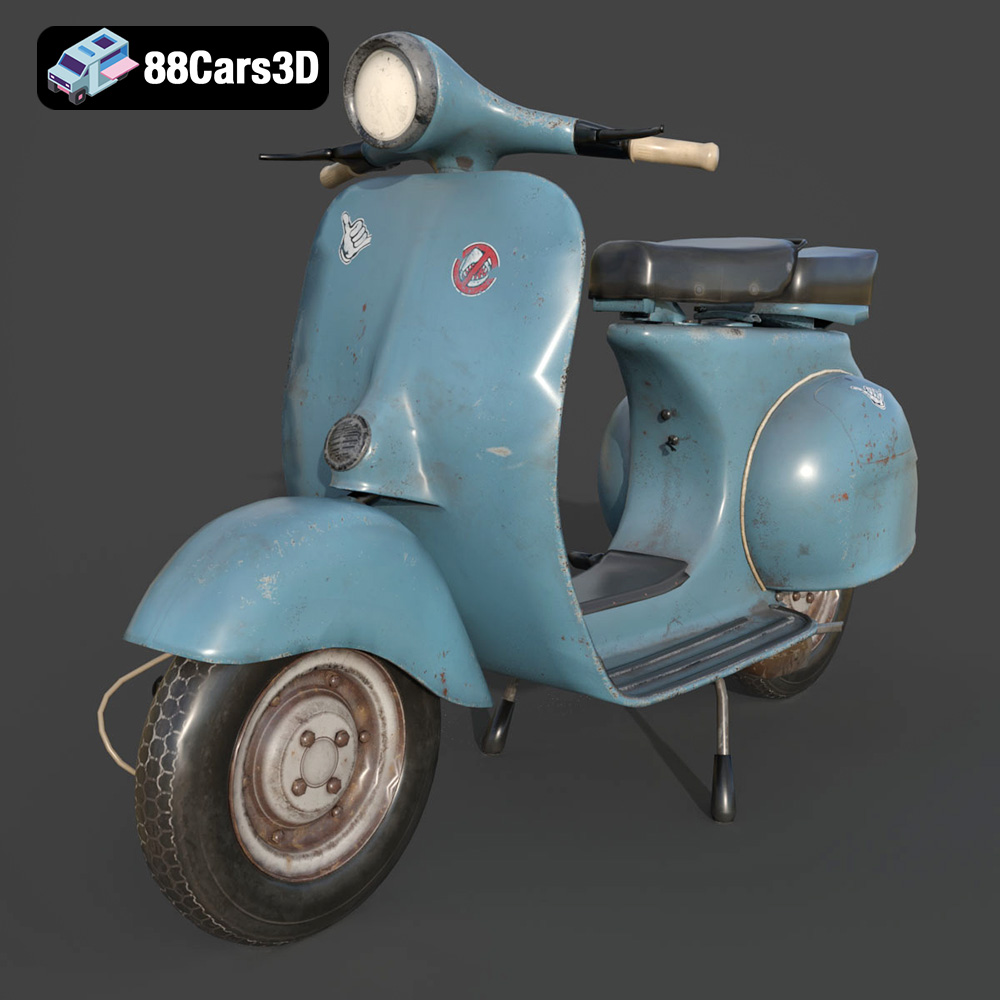
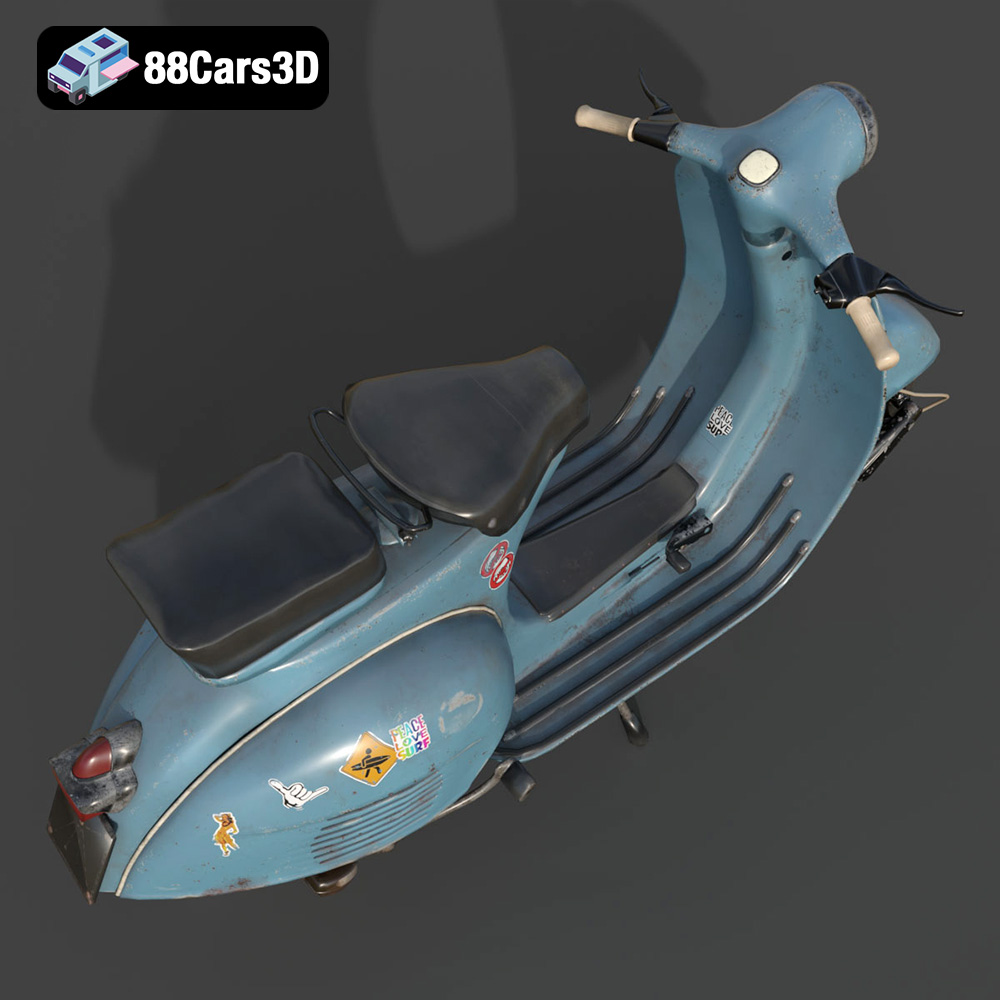
It’s within this context of meticulous digital craftsmanship and a passion for automotive heritage that we introduce a truly exceptional asset: the Vintage Vespa 3D Model. This isn’t just a generic scooter; it’s a meticulously recreated icon, embodying the spirit of Italian ‘La Dolce Vita’ and ready to bring unparalleled character to any digital environment. From its distinctive pressed steel monocoque chassis to its beautifully sweeping side cowls, every detail has been faithfully preserved, offering creators a versatile and technically robust foundation for their most ambitious projects.
Classic vehicles, much like timeless art, possess an intrinsic appeal that transcends generations. Their designs are often a testament to an era’s engineering prowess, artistic sensibilities, and cultural trends. For 3D artists and developers, recreating these icons presents a unique opportunity to infuse projects with character, history, and a touch of vintage charm that modern designs often lack.
The decision to incorporate a vintage 3D model, such as a classic Vespa, into a project goes beyond mere aesthetics. It’s about storytelling. A retro scooter parked on a cobbled street instantly sets a scene, suggesting a European city, a bygone era, or a lifestyle. For game developers, these assets provide depth and realism to environments, allowing players to connect with the virtual world on a more profound level. In architectural visualization, a carefully placed classic vehicle can humanize a sterile render, adding warmth and narrative. For filmmakers and advertisers, they become powerful symbols, evoking specific emotions and associations that resonate deeply with audiences. The careful attention to detail in models like the Vintage Vespa ensures that this heritage is not just simulated, but genuinely captured.
Replicating a physical object, especially one with as much intricate detail and history as a vintage vehicle, into a digital asset is a challenging art form. It requires a blend of historical research, anatomical precision, and advanced 3D modeling techniques. Every curve, every weld line, every mechanical component must be studied and translated into polygons, textures, and materials. The process involves precise reference gathering, high-polygon modeling for detail, and then careful retopology to create an optimized, game-ready mesh that still retains visual fidelity. This labor-intensive process is precisely what distinguishes a generic asset from a truly professional, ready-to-use 3D model, such as those found on 88cars3d.com, ensuring that the digital twin honors its real-world counterpart.
Navigating the world of 3D models means understanding the various file formats, each tailored for specific workflows, software, and applications. The Vintage Vespa 3D model, recognizing this professional necessity, offers an extensive suite of formats to ensure maximum compatibility and flexibility across the entire production pipeline. Choosing the right format is crucial for efficiency and quality.
The .blend format is Blender’s native file type, offering a complete and fully editable scene. When you download the Vintage Vespa in .blend format, you’re not just getting the mesh; you’re getting the entire Blender project. This includes all materials set up with Blender’s powerful node-based system (typically Cycles or Eevee), lighting, cameras, and potentially even animation data or modifiers. This format is ideal for Blender users who need full control to modify the model, change textures, adjust shaders, or integrate it seamlessly into an existing Blender scene with all its native functionalities intact. It preserves layers, collections, and all scene configurations, making it the go-to for deep customization and iteration within the Blender ecosystem.
FBX (Filmbox) is an Autodesk-developed proprietary file format that has become an industry standard for 3D data interchange, especially in game development and animation. Its robust support for geometry, materials (with PBR maps), textures, skeletal animations, and blend shapes makes it incredibly versatile. For the Vintage Vespa, the .fbx format is game-ready, meaning it’s optimized for real-time engines like Unreal Engine and Unity. It ensures that the model’s pivots, hierarchy, and basic material assignments translate correctly, allowing for immediate integration into your game development workflow without significant re-setup. It’s the bridge that connects high-fidelity modeling software to the performant demands of real-time applications.
OBJ (Object) is one of the oldest and most universally supported 3D file formats. It’s a simple, text-based format primarily used for transferring geometric data (vertices, normals, texture coordinates, and faces) between different 3D applications. While .obj does not natively support animations or advanced material properties beyond basic color and texture references (usually via an accompanying .mtl file), its widespread compatibility makes it a safe bet for ensuring that the Vintage Vespa model can be opened and worked with in virtually any 3D software, from ZBrush to Maya to 3ds Max. It’s perfect when you need a clean mesh for sculpting, retopology, or basic rendering in an unfamiliar software environment.
.glb is the binary version of the glTF (GL Transmission Format), an open standard for 3D scenes and models. Designed to be compact and efficient, .glb files embed all data—geometry, materials, textures, animations—into a single file, making them ideal for web-based 3D, augmented reality (AR), virtual reality (VR), and mobile applications. For the Vintage Vespa, the .glb format ensures quick loading and rendering in browsers, making it perfect for interactive product viewers on websites, AR experiences that place the scooter in a real-world setting via a smartphone, or VR showrooms. Its optimization for real-time web delivery makes it a powerful tool for modern digital engagement.
STL (Stereolithography) is the de facto standard file format for 3D printing. It represents a 3D model as a series of connected triangles (a triangulated mesh) without any color, texture, or material information. The Vintage Vespa model in .stl format is specifically prepared for physical fabrication. While it loses the rich visual data, it provides the essential geometric information a 3D printer needs to accurately reproduce the object layer by layer. This format is crucial for hobbyists, product designers, or anyone looking to bring the classic scooter into the physical realm as a collectible, scale model, or prototype.
PLY (Polygon File Format) is another format primarily used for storing 3D data, particularly from 3D scanners. It’s capable of storing not only geometry but also properties like color, transparency, and normal vectors per vertex or face. While less common for general asset distribution than FBX or OBJ, .ply is valuable in specific engineering, CAD, or scientific visualization contexts where precise point cloud data or complex mesh properties are required. For the Vintage Vespa, this format might be utilized if the model needs to be integrated into reverse engineering workflows or for detailed surface analysis in specialized software.
The .unreal format refers to assets specifically configured and sometimes ‘cooked’ or optimized directly for Unreal Engine. This often means the asset has been imported, had its materials set up, collisions defined, and LODs (Levels of Detail) generated within the engine itself, and then exported or saved as an Unreal asset package. This format ensures the Vintage Vespa is truly “drag-and-drop” ready for Unreal Engine users, potentially bypassing some import steps and offering immediate, optimal performance and visual fidelity within the engine’s environment. It typically implies a higher level of integration and optimization specifically for Unreal’s rendering pipeline and tools.
.max is the native file format for Autodesk 3ds Max, a powerful 3D modeling, animation, and rendering software widely used in architectural visualization, product design, and cinematic production. Similar to .blend for Blender, the .max format for the Vintage Vespa provides the complete 3ds Max scene, including all modifiers, material setups (e.g., V-Ray, Corona), lighting rigs, and animation keyframes. This is indispensable for 3ds Max professionals who require full access to the original scene for advanced rendering, custom animation sequences, or integration into complex visualization projects that leverage 3ds Max’s extensive feature set.
The creation of a truly high-quality 3D model, especially one as iconic as the Vintage Vespa, is a testament to technical skill and artistic dedication. This model exemplifies a balance between visual fidelity and practical performance, making it a valuable asset for a wide range of professional applications.
At the core of any good 3D model is its topology – the arrangement of vertices, edges, and faces that define its shape. The Vintage Vespa 3D model boasts a highly optimized topology with approximately 150,000 triangles. This figure represents a crucial sweet spot: it’s detailed enough to capture the intricate curves and components of the scooter with stunning visual realism, yet lean enough to perform efficiently in real-time engines like Unreal and Unity. This “game-ready” optimization means developers won’t encounter significant performance bottlenecks, allowing for the inclusion of multiple instances of the Vespa in crowded scenes or for use as a drivable vehicle without sacrificing frame rates. Furthermore, the model is built to real-world scale accuracy, based on actual vehicle chassis dimensions, ensuring it fits perfectly into any architectural visualization or simulation environment. Proper pivot setups for steering, wheel rotation, and suspension travel are also integrated, making it animation-ready right out of the box.
What truly sets this Vintage Vespa 3D model apart is its unparalleled attention to detail. Every characteristic feature of the classic scooter has been faithfully recreated. On the exterior, you’ll find the accurate vintage Vespa frame geometry and proportions, the distinctive 2-stroke engine casing with its characteristic cooling fins, and the classic curved exhaust system with authentic mounting. The iconic round headlamp and retro taillight housing are perfect, as are the vintage stamped steel wheels paired with classic tread tires. Even the signature single-sided trailing-link front suspension has been modeled with precision. Crucially, separate components for wheels, suspension, and steering allow for dynamic animation.
The commitment to realism extends to the cockpit. The model features an authentic sprung saddle with beautifully stitched seat details, a chrome tubular handlebar complete with iconic grips and switches, and a vintage analog instrument cluster with a speedometer. Original clutch, brake levers, and the twist-gear selector are also present. This level of interior detail is particularly beneficial for first-person perspective (POV) in gaming or for close-up renders where the rider’s view would reveal these elements, providing a truly immersive experience.
The versatility of the Vintage Vespa 3D model, coupled with its robust technical specifications and multiple file formats, makes it an ideal choice for a diverse array of professional applications.
For game developers, the Vintage Vespa is a dream asset. Its optimized polycount (~150,000 triangles) is perfectly suited for populating open-world games, creating racing titles, or building immersive simulators without taxing system resources. The inclusion of .fbx and .unreal formats ensures seamless integration into Unreal Engine and Unity pipelines. Developers can quickly drag and drop the asset, apply PBR materials, and leverage its proper pivot setup for immediate animation of steering, wheels, and suspension. Imagine creating a bustling European city scene in your next game; several instances of this iconic scooter, perhaps in different colors or states of wear, would instantly elevate the realism and charm. Players could even interact with or ride the Vespa, benefiting from its optimized geometry for first-person POV experiences and responsive handling facilitated by its accurate component separation.
For artists focused on high-end automotive rendering, product visualization, or architectural walkthroughs, the Vintage Vespa delivers exceptional fidelity. Professionals using software like 3ds Max (with .max format) or Blender (with .blend format) gain full access to the model’s detailed geometry and material setups. They can easily adapt the model to advanced renderers such as V-Ray, Corona, Cycles, or Octane, achieving photorealistic results. Picture a lifestyle visualization for a luxury apartment complex: placing the Vintage Vespa prominently in a rendered street scene or inside a modern garage instantly adds a touch of sophistication and narrative. For brand campaigns, the model can be dynamically lit in a studio setup to highlight its classic lines, creating compelling marketing visuals that evoke emotion and style, perfectly suited for advertising agencies or automotive magazines.
The demand for immersive digital experiences in AR (Augmented Reality) and VR (Virtual Reality) is skyrocketing, and the Vintage Vespa is perfectly poised to meet it. With its .glb format, optimized for web and mobile, it can be easily integrated into virtual showrooms, interactive configurators, or even mobile AR applications. Imagine a customer using their smartphone to place a life-sized virtual Vespa in their driveway, rotating it, and exploring its details before a purchase decision. VR experiences can transport users to bustling Italian streets, with the scooter acting as a central interactive element. The compact nature and efficiency of the .glb format ensure smooth performance even on less powerful devices, opening up new avenues for engagement in retail, education, and entertainment.
Beyond digital pixels, the Vintage Vespa 3D model also offers a tangible connection to its iconic status through 3D printing. This application caters to hobbyists, collectors, and designers who wish to bring the classic scooter into the physical world as a detailed miniature or display piece.
The inclusion of the .stl format is crucial for 3D printing. This format strips away textures and materials, leaving behind a clean, triangulated mesh that 3D printers can interpret to build the object layer by layer. For those requiring even greater precision or working with specialized industrial printers, the .ply format also offers a robust option for retaining granular surface data. Whether you’re planning to create a desk model, a component for a larger diorama, or a collectible item, having these optimized files ensures a smooth transition from screen to physical form. Recommended scales like 1:12, 1:18, or 1:24 offer flexibility for different display preferences and print capabilities, allowing creators to choose the perfect size for their physical reproduction of this magnificent 3D car model.
Successful 3D printing of a detailed model like the Vintage Vespa requires careful consideration of print settings. For optimal fidelity, resin printing is highly recommended, allowing for finer details like cooling fins and handlebar controls. Recommended layer heights of 0.04–0.12 mm ensure smooth surfaces and sharp edges. A wall thickness of 1.2–2.0 mm provides structural integrity, while an infill of 20–30% offers a good balance between strength and material usage. Due to its intricate geometry, supports will be required for parts like the exhaust, mirrors, and handlebars. Strategic print orientation, such as printing the frame at an angle for structural integrity and the wheels separately, further enhances print quality. After printing, post-processing is key: sanding, applying primer, and painting with authentic factory colors or custom metallic finishes will bring your physical Vintage Vespa to life with exceptional realism. This process truly highlights the versatility of a high-quality 3D asset from 88cars3d.com.
A premium 3D model isn’t just about static perfection; it’s about providing a foundation for boundless creative expression. The Vintage Vespa 3D model excels in its customization potential, allowing artists and developers to tailor it to their specific project needs.
The inherent flexibility of this model allows for extensive material and texture customization. Artists can easily change the body and tank colors to reflect various factory options, apply custom paint jobs, or even experiment with different finishes such as matte, gloss, or metallic. Imagine a weathered, rusty Vespa for a post-apocalyptic scene, or a brightly polished, chrome-laden version for a high-fashion advertisement. Tire textures can be swapped between classic street variants and more rugged off-road styles to suit different environments. This adaptability ensures that the single Vintage Vespa asset can serve multiple narrative and aesthetic purposes, greatly enhancing its value across different projects requiring unique 3D car models.
Beyond surface appearance, the model is designed for seamless integration into diverse environmental setups. Artists can adapt lighting schemes to match any scene – from the harsh sunlight of a Mediterranean summer day to the soft glow of a twilight street lamp or the controlled illumination of a studio rendering setup. Adding custom elements, such as luggage racks, side mirrors, or personalized decals, further allows for individualization. This level of creative freedom empowers users to not only use the Vintage Vespa as a standalone asset but to truly make it their own, reflecting the unique vision and context of their digital world.
In the dynamic world of 3D content creation, the difference between good and great often lies in the quality and versatility of the assets you employ. The Vintage Vespa 3D Model stands as a shining example of this principle. It’s a meticulously crafted digital artifact that blends historical accuracy with cutting-edge technical optimization, offering an unparalleled foundation for a myriad of projects across game development, architectural visualization, high-end rendering, AR/VR experiences, and even physical 3D printing.
From its game-ready polycount to its detailed cockpit, and from its extensive file format support to its inherent customizability, this model is engineered to empower professionals and enthusiasts alike. It represents not just a vehicle, but a piece of cultural heritage, ready to infuse your digital creations with character, charm, and a touch of timeless style. Investing in high-quality 3D car models like this Vintage Vespa from 88cars3d.com ensures that your projects not only look stunning but also perform flawlessly, providing a solid return on your creative investment. Elevate your next project by bringing this iconic piece of ‘La Dolce Vita’ into your digital universe.
Capture the essence of Italian La Dolce Vita with this meticulously crafted Vintage Vespa 3D model. Celebrating decades of iconic design heritage, this classic scooter is immediately recognizable by its pressed steel monocoque chassis, beautifully sweeping side cowls, and signature step-through frame. Every element has been faithfully recreated to preserve the timeless elegance of this two-wheeled legend.
$19.99
.blend
.fbx
.glb
.max
.obj
.ply
.rendering
.scooter
.stl
.unreal
.vespa
classic-scooter
game asset
game-ready
low-poly
motorcycle-3d-model
optimized
retro-vehicle
vintage-vespa
VR/AR