Get 20% OFF All Premium 3D & STL Models!

In the rapidly evolving landscape of digital media, the demand for exceptionally realistic and versatile 3D assets has never been higher. From the shimmering surfaces of a photorealistic advertisement to the meticulously crafted environments of a next-generation video game, the quality of a 3D model can make or break an immersive experience. Automotive design, in particular, requires an unparalleled level of precision and aesthetic fidelity. Designers, animators, game developers, and visualization specialists constantly seek assets that not only look authentic but are also technically robust and adaptable to various professional pipelines.
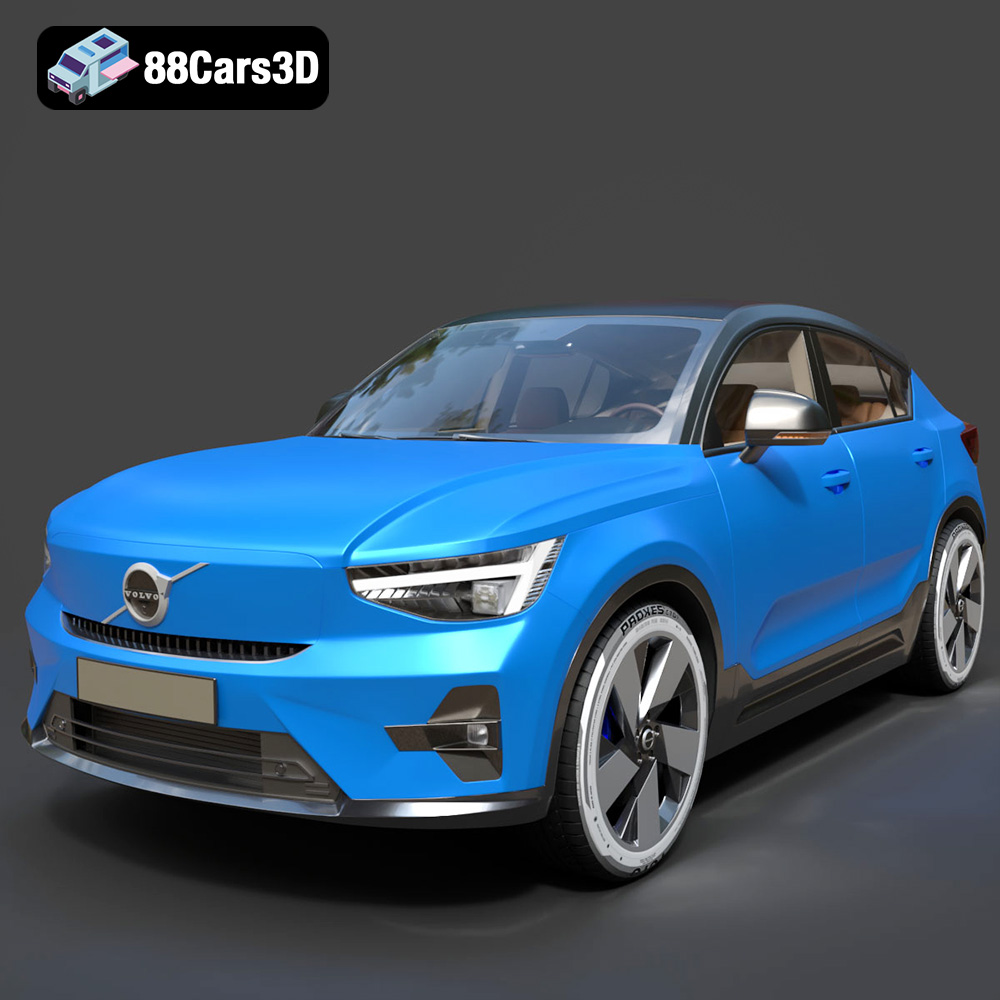
This quest for excellence brings us to the forefront of modern 3D asset creation, exemplified by stellar products like the Volvo C40 Recharge 3D Model. This particular asset stands out as a prime example of how detailed craftsmanship and technical foresight combine to create a truly professional resource. Crafted to mirror the actual vehicle with incredible accuracy, it provides clean, optimized geometry, realistic textures, and an intelligently organized structure. Whether you’re aiming for breathtaking renders, dynamic game environments, or interactive AR/VR applications, understanding the nuances of such a high-quality 3D car model is crucial for achieving superior results.
Creating a premium 3D car model is a complex process that blends artistic vision with rigorous technical execution. It’s about more than just replicating a vehicle’s form; it’s about capturing its essence, its materials, and its functionality in a digital space. Professional 3D car models are the backbone of impactful automotive visualization, offering unparalleled flexibility and quality.
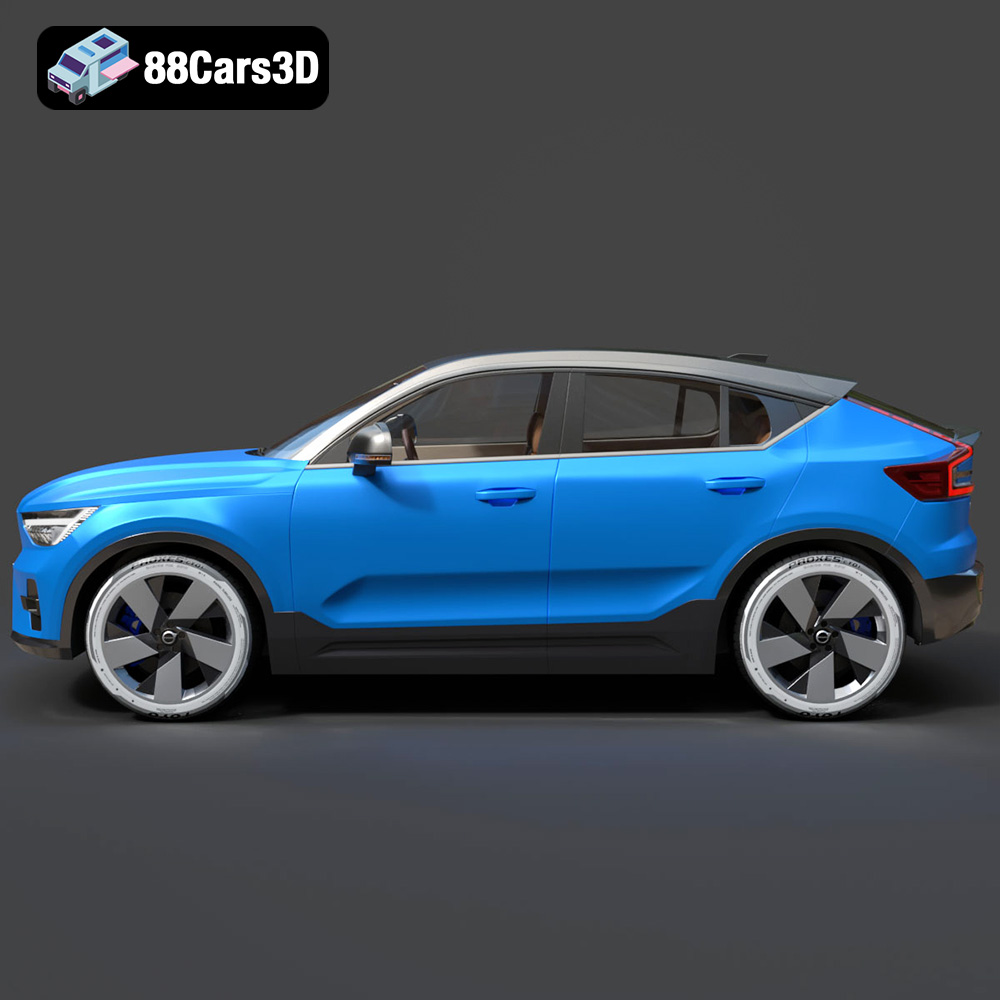
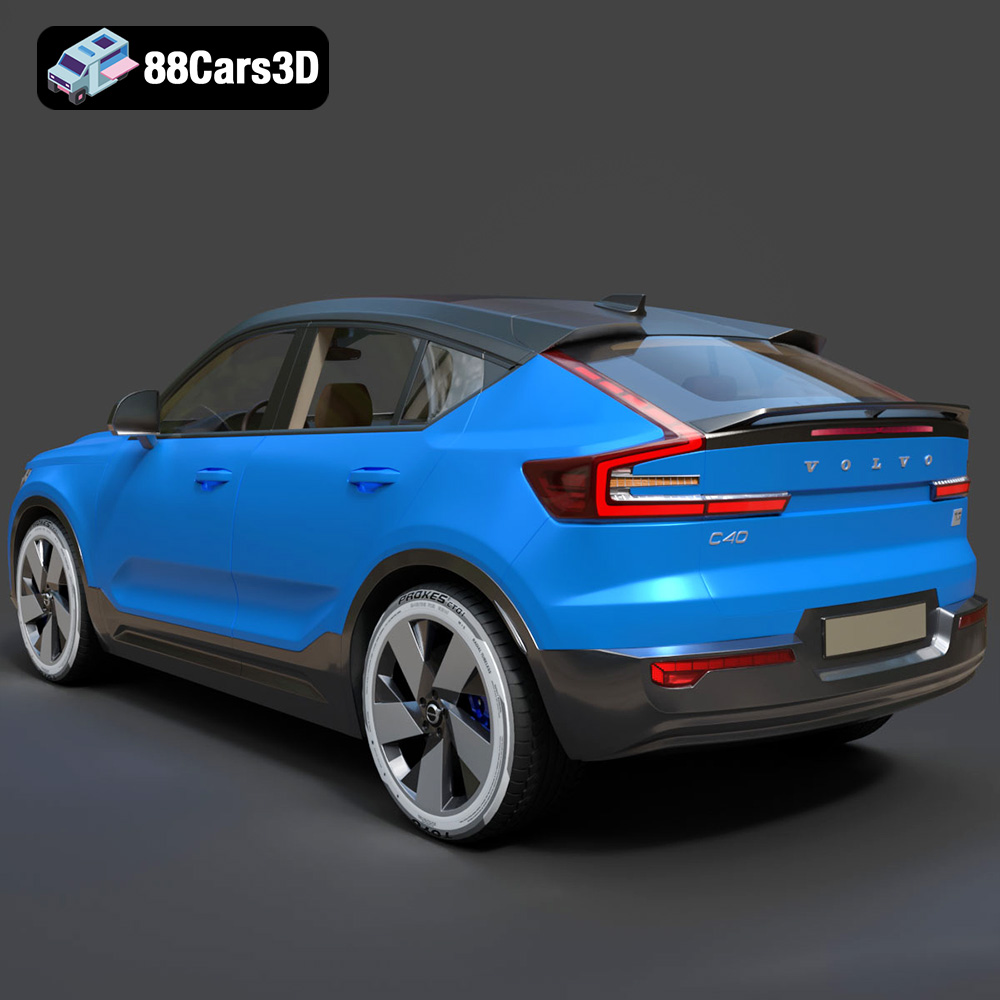
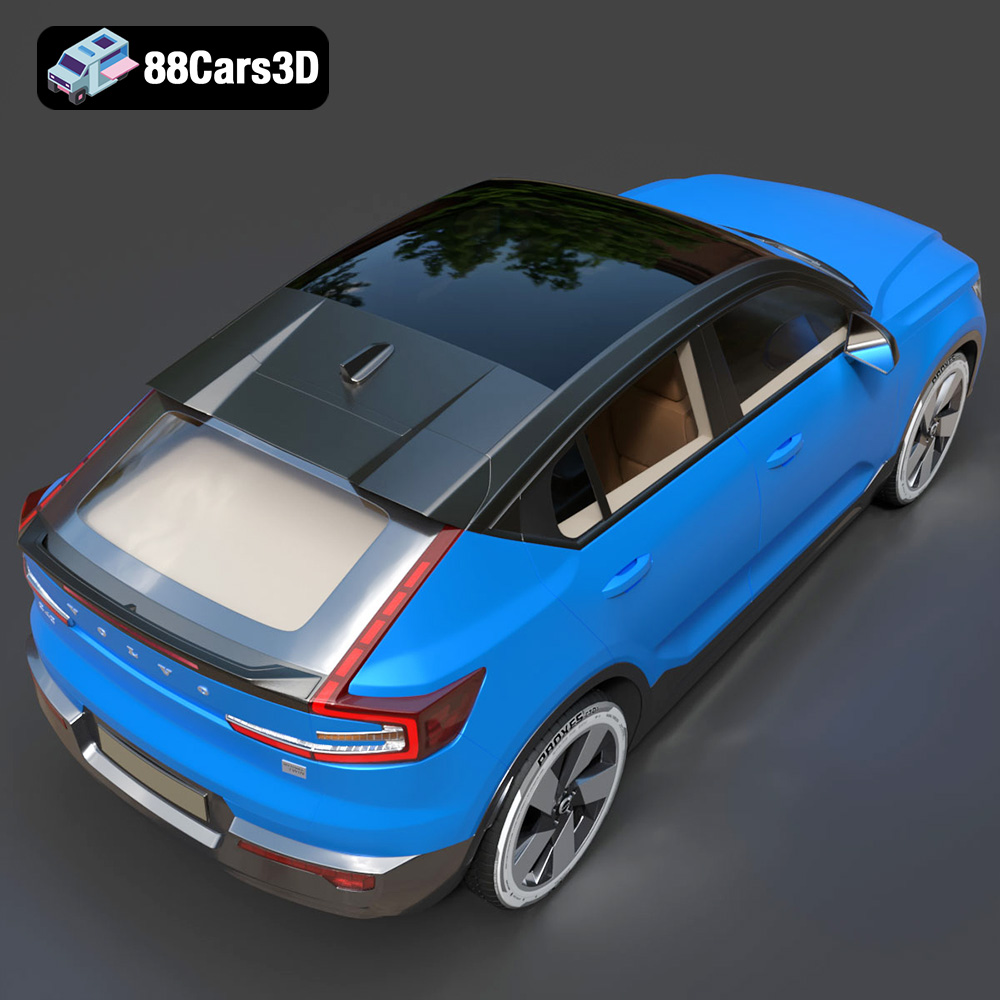
The foundation of any high-quality 3D car model is its geometry. Achieving photorealism demands excruciating attention to detail, starting with accurate proportions and curvature. Every panel gap, every subtle curve, and every sharp edge must be meticulously modeled to reflect the real-world counterpart. For instance, the Volvo C40 Recharge 3D Model distinguishes itself through its incredibly accurate proportions and sleek styling, ensuring that from any angle, the digital representation is indistinguishable from the physical vehicle. This level of detail extends to elements like headlights, taillights, badges, and even tire treads, all of which contribute to the overall visual integrity.
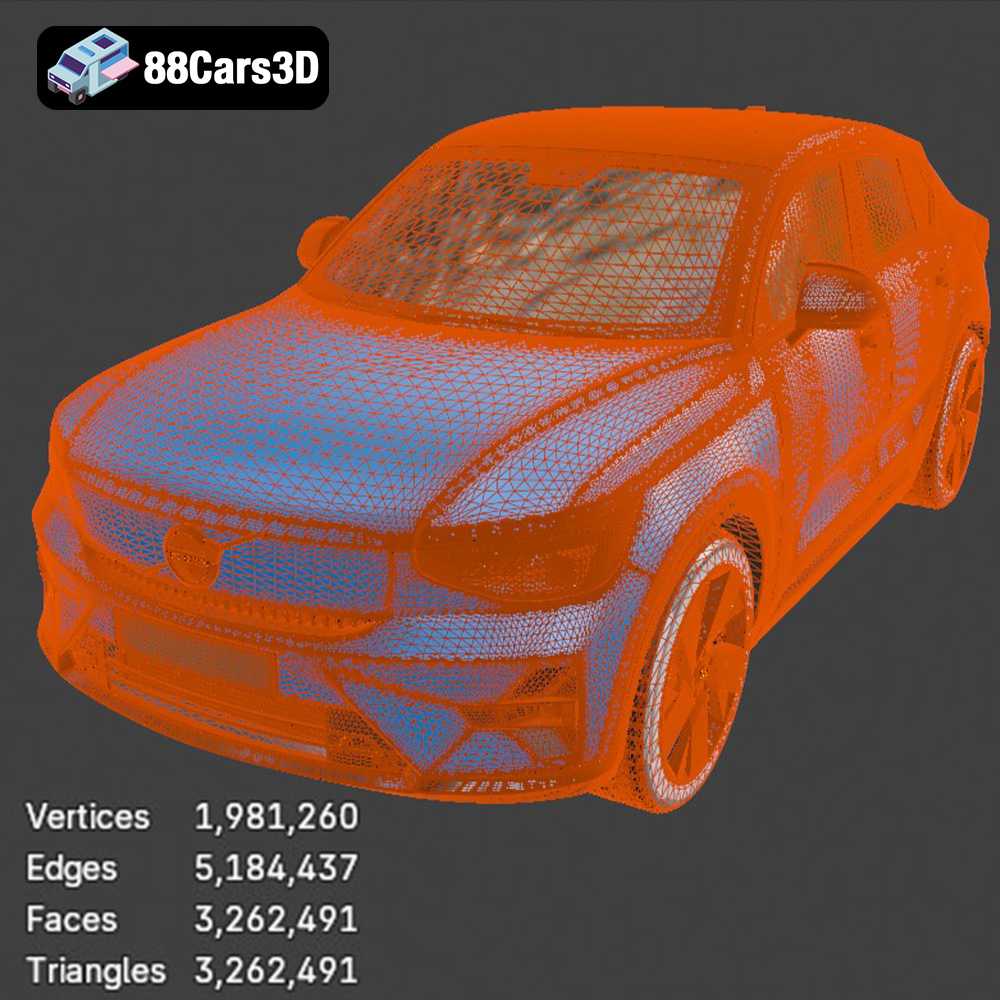
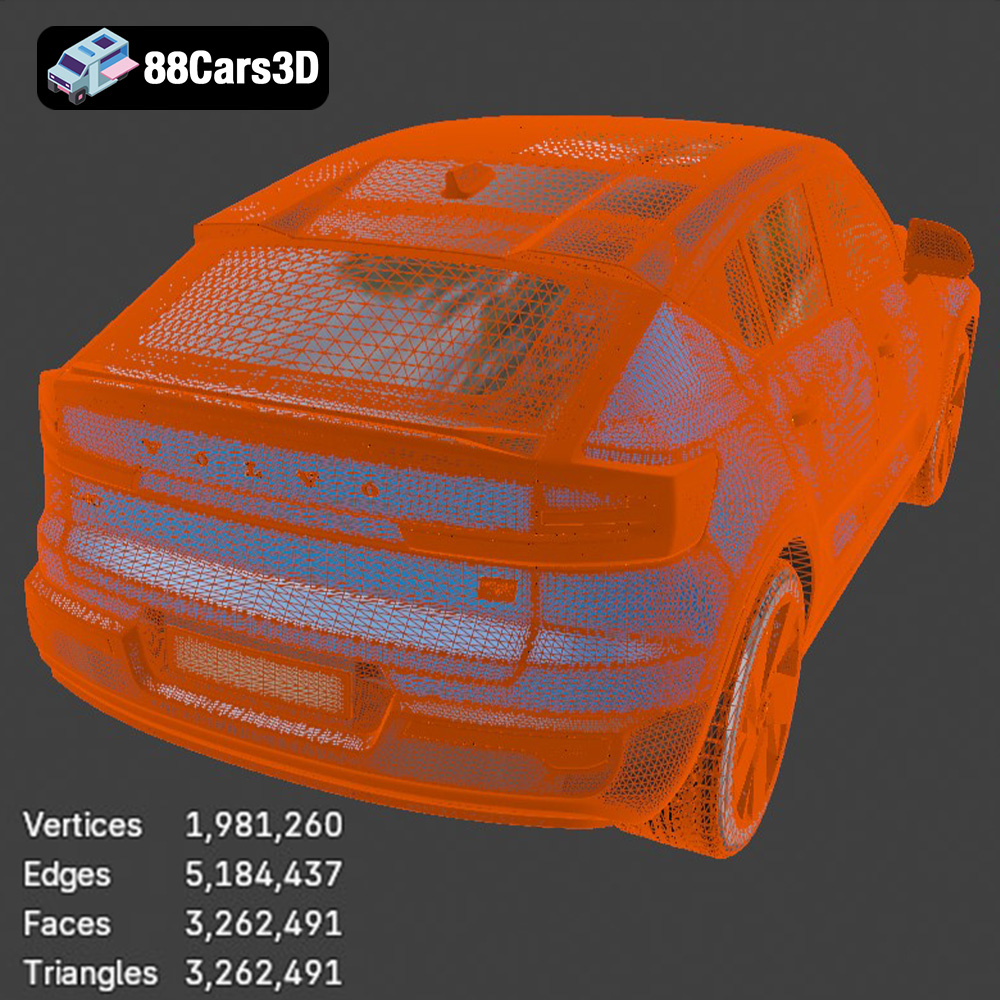
Beyond visual accuracy, the underlying structure—the topology—is paramount. Clean topology refers to a mesh that is well-organized, primarily composed of quadrilaterals (quads), and avoids issues like N-gons (polygons with more than four sides) or distorted faces. This clean structure is vital for smooth deformations during animation, predictable subdivision for high-detail renders, and efficient UV unwrapping. An optimized mesh, like that found in the Volvo C40 Recharge 3D Model, translates directly to better performance in real-time engines and cleaner results in rendering software, saving artists countless hours in troubleshooting and cleanup.
While geometry defines the shape, textures and shaders bring a 3D model to life. Realistic textures replicate the subtle imperfections, reflections, and material properties of paint, glass, rubber, metal, and fabric. This involves sophisticated PBR (Physically Based Rendering) workflows, utilizing maps for albedo, roughness, metallic, normal, and ambient occlusion. High-quality assets include carefully calibrated materials that react realistically to light, providing depth and believability. The Volvo C40 Recharge 3D Model, with its realistic textures, ensures that its digital paintwork gleams authentically, and its interior materials possess a tactile quality, making it ideal for close-up shots and immersive experiences.
The versatility of a professional 3D model is often defined by the range of file formats it supports. Each format serves specific purposes and excels in different pipelines, offering unique advantages to users across various industries. A truly comprehensive asset, like the Volvo C40 Recharge 3D Model, provides options that cater to virtually any workflow, ensuring seamless integration and maximum utility. Understanding these formats is crucial for selecting the right asset for your project.
The .blend format is native to Blender, one of the most popular open-source 3D creation suites. When you acquire a .blend file, you’re not just getting the model; you’re often getting a fully editable Blender scene complete with materials, lighting setups, and sometimes even animation rigs. This format is ideal for artists deeply embedded in the Blender ecosystem, providing immediate access to all aspects of the model for modifications, custom renders, or integration into existing Blender projects. Its direct compatibility means no loss of data or conversion artifacts, offering the most flexibility for Blender users.
.fbx (Filmbox) is an industry-standard format developed by Autodesk, widely used for exchanging 3D data between various software applications, including 3ds Max, Maya, Cinema 4D, and most importantly, game engines like Unreal Engine and Unity. It can store not just geometry, but also materials, textures, animations, and camera data. For game development and real-time pipelines, .fbx is often the go-to choice due to its robustness and broad support, making it game-engine ready. The Volvo C40 Recharge 3D Model‘s .fbx version is perfectly suited for these demanding applications.
.obj (Wavefront OBJ) is another universal format, renowned for its simplicity and wide compatibility. It’s a standard format that virtually every 3D software can import and export. While it primarily focuses on geometry, UV coordinates, and basic material definitions, it’s an excellent choice for cross-software compatibility when complex animations or advanced material nodes aren’t being transferred. It serves as a reliable fallback and a solid foundation for clean mesh data, ensuring your 3D car models can be accessed and utilized in any major software environment.
.glb (GL Transmission Format Binary) is gaining significant traction, especially for AR, VR, and web-based visualization. It’s an optimized, self-contained format that bundles the model, textures, and animations into a single file, making it incredibly efficient for delivery over the web and display in various viewers. Its compact size and ease of integration make it perfect for interactive product configurators, social media filters, and immersive online experiences. The Volvo C40 Recharge 3D Model offered in .glb ensures it’s ready for the future of interactive digital presence.
The .unreal format, or more accurately, assets provided as Unreal Engine projects/packages, signifies content that has been specifically configured and optimized for the Unreal Engine. This means materials are set up with Unreal’s PBR system, collisions might be pre-generated, and often includes blueprint setups or level sequences. It offers the most seamless integration for Unreal Engine developers, minimizing setup time and ensuring optimal performance within the engine. This pre-configured state of the Volvo C40 Recharge 3D Model for Unreal Engine use drastically accelerates production timelines.
.stl (Stereolithography) is primarily known as the standard file format for 3D printing. It represents a 3D model as a series of connected triangles, defining only the surface geometry. While it doesn’t store color or texture information, its simplicity makes it ideal for rapid prototyping, mold creation, and bringing digital designs into the physical world. For designers looking to 3D print a scale model of the Volvo C40 Recharge, the .stl version is indispensable.
.ply (Polygon File Format or Stanford Triangle Format) is a precision mesh format used to store 3D data from 3D scanners, CAD systems, and other analytical tools. It can store more complex information than .stl, including color per vertex, normal vectors, and other properties. It’s often used for scientific visualization, detailed analysis, and scenarios where precise geometric data with rich attributes is critical.
Finally, .max is the native file format for Autodesk 3ds Max. Similar to .blend, a .max file contains a complete 3ds Max scene, including geometry, materials, lighting, cameras, and animation data. It offers the full power and flexibility of 3ds Max for artists who use this industry-leading software for high-end rendering and complex animation tasks. An editable 3ds Max file like that of the Volvo C40 Recharge 3D Model provides the ultimate control for detailed scene construction and custom visualizations.
Automotive rendering is an art form focused on creating stunning, photorealistic images and animations of vehicles. It’s a crucial component of marketing, design visualization, and concept development within the automotive industry. A high-quality asset like the Volvo C40 Recharge 3D Model provides the perfect foundation for achieving breathtaking results.
One of the most common applications for premium 3D car models is the creation of photorealistic studio renders. This often involves setting up a virtual studio environment with controlled lighting – mimicking real-world photography studios. Using powerful renderers like V-Ray or Corona Renderer within software like 3ds Max or Blender, artists can manipulate light bounces, reflections, and refractions to showcase the vehicle’s form and material properties. The precision of the Volvo C40 Recharge 3D Model‘s geometry and its PBR materials truly shine here, allowing the digital paint to reflect light with astonishing accuracy and the interior details to pop with realistic depth, ideal for glossy advertisements and product showcases.
Beyond isolated studio shots, integrating 3D car models into diverse environments adds context and narrative. This could range from bustling cityscapes to serene natural landscapes or futuristic urban settings. Artists utilize techniques such as HDRI (High Dynamic Range Imaging) lighting for realistic illumination and reflections, combined with careful camera matching and atmospheric effects. The clean topology and optimized textures of the Volvo C40 Recharge 3D Model make it effortlessly blend into any scene, whether it’s navigating a virtual urban street or parked elegantly on a digital mountain road, enhancing the believability of the entire composition.
For dynamic presentations, animations bring the vehicle to life. This involves rigging the car (if complex articulated parts are needed), setting up camera paths, and animating movements like wheels spinning, doors opening, or the vehicle driving through a scene. Professional automotive rendering often includes showcasing features, explaining design elements, or demonstrating the car’s performance characteristics. The organized structure of the Volvo C40 Recharge 3D Model facilitates animation workflows, ensuring smooth wheel rotations and the potential for detailed interior interactions, creating engaging cinematic sequences for marketing or internal design reviews.
The immersive nature of video games and AR/VR experiences demands 3D assets that are not only visually appealing but also highly optimized for real-time performance. This delicate balance is where superior 3D car models truly prove their worth, providing both visual fidelity and efficiency. The Volvo C40 Recharge 3D Model exemplifies an asset built for these demanding, interactive environments.
In game development, every polygon counts, and draw calls must be minimized. High-fidelity 3D car models designed for games, like the Volvo C40 Recharge 3D Model available on 88cars3d.com, are meticulously optimized. This involves techniques like polygon reduction, baking high-detail normal maps from high-poly sculpts to low-poly meshes, and efficient UV packing for texture atlases. Game engines like Unreal Engine and Unity rely on these optimizations to maintain high frame rates while delivering stunning visuals. The .fbx and .unreal formats of the C40 Recharge model are specifically tailored for smooth integration and optimal performance within these engines, making it a powerful “game asset.”
AR (Augmented Reality) and VR (Virtual Reality) demand an even higher level of optimization and specific considerations for user interaction. Models must be lightweight enough to run smoothly on mobile devices for AR, or maintain consistent frame rates for VR to prevent motion sickness. The detailed exterior and fully modeled interior of the Volvo C40 Recharge 3D Model make it ideal for AR/VR applications where users might virtually walk around the car, open its doors, or even sit inside. The .glb format is particularly beneficial here, offering a compact and web-friendly package for seamless deployment in interactive AR/VR showcases or virtual showrooms.
To ensure optimal performance in diverse scenarios, professional 3D car models often come with LODs (Levels of Detail). These are progressively simpler versions of the same model that are swapped out based on the camera’s distance, saving rendering resources when the object is far away. Additionally, collision meshes (simplified geometries used for physics calculations) are essential for realistic interaction in games and simulations. While not explicitly listed, a high-quality asset like the Volvo C40 Recharge often forms the basis for such implementations, allowing developers to create these performance-critical components with ease, ensuring both visual quality and robust interactive physics.
The utility of high-fidelity 3D car models extends far beyond just visual representation. They are indispensable tools in engineering, scientific research, and advanced prototyping. The detailed and accurate geometry of models like the Volvo C40 Recharge 3D Model provides a solid foundation for a variety of technical applications.
In automotive engineering, precise 3D models are critical for conducting complex simulations. Computational Fluid Dynamics (CFD) analysis, for example, relies on highly accurate mesh data to simulate airflow over a vehicle’s body, helping engineers optimize aerodynamics for fuel efficiency and performance. Crash simulations also use detailed 3D models to predict how a vehicle will deform under impact. While the Volvo C40 Recharge 3D Model from 88cars3d.com is designed primarily for rendering and visualization, its underlying clean geometry and accurate proportions make it an excellent starting point for engineers to derive the necessary meshes for such demanding simulations, allowing for a seamless transition from aesthetic design to analytical testing.
Bringing digital designs into the physical world is a powerful application for 3D models. The .stl format, included with the Volvo C40 Recharge 3D Model, is the universal standard for 3D printing. This allows designers, engineers, and hobbyists to create physical prototypes, scale models, or even custom parts of the vehicle. From verifying ergonomic designs of interior components to presenting tangible representations of concept cars, 3D printing offers an efficient and cost-effective way to iterate on designs before committing to expensive manufacturing processes. The availability of this format ensures the model’s utility for tangible output and tactile evaluation.
High-fidelity 3D car models are increasingly used in interactive training modules, especially for technicians or sales personnel. Trainees can virtually explore the vehicle, learn about its components, and practice maintenance procedures in a risk-free environment. Furthermore, the concept of a “digital twin”—a virtual replica of a physical asset that constantly updates with real-world data—is gaining traction. A precise 3D model like the Volvo C40 Recharge 3D Model can serve as the visual frontend for such a digital twin, allowing for real-time monitoring, predictive maintenance, and operational insights, bridging the gap between the physical and digital realms.
In a world overflowing with digital assets, the discerning professional understands the paramount importance of quality and reliability. When it comes to 3D car models, especially for critical applications in automotive rendering, game development, or simulation, cutting corners is simply not an option. This is precisely where platforms like 88cars3d.com distinguish themselves, offering meticulously crafted assets that meet the rigorous demands of the industry.
Time is a valuable commodity in any professional workflow. Acquiring a pre-optimized, high-quality asset significantly reduces production time and costs. Instead of spending hours or days modeling a vehicle from scratch, or cleaning up a poorly constructed mesh, artists and developers can immediately integrate a ready-to-use model into their projects. The Volvo C40 Recharge 3D Model, available at 88cars3d.com, is a prime example of such an asset – featuring clean geometry, intelligent organization, and realistic textures that are ready for immediate deployment across various platforms and rendering engines. This ‘plug-and-play’ capability translates directly into accelerated workflows and faster project delivery.
88cars3d.com prides itself on offering a diverse and continually expanding library of high-quality 3D car models. Whether your project demands the latest electric crossover like the Volvo C40 Recharge, a classic muscle car, a luxury sedan, or a rugged SUV, you can find professional-grade assets designed to integrate seamlessly. This extensive selection ensures that creative professionals have access to the exact vehicle models they need, without compromising on quality or technical specifications. Each model is curated to meet the standards required for photorealistic rendering, real-time applications, and beyond.
The commitment to quality at 88cars3d.com goes beyond just visual appeal. It encompasses technical robustness and broad compatibility. Every model, including the versatile Volvo C40 Recharge 3D Model, is delivered in a comprehensive range of industry-standard file formats (.blend, .fbx, .obj, .glb, .stl, .ply, .unreal, .max). This multi-format availability ensures that regardless of your preferred software or pipeline—be it 3ds Max for architectural visualization, Blender for animation, Unreal Engine for game development, or even a 3D printer for physical prototyping—the model will integrate smoothly and perform as expected. This dedication to technical excellence and universal compatibility provides peace of mind and empowers artists to focus on their creative vision.
The world of 3D visualization and interactive experiences is fundamentally shaped by the quality of its foundational assets. High-fidelity 3D car models are not just digital representations; they are pivotal tools that drive innovation across automotive rendering, game development, AR/VR, and engineering simulations. From capturing the intricate curves of a vehicle’s exterior to rendering a fully detailed interior, the meticulous craftsmanship and technical optimization of these assets are non-negotiable for achieving truly compelling results.
The Volvo C40 Recharge 3D Model stands as a testament to what professional-grade 3D assets can achieve. Its exceptional realism, clean geometry, and multi-format availability ensure it’s a versatile solution for virtually any project. Whether you are an architectural visualizer crafting a hyper-realistic scene, a game developer building an immersive open world, or a product designer iterating on a new concept, leveraging such a high-quality model will undoubtedly elevate your work. By understanding the technical nuances of file formats and the specific demands of different pipelines, artists and developers can make informed choices that accelerate their workflows and enhance their creative output. For access to a curated selection of such premium assets, including the featured Volvo C40 Recharge, consider exploring the extensive library at 88cars3d.com.
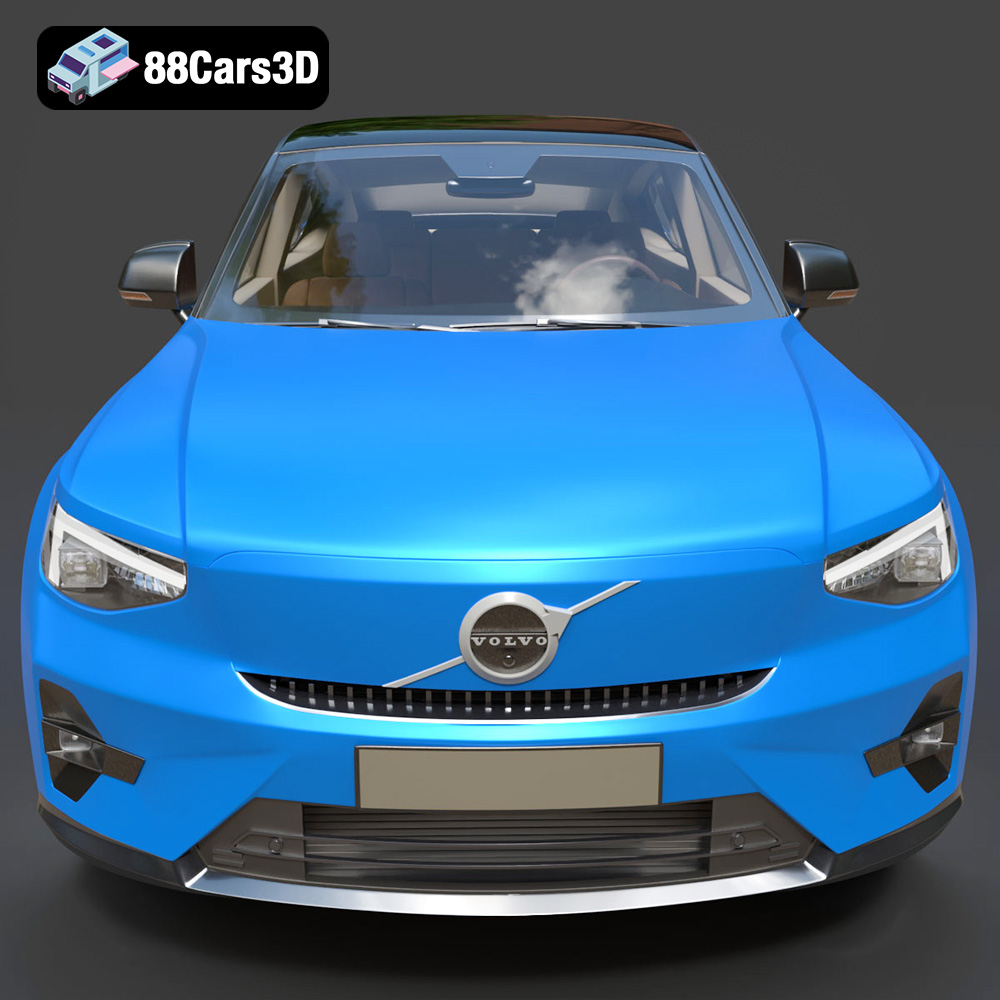
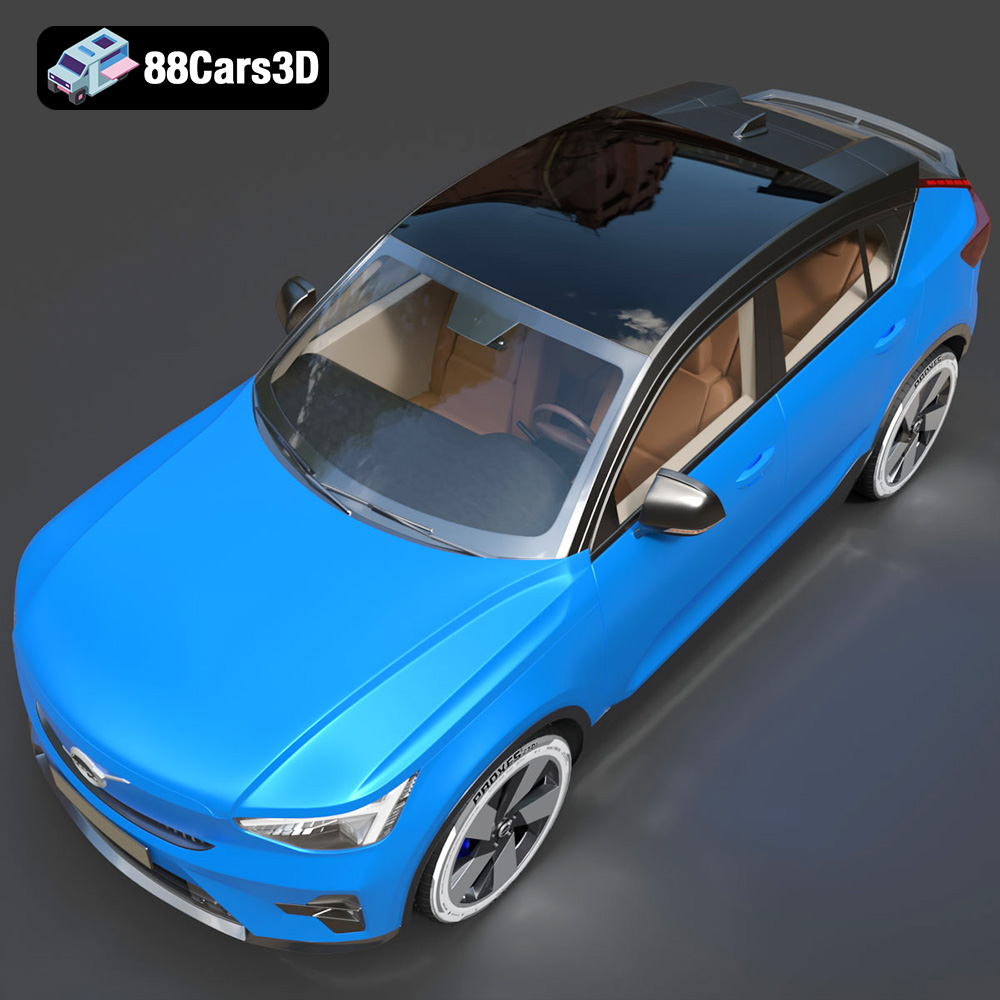
Discover the exceptional realism of the Volvo C40 Recharge 3D Model. Carefully crafted to mirror the actual vehicle, this 3D asset provides incredibly accurate proportions, sleek styling, and realistic textures ideal for any digital environment. Featuring clean, optimized geometry and an intelligently organized structure, this model ensures seamless integration into your workflow. The exterior perfectly captures the distinctive aesthetic of the modern electric crossover, while the fully modeled interior presents detailed dashboard components and seating, enhancing its suitability for close-up shots and immersive experiences. Whether you are developing cutting-edge video games, producing hyper-realistic automotive renderings, building interactive AR/VR applications, or conducting simulations, this versatile 3D model delivers outstanding performance and visual fidelity. Available in a comprehensive range of industry-standard file formats to suit any pipeline:
$19.99
.arvr
.blend
.c40
.car3dmodel
.crossover
.electriccar
.ev
.fbx
.gameasset
.glb
.max
.obj
.ply
.recharge
.rendering
.simulation
.stl
.unreal
.volvo
SUV