Get 20% OFF All Premium 3D & STL Models!

The automotive industry has always been at the forefront of design and technological innovation. In the digital realm, this spirit translates into the meticulous creation of 3D car models that are indistinguishable from their real-world counterparts. From captivating marketing campaigns and immersive virtual showrooms to the adrenaline-pumping world of video games, high-quality 3D automotive assets are the backbone of countless modern experiences. These digital replicas allow artists, designers, and developers to explore, visualize, and interact with vehicles in ways that were once impossible, pushing the boundaries of creativity and efficiency.
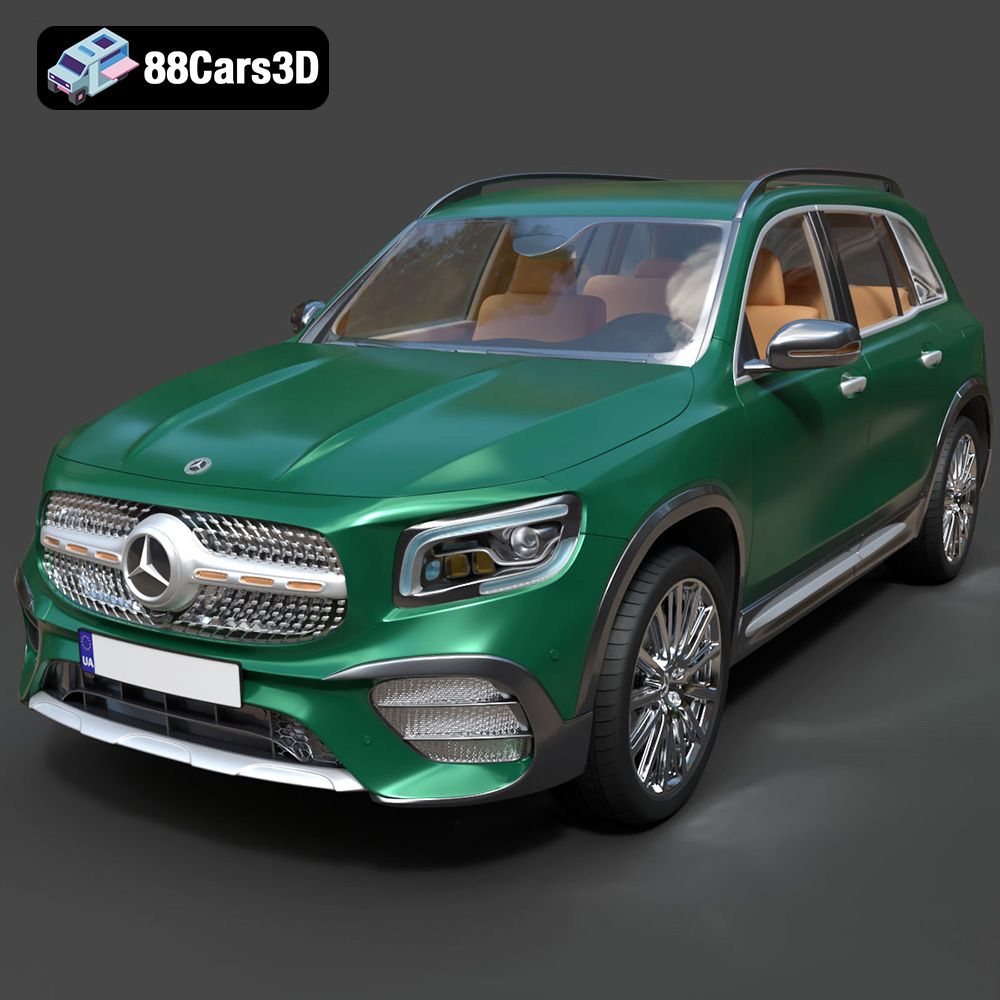
At the heart of this digital revolution lies the demand for precision, versatility, and performance. A prime example of such an asset is the Mercedes-Benz GLB-Class Mk1 AMG Line 2019 3D Model. This meticulously crafted digital twin embodies the perfect fusion of rugged versatility and premium luxury, capturing every striking curve and sophisticated detail of the compact crossover SUV. Whether you’re an automotive designer, a game developer, or an architectural visualization artist, understanding the nuances of these models and the various file formats they come in is crucial for leveraging their full potential.
The world of 3D modeling is rich with various file formats, each designed with specific purposes, compatibilities, and optimizations in mind. Choosing the correct format for your project is critical for seamless integration, efficient workflows, and optimal performance. For a comprehensive asset like the Mercedes-Benz GLB-Class Mk1 AMG Line 2019 3D Model, understanding the included file types is paramount.
The .blend format is native to Blender, one of the most powerful and widely used open-source 3D creation suites. When you download a .blend file, you’re not just getting the model; you’re often receiving the complete Blender scene. This includes not only the mesh geometry but also materials, textures, lighting setups, cameras, animation data, and even modifiers or rigging information. For artists deeply integrated into the Blender ecosystem, this offers unparalleled flexibility. You can easily modify the model, adjust materials, create custom animations, or render directly within Blender, making it ideal for comprehensive project development and highly customizable workflows.
The .fbx (Filmbox) format, developed by Autodesk, is one of the most popular and robust formats for transferring 3D data between different software applications and particularly for game engines. It supports a wide range of 3D assets, including models, animations, cameras, and lights, while maintaining scene hierarchy. Its strength lies in its ability to efficiently transfer complex data, making it a go-to for game development in engines like Unreal Engine and Unity. When using .fbx, you can expect good compatibility and reliable import into most major 3D software packages and real-time pipelines, preserving UVs, materials (though sometimes requiring re-setup in the target engine), and even skeletal animations.
The .obj (Wavefront OBJ) format is a truly universal 3D data format, renowned for its simplicity and wide compatibility. Almost every 3D modeling software can import and export .obj files. It primarily stores geometry (vertices, normals, texture coordinates) and references external material files (.mtl) for basic material properties. While it lacks support for animations, rigging, or complex scene data, its widespread adoption makes it excellent for basic model transfer between disparate software packages or as a fallback option when other formats fail. For raw mesh data, it’s an industry staple.
The .glb (GL Transmission Format Binary) is an increasingly important format, especially for the burgeoning fields of Augmented Reality (AR), Virtual Reality (VR), and web-based 3D applications. It’s the binary version of glTF, a royalty-free specification for the efficient transmission and loading of 3D scenes and models by engines and applications. .glb files encapsulate all necessary data – geometry, materials, textures, animations, and skeletal structures – into a single, compact file. This “all-in-one” packaging makes it incredibly efficient for web streaming, mobile AR/VR experiences, and interactive browser-based product configurators where file size and quick loading are critical. Its optimization for real-time rendering pipelines is a major advantage.
The .stl (Stereolithography) format is the industry standard for 3D printing. It represents 3D surfaces as a collection of unconnected triangular facets, defining only the surface geometry of a 3D object without any color, texture, or material information. While it’s a “dumb” format in terms of artistic data, its simplicity makes it universally compatible with 3D printers and slicing software. When preparing the Mercedes-Benz GLB-Class model for physical replication, converting to .stl is the crucial step. It’s essential to ensure the mesh is watertight and has no errors before exporting to .stl for a successful print.
The .ply (Polygon File Format or Stanford Triangle Format) is a versatile format for storing 3D data, particularly scan data and objects with complex geometry. Similar to .obj, it stores geometry, but it can also store a wider array of properties for vertices, faces, and edges, such as color, transparency, normals, texture coordinates, and even reliability information from 3D scanners. It’s often used in scientific, CAD, and engineering applications where precision and additional data per vertex are valuable. While less common for general artistic asset transfer, it offers a robust solution for specific data-intensive scenarios.
The .unreal format refers to assets specifically packaged or optimized for direct use within Unreal Engine. This isn’t a standalone file format in the traditional sense like .fbx, but rather a representation of a model that has undergone the necessary preparation for Unreal’s ecosystem. This often means the mesh has been correctly scaled, materials are set up with PBR shaders, collision meshes are generated, and LODs (Levels of Detail) are in place. Having a .unreal ready asset like the GLB-Class 3D model means less setup time and a faster pipeline for developers working within Unreal Engine, ensuring optimal performance and visual quality straight out of the box.
The .max format is the native file type for Autodesk 3ds Max, another industry-standard 3D modeling, animation, and rendering software. Similar to .blend, a .max file contains the complete scene data, including geometry, materials, textures, lighting, cameras, animation keyframes, and any modifiers applied. For professionals using 3ds Max for high-end rendering, architectural visualization, or complex animation sequences, having the model in its native .max format offers maximum editability and integration into existing 3ds Max workflows. It allows for advanced material setups, detailed scene assembly, and seamless utilization of 3ds Max’s powerful rendering capabilities.
Creating a truly high-fidelity 3D car model is a blend of artistic vision and rigorous technical execution. It requires a deep understanding of automotive design principles, meticulous attention to detail, and proficiency in 3D software to translate a physical object into a stunning digital asset. The Mercedes-Benz GLB-Class Mk1 AMG Line 2019 3D Model exemplifies this intricate process.
The foundation of any realistic 3D car model is its accurate geometry and proportions. This involves more than just “eyeballing” the car; it requires extensive reference gathering, often including blueprints, photogrammetry, and detailed measurements of the actual vehicle. Professional modelers use these references to create a faithful digital reproduction, ensuring that every curve, panel gap, and body line matches the real-world design. For the GLB-Class model, this translates to accurate frame geometry, precise chassis dimensions, and authentic placement of all exterior components, giving it the commanding stance and distinctive boxy silhouette of the actual vehicle.
While precision is key, raw detail can quickly lead to unmanageably high polygon counts, hindering performance, especially in real-time applications like games or AR/VR. This is where optimized topology comes into play. It’s the art of creating a mesh that is both visually rich and computationally efficient. The Mercedes-Benz GLB-Class Mk1 AMG Line 2019 3D Model, with its ~250,000 triangles, strikes an impeccable balance. This “game-ready” optimization ensures that while the model maintains exceptional visual realism for high-end rendering, it remains efficient enough for smooth real-time performance in demanding environments like Unreal Engine or Unity, avoiding unnecessary computational overhead.
Beyond the mesh, the surface appearance of a 3D model is crucial for realism. Physically Based Rendering (PBR) texturing is the industry standard for achieving photorealistic materials. PBR workflows simulate how light interacts with surfaces in the real world, using multiple texture maps (e.g., Albedo, Normal, Roughness, Metallic, Ambient Occlusion) to define material properties. The GLB-Class model utilizes PBR texturing to accurately represent the varied surfaces of the vehicle, from the metallic sheen of the paintwork and the reflections on the glass to the subtle texture of the tires and the intricate stitching on the interior upholstery. This ensures consistent and realistic rendering across different lighting conditions and rendering engines.
When considering a premium 3D automotive asset, the level of detail and fidelity directly impacts its utility across various professional applications. The Mercedes-Benz GLB-Class Mk1 AMG Line 2019 3D Model available on 88cars3d.com stands out due to its comprehensive and meticulous digital craftsmanship, capturing the essence of the luxury compact SUV.
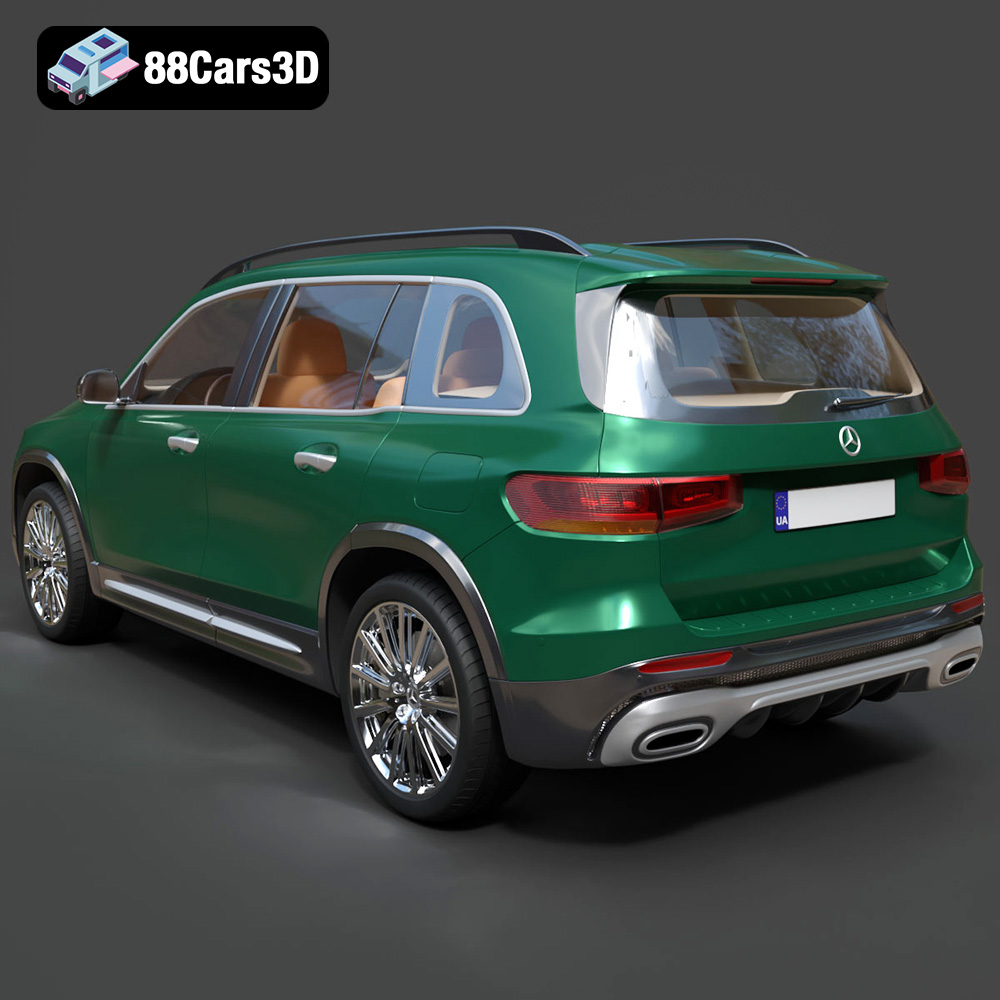
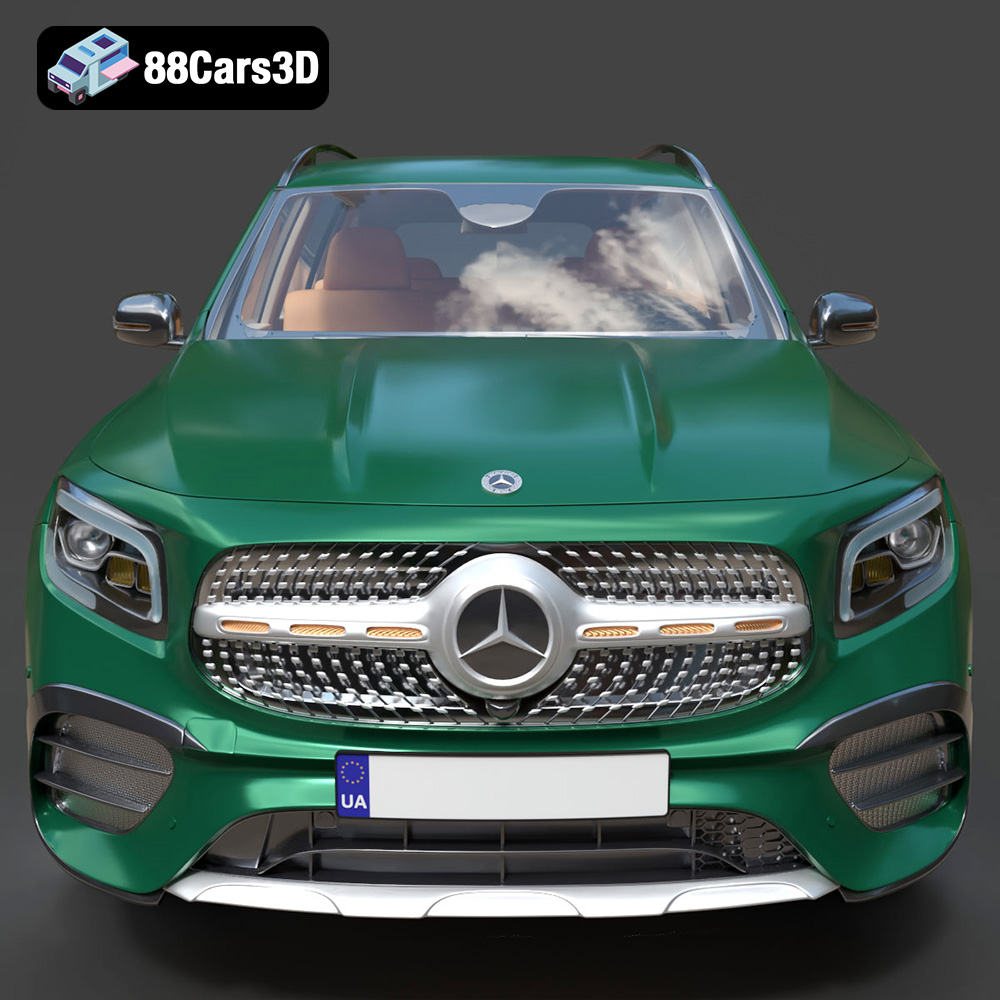
The exterior of the GLB-Class model is a testament to precision modeling. It captures the authentic AMG Line styling cues that distinguish this variant, including the signature diamond radiator grille, sporty front aprons, and prominent dual exhaust system. The details extend to high-detail LED High Performance headlamps and distinctive taillight clusters, which are accurately modeled to reflect their real-world counterparts. The model also features authentic AMG 5-twin-spoke light-alloy wheels and performance tires, complete with realistic tread patterns. Even the sport-tuned suspension detailing and undercarriage components are present, contributing to a truly comprehensive and accurate digital representation.
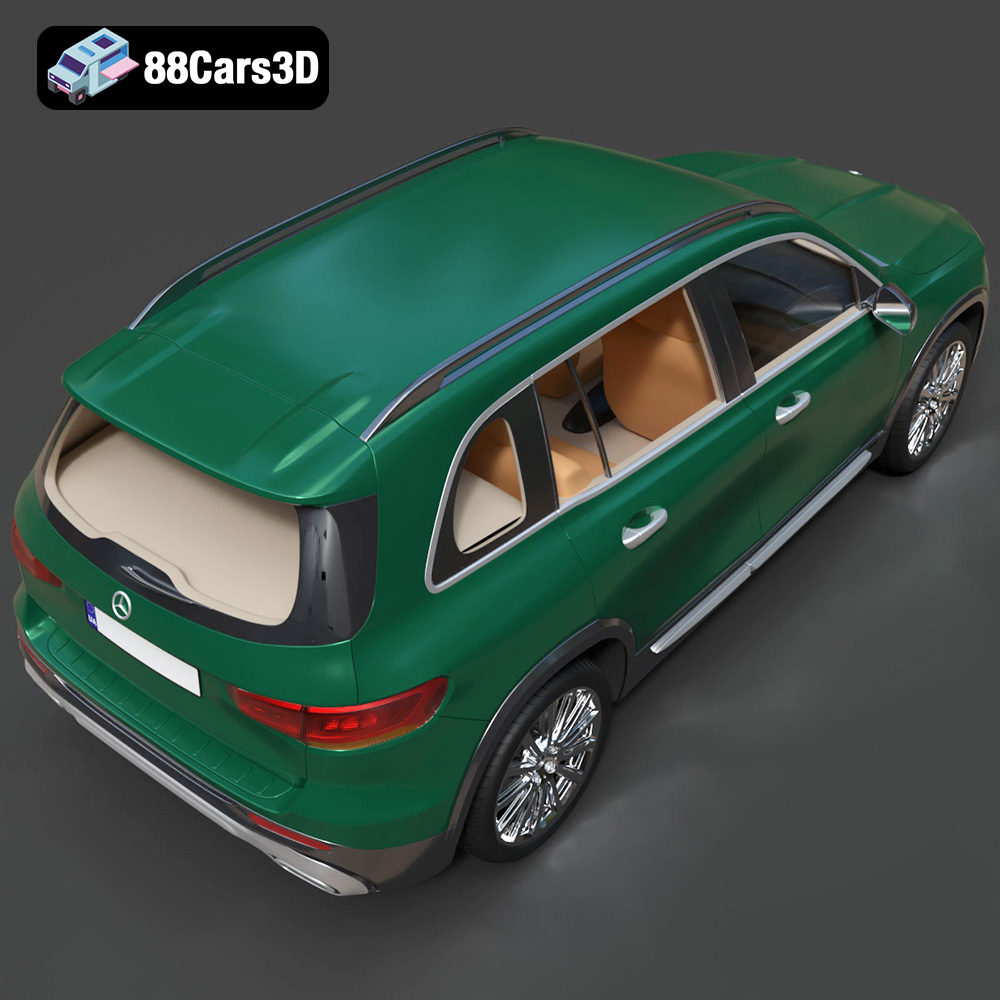
A truly high-quality 3D car model doesn’t stop at the exterior. The GLB-Class model offers a fully realized and immersive interior. It features detailed sport seating with intricate stitching and contouring, accurately reproducing the luxurious cabin environment. The Nappa leather multifunction sports steering wheel is meticulously modeled with precise switchgear, and the MBUX dual-screen digital instrument cluster and infotainment system are faithfully recreated. Even the central console with its touch controls, air vents, and pedals are detailed. This level of interior fidelity is crucial for applications requiring first-person POV in gaming, virtual reality simulations, or realistic virtual showrooms, allowing users to experience the luxury firsthand.
Beyond static representation, the technical setup of a 3D car model is vital for dynamic applications. This Mercedes-Benz GLB-Class model is designed with animation in mind. It features separate wheels, suspension, and steering components, each with proper pivot setups. This allows for seamless and realistic animation of steering, wheel rotation, and suspension travel, critical for racing games, simulators, and promotional animations. Furthermore, its real-world scale accuracy, based on the actual vehicle chassis, ensures that it integrates perfectly into architectural scenes or virtual environments without requiring scale adjustments, offering significant time savings and consistency in professional workflows.
High-quality 3D car models are versatile assets that empower professionals across diverse industries. The Mercedes-Benz GLB-Class Mk1 AMG Line 2019 3D Model, with its multiple file formats and optimized topology, is designed to seamlessly integrate into various professional pipelines, from game development to high-end visualization.
For game developers, performance is king. The GLB-Class model’s “game-ready” optimization, with approximately 250,000 triangles, hits a sweet spot, balancing visual fidelity with real-time efficiency. In engines like Unreal Engine, assets like this streamline the development process. Developers can import the provided `.fbx` or the specially optimized `.unreal` file, set up collision meshes, configure physics, and integrate it into a virtual world with minimal fuss. Its PBR textures ensure it looks stunning under dynamic lighting conditions, while the proper pivot setups for wheels and steering facilitate realistic vehicle dynamics, making it ideal for open-world games, racing titles, and vehicle simulators.
Architectural visualization (ArchViz) and product rendering demand photorealism, and high-quality car models are essential for breathing life into digital scenes. Using the `.max` file in 3ds Max, artists can leverage the software’s powerful rendering capabilities with engines like V-Ray or Corona. The GLB-Class model, with its accurate proportions and detailed features, can be seamlessly integrated into a luxury garage, a modern cityscape, or a showroom scene. Artists can adjust materials, fine-tune lighting to create dramatic reflections and shadows, and render stunning imagery for marketing campaigns, lifestyle scenes, or client presentations, showcasing the car in its ideal environment.
The rise of AR, VR, and interactive web experiences has created a new demand for optimized 3D assets. The GLB-Class model’s inclusion of `.blend` and `.glb` formats caters perfectly to this. For AR/VR experiences, the `.glb` format is a game-changer due to its compact size and single-file structure, making it ideal for mobile AR apps or immersive virtual showrooms. In Blender, developers can further optimize the `.blend` file for specific AR/VR platforms, or export to `.glb` for web-based configurators where users can rotate, inspect, and even customize the car in real-time directly in their browser, creating engaging and interactive product showcases.
The utility of a detailed 3D car model extends beyond digital screens, offering tangible outputs and endless creative possibilities. The Mercedes-Benz GLB-Class Mk1 AMG Line 2019 3D Model provides options for both physical replication and extensive digital customization.
One of the most fascinating applications of a highly detailed 3D model is its conversion into a physical object through 3D printing. The inclusion of the `.stl` format in the GLB-Class model makes it readily convertible for display-scale hobbyists or for creating prototypes. While the digital model is high-resolution, specific 3D print settings are recommended to achieve the best results. For instance, resin printing is often preferred for fine details like those on the AMG Line styling, and supports are required for intricate parts such as the exhaust system, mirrors, and steering wheel. After printing, post-processing with sanding, primer, and authentic factory colors with metallic finishes can transform the plastic replica into a stunning, miniature version of the luxury SUV, bringing the digital design into the physical world.
The flexibility of a well-structured 3D model allows for extensive digital customization, enabling artists and designers to adapt the vehicle to suit specific project needs or artistic visions. With the Mercedes-Benz GLB-Class Mk1 AMG Line 2019 3D Model, you have the freedom to:
These customization options provide unparalleled creative control, making the model a versatile tool for any project requiring a bespoke automotive presence.
In the rapidly evolving landscape of 3D visualization and development, high-quality 3D car models like the Mercedes-Benz GLB-Class Mk1 AMG Line 2019 3D Model are indispensable assets. They bridge the gap between imagination and reality, offering unparalleled detail, technical precision, and cross-platform compatibility. Whether for cutting-edge automotive rendering, immersive game development, interactive AR/VR experiences, or even physical 3D printing, these models provide the foundation for breathtaking digital content.
The ability to access such meticulously crafted models in various optimized formats—from editable Blender and 3ds Max scenes to game-ready FBX and Unreal files, and universal OBJ, GLB, STL, and PLY—ensures that professionals have the right tools for any challenge. Investing in premium 3D car models not only enhances the visual quality of your projects but also streamlines workflows, saving valuable time and resources. As digital content continues to dominate how we interact with products and environments, the demand for such versatile and realistic 3D assets will only grow. For a wide selection of premium 3D car models to elevate your next project, explore the extensive collection at 88cars3d.com.
Experience the perfect blend of rugged versatility and premium luxury with our meticulous 3D model of the Mercedes-Benz GLB-Class (Mk1) AMG Line 2019. This compact crossover SUV stands out with its distinctive boxy silhouette, commanding stance, and aggressive AMG Line styling cues, including the signature diamond radiator grille, sporty front aprons, and prominent dual exhaust system. Designed to encapsulate the modern elegance and muscular heritage of the Mercedes-Benz brand, this digital replica captures every striking curve and sophisticated detail. This high-fidelity, game-ready 3D model is meticulously crafted with optimized topology (~250,000 triangles), striking an impeccable balance between exceptional visual realism and efficient real-time performance. Designed for maximum versatility, the model features PBR texturing and precise structural proportions, making it a premium asset for game engines, high-end rendering, and immersive interactive media. Perfect for urban racing games, luxury vehicle configurators, architectural visualizations, and mobile AR experiences.
$19.99
.2019
.blend
.fbx
.glb
.luxury suv
.max
.obj
.ply
.rendering
.stl
.unreal
amg-line
car-3d-model
compact-suv
game asset
game-ready
glb-class
low-poly
mercedes-benz
optimized
VR/AR