Get 20% OFF All Premium 3D & STL Models!

In the rapidly evolving landscape of digital content creation, the demand for exceptionally realistic and versatile 3D models has never been higher. From blockbuster game titles and cinematic masterpieces to groundbreaking architectural visualizations and immersive AR/VR experiences, the quality of your foundational assets dictates the success of your entire project. Automotive design, in particular, stands at the forefront of this digital revolution, requiring models that capture every curve, reflection, and material nuance with breathtaking accuracy.
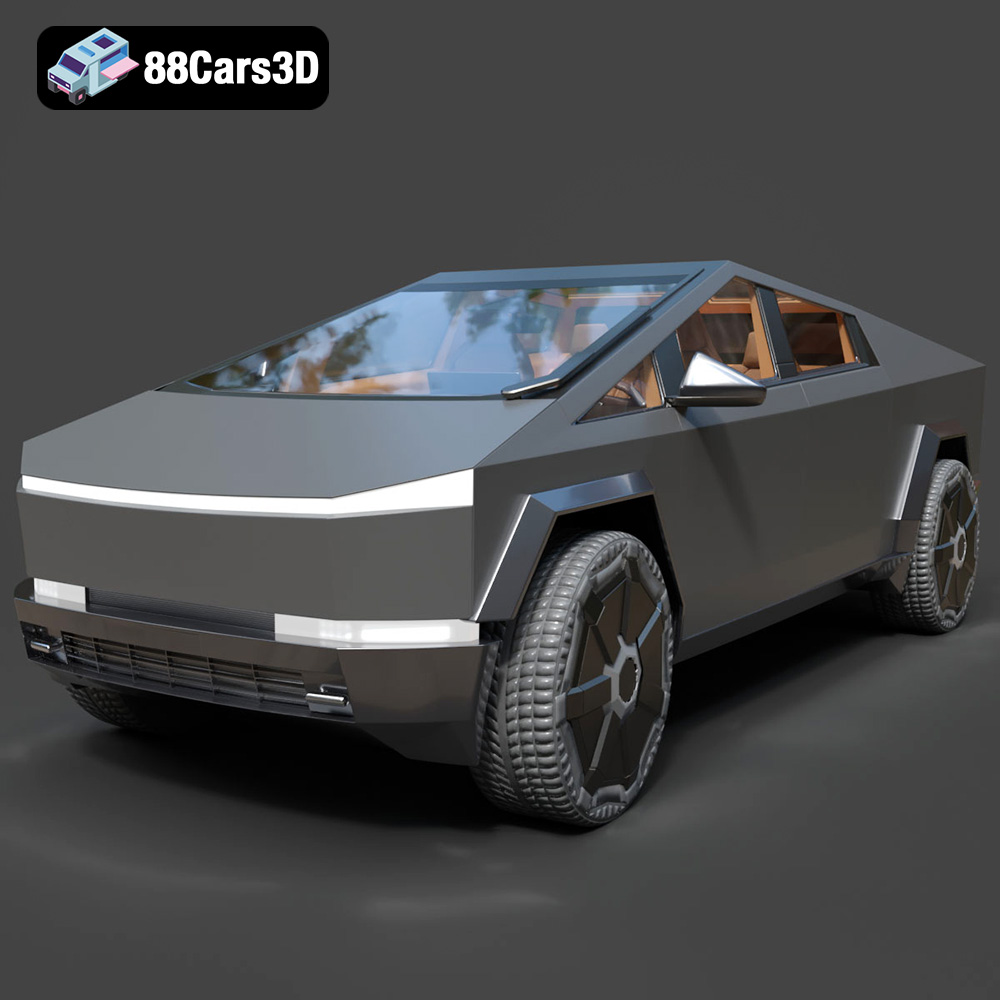
Few vehicles exemplify this futuristic trend quite like the Tesla Cybertruck. Its distinctive angular exoskeleton and advanced aesthetic present a unique challenge and opportunity for 3D artists. Replicating such an iconic design in a digital environment demands precision, clean geometry, and meticulous attention to detail. This is precisely where a professional-grade asset like the Tesla Cybertruck 2024 3D Model, available at 88cars3d.com, becomes an invaluable tool. It’s not just a model; it’s a meticulously crafted digital twin, ready to integrate seamlessly into a multitude of professional workflows, ensuring a striking presence in any digital environment you envision.
The choice of file format for a 3D model is far more than a technicality; it’s a critical decision that impacts compatibility, editability, performance, and ultimately, your project’s success. A truly versatile asset, such as the Tesla Cybertruck 2024 3D Model, provides a comprehensive suite of formats, empowering artists and developers across diverse platforms. Let’s delve into the technical specifics of each format included with this exceptional model, understanding when and why to leverage each one.
The .blend file is Blender’s native format, encapsulating an entire scene, including mesh data, materials, textures, lighting setups, cameras, animations, and even physics simulations. For artists deeply integrated into the Blender ecosystem, this format offers unparalleled editability. You can dissect every node in the material shader, tweak geometry with modifiers, adjust lighting scenarios, and completely reconfigure the scene as needed. It’s ideal for in-depth customization, rendering in Cycles or Eevee, and leveraging Blender’s robust suite of modeling and animation tools. The inclusion of a fully editable .blend file for the Tesla Cybertruck ensures that Blender users can hit the ground running with an optimized, ready-to-render asset.
.fbx (Filmbox) is arguably the most widely adopted proprietary file format for 3D data exchange, especially within game development and animation pipelines. Developed by Autodesk, it’s designed to carry a comprehensive array of 3D data, including geometry (meshes), materials (with basic properties and texture references), animations (skeletal and vertex), cameras, and light sources. Its strength lies in its ability to maintain scene hierarchy and object transformations accurately across different software packages like Maya, 3ds Max, Unity, and Unreal Engine. For real-time applications, .fbx is often the go-to choice due to its efficiency and robust support for game engine specific features, making the Cybertruck .fbx perfect for immediate integration into interactive experiences.
The .obj (Wavefront Object) format is a venerable and universally supported text-based format primarily focused on storing geometry data – vertices, normals, UV coordinates, and faces. While it doesn’t embed materials directly, it references external .mtl (Material Template Library) files that define basic material properties and texture maps. Its simplicity makes it highly compatible with virtually all 3D software. For static meshes, archival purposes, or scenarios where you need a clean geometric base for re-texturing or sculpting, the .obj version of the Tesla Cybertruck 2024 3D Model offers a reliable, uncompromised mesh.
.glb is the binary version of the GL Transmission Format (glTF), an open-standard, royalty-free format designed for the efficient transmission and loading of 3D scenes and models by applications. What makes .glb particularly powerful is its “single-file” nature: geometry, materials, textures, and even animations are all packed into one compact file. This optimization makes it ideal for web-based 3D viewers, Augmented Reality (AR), Virtual Reality (VR), and other real-time browser-based displays. For showcasing the Tesla Cybertruck in an online configurator or an AR app, the .glb format delivers excellent performance and visual quality.
.stl (Stereolithography) is the de facto standard for 3D printing. This format represents the surface geometry of a 3D object as a collection of unconnected triangular facets. It is remarkably simple and doesn’t store color, texture, or material information – only the shape itself. While not suitable for rendering, the .stl version of the Cybertruck model is essential for anyone looking to bring the digital design into the physical world through 3D printing, whether for prototyping, scale models, or educational purposes. Precision and manifold geometry are crucial here, ensuring a successful print.
The .ply (Polygon File Format) is another widely supported format, often used for storing data from 3D scanners or for CAD/CAM applications. It’s more flexible than .obj and can store a variety of properties including color, transparency, normals, texture coordinates, and even reliability information for each vertex. For detailed analysis, scientific visualization, or working with point cloud data, the .ply format offers a robust and precise representation of the Cybertruck’s complex surfaces.
While not a standalone file extension in the traditional sense, “.unreal” typically refers to an asset that has been meticulously prepared and configured specifically for Unreal Engine. This means the underlying .fbx has been imported, materials have been set up as Unreal material instances (often PBR-compliant), textures are correctly assigned, LODs (Levels of Detail) might be generated, and collision meshes are likely in place. This pre-configuration significantly accelerates development, allowing Unreal Engine artists and developers to drag-and-drop the Tesla Cybertruck 2024 3D Model directly into their projects, knowing it’s optimized and ready for real-time environments.
Similar to .blend for Blender users, the .max file is 3ds Max’s native project format. It stores the entire scene, including geometry, modifiers, intricate material setups (like V-Ray or Corona materials), lighting, cameras, animations, and render settings. For professionals operating within the Autodesk 3ds Max ecosystem, this format provides full editability and control over every aspect of the scene. It’s perfect for high-fidelity architectural visualizations, complex animations, and advanced rendering workflows, allowing for limitless creative modifications to the Tesla Cybertruck.
By offering this comprehensive suite of formats, the Tesla Cybertruck 2024 3D Model from 88cars3d.com demonstrates a profound understanding of industry needs, ensuring maximum flexibility and utility for any digital artist or developer.
Automotive rendering is a specialized discipline that marries technical precision with artistic vision. It’s about more than just accurate models; it’s about crafting an emotional response, whether for advertising, product launches, or conceptual showcases. The Tesla Cybertruck, with its unique material properties and minimalist design, presents an exciting challenge for rendering artists.
The journey to a photorealistic render begins with the scene setup. In software like 3ds Max and Blender, artists leverage powerful rendering engines to simulate real-world physics of light. For the Cybertruck, this means carefully considering its brushed stainless steel exterior, reflective glass, and unique tire textures. Using the provided .max or .blend files, artists can immediately access the model’s clean geometry and pre-configured materials.
High-quality 3D car models are the bedrock for architectural visualization projects, placing the vehicle in realistic urban or rural settings, enhancing the overall narrative of a design.
True photorealism goes beyond basic material application. It involves a deep understanding of light transport and how surfaces interact with their environment.
These techniques transform a raw 3D model into a captivating visual narrative, showcasing the Tesla Cybertruck 2024 3D Model as a true masterpiece of automotive design.
The interactive nature of game development imposes unique demands on 3D assets. Performance is paramount, and every polygon, texture, and material must be optimized for real-time rendering. The Tesla Cybertruck 2024 3D Model, with its professional-grade polygon edge flow and included game-engine-ready formats, is designed to meet these challenges head-on.
While high-fidelity models are essential for visual quality, raw polygon counts can cripple game performance. Optimization is key.
The .fbx and .unreal file formats included with the Tesla Cybertruck 2024 3D Model streamline integration into the leading game engines, Unreal Engine and Unity.
Leveraging high-quality 3D car models like this significantly reduces development cycles, allowing game studios to produce visually stunning and performant interactive experiences.
The versatility of a premium 3D model extends far beyond traditional rendering and game engines. The Tesla Cybertruck 2024 3D Model is equipped for the cutting-edge worlds of Augmented Reality (AR), Virtual Reality (VR), and even physical prototyping through 3D printing.
AR and VR are transforming how we interact with digital content, offering immersive ways to experience products and designs. The Cybertruck’s futuristic appeal makes it an ideal candidate for these platforms.
While digital experiences are powerful, sometimes a tangible representation is required. 3D printing offers a bridge from the digital to the physical, and the included .stl and .ply formats facilitate this process.
The availability of these diverse formats ensures that the Tesla Cybertruck 2024 3D Model is truly a comprehensive solution for any modern digital or physical project.
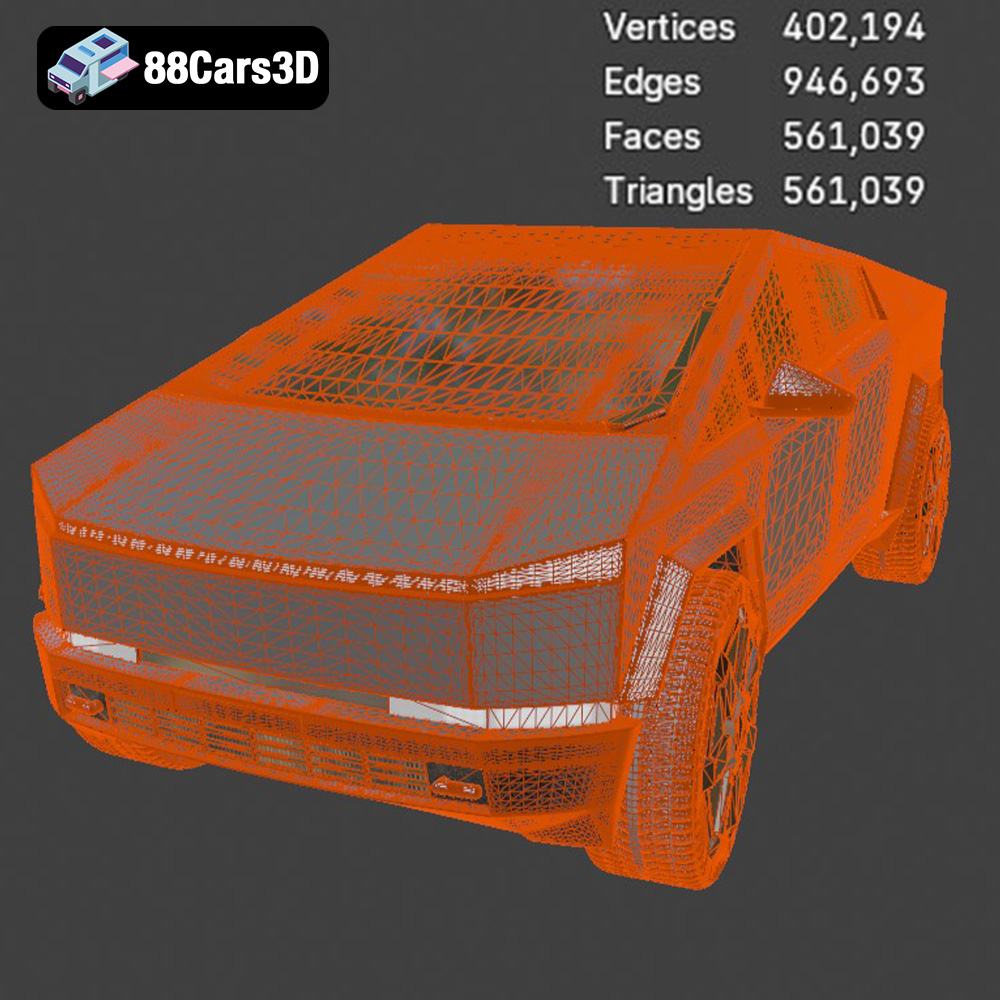
At the core of any exceptional 3D model lies its geometry. It’s the invisible framework that dictates everything from render quality to animation potential and overall performance. The description of the Tesla Cybertruck 2024 3D Model emphasizes “clean geometry” and “professional-grade polygon edge flow,” which are hallmarks of a superior asset.
Topology refers to the arrangement of polygons (usually quads for organic shapes or triangular for hard surfaces) on a 3D model’s surface. Edge flow describes how these polygons connect and follow the contours of the object. For the Cybertruck’s angular yet sophisticated design, this means:
Crafting such clean geometry, especially for complex automotive shapes, requires considerable skill and experience, highlighting the value of models found on 88cars3d.com.
Beyond geometry, materials and textures breathe life into a 3D model. The Tesla Cybertruck 2024 3D Model includes “realistic materials and textures,” implying a Physically Based Rendering (PBR) workflow.
The combination of pristine geometry and meticulously crafted PBR materials ensures that the Tesla Cybertruck 2024 3D Model delivers an authentic and striking appearance across all professional applications.
In today’s fast-paced digital production environment, time is a precious commodity. Creating complex 3D car models from scratch is an incredibly labor-intensive process, demanding hundreds of hours from skilled artists. This is where the strategic integration of professional, pre-made 3D assets becomes not just a convenience, but a necessity for efficiency and quality.
Investing in a premium 3D model like the Tesla Cybertruck 2024 3D Model offers significant advantages:
88cars3d.com stands as a premier destination for high-quality 3D car models, and the Tesla Cybertruck 2024 3D Model is a shining example of their commitment to excellence. The platform curates assets that are not only visually stunning but also technically robust, designed to integrate seamlessly into professional pipelines.
Leveraging assets from 88cars3d.com means equipping your team with the tools to deliver exceptional results faster and more efficiently, pushing the boundaries of what’s possible in automotive visualization and interactive experiences.
The digital realm continues to expand its influence across industries, and the demand for photorealistic, high-performance 3D assets is at an all-time high. The Tesla Cybertruck 2024 3D Model exemplifies the pinnacle of modern 3D asset creation, offering a meticulously detailed and versatile representation of one of the automotive world’s most iconic and futuristic vehicles.
From its clean geometry and professional-grade polygon edge flow to its realistic PBR materials and comprehensive suite of file formats – including .blend, .fbx, .obj, .glb, .stl, .ply, .unreal, and .max – this model is engineered for seamless integration into virtually any professional workflow. Whether you’re aiming for breathtaking automotive renders in 3ds Max, developing immersive game assets for Unreal Engine, creating compelling AR/VR experiences, or even fabricating physical prototypes through 3D printing, the Cybertruck model provides the technical foundation you need.
The strategic use of such high-quality 3D car models not only elevates the visual fidelity of your projects but also significantly streamlines your production pipeline, saving invaluable time and resources. For artists, developers, and designers seeking to push the boundaries of digital realism and efficiency, the Tesla Cybertruck 2024 3D Model is an indispensable asset.
Discover this exceptional model and a wide range of other professional-grade 3D car models by visiting 88cars3d.com today. Unleash the full potential of your creative visions with assets built for the future.
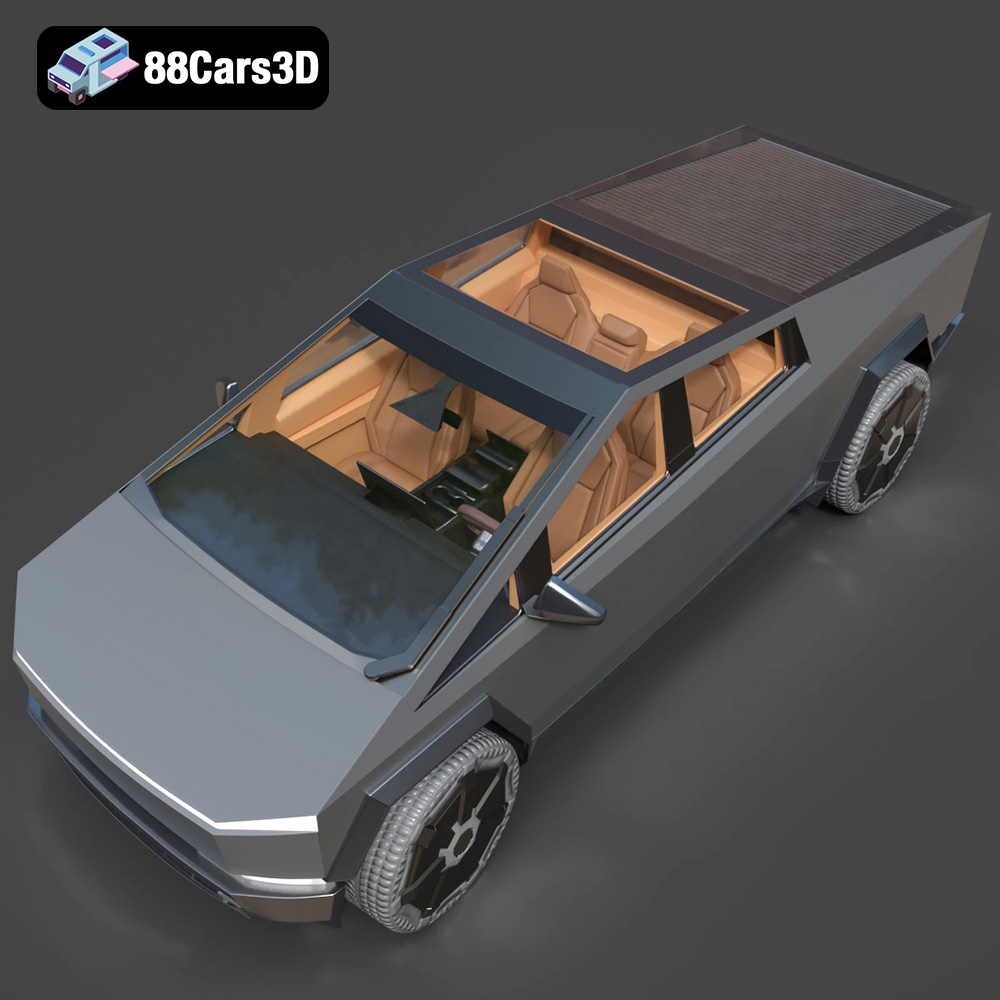
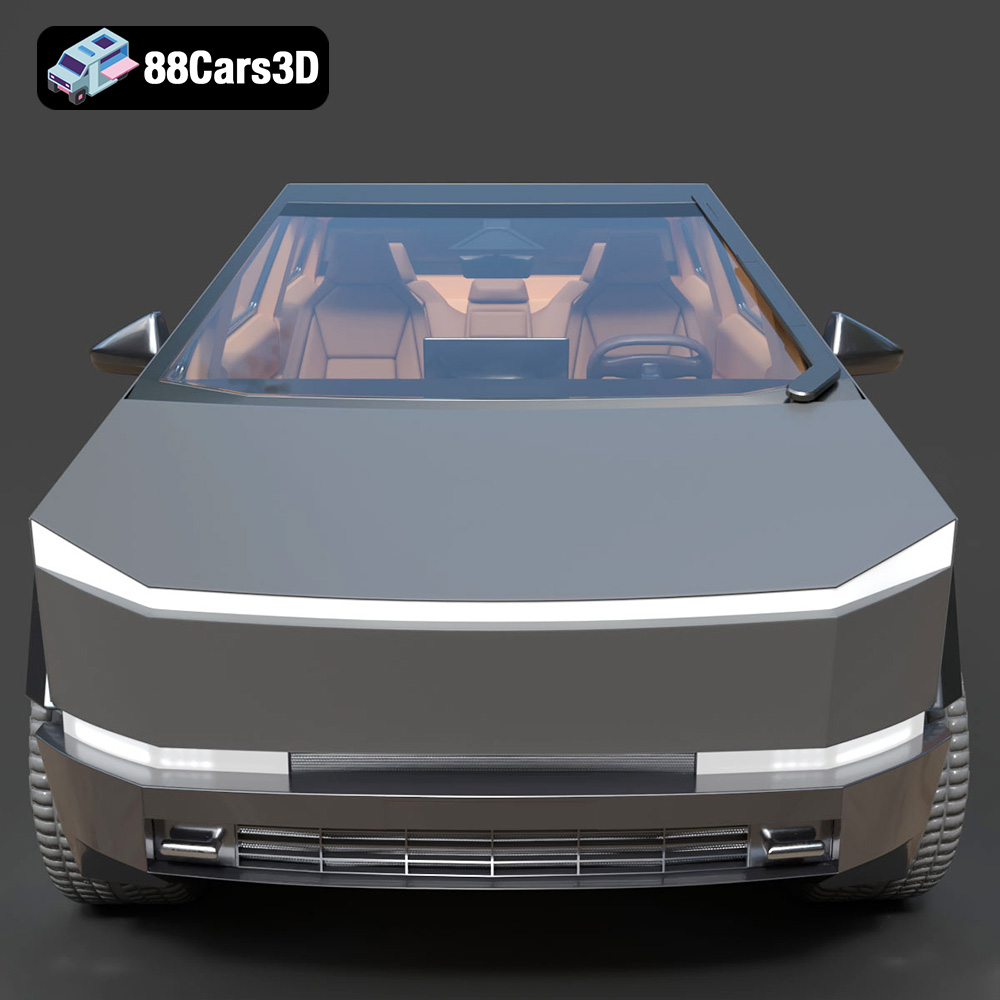
Experience the futuristic design of the Tesla Cybertruck 2024 with this exceptionally realistic 3D model. Built to precise proportions, this asset captures the distinctive angular exoskeleton and advanced aesthetic of the iconic electric pickup truck, ensuring a striking presence in any digital environment. This model is crafted with clean geometry and professional-grade polygon edge flow, making it an excellent choice for seamless integration. It features realistic materials and textures, delivering an authentic look across various lighting conditions. Perfectly suited for a multitude of professional applications, this model excels in game development, architectural visualization, cinematic rendering, and immersive AR/VR experiences. Whether creating dynamic simulation environments or detailed automotive showcases, this versatile asset meets standard industry requirements.
$19.99
.arvr
.blend
.car3dmodel
.cybertruck
.electricvehicle
.fbx
.gameasset
.glb
.max
.obj
.pickup
.ply
.rendering
.simulation
.stl
.tesla
.truck
.unreal