Get 20% OFF All Premium 3D & STL Models!

In the rapidly evolving landscape of digital content creation, the demand for exceptionally detailed and versatile 3D assets has never been higher. From breathtaking cinematic automotive rendering to immersive game environments and cutting-edge AR/VR experiences, the quality of a 3D model directly impacts the final output. Professionals across industries are constantly seeking assets that not only look stunning but also integrate seamlessly into complex production pipelines. This quest for perfection brings us to the forefront of high-fidelity digital craftsmanship, exemplified by assets like the BMW X7 G07 2019 3D Model.
Imagine being able to place a meticulously recreated luxury SUV into any digital scene, knowing that every curve, every reflection, and every material detail has been crafted to exacting standards. This isn’t just about aesthetics; it’s about efficiency, accuracy, and the ability to tell compelling stories or develop robust simulations. The BMW X7 G07 2019 3D model is a prime example of a professional-grade asset, offering unparalleled realism and a flexible architecture suitable for a myriad of applications, from game development to advanced architectural visualization.
The utility of a 3D model is significantly amplified by the range and quality of its supported file formats. Each format serves a distinct purpose, optimized for specific software, engines, or end-use cases. For professionals working with high-quality 3D car models, understanding these distinctions is critical for efficient workflow and successful project delivery. The BMW X7 G07 2019 3D model, for instance, provides a comprehensive suite of formats, ensuring its adaptability across virtually any digital project.
The .blend file format is native to Blender, a powerful open-source 3D creation suite. When a model is provided in .blend, it typically includes the fully editable scene with materials, textures, lighting setups, and even camera configurations. This format is ideal for artists who primarily work in Blender, offering complete creative control for modifications, custom animations, or integrating the model into existing Blender projects with minimal effort. It allows for deep customization of the BMW X7 G07 2019 model’s shader networks, geometry, and scene properties.
.fbx (Filmbox) is arguably one of the most widely adopted proprietary file formats for 3D content interchange. Developed by Autodesk, it’s a robust format that can store model data, materials, textures, animations, and even rigging information. Its strength lies in its excellent compatibility with game engines like Unreal Engine and Unity, as well as most major DCC (Digital Content Creation) software. For the BMW X7 G07 2019 3D model, the .fbx variant is essential for real-time pipelines, ensuring that the model’s structure and materials translate cleanly into interactive environments.
The .obj (Wavefront OBJ) format is a universal, open-standard 3D geometry definition file. It stores mesh data, including vertices, normals, UV coordinates, and groups, often accompanied by a .mtl (material library) file for basic material properties. While it doesn’t support animation or advanced rigging, its simplicity and wide support make it an excellent choice for cross-software compatibility. If you need to import the BMW X7 G07 2019 into an obscure 3D application or convert it to another format, .obj is a reliable intermediary.
.glb (GL Transmission Format Binary) is the binary version of glTF, a royalty-free specification for the efficient transmission and loading of 3D scenes and models by applications. It packages textures and other assets directly into a single file, making it incredibly optimized for AR, VR, and web-based displays. The .glb version of the BMW X7 G07 2019 3D model ensures fast loading and seamless integration into interactive web viewers, augmented reality apps, or virtual reality experiences without needing external asset files.
.stl (Stereolithography) is the de facto standard file format for 3D printing. It represents a 3D model as a collection of triangles, defining only the surface geometry without color or texture information. For physical prototyping or creating miniature replicas of the BMW X7 G07 2019, the .stl format is indispensable. It requires the model to be watertight (a closed manifold mesh) to print correctly, a characteristic often found in high-quality assets.
.ply (Polygon File Format) is another format for storing 3D data, particularly useful for scanned data and detailed meshes. It can store a wider range of properties than .obj, including color, transparency, and often normal vectors per vertex or face. For analytical purposes, scientific visualization, or specific CAD applications that demand high precision and attribute data, the .ply version of the BMW X7 G07 2019 can be exceptionally valuable.
The .unreal format signifies an asset specifically pre-configured for direct use within Unreal Engine. This often means optimized meshes, correctly set up materials with PBR (Physically Based Rendering) parameters, LODs (Levels of Detail), and sometimes even basic collision meshes or blueprint setups. For game developers or real-time visualization artists using Unreal Engine, the .unreal file for the BMW X7 G07 2019 3D model dramatically reduces setup time, allowing for immediate integration and iteration.
.max is the native file format for Autodesk 3ds Max, a leading software for 3D modeling, animation, rendering, and visualization. A .max file typically contains the complete scene, including geometry, materials, lighting, cameras, animation data, and renderer-specific settings. Professionals using 3ds Max for high-end automotive rendering or detailed animations will find the .max file of the BMW X7 G07 2019 invaluable for its full editability and compatibility with advanced rendering engines like V-Ray or Corona Renderer.
Automotive rendering is a specialized field that demands an exquisite balance of technical precision and artistic flair. High-fidelity 3D car models are the bedrock upon which stunning visualizations are built, enabling designers and marketers to showcase vehicles long before physical prototypes exist. The BMW X7 G07 2019 3D model, with its “meticulously crafted digital replica” status, provides the perfect foundation for such endeavors.
The pursuit of photorealism in automotive rendering hinges significantly on the quality of materials and texturing. Modern rendering pipelines utilize Physically Based Rendering (PBR) workflows, where materials react to light in a physically accurate way. This means defining properties like albedo (base color), metallic, roughness, normal maps for fine surface details, and ambient occlusion. The “realistic materials” promised by this model imply that these PBR textures are already in place, ensuring that reflections, gloss, and diffuse properties on surfaces like paint, chrome, glass, and tires behave authentically under any lighting condition. Renderers like V-Ray, Corona, and Cycles can take full advantage of these properties, bringing the BMW X7 G07 2019 to life with breathtaking accuracy.
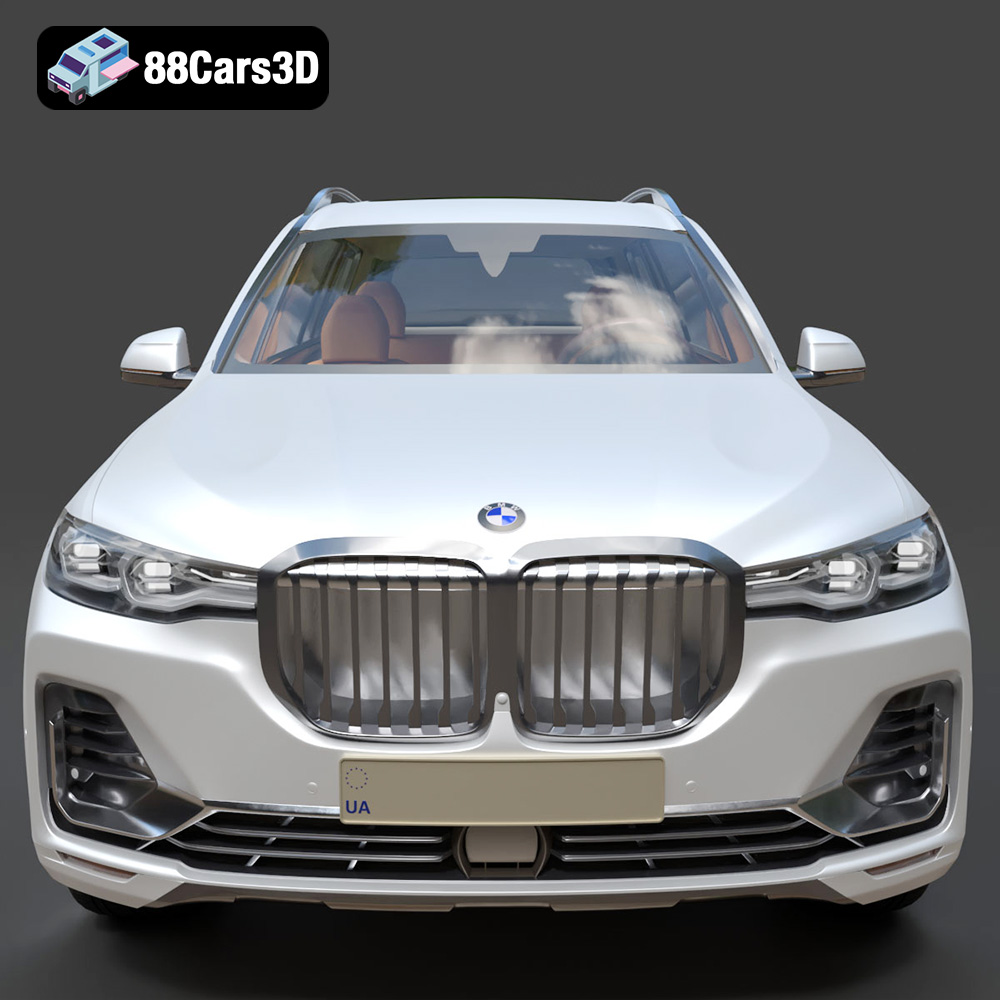
Effective lighting is paramount to showcasing the intricate design of a vehicle. Artists often employ a combination of techniques: using High Dynamic Range Images (HDRIs) for realistic environment lighting and reflections, coupled with targeted area lights or studio lights to sculpt the car’s form and highlight specific features. For the BMW X7 G07 2019, understanding how light interacts with its curves and sharp lines, from the iconic kidney grille to the sophisticated headlight clusters, is crucial. A skilled renderer can use these lighting setups to emphasize the luxury and commanding presence of the SUV, creating images that are indistinguishable from real-world photography.
Game development presents a unique set of challenges for 3D assets, balancing visual fidelity with performance constraints. In the world of open-world racing games, simulations, or even cinematic cutscenes, high-quality 3D car models are indispensable. The BMW X7 G07 2019 3D model, categorized as “game-engine ready,” is tailored for these demanding environments, offering “optimized mesh topology” crucial for smooth gameplay.
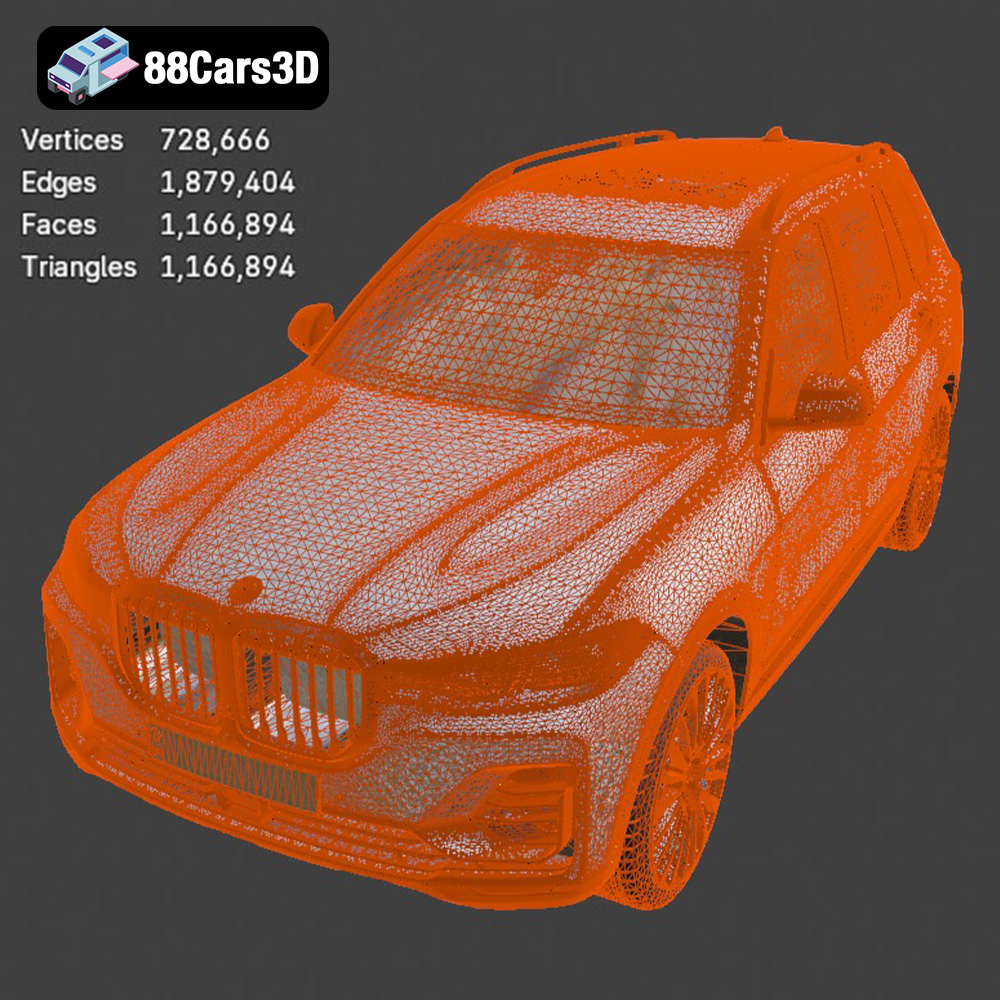
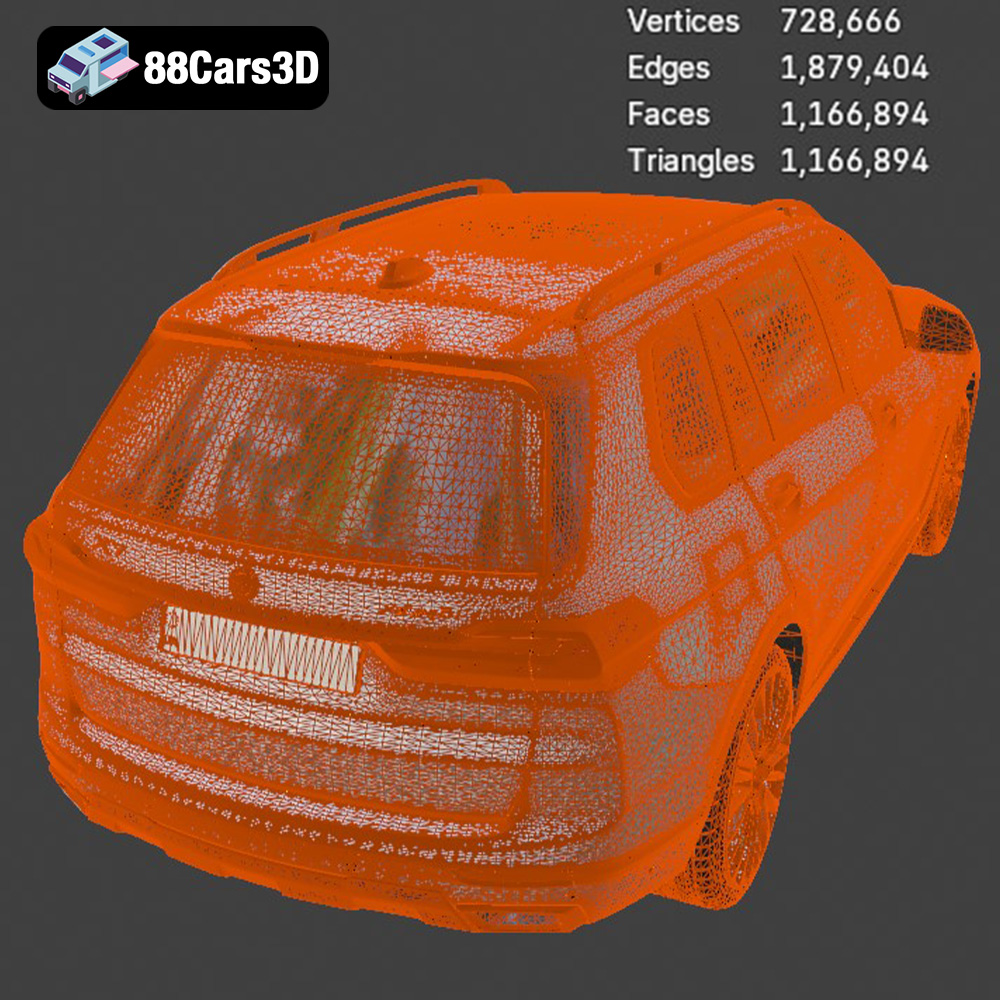
Unlike static renders, real-time applications require models that are efficient to process. This often involves managing poly counts – the number of polygons that make up the mesh. While the exact poly count isn’t specified, “optimized mesh topology” suggests a careful balance between detail and performance. Game developers frequently implement Levels of Detail (LODs), where multiple versions of a model exist at varying poly counts. As the vehicle moves further from the camera, a lower-poly LOD is swapped in, conserving processing power without a noticeable drop in visual quality. For a complex SUV like the BMW X7 G07 2019, this optimization is critical for maintaining high frame rates in a dynamic game environment.
Both Unreal Engine and Unity are industry-standard platforms for game development and real-time visualization. The inclusion of .fbx and .unreal formats for the BMW X7 G07 2019 3D model streamlines integration into these engines. Using the .fbx format, developers can import the model with its materials, UVs, and potentially even animation rigs. The .unreal format goes a step further, often providing pre-configured assets ready to be dragged and dropped into a scene with correct PBR materials and potentially collision meshes already set up. This saves significant time and effort, allowing artists and developers to focus on gameplay mechanics or scene composition rather than asset preparation.
The utility of premium 3D models extends far beyond conventional rendering and game development. Emerging technologies like Augmented Reality (AR), Virtual Reality (VR), and 3D printing are creating new avenues for interaction and physical prototyping. The versatility of the BMW X7 G07 2019 3D model positions it perfectly for these innovative applications.
AR and VR are transforming how we interact with digital content, offering immersive experiences that blur the lines between virtual and physical. High-quality 3D car models are central to these applications, allowing users to explore vehicles in a virtual showroom, “drive” them in simulated environments, or even project them into their real-world space via AR. The .glb format, included with the BMW X7 G07 2019, is specifically optimized for these use cases, enabling lightweight, performant models that load quickly and look stunning in real-time AR/VR viewers. Imagine a potential customer using an AR app to visualize the BMW X7 G07 2019 parked in their driveway, true to scale and detail – a powerful marketing tool.
While digital models are invaluable, sometimes a physical representation is necessary. 3D printing offers the ability to transform a digital design into a tangible object. The .stl format provided for the BMW X7 G07 2019 3D model is perfectly suited for this. Designers can use this file to print scaled-down models for concept review, aerodynamic testing (on a simplified level), or simply as highly detailed physical collectibles. The quality of the original mesh geometry is paramount for a successful 3D print, ensuring that the printed model accurately reflects the intricate design of the SUV without artifacts or imperfections.
Integrating a high-quality asset like the BMW X7 G07 2019 3D model into professional workflows significantly enhances efficiency and output quality. The breadth of included file formats ensures that artists and studios, regardless of their preferred software, can leverage this asset effectively.
For studios relying on Autodesk 3ds Max, the native .max file offers the ultimate flexibility. Artists can open the BMW X7 G07 2019 with its full scene hierarchy, materials, and potentially rigging intact. This allows for complex animation setups, such as door openings, wheel rotations, or suspension dynamics, crucial for automotive advertisements or detailed simulations. Coupled with advanced rendering engines like V-Ray or Corona Renderer, 3ds Max users can achieve hyper-realistic stills and animations, perfectly showcasing the luxurious details of the BMW X7 G07 2019.
Blender users benefit immensely from the dedicated .blend file. With full access to the model’s geometry and material nodes, artists can easily customize shaders, add dirt or damage details, or integrate the vehicle into an existing Blender scene. The powerful Cycles and Eevee renderers in Blender can produce stunning visuals, while its robust modeling tools allow for specific modifications to the BMW X7 G07 2019, such as creating custom body kits or adapting it for specialized environments. Blender’s popularity in indie game development and open-source projects makes the .blend file a highly desirable inclusion.
The core value of platforms like 88cars3d.com is providing professional artists and developers with ready-to-use, meticulously crafted assets. Instead of spending countless hours modeling a vehicle from scratch, which requires extensive blueprint research, topology optimization, and material creation, studios can acquire a production-ready model like the BMW X7 G07 2019. This investment drastically cuts down production time and costs, allowing teams to focus on creative direction, scene assembly, animation, and rendering, rather than foundational asset creation. The consistent quality found at 88cars3d.com ensures that these models meet industry standards, providing a reliable source for top-tier 3D car models.
In a competitive digital landscape, the choice between creating an asset from scratch or acquiring a professional-grade 3D model is significant. The value proposition of premium 3D car models, such as the BMW X7 G07 2019 from 88cars3d.com, is clear: they represent an investment that yields substantial returns in time saved, quality achieved, and project flexibility.
Developing a complex vehicle model to the standard of the BMW X7 G07 2019 requires expert knowledge in hard-surface modeling, UV mapping, texture painting, and material setup. This can take hundreds of hours for even seasoned professionals. By purchasing a pre-made, high-quality asset, individuals and studios can drastically reduce their development cycles, allocating resources to other critical aspects of their projects. Furthermore, the guaranteed quality and clean geometry inherent in such models mean fewer headaches down the line, avoiding issues with rendering artifacts, animation errors, or performance bottlenecks that often plague lower-quality or hastily produced assets. For any project demanding visual excellence and technical reliability, investing in premium 3D models is not just a convenience, but a strategic necessity.
The demand for high-quality 3D assets continues to drive innovation in digital content creation. The BMW X7 G07 2019 3D model stands as a testament to the meticulous craftsmanship and technical versatility required in today’s professional pipelines. From photorealistic automotive rendering to optimized game assets, immersive AR/VR experiences, and even physical prototyping through 3D printing, this model provides the robust foundation needed for diverse projects.
Its comprehensive array of file formats – from .blend and .max for deep software integration to .fbx and .unreal for real-time engines, and .glb and .stl for modern applications – ensures that professionals have the right tool for every job. By leveraging such expertly crafted 3D car models, artists, designers, and developers can significantly enhance their workflows, reduce production times, and ultimately deliver superior visual experiences. When seeking premium digital vehicles, remember that quality assets like the BMW X7 G07 2019 3D model, available on platforms such as 88cars3d.com, are key to unlocking true digital excellence.
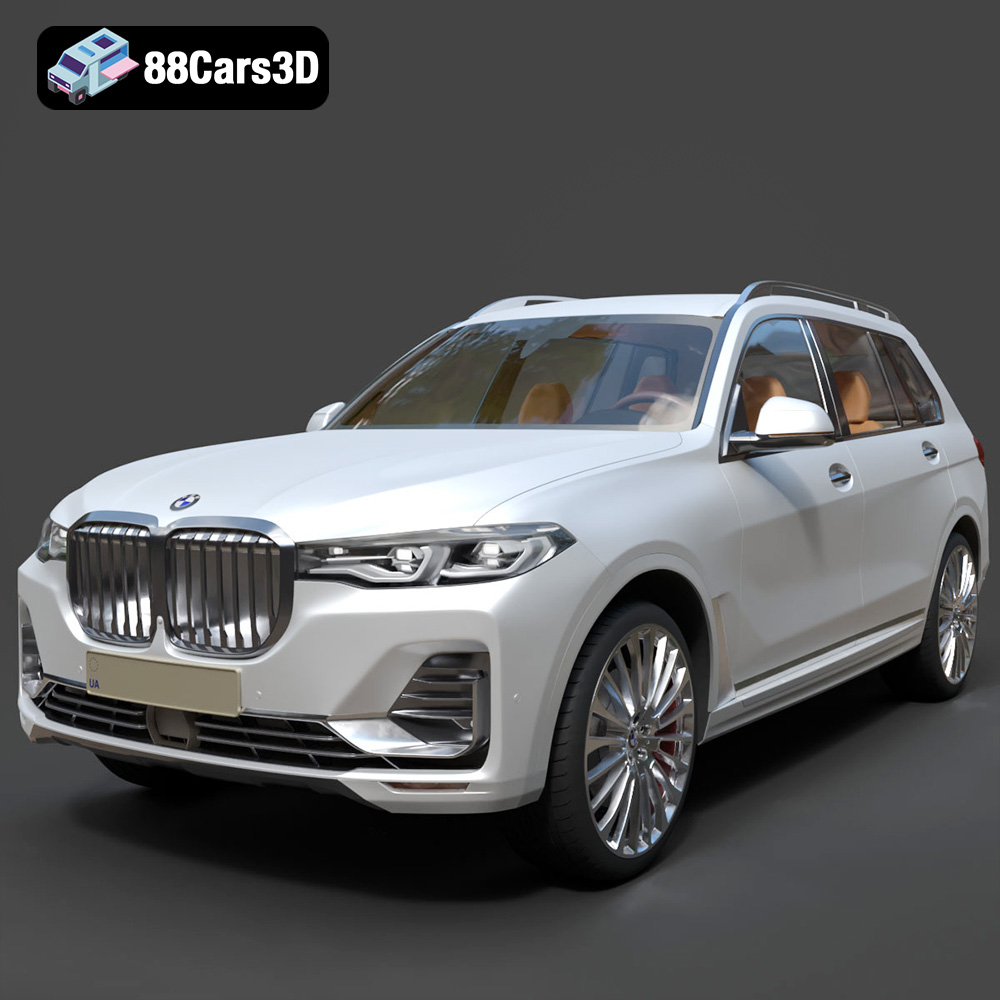
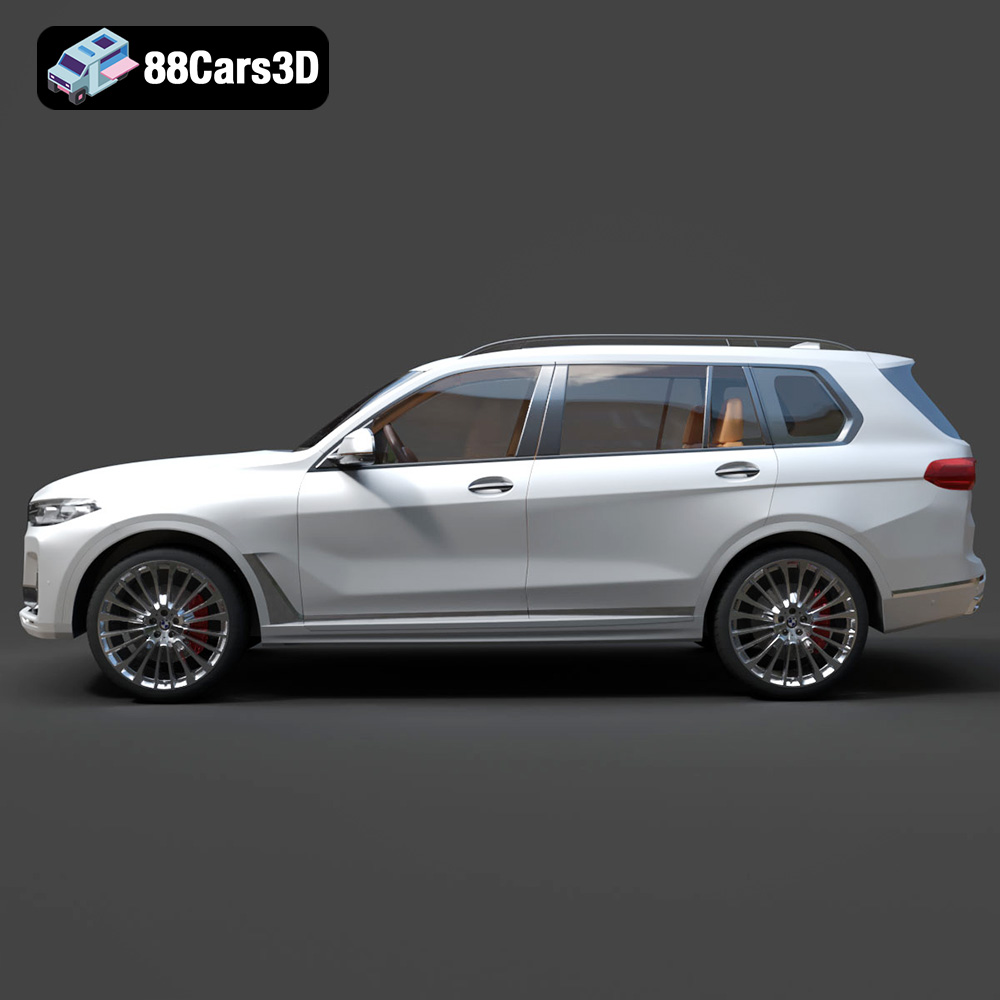
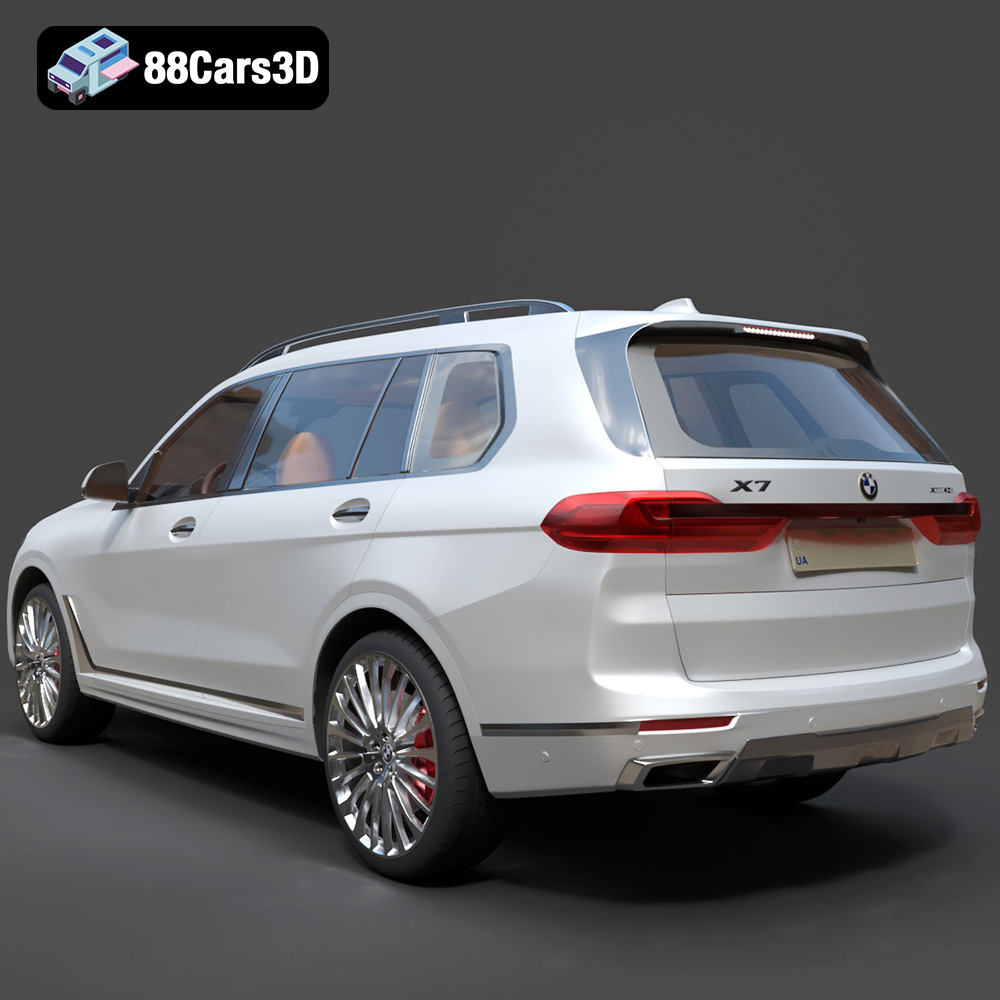
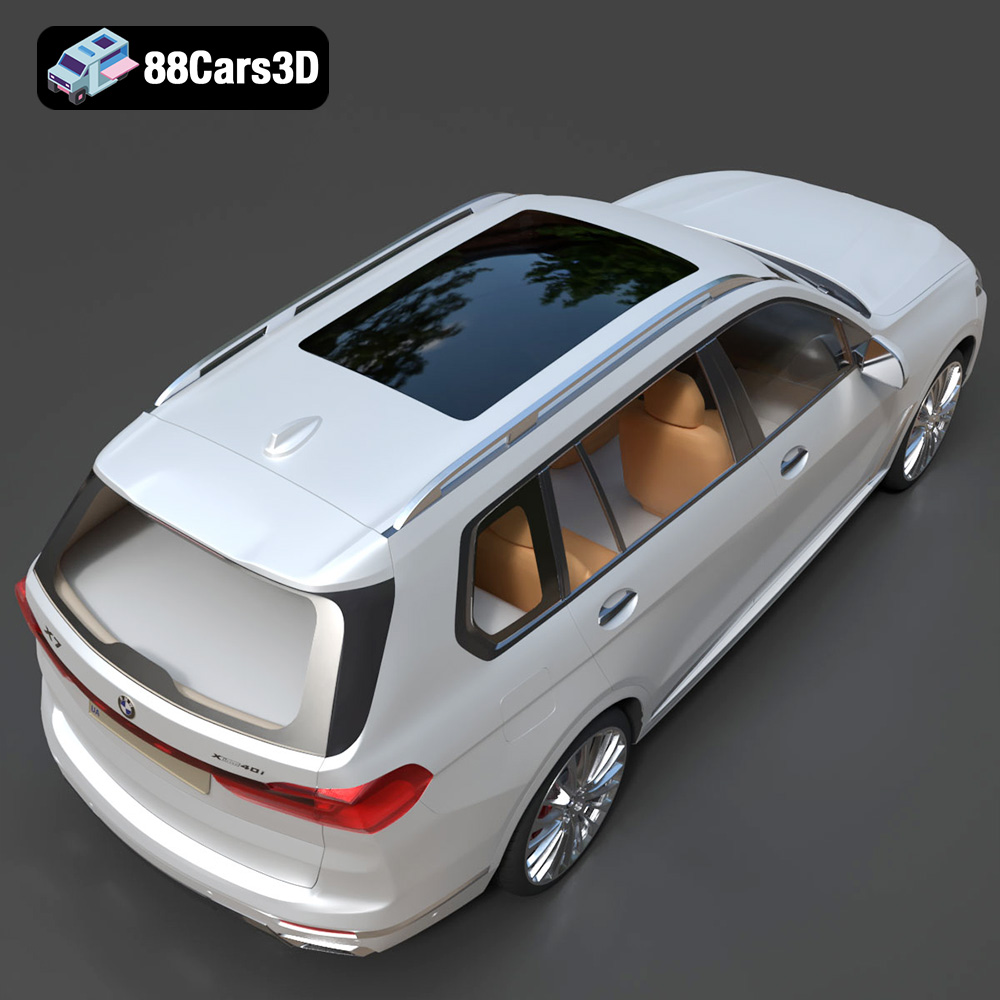
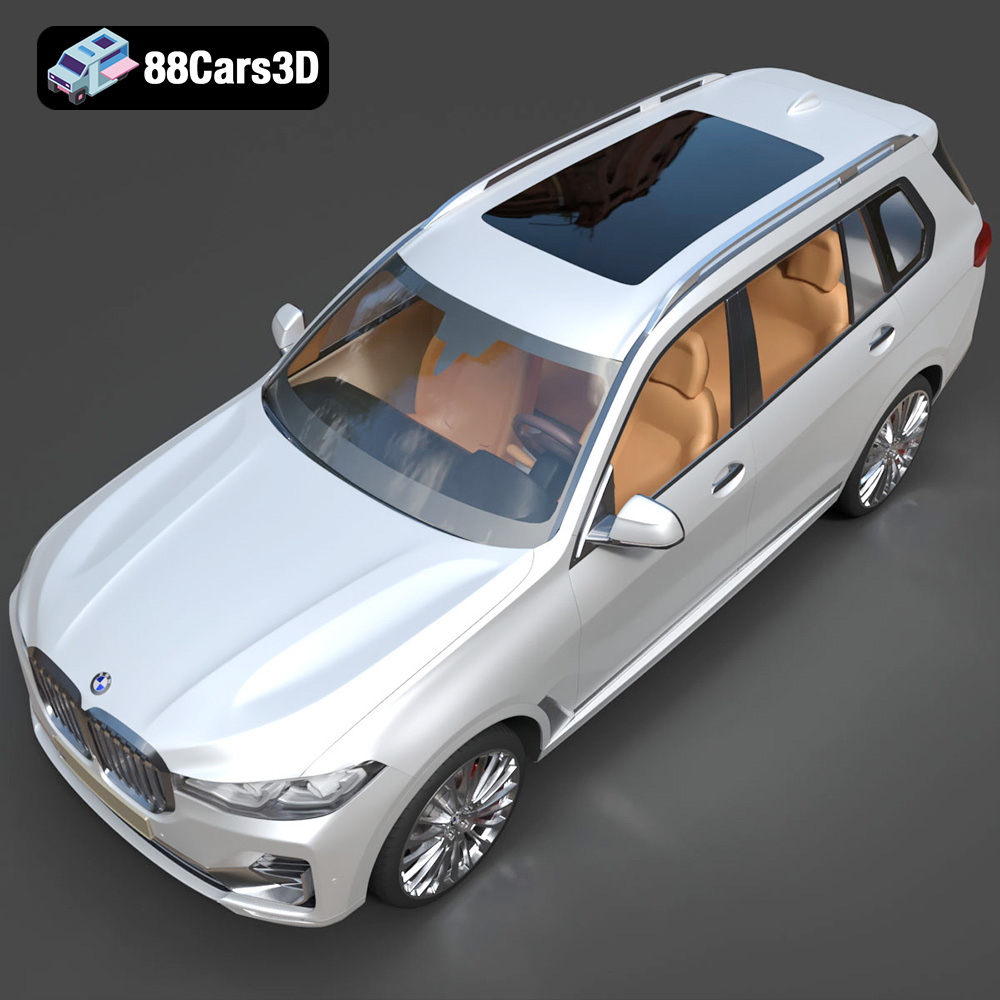
The BMW X7 G07 2019 3D model is a meticulously crafted digital replica capturing the luxurious and commanding presence of the flagship SUV. This highly realistic model is designed for professionals seeking exceptional accuracy and visual fidelity in their digital projects.
Built with clean geometry and realistic materials, this professional-grade asset ensures exceptional detailing across all surfaces. Its optimized mesh topology allows for seamless integration into various digital environments without compromising performance.
This versatile 3D vehicle is designed for a wide range of applications, including game development, automotive rendering, AR/VR experiences, architectural visualization, and dynamic simulations.
Included File Formats:
$19.99
.arvr
.blend
.bmw
.car3dmodel
.fbx
.g07
.gameasset
.glb
.luxurycar
.max
.obj
.ply
.rendering
.simulation
.stl
.unreal
.x7
SUV