Get 20% OFF All Premium 3D & STL Models!

In the fast-paced world of digital creation, the demand for hyper-realistic and technically sound 3D assets is ever-growing. From cinematic spectacles to immersive game environments and cutting-edge product visualizations, the quality of a 3D model can make or break a project. This is particularly true for automotive subjects, where sleek lines, intricate engineering, and the subtle interplay of light on polished surfaces demand nothing less than perfection.
Creating a truly authentic 3D car model from scratch is a monumental undertaking, requiring hundreds of hours of skilled labor, meticulous attention to detail, and a deep understanding of automotive design principles. This is where professional-grade, pre-built assets become invaluable. They empower artists, developers, and designers to bypass the arduous modeling phase and jump straight into creative development, saving crucial time and resources without compromising on quality.
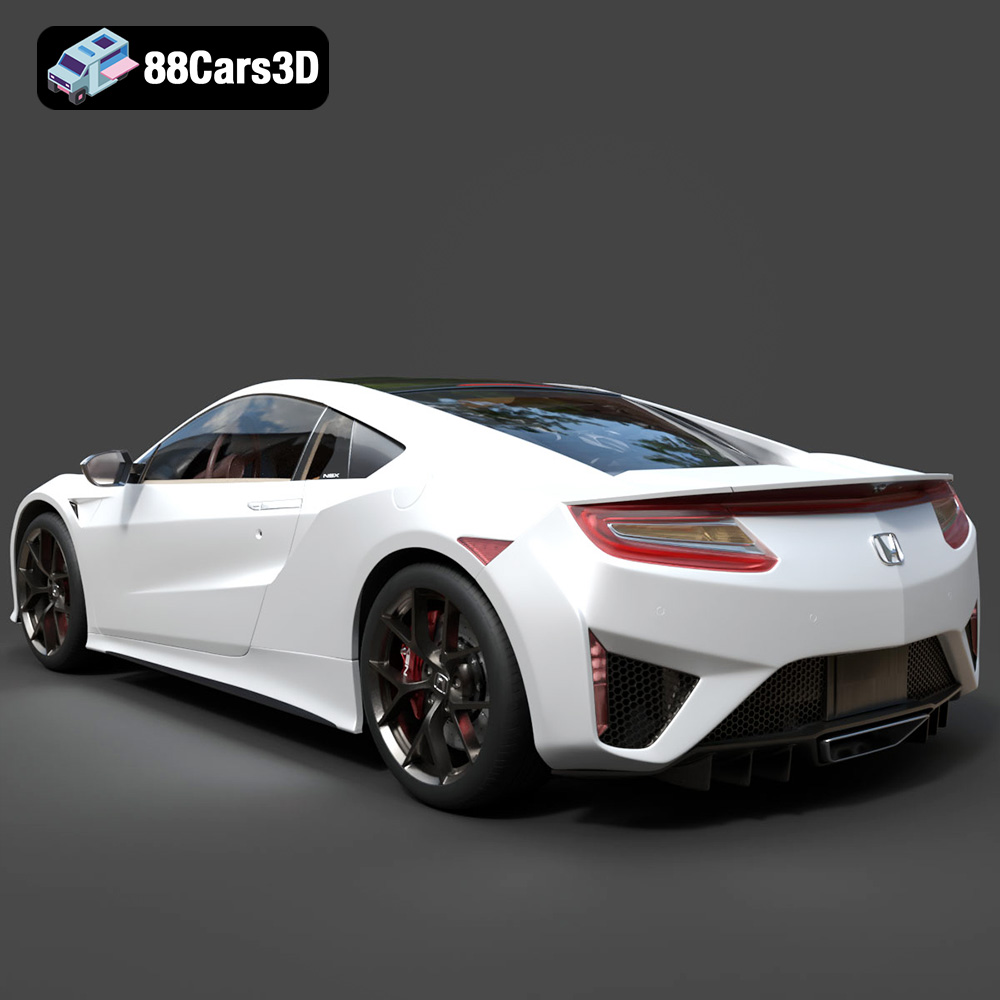
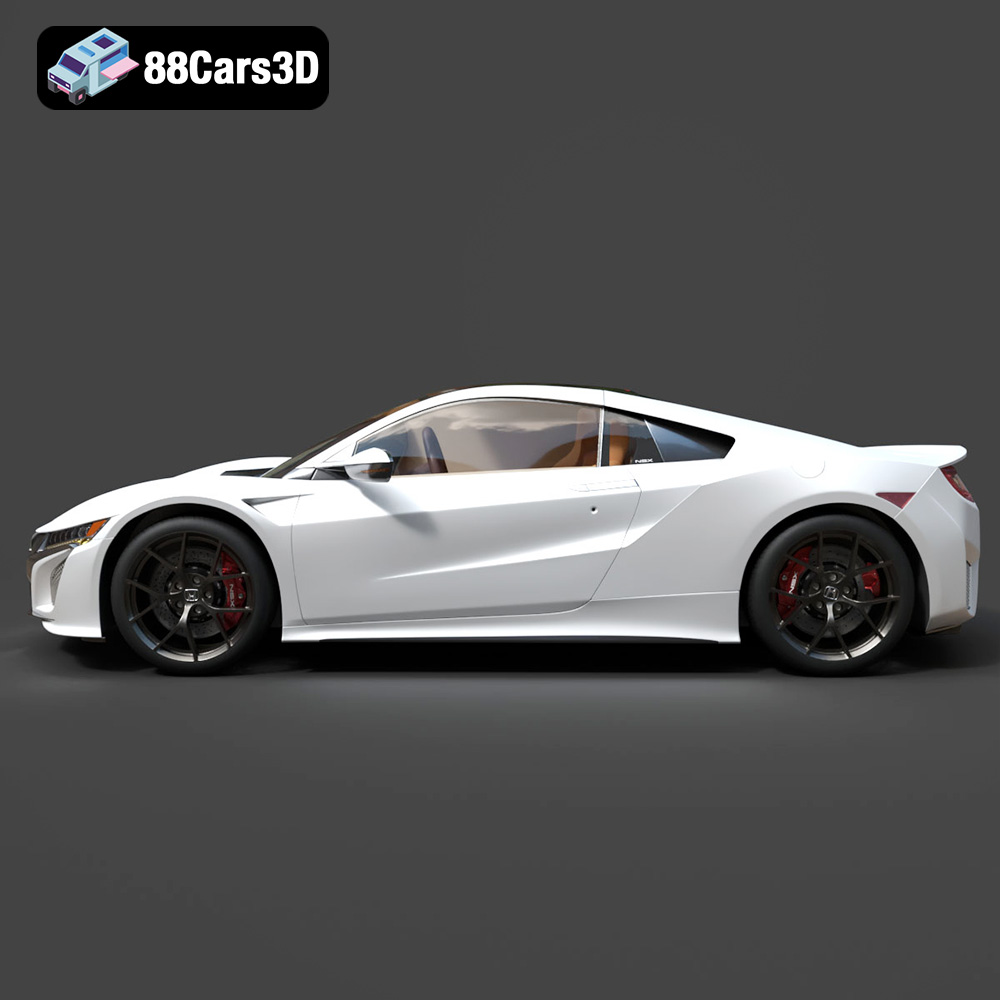
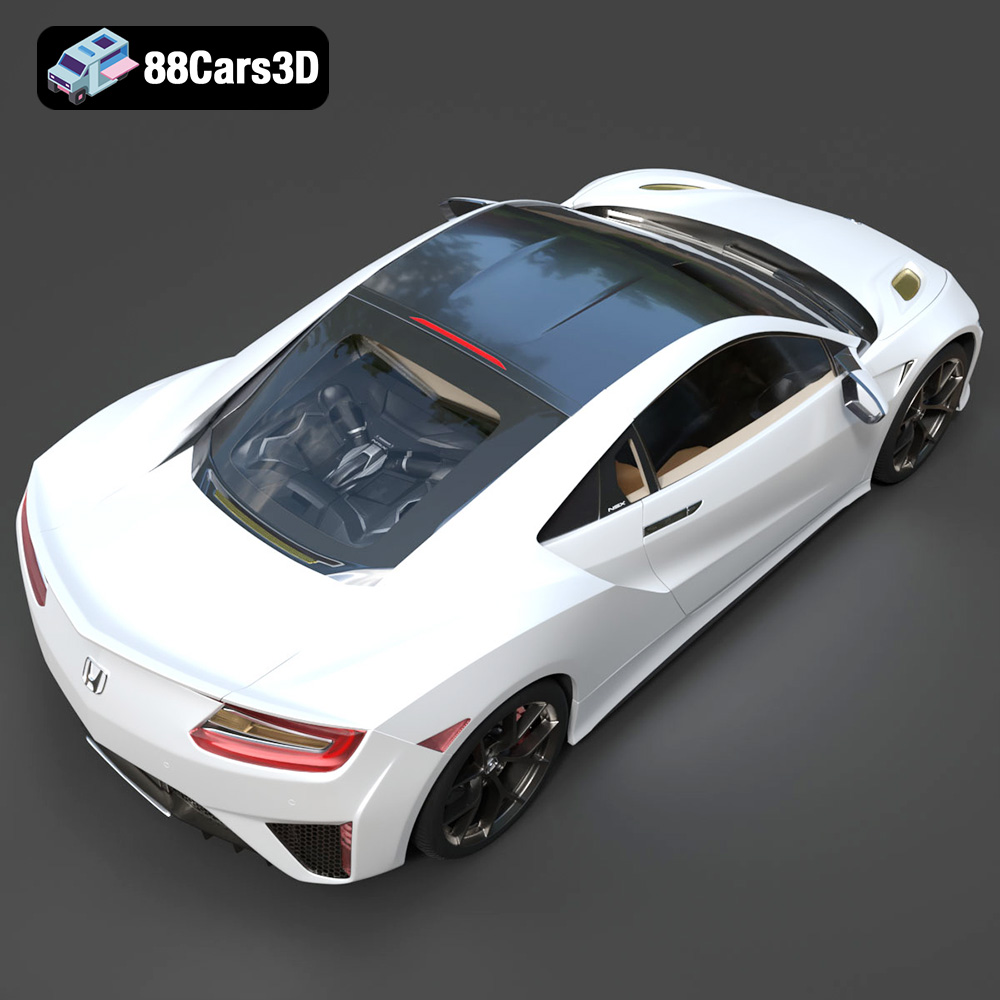
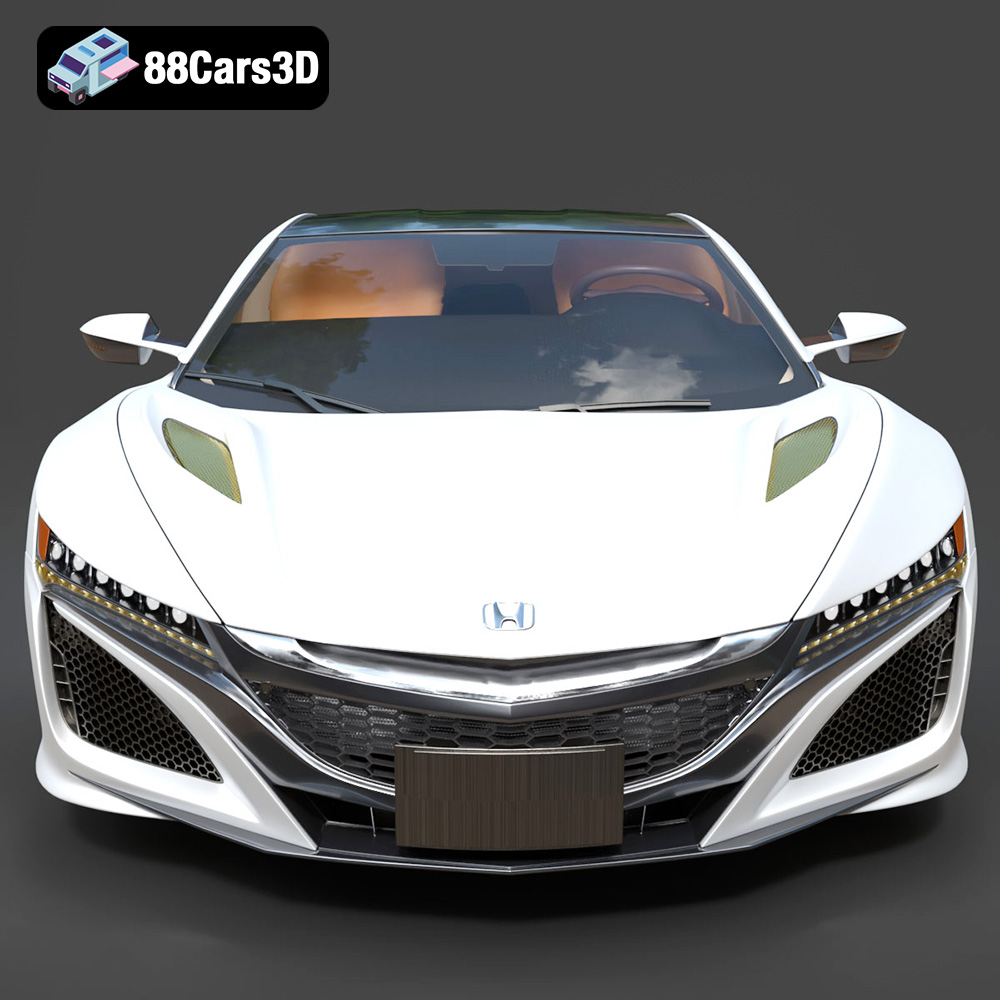
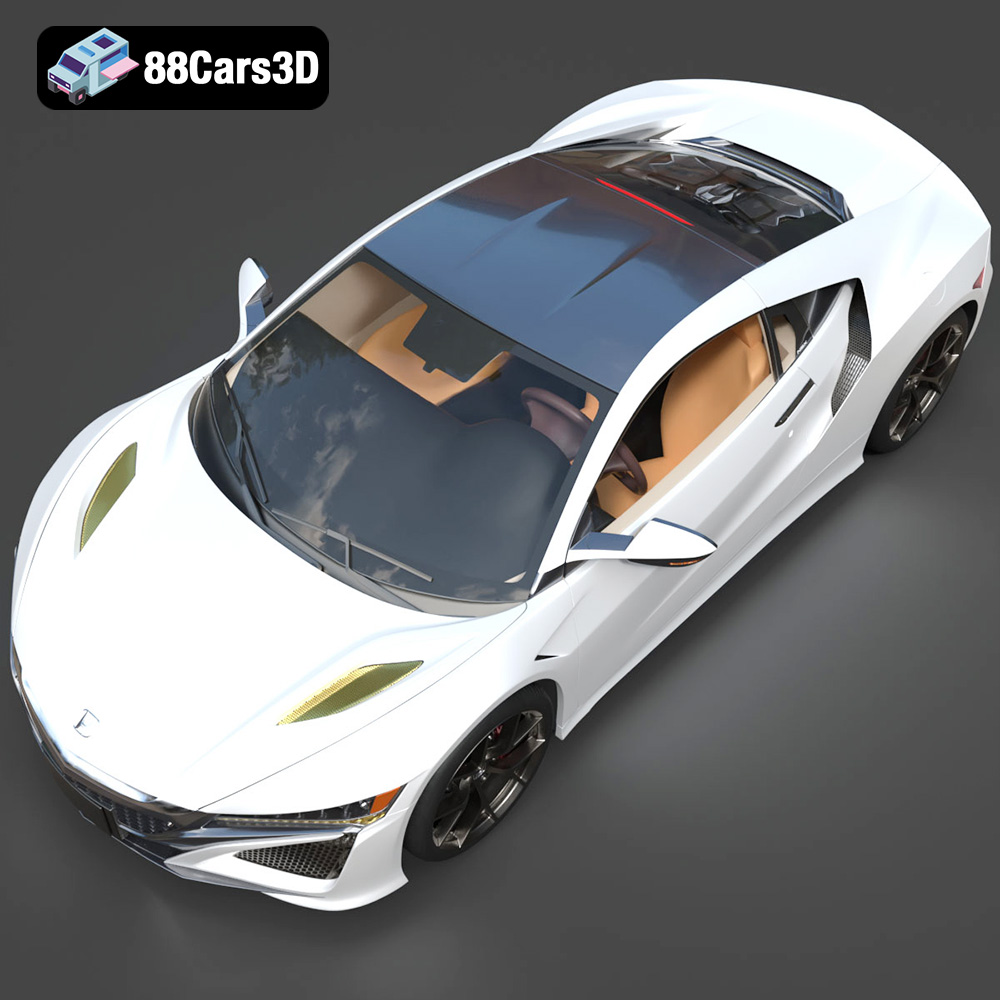
A prime example of such an asset is the Honda NSX 2017 3D Model, a meticulously crafted digital replica of one of the most iconic hybrid sports cars. This model encapsulates the pinnacle of 3D automotive artistry, designed to meet the rigorous demands of modern digital pipelines. Whether your project involves a high-octane racing game, a stunning architectural visualization, or an interactive AR experience, a premium asset like the Honda NSX 2017 3D Model provides the foundational excellence needed to bring your vision to life.
Crafting a 3D car model that truly resonates with realism requires a blend of artistic vision and engineering precision. It’s not merely about replicating shapes, but about capturing the essence of the vehicle – its stance, its aerodynamic flow, and the subtle nuances that give it character.
The journey begins with capturing the authentic dimensions and design language of the real-world vehicle. This involves painstaking attention to every curve, panel gap, and intricate detail. For a model like the Honda NSX 2017 3D Model, “meticulously crafted” isn’t just a marketing phrase; it signifies countless hours spent referencing blueprints, photographs, and even real-world scans to ensure every proportion is accurate. The goal is to achieve surface continuity, meaning light reflects smoothly across panels as it would on a physical car, without any unsightly bumps or breaks in the mesh.
This level of precision extends to elements often overlooked in lower-quality models, such as the intricate design of headlights and taillights, the subtle contours of the interior dashboard, or the complex geometry of wheel rims. Each component is modeled independently and then seamlessly integrated, ensuring the final assembly is a cohesive and true-to-life representation. The sleek, aerodynamic lines of the Honda NSX, for instance, are notoriously challenging to reproduce digitally while maintaining perfect curvature and form, highlighting the expertise embedded in such a high-quality 3D car model.
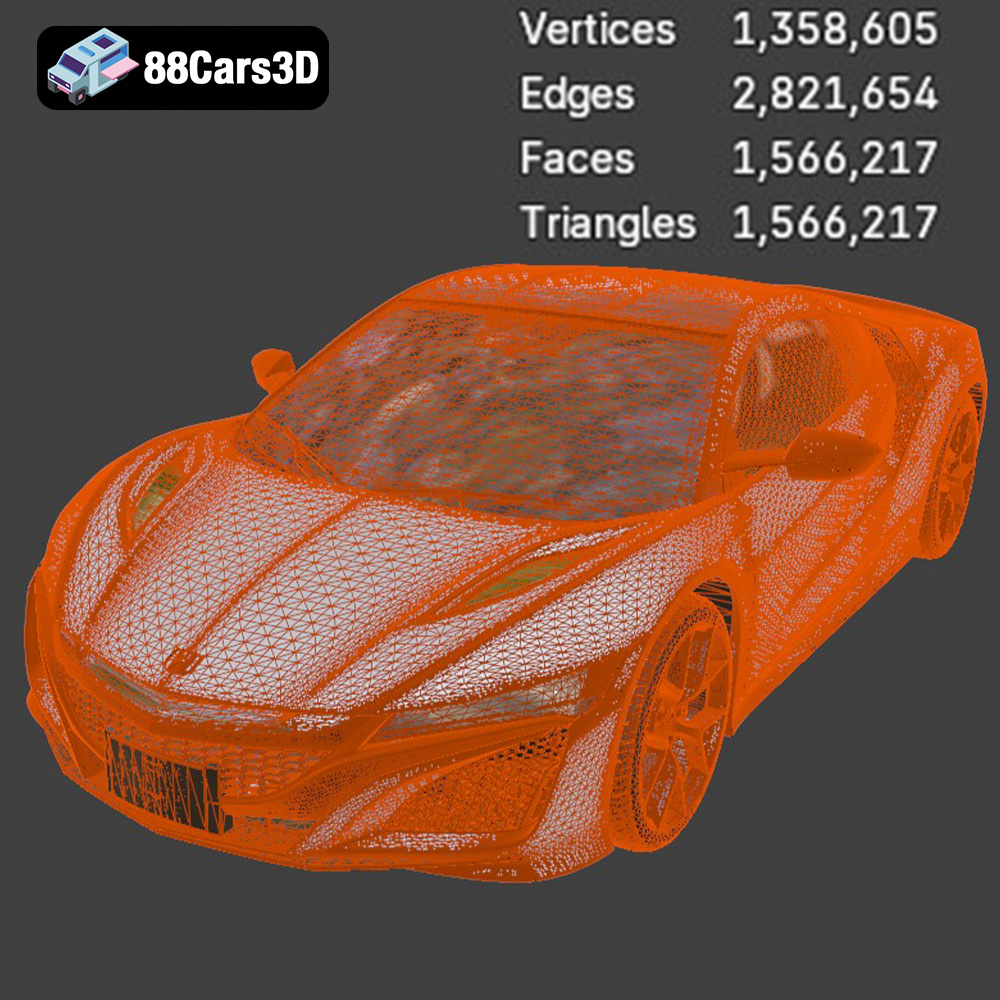
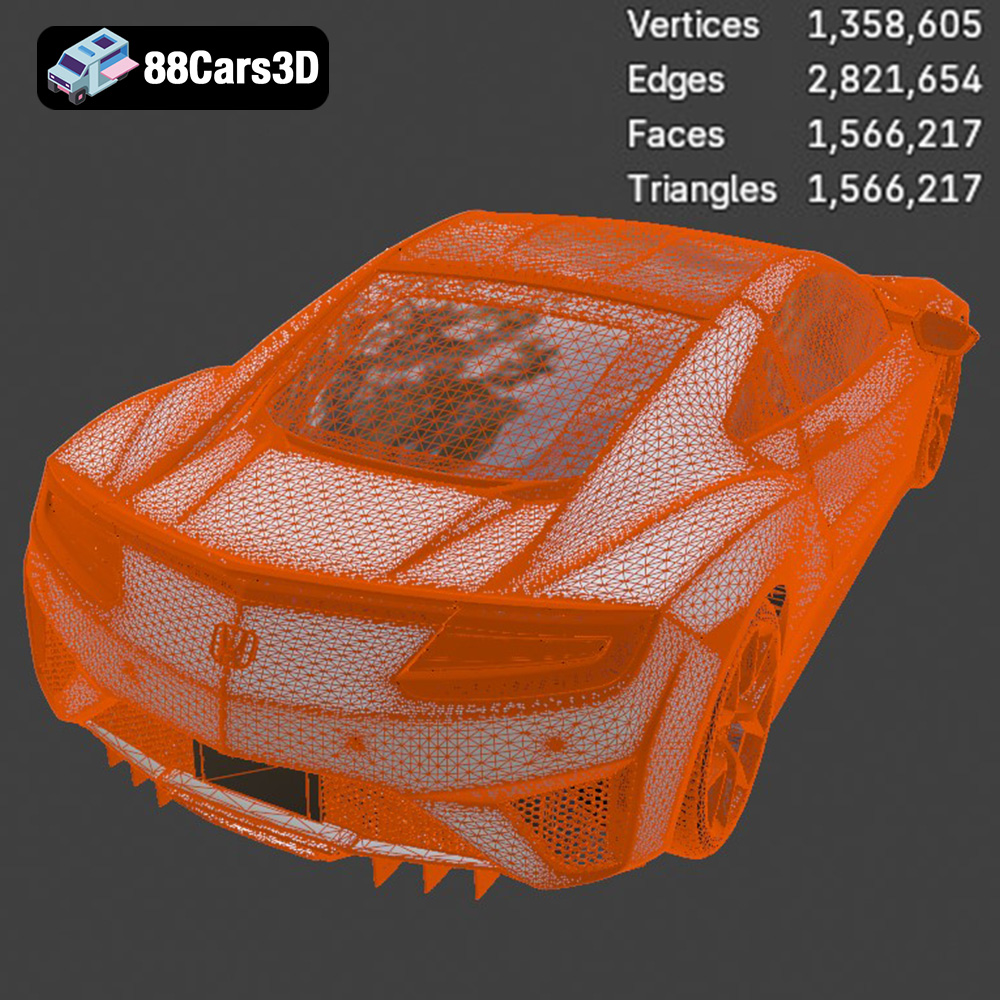
While detail is paramount, a professional 3D car model also balances fidelity with performance. This is achieved through “clean geometry” and “professional-grade polygon structures.” Clean geometry refers to an efficient and well-organized mesh, predominantly using quad polygons (four-sided faces) rather than triangles (three-sided faces) wherever possible. Quads are superior for deformation, subdivision, and general editing, making the model more versatile for animation, rigging, and further refinement.
Optimization is critical, especially for game assets or real-time rendering. This involves maintaining a manageable poly count without sacrificing visual quality. Techniques like edge loops, which define sharp creases and smooth transitions, are strategically placed to ensure the model holds its shape even when subdivided or animated. A well-optimized model allows for efficient UV unwrapping, which is essential for applying high-resolution textures without distortion. This balance ensures that the Honda NSX 2017 3D Model, for instance, can serve as a hero asset in a cinematic scene requiring millions of polygons, or as an interactive vehicle in a game engine where performance is key, thanks to its adaptable mesh.
The versatility of a professional 3D car model is significantly enhanced by its availability in multiple industry-standard file formats. Choosing the correct format is crucial for seamless integration into various software environments and production pipelines. Each format is designed with specific use cases and technical considerations in mind, ensuring optimal performance and compatibility. The Honda NSX 2017 3D Model, available on 88cars3d.com, exemplifies this versatility by offering a comprehensive suite of formats.
The comprehensive availability of the Honda NSX 2017 3D Model in these diverse formats on 88cars3d.com underscores its adaptability, allowing users to select the optimal version for their specific project needs and software ecosystem.
Once the foundation of a high-quality 3D car model is laid, the next step is to breathe life into it through realistic rendering. This process transforms raw geometry into breathtaking images and animations, mimicking how light interacts with materials in the real world.
The “realistic materials” mentioned for the Honda NSX 2017 3D Model are crucial for achieving photorealism. Modern rendering heavily relies on Physically Based Rendering (PBR) workflows, where materials are defined by properties that simulate real-world physics, such as albedo (base color), roughness, metallicness, and normal maps. Car paint shaders, for instance, are complex, often layered with base coat, metallic flakes, and clear coat reflections, each contributing to the distinctive sheen and depth. Tire rubber needs specific roughness and displacement for grip, while glass requires accurate transmission and reflection values.
A high-quality 3D car model comes with a robust set of PBR textures and properly configured materials that react realistically to light. This ensures that the true-to-life reflections and accurate proportions of the Honda NSX are perfectly rendered, whether it’s reflecting a studio environment or a dynamic outdoor scene. Artists can then fine-tune these materials, experimenting with different paint colors, wheel finishes, or interior upholstery, confident that the underlying model’s UVs and geometry are prepared for seamless texture application.
Even the most perfectly modeled and textured car will look flat without appropriate lighting. Realistic automotive rendering depends heavily on simulating natural or studio lighting conditions. High Dynamic Range Images (HDRIs) are commonly used to provide realistic environmental lighting and reflections, capturing real-world light information from 360-degree panoramic images. These HDRIs cast accurate lighting and, more importantly, create convincing reflections on the highly reflective surfaces of a car body.
Beyond global illumination from HDRIs, artists use targeted lights to highlight specific features, create dramatic shadows, or simulate studio softboxes. The subtle interplay of light and shadow defines the car’s form and accentuates its design. For a vehicle like the Honda NSX, with its intricate bodywork and aerodynamic contours, proper lighting is essential to showcase its “sleek, aerodynamic lines” and “iconic stance.” Adjusting the angle and intensity of lights can drastically change the mood and perception of the vehicle, from a showroom display to a dynamic action shot.
Game development places unique demands on 3D assets, requiring a careful balance between visual fidelity and real-time performance. High-quality 3D car models, like those found on 88cars3d.com, are built with these considerations in mind, making them ideal “game assets.”
For game engines like Unreal Engine and Unity, raw high-poly models are often too demanding. Optimization strategies are essential. One primary technique is the creation of Levels of Detail (LODs). This involves generating multiple versions of the same model, each with progressively lower polygon counts, which are swapped dynamically based on the camera’s distance from the object. When the car is far away, a low-poly LOD is rendered; as it gets closer, a higher-poly LOD takes over, maintaining visual quality while saving processing power.
Additionally, proper UV unwrapping for texture atlases is crucial for reducing draw calls, another performance bottleneck. Collision meshes, separate simplified geometries, are also created to define the physical boundaries of the car for game physics without impacting visual rendering. The “game-engine ready” promise of the Honda NSX 2017 3D Model means these optimizations are either already implemented or the base mesh is clean enough to facilitate their easy creation by developers, ensuring seamless integration and smooth gameplay.
Beyond static appearance, game cars need to move and interact realistically. This requires rigging – creating a skeletal structure that allows for animation. For a car, this typically includes rigging for wheels (rotation, steering, suspension compression), doors (opening and closing), and potentially other moving parts like spoilers or convertible tops. A clean, well-structured mesh, such as that of the Honda NSX 2017 3D Model, is fundamental for successful rigging, as it deforms predictably and avoids unwanted visual artifacts.
Once rigged, the model can be animated to simulate driving, crashes, or specific in-game events. Game engines also integrate sophisticated physics systems that can apply forces to the car’s rigid body, simulating realistic acceleration, braking, and collisions. The quality of the base 3D car model directly impacts how effectively these systems can interact with the vehicle, ensuring that its “iconic stance” and “aerodynamic lines” translate into convincing in-game motion.
The utility of a high-quality 3D car model extends far beyond conventional rendering and game development, opening doors to cutting-edge immersive experiences and even physical prototyping.
Augmented Reality (AR) and Virtual Reality (VR) platforms demand efficient, optimized 3D assets capable of real-time rendering on a variety of devices. The “optimized for AR/VR” promise of formats like .glb for the Honda NSX 2017 3D Model is particularly significant here. AR allows users to place a virtual car into their real-world environment, perhaps seeing the NSX parked in their driveway, while VR offers fully immersive virtual showrooms or test drives. For these applications, accurate scale, true-to-life reflections, and efficient polygon counts are paramount to deliver a convincing and engaging experience without motion sickness or visual artifacts.
A detailed 3D car model forms the backbone of these interactive experiences. Imagine a customer using an AR app to explore different color options or interior configurations of the Honda NSX before making a purchase decision. Or a VR simulation allowing aspiring race car drivers to experience the cockpit of the NSX. These applications leverage the model’s fidelity to create compelling, interactive, and highly realistic virtual products that blur the lines between digital and physical.
The “suitable for 3D printing” .stl format for the Honda NSX 2017 3D Model bridges the gap between the digital and physical realms. While 3D models are typically intangible, a well-prepared .stl file allows for the creation of physical prototypes or scaled models. This is invaluable for designers who need to hold a physical representation of their digital work, test ergonomics, or simply admire the form in a tangible way.
Preparing a model for 3D printing involves ensuring it has a “manifold” or watertight mesh – no holes, inverted normals, or overlapping faces that would confuse the printer. While some post-processing might be needed depending on the target printer and scale, starting with a clean, professional-grade 3D car model significantly streamlines this process. From creating a desk ornament to a detailed scale model for a marketing event, the ability to translate a high-fidelity digital asset into a physical object adds another layer of versatility to premium 3D models.
In professional production environments, efficiency, quality, and reliability are paramount. High-quality, pre-built 3D car models are not just conveniences; they are strategic assets that drive project success.
The most tangible benefit of acquiring a premium 3D car model like the Honda NSX 2017 from 88cars3d.com is the immense time saving. Modeling a complex vehicle from scratch can consume weeks or even months of an experienced artist’s time. By utilizing a pre-built asset, studios and individual artists can drastically cut down on production schedules, allowing them to allocate resources to other critical aspects of a project, such as scene composition, animation, lighting, and rendering refinements.
This acceleration is not at the expense of quality. When you invest in a professionally crafted model, you’re not just buying geometry; you’re acquiring a meticulously engineered asset with clean topology, optimized materials, and often multiple file formats ready for immediate deployment. This means less troubleshooting, fewer rework cycles, and a faster pipeline from concept to final delivery, empowering creative teams to focus on artistic direction rather than technical setup.
The applications for a high-fidelity 3D car model are vast and varied across industries. In architectural visualization, placing a Honda NSX 2017 3D Model in the driveway of a proposed luxury home instantly elevates the realism and appeal of the rendering, adding a aspirational lifestyle element. For automotive configurators, interactive web experiences allow potential buyers to customize their NSX in real-time, changing colors, rims, and interior options, all powered by a robust 3D model.
Marketing and advertising campaigns frequently leverage 3D car models for stunning product showcases, creating animations that highlight design features or demonstrate performance without the cost and logistical challenges of a physical photoshoot. In film and television, these models are used for background vehicles, chase scenes, or even detailed close-ups where a physical car is impractical. Each of these scenarios demands the “fidelity required for professional production” that a model like the Honda NSX 2017 provides, showcasing its versatility and critical role in bringing diverse digital visions to life.
The landscape of 3D content creation is continuously evolving, pushing the boundaries of realism and immersion. At the heart of this evolution lies the demand for exceptionally crafted 3D assets, especially when it comes to the complex and visually critical realm of automotive design. From high-end cinematic rendering to performance-driven game development, and innovative AR/VR experiences to precise 3D printing, the foundational quality of a 3D car model dictates the success of a project.
The Honda NSX 2017 3D Model stands as a testament to what professional-grade assets can achieve. Its meticulous craftsmanship, clean geometry, realistic materials, and broad format compatibility offer an unparalleled advantage to creators across industries. By leveraging such premium resources, artists and developers can significantly reduce production time, elevate visual quality, and unlock new creative possibilities, all while maintaining the highest technical standards.
Investing in superior 3D car models allows you to bypass the extensive groundwork of asset creation and focus directly on the creative and innovative aspects of your projects. Whether you are aiming to build the next generation of racing simulations or simply need a stunning vehicle to enhance your architectural visualizations, explore the exceptional range of 3D car models available at 88cars3d.com to bring your digital automotive dreams to fruition.
Experience unparalleled realism with the Honda NSX 2017 3D Model. Meticulously crafted to capture the sleek, aerodynamic lines and iconic stance of this legendary hybrid sports car, this model delivers exceptional detail for all your digital projects. Key features include clean geometry, realistic materials, and professional-grade polygon structures. Every curve, panel, and interior element is designed to ensure seamless integration into any visual environment, providing true-to-life reflections and accurate proportions. Perfect for a wide range of applications, this model excels in game development, architectural visualization, cinematic rendering, and AR/VR experiences. Whether used as a hero asset in an animation or an interactive vehicle in a virtual environment, it offers the fidelity required for professional production. The model is delivered in multiple industry-standard file formats to ensure maximum compatibility: .blend – Editable Blender file with materials and lighting setup, .fbx – Game-engine ready format for Unreal Engine and Unity, .obj – Standard 3D model format compatible with all major software, .glb – Optimized for AR/VR and web-based visualization, .stl – Suitable for 3D printing and prototyping, .ply – Detailed polygon mesh for analysis and visualization, .unreal – Pre-configured for Unreal Engine use, .max – Editable 3ds Max file for rendering and animation.
$19.99
.arvr
.blend
.car3dmodel
.fbx
.gameasset
.glb
.honda
.max
.nsx
.obj
.ply
.rendering
.simulation
.sportsCar
.stl
.supercar
.unreal