Get 20% OFF All Premium 3D & STL Models!

In the dynamic world of digital design, the demand for high-quality, technically accurate 3D car models is ever-present. From crafting hyper-realistic automotive rendering for marketing campaigns to populating vast open-world environments in game development, the foundation of any compelling visual project lies in the fidelity and optimization of its core assets. Professionals across various industries, including advertising, architecture, virtual reality, and interactive simulations, consistently seek out assets that not only look authentic but also integrate seamlessly into diverse workflows.
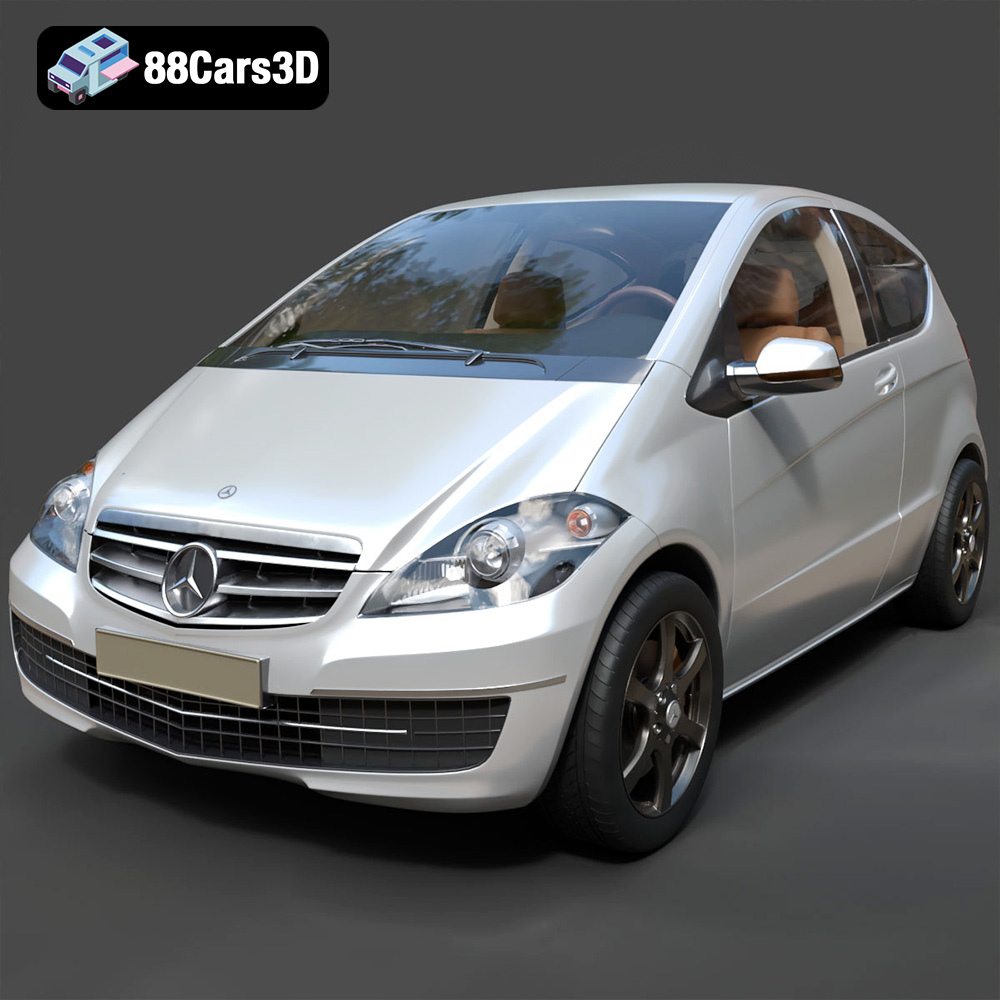
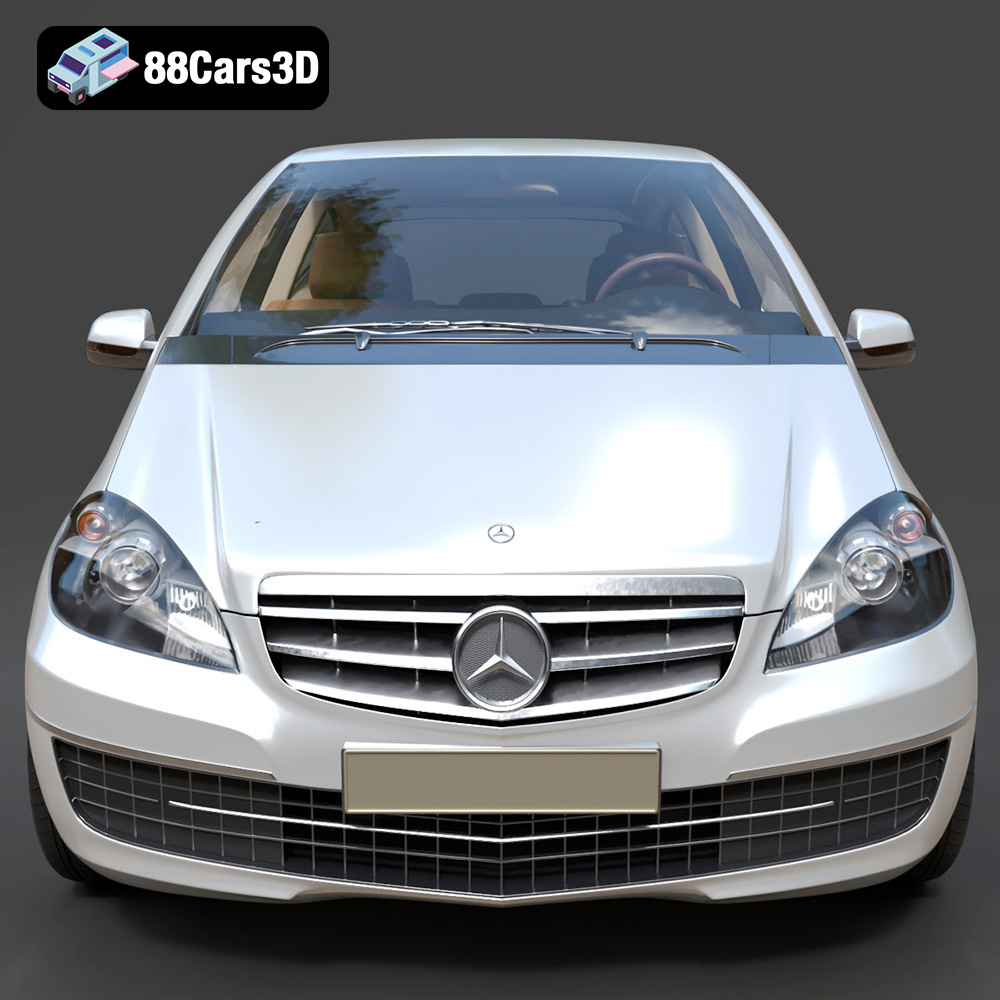
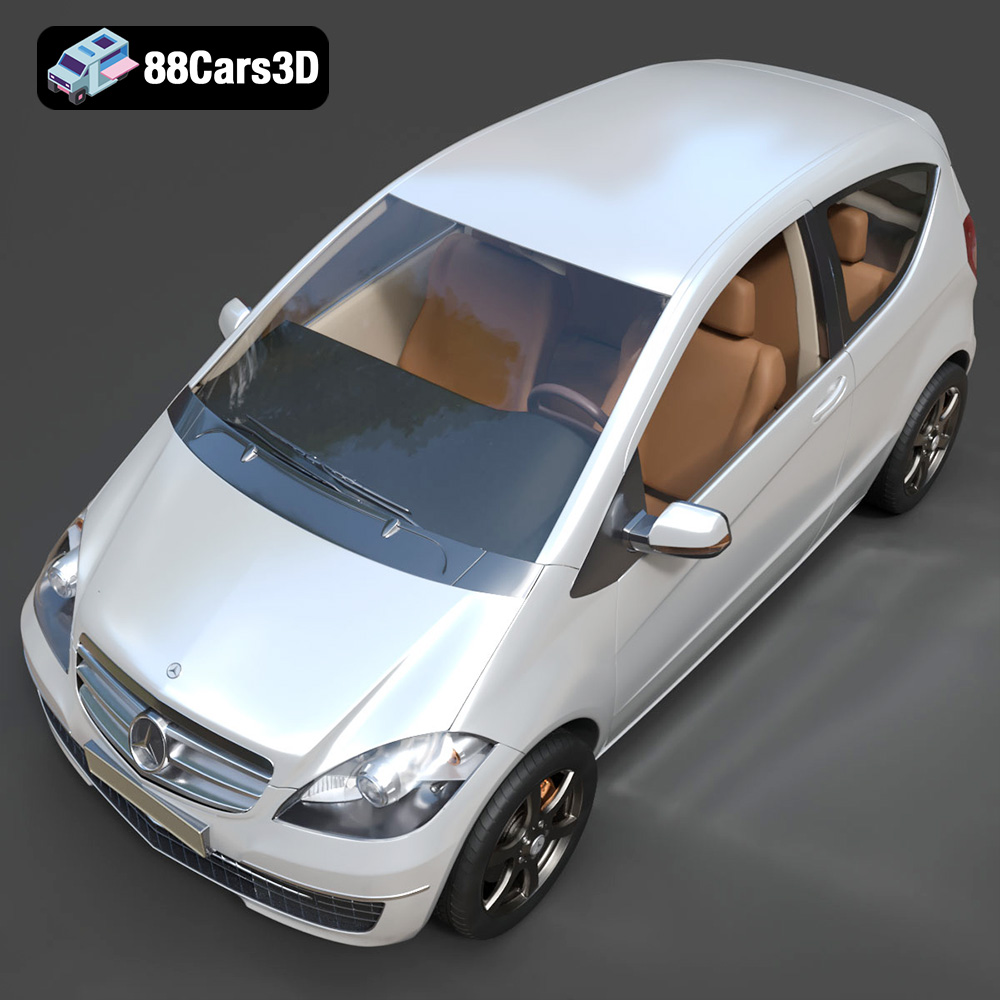
Today, we delve into the intricate details of what makes a premium 3D vehicle asset truly stand out, using a prime example: the Mercedes Benz A Class 3 Door 2010 3D Model. This particular model, available on 88cars3d.com, encapsulates the essence of compact luxury and German engineering from its era, offering a meticulously crafted digital representation that serves as an invaluable tool for a wide array of creative endeavors. It’s more than just a model; it’s a versatile foundation engineered for performance, realism, and adaptability.
When acquiring a professional 3D car model, understanding the various file formats available is paramount. Each format serves a specific purpose, offering unique advantages for different stages of the production pipeline, from initial modeling and animation to real-time rendering and physical fabrication. The Mercedes Benz A Class 3 Door 2010 3D Model conveniently includes a comprehensive suite of these formats, ensuring maximum compatibility and utility for any project.
The .blend file format is the native scene file for Blender, the popular open-source 3D creation suite. When you receive a .blend file, you’re not just getting the mesh; you’re getting a fully editable Blender scene. This includes the model’s geometry, materials, textures, lighting setups, cameras, and even animations, all within a single package. For users deeply integrated into the Blender ecosystem, this format offers unparalleled flexibility. You can dissect the model, understand its construction, modify materials, adjust UVs, or even re-rig components with ease. It’s the ultimate format for customization and learning, allowing artists to adapt the Mercedes-Benz A-Class 3D model to their specific artistic vision without limitations.
FBX (Filmbox) is arguably the most widely adopted proprietary file format for 3D data exchange between different software applications. Developed by Autodesk, .fbx is ideal for transferring models, animations, and scenes between programs like Maya, 3ds Max, Cinema 4D, and crucially, game engines like Unreal Engine and Unity. Its strength lies in its ability to encapsulate complex scene data, including meshes, materials (with basic properties), textures, rigging, skinning, and animation data, into a single, relatively compact file. For the Mercedes A-Class model, the .fbx variant is perfect for those planning to integrate it into real-time pipelines, ensuring that pivot points, hierarchical structures, and even rudimentary material assignments transfer cleanly, minimizing setup time in the target engine.
The .obj (Wavefront OBJ) format is a simple, universally recognized geometry definition file. While it lacks support for advanced features like animation or complex material definitions (often relying on an accompanying .mtl file for basic material properties), its simplicity makes it incredibly robust and compatible with virtually every 3D software package. For straightforward mesh import, archival, or when precise control over material assignment is preferred in the destination software, .obj is an excellent choice. It’s often used as a fallback or for situations where only the pure polygonal geometry of the Mercedes-Benz A-Class is needed, serving as a reliable backbone for cross-software compatibility.
.glb (GLB Transmission Format) is the binary version of glTF (GL Transmission Format), an open-standard, royalty-free file format for 3D scenes and models. Designed to be compact, efficient, and runtime-agnostic, .glb is rapidly becoming the standard for 3D content delivery on the web, in augmented reality (AR), and virtual reality (VR) applications. It packs the entire 3D model, textures, and animations into a single file, making it incredibly easy to load and display in browsers or mobile AR/VR viewers. The .glb version of the Mercedes A-Class is therefore perfectly suited for interactive product showcases on websites, mobile AR experiences, or light VR simulations where quick loading and optimized performance are critical.
STL (Stereolithography) is the de facto standard file format for 3D printing. It represents a 3D model as a series of connected triangles, describing only the surface geometry of a 3D object without any color, texture, or material information. The .stl format of the Mercedes-Benz A-Class 3D model opens up avenues for physical creation, allowing hobbyists and professionals to fabricate miniature replicas. While often requiring specific preparation for watertight meshes and printability, its inclusion underscores the model’s versatility for both digital and tangible applications, as noted in the product description with recommended print settings for optimal results.
.ply (Polygon File Format or Stanford Triangle Format) is another versatile format for storing 3D data, particularly useful for scanned data, CAD, or scientific analysis. It can store a wider range of properties than .obj, including color, transparency, surface normals, and even confidence values for each vertex. While less common for general asset exchange, its precision and ability to carry additional data make it valuable for specialized applications where the integrity of the mesh data and its attributes are crucial, offering a robust alternative for certain visualization or analysis workflows involving the Mercedes-Benz A-Class.
The inclusion of a .unreal file specifically signifies an asset pre-packaged and optimized for the Unreal Engine. This means the asset has likely undergone specific preparation, such as proper scale, collision setup, material instances, and even blueprint integration, to ensure it drops directly into an Unreal project with minimal fuss. For game developers or architectural visualization artists using Unreal, this format is a significant time-saver, indicating that the Mercedes-Benz A-Class 3D model is truly “game-ready” and designed for immediate implementation into real-time environments, leveraging Unreal’s powerful rendering capabilities.
Finally, the .max file is the native project file for Autodesk 3ds Max, a powerhouse in architectural visualization, animation, and high-end rendering. Similar to the .blend file for Blender, the .max file contains the complete scene data, including geometry, materials, textures, lighting, cameras, and animation curves. For artists working in 3ds Max, this format provides full access to the model’s construction, allowing for complex rendering setups, integration with V-Ray or Corona Renderer, and advanced animation sequences. It offers the highest level of detail and control for those looking to push the boundaries of photorealistic automotive rendering with the Mercedes-Benz A-Class 3D model.
The appeal of the Mercedes-Benz A-Class 3-Door (2010) lies not just in its brand legacy but in its unique design for a compact luxury vehicle. The 3D model meticulously recreates this, ensuring that every curve, panel gap, and signature element is faithfully represented. This level of detail is crucial for projects where accuracy and authenticity are paramount, be it for a car configurator, a cinematic render, or a virtual showroom.
The exterior of the Mercedes-Benz A-Class 3D model is a testament to precision modeling. It captures the distinctive wedge-shaped silhouette that defined the A-Class of that era, complete with the prominent front grille and the unmistakable three-pointed star emblem. Details such as the swept-back headlights, distinct taillight clusters, accurately modeled exhaust system, and integrated rear bumper are all present. Furthermore, the model includes factory-spec alloy wheel designs and realistic tire treads, which are critical for close-up shots and ensuring convincing ground contact in animations. The authentic suspension stance and ride height also contribute significantly to the model’s visual realism, giving it the genuine appearance of the original vehicle. Separately modeled components like wheels, doors, and steering components are invaluable, as they enable realistic animation for interactive experiences or cinematic sequences.
Beyond the impressive exterior, the Mercedes Benz A Class 3 Door 2010 3D Model extends its fidelity to the interior. The cockpit features an authentic Mercedes-Benz compact luxury seating arrangement, detailed steering wheel with integrated emblem and controls, and an accurate dashboard layout with instrument cluster details. The center console, complete with shifter, pedals, and climate controls, is also carefully modeled. This attention to interior detail is vital for applications requiring first-person perspectives, such as driving simulators, virtual tours, or game environments where players might enter or interact with the vehicle. Optimized interior geometry ensures that these details are visible without unduly impacting performance in real-time applications.
In today’s interactive landscapes, raw visual fidelity must often be balanced with performance. The Mercedes-Benz A-Class 3D model strikes this balance perfectly, designed to be “game-ready” without sacrificing high-end visual realism. This optimization makes it an ideal asset for game developers and those working in real-time visualization.
A key technical advantage of this 3D car model is its optimized geometry, specifically its triangle count of approximately 150,000 triangles. This polycount is a sweet spot: it’s efficient enough for smooth performance in demanding real-time engines like Unreal Engine and Unity, yet detailed enough to maintain exceptional visual fidelity for close-ups and high-quality rendering. The efficient topology ensures clean deformations if the model were to be animated further or used in physics simulations. This careful optimization means developers don’t have to spend valuable time reducing polygons or cleaning up meshes, allowing for quicker integration and iteration.
The model’s compatibility extends to major 3D software platforms and, crucially, real-time rendering engines. Its real-world scale accuracy ensures that the vehicle integrates seamlessly into virtual environments without requiring scale adjustments, which can be a common headache with external assets. Furthermore, the proper pivot setup for steering, wheel rotation, and suspension travel is a critical technical advantage. These pre-configured pivots significantly reduce the setup time for animating the vehicle in a game engine or 3D software, making it instantly ready for driving simulations or cinematic sequences. This thoughtful engineering makes the Mercedes A-Class 3D model a truly valuable game asset, streamlining the development process.
The utility of a high-quality 3D car model extends far beyond traditional rendering and game development. With the rise of immersive technologies and accessible fabrication methods, assets like the Mercedes-Benz A-Class 3D model are finding new applications in augmented reality, virtual reality, and even physical production through 3D printing.
The “game-ready” optimization of the Mercedes-Benz A-Class 3D model makes it perfectly suited for AR/VR experiences. In virtual showrooms, customers can explore the car in a fully immersive environment, examine its interior, and even interact with components. For mobile AR experiences, the optimized polycount and included .glb format ensure smooth performance on mobile devices, allowing users to place a virtual Mercedes-Benz A-Class in their driveway or office. These applications enhance product visualization, offer engaging marketing tools, and provide unique opportunities for interactive learning and simulation. The ability to change body colors and adjust material finishes further augments the customizability in these interactive settings.
The inclusion of the .stl format, alongside detailed 3D print settings, highlights the model’s capability for physical realization. Hobbyists and designers can transform the digital Mercedes A-Class into a tangible collectible. Recommended scales (1:12, 1:18, 1:24) cater to popular model sizes, while specifics on layer height, wall thickness, infill, and support requirements guide users toward successful prints. The recommendation for resin printing for fine details underscores the model’s intricate design, which translates well into physical form. Post-processing suggestions like sanding, priming, and applying authentic factory colors allow for a truly professional finish, demonstrating the versatility of purchasing 3D car models from a professional marketplace like 88cars3d.com.
A professional 3D asset should not only be high-quality but also seamlessly integrate into a variety of professional workflows. The Mercedes-Benz A-Class 3D model is designed with this versatility in mind, supporting common industry pipelines from initial setup to final output.
For artists working in Blender, the native .blend file provides a complete starting point. Users can open the file and immediately begin customizing the vehicle. This might involve applying custom paint shaders, integrating the car into an existing environment scene, or even modifying geometry for specific artistic interpretations – perhaps creating a tuned version or a weathered classic. The separated components (wheels, doors, steering) allow for easy animation setup directly within Blender, whether for a turntable render or an interactive walkthrough. The efficient topology also makes it easier to unwrap custom UVs or apply advanced procedural materials without performance bottlenecks.
In 3ds Max, the .max file offers complete control for high-end automotive rendering. Artists can import the model, set up studio lighting rigs (e.g., using HDRIs or complex light setups), and apply advanced material shaders with renderers like V-Ray or Corona. The ability to manipulate individual components allows for detailed animation of opening doors, turning wheels, or complex suspension movements, perfect for showcasing the car in a marketing video or an architectural visualization where it acts as an environmental prop. The precise geometry of the Mercedes-Benz A-Class ensures that reflections and refractions behave realistically, leading to stunning, photorealistic outputs.
The inclusion of the .unreal and .fbx formats makes this model a prime candidate for Unreal Engine projects. Game developers can import the FBX, which typically retains skeletal mesh information (if present) and pivot points, allowing for rapid integration into a vehicle blueprint. With minimal effort, the Mercedes-Benz A-Class can be driven around a game level, complete with working wheels and steering. For architectural visualization, dropping the .unreal asset into a scene allows for real-time walkthroughs with an accurate vehicle parked outside a building or driving through a street, significantly enhancing the realism and immersion of the interactive experience. This direct compatibility saves immense amounts of time in asset preparation, a critical factor in fast-paced production environments.
Investing in professional-grade 3D car models like the Mercedes-Benz A-Class 3 Door 2010 is not merely about acquiring a digital object; it’s about investing in efficiency, quality, and versatility for your creative and commercial projects. High-quality assets save invaluable time that would otherwise be spent on modeling, texturing, and optimization, allowing artists and developers to focus on the broader creative vision.
Whether you’re an independent game developer seeking realistic game assets, an architectural firm needing authentic traffic populations, an automotive studio creating stunning visualizations, or an AR/VR developer building immersive experiences, the foundation of your success lies in the quality of your digital components. Platforms like 88cars3d.com specialize in providing these meticulously crafted 3D models, ensuring that designers have access to assets that meet industry standards for detail, performance, and flexibility. The Mercedes-Benz A-Class model exemplifies this commitment, offering a comprehensive package designed to integrate flawlessly into any professional pipeline.
The world of 3D modeling is constantly evolving, with increasing demands for both photorealism and real-time performance. The Mercedes Benz A Class 3 Door 2010 3D Model stands as an excellent example of a versatile, high-quality asset designed to meet these diverse needs. From its detailed exterior and interior to its game-ready optimization and extensive file format support, it offers an exceptional foundation for a multitude of applications. Whether your project involves cinematic automotive rendering, dynamic game environments, interactive AR/VR experiences, or even physical 3D prints, this model provides the technical precision and creative flexibility required to achieve outstanding results.
By understanding the nuances of different file formats, appreciating the blend of visual fidelity and technical optimization, and recognizing the model’s seamless integration into various professional workflows, creators can harness the full potential of such a valuable asset. For those seeking to elevate their digital projects with top-tier 3D car models, exploring the curated selection at 88cars3d.com offers a gateway to professional excellence and limitless creative possibilities.
The Mercedes-Benz A-Class 3-Door (2010) represents a defining era of compact luxury, blending urban practicality with premium German engineering. This 3D model captures the distinctive wedge-shaped silhouette, prominent front grille with the iconic three-pointed star, and the sleek 3-door configuration that gives it a sportier edge over its 5-door sibling. Expertly crafted with game-ready optimization, this model features a highly efficient topology while maintaining exceptional visual fidelity. With an optimized triangle count, it perfectly bridges the gap between high-end architectural visualization and real-time performance, making it an ideal asset for game development, AR/VR experiences, and high-quality animations. Perfect for urban driving simulations, virtual showrooms, architectural traffic populations, and lifestyle renders.
$19.99
.2010
.blend
.fbx
.glb
.hatchback
.max
.obj
.ply
.rendering
.stl
.unreal
3-door
a-class
car-3d-model
compact-car
game asset
game-ready
low-poly
mercedes-benz
optimized
VR/AR