Get 20% OFF All Premium 3D & STL Models!

In the rapidly evolving landscape of digital visualization, the demand for high-fidelity 3D assets is more critical than ever. From blockbuster game titles and cinematic automotive commercials to immersive AR/VR experiences and detailed product configurators, a meticulously crafted 3D car model forms the cornerstone of any successful project. These aren’t just pretty pictures; they are complex digital blueprints that demand precision, optimization, and versatility.
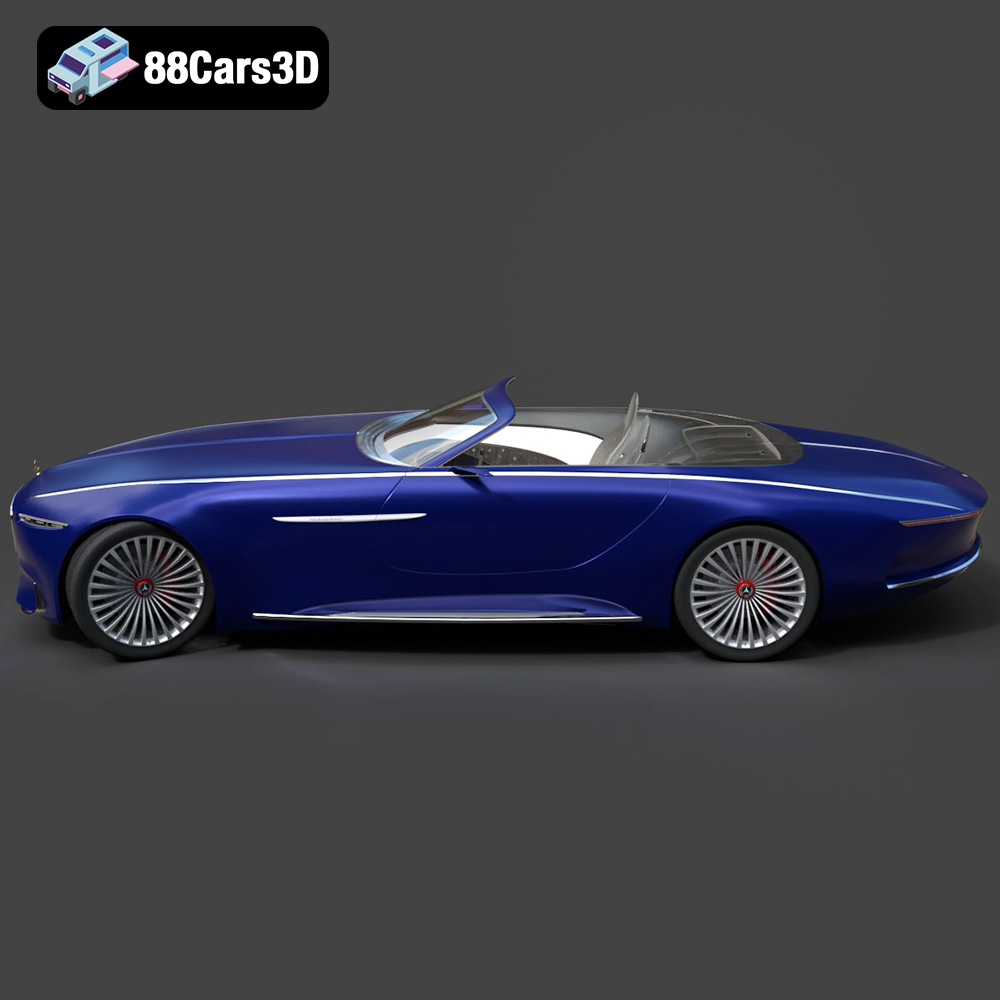
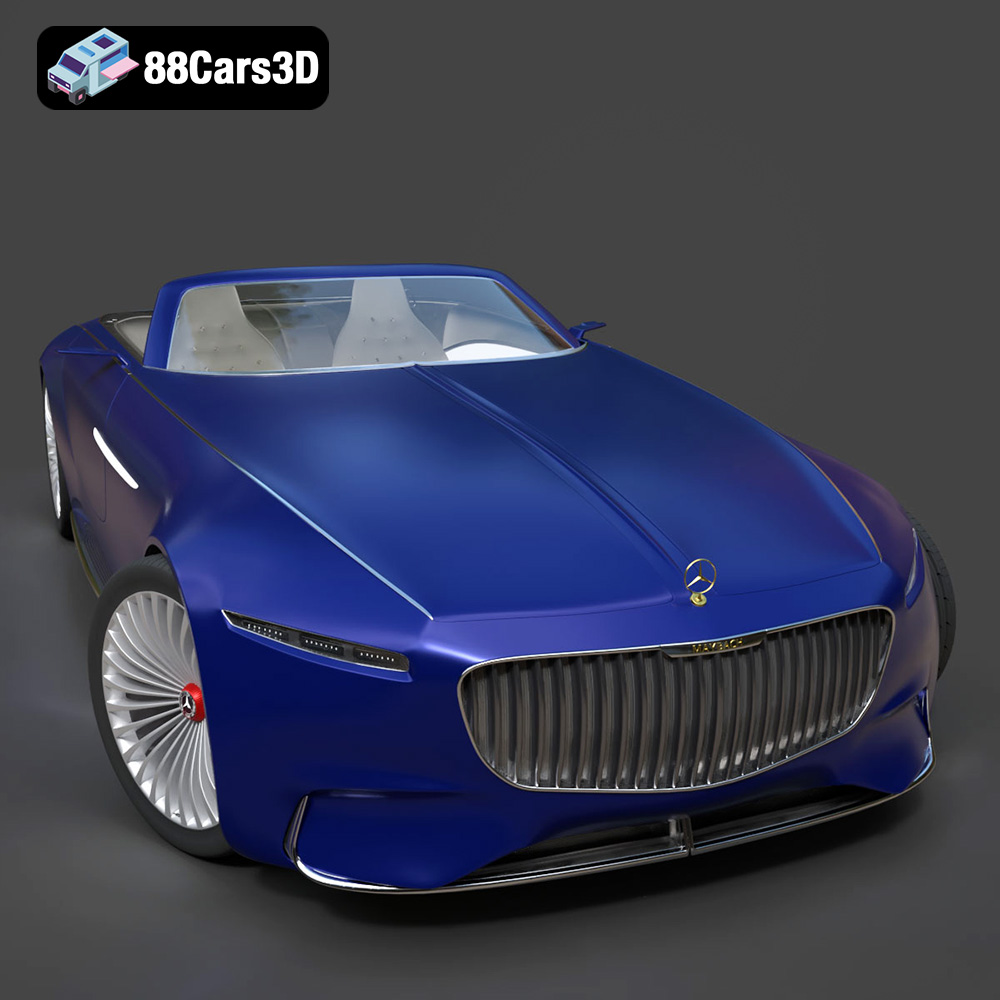
At the heart of this digital revolution lies the ability to bring even the most ambitious concepts to life. Imagine a vehicle that fuses opulent luxury with electrifying performance, a concept so striking it redefines automotive aesthetics. The Mercedes-Maybach Vision 6 2018 is precisely such a marvel. This breathtaking electric concept car pays a stunning homage to the glorious age of the aero coupes, featuring dramatic, extreme proportions with a massively elongated hood, a sweeping low roofline, and an iconic vertical strut grille inspired by a pinstriped suit. Its striking gullwing doors, ultra-slim LED headlights, aerodynamic boat-tail rear design, and massive 24-inch transparent aerodynamically optimized wheels make it an icon of futuristic design.
For 3D artists, game developers, and visualization specialists, having access to such a visionary design as a high-quality 3D asset is invaluable. A premium model, like the Mercedes-Maybach Vision 6 2018 3D Model available at 88cars3d.com, delivers not just visual fidelity but also the technical integrity required for diverse professional applications. It’s a testament to how advanced 3D modeling can capture the essence of automotive design and make it usable across various digital mediums.
The world of 3D modeling is rich with various file formats, each designed for specific purposes, software compatibility, and optimization goals. Choosing the right format is paramount for a smooth workflow and achieving the desired outcome, whether it’s for real-time rendering, static visualization, or 3D printing. Understanding these distinctions is crucial for anyone working with 3D car models.
The .blend format is Blender’s native file type. It encapsulates an entire Blender scene, including all geometry, materials, textures, lighting, cameras, animations, physics simulations, and even custom scripts. For artists deeply integrated into the Blender ecosystem, a .blend file offers maximum flexibility. It means full editability, allowing for comprehensive modifications, rigging adjustments, material tweaks using Blender’s powerful node-based shader editor, and scene re-composition. It’s perfect for those who want to use Blender’s comprehensive toolset to further customize, animate, or render the model within a single environment. The Mercedes-Maybach Vision 6 2018 3D Model, provided in .blend, gives users complete access to its intricate structure within Blender.
.fbx (Filmbox) is arguably one of the most widely adopted 3D exchange formats, developed by Autodesk. Its strength lies in its ability to store not just mesh data, but also hierarchies, materials (with some limitations depending on software), animations, rigging information, and even cameras and lights. This makes it an ideal choice for pipelines involving multiple software packages, especially for game development (Unreal Engine, Unity) and film production. When importing an .fbx, developers expect a robust, mostly intact representation of the original scene, ready for real-time rendering or further refinement. Its robust nature makes it indispensable for transferring complex assets like the Mercedes-Maybach Vision 6 to game engines where performance and integrity are key.
The .obj (Wavefront Object) format is a venerable and highly compatible format, often considered a universal standard for geometry exchange. It primarily stores vertex data, polygons (faces), UV coordinates, and normals. While it can reference external material (.mtl) files, its strength is its simplicity and widespread support across virtually all 3D software. For simple static meshes or when you need a clean mesh to start a new project in an unfamiliar software, .obj is an excellent choice. It’s less comprehensive than .fbx for animation data but superior in its ubiquitous compatibility.
.glb (GL Transmission Format Binary) is the binary version of glTF, a royalty-free specification for the efficient transmission and loading of 3D scenes and models by applications. .glb packages all necessary data (geometry, materials, textures, animations) into a single file, making it highly optimized for web-based 3D, AR (Augmented Reality), and VR (Virtual Reality) experiences. Its efficiency makes it perfect for displaying 3D models directly in browsers, mobile AR apps, or lightweight VR environments without complex external dependencies. For an interactive luxury showroom experience of the Mercedes-Maybach Vision 6 2018 in a web browser, .glb is the go-to format.
The .stl (Stereolithography) format is the de facto standard for 3D printing. It represents a 3D model as a series of connected triangles, essentially describing only the surface geometry of an object without color, texture, or other advanced properties. While it’s simple, this minimalist approach makes it universally compatible with 3D printers and slicing software. When preparing the Mercedes-Maybach Vision 6 for physical reproduction, the .stl file provides the precise mesh data required for accurate printing.
The .ply (Polygon File Format, or Stanford Triangle Format) is similar to .obj and .stl in that it describes a 3D object as a collection of polygons. However, .ply can also store additional properties like color, transparency, surface normals, and even data about the reliability of the data for each vertex or face. It’s often used in scientific applications, 3D scanning, and CAD/CAM workflows where precision and additional data attributes are important for analysis or manufacturing processes.
While not a universal file format in the traditional sense, .unreal usually refers to asset packages or projects specifically tailored for Unreal Engine. This often means an asset has been thoroughly optimized, configured with Unreal-specific materials (like PBR), collision meshes, LODs (Levels of Detail), and potentially Blueprints for interactivity. An “.unreal” file or asset typically implies that it’s designed for drag-and-drop integration, saving significant setup time for developers. The Mercedes-Maybach Vision 6 model’s “game-ready” attributes are often bundled or optimized for direct use in Unreal Engine, ensuring minimal effort for maximum impact.
Finally, the .max format is the native file type for Autodesk 3ds Max. Similar to .blend for Blender, a .max file contains a complete 3ds Max scene with all its elements – geometry, textures, materials, lighting, cameras, animations, modifiers, and scripts. For users deeply entrenched in 3ds Max for architectural visualization, animation, or detailed modeling, the .max file provides full parametric control and editability within their preferred environment. Having the Mercedes-Maybach Vision 6 in .max format ensures that professionals can leverage 3ds Max’s powerful rendering capabilities and extensive plugin ecosystem.
The availability of the Mercedes-Maybach Vision 6 2018 3D Model in this diverse range of formats (.blend, .fbx, .obj, .glb, .stl, .ply, .unreal, .max) from 88cars3d.com underscores its versatility and the understanding that different projects and pipelines demand specific technical solutions. This comprehensive support empowers artists and developers to integrate the model seamlessly into virtually any professional workflow.
Developing a premium 3D car model is an intricate process that balances artistic vision with technical precision. The Mercedes-Maybach Vision 6 2018 3D Model exemplifies this balance, offering both stunning visual fidelity and robust technical underpinnings that make it suitable for a wide array of demanding applications.
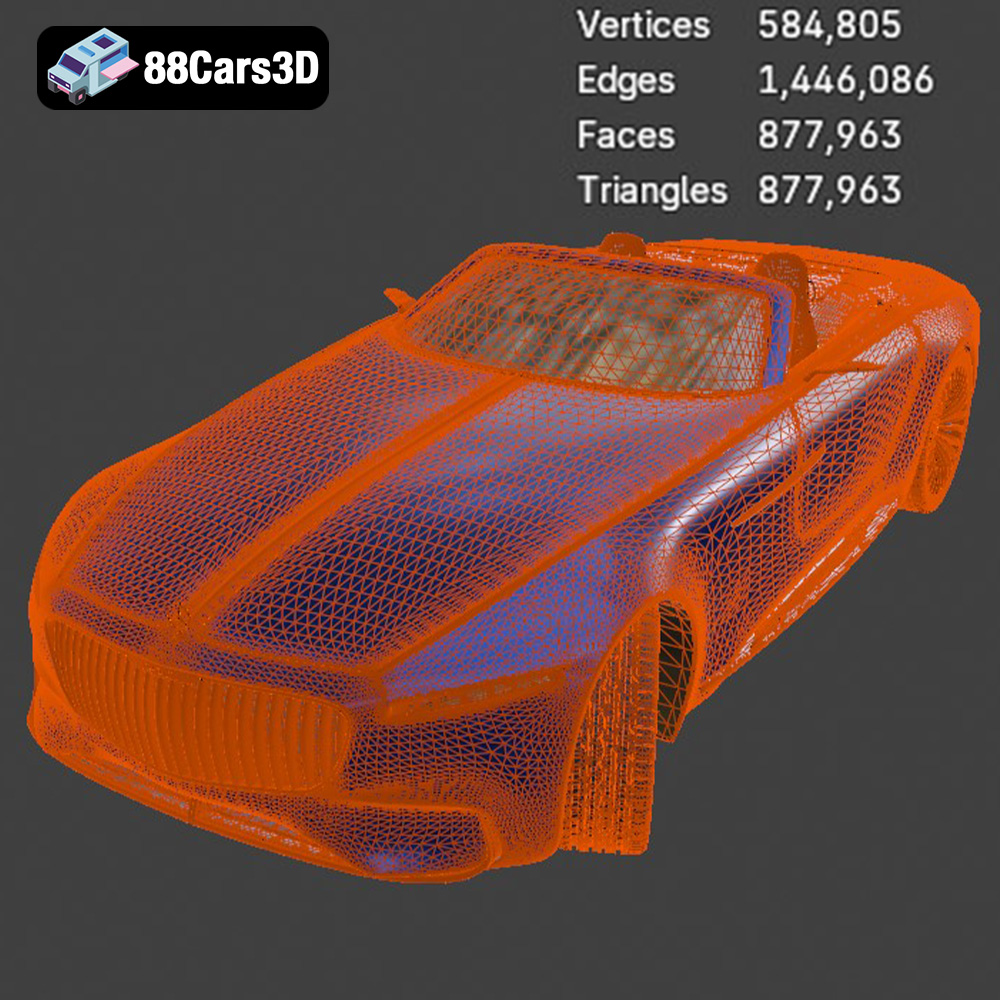
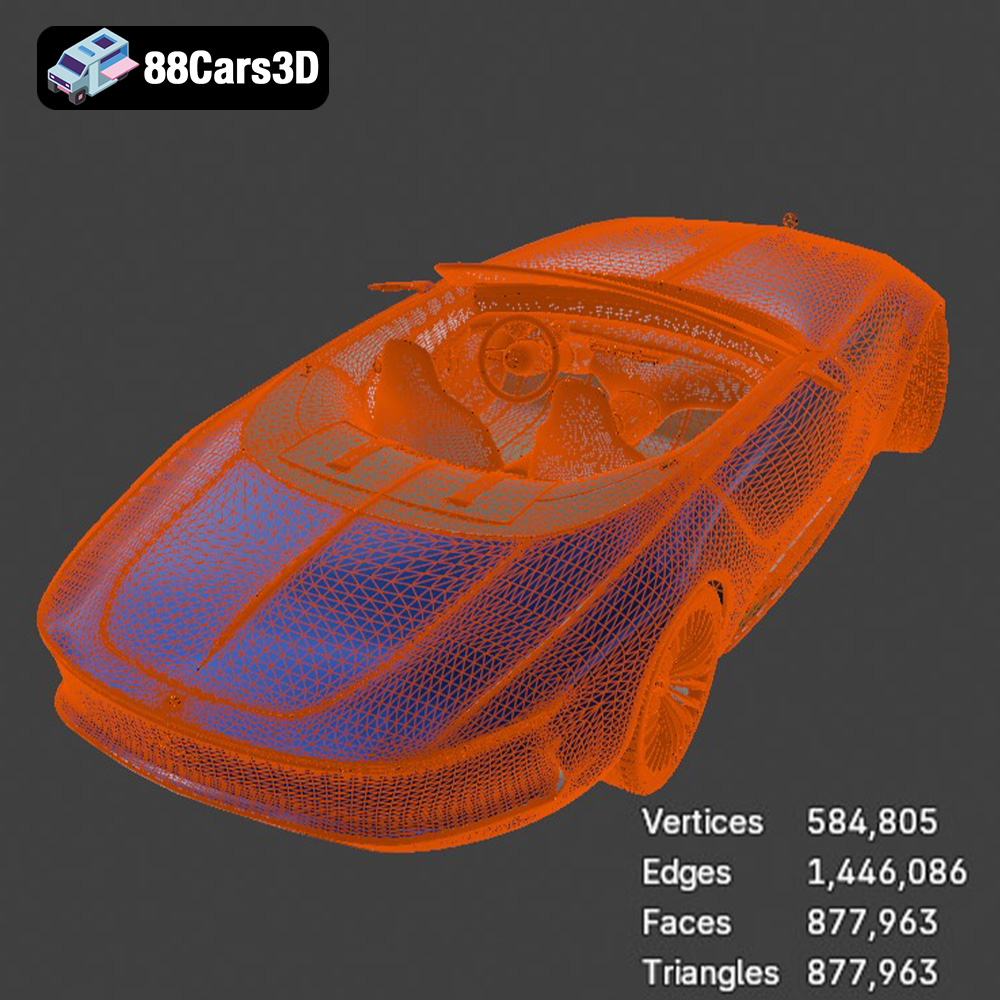
One of the most critical aspects of a high-quality 3D asset, especially for real-time environments, is its topology. The Vision 6 model boasts approximately 250,000 triangles. This figure strikes a perfect balance: it’s high enough to capture the car’s sweeping curves, sharp lines, and intricate details without appearing faceted or low-resolution, yet optimized to ensure game-ready performance. In a game engine like Unreal or Unity, a model with excessive polycount can cripple frame rates. Conversely, too few polygons result in a blocky, unrealistic appearance. The chosen triangle count for this model demonstrates a keen understanding of real-time engine limitations and the need for visual realism, making it an ideal game asset.
Beyond polycount, the model’s structure reflects a deep commitment to accuracy and usability. It adheres to real-world scale, which is fundamental for realistic integration into scenes and consistent interaction within virtual environments. Furthermore, critical components are separately modeled and properly pivoted for animation, a feature essential for dynamic projects.
While the product description emphasizes geometry, implied in a high-quality 3D model like this are clean UVs and PBR (Physically Based Rendering) ready materials. This allows for extensive customization and realistic rendering across various engines and software.
A high-quality 3D car model is more than just a static asset; it’s a dynamic tool that empowers creators across various industries. The Mercedes-Maybach Vision 6 2018 3D Model, with its detailed design and optimized structure, is perfectly suited for a multitude of professional applications.
For game developers, the blend of visual fidelity and optimized performance is a dream come true. The Vision 6 model’s ~250,000 triangle count makes it an ideal game asset.
The power of 3D models shines brightly in visualization, marketing, and immersive experiences, where aesthetics and realism are paramount. The Mercedes-Maybach Vision 6 model excels in these areas.
While often overlooked for complex automotive models, 3D printing offers a tangible connection to digital designs. The Mercedes-Maybach Vision 6 3D Model is convertible to .stl format, opening doors for display-scale hobbyists and enthusiasts.
The world of game development is constantly pushing boundaries, demanding ever-increasing levels of realism and immersion. 3D car models, particularly those of exceptional quality like the Mercedes-Maybach Vision 6 2018, are pivotal to achieving these goals. They are not merely visual elements but complex digital systems that interact with game physics, animation systems, and player input.
Bringing a detailed 3D car model into a game engine like Unreal Engine or Unity involves several technical considerations beyond simple import. The “game-ready” designation of the Vision 6 model is key here.
A static car model is insufficient for an interactive driving experience. The Mercedes-Maybach Vision 6 3D Model excels with its pre-separated and pivot-set components.
The Mercedes-Maybach Vision 6 2018 3D Model is not just ready for current-gen games but also poised for future advancements. Its optimized geometry and clean structure make it adaptable.
The digital age has transformed how we perceive and interact with automotive design. High-quality 3D car models like the Mercedes-Maybach Vision 6 are central to creating compelling visual narratives, whether for marketing, product development, or interactive customer experiences.
Photorealistic rendering is the pinnacle of architectural and automotive visualization, and it demands impeccable 3D assets combined with sophisticated rendering techniques.
Augmented Reality (AR) and Virtual Reality (VR) are revolutionizing how customers interact with products, especially high-value items like concept cars. The Vision 6 3D Model is perfectly suited for these cutting-edge applications.
While digital visualization offers immense flexibility, there’s a unique satisfaction in holding a physical representation of a meticulously crafted 3D model. The Mercedes-Maybach Vision 6 2018 3D Model’s compatibility with 3D printing technologies provides an exciting avenue for enthusiasts and designers alike to bring this concept car into the physical realm.
Converting a high-detail rendering model into a successful 3D print requires specific considerations, which the .stl format and the provided print settings address.
Complex geometries, like those found on the Vision 6, often require strategic support structures during the printing process to prevent sagging or failure.
The journey from a raw 3D print to a display-worthy model involves careful post-processing, transforming the print into a high-quality replica.
In the dynamic landscape of digital content creation, the value of a meticulously crafted 3D car model cannot be overstated. From powering the most immersive next-gen racing games to anchoring photorealistic automotive advertisements and enabling groundbreaking AR/VR showroom experiences, these digital assets are fundamental tools for professionals across industries. The Mercedes-Maybach Vision 6 2018 3D Model stands as a prime example of what a premium asset should be: a perfect fusion of stunning aesthetics, optimized technical specifications, and broad compatibility.
Whether you are a game developer striving for unparalleled realism, a visualization artist aiming for cinematic perfection, or an enthusiast wanting to bring a virtual concept into the physical world through 3D printing, the versatility and quality of this model make it an indispensable resource. Its availability in a comprehensive range of formats – .blend, .fbx, .obj, .glb, .stl, .ply, .unreal, and .max – ensures seamless integration into virtually any professional workflow, maximizing efficiency and creative potential.
Investing in high-quality 3D car models, such as the Mercedes-Maybach Vision 6 2018 from 88cars3d.com, is an investment in future-proof content creation. It provides the foundation upon which captivating experiences and stunning visuals are built, allowing artists and developers to focus on innovation rather than asset creation from scratch. As the digital realm continues to expand, the demand for such expertly crafted assets will only grow, cementing their role as critical components of the modern creative pipeline.
The Mercedes-Maybach Vision 6 2018 is a breathtaking electric concept car that pays a stunning homage to the glorious age of the aero coupes. It features dramatic, extreme proportions with a massively elongated hood, a sweeping low roofline, and an iconic vertical strut grille inspired by a pinstriped suit. Key visual elements include the striking gullwing doors, ultra-slim LED headlights, an aerodynamic boat-tail rear design, and massive 24-inch transparent aerodynamically optimized wheels. This 3D model boasts exceptional quality with optimized topology (approximately 250,000 triangles), delivering a perfect balance between high visual fidelity and game-ready performance. Whether you are developing a next-gen racing game, creating an interactive AR/VR luxury showroom, or producing cinematic animations, this model provides pristine detailing without compromising rendering speeds. Perfect for luxury car showcases, cinematic rendering, futuristic game environments, and high-end VR configurators.
$19.99
.2018
.blend
.fbx
.glb
.max
.obj
.ply
.rendering
.stl
.unreal
car-3d-model
concept-car
game asset
game-ready
low-poly
luxury car
mercedes-maybach
optimized
vision-6
VR/AR