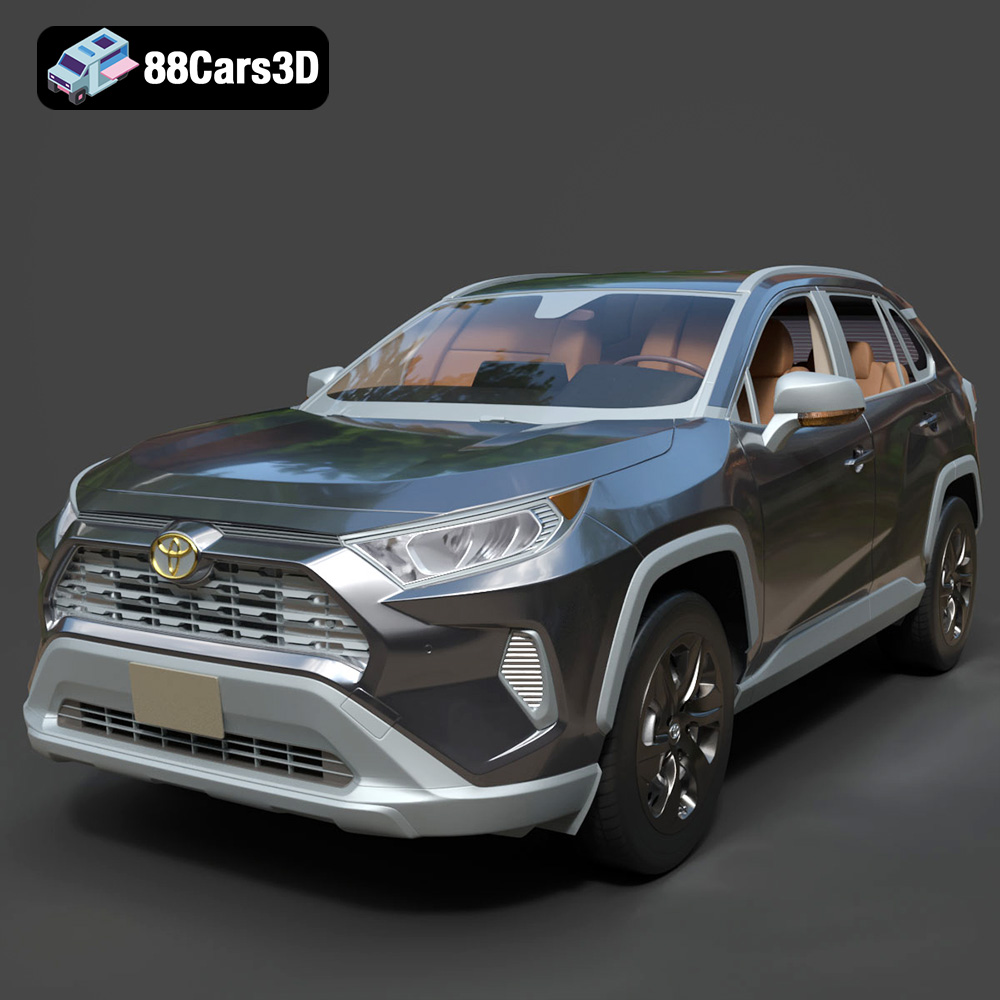
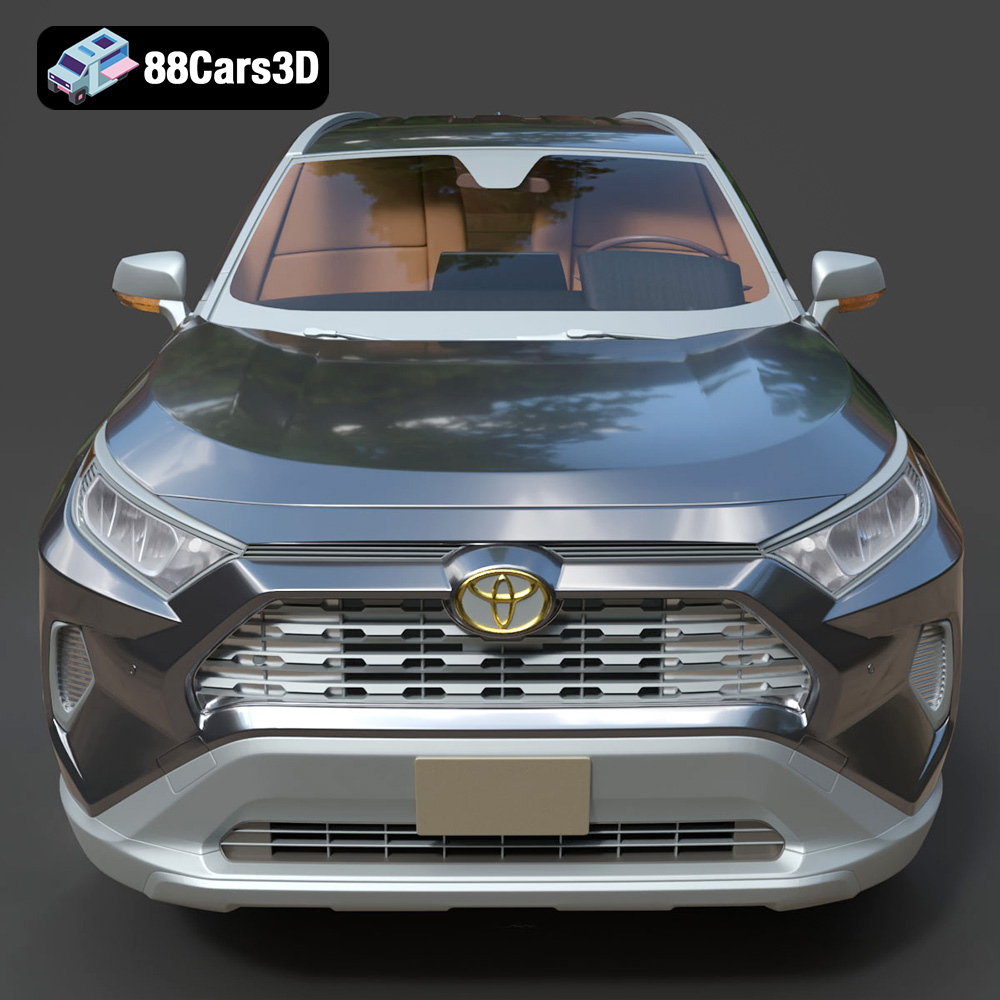
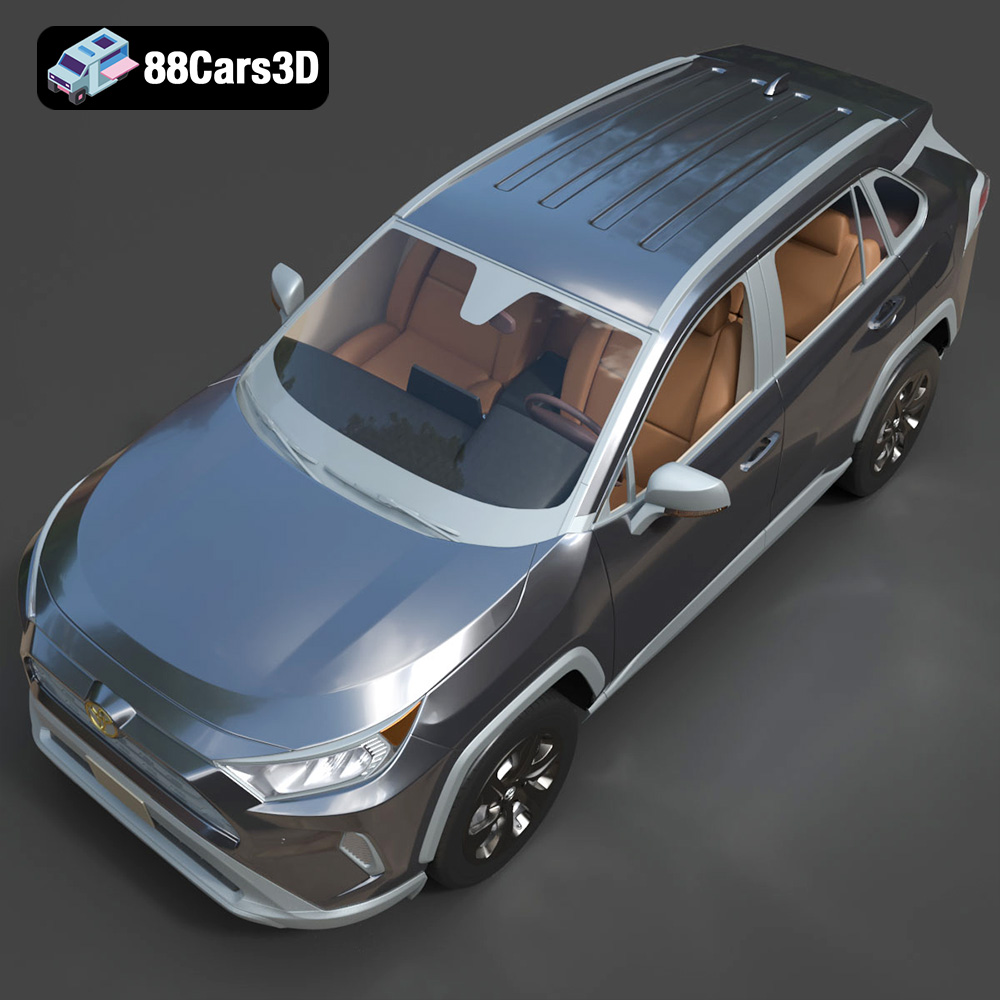
In the dynamic world of 3D visualization, game development, and real-time experiences, the demand for high-quality, meticulously crafted 3D assets is ever-growing. Automotive models, in particular, stand as a cornerstone for a vast array of applications, from cinematic renderings to interactive virtual showrooms. Professionals and enthusiasts alike seek models that not only capture the aesthetic fidelity of a vehicle but also adhere to rigorous technical standards for performance and versatility. This pursuit of excellence leads many to specialized marketplaces like 88cars3d.com, where expertly developed assets, such as the featured Toyota RAV4 LE 2019 3D Model, redefine what’s possible.
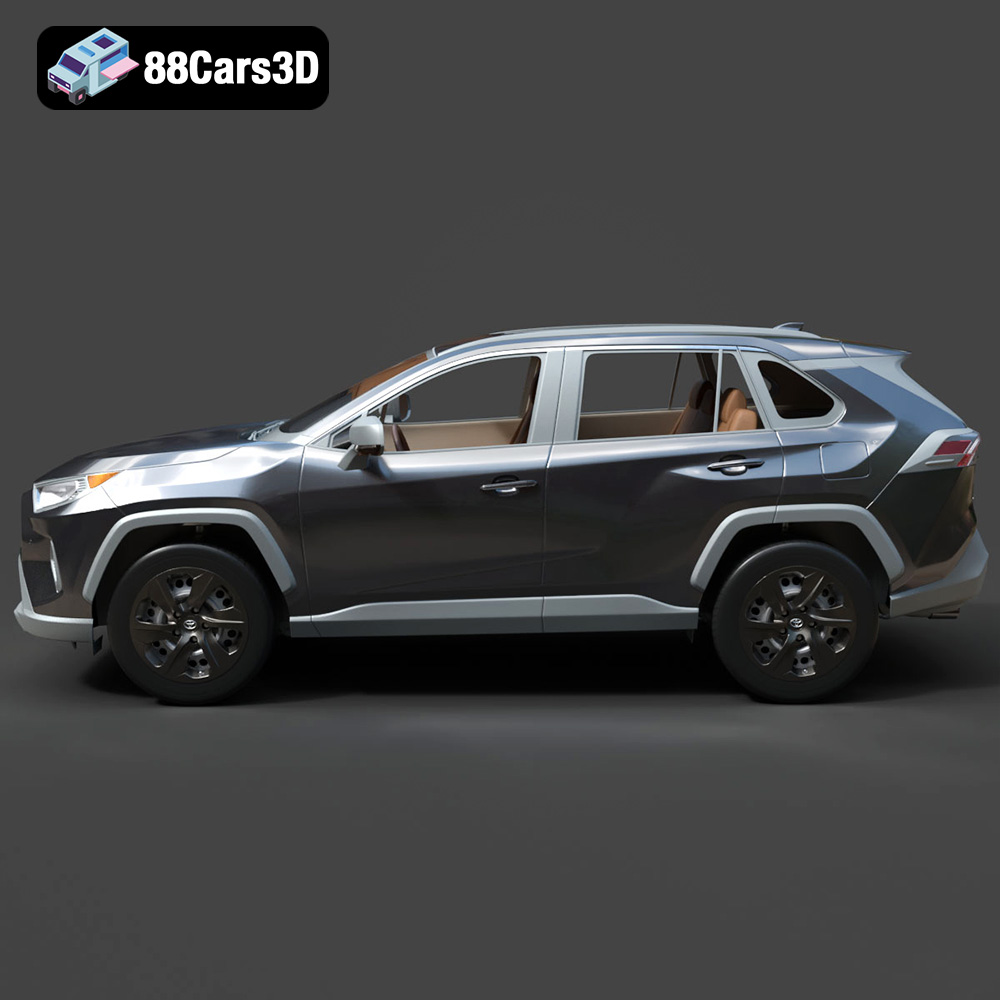
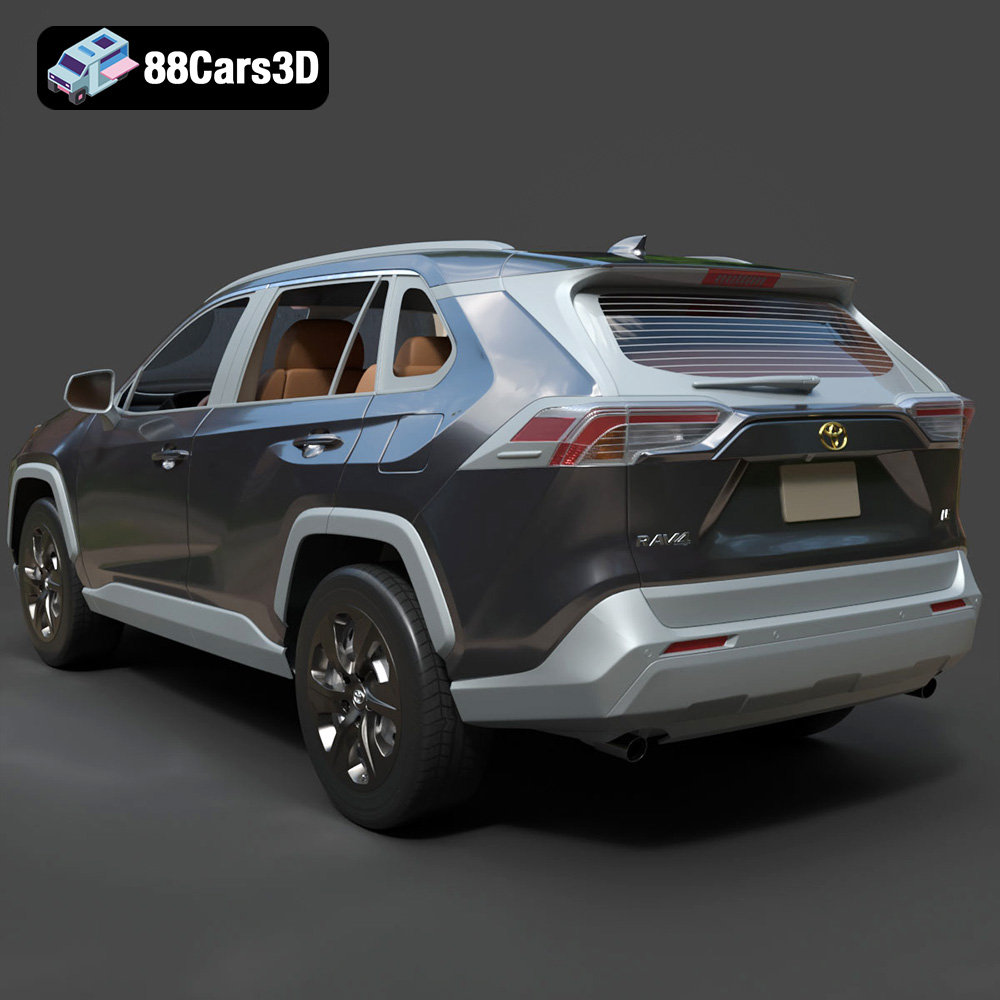
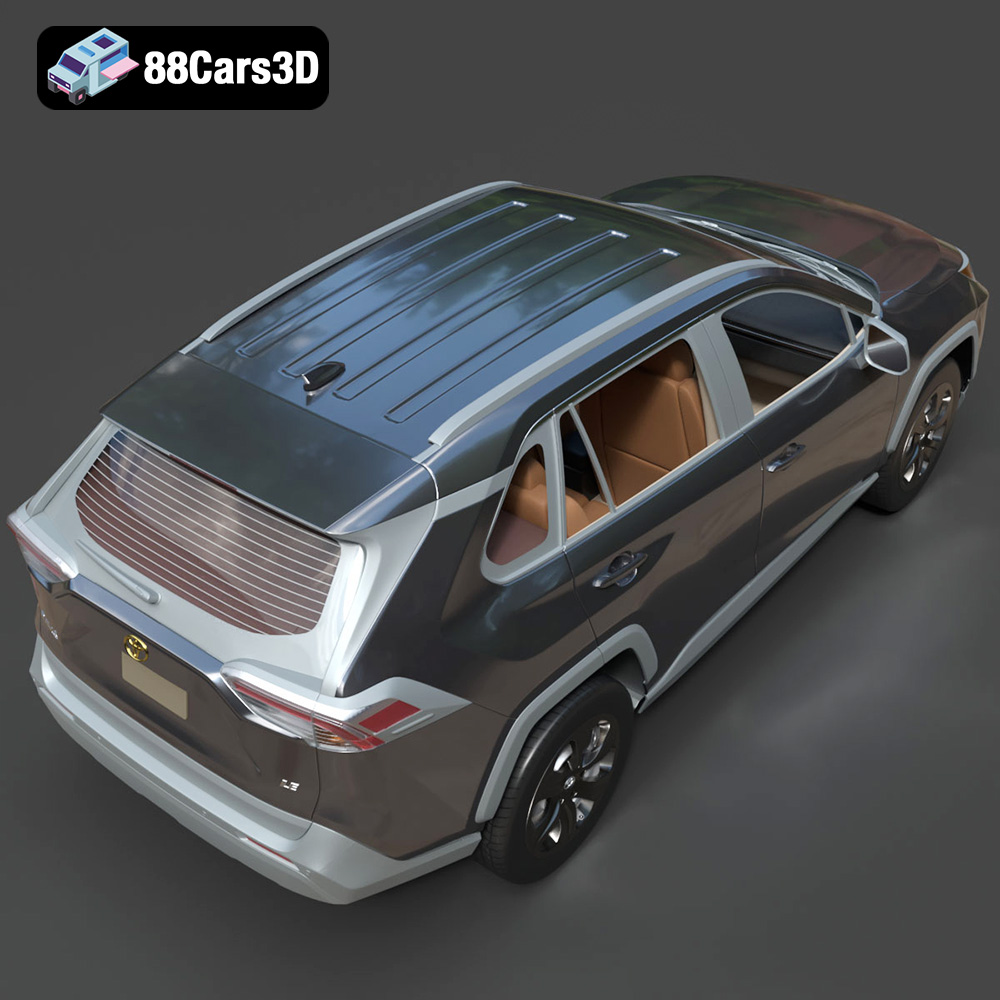
The Toyota RAV4 LE 2019 itself represents a significant evolution in compact SUV design, known for its rugged appeal and modern aesthetic. Translating this real-world presence into a compelling 3D model requires a deep understanding of geometry, materials, and optimization. This particular 3D model doesn’t just replicate the vehicle’s appearance; it embodies a carefully balanced blend of visual realism and technical efficiency, making it an indispensable asset for diverse projects. Whether you’re a game developer looking for a sturdy vehicle for your open world, an architect integrating realistic street scenes, or an AR/VR designer crafting immersive experiences, a model like the Toyota RAV4 LE 2019 offers a robust foundation.
Understanding 3D Model File Formats
Navigating the landscape of 3D assets often begins with understanding the myriad of file formats available, each serving distinct purposes and workflows. A truly versatile 3D model, like the Toyota RAV4 LE 2019, offers a comprehensive suite of formats, ensuring seamless integration across various software and platforms. Choosing the correct format is paramount for maintaining data integrity, optimizing performance, and achieving your project’s specific goals.
The Ecosystem of Editable Scenes
For artists and developers who require full control over their 3D assets, scene-based formats are invaluable. The Toyota RAV4 LE 2019 3D Model includes some of the most prominent ones:
- .blend (Blender): This is Blender’s native file format, offering a fully editable scene with all materials, textures, lighting, cameras, and animation data embedded. For users of Blender, this format provides the highest degree of flexibility, allowing for extensive modifications, re-texturing, re-rigging, and integration into existing Blender projects. It’s the go-to for artists who want to delve deep into the model’s construction and adapt it precisely to their needs. The .blend file for the RAV4 LE 2019 would allow you to inspect the detailed engine block, manipulate the individual suspension components, or even re-sculpt parts of the chassis with ease.
- .max (3ds Max): Similar to .blend for Blender users, .max is the native file format for Autodesk 3ds Max. It encompasses a complete scene with all model data, including geometry, modifiers, materials, lights, and animation. For professionals operating within the 3ds Max ecosystem, this format offers unparalleled fidelity to the original design, ensuring that all intricate details, from the dual exhaust styling to the realistic tire treads, are preserved and fully editable for high-end rendering and animation tasks. If your workflow revolves around V-Ray or Corona for automotive rendering, the .max file is your ideal starting point.
Interoperability and Real-time Optimization
When it comes to sharing models between different software packages or deploying them in real-time environments, certain formats excel:
- .fbx (Filmbox): Developed by Autodesk, FBX is arguably the most widely adopted format for 3D data exchange, particularly favored in game development (Unreal Engine, Unity) and film pipelines. It supports geometry, materials, textures, animations, and skeletal data, making it ideal for importing complex animated models. The .fbx version of the RAV4 LE 2019 is perfectly optimized for real-time engines, ensuring the ~200k triangle count is handled efficiently while preserving accurate pivot setups for steering and suspension.
- .obj (Wavefront OBJ): A universal format, .obj is a simple, text-based format that primarily stores geometry (vertices, normals, UVs) and references to external material files (.mtl). Its simplicity ensures broad compatibility across almost all 3D software. While it doesn’t support animation, its robustness for static mesh data makes it a reliable choice for initial model import, particularly when cross-software compatibility is the top priority. The .obj can be easily imported into any DCC software for rendering or further processing.
- .glb (GL Transmission Format Binary): This is the binary version of glTF, specifically optimized for efficient transmission and loading of 3D scenes and models on the web and in AR/VR applications. .glb files are self-contained, including geometry, materials, textures, and even animations in a single file, making them incredibly lightweight and performant for browser-based viewers, immersive virtual showrooms, and mobile AR experiences. For showcasing the RAV4 LE 2019 in an interactive web viewer or an AR app, .glb is the definitive choice.
- .unreal (Unreal Engine Asset): While not a standalone file format in the traditional sense, a designated “.unreal” file often signifies an asset specifically pre-configured and optimized for direct import or use within Unreal Engine. This could mean pre-setup materials, collisions, LODs (Levels of Detail), and correct pivot points, saving considerable development time. For game developers using Unreal Engine, this is an incredibly valuable asset, allowing for immediate integration of the RAV4 LE 2019 into their projects.
Specialized Formats for Niche Applications
Beyond general-purpose formats, some cater to very specific needs:
- .stl (Stereolithography): This format is the industry standard for 3D printing. It represents a 3D model as a series of connected triangles (a mesh) and contains only geometric information without color or texture data. The .stl version of the Toyota RAV4 LE 2019 3D Model is provided for hobbyists and professionals looking to physically manifest the digital design. It’s crucial for slicing software that prepares the model for various 3D printers, requiring a “watertight” mesh for successful fabrication.
- .ply (Polygon File Format): Also known as the Stanford Triangle Format, .ply is a versatile format for storing 3D data, including geometry, color, and other attributes per vertex or face. It’s often used for scanned data and can support both ASCII and binary representations. While less common for general 3D asset exchange than FBX or OBJ, it offers precision for complex mesh data and can be useful in specific CAD or analytical pipelines where detailed mesh attributes are important, or for certain types of 3D printing software.
The provision of such a comprehensive range of file formats with the Toyota RAV4 LE 2019 3D Model underscores its versatility and value, truly making it a robust solution for nearly any 3D production pipeline.
Crafting Excellence: The Technical Anatomy of a Game-Ready 3D Car Model
Creating a high-quality 3D car model that is both visually stunning and technically efficient requires a mastery of digital sculpting, topology optimization, and a keen eye for real-world detail. The Toyota RAV4 LE 2019 3D Model exemplifies this balance, engineered for performance across a spectrum of demanding applications.
Precision Geometry and Optimized Topology
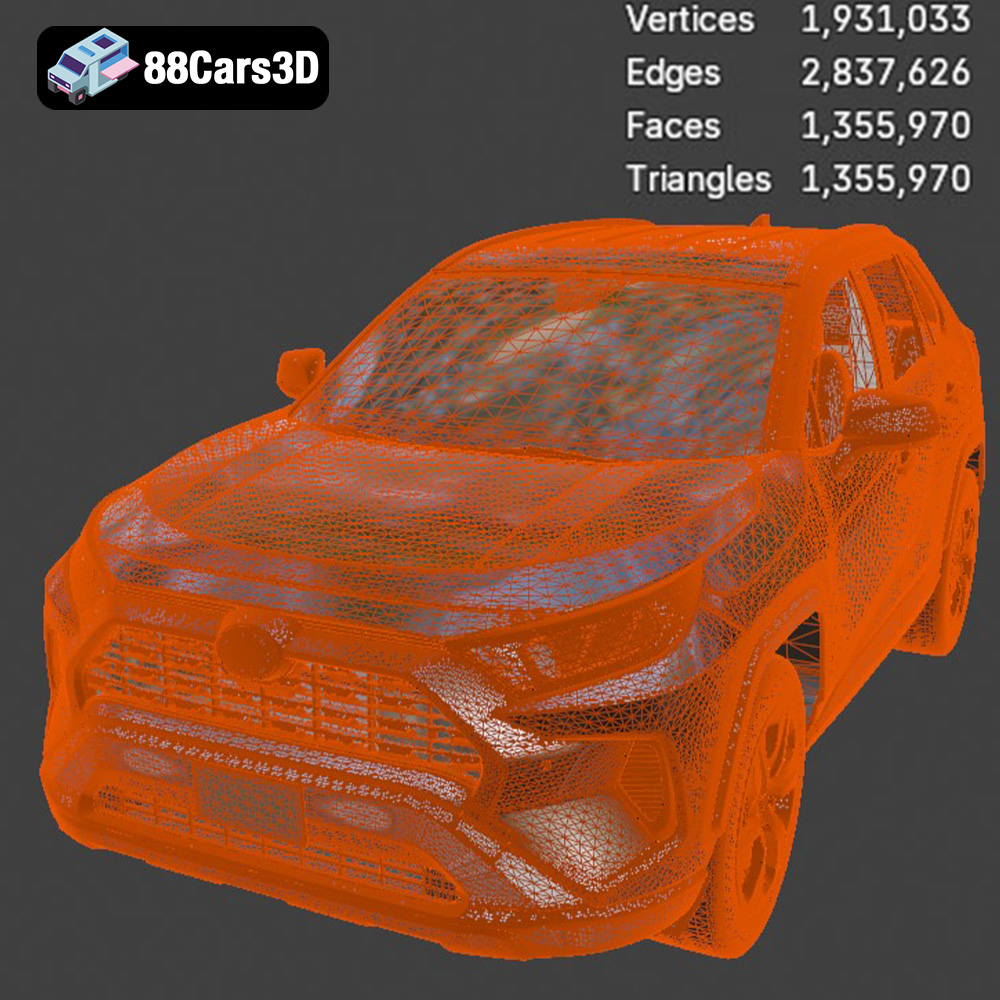
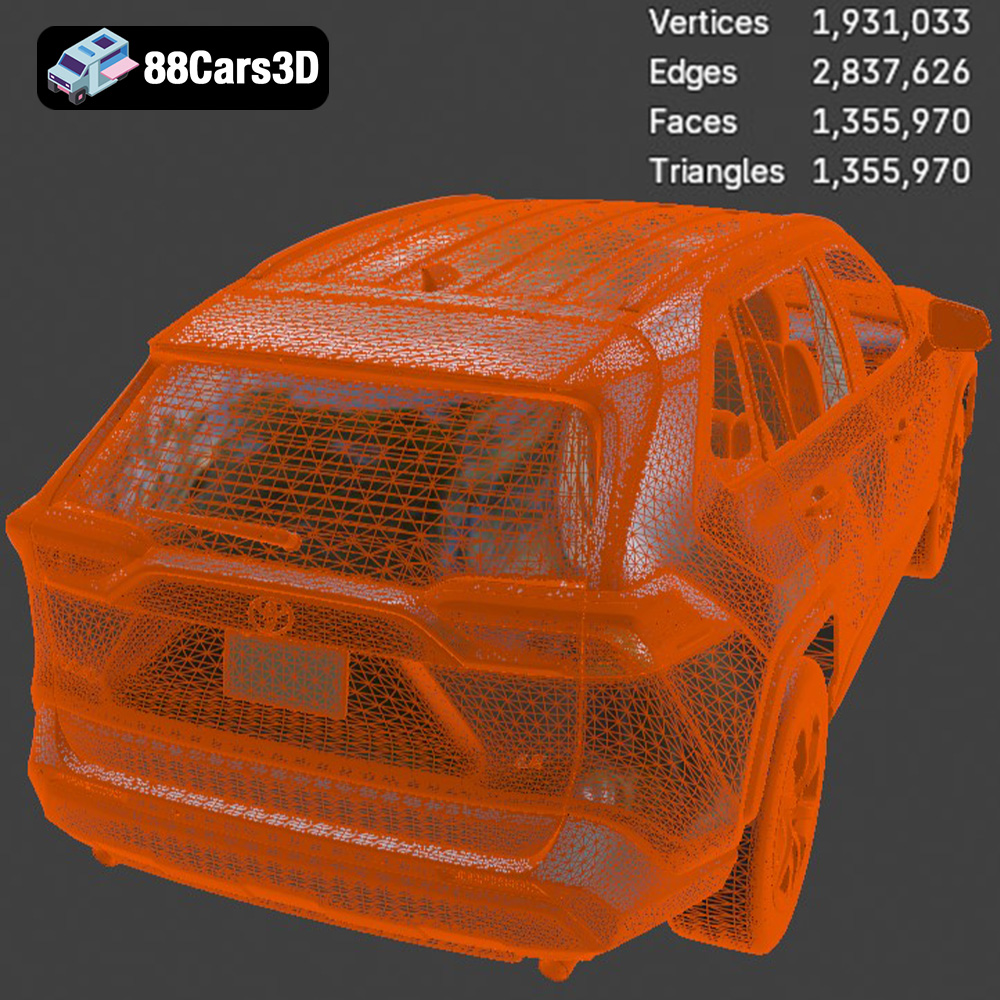
At the heart of any exceptional 3D model lies its geometry and topology. For the Toyota RAV4 LE 2019, the developers have achieved a critical balance: a game-ready ~200k triangle count. This optimization is crucial for real-time engines like Unreal and Unity, where every polygon counts towards frame rate performance. Yet, despite this optimization, the model maintains a high level of visual realism, ensuring that details like body lines, panel gaps, and the distinctive RAV4 grille are accurately represented without being overly dense. The “excellent topology” mentioned in the description refers to the clean, organized flow of polygons, which is essential for smooth deformations during animation, efficient UV unwrapping, and proper subdivision if higher detail is needed for close-up renders.
- Strategic Polycount: A ~200k triangle count is considered an optimal sweet spot for modern game engines. It’s detailed enough for foreground assets and close-ups in games or AR/VR, yet light enough to be replicated multiple times in a scene without significantly impacting performance.
- Clean Mesh Structure: Good topology ensures that the model can be easily edited, textured, and animated. It minimizes shading artifacts and allows for efficient UV mapping, which directly translates to cleaner textures and better visual quality.
Dissecting the Details: Exterior and Undercarriage
The fidelity of a 3D car model often hinges on its exterior and undercarriage details. The Toyota RAV4 LE 2019 model pays meticulous attention to these elements:
- Accurate Frame Geometry: The model boasts accurate Toyota RAV4 LE 2019 frame geometry and proportions, derived from the real vehicle. This is vital for realistic simulations, vehicle configurators, and architectural visualizations where scale and realism are paramount.
- Engine Block and Undercarriage: Unlike many models that simplify these often-unseen areas, this asset features a detailed engine block based on the 2.5L Dynamic Force 4-cylinder engine and realistic dual exhaust styling and undercarriage detailing. This level of depth is invaluable for simulations, close-up renders, and educational content where exposing mechanical components is desired.
- Lighting and Wheels: Intricate headlight and taillight assemblies with distinct LED signatures enhance realism, especially in night scenes. The accurate 17-inch steel wheel designs with detailed tire treads further contribute to the model’s authenticity, complete with detailed independent MacPherson strut front suspension. Critically, separate wheels, suspension, and steering components are included, enabling realistic animation of driving dynamics.
Immersive Interiors: Beyond the Dashboard
An automotive 3D model is incomplete without a well-realized interior, especially for first-person perspectives in games or interactive experiences:
- Cockpit Fidelity: The Toyota RAV4 LE 2019 3D Model includes an accurately modeled fabric-trimmed seating, a detailed multi-function steering wheel, and a high-fidelity digital and analog instrument cluster. These elements create an immersive environment for virtual pilots or passengers.
- Driver Controls: Precise center console with climate controls, pedals, and shifter are all modeled, offering visual cues for interaction and enhancing the sense of being inside the vehicle.
- Optimized for Perspective: The interior geometry is specifically optimized for first-person POV in gaming, ensuring that the model remains efficient even when viewed from the driver’s seat, avoiding unnecessary polycount in unseen areas while maintaining detail where it matters most.
Integrating High-Fidelity Automotive Assets into Professional Pipelines
The true value of a premium 3D car model, such as the Toyota RAV4 LE 2019, lies in its seamless integration into diverse professional workflows. From generating breathtaking static renders to deploying interactive real-time experiences, versatility is key.
Rendering with Realism: 3ds Max and Blender Workflows
For professionals in visualization and animation, the ability to work within industry-standard software like 3ds Max and Blender is non-negotiable. The inclusion of .max and .blend formats for the Toyota RAV4 LE 2019 3D Model provides a native starting point.
- Material and Lighting Setup: In both 3ds Max and Blender, artists can take full advantage of the model’s clean UVs and well-defined material IDs. This allows for quick setup of PBR (Physically Based Rendering) materials, using textures provided or custom ones. Pairing the model with advanced renderers like V-Ray, Corona Renderer (for 3ds Max), or Cycles and Eevee (for Blender) enables the creation of photorealistic images. Imagine the RAV4 positioned in an urban street scene, rendered with realistic reflections on its aerodynamic profile, or showcased in a studio environment with dramatic lighting highlighting its chiseled styling.
- Animation and Dynamics: The separate components for wheels, suspension, and steering, coupled with proper pivot setups, are crucial for animation. In 3ds Max, artists can rig the vehicle for realistic driving animations using constraints and controllers. Similarly, in Blender, these components allow for easy rigging, enabling the RAV4 to navigate virtual terrains with accurate wheel rotation and suspension travel. This capability extends the model’s utility beyond static shots to dynamic presentations and cinematic sequences.
Real-Time Performance: Unreal Engine and Unity
The game-ready nature of the Toyota RAV4 LE 2019 3D Model is particularly evident in its suitability for real-time engines. The .fbx and .unreal formats are prime examples of this optimization.
- Optimized Import and Material Setup: Importing the .fbx file into Unreal Engine or Unity is a straightforward process. The ~200k triangle count is efficient for real-time rendering. Developers can quickly set up advanced PBR materials using the engine’s node-based material editors, applying realistic metallic finishes, glass shaders for windows, and rubber for tires.
- Collision and LODs: For game environments, proper collision meshes are essential for realistic physics interactions. The model’s clean topology facilitates the creation of accurate collision hulls. Furthermore, developers can leverage the model’s design to generate multiple Levels of Detail (LODs), ensuring that distant vehicles render with fewer polygons, thus maintaining optimal performance without noticeable visual degradation. This makes the RAV4 ideal for open-world games and racing titles where performance is paramount.
Bridging Worlds: AR/VR and Virtual Showrooms
The immersive potential of 3D car models in AR/VR is rapidly expanding. The .glb format, included with the RAV4 LE 2019, is specifically designed for these applications.
- Lightweight and Accessible: .glb files are highly optimized for web and mobile environments, allowing for quick loading times and smooth performance in augmented reality applications on smartphones or virtual reality experiences in headsets. Imagine placing a virtual RAV4 in your driveway via an AR app, or exploring its detailed interior in a VR showroom.
- Interactive Configurator Potential: For automotive brands, a model like this forms the backbone of virtual configurators, allowing potential buyers to customize colors, wheel types, and even explore interior options in real-time, greatly enhancing the purchasing experience. The customization options like changing body colors and modifying tire textures directly support this use case.
From Digital to Tangible: 3D Printing the Toyota RAV4 LE 2019 Model
The versatility of a high-quality 3D model extends beyond digital screens, offering the exciting possibility of physical manifestation through 3D printing. The Toyota RAV4 LE 2019 3D Model, with its inclusion of the .stl and .ply formats, provides a robust foundation for bringing this digital vehicle into the real world, whether for hobbyists, collectors, or prototyping.
Preparing for Fabrication: STL and PLY Formats
3D printing relies on specialized file formats that translate complex digital geometry into instructions for a physical printer. The .stl and .ply formats are central to this process:
- STL: The Industry Standard for Printing: The .stl (Stereolithography) format is universally accepted by 3D printing software. It represents the surface of a 3D model using a series of connected triangles. For a successful print, an STL file must be “manifold” or “watertight,” meaning it has no holes, inversed normals, or intersecting geometry that would confuse the printer’s slicing software. The Toyota RAV4 LE 2019 3D Model’s clean geometry and optimized topology are excellent starting points for conversion to a reliable STL. This format captures the external form of the RAV4, ready for slicing.
- PLY: Precision Meshes for Advanced Use: While .stl is prevalent, the .ply (Polygon File Format) offers a more comprehensive way to store mesh data, including color and other attributes per vertex or face, although for 3D printing, it primarily functions as a precise geometric descriptor. It can be useful for certain advanced slicing software or for capturing detailed surface information if color printing is a consideration, though most hobbyist-scale automotive prints focus on single-color materials for painting. For complex analysis or specific industrial additive manufacturing workflows, .ply can be advantageous due to its explicit definition of vertices, edges, and faces, ensuring very high precision.
- Ensuring Printability: Regardless of the format, the initial digital model must be designed with 3D printing considerations in mind. Factors like wall thickness, minimal detail size, and potential for overhangs need to be addressed. The RAV4 model’s robust design likely facilitates this, but additional checks in software like Meshmixer or Netfabb might be required for absolute print perfection.
Recommended Print Settings and Post-Processing
Successfully printing a detailed automotive model like the RAV4 requires careful attention to print settings and post-processing techniques to achieve the desired level of fidelity and finish:
- Scaling for Detail: The recommended scales of 1:12, 1:18, or 1:24 are excellent choices. Larger scales allow for greater detail retention, making intricate parts like the detailed engine block or suspension components more prominent. Smaller scales are more economical but demand higher printer resolution.
- Layer Height and Material: A layer height of 0.04–0.12 mm is critical for capturing fine details and smooth surfaces, especially for a vehicle with distinct body lines. Resin printing (SLA/DLP) is highly recommended for such fine details over FDM (Fused Deposition Modeling) due to its superior resolution and ability to reproduce intricate features like LED signatures in headlights and delicate interior elements.
- Structural Considerations: Wall thickness of 1.2–2.0 mm provides structural integrity, preventing fragile parts. An infill of 20–30% offers a good balance between strength and material usage. For parts like the exhaust, mirrors, and even parts of the detailed undercarriage, supports will be required during printing to prevent sagging and ensure proper adhesion. Printing the frame angled can often improve structural integrity and minimize support material on visible surfaces, while wheels are best printed separately for cleaner results and easier post-processing.
- Post-Processing for Realism: After printing, the real magic begins with post-processing. This includes sanding to remove layer lines and support marks, applying primer for an even paint base, and then painting with authentic factory colors, often with metallic finishes to mimic the original vehicle’s luster. This stage is where the raw print transforms into a display-worthy replica, truly showcasing the details of the Toyota RAV4 LE 2019.
Unlocking Creative Potential: Customization and Versatility
The true power of a meticulously crafted 3D model like the Toyota RAV4 LE 2019 lies not just in its initial fidelity, but in its inherent flexibility and capacity for customization. A professional-grade asset should serve as a dynamic canvas, allowing artists and developers to tailor it precisely to their creative vision and project requirements.
Aesthetic Transformations: Colors, Materials, and Textures
The ability to alter the visual appearance of a 3D car model is fundamental for diverse applications. The Toyota RAV4 LE 2019 model is built with this flexibility in mind:
- Body and Tank Colors: Changing the body and “tank” (referring to main chassis/body panels) colors is one of the most common and impactful customizations. This model allows users to effortlessly cycle through a palette of factory colors, or even apply entirely custom finishes, from matte stealth looks to high-gloss metallics. This is crucial for virtual showrooms, allowing prospective customers to visualize their preferred vehicle configuration, or for game developers to offer a variety of car options. The clean UVs and material ID setup facilitate this process in any major 3D software or game engine.
- Material Finishes: Beyond color, the ability to adjust material properties—such as matte, gloss, or metallic finishes—adds another layer of realism and artistic control. These properties are typically managed through PBR (Physically Based Rendering) workflows, allowing for accurate light interaction and reflections. This means the RAV4 can appear pristine and polished under studio lights, or rugged and dusty for an off-road scene, simply by tweaking material parameters.
- Tire Textures: Tires are critical visual elements. The option to modify tire textures, for instance, switching between off-road and street variants, dramatically changes the vehicle’s character and suitability for different environments. This level of detail in customization ensures that the RAV4 can seamlessly fit into an urban simulator or a wilderness adventure game.
Dynamic Applications: Animation and Interactive Elements
Beyond static renders, the Toyota RAV4 LE 2019 3D Model is engineered for dynamic interactions, thanks to its well-thought-out technical specifications:
- Accurate Pivots for Animation: The inclusion of “proper pivot setup for steering, wheel rotation, and suspension travel” is a major advantage. In 3D animation software (like 3ds Max or Blender) or game engines (Unreal, Unity), correctly placed pivots are essential for realistic motion. Without them, animating a car’s wheels to turn or its suspension to compress over bumps becomes a cumbersome, inaccurate task. This foundational setup saves countless hours for animators and riggers, allowing them to focus on creating compelling movement sequences for cinematics, simulations, or interactive driving experiences.
- Separated Components: The separate wheels, suspension, and steering components are not merely aesthetic details; they are functional elements. This modularity allows for independent animation of each part, crucial for highly realistic vehicle physics and kinematics. For instance, in a racing game, accurate suspension compression and steering response contribute significantly to player immersion.
- Lighting Adaptation: The ability to “adapt lighting for different environments” ties into overall scene integration. While not a direct model customization, the model’s high fidelity means it reacts realistically to various lighting conditions, from bright daylight to moody twilight or interior studio lighting. This adaptability is key for visualizers needing to place the RAV4 in diverse settings without compromising its visual integrity.
This level of built-in versatility and customization ensures that investing in the Toyota RAV4 LE 2019 3D Model from 88cars3d.com provides not just a static asset, but a powerful, adaptable tool for a wide range of creative and technical endeavors.
The Strategic Advantage of Premium 3D Car Models
In today’s fast-paced digital landscape, time is a valuable commodity. For studios, developers, and visualizers, the choice between building an asset from scratch or acquiring a high-quality, pre-made 3D car model can profoundly impact project timelines, budgets, and overall quality. A premium asset like the Toyota RAV4 LE 2019 3D Model offers a strategic advantage that goes beyond mere convenience.
Accelerating Game Development and Simulation
For game studios, every asset must meet stringent technical requirements for performance, scalability, and visual fidelity. Building a vehicle from the ground up, with accurate proportions, optimized polycount, detailed interiors, and correct pivot points, is a monumental task that requires significant resources and expertise.
- Time-Saving: The Toyota RAV4 LE 2019 3D Model, being game-ready with ~200k triangle count and optimized topology, immediately shaves off weeks or even months of development time. It allows developers to integrate a production-ready vehicle into their open-world games, racing titles, or driving simulators without the need for extensive optimization or rework.
- Consistent Quality: Sourcing professional 3D car models ensures a consistent level of quality across your asset library, which is critical for maintaining visual coherence in large-scale projects. The meticulous attention to detail on the RAV4 model, from its engine block to its suspension components, elevates the realism of any simulation or interactive experience.
Elevating Architectural and Product Visualization
Architectural visualization (Arch-Viz) and product rendering demand photorealism to effectively communicate design concepts and brand identity. High-fidelity automotive assets are essential for grounding scenes in reality and providing context.
- Enhanced Realism: Placing a highly detailed vehicle like the Toyota RAV4 LE 2019 into an architectural render of a suburban home or an urban landscape immediately adds a layer of believability and life. Its accurate proportions and realistic material properties make the scene more relatable and immersive.
- Brand Campaigns and Virtual Showrooms: For automotive brands, these models are indispensable for creating compelling marketing materials, from high-resolution print ads to interactive virtual showrooms. The ability to customize colors, materials, and adapt lighting for different environments empowers marketers to showcase the RAV4 in a myriad of appealing scenarios, directly engaging potential customers in AR/VR experiences.
Future-Proofing Your Digital Asset Library
Investing in versatile 3D car models from reputable sources like 88cars3d.com is a forward-thinking decision. The inclusion of multiple industry-standard file formats (.blend, .fbx, .obj, .glb, .stl, .ply, .unreal, .max) ensures that the asset remains compatible with evolving software and emerging technologies.
- Long-Term Value: A model with clean topology, real-world scale, and a balance of detail and optimization is inherently adaptable. As new rendering techniques or real-time engine features emerge, a well-constructed base model is far easier to update and integrate than a poorly optimized one.
- Broad Application Spectrum: The Toyota RAV4 LE 2019 3D Model’s suitability for game development, AR/VR, rendering, visualization, and even 3D printing means it’s not a single-use asset. It can be repurposed across various projects, maximizing its return on investment and serving as a reliable foundation for future creative endeavors.
In conclusion, the journey of bringing an iconic vehicle like the Toyota RAV4 LE 2019 into the digital realm, with its rugged appeal and modern design, is a testament to the intricate artistry and technical precision required in 3D modeling. From its optimized ~200k triangle count and meticulous interior details to its separate, animatable components, this 3D model stands as a benchmark for professional-grade assets.
The versatility offered by its comprehensive suite of file formats – from .blend and .max for deep editing to .fbx for game engines, .glb for AR/VR, and .stl for 3D printing – ensures that this model is not just an aesthetic replication, but a robust, adaptable tool for virtually any creative or technical pipeline. Whether you’re crafting a photorealistic render in 3ds Max, building an immersive virtual showroom in Unreal Engine, or even fabricating a physical replica, the Toyota RAV4 LE 2019 3D Model provides an unparalleled foundation.
By investing in such high-quality 3D car models, professionals can significantly streamline their workflows, accelerate project development, and consistently deliver stunning results. This model truly embodies the synergy between visual fidelity and technical optimization, making it an invaluable addition to any digital asset library. Explore this exceptional model and more at 88cars3d.com, where quality meets innovation in the world of 3D automotive assets.
Featured 3D Model
Toyota RAV4 LE 2019 3D Model Download STL FBX OBJ GLB Blend
Detailed Product Description:
The Toyota RAV4 LE 2019 represents a bold, dynamic shift in the compact SUV segment. Known for its rugged, chiseled styling inspired by Toyota’s off-road heritage, this 3D model captures the essence of the LE trim with its distinctive front grille, striking LED headlights, and aerodynamic profile.
Crafted with precision, this high-quality 3D model features excellent topology with an optimized triangle count, ensuring game-ready performance without compromising visual fidelity. It is perfectly suited for use in real-time engines, game development, AR/VR experiences, and high-end architectural or lifestyle visualizations.
Perfect for urban driving simulations, virtual showrooms, suburban environment renderings, and interactive vehicle configurators.
Exterior Features:
- Accurate Toyota RAV4 LE 2019 frame geometry and proportions
- Detailed engine block based on the 2.5L Dynamic Force 4-cylinder engine
- Realistic dual exhaust styling and undercarriage detailing
- Intricate headlight and taillight assemblies with distinct LED signatures
- Accurate 17-inch steel wheel designs with detailed tire treads
- Detailed independent MacPherson strut front suspension
- Separate wheels, suspension, and steering components for animation
Cockpit & Interior Features:
- Accurately modeled fabric-trimmed seating
- Detailed multi-function steering wheel
- High-fidelity digital and analog instrument cluster
- Precise center console with climate controls, pedals, and shifter
- Optimized geometry for first-person POV in gaming
Technical Specifications & Advantages:
- Game-Ready & Optimized: ~200k triangle count strikes perfect balance for real-time engines (Unreal, Unity) while maintaining high-end visual realism
- Real-world scale accuracy based on actual vehicle chassis
- Proper pivot setup for steering, wheel rotation, and suspension travel
- Compatible with major 3D software platforms and real-time rendering engines
Applications:
- Game Development: Ideal for open-world games, racing titles, and simulators due to optimized polycount
- AR/VR: Perfect for immersive virtual showrooms, configurators, and mobile AR experiences
- Rendering & Visualization: Excellent for brand campaigns, lifestyle scenes, and studio lighting setups
- 3D Printing: Convertible to .stl format for display-scale hobbyists
3D Print Settings:
- Recommended scale: 1:12 / 1:18 / 1:24
- Layer height: 0.04–0.12 mm (Resin printing recommended for fine details)
- Wall thickness: 1.2–2.0 mm
- Infill: 20–30%
- Supports: Required for detailed parts like exhaust, mirrors, handlebars
- Print orientation: Frame printed angled for structural integrity; wheels printed separately
- Post-processing: Sanding, primer, and authentic factory colors with metallic finishes
Customization Options:
- Change body/tank colors (e.g., factory colors, custom finishes)
- Modify tire textures (off-road vs. street variants)
- Adjust material finishes (matte, gloss, metallic)
- Adapt lighting for different environments
Included File Formats:
.blend, .fbx, .obj, .glb, .stl, .ply, .unreal, .max
Tags:
toyota, rav4, rav4-le-2019, suv, compact-suv, game-ready, low-poly, optimized, car-3d-model, game-asset, rendering, vr-ar, blend, fbx, obj, glb, stl, ply, unreal, maxVespa VNB 125-B 3D Model 3D Printable STL
$19.99
View This Model
Related Tags
.blend
.fbx
.glb
.max
.obj
.ply
.rendering
.stl
.toyota
.unreal
car-3d-model
compact-suv
game asset
game-ready
low-poly
optimized
rav4
rav4-le-2019
SUV
VR/AR