Get 20% OFF All Premium 3D & STL Models!

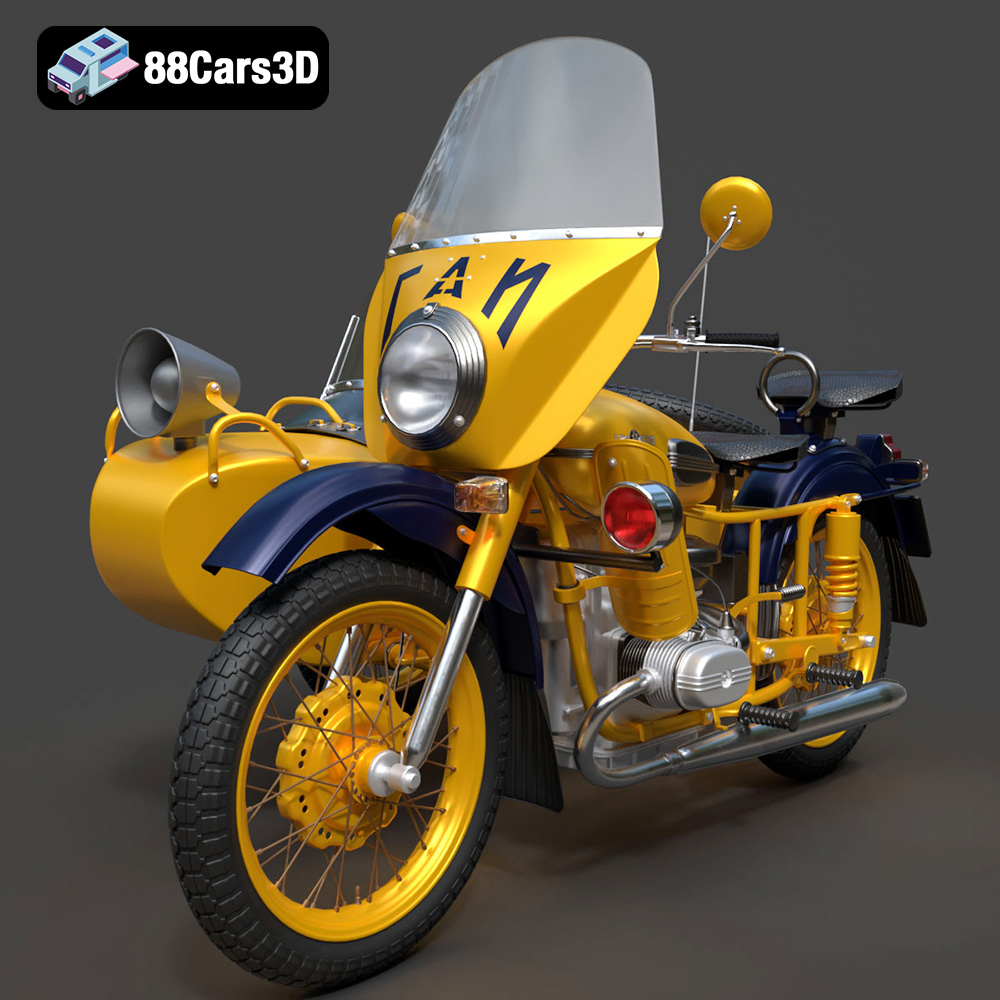
In the realm of digital creation, the ability to accurately and beautifully represent real-world objects is paramount. For automotive enthusiasts, game developers, architects, and visualization artists, the allure of classic vehicles transcends mere nostalgia; it’s about capturing history, engineering, and character in a format that can be explored, animated, and rendered with stunning realism. Few vehicles embody this rugged charm and utilitarian spirit quite like the 1976 Ural M67-36-P. This legendary Soviet-era motorcycle, with its iconic opposed-twin engine and sturdy frame, is a testament to an era of no-nonsense design.
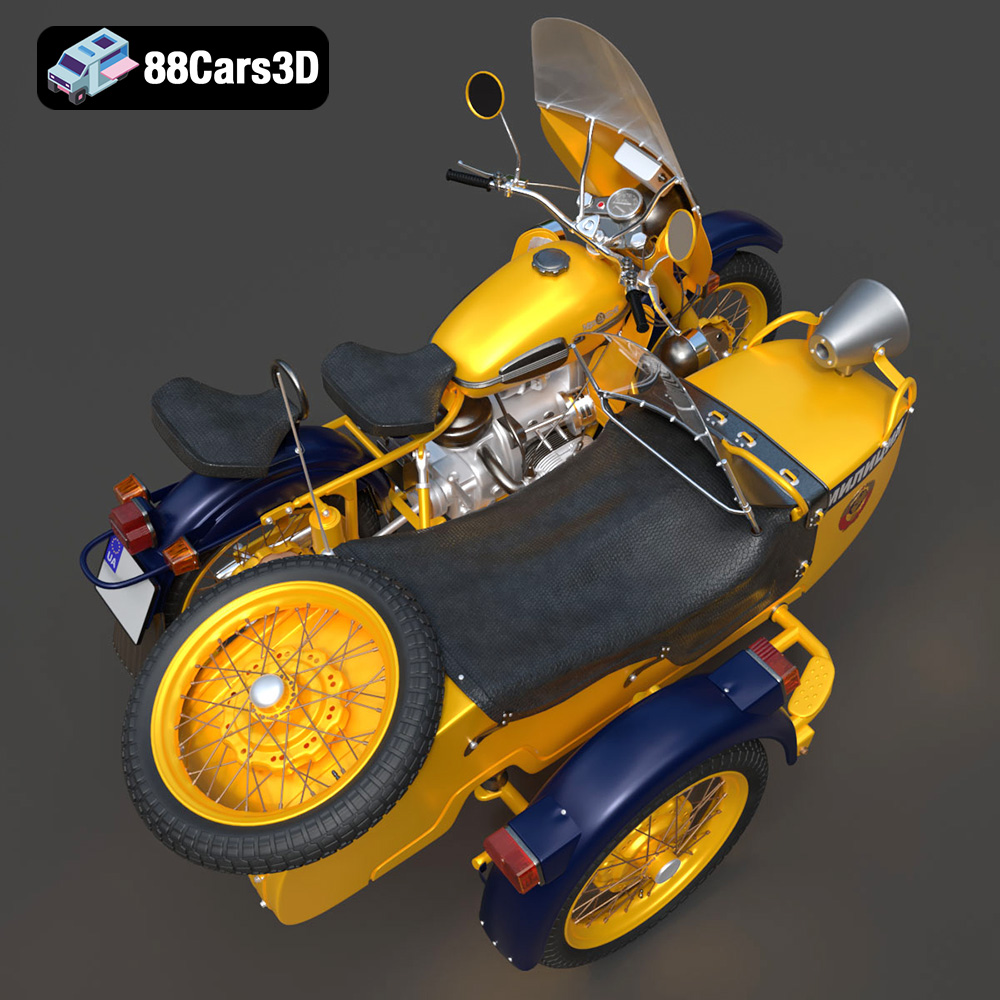
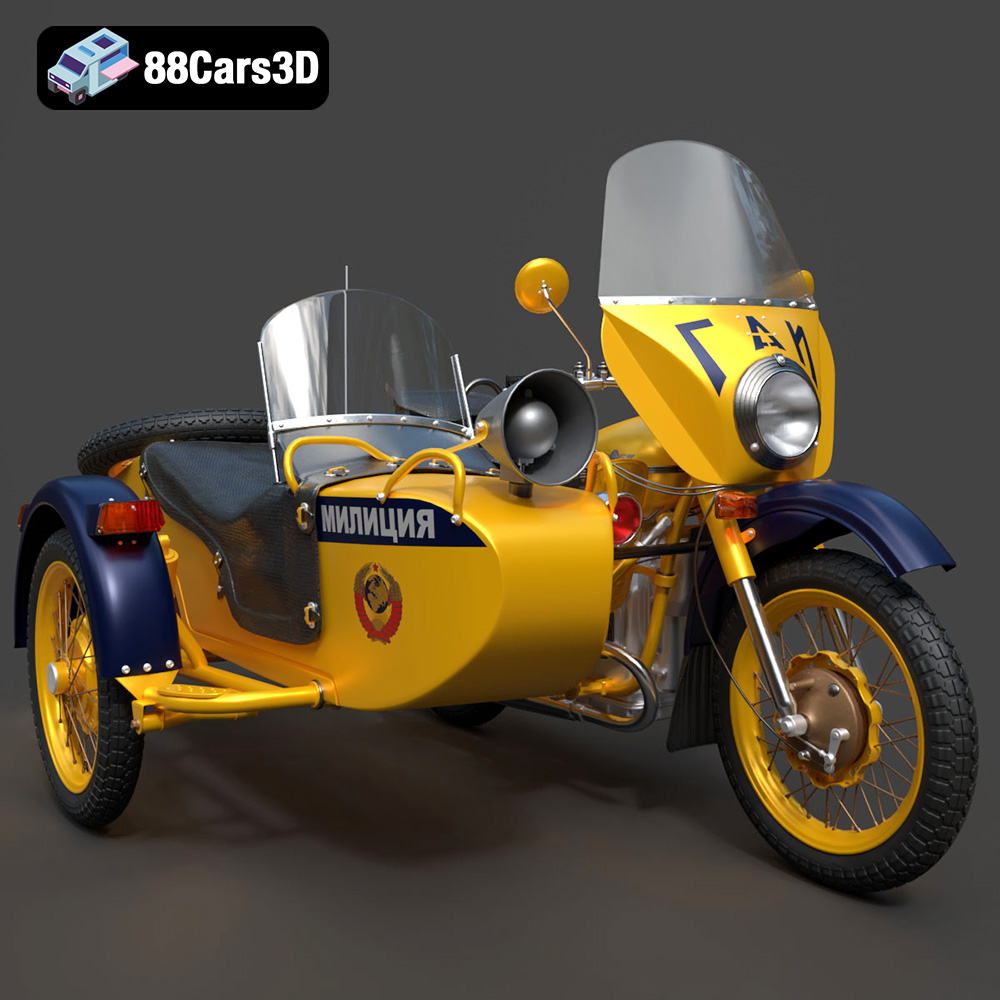
Today, thanks to skilled 3D artists, this piece of history is available as an exceptional Ural M67-36-P 1976 3D Model, optimized for a vast array of digital applications. From enhancing the authenticity of period games to enriching immersive AR/VR experiences and bringing cinematic renders to life, high-quality 3D vehicle models are indispensable assets. They bridge the gap between imagination and tangible digital reality, offering unparalleled flexibility and detail.
When procuring a premium 3D model like the Ural M67-36-P 1976, understanding the various file formats it comes in is crucial for maximizing its utility across different software and platforms. Each format serves a specific purpose, offering unique advantages for particular workflows, be it for game development, architectural visualization, 3D printing, or real-time applications. The availability of multiple formats ensures that professionals can seamlessly integrate the asset into their preferred pipeline without compatibility headaches.
The .blend format is the native file type for Blender, the powerful open-source 3D creation suite. When you receive a .blend file, it means you’re getting a fully editable Blender scene, complete with all its intricacies: mesh data, materials (including complex PBR setups), textures, lighting, cameras, animation data, and even modifiers. This format is ideal for artists who primarily work in Blender, offering the highest degree of flexibility for customization, rigging, animation, or further optimization. For instance, an artist could open the Ural M67-36-P 1976 .blend file to tweak its material nodes, adjust its topology, or even add custom parts and accessories, leveraging Blender’s robust toolset.
.fbx (Filmbox) is arguably the most widely adopted proprietary file format for 3D data interchange, developed by Autodesk. Its strength lies in its ability to store not just geometry and materials, but also animations, rigging, skinning, and camera data in a relatively compact form. This makes it the go-to format for transferring assets between different professional 3D software packages (like 3ds Max, Maya, Blender, Cinema 4D) and, critically, into game engines such as Unreal Engine and Unity. The Ural M67-36-P 1976 as an .fbx is perfectly primed for game developers, offering optimized meshes and often including embedded PBR materials for a quick drag-and-drop workflow into real-time environments.
The .obj (Wavefront OBJ) format is a venerable, universally supported file type that primarily stores 3D geometry data (vertices, normals, texture coordinates, and faces) and references to external material files (.mtl). While it doesn’t support advanced features like animation or rigging, its simplicity and widespread compatibility make it an excellent choice for basic mesh transfer across virtually any 3D software. If you need to import the Ural M67-36-P 1976 into a niche application or an older program, .obj is often the safest bet. It’s robust for static mesh data and widely used for archival purposes due to its open specification.
.glb (GL Transmission Format Binary) is the binary version of glTF, a royalty-free specification for the efficient transmission and loading of 3D scenes and models by engines and applications. It’s explicitly designed for modern web applications, AR/VR experiences, and mobile devices, thanks to its compact size and efficiency. A .glb file encapsulates all necessary data (geometry, materials, textures, animations) into a single, self-contained file, making it incredibly easy to share and integrate into browser-based viewers or mobile AR apps. For visualizing the Ural M67-36-P 1976 in an augmented reality showroom or a web-based configurator, .glb is the optimal choice.
.stl (STereoLithography) is the de facto standard file format for 3D printing. It represents a 3D model as a series of connected triangles, describing only the surface geometry of an object without color, texture, or other CAD attributes. While simple, its ubiquity in the 3D printing world is unmatched. If your goal is to physically manifest the Ural M67-36-P 1976 as a scale model, the .stl file is what your 3D printer slicing software will use. It’s crucial for hobbyists and professionals alike who want to bring digital assets into the tangible world.
.ply (Polygon File Format, or Stanford Triangle Format) is another format that stores 3D data, often used for scanned data, CAD applications, and scientific analysis. It can store more complex properties than .obj or .stl, such as color, transparency, normals, texture coordinates, and even reliability information for vertices and faces. While less common for everyday artistic interchange than .fbx or .blend, its precision makes it valuable in engineering contexts or when working with high-fidelity, scan-derived geometry. For the Ural M67-36-P 1976, this format offers an alternative for highly precise mesh data transfer.
The .unreal format, or rather, assets specifically prepared for Unreal Engine (often provided as a .uasset or a complete Unreal project structure), represents an asset that has been meticulously optimized, textured, and configured within Unreal Engine itself. This means the Ural M67-36-P 1976 3D Model would come with pre-set materials, collision meshes, LODs (Levels of Detail), and potentially even basic blueprints or animations, ready to be dropped directly into an Unreal project with minimal setup. This saves significant development time, making it an invaluable resource for game developers.
Lastly, the .max format is the native file type for Autodesk 3ds Max, a leading software for 3D modeling, animation, rendering, and visualization. Similar to .blend, a .max file encapsulates an entire 3ds Max scene, including geometry, materials, textures, lighting, cameras, and any applied modifiers or animations. For professionals who operate within the 3ds Max ecosystem, this format offers full editability and control over the model, making it ideal for high-end automotive rendering projects, complex scene integrations, or further artistic development of the Ural M67-36-P 1976.
Creating a truly high-fidelity 3D vehicle model is an intricate process that blends artistic vision with rigorous technical expertise. It’s not just about replicating shapes; it’s about capturing the essence of the vehicle, from its historical context to the subtle nuances of its engineering. The Ural M67-36-P 1976 3D Model exemplifies this fusion, meticulously crafted to serve diverse professional needs.
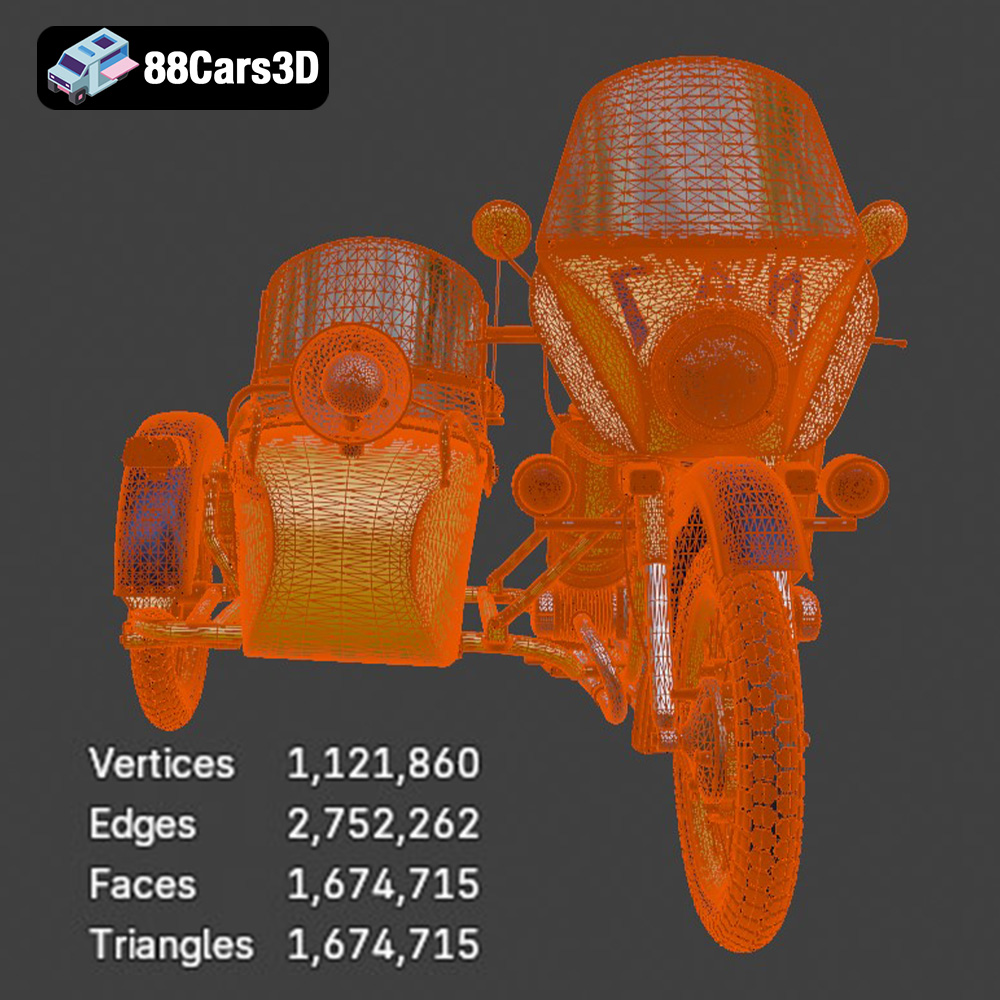
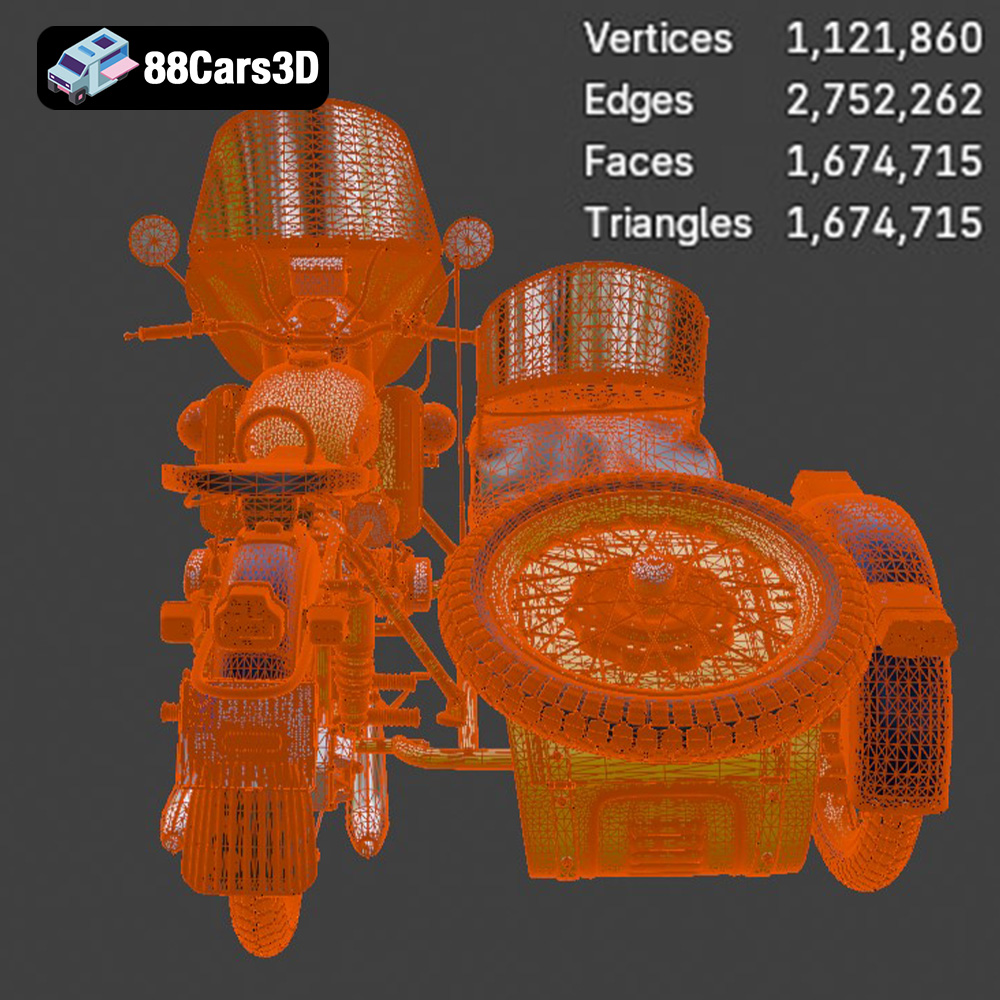
A hallmark of a professional-grade 3D model, especially for real-time applications, is its optimized topology. The Ural M67-36-P 1976 3D model, with approximately 85,000 triangles, strikes a superb balance between visual fidelity and real-time performance. This polycount is sufficiently detailed to hold up in close-up renders and cinematic sequences, yet efficient enough to be integrated into demanding game engines or AR/VR environments without crippling frame rates. This optimization process involves careful poly reduction, edge flow considerations, and potentially the creation of multiple Levels of Detail (LODs) for distant views, though the product description indicates the base model is already highly optimized.
Beyond geometry, the visual realism of any 3D model is heavily reliant on its materials and textures. Modern workflows predominantly use Physically Based Rendering (PBR) techniques, which accurately simulate how light interacts with surfaces in the real world. For the Ural M67-36-P 1976, this means textures for painted metal, chrome, rubber, and leather are crafted with albedo, roughness, metallic, normal, and ambient occlusion maps. These maps define every minute detail, from the subtle sheen of aged paint to the slight imperfections on the chrome exhaust pipes, ensuring that the model looks authentic under any lighting condition, whether in a Blender Cycles render or an Unreal Engine scene.
The availability of highly detailed and optimized 3D motorcycle models like the Ural M67-36-P 1976 transforms creative and development pipelines. These assets are not mere decorations; they are foundational components that drive innovation across various industries.
For game developers, the Ural M67-36-P 1976 3D model is a ready-to-use asset, perfectly suited for open-world games, racing titles, or historical simulators. Its game-ready optimization ensures seamless integration into engines like Unreal Engine and Unity. With separate wheels, suspension, and steering components, the model is inherently set up for animation, allowing developers to implement realistic driving physics, turning mechanics, and suspension travel. Imagine this classic motorcycle roaring through a virtual landscape, adding an unparalleled layer of authenticity to a game environment.
Beyond gaming, the Ural model excels in professional visualization contexts. In automotive rendering, it can be placed in lifestyle scenes, demonstrating a rugged outdoor aesthetic, or featured in studio shots for product showcases. For architectural visualization, adding a vintage motorcycle can breathe life and character into exterior renders, anchoring a scene in a specific era or mood. The model’s accurate real-world scale and high material fidelity make it ideal for marketing campaigns, digital brochures, or high-end presentations, offering a powerful visual narrative.
The burgeoning fields of Augmented Reality (AR) and Virtual Reality (VR) benefit immensely from optimized 3D assets. The Ural M67-36-P 1976 is perfect for immersive virtual showrooms, where potential buyers or enthusiasts can explore the motorcycle up close, rotating it, inspecting details, and even changing colors in real-time. It can also form a central exhibit in a virtual museum, allowing users to interact with a piece of history in a truly engaging way, all rendered with impressive visual fidelity on various devices.
The true value of a premium 3D model lies in its meticulous attention to detail and technical precision. The Ural M67-36-P 1976 3D Model available at 88cars3d.com is a prime example of this commitment to quality, reflecting a deep understanding of the original vehicle’s design and engineering.
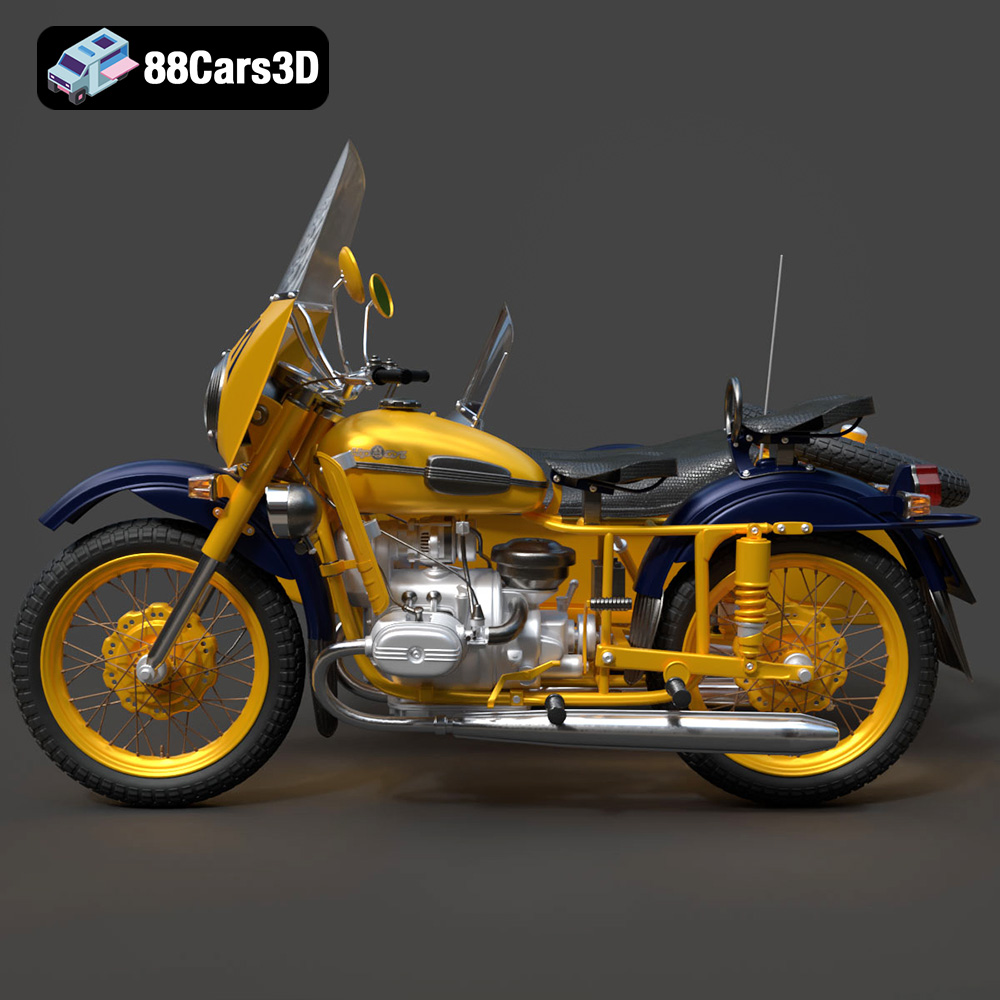
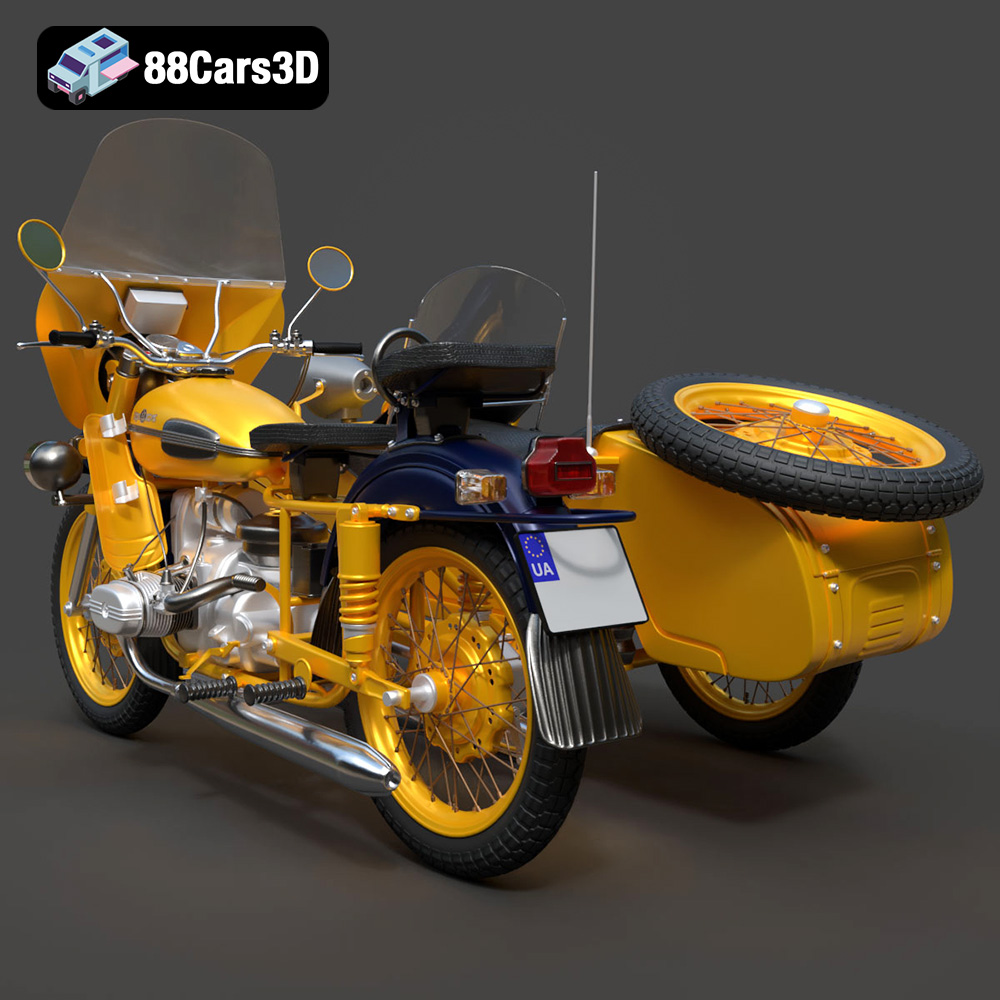
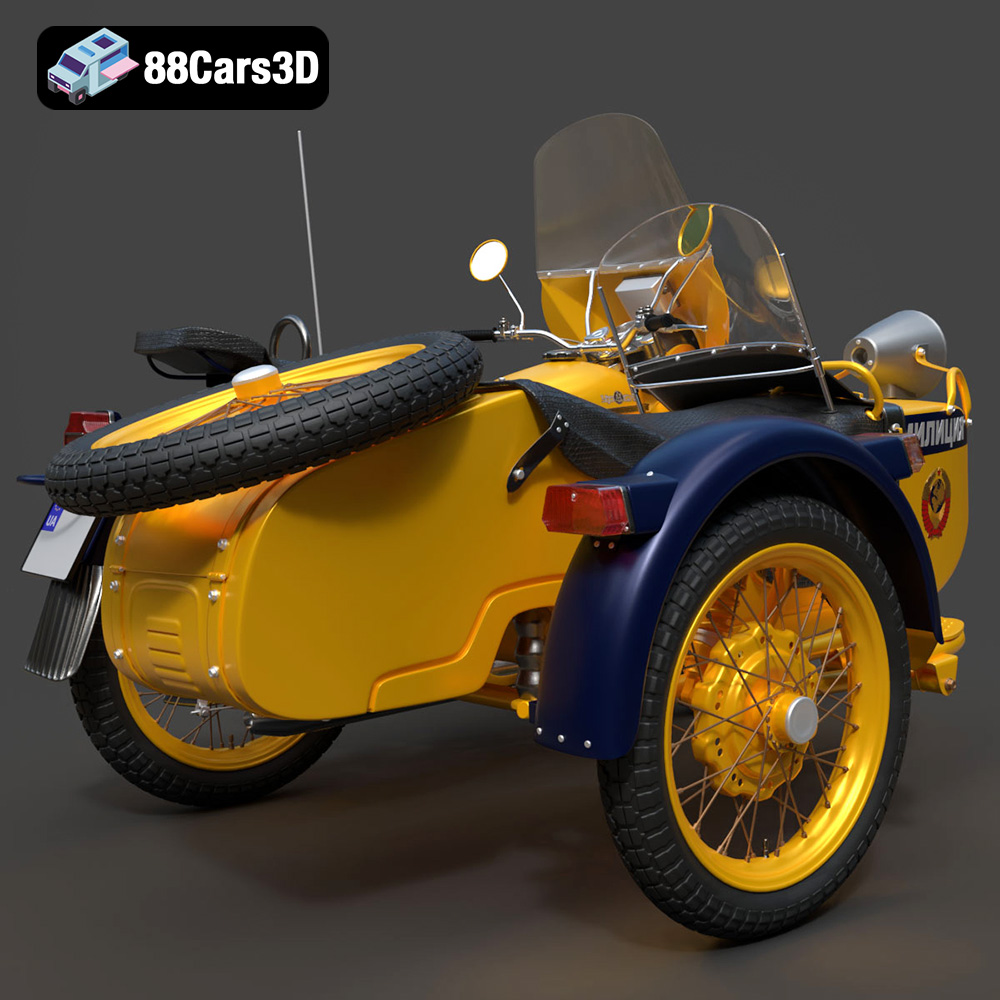
Every aspect of the Ural M67-36-P has been faithfully recreated. The accurate frame geometry and proportions provide a solid foundation, while the detailed 649cc OHV air-cooled boxer engine block captures the heart of this machine. From the twin chrome exhaust pipes with authentic vintage silencers to the classic round headlight housing, spoked wheels with period-accurate tires, and heavy-duty dual shock rear suspension, no detail is overlooked. Crucially, separate components for wheels, suspension, and steering ensure the model is ready for complex animations, allowing for realistic turning, bumps, and leans, essential for dynamic scenes or interactive applications.
The attention extends to the rider’s perspective, vital for games and VR. The model features a classic sprung solo saddle or dual bench seat details, vintage wide handlebars with authentic grips, and a minimalist retro instrument cluster with an analog speedometer. Accurate foot pegs, kickstarter, and manual hand levers further enhance the realism. This meticulous cockpit detailing ensures that the model is optimized for first-person POV in gaming, making the virtual riding experience truly immersive and believable.
One of the most exciting capabilities offered by a versatile 3D model like the Ural M67-36-P 1976 is the potential to transcend the digital realm and become a tangible object. The inclusion of an .stl format makes this model an excellent candidate for 3D printing, allowing enthusiasts to create their own physical replicas of this classic motorcycle.
Converting a detailed 3D rendering model into a successful 3D print requires careful consideration. The .stl file format, tailored for 3D printing, simplifies this process. For the Ural M67-36-P 1976, recommended scales like 1:12, 1:18, or 1:24 provide a good balance between detail and printability. Resin printing is often advised for models with fine details, ensuring that intricate parts like the exhaust system, mirrors, and handlebars retain their crispness. Proper layer height (e.g., 0.04–0.12 mm) and adequate wall thickness (1.2–2.0 mm) are essential for structural integrity, and thoughtful print orientation, such as printing the frame angled, minimizes stress and improves overall quality. Supports will be necessary for overhangs and delicate features, as noted in the product’s 3D print settings.
Once printed, the journey from raw plastic to a museum-quality replica continues with post-processing. This typically involves removing supports, sanding to smooth out layer lines, and applying a primer to prepare the surface for painting. For a vehicle like the Ural M67-36-P 1976, meticulous painting with authentic factory colors and metallic finishes will bring the model to life, replicating its vintage charm. Detailing with weathering effects or subtle patinas can further enhance its realism, transforming a digital asset into a cherished physical collectible.
The true power of a high-quality 3D model lies not just in its initial fidelity, but in its adaptability. The Ural M67-36-P 1976 3D model offers significant scope for customization, allowing artists and developers to tailor it precisely to their project’s unique requirements.
With its well-structured materials and textures, customizing the Ural M67-36-P 1976 is straightforward. Users can easily change body and tank colors to reflect various factory options or introduce custom finishes, ranging from a pristine gloss to a weathered matte or a unique metallic sheen. Modifying tire textures to include off-road variants versus street-specific treads allows for quick adaptation to different terrains or narrative contexts. This flexibility ensures that the model can be seamlessly integrated into a wide array of visual styles and storytelling needs without requiring a complete re-texturing effort.
The model’s robust material setup means it will respond beautifully to diverse lighting environments. Whether placed under a harsh desert sun, the soft glow of a studio light, or the ambient illumination of a city street at dusk, its PBR materials will react realistically. Artists can adapt the lighting to enhance dramatic effect, create specific moods, or ensure consistency with other assets in a scene. This adaptability, combined with its optimized geometry, makes the Ural M67-36-P 1976 3D model a versatile asset, capable of elevating the visual quality of any project from 88cars3d.com.
The world of 3D modeling offers unparalleled opportunities for creative expression and technical innovation. High-quality 3D vehicle models are more than just digital files; they are versatile tools that power everything from blockbuster video games and immersive AR/VR experiences to stunning automotive rendering and tangible 3D prints. The Ural M67-36-P 1976 3D Model stands as a testament to the meticulous craftsmanship and technical expertise required to bring a legendary vehicle into the digital age. Its optimized geometry, PBR materials, and broad file format compatibility (from .blend and .max for full editability, to .fbx and .unreal for game engines, and .stl for 3D printing) ensure it’s a valuable asset for any professional or enthusiast. Whether you’re a game developer seeking authentic game assets, a visualization artist requiring precise automotive rendering, or a hobbyist eager to 3D print a piece of history, this model from 88cars3d.com provides the foundation for exceptional digital creations. It truly embodies the power of well-crafted 3D car models (or in this case, a classic motorcycle) in today’s demanding digital landscape.
The 1976 Ural M67-36-P is a legendary Soviet-era motorcycle, renowned for its rugged durability, classic utilitarian styling, and historic patrol heritage. Featuring its iconic opposed-twin (boxer) engine, robust dual exhaust system, and sturdy frame design, this classic workhorse captures the absolute essence of 1970s Eastern Bloc engineering and heavy-duty performance.
This highly detailed, game-ready 3D model boasts optimized topology (approximately 85,000 triangles) to deliver maximum visual fidelity without compromising real-time performance. Designed for seamless integration into modern digital pipelines, the model ensures highly accurate geometry and excellent material setup, making it an outstanding asset for high-end automotive visualization, game development, and AR/VR applications.
Perfect for historic period games, classic motorcycle configurators, VR museums, and cinematic renders.
.blend, .fbx, .obj, .glb, .stl, .ply, .unreal, .max
Tags:
ural, m67-36-p, 1976, classic-motorcycle, soviet-motorcycle, vintage-bike, game-ready, low-poly, optimized, motorcycle-3d-model, game-asset, rendering, vr-ar, blend, fbx, obj, glb, stl, ply, unreal, maxVespa VNB 125-B 3D Model 3D Printable STL
$19.99
.blend
.fbx
.glb
.max
.obj
.ply
.rendering
.stl
.unreal
.ural
1976
classic-motorcycle
game asset
game-ready
low-poly
m67-36-p
motorcycle-3d-model
optimized
soviet-motorcycle
vintage-bike
VR/AR