Get 20% OFF All Premium 3D & STL Models!

In the vast landscape of digital content creation, the pursuit of realism and iconic aesthetics often drives artists and developers to seek out assets that not only meet technical demands but also inspire creativity. Automotive design, in particular, thrives on the faithful reproduction of timeless vehicles. Whether you’re a game developer aiming for immersive environments, an architect enhancing visualizations, or a product designer showcasing concepts, the quality of your 3D models can make or break a project. This dedication to precision is perfectly embodied by objects that carry a significant cultural legacy.
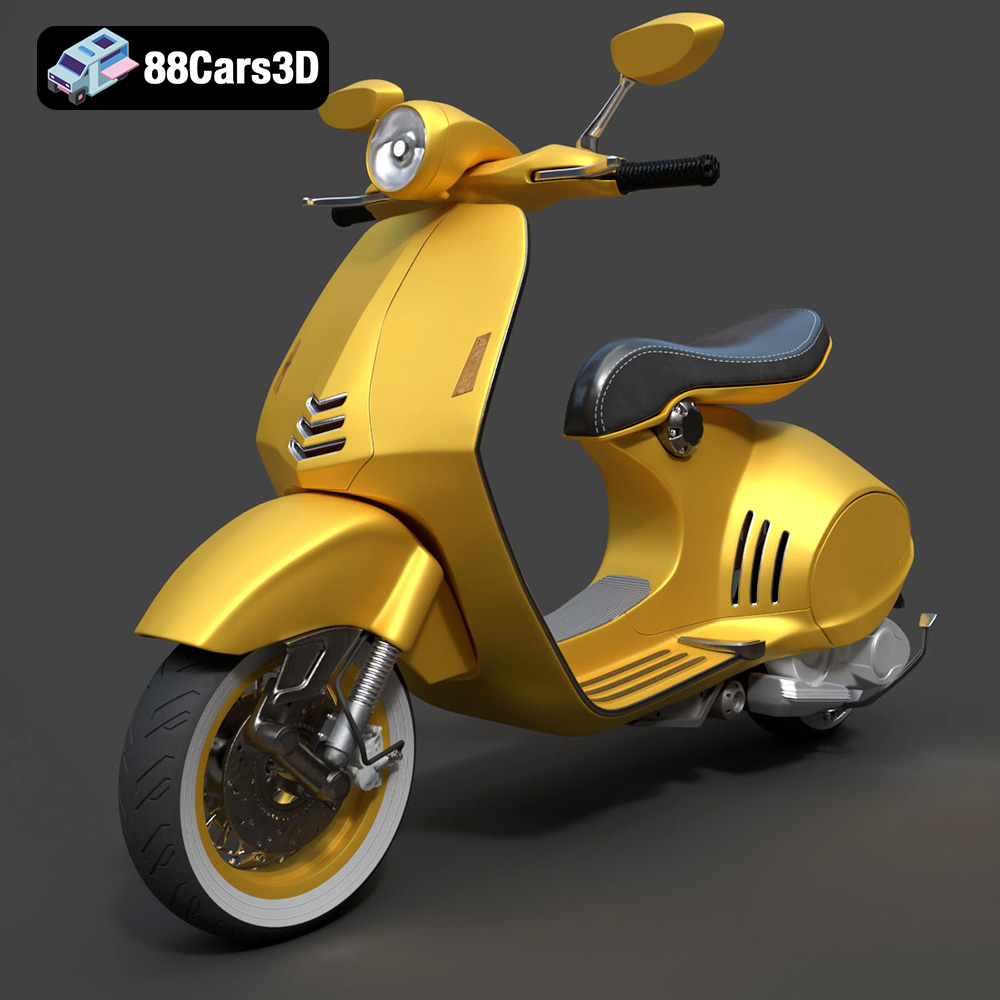
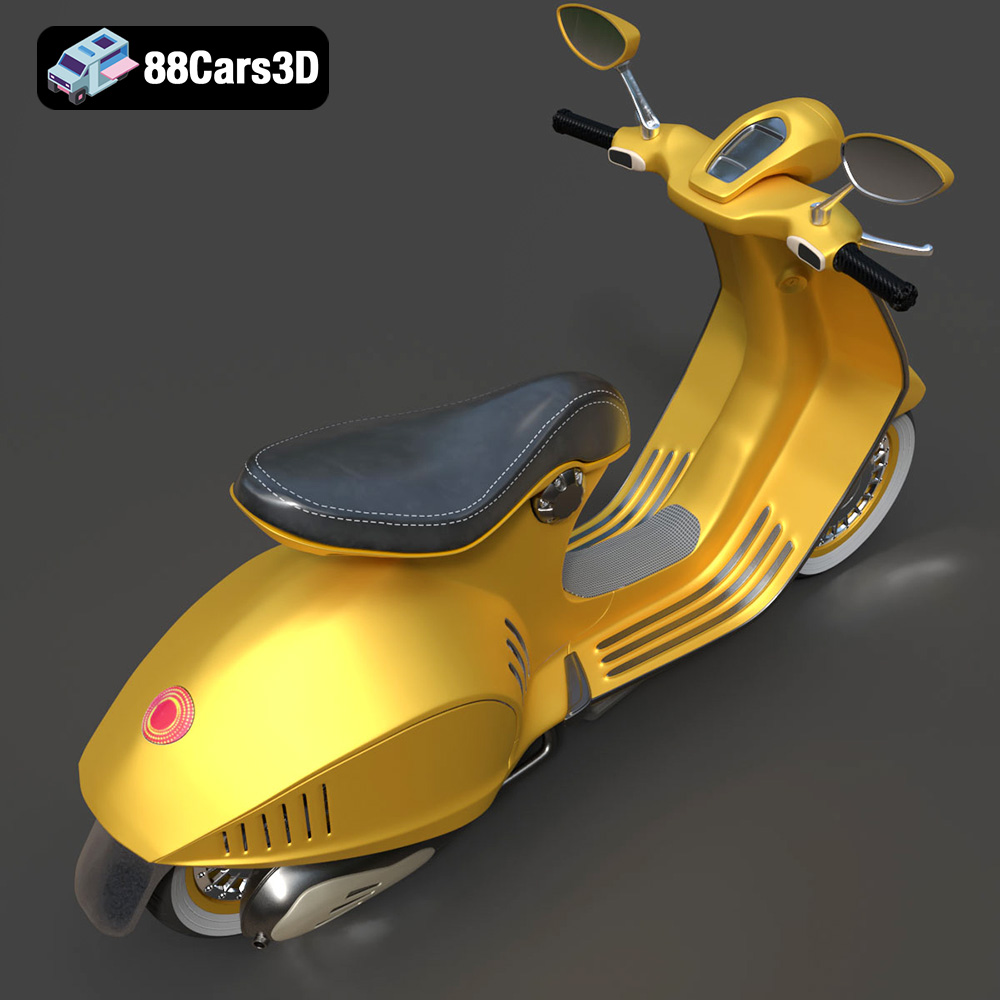
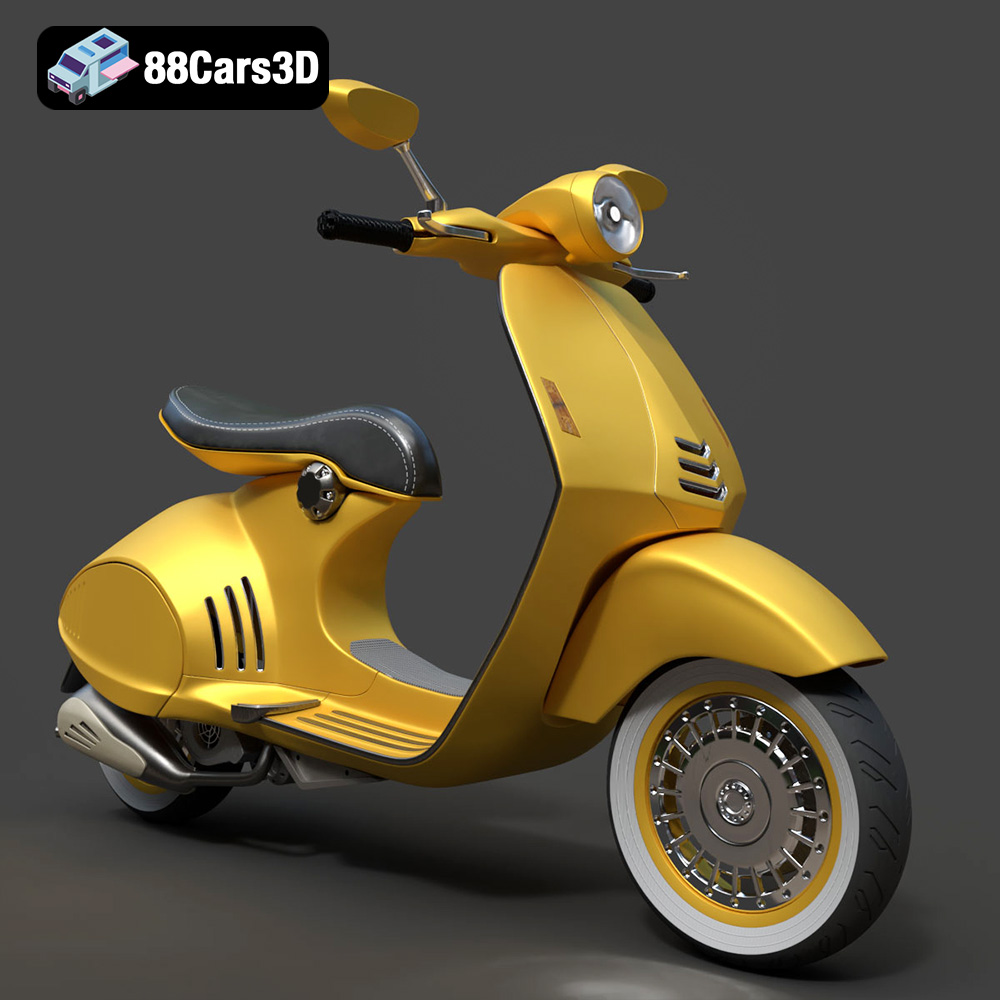
Consider the Vespa 946, a scooter renowned for its elegant lines, retro-futuristic appeal, and rich heritage. Capturing this essence in a 3D model requires meticulous attention to detail, from the distinct curves of its bodywork to the intricate mechanical components. A truly professional 3D car model, even if it’s a scooter, elevates any scene, adding a layer of sophistication and authenticity that resonates with viewers. The Vespa 946 3D Model available at 88cars3d.com is a prime example of such an asset, meticulously crafted to replicate the authentic curves and refined aesthetics of the renowned scooter, providing true-to-life realism for professional projects.
This comprehensive guide delves into the technical intricacies of high-quality 3D models, exploring their applications across various industries, the critical role of file formats, and how a premium asset like the Vespa 946 3D Model can streamline your workflow and enhance your final output. We’ll examine how such models are built for versatility, performance, and visual fidelity, ensuring they are ready for anything from close-up studio renders to dynamic real-time environments.
The journey of any 3D model, from creation to deployment, is intrinsically linked to the file formats it utilizes. Choosing the correct format is not merely a preference; it’s a critical decision that impacts compatibility, performance, and the scope of a model’s utility. High-quality 3D car models, and indeed all professional 3D assets, are typically offered in multiple formats to cater to diverse professional pipelines. The Vespa 946 3D Model, for instance, provides a robust selection, ensuring seamless integration into virtually any software or engine.
The `.blend` format is Blender’s native file type. It’s a complete scene file, meaning it saves not only the mesh geometry but also materials, textures, lighting setups, cameras, animations, rigging, and even scene properties. This makes it incredibly powerful for Blender users, offering full editability and the ability to pick up exactly where the creator left off. For artists deeply integrated into the Blender ecosystem, a `.blend` file like that for the Vespa 946 is ideal for custom modifications, rendering, or leveraging Blender’s expansive toolset for further detailing or animation.
Autodesk’s Filmbox, or `.fbx`, is arguably the most widely adopted interchange format in the 3D industry, especially for game development and animation. It supports geometry, materials, textures, animations, skinning, and blend shapes. Its binary nature makes it efficient for data transfer and it’s robustly supported by game engines like Unreal Engine and Unity, as well as major DCC (Digital Content Creation) software. When importing a 3D car model as `.fbx`, you get a solid, production-ready asset that bridges the gap between different software packages and real-time environments.
The `.obj` (Wavefront Object) format is a foundational, nearly universal 3D file format. It’s text-based and primarily describes geometry (vertices, normals, UV coordinates) and references external material files (`.mtl`). While it doesn’t support animation or rigging, its widespread compatibility makes it excellent for basic mesh transfer between virtually any 3D software. For the Vespa 946, the `.obj` ensures that even niche or older software can open and work with the core model, making it a reliable fallback.
The GL Transmission Format (glTF) and its binary counterpart, `.glb`, are rapidly becoming the “JPEG of 3D.” Developed by the Khronos Group, `.glb` files package geometry, materials, and textures into a single, compact file, optimized for efficient transmission and loading on the web and in real-time applications like augmented reality (AR) and virtual reality (VR). For showcasing the Vespa 946 in a browser-based configurator or an interactive AR experience, `.glb` offers unmatched performance and ease of use.
The Standard Tessellation Language, or `.stl`, is the de facto standard for 3D printing. It represents a 3D model as a collection of unconnected triangular facets, defining only the surface geometry of an object without color, texture, or other attributes. For prototyping physical models of the Vespa 946 or integrating it into a physical product design workflow, the `.stl` format is essential, providing a clean, print-ready mesh.
The Polygon File Format, or `.ply`, is commonly used for storing 3D data from 3D scanners, CAD software, and other precision modeling applications. It can store a wider range of data than `.obj`, including color, transparency, and often supports both triangulated and quadrilateral meshes. For highly detailed analysis or specific industrial applications of the Vespa 946, where precision and additional vertex data are paramount, `.ply` offers a robust solution.
The `.unreal` format, or more accurately, assets packaged for Unreal Engine, are pre-configured files designed for direct import and optimal performance within the Unreal Engine ecosystem. These often involve specific folder structures, material setups, LODs (Levels of Detail), and collision meshes that adhere to Unreal’s best practices. Having the Vespa 946 available in this specific, engine-ready format significantly reduces setup time for game developers and real-time visualization artists, ensuring that the asset is performant right out of the box.
Similar to `.blend` for Blender, `.max` is the native file format for Autodesk 3ds Max. It stores a complete scene with all its components, including geometry, materials, textures, lighting, cameras, and animation data. For professional studios and individual artists who rely on 3ds Max for architectural visualization, high-fidelity rendering, and complex animation, the `.max` file of the Vespa 946 offers full editability and integration into existing 3ds Max pipelines, allowing for advanced rendering and scene construction.
The allure of an iconic design like the Vespa 946 lies in its subtle curves and sophisticated details. Replicating this in a 3D model demands not just technical skill but also an artistic eye. A premium 3D asset, such as the Vespa 946 3D Model from 88cars3d.com, stands out due to its commitment to authenticity in both geometry and surface aesthetics.
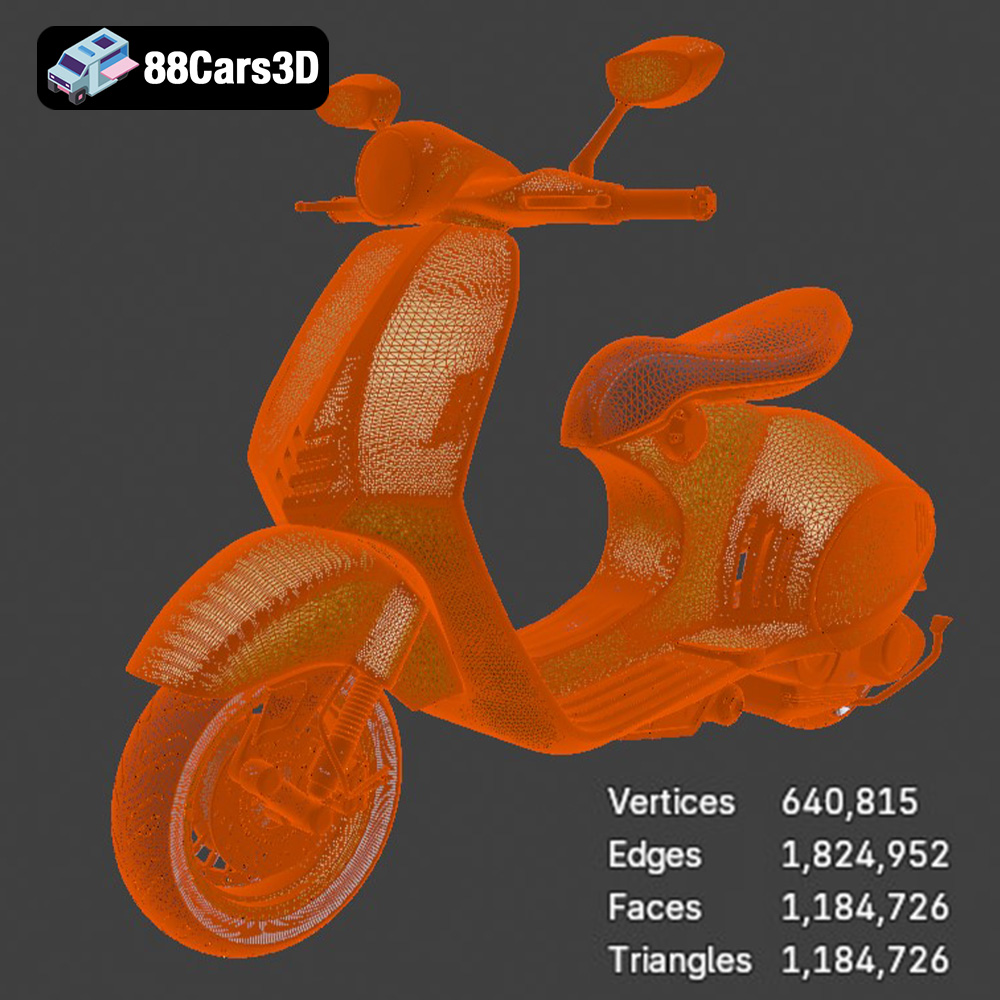
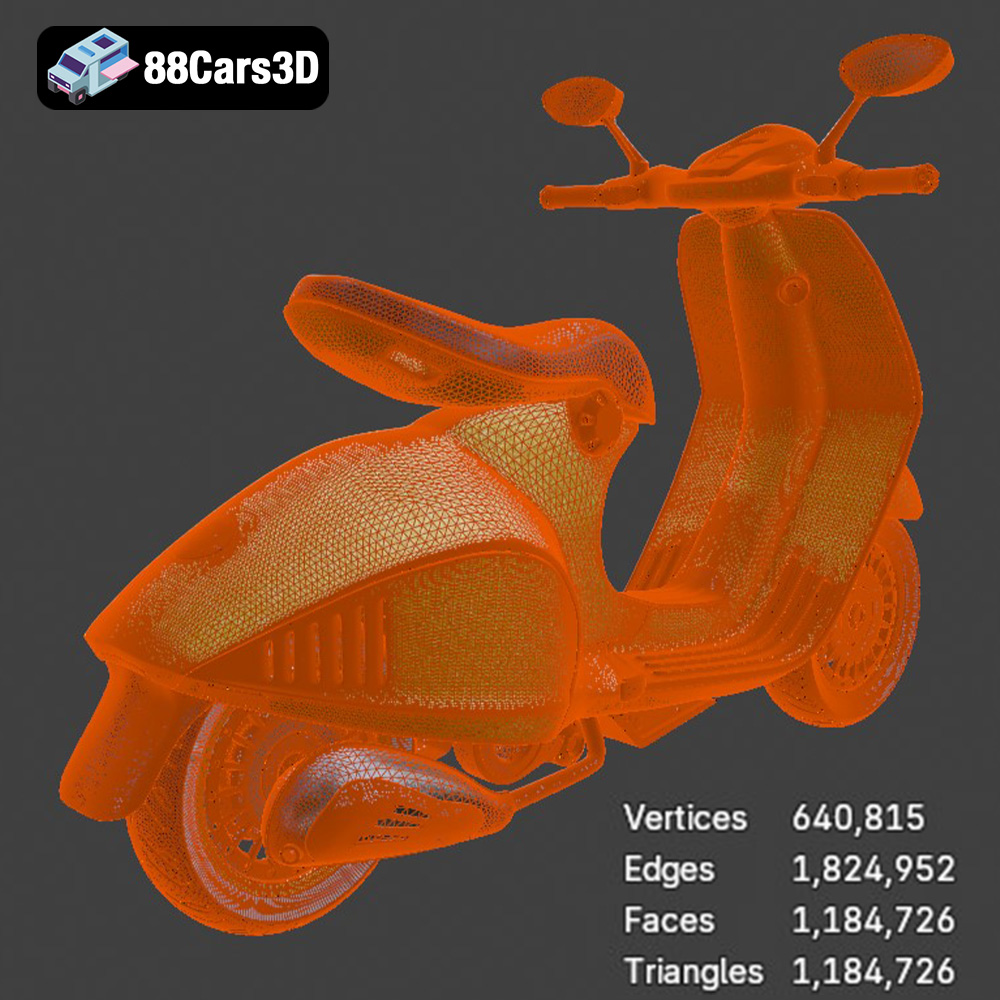
The foundation of any high-quality 3D model is its geometry. “Clean geometry” refers to a mesh that is well-structured, primarily composed of quads (four-sided polygons), and free from errors like non-manifold geometry, overlapping faces, or isolated vertices. This ensures predictable deformation during animation, smooth subdivision for high-resolution renders, and efficient performance in real-time engines. For the Vespa 946, maintaining clean topology is crucial for preserving its fluid lines and allowing for seamless integration into various software without issues.
Beyond the mesh, materials and textures breathe life into a 3D model. Realistic rendering relies heavily on physically based rendering (PBR) materials, which simulate how light interacts with surfaces in the real world. This includes properties like metallicness, roughness, normal maps for fine surface details, and ambient occlusion for subtle shadow information.
The true value of a premium 3D model lies in its seamless integration into diverse professional pipelines. Artists and developers need assets that are not just visually appealing but also technically sound and ready for production. The Vespa 946 3D Model exemplifies this, offering adaptability across various industries.
For automotive studios, marketing agencies, and architectural visualization firms, photorealistic rendering is paramount. The Vespa 946 3D Model, with its detailed geometry and PBR materials, is an ideal candidate for creating compelling marketing imagery, configurator assets, or even integrating into architectural scenes to add a touch of urban flair.
Game developers constantly seek optimized assets that maintain visual fidelity while adhering to strict performance budgets. The multi-format availability of the Vespa 946 3D Model, especially the `.fbx` and `.unreal` files, makes it perfectly suited for game engines.
Automotive rendering is a specialized field that combines technical expertise with artistic vision. It’s about more than just rendering a car; it’s about telling a story, evoking emotion, and highlighting the craftsmanship of the vehicle. The Vespa 946, with its inherent charm and design legacy, is a perfect subject for such detailed visual storytelling.
To truly showcase the elegance of the Vespa 946, rendering artists leverage a suite of advanced techniques that push the boundaries of realism. This is where the quality of the base 3D model becomes critical, as garbage in leads to garbage out.
Imagine a scenario where an architectural firm is presenting a new urban development project. To make the renderings feel more lived-in and dynamic, they decide to populate the street scenes with various vehicles. Instead of generic placeholder cars, they choose iconic models that resonate with a sense of style and quality. Integrating the Vespa 946 3D Model from 88cars3d.com into these scenes immediately elevates the visual narrative.
As technology evolves, the applications for high-quality 3D models continue to expand. The versatility of an asset like the Vespa 946 3D Model is not just about its immediate use in rendering or games, but also its potential in emerging fields.
Augmented Reality (AR) and Virtual Reality (VR) are transforming how we interact with digital content. For manufacturers, designers, and marketers, AR/VR offers unparalleled opportunities to showcase products. The `.glb` format of the Vespa 946 is tailor-made for these platforms, enabling interactive showrooms, virtual test drives, or even customizing the scooter in a virtual space before purchase.
While often used for digital output, 3D models are increasingly bridging the gap to the physical world through 3D printing. The `.stl` and `.ply` formats provided with the Vespa 946 3D Model open up possibilities for rapid prototyping and small-scale physical production.
In the dynamic world of 3D content creation, the difference between a good project and a great one often comes down to the quality of your assets. Investing in meticulously crafted 3D models, particularly for iconic subjects like the Vespa 946, is a strategic decision that pays dividends in realism, performance, and versatility. From the foundational importance of understanding file formats to the nuanced art of rendering and the expansive possibilities of AR/VR and 3D printing, a professional-grade asset is the cornerstone of successful digital endeavors.
The Vespa 946 3D Model stands as a testament to precision and craftsmanship. Its clean geometry, optimized polygon counts, realistic materials, and multi-format availability ensure it is perfectly equipped for game development, architectural visualization, immersive experiences, and high-fidelity automotive rendering. Whether you’re enhancing a scene in 3ds Max, building a game in Unreal Engine, or creating an interactive web experience with Blender and `.glb`, this model provides the quality and flexibility demanded by professionals.
For artists and developers seeking to infuse their projects with unparalleled realism and iconic design, explore the range of high-quality 3D car models and vehicle assets available at 88cars3d.com. The Vespa 946 3D Model is more than just an asset; it’s an opportunity to elevate your digital creations, saving you valuable production time and allowing you to focus on bringing your artistic vision to life with confidence and precision.
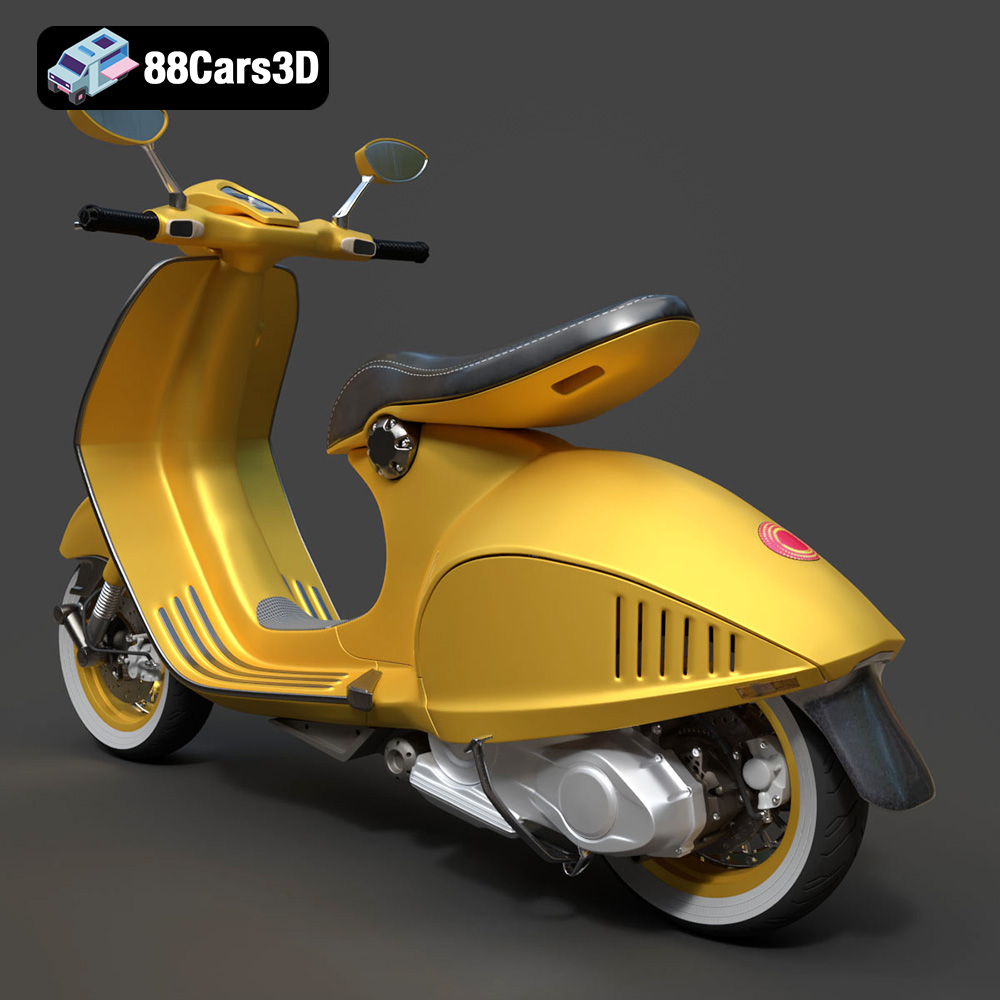
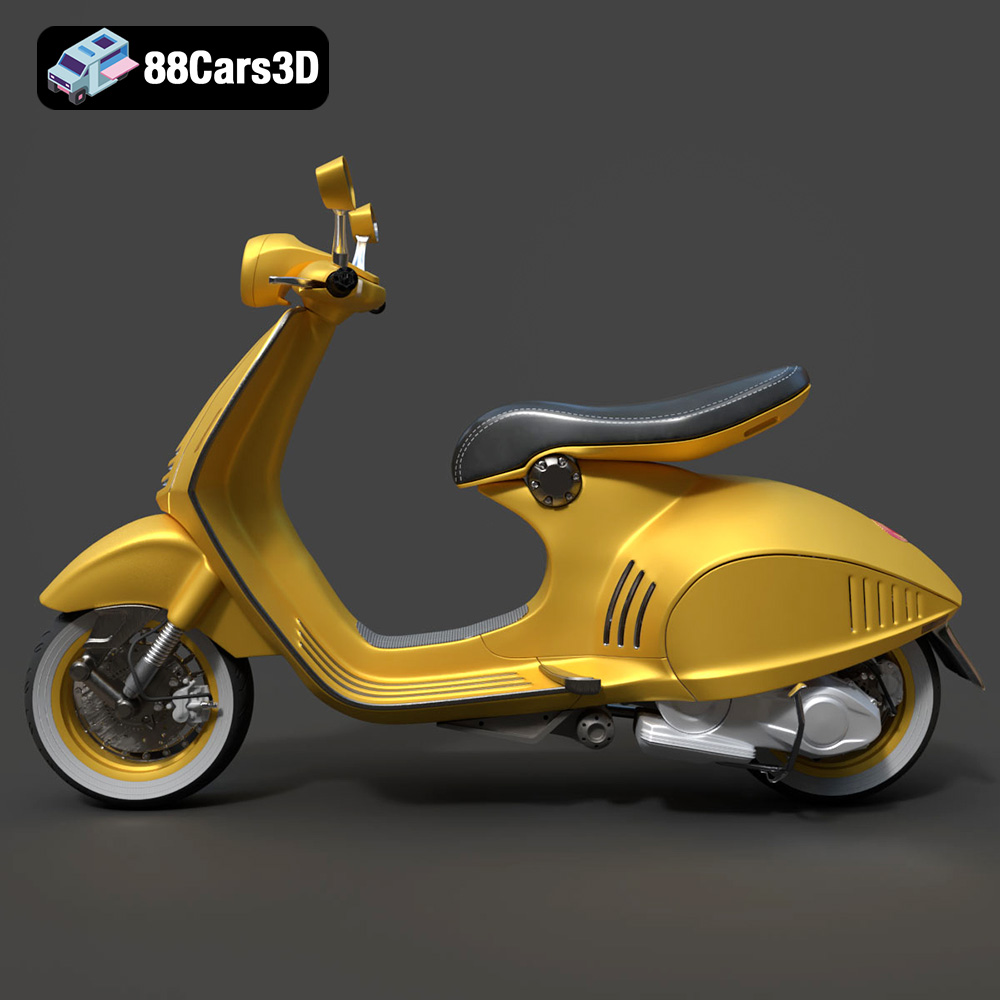
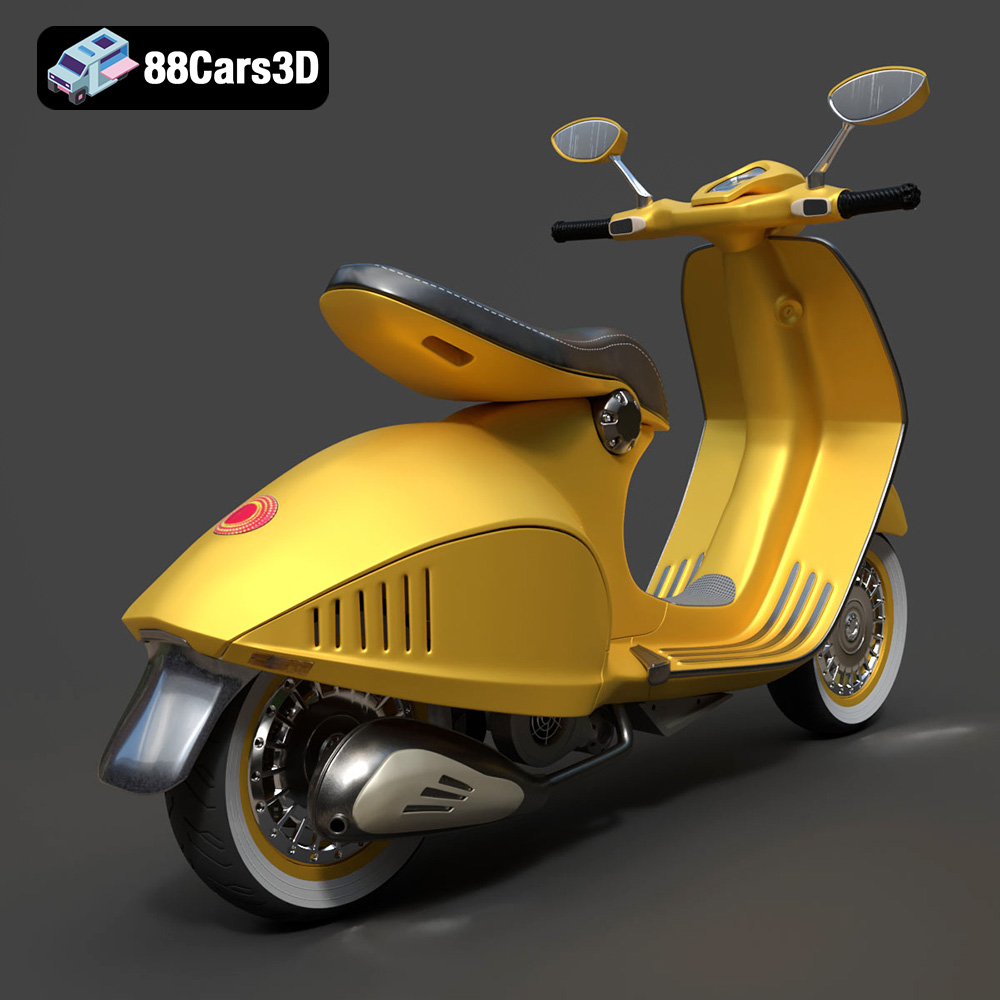
Experience the iconic elegance of the Vespa 946 with this meticulously crafted 3D model. Designed to replicate the authentic curves and refined aesthetics of the renowned scooter, this asset provides true-to-life realism for professional projects. Whether for close-up studio renders or dynamic environments, every detail from the distinct seating to the polished chassis has been modeled with precision.
Built with clean geometry and optimized polygon counts, this model ensures seamless integration into various pipelines. It features realistic materials, accurate texturing, and a highly detailed structure, making it a perfect choice for demanding digital creations. The professional-grade topology guarantees smooth subdivisions and optimal performance.
This Vespa 946 3D model is highly versatile and ideal for a wide range of applications, including game development, architectural visualization, AR/VR experiences, animation, and realistic rendering. It provides creators with a ready-to-use asset that elevates the visual fidelity of any scene.
Included file formats:
Tags: .vespa, .946, .scooter, .motorcycle, .car3dmodel, .rendering, .simulation, .gameasset, .arvr, .blend, .fbx, .obj, .glb, .stl, .ply, .unreal, .max
Tags:
.vespa, .946, .scooter, .motorcycle, .car3dmodel, .rendering, .simulation, .gameasset, .arvr, .blend, .fbx, .obj, .glb, .stl, .ply, .unreal, .maxMercedes Benz CLS 500 3D Model 3D Printable STL
$19.99
.946
.arvr
.blend
.car3dmodel
.fbx
.gameasset
.glb
.max
.motorcycle
.obj
.ply
.rendering
.scooter
.simulation
.stl
.unreal
.vespa