Get 20% OFF All Premium 3D & STL Models!

In the dynamic world of digital content creation, the difference between a good project and a truly exceptional one often hinges on the quality of its foundational assets. For industries ranging from automotive design and game development to architectural visualization and cinematic production, high-fidelity 3D car models are not just components; they are critical elements that define realism, immersion, and professional polish. A meticulously crafted vehicle can elevate an entire scene, captivating audiences with breathtaking realism and intricate detail. This is where precision-engineered assets become indispensable, offering artists and developers a robust starting point that saves countless hours and ensures a superior end product.
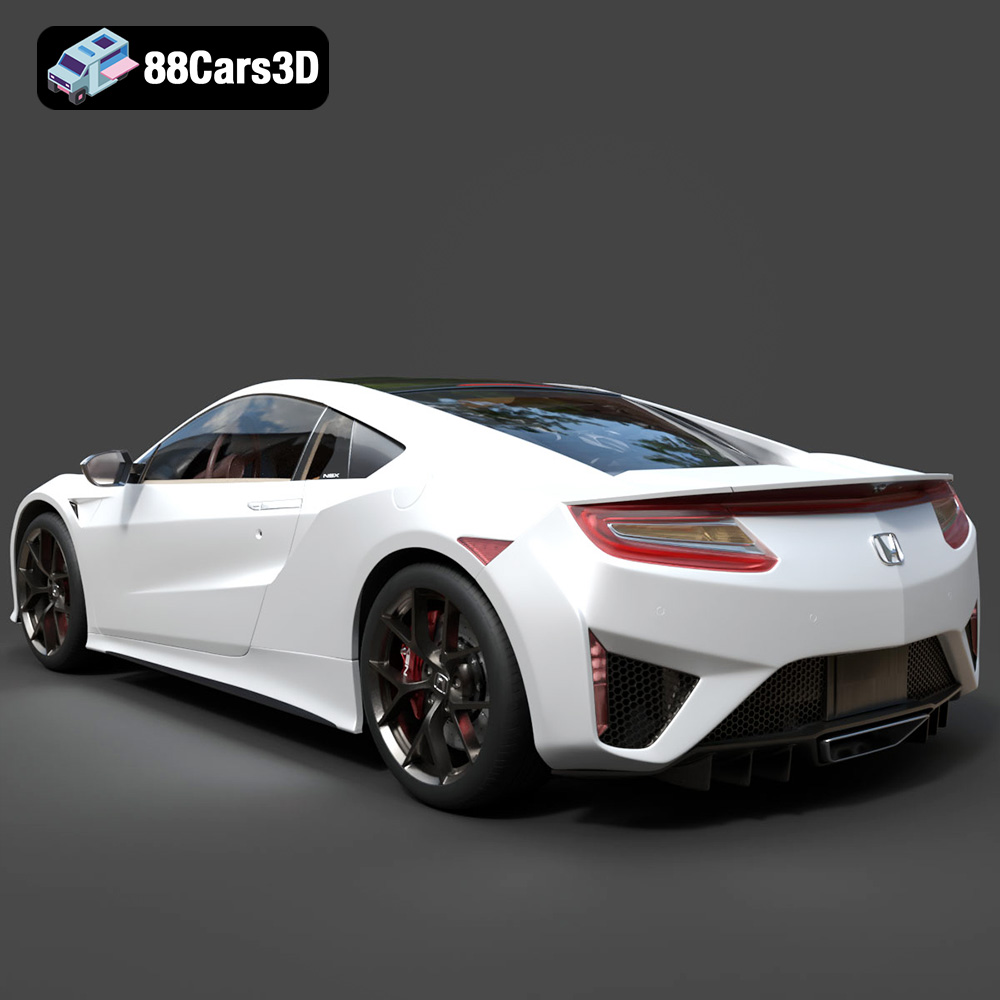
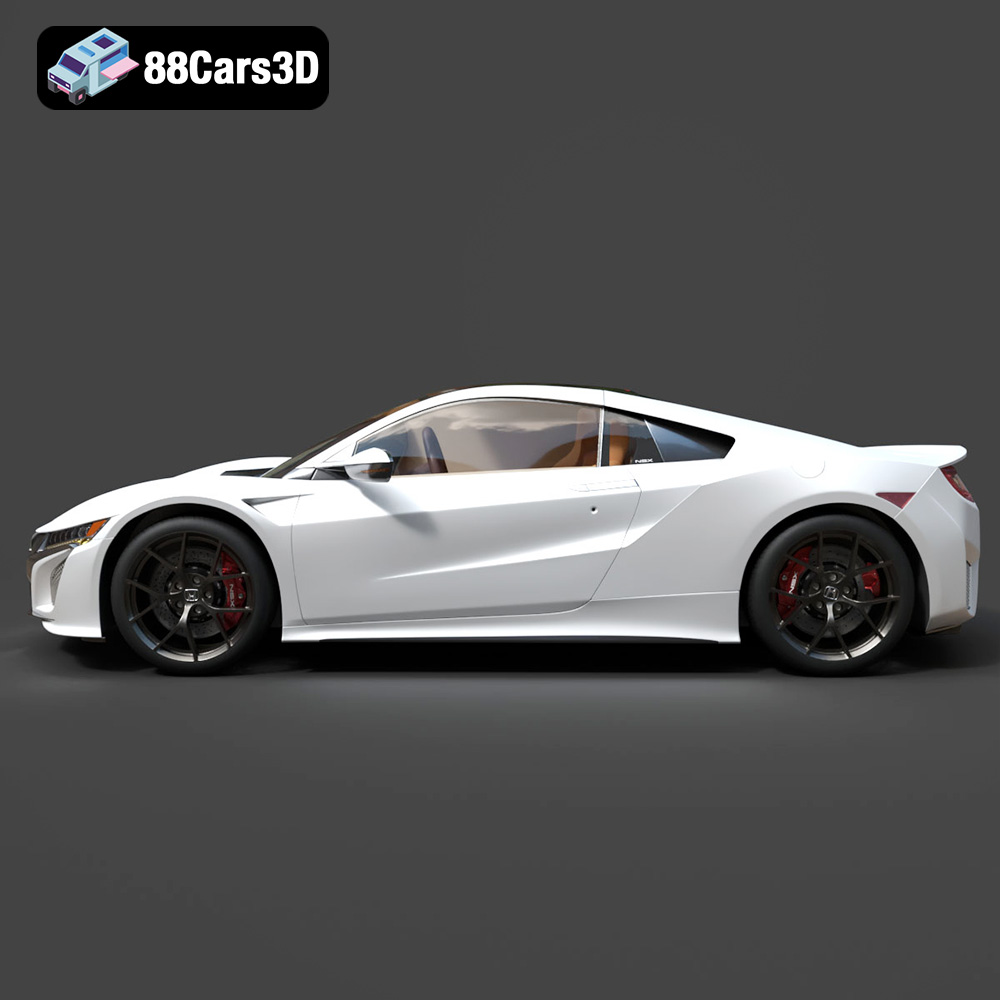
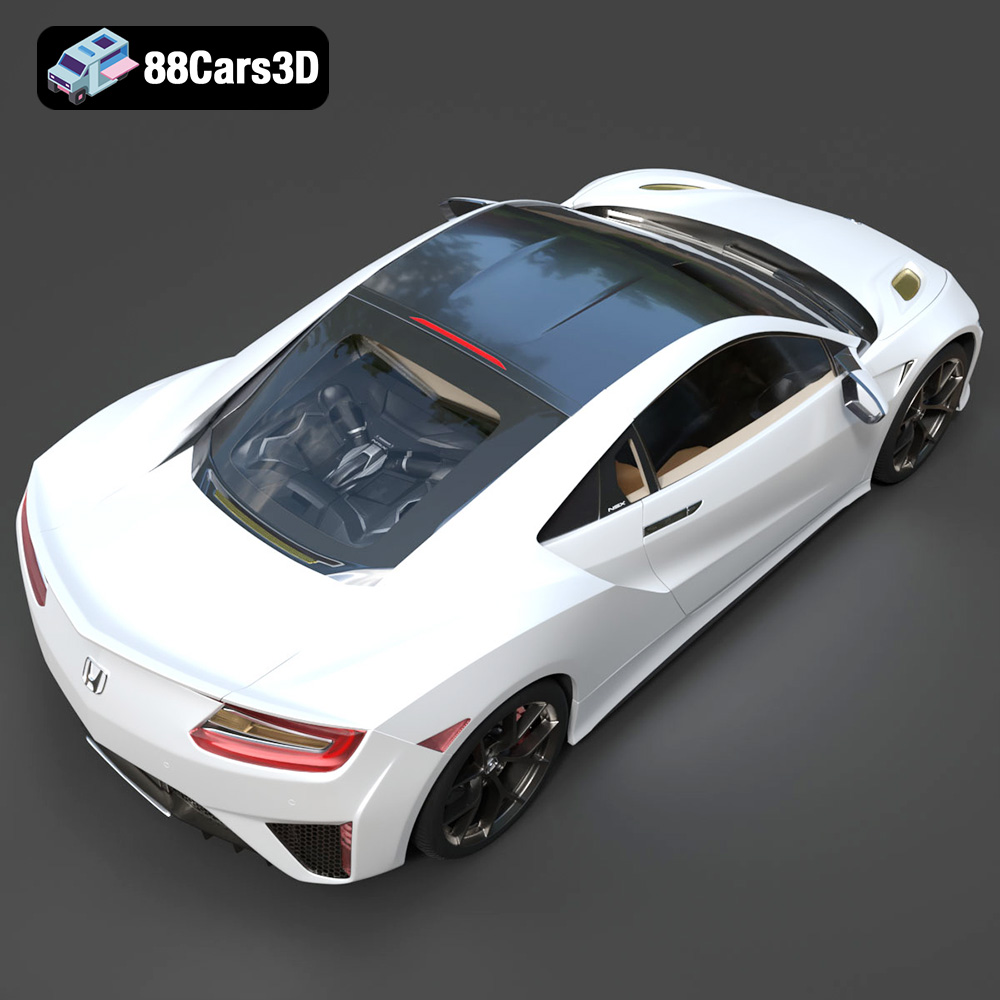
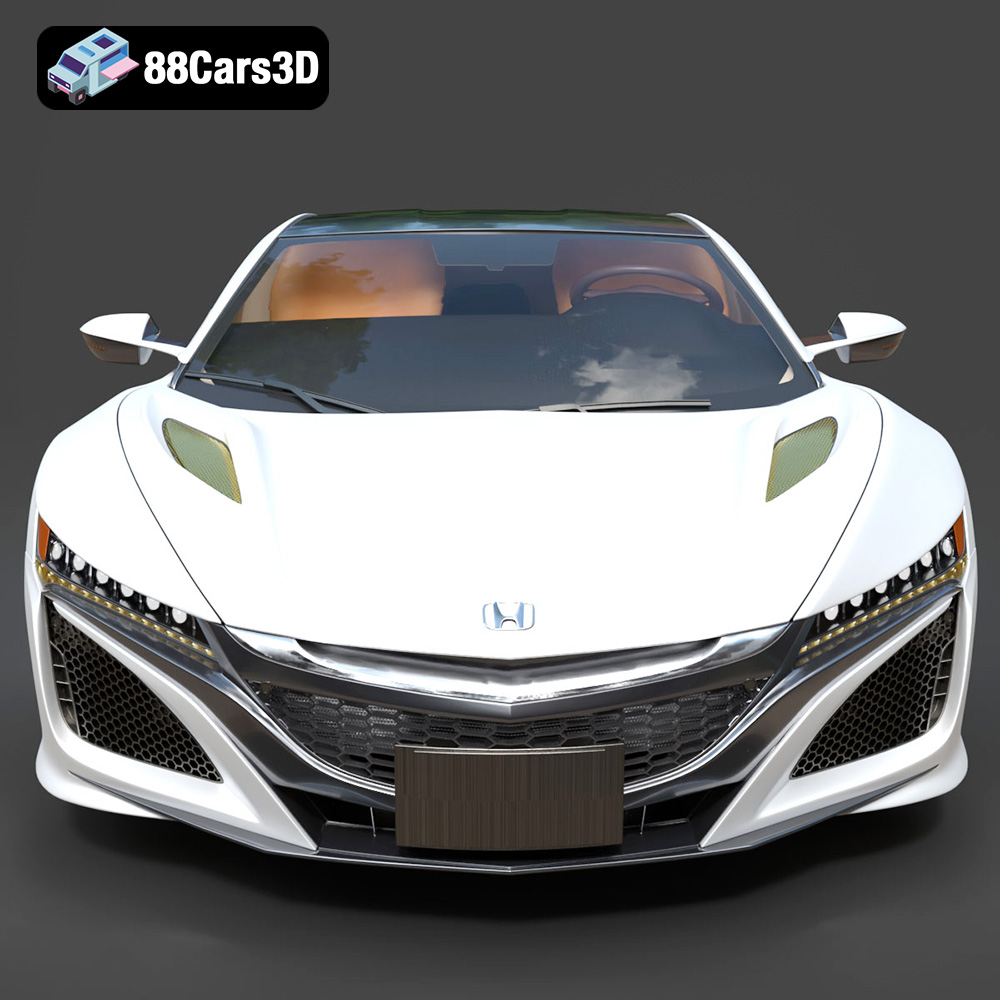
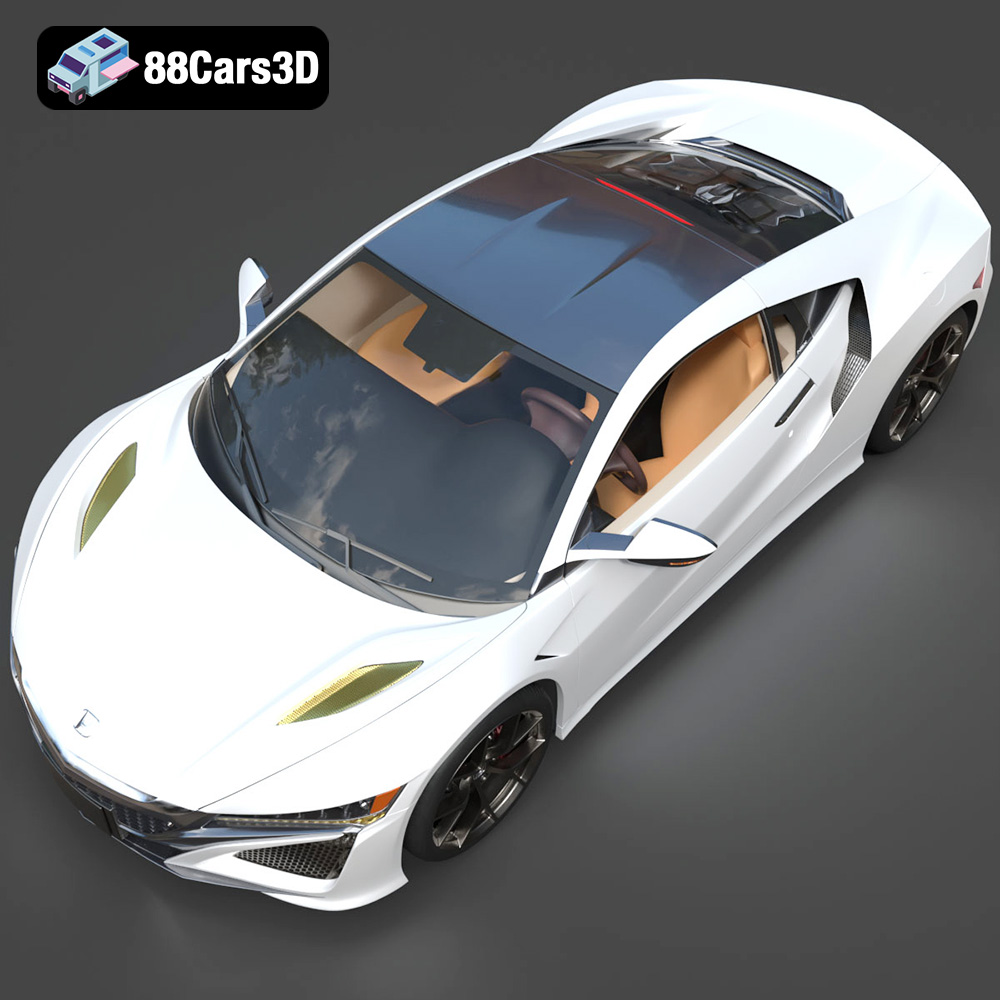
One such exemplary asset is the Honda NSX 2017 3D Model. This particular model stands as a testament to the level of detail and versatility required in today’s demanding visual pipelines. Capturing the essence of this legendary hybrid sports car, from its sleek, aerodynamic lines to its iconic stance, it delivers unparalleled realism for a multitude of digital projects. Its design considerations, from clean geometry to realistic materials, make it a powerhouse asset ready for immediate deployment in environments demanding the highest visual standards.
The demand for realistic and accurate 3D car models has never been higher. Modern render engines, game engines, and real-time visualization platforms are capable of producing photorealistic results, but they are only as good as the assets fed into them. Low-quality models, regardless of sophisticated lighting or rendering techniques, will always fall short, breaking immersion and undermining the credibility of a project. Professional 3D car models, like those found on 88cars3d.com, ensure that every curve, reflection, and material property contributes to a cohesive, believable visual experience.
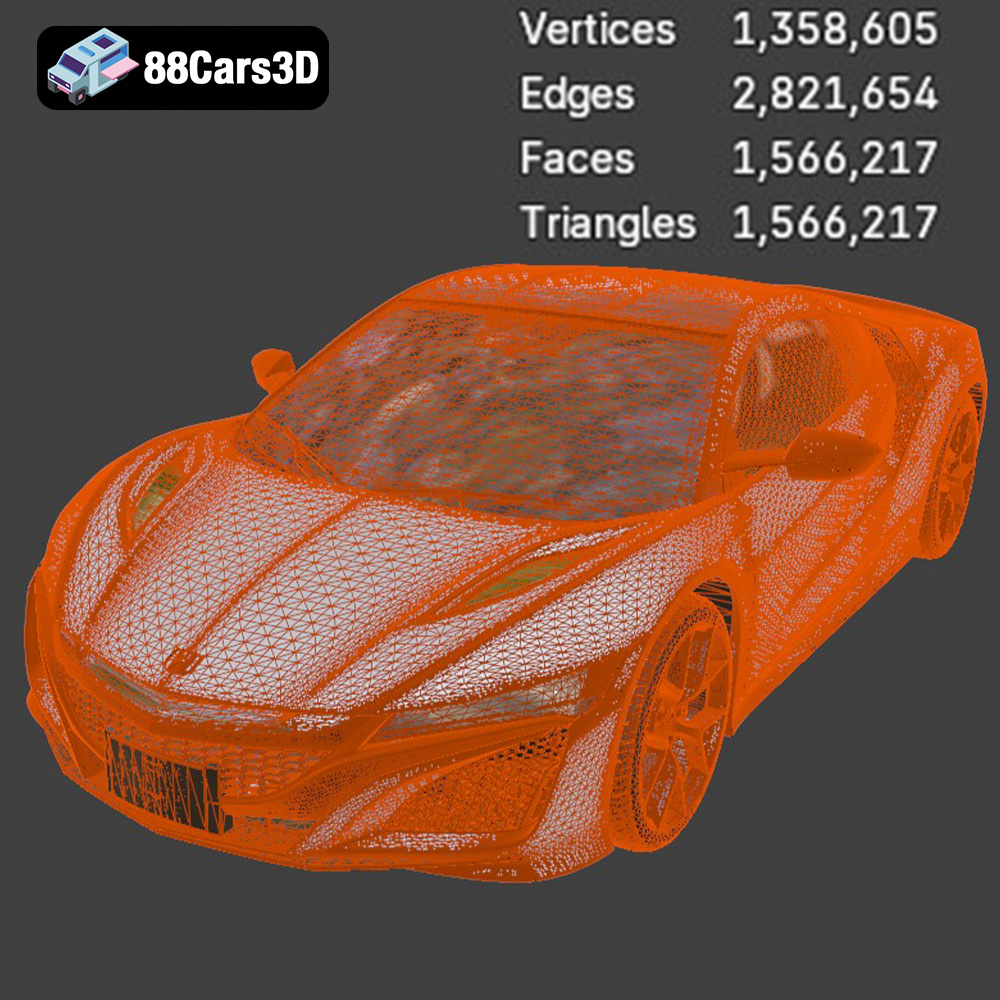
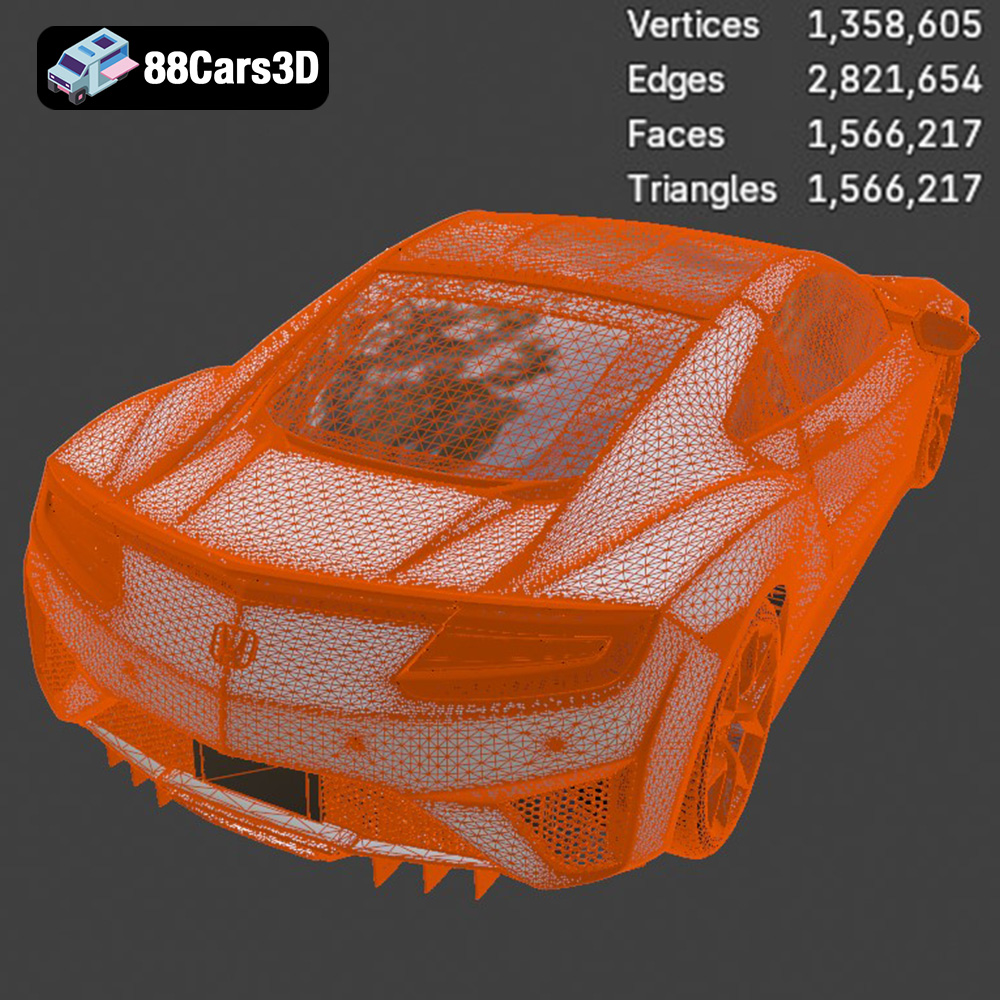
High-quality 3D car models are built upon a foundation of clean, optimized geometry. This means more than just having enough polygons; it means having polygons that are correctly structured, typically using quad-based topology. Such geometry ensures smooth subdivision, prevents rendering artifacts, and allows for seamless deformation in animations. For assets like the Honda NSX 2017 3D Model, “clean geometry” is paramount. It dictates how light interacts with the surfaces, how reflections behave, and ultimately, how realistic the vehicle appears. Models with “professional-grade polygon structures” facilitate easier UV mapping, texture application, and optimization for various platforms, from high-end cinematic renders to performance-critical game environments.
The visual fidelity of a 3D car model is significantly enhanced by its materials and textures. Physically Based Rendering (PBR) workflows have become the industry standard, requiring carefully authored albedo, normal, roughness, metallic, and ambient occlusion maps. A premium 3D model will come with “realistic materials” that are PBR-ready, ensuring “true-to-life reflections” and accurate surface properties under any lighting condition. Crucially, these materials rely on professional UV mapping – a process where the 3D surface is unwrapped into a 2D plane without stretching or distortion. This allows textures to be applied accurately and efficiently, making the model versatile for custom paint jobs, decals, and detailed surface wear, all contributing to the model’s overall photorealism.
Navigating the diverse landscape of 3D software and platforms requires a deep understanding of file formats. The choice of format can drastically impact a model’s compatibility, performance, and the type of data it carries. A truly versatile 3D car model, such as the Honda NSX 2017 3D Model, is offered in multiple industry-standard formats, providing maximum flexibility for any workflow. Each format serves a specific purpose, catering to different stages and requirements of a digital production pipeline.
The **.blend** file format is Blender’s native format. It encapsulates an entire Blender project, including the 3D mesh, materials, textures, lighting, cameras, animations, and even scene settings. This makes it an incredibly powerful format for artists working within Blender, as it provides a fully editable and self-contained scene. For the Honda NSX 2017, a .blend file offers an immediate starting point for customization, animation, or rendering within Blender’s robust environment, complete with pre-configured materials and lighting setup. Its primary advantage is its comprehensive nature and the ability to preserve all aspects of the Blender scene without data loss during export/import cycles.
The **.fbx** (Filmbox) format is one of the most widely supported 3D file formats, especially prevalent in game development and animation studios. Developed by Autodesk, it’s designed to facilitate data exchange between different 3D software applications and game engines. An .fbx file can store not only mesh data but also animations, skinning, cameras, lights, and even some material properties. For assets destined for Unreal Engine or Unity, the Honda NSX 2017’s .fbx file is “game-engine ready.” Its strength lies in its ability to transfer complex scene data efficiently, making it the go-to choice for integrating character rigs, animated objects, and detailed environments into real-time applications. While not as editable as a native .max or .blend file, it’s optimized for pipeline integration.
The **.obj** (Wavefront Object) format is a universal standard for 3D geometry. It’s a simple, human-readable text-based format that primarily stores mesh data (vertices, normals, texture coordinates, and faces). While it doesn’t typically carry animation, rigging, or advanced material definitions in a universal way, its simplicity makes it incredibly compatible across virtually all 3D software packages. When you need to get the core geometry of the Honda NSX 2017 into almost any 3D application without worrying about proprietary software lock-in, the .obj file is the perfect “standard 3D model format.” Material properties are often linked via an accompanying .mtl file.
The **.glb** (GLB Binary) format is the binary version of the glTF (GL Transmission Format), often referred to as the “JPEG of 3D.” It’s designed for efficient transmission and loading of 3D scenes and models, especially in web-based, Augmented Reality (AR), and Virtual Reality (VR) applications. A .glb file embeds all necessary assets (geometry, textures, animations) into a single file, making it incredibly easy to share and deploy. For interactive experiences or showcasing the Honda NSX 2017 directly in a web browser, the .glb format is “optimized for AR/VR and web-based visualization,” offering a streamlined solution for lightweight, performance-friendly deployment.
The **.stl** (Standard Tessellation Language) format is the industry standard for 3D printing. It represents a 3D model as a collection of unconnected triangles (a tessellation) that define the surface geometry of an object. Unlike other formats, .stl files contain no color, texture, or material information, focusing purely on the physical shape. For users looking to 3D print a physical replica or prototype of the Honda NSX 2017, the .stl file provides the necessary data for additive manufacturing, ensuring dimensional accuracy for tangible outputs.
The **.ply** (Polygon File Format) is another popular format for storing 3D data, particularly from 3D scanners or for CAD applications. It can store various properties for each vertex (like color, normal, transparency) and face (like color), making it more robust than .obj for certain data-rich applications. It supports both ASCII and binary representations. For detailed analysis or specialized visualization, the Honda NSX 2017’s .ply file provides a “detailed polygon mesh,” suitable for engineering, scientific visualization, or scenarios requiring precision surface data beyond basic rendering.
The **.unreal** format typically refers to assets that are already integrated or specifically packaged for Unreal Engine. This could mean a .uasset file or a set of files within an Unreal Engine project structure that are “pre-configured for Unreal Engine use.” Such assets have usually undergone optimizations, material setups, and possibly collision or LOD implementations directly within the engine. For rapid deployment into an Unreal Engine project, the .unreal version of the Honda NSX 2017 significantly reduces setup time, allowing developers to focus on scene composition and interaction rather than asset preparation.
The **.max** file is the native format for Autodesk 3ds Max. Similar to .blend, it saves an entire 3ds Max scene, including geometry, materials, textures, lighting, cameras, and animation data. For professionals whose primary 3D software is 3ds Max, the .max file of the Honda NSX 2017 is an “editable 3ds Max file for rendering and animation,” providing complete control over every aspect of the model within a familiar environment. This is ideal for high-end automotive rendering, creating complex animations, or integrating the vehicle into intricate architectural visualizations.
The versatility of a high-quality 3D asset lies not just in its visual fidelity but in its adaptability across diverse professional workflows. The Honda NSX 2017 3D Model exemplifies this, offering comprehensive file format support that caters to different industry needs.
In game development, the challenge is balancing visual fidelity with real-time performance. The Honda NSX 2017, with its “game-engine ready” .fbx and .unreal formats, is perfectly suited. Developers can import the .fbx file into Unreal Engine or Unity, where PBR materials can be quickly set up using included textures. For optimal performance, Level of Detail (LOD) meshes can be generated, ensuring the car looks great up close but remains efficient when viewed from a distance. Collision meshes are crucial for realistic physics and player interaction, allowing the NSX to behave authentically within a virtual environment. Assets like this are invaluable for creating compelling racing games, open-world adventures, or realistic driving simulators where “game assets” need to be top-tier.
For cinematic productions and architectural visualization (arch-viz), photorealism is paramount. The .max and .blend files of the Honda NSX 2017 provide artists with native project files, allowing full control over material adjustments, complex lighting setups, and camera angles. Using renderers like V-Ray, Corona, or Cycles, artists can integrate the NSX into photorealistic exterior or interior scenes, utilizing HDRI environments for accurate reflections and global illumination. Imagine the NSX parked in front of a meticulously rendered modern home, or featured as a hero vehicle in an automotive commercial – its “cinematic rendering” capabilities shine here, providing “true-to-life reflections” that are critical for high-impact visuals. This level of detail makes it an ideal choice for high-end product showcases and “automotive rendering.”
Augmented Reality (AR) and Virtual Reality (VR) are transforming how we interact with digital content. For these immersive experiences, optimized assets are key to maintaining smooth frame rates and preventing motion sickness. The .glb format of the Honda NSX 2017 is specifically “optimized for AR/VR and web-based visualization.” Its single-file structure with embedded textures allows for rapid loading and display in AR apps, VR environments, or interactive web viewers. This opens doors for virtual car showrooms, interactive product configurators on websites, or even educational applications where users can explore the car’s design from every angle in a truly immersive way.
Beyond surface-level aesthetics, the true value of a professional 3D model lies in its underlying technical excellence. These details dictate how versatile, performant, and future-proof an asset is across different production needs.
The “professional-grade polygon structures” of a model like the Honda NSX 2017 speak to a meticulous balancing act. For high-fidelity cinematic rendering, a higher poly count allows for smoother curves and intricate details without relying solely on normal maps. However, for real-time applications like games or AR/VR, excessive polygons can cripple performance. A well-engineered model provides geometry that is dense enough for close-up detail, yet structured in a way that allows for easy creation of Level of Detail (LOD) meshes. This scalability ensures that the same core asset can be used efficiently across a spectrum of requirements, from high-resolution hero shots to distant background elements. The clean topology also makes re-meshing or subdivision easier if specific poly count targets are needed for a particular engine or pipeline.
Seamless and efficient UV mapping is non-negotiable for a high-quality 3D car model. The Honda NSX 2017 3D Model’s reliance on “realistic materials” and “true-to-life reflections” heavily depends on expertly laid out UVs. Professional UVs ensure that textures are applied without stretching, seams, or wasted space, maximizing the resolution and fidelity of surface details. Multiple UV channels might be employed: one for general albedo and normal maps, another for lightmaps in game engines, and perhaps a third for specific effects or decals. This careful arrangement allows artists to fully leverage PBR textures, ensuring that every painted detail, every metallic sheen, and every subtle surface imperfection renders exactly as intended, contributing significantly to the model’s photorealism and production readiness.
The impact of high-quality 3D car models extends far beyond simple visual presentation, empowering various industries to innovate and streamline their processes.
Modern automotive advertising heavily leverages 3D models. Companies can create stunning commercials, interactive online configurators, and high-resolution print ads without needing to transport physical vehicles, build expensive sets, or conduct elaborate photoshoots. The Honda NSX 2017 3D Model, for instance, could be used to showcase new paint options, wheel designs, or even interior features long before a physical prototype is available. This reduces costs, accelerates marketing timelines, and offers unparalleled creative control, allowing brands to tell compelling stories with dynamic “automotive rendering” and realistic visual effects. From virtual showrooms to augmented reality car configurators on mobile devices, the applications are endless.
Beyond marketing, accurate 3D car models are vital for simulation and training. Driving simulators used for professional racing, autonomous vehicle development, or driver training rely on precise 3D vehicle geometry and physics models to accurately mimic real-world behavior. The high fidelity and accurate proportions of models like the Honda NSX 2017 ensure that simulations are as close to reality as possible, providing invaluable data and training opportunities. Whether it’s testing new advanced driver-assistance systems (ADAS) or training emergency responders, the integration of detailed “3D car models” in “simulation” environments is a critical step towards innovation and safety.
In the complex ecosystem of modern digital production, the foundational quality of 3D assets is paramount. From accelerating game development cycles to enabling breathtaking cinematic sequences and pioneering AR/VR experiences, premium 3D car models are an investment in efficiency, fidelity, and creative freedom. The Honda NSX 2017 3D Model perfectly embodies this professional standard, offering meticulously crafted geometry, realistic materials, and unparalleled versatility across a myriad of industry-standard file formats. Its readiness for diverse workflows, from high-poly “automotive rendering” in 3ds Max to optimized “game assets” for Unreal Engine, ensures that artists and developers can integrate it seamlessly into their projects. For those seeking to elevate their digital creations with assets that deliver both technical excellence and stunning visual impact, resources like 88cars3d.com provide access to a curated selection of top-tier 3D car models designed to meet the rigorous demands of today’s professional landscape.
Meticulously crafted to capture the sleek, aerodynamic lines and iconic stance of this legendary hybrid sports car, this model delivers exceptional detail for all your digital projects. Key features include clean geometry, realistic materials, and professional-grade polygon structures. Every curve, panel, and interior element is designed to ensure seamless integration into any visual environment, providing true-to-life reflections and accurate proportions. Perfect for a wide range of applications, this model excels in game development, architectural visualization, cinematic rendering, and AR/VR experiences. Whether used as a hero asset in an animation or an interactive vehicle in a virtual environment, it offers the fidelity required for professional production.
$19.99
.arvr
.blend
.car3dmodel
.fbx
.gameasset
.glb
.honda
.max
.nsx
.obj
.ply
.rendering
.simulation
.sportsCar
.stl
.supercar
.unreal