Get 20% OFF All Premium 3D & STL Models!

In the rapidly evolving landscape of digital visualization, the demand for hyper-realistic and technically robust 3D assets has never been higher. From the breathtaking cinematic sequences of Hollywood blockbusters to the immersive worlds of AAA video games, and the detailed simulations of automotive design, the quality of 3D models forms the bedrock of believability. A poorly optimized or inaccurately modeled asset can break immersion, hinder performance, and ultimately undermine an entire project. This is especially true for complex subjects like automobiles, where every curve, reflection, and internal component contributes to the overall aesthetic and functional integrity.
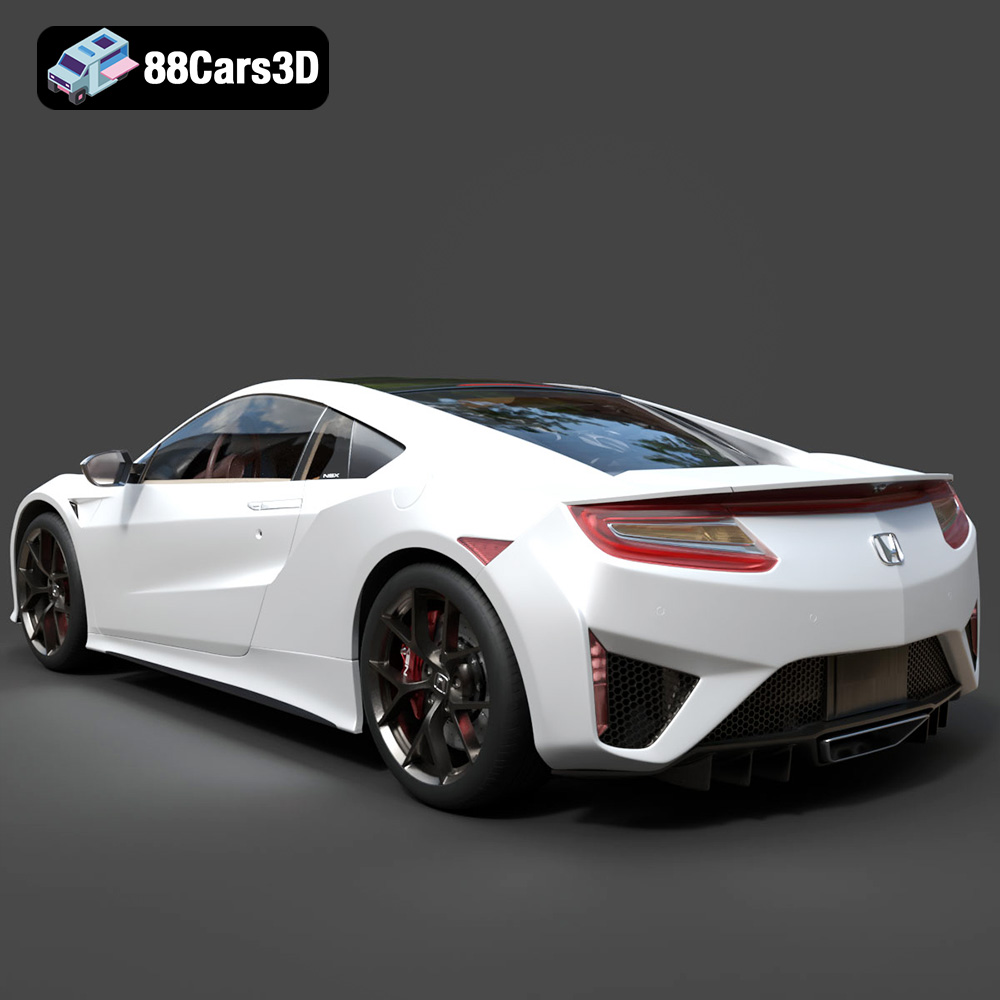
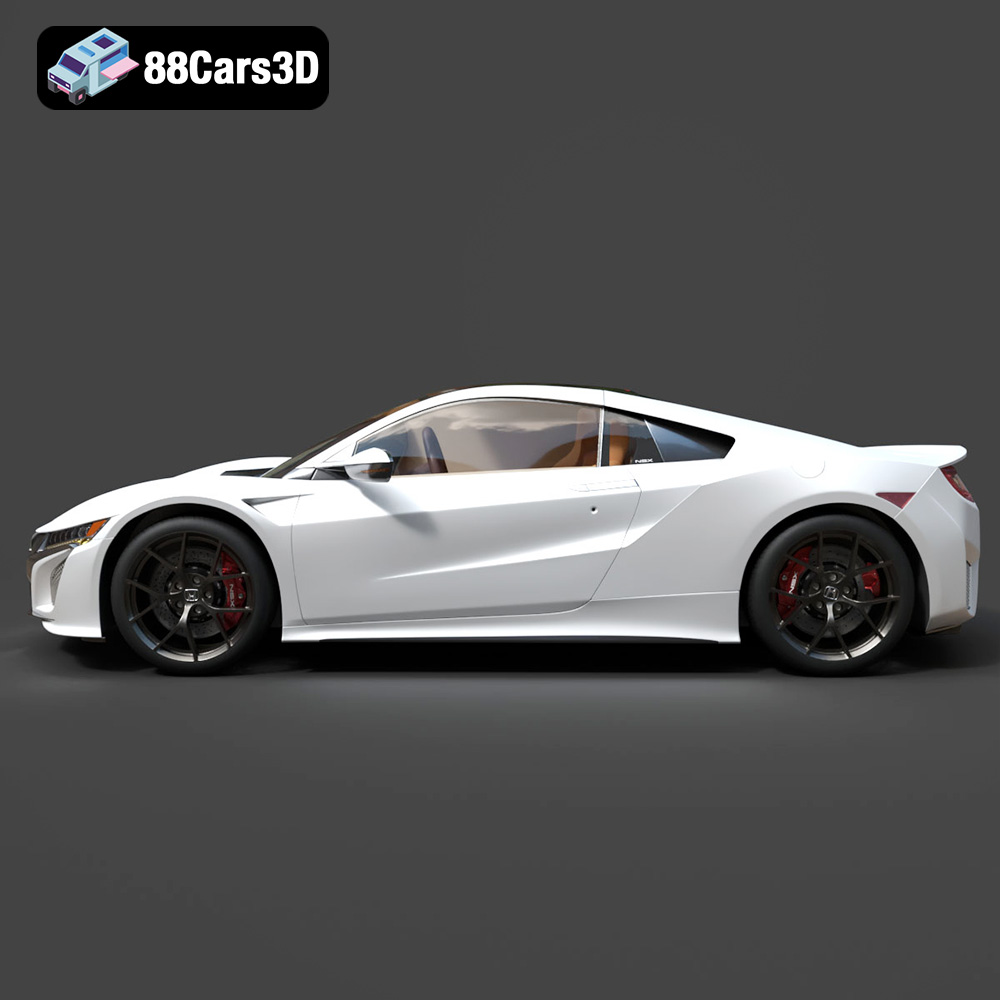
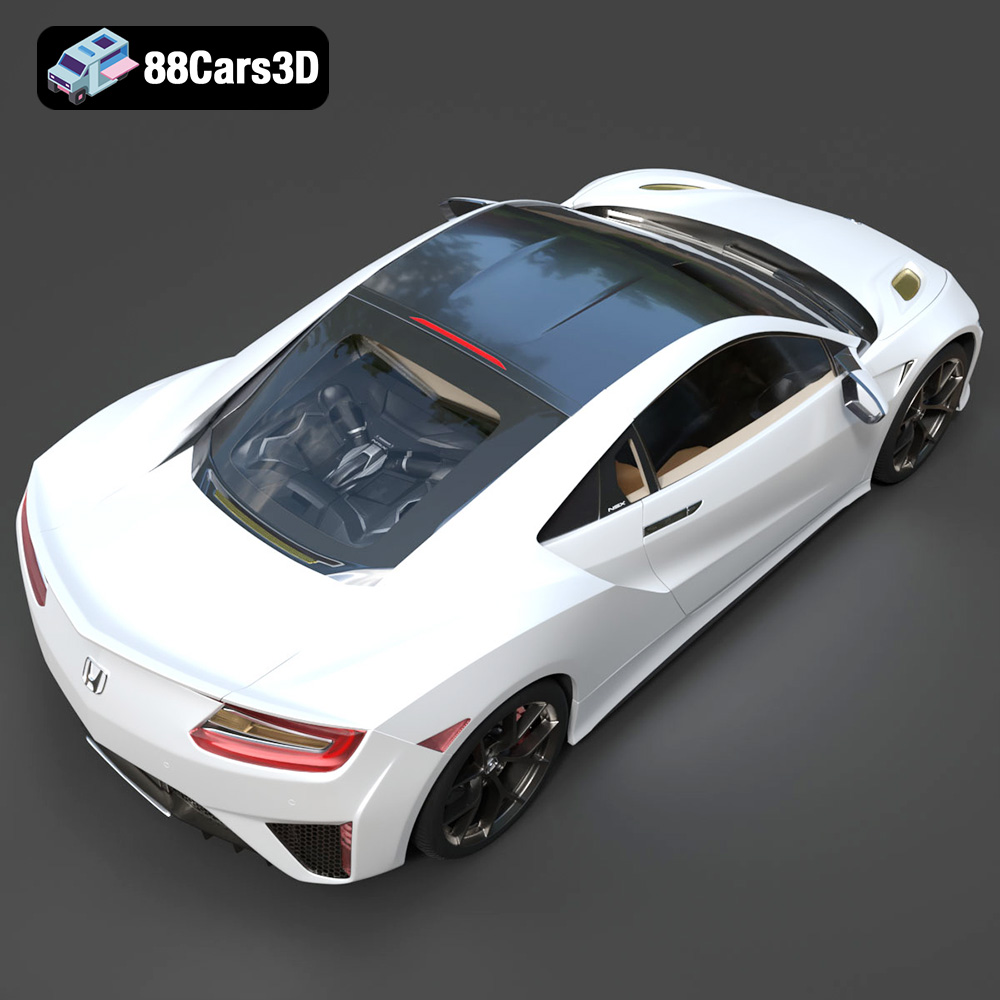
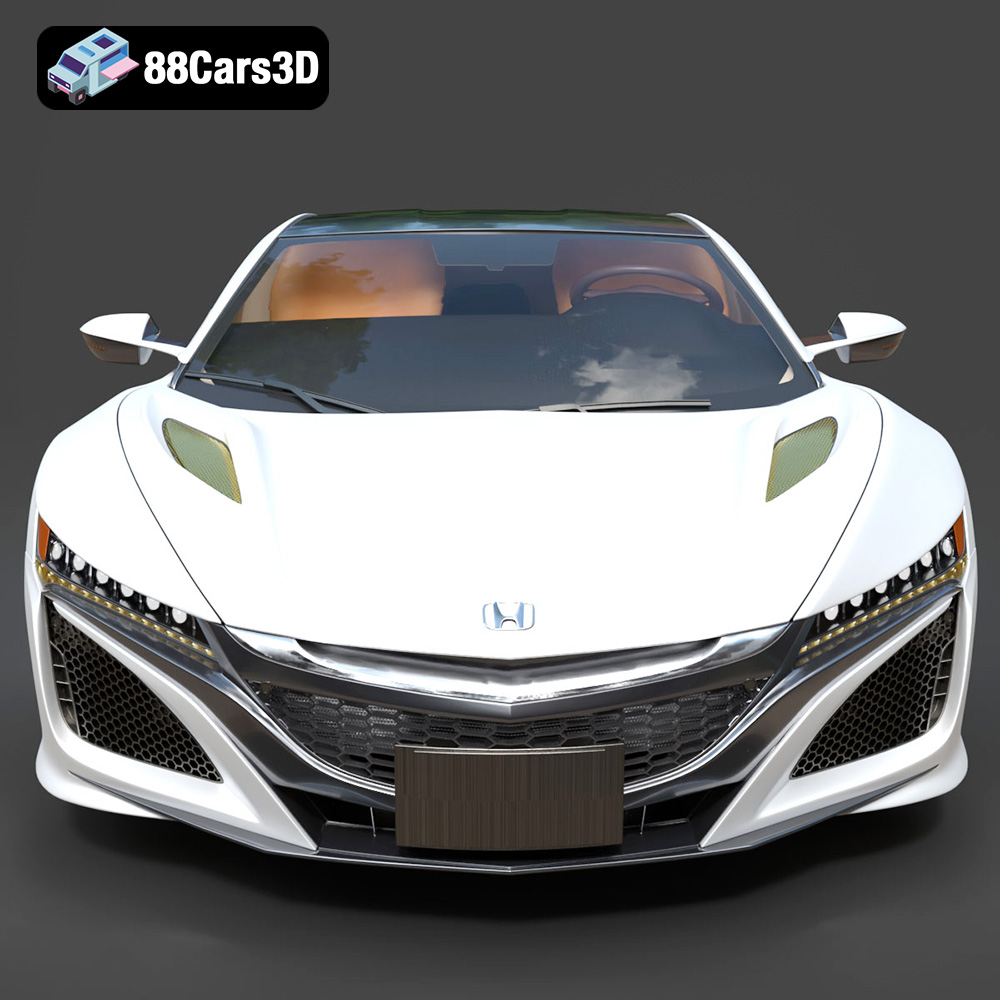
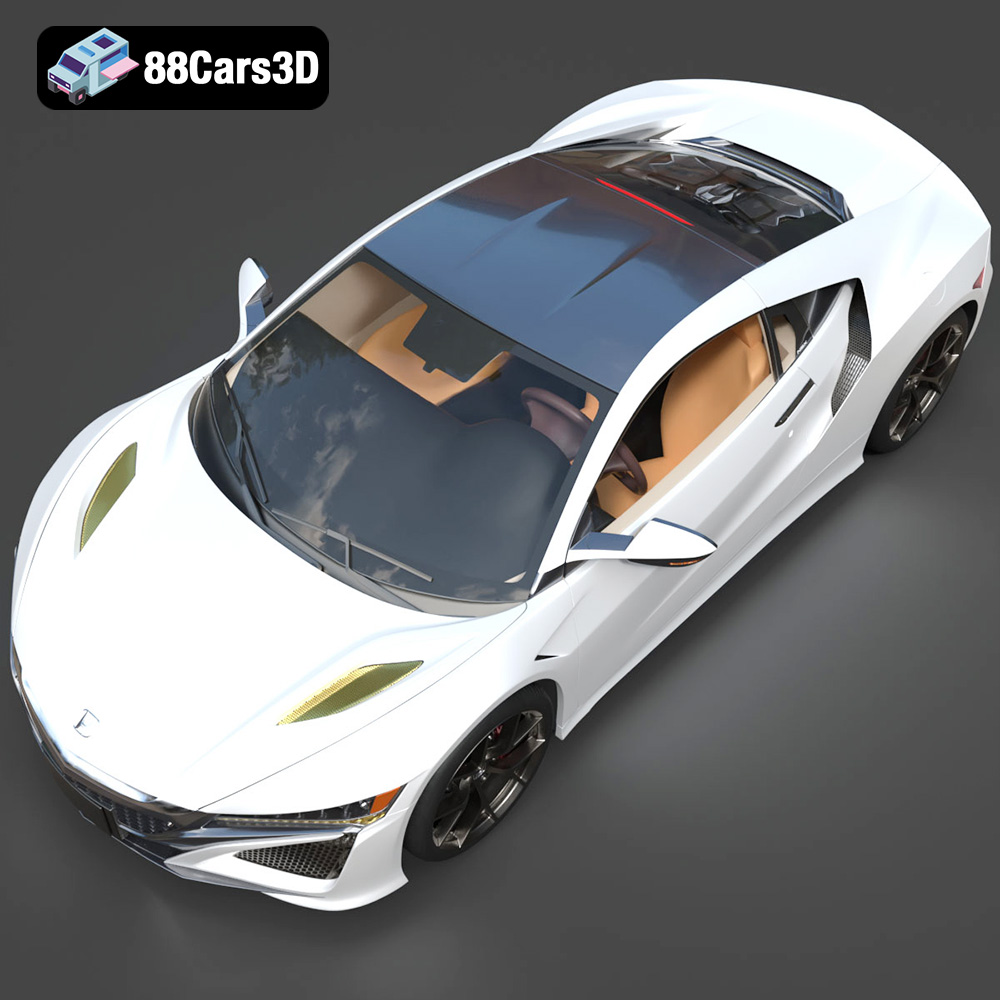
The pursuit of digital perfection is a journey that begins with meticulous craftsmanship and an understanding of diverse technical requirements. It’s about creating assets that not only look stunning but are also engineered for seamless integration across various platforms and pipelines. One such exemplary asset that embodies this philosophy is the Honda NSX 2017 3D Model. This meticulously crafted digital representation of the iconic hybrid sports car offers unparalleled realism and technical versatility, making it an indispensable tool for professionals seeking top-tier 3D car models for their projects, whether for automotive rendering, game assets, or cutting-edge AR/VR experiences. Sourced from 88cars3d.com, it represents a standard of quality that can significantly elevate any digital production.
The visual impact of a project often hinges on the quality of its primary assets. For scenarios involving vehicles, a high-quality 3D car model is not just an aesthetic choice; it’s a technical necessity. Precision modeling ensures that the digital representation holds up under intense scrutiny, from extreme close-ups to dynamic lighting conditions.
Automotive rendering is an art form that blends technical accuracy with aesthetic flair. Designers, advertisers, and enthusiasts rely on 3D models to visualize vehicles before they even leave the factory floor or to create stunning marketing campaigns. A high-fidelity model, like the Honda NSX 2017 3D Model, provides the clean geometry and realistic materials necessary for photorealistic outputs. This means accurate reflections on the paintwork, precise shadow casting, and a true-to-life representation of the vehicle’s unique design language. Without this level of detail, the rendered images risk appearing artificial or generic, failing to capture the essence and allure of the actual car.
In the realm of video games, 3D car models serve a dual purpose: they must look good and perform efficiently. Game engines demand optimized meshes, clean UV layouts, and well-structured material setups to maintain high frame rates and a smooth user experience. The challenge lies in balancing visual fidelity with performance constraints, often requiring multiple Levels of Detail (LODs) and specialized material techniques. A professionally crafted model like the Honda NSX 2017 provides a solid foundation, ready for further optimization or directly usable as a hero asset in next-generation titles, ensuring that the visual spectacle doesn’t come at the cost of playability.
Augmented Reality (AR) and Virtual Reality (VR) are transforming how we interact with digital content, offering immersive experiences that blur the lines between the real and virtual. For automotive applications, this translates into virtual showrooms, interactive training simulations, and real-time design reviews. High-quality 3D car models are crucial for these platforms, as they must render flawlessly in real-time, often on less powerful hardware (especially for mobile AR). The ability to instantly load, manipulate, and experience a detailed vehicle model in an interactive environment is a game-changer for sales, education, and entertainment. The Honda NSX 2017 3D Model, optimized for various formats including GLB, is perfectly suited for these cutting-edge visualization techniques.
The versatility of a 3D model is often defined by the range of file formats it supports. Each format serves specific purposes, catering to different software, pipelines, and end-use applications. Understanding these distinctions is crucial for selecting the right asset for your project and ensuring smooth integration into your workflow. The Honda NSX 2017 3D Model is provided in a comprehensive suite of formats, making it exceptionally adaptable.
The .blend format is Blender’s native file type. It’s incredibly powerful because it encapsulates an entire Blender project, including all 3D mesh data, materials, textures, lighting setups, cameras, animations, rigging, and even scene configurations. For users deeply integrated into the Blender ecosystem, a .blend file offers maximum flexibility. You can dissect the model, understand its construction, modify its materials, adjust the lighting, or even animate it using Blender’s robust toolset. This format is ideal for artists who want to delve into the model’s structure, learn from its professional setup, or customize it extensively for unique rendering or game development needs.
FBX (Filmbox) is a proprietary file format developed by Autodesk, widely regarded as the industry standard for interoperability between 3D software and game engines. It’s particularly favored for its ability to store not just mesh data, but also animation, rigging, skinning, lights, cameras, and even PBR material properties. When exporting for Unreal Engine or Unity, .fbx is often the go-to choice due to its efficient handling of complex scene data and its robust support within these engines. An .fbx file typically contains optimized mesh data (often triangulated for real-time performance), hierarchical structures for scene organization, and references to external textures, making it game-engine ready without significant additional conversion.
OBJ (or Wavefront .obj) is one of the oldest and most universally supported 3D file formats. It’s an open standard, making it highly compatible across virtually all 3D modeling, rendering, and sculpting software. An .obj file primarily stores vertex positions, UV coordinates, vertex normals, and face definitions (which can be triangles, quads, or N-gons). Material information is typically stored in a companion .mtl (material template library) file, which defines properties like color, reflectivity, and texture map references. While .obj doesn’t store animations or complex scene data like .fbx, its simplicity and widespread support make it an excellent choice for static mesh exchange and archival purposes when maximum compatibility is required.
.glb is the binary version of glTF (Graphics Library Transmission Format), an open-standard format for 3D scenes and models. glTF is often referred to as the “JPEG of 3D” due to its efficiency and focus on delivering 3D assets in a compact, easy-to-load package, especially for web and real-time applications. .glb embeds all assets (geometry, textures, animations, PBR materials) into a single file, reducing HTTP requests and improving load times. This makes it exceptionally well-suited for AR/VR applications, interactive web viewers, and mobile experiences where performance and file size are critical considerations.
STL (Stereolithography) is the most common file format used for 3D printing. It represents a 3D model as a series of connected triangles (a triangulated mesh) that define the surface geometry of an object. Unlike other formats that might store color or material data, .stl files exclusively focus on shape. The precision of an .stl model is determined by the number of triangles used to approximate the surface – more triangles mean a smoother, more accurate print, but also a larger file size. For physical prototyping or manufacturing of parts based on the Honda NSX 2017, the .stl format ensures a watertight, print-ready mesh.
PLY (Polygon File Format or Stanford Triangle Format) is another common format for storing 3D data, particularly useful for scanned data, CAD, and scientific applications. It can store not only the geometry (vertices, faces) but also additional properties like color, transparency, surface normals, and texture coordinates for each vertex. PLY is more flexible than STL in terms of data storage and can handle more complex attribute data, making it valuable for detailed analysis, scientific visualization, or when precise mesh data with additional per-vertex information is required beyond simple geometry.
While not a universal file format in the traditional sense, the “.unreal” designation often implies an asset package that is pre-configured and optimized specifically for Unreal Engine. This could mean a .fbx file that has been thoroughly tested, imported, and adjusted within Unreal, or a complete Unreal Engine asset file (e.g., a .uasset) that includes materials, textures, blueprints, and potentially even collision meshes already set up. This dramatically accelerates workflow for Unreal Engine developers, as it removes the need for manual import settings, material creation, and optimization, allowing for immediate integration of the Honda NSX 2017 into an Unreal project.
The .max format is the native file type for Autodesk 3ds Max, a powerful 3D modeling, animation, and rendering software widely used in architectural visualization, automotive design, and film production. Similar to a .blend file for Blender, a .max file contains the complete scene, including geometry, materials, lighting, cameras, animations, and render settings. Having the Honda NSX 2017 in .max format provides 3ds Max users with the highest level of editability and control over the asset, allowing for direct modification, integration into existing scenes, and utilization of 3ds Max’s extensive rendering capabilities with V-Ray or Corona Renderer.
Achieving a truly professional 3D car model requires more than just recreating the shape; it demands a deep understanding of geometry, materials, and scale. The Honda NSX 2017 3D Model exemplifies this technical artistry.
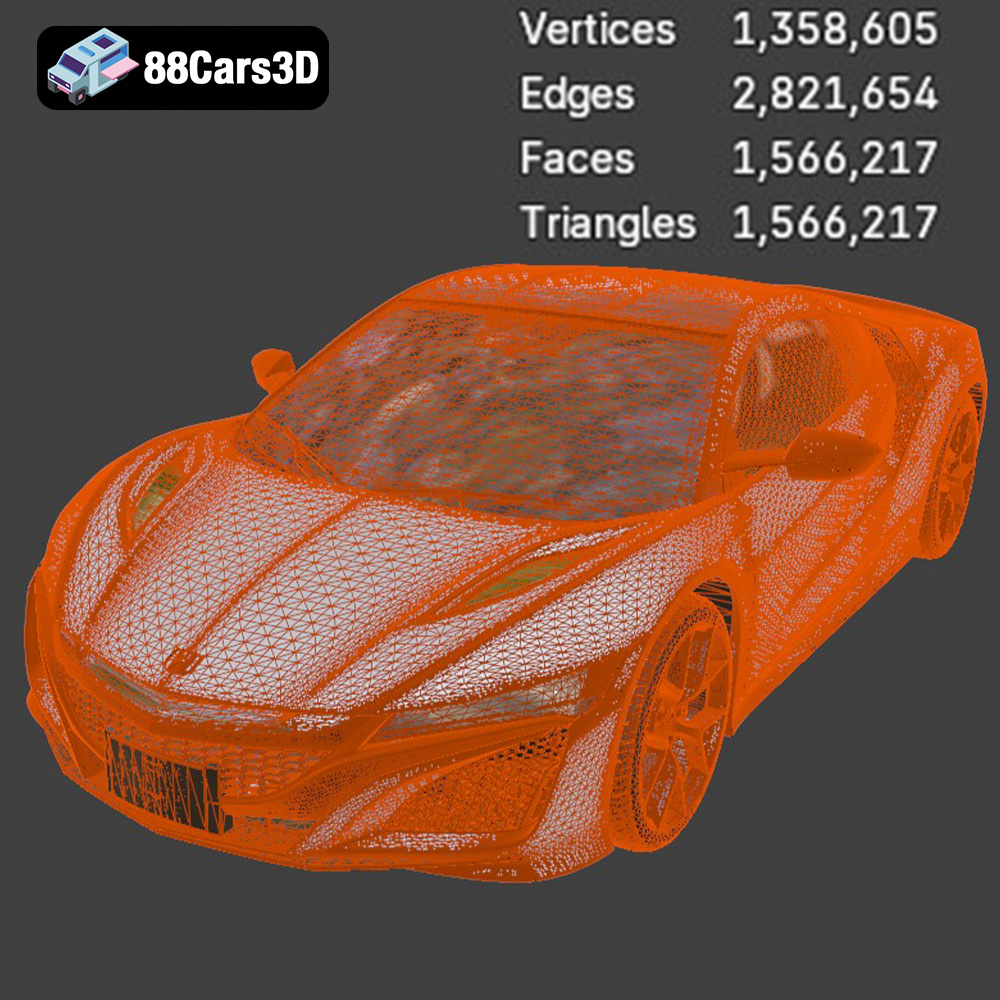
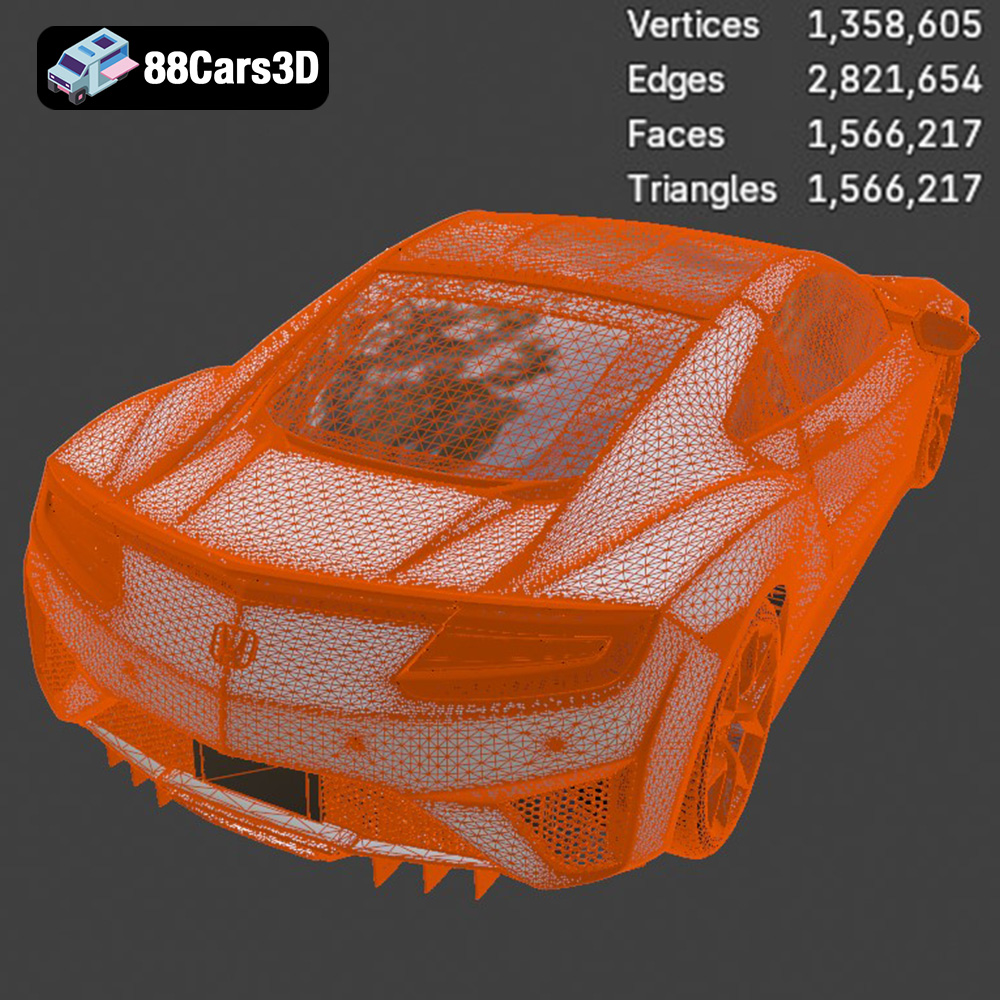
The foundation of any high-quality 3D model is its geometry and topology. The Honda NSX 2017 3D Model features clean geometry, primarily composed of quads, which is essential for smooth subdivision and distortion-free deformation. A typical poly count for a highly detailed vehicle like this, intended for rendering or as a hero game asset, might range from 250,000 to 500,000 polygons, with careful attention paid to edge loops for supporting crisp edges and allowing for efficient subdivision surfacing if needed. This clean mesh structure ensures seamless performance during rendering and animation, preventing artifacts and simplifying subsequent modifications. It also means that the model can be easily optimized for lower-poly versions if required for mobile games or distant shots.
Photorealism is heavily dependent on the quality of materials and textures. The Honda NSX 2017 3D Model comes equipped with realistic materials, often employing Physically Based Rendering (PBR) workflows. This involves texture maps for albedo (base color), roughness, metallic, normal, and ambient occlusion, precisely defining how light interacts with the surfaces. Critically, the model features professional-grade UV unwrapping, ensuring that textures are mapped without stretching or distortion. Non-overlapping UVs are essential for baking lighting, ambient occlusion, and other texture maps without issues, providing a solid base for advanced material layering and customization, whether you’re working in Blender, 3ds Max, or a game engine.
Accuracy in scale and proportions is paramount, especially for real-world objects like cars. The Honda NSX 2017 3D Model is meticulously scaled to real-world measurements, ensuring that it integrates perfectly into scenes without requiring manual adjustments or appearing disproportionate. This precision is vital for architectural visualization projects where a car needs to fit realistically into a street scene, for simulations requiring accurate physics, or for AR experiences where the digital model overlays a real environment. Every panel gap, curvature, and headlight dimension is designed to be true to the actual vehicle, providing an authentic representation.
A truly versatile 3D car model seamlessly integrates into diverse professional workflows. The Honda NSX 2017 3D Model is engineered for such adaptability, supporting a range of applications from cinematic rendering to real-time game development.
For high-end cinematic rendering, professionals often turn to software like 3ds Max combined with powerful renderers such as V-Ray or Corona. The .max file provided with the Honda NSX 2017 3D Model allows for direct import, giving artists full access to the model’s geometry and material setups. A typical workflow might involve: importing the model, setting up a studio lighting environment (e.g., using an HDRI and additional area lights), refining the car’s PBR materials (adjusting reflections, clear coat, and metallic properties), adding details like brake calipers and interior elements for close-up shots, and finally, rendering high-resolution stills or animation sequences. This robust setup allows for breathtaking visuals, perfect for commercials, design showcases, or film.
Game developers demand efficiency and performance. The .fbx and .unreal formats of the Honda NSX 2017 3D Model are specifically tailored for integration into real-time engines like Unreal Engine and Unity. The workflow for game assets typically involves: importing the .fbx (or .unreal package directly) into the engine, creating LODs (Levels of Detail) to optimize performance by reducing poly count for distant objects, setting up collision meshes for realistic physics interactions, and integrating it into the game’s blueprint or scripting system for player control or AI behavior. The clean geometry and optimized UVs ensure that textures and materials render efficiently, maintaining high frame rates even in complex scenes, making it an excellent choice for any racing simulation or open-world game.
Blender, with its powerful Eevee real-time renderer, offers a fantastic platform for creating interactive presentations and quick, high-quality renders. With the included .blend file, artists can open the Honda NSX 2017 3D Model directly in Blender. They can then utilize Eevee’s real-time capabilities to create dynamic lighting scenarios, showcase the car from various angles in an interactive viewport, or even set up simple animations for product configurators or virtual showrooms. The native Blender file ensures that all materials, textures, and even studio lighting setups are ready to use, significantly speeding up the development of engaging, interactive content without the overhead of traditional offline rendering.
The utility of a high-quality 3D car model extends far beyond traditional screen-based visualizations. It serves as a foundational asset for emerging technologies and critical industry applications, further highlighting the value of assets like the Honda NSX 2017 3D Model from 88cars3d.com.
For augmented and virtual reality, immersion is key. The Honda NSX 2017 3D Model, particularly in its .glb format, is ideal for creating compelling AR/VR experiences. Imagine a virtual showroom where customers can walk around the NSX, inspect its interior, change colors, and even “sit” inside it, all from the comfort of their home using a VR headset. For AR, the model can be placed virtually in a real-world environment through a smartphone, allowing users to see the NSX parked in their driveway before purchase. Optimizations in file size and draw calls are critical for these platforms, especially for mobile AR, where resources are limited. The meticulous detail of the model ensures that even under close inspection in VR, the illusion of reality holds strong.
Beyond digital displays, the Honda NSX 2017 3D Model also offers tangible benefits through 3D printing. The .stl format provided is specifically designed for additive manufacturing. Design studios, engineers, and hobbyists can leverage this format to create physical prototypes, scale models, or even intricate parts of the vehicle. For a design studio, printing a scaled model allows for tactile examination of form and proportion that a screen simply cannot replicate. For enthusiasts, it opens up possibilities for creating bespoke collectibles. The clean, watertight mesh of the model ensures that the 3D printer can accurately interpret the geometry and produce a high-fidelity physical object.
High-fidelity 3D car models are indispensable for advanced driving simulations, driver training modules, and autonomous vehicle research. The accurate scale, proportions, and detailed geometry of the Honda NSX 2017 3D Model make it perfectly suited for these demanding applications. Integrating the model into a simulator environment allows for realistic visual feedback as driving dynamics and physics models interact with the vehicle. This is crucial for professional training of race car drivers, engineers testing new vehicle components, or researchers developing self-driving car algorithms, where visual accuracy directly impacts the efficacy of the simulation.
The journey to creating compelling digital experiences in automotive design, game development, and immersive visualization begins with the right assets. As we’ve explored, the demand for highly detailed, technically robust, and versatile 3D car models is a constant across these dynamic industries. The meticulous craftsmanship, clean geometry, realistic materials, and comprehensive file format support of the Honda NSX 2017 3D Model position it as an exceptional resource for any professional endeavor.
Whether you’re an automotive designer seeking unparalleled rendering quality, a game developer building the next blockbuster racing title, or an AR/VR innovator crafting immersive experiences, this model provides the fidelity and flexibility required to bring your vision to life. Its compatibility across major software like Blender, 3ds Max, Unreal Engine, and its readiness for 3D printing or web-based AR/VR, underscores its value as a truly multi-purpose asset. For those seeking to elevate their projects with premium 3D car models, look no further than the curated collection available at 88cars3d.com, where the Honda NSX 2017 3D Model stands as a testament to digital excellence.
Experience unparalleled realism with the Honda NSX 2017 3D Model. Meticulously crafted to capture the sleek, aerodynamic lines and iconic stance of this legendary hybrid sports car, this model delivers exceptional detail for all your digital projects.Key features include clean geometry, realistic materials, and professional-grade polygon structures. Every curve, panel, and interior element is designed to ensure seamless integration into any visual environment, providing true-to-life reflections and accurate proportions.Perfect for a wide range of applications, this model excels in game development, architectural visualization, cinematic rendering, and AR/VR experiences. Whether used as a hero asset in an animation or an interactive vehicle in a virtual environment, it offers the fidelity required for professional production.The model is delivered in multiple industry-standard file formats to ensure maximum compatibility:
$19.99
.arvr
.blend
.car3dmodel
.fbx
.gameasset
.glb
.honda
.max
.nsx
.obj
.ply
.rendering
.simulation
.sportsCar
.stl
.supercar
.unreal