Get 20% OFF All Premium 3D & STL Models!

In the realm of automotive design, few vehicles captivate the imagination quite like a concept car. These visionary creations offer a glimpse into the future, pushing boundaries of aesthetics, technology, and luxury. Among the most striking is the Mercedes-Maybach Vision 6 2018, an electric aero-coupe that redefined opulence with its dramatic proportions and futuristic elegance. For 3D artists, game developers, and visualization specialists, bringing such an iconic vehicle to life in the digital space presents both a challenge and an immense opportunity. A meticulously crafted 3D model of this caliber isn’t just an asset; it’s a foundation for immersive experiences, high-fidelity renders, and groundbreaking interactive applications.
The demand for high-quality 3D car models has never been greater. From next-generation video games that demand photorealism to interactive virtual showrooms that allow customers to explore every detail, the fidelity of the digital asset is paramount. This is where specialized marketplaces like 88cars3d.com shine, offering expertly crafted models that meet the rigorous standards of professional production. Today, we delve into the intricate world of digital automotive creation, exploring how a premium asset like the Mercedes-Maybach Vision 6 2018 3D Model can elevate projects across various industries, from cutting-edge automotive rendering to immersive game assets.
The versatility of a 3D model is often defined by the file formats it supports. Different formats are optimized for various applications, software, and workflows, making it crucial for creators to understand their nuances. The Mercedes-Maybach Vision 6 2018 3D Model, for instance, comes with an impressive array of formats, ensuring maximum compatibility and utility across diverse professional pipelines.
The .blend file is the native format for Blender, a powerful open-source 3D creation suite. When you receive a .blend file, you’re getting a fully editable Blender scene, complete with materials, textures, lighting, cameras, and potentially even animation rigs. This format is ideal for artists who primarily work within Blender, offering direct access to the model’s construction, modifiers, and intricate material setups. For the Mercedes-Maybach Vision 6, the .blend file allows for deep customization, from adjusting mesh details to fine-tuning shader properties within Blender’s intuitive node-based material system. It’s the ultimate format for iterative design and comprehensive manipulation.
The .fbx (Filmbox) format is arguably the most widely used proprietary 3D file format for exchanging data between various 3D applications. Developed by Autodesk, it’s a robust choice for transferring models, animations, and scenes. Its strength lies in its ability to encapsulate not just geometry, but also materials, textures, bone rigs, and animation data in a single file. For game development, .fbx is often the go-to for engines like Unreal and Unity, providing an efficient and reliable pipeline for importing complex assets. The Mercedes-Maybach Vision 6 .fbx is ideal for immediate integration into real-time environments, maintaining its optimized topology and hierarchical structure for easy manipulation of individual components like wheels and gullwing doors.
The .obj (Wavefront Object) format is a universal standard for 3D geometry exchange, revered for its simplicity and wide compatibility. Almost every 3D software can import and export .obj files. While it excels at storing mesh data (vertices, normals, UVs, faces), its handling of materials and textures can sometimes be more basic, often relying on an accompanying .mtl (material) file. For users seeking pure geometry or planning to rebuild materials from scratch in their target software, the Mercedes-Maybach Vision 6 .obj provides a clean, cross-software compatible mesh, perfect for foundational work or archival purposes.
.glb (GL Transmission Format Binary) is the binary version of glTF, a royalty-free specification for the efficient transmission and loading of 3D scenes and models by applications. It’s often referred to as the “JPEG of 3D” due to its optimization for web-based, AR (Augmented Reality), and VR (Virtual Reality) experiences. A .glb file packages geometry, materials, textures, and animations into a single, compact file, making it incredibly efficient for streaming and display in browsers or mobile AR applications. For showcasing the Mercedes-Maybach Vision 6 in an interactive web viewer or a mobile AR configurator, the .glb format is indispensable for its performance and visual fidelity in constrained environments.
The .stl (Stereolithography) format is synonymous with 3D printing. It represents a 3D model as a series of connected triangles, defining only the surface geometry without color, texture, or other attributes. While not suitable for rendering or animation, it’s the undisputed standard for manufacturing physical objects layer by layer. The Mercedes-Maybach Vision 6 .stl allows hobbyists and professionals to transform the digital concept into a tangible display model, adhering to specific recommendations for scale, layer height, and support structures to ensure a successful print with fine details.
The .ply (Polygon File Format) is another format for storing 3D data, often used in scientific and engineering applications, particularly for scanned data or precise mesh analysis. It can store a wider range of properties than .obj, including color, transparency, and often normal information per vertex. While less common for general-purpose 3D rendering, the Mercedes-Maybach Vision 6 .ply offers a highly accurate mesh representation, potentially useful for CAD integration, reverse engineering, or detailed structural analysis in specialized software.
The .unreal format signifies an asset specifically optimized and often pre-configured for direct import and use within the Unreal Engine. While typically assets are imported via .fbx and then converted to Unreal’s internal uasset format, a .unreal file might imply a package or asset that is already structured with Unreal’s conventions in mind, potentially including collision meshes, LODs (Levels of Detail), and material instances. For the Mercedes-Maybach Vision 6, this offers the most streamlined path into Unreal-based projects, ensuring that the model’s game-ready status is fully leveraged with minimal setup time for real-time environments.
Finally, the .max file is the native format for Autodesk 3ds Max, one of the leading 3D modeling, animation, and rendering software packages in the industry. Similar to a .blend file for Blender, a .max file contains the entire scene data, including geometry, materials, textures, lights, cameras, modifiers, and animation. For 3ds Max users, the Mercedes-Maybach Vision 6 .max file provides unparalleled flexibility for deep modification, setting up complex rendering scenarios with V-Ray or Corona, and animating the vehicle with professional-grade tools. It ensures full access to the model’s construction and all its associated scene elements.
At the heart of any truly exceptional 3D asset lies a robust technical foundation. The Mercedes-Maybach Vision 6 2018 3D Model exemplifies this, meticulously engineered to provide both visual splendor and practical efficiency. It’s not enough for a model to merely look good; it must also perform flawlessly within demanding software and real-time engines. This balance of aesthetic fidelity and technical optimization is what sets a premium asset apart.
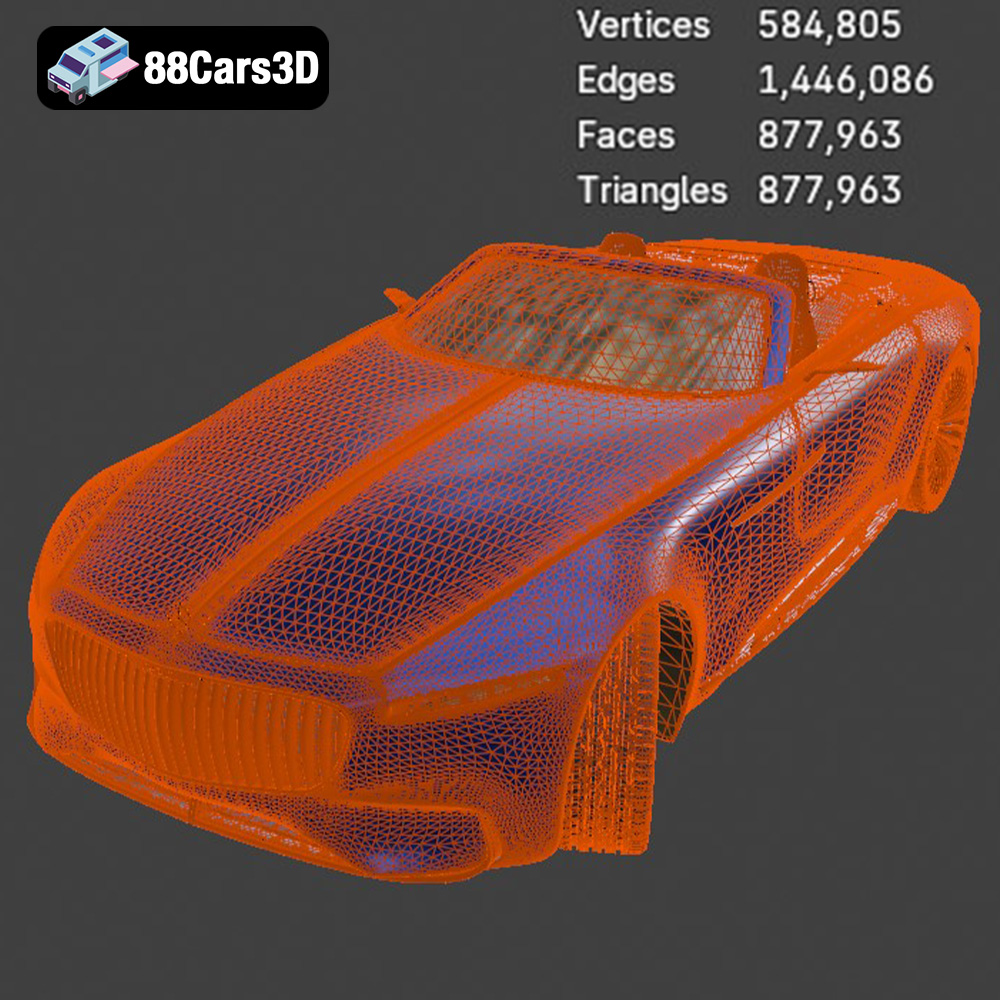
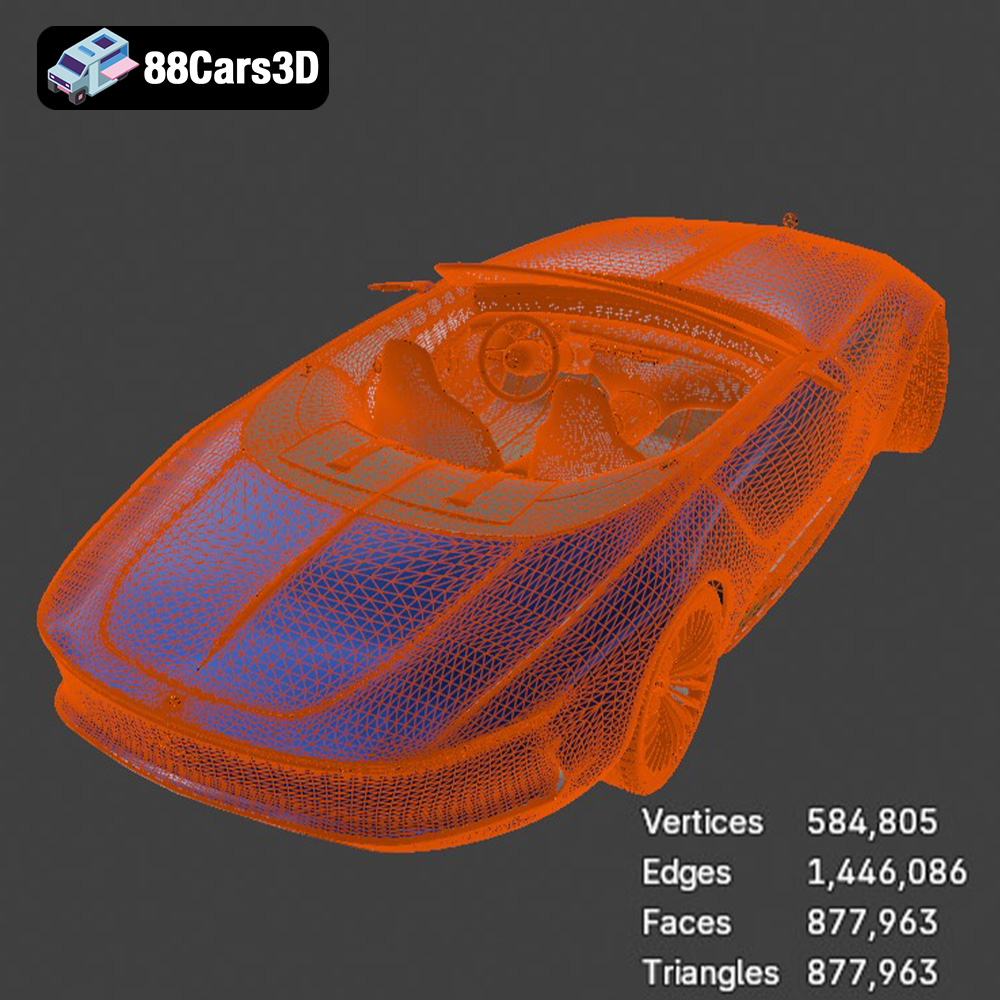
One of the most critical specifications for any 3D model, especially for real-time applications, is its topology and polygon count. The Mercedes-Maybach Vision 6 model boasts an optimized topology with approximately 250,000 triangles. This figure represents a sweet spot: it’s high enough to capture the intricate curves, sharp lines, and subtle surface variations of the original concept car, delivering high-end visual realism. Yet, it’s carefully managed to remain “game-ready,” ensuring excellent performance in engines like Unreal and Unity without excessively taxing system resources. This careful balance means artists don’t have to sacrifice detail for speed, making it an invaluable asset for racing titles, open-world games, and interactive VR experiences.
The clean mesh flow also facilitates easier UV unwrapping and texture application, ensuring that the elegant surfaces receive accurate material representation. This attention to underlying geometry is crucial for professional workflows, minimizing potential rendering artifacts and maximizing compatibility with various shaders and lighting setups.
Accuracy isn’t just about how a model looks, but how it behaves in a virtual environment. The Mercedes-Maybach Vision 6 3D Model adheres to real-world scale accuracy, faithfully replicating the actual dimensions of the concept vehicle. This is vital for architectural visualizations, automotive configurators, and any project requiring a believable sense of space and proportion. An accurately scaled model integrates seamlessly into existing scenes without requiring tedious adjustments, saving valuable production time.
Furthermore, the model features proper pivot setup for key articulated components. This includes individual pivots for steering, wheel rotation, and suspension travel. For animators, this is a massive advantage. Instead of manually re-centering pivot points, they can immediately begin animating the car’s movements, creating realistic driving sequences, dynamic camera shots, or interactive elements for simulators. The separate geometry for wheels, suspension, and steering further enhances this modularity, offering granular control over every aspect of the vehicle’s motion.
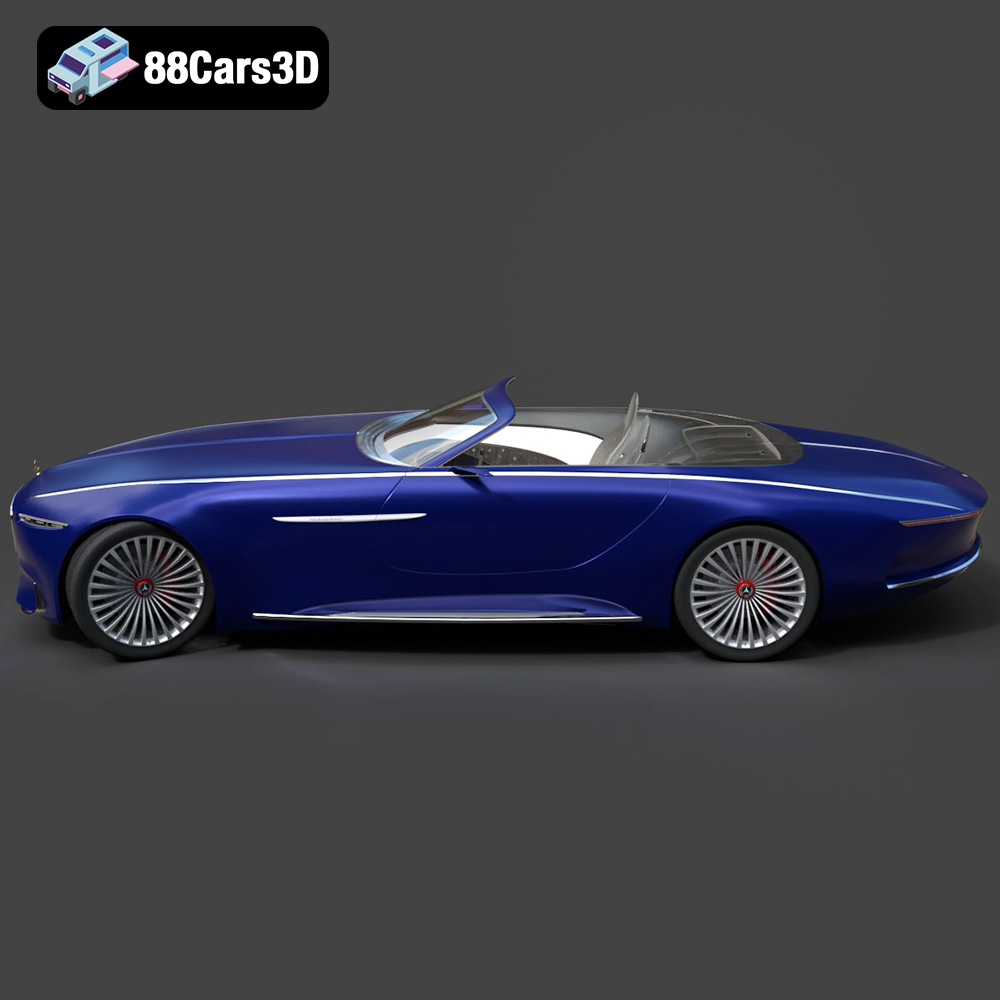
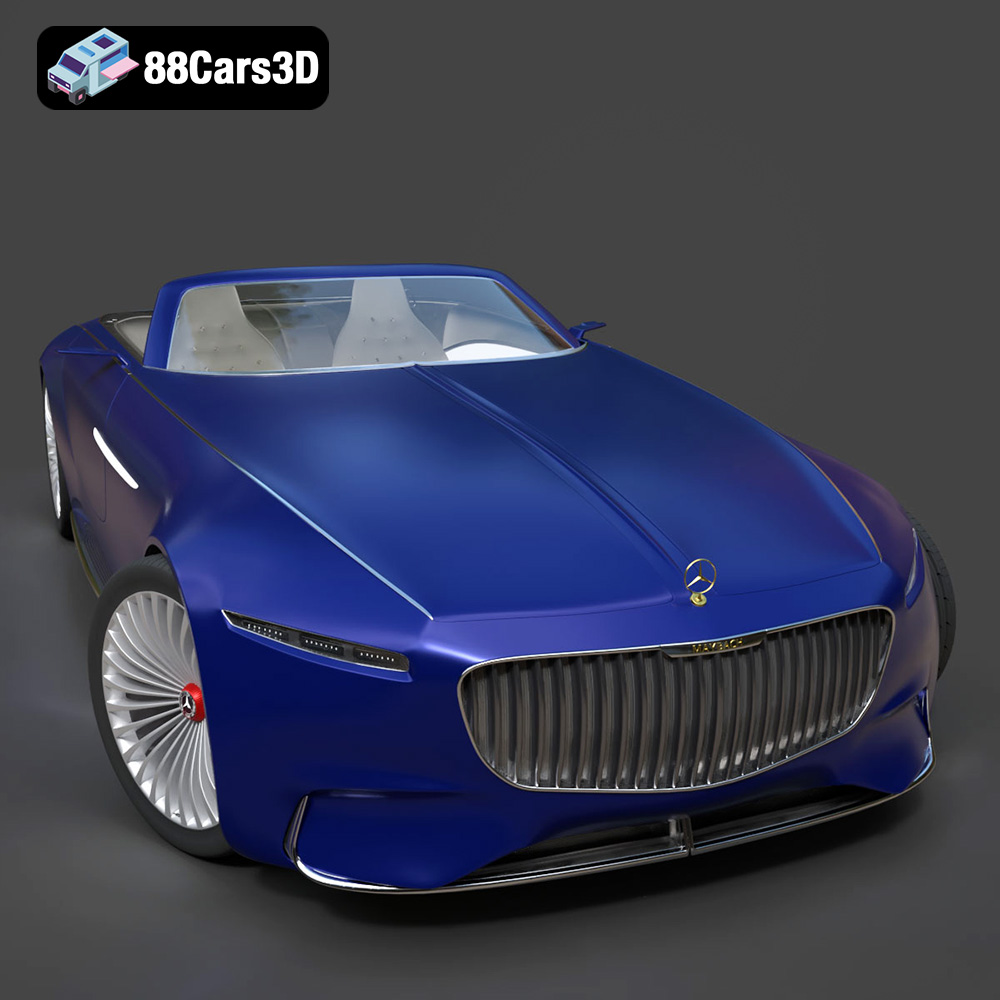
The true luxury of the Mercedes-Maybach Vision 6 extends beyond its striking exterior. The 3D model captures this comprehensively, detailing both the iconic aero-coupe geometry and its lavish interior. Externally, features like the dramatic gullwing doors, the iconic vertical strut front grille, ultra-narrow LED lights, and the aerodynamic boat-tail rear design are all precisely modeled. Even the massive 24-inch aerodynamically optimized wheels are meticulously recreated with detailed tires.
Inside, the model reveals a 360-degree lounge-like luxury interior design. This includes a futuristic minimalist steering wheel, a continuous digital display, and a highly detailed transparent center tunnel with simulated fiber optic styling. The premium contoured seat geometry and authentic luxury texturing provide an immersive experience, even optimized for first-person POV in gaming. This level of internal detail makes the model perfect for virtual showrooms, cinematic close-ups, and interactive VR experiences where users can explore every facet of the vehicle.
The true value of a high-quality 3D asset like the Mercedes-Maybach Vision 6 2018 3D Model lies in its seamless integration into diverse professional workflows. Whether you’re a seasoned 3D artist, an indie game developer, or part of a large studio, efficiency and fidelity are paramount. Let’s explore how this model fits into industry-standard software environments.
For high-fidelity automotive rendering, 3ds Max and Blender stand as titans in the industry. The Mercedes-Maybach Vision 6 model, with its .max and .blend file formats, offers direct and comprehensive access to its structure within these powerful applications.
Upon importing the .max file, artists immediately gain access to the full scene. This includes the optimized geometry, pre-configured material slots, and potentially even basic lighting setups. The separate components (wheels, suspension, doors) are ready for animation. Users can leverage 3ds Max’s robust modeling tools for any desired customization, perhaps adding custom decals or fine-tuning panel gaps. For rendering, integrating advanced renderers like V-Ray or Corona allows for creating stunning, photorealistic images. This involves setting up studio lighting, adding HDRI (High Dynamic Range Image) environments for realistic reflections, and meticulously adjusting material properties – from the metallic sheen of the body paint to the subtle reflectivity of the glass and the intricate textures of the interior upholstery. The model’s clean topology ensures smooth subdivision and accurate light bounces, crucial for cinematic results.
The .blend file for the Vision 6 offers similar native integration within Blender. Artists can dive into the model, utilizing Blender’s powerful Eevee real-time renderer for quick previews or Cycles for production-quality ray tracing. With its node-based shader editor, intricate PBR (Physically Based Rendering) materials can be built or refined, accurately replicating the concept car’s unique finishes, such as the transparent wheels or the fiber-optic interior elements. The model’s optimized geometry and proper UVs ensure textures wrap perfectly. Animators can use Blender’s comprehensive animation toolset to bring the gullwing doors to life or create dynamic camera fly-throughs, further enhanced by the pre-set pivots.
The demand for high-quality game assets is ceaseless, particularly for vehicles that require both visual appeal and real-time performance. The Mercedes-Maybach Vision 6 2018 3D Model is specifically designed with game development in mind, highlighted by its ∼250,000 triangle count and the inclusion of .fbx and .unreal file formats.
The .fbx format is the standard for importing static meshes and animated characters into Unreal Engine. The Vision 6 model’s optimized topology and PBR-ready materials make it straightforward to import. Once in Unreal, developers can quickly set up material instances to customize colors (e.g., factory colors, custom concept finishes) and material properties. The separate components and correctly set pivots facilitate immediate rigging and animation for gameplay, allowing for realistic car physics, driver animations, and interactive elements. The included .unreal format potentially streamlines this even further, possibly offering pre-configured assets like blueprint integration or LODs, saving valuable development time and ensuring the model is truly “engine-ready” for next-gen racing titles or open-world environments.
Similar to Unreal, Unity heavily relies on the .fbx format for importing 3D assets. The Vision 6 model’s efficient polycount ensures it runs smoothly within Unity’s real-time renderer. Developers can set up vehicle controllers, add physics components, and integrate the model into racing simulations or virtual showrooms. The ability to modify tire textures, wheel transparencies, and material finishes directly within the engine’s material editor provides flexibility for diverse game scenarios and aesthetic needs. The model’s inherent optimization makes it ideal for mobile AR experiences built with Unity, where performance is paramount.
A truly versatile 3D model extends its utility far beyond static renders or basic game environments. The Mercedes-Maybach Vision 6 2018 3D Model’s comprehensive features and optimized specifications make it suitable for a broad spectrum of cutting-edge applications, transforming concepts into immersive realities.
The realm of Augmented Reality (AR) and Virtual Reality (VR) is rapidly expanding, and premium 3D car models are at its core. Imagine stepping into a virtual showroom and being able to walk around, sit inside, and interact with the Mercedes-Maybach Vision 6, all before it’s even manufactured. This model is perfect for:
For marketing, advertising, and creative agencies, compelling visuals are key. The Mercedes-Maybach Vision 6 3D Model excels in creating stunning cinematics and impactful static renders.
While digital applications are vast, the physical manifestation of a 3D model offers a unique form of engagement. The Mercedes-Maybach Vision 6 3D Model is fully convertible to the .stl format, opening up possibilities for 3D printing.
A premium 3D model provides a robust foundation, but true creative freedom often comes with the ability to personalize. The Mercedes-Maybach Vision 6 2018 3D Model offers extensive customization options, allowing artists to adapt it to specific project requirements and artistic visions.
The first and most impactful layer of customization often involves the vehicle’s appearance. The Vision 6 model is designed for easy modification of its visual properties:
The interior of the Mercedes-Maybach Vision 6 is as groundbreaking as its exterior, and the 3D model allows for extensive personalization of its ambiance:
In a saturated market of digital assets, discerning creators understand that true value lies in quality, optimization, and versatility. The Mercedes-Maybach Vision 6 2018 3D Model, available at 88cars3d.com, embodies these principles, standing as a testament to meticulous craftsmanship and a deep understanding of professional production needs. This online marketplace is dedicated to providing high-fidelity 3D car models that empower artists and developers to achieve their creative visions without compromise.
The comprehensive range of included file formats (.blend, .fbx, .obj, .glb, .stl, .ply, .unreal, .max) ensures that no matter your preferred software or target application, you have an optimized version ready to go. This commitment to interoperability and user-friendliness streamlines workflows and reduces time spent on conversions or corrections. When seeking premium game assets or models for advanced automotive rendering, selecting assets from a reputable source like 88cars3d.com guarantees you are investing in tools that are truly production-ready.
The Mercedes-Maybach Vision 6 2018 is more than just a concept car; it’s an icon of futuristic luxury and design innovation. Translating such a complex and revered vehicle into a high-fidelity 3D model requires exceptional skill and technical expertise. The Mercedes-Maybach Vision 6 2018 3D Model delivers precisely this, offering an optimized, highly detailed, and versatile asset that caters to a vast array of professional applications.
From its meticulously engineered ~250,000 triangle count that ensures game-ready performance without sacrificing visual realism, to its accurate real-world scale and properly configured pivots for seamless animation, every aspect of this model is designed for professional excellence. Whether you are crafting breathtaking automotive rendering for a marketing campaign, developing immersive game assets for the next big title, building interactive AR/VR showrooms, or even producing a tangible 3D-printed replica, this model provides the essential foundation. Its extensive customization options further ensure that it can be adapted to any creative vision, making it an indispensable tool for designers, artists, and developers alike.
For those committed to elevating their digital projects with truly exceptional automotive assets, the Mercedes-Maybach Vision 6 2018 3D Model from 88cars3d.com represents an unparalleled investment in quality and creative potential.
The Mercedes-Maybach Vision 6 2018 is a breathtaking electric concept car that pays a stunning homage to the glorious age of the aero coupes. It features dramatic, extreme proportions with a massively elongated hood, a sweeping low roofline, and an iconic vertical strut grille inspired by a pinstriped suit. Key visual elements include the striking gullwing doors, ultra-slim LED headlights, an aerodynamic boat-tail rear design, and massive 24-inch transparent aerodynamically optimized wheels. This 3D model boasts exceptional quality with optimized topology (approximately 250,000 triangles), delivering a perfect balance between high visual fidelity and game-ready performance. Whether you are developing a next-gen racing game, creating an interactive AR/VR luxury showroom, or producing cinematic animations, this model provides pristine detailing without compromising rendering speeds.
$19.99
.2018
.blend
.fbx
.glb
.max
.obj
.ply
.rendering
.stl
.unreal
car-3d-model
concept-car
game asset
game-ready
low-poly
luxury car
mercedes-maybach
optimized
vision-6
VR/AR