Get 20% OFF All Premium 3D & STL Models!

In the rapidly evolving landscape of digital content creation, the demand for high-fidelity 3D assets is insatiable. From breathtaking cinematic sequences and immersive virtual reality experiences to cutting-edge game development and detailed visualization projects, the quality of your 3D models forms the bedrock of your entire production. Professional artists and studios understand that investing in expertly crafted assets saves invaluable time, ensures consistency, and elevates the final output to a truly professional standard.
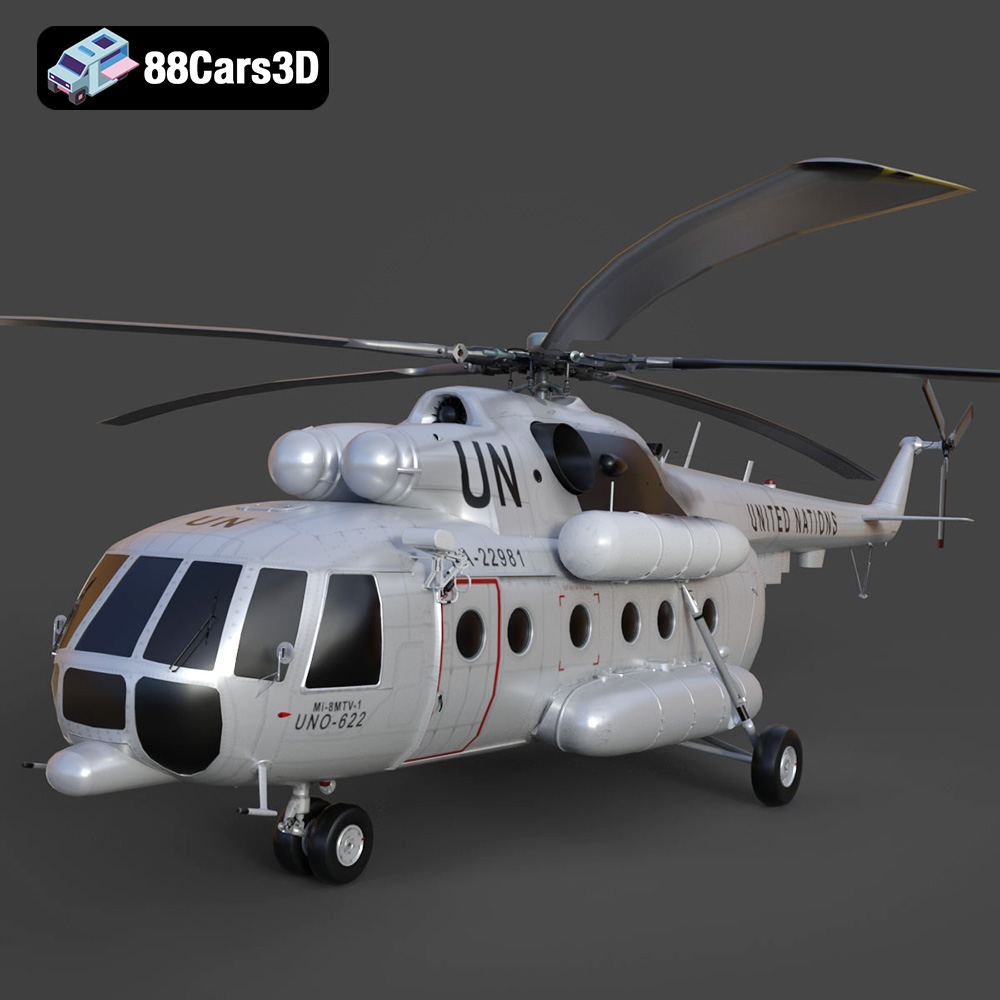
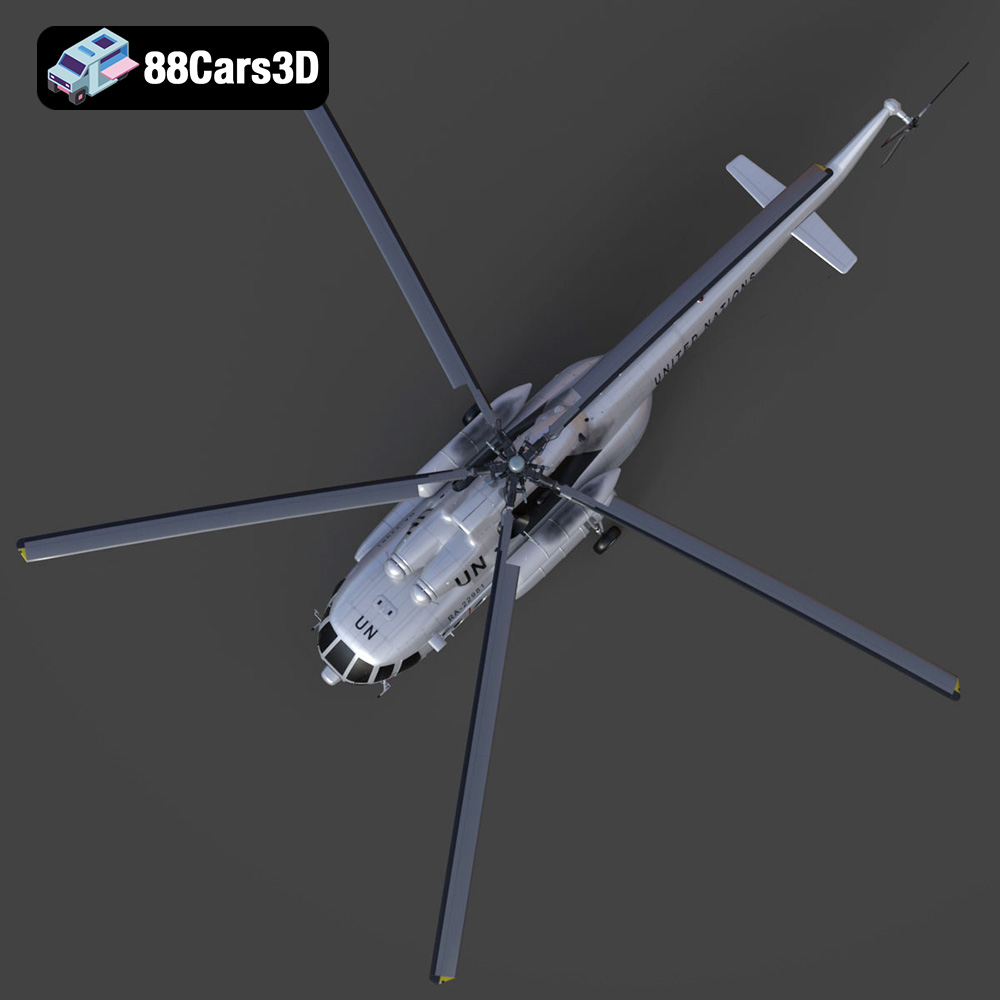
Consider the intricate details required for realistic vehicle modeling – whether it’s the sleek lines of a modern supercar for automotive rendering or the rugged utility of a military transport. Each component, texture, and polygon must be meticulously sculpted and optimized. This is precisely where a high-quality asset like the Mil Mi-8MTV-UN 3D Model from 88cars3d.com shines. This iconic multi-role helicopter, globally recognized for its humanitarian and peacekeeping service under the United Nations, is presented as an exceptionally detailed and versatile 3D asset. Its optimized topology, authentic UN livery, and comprehensive interior details make it an indispensable tool for a wide array of projects, proving that a well-executed 3D model can be the centerpiece of countless creative endeavors.
Navigating the world of 3D modeling often begins with understanding the myriad of file formats available. Each format serves a specific purpose, offering unique advantages for different stages of the production pipeline, from initial modeling to final rendering and deployment. Choosing the correct format is crucial for maintaining data integrity, ensuring compatibility, and optimizing performance. Let’s delve into the technical specifications and use cases of the most common 3D model file formats provided with premium assets like the Mil Mi-8MTV-UN 3D Model.
The .blend file format is native to Blender, the powerful open-source 3D creation suite. When you receive a .blend file, you’re getting a fully editable Blender scene. This means not only the mesh data but also materials, textures, lighting setups, animation data, cameras, and even custom scripts are all encapsulated within a single file. For users primarily working in Blender, this is the most convenient and flexible format, offering complete control over every aspect of the model. Artists can easily modify geometry, adjust PBR materials, re-rig components, or integrate the model into existing Blender projects without any loss of data fidelity. For the Mil Mi-8MTV-UN, the .blend file provides the ultimate starting point for customization and integration within a Blender-centric workflow.
The .fbx (Filmbox) format is arguably the most widely adopted proprietary 3D file format for inter-application data exchange, especially within game development and real-time pipelines. Developed by Autodesk, FBX is excellent at transferring 3D model data, including geometry, materials, textures, rigging, skinning, and animations, between different 3D software packages (like 3ds Max, Maya, Cinema 4D, Blender) and game engines (Unreal Engine, Unity). Its robust support for animation makes it ideal for game assets and animated sequences. The .fbx version of the Mil Mi-8MTV-UN 3D Model is specifically optimized for seamless import into Unreal and Unity, ensuring that its pivot setups for rotors, doors, and landing gear are preserved for immediate animation.
The .obj (Wavefront OBJ) format is a simple, universal 3D data format that has been around for decades. It’s renowned for its high compatibility across virtually all 3D software. An .obj file typically stores only geometry data (vertices, faces, normals, UV coordinates) and references to external material files (.mtl). While it doesn’t support animation or advanced scene data like FBX, its simplicity makes it a reliable choice for pure mesh transfer. When you need to bring a 3D model into an obscure application or ensure maximum compatibility, .obj is often the safest bet. The Mil Mi-8MTV-UN’s .obj variant allows for easy integration into any modeling package for static renders or for re-exporting into other formats.
The .glb (GL Transmission Format Binary) is an increasingly important format, particularly for modern web-based 3D applications, augmented reality (AR), and virtual reality (VR). GLB is a binary format that embeds all necessary data – geometry, materials, textures, and even animations – into a single, self-contained file. This makes it incredibly efficient for streaming and displaying 3D content quickly in browsers or on mobile devices without external dependencies. Its small file size and optimized structure make it perfect for interactive web experiences or showcasing the Mil Mi-8MTV-UN in an AR viewer on a smartphone, providing instant visual feedback.
The .stl (Stereolithography) format is the de facto standard for 3D printing. It represents a 3D model as a series of connected triangles, essentially describing the surface geometry without color, texture, or internal structure. STL files are read by slicer software, which then generates toolpaths for 3D printers. For the Mil Mi-8MTV-UN, the .stl file is crucial for hobbyists or professionals looking to physically manifest the digital model. It allows for creating display-scale models or parts for dioramas, requiring careful consideration of print settings like layer height and support structures to capture fine details.
The .ply (Polygon File Format or Stanford Triangle Format) is a versatile format for storing 3D data from scanners, CAD systems, or for scientific visualization. Like OBJ, it supports geometry, but it can also store additional properties for each vertex or face, such as color, transparency, and even normal vectors or texture coordinates. It’s often used when precision and additional per-element data are important, making it suitable for reverse engineering or analytical applications. For the Mil Mi-8MTV-UN, a .ply export offers another avenue for detailed mesh analysis or integration into specialized engineering visualization software.
The .unreal file (often a .uasset or specific Unreal project file structure) indicates an asset that has been pre-processed and packaged for direct import or use within Unreal Engine. This often means textures are properly packed, materials are set up using Unreal’s physically based rendering (PBR) system, and mesh data is optimized for the engine’s rendering pipeline. This format offers the quickest path to getting the Mil Mi-8MTV-UN up and running in a dynamic, interactive environment without extensive manual setup, ensuring optimal performance and visual quality within Unreal Engine projects.
The .max file is the native format for Autodesk 3ds Max, one of the leading 3D modeling, animation, and rendering software packages. Similar to .blend files for Blender, a .max file contains the entire scene data, including geometry, modifiers, materials, lights, cameras, animation keyframes, and plugins used. It provides full editability and flexibility for 3ds Max users, allowing them to dissect the Mil Mi-8MTV-UN model, modify its structure, create complex animations, or set up sophisticated rendering scenes using engines like V-Ray or Corona. This format is essential for professional studios relying on 3ds Max for high-end visualization and animation.
Understanding these formats empowers artists and developers to make informed decisions, ensuring their projects benefit from seamless integration and maximum efficiency. The availability of multiple formats for the Mil Mi-8MTV-UN 3D Model exemplifies a commitment to flexibility and professional-grade asset provision.
The Mil Mi-8MTV-UN 3D Model is more than just a collection of polygons; it’s a meticulously crafted digital twin of an aviation icon. Its design philosophy prioritizes both visual fidelity and technical optimization, making it suitable for an incredibly broad range of digital projects. From the smallest detail of its twin Klimov turboshaft engines to the expansive cargo bay, every aspect has been considered to deliver a premium asset.
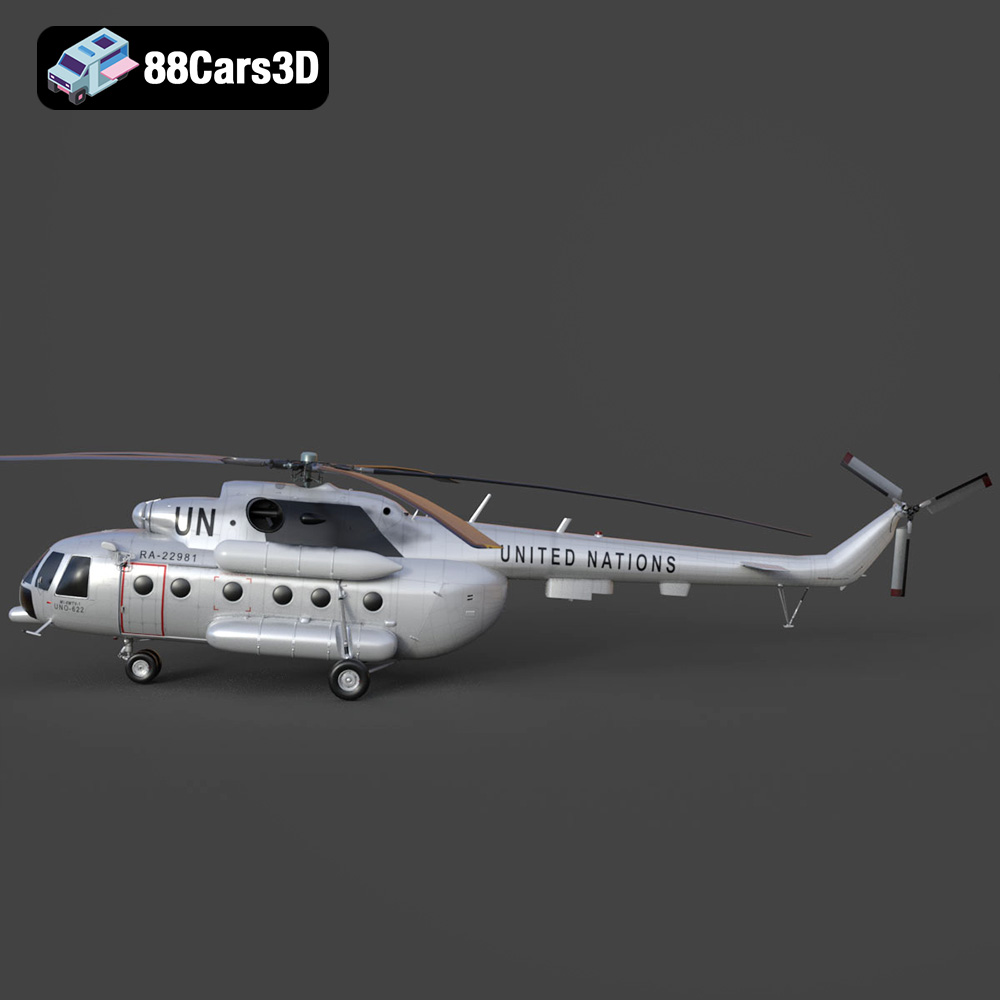
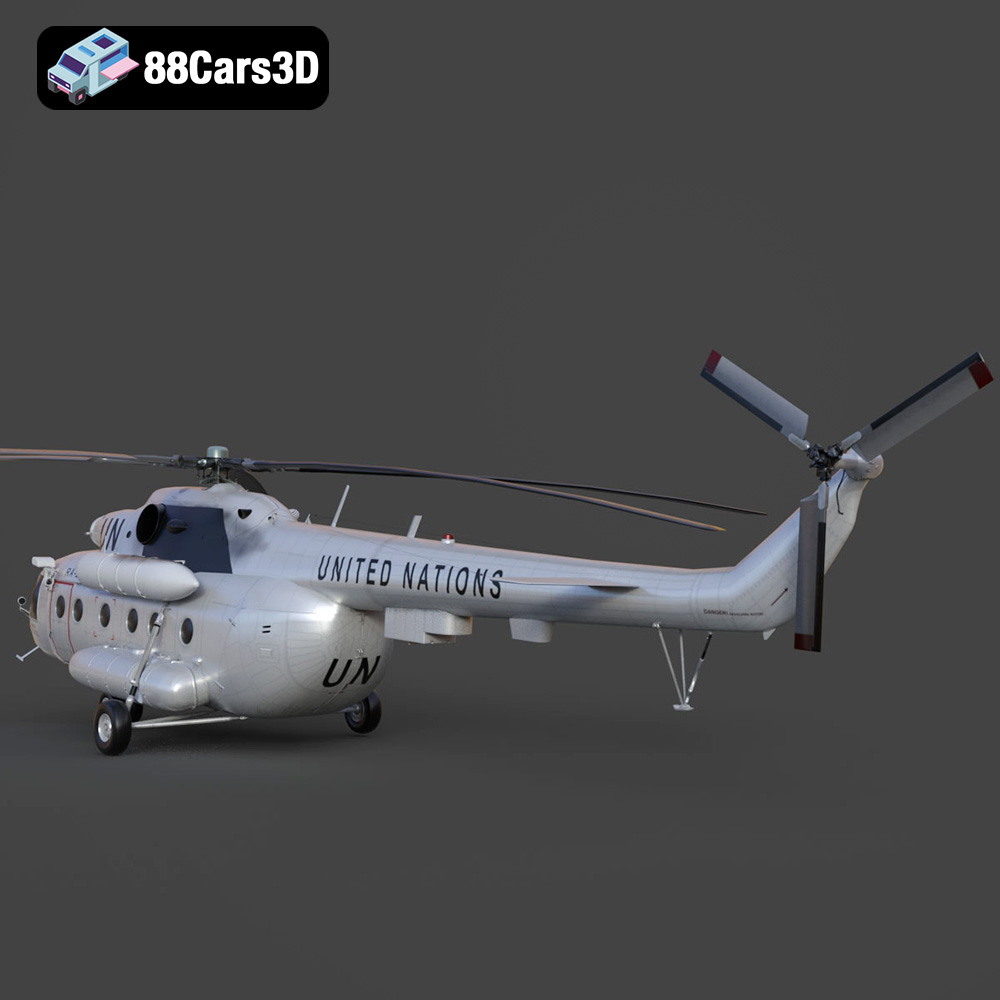
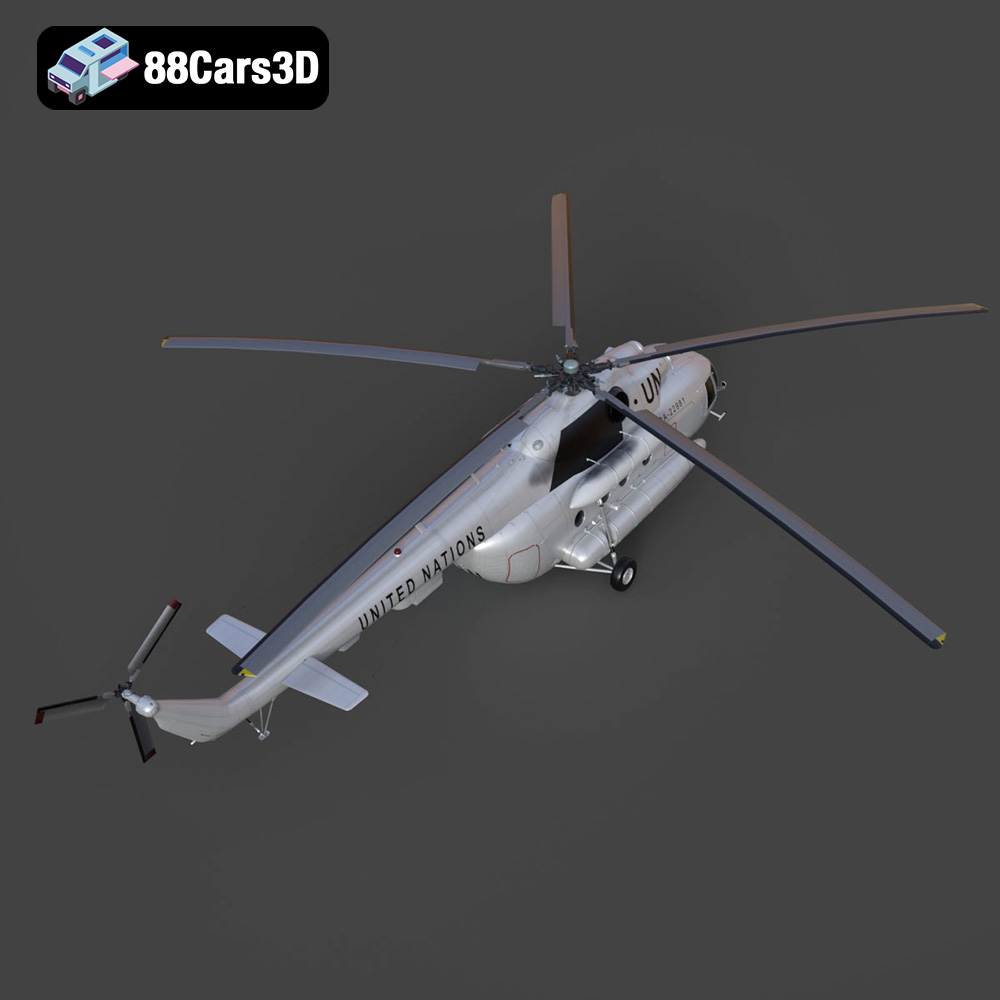
The model captures the rugged essence of the Mil Mi-8MTV-UN, right down to its distinctive white UN livery and prominent markings. High-resolution PBR textures ensure that surfaces react realistically to light, providing a sense of depth and wear that enhances realism. The inclusion of detailed exterior lighting, like anti-collision lights and landing beacons, adds another layer of authenticity, crucial for both static renders and dynamic simulations. The robust tricycle landing gear, accurately modeled tires and struts, and the highly detailed 5-blade main rotor and 3-blade tail rotor assemblies all contribute to a believable representation, vital for high-end visualization and accurate flight simulators.
Beyond its impressive exterior, the Mil Mi-8MTV-UN 3D Model boasts a detailed cockpit and interior. Pilot and co-pilot seating with safety harnesses, authentic dual-control flight sticks, pedals, and a comprehensive analog instrument panel create an immersive environment. This level of interior detail is paramount for applications like flight simulators, where first-person POV (Point of View) realism is key, and for AR/VR experiences where users can explore the aircraft from within. The spacious cargo and troop compartment, with accurate interior paneling, further expands its utility for scenes requiring passenger or cargo loading scenarios, humanitarian aid setups, or tactical operations.
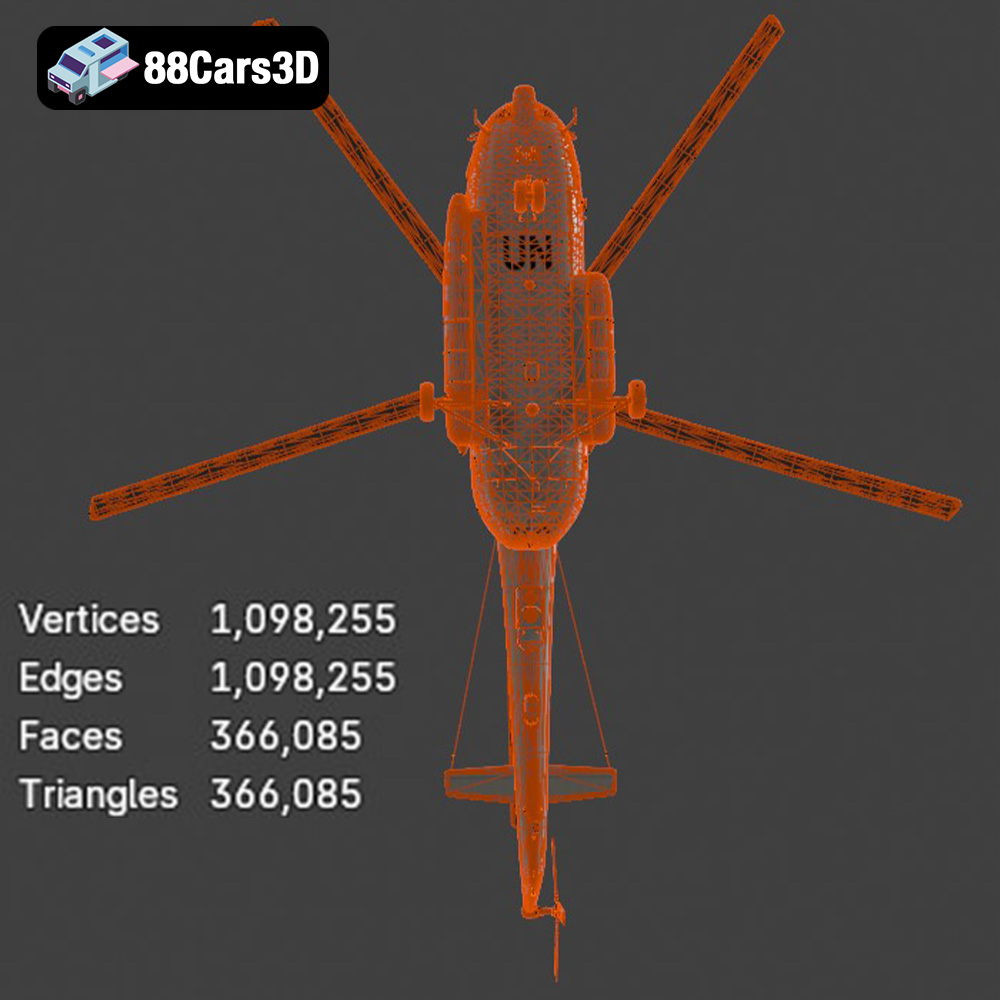
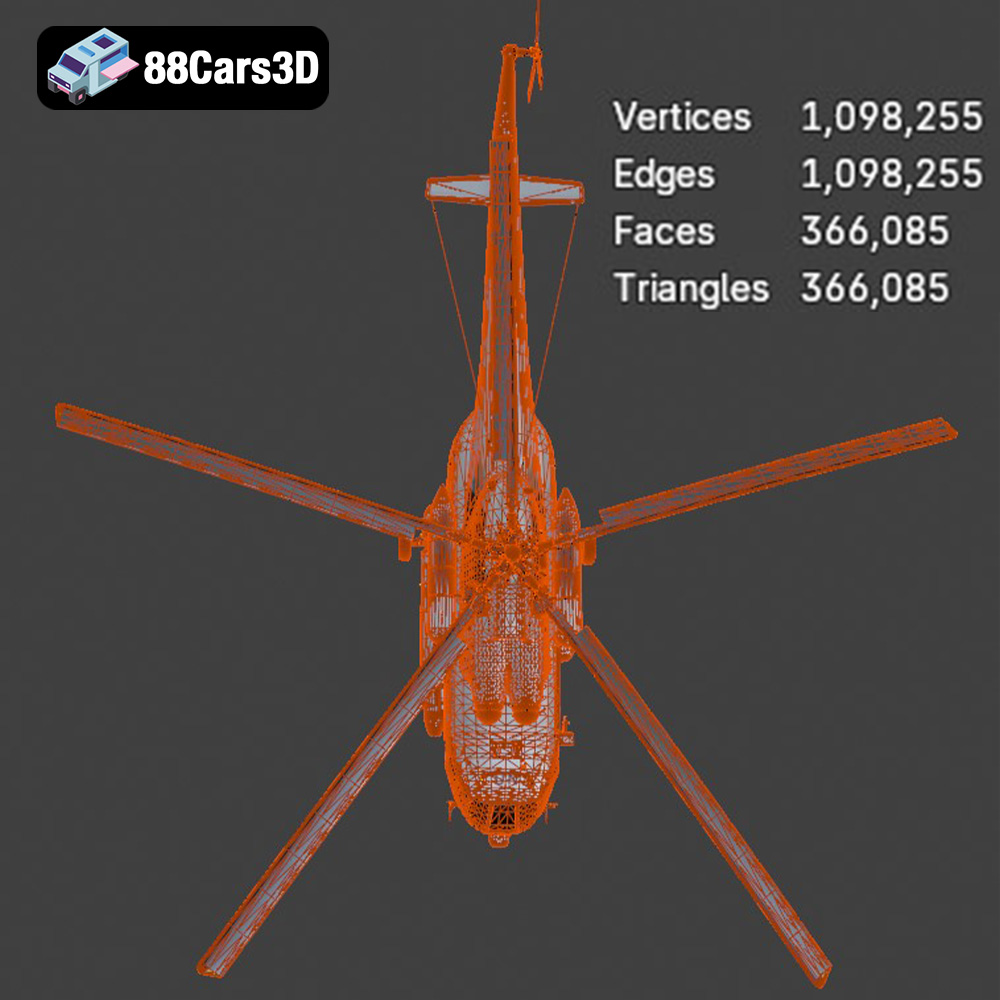
With an optimized topology of approximately 150,000 triangles, the Mil Mi-8MTV-UN strikes a perfect balance between visual realism and performance efficiency. This “game-ready” optimization means it can be seamlessly integrated into real-time engines like Unreal Engine and Unity without causing significant performance bottlenecks. Real-world scale accuracy, based on actual chassis and schematics, ensures that the model fits perfectly into larger scenes and environments. Crucially, proper pivot setups for rotor spinning, door mechanisms, and landing gear compression are already configured, saving animators significant time and effort in production. This attention to technical detail makes it an invaluable asset for any professional workflow.
Game development and real-time interactive experiences demand 3D models that are not only visually stunning but also incredibly efficient. The Mil Mi-8MTV-UN 3D Model is engineered precisely for this challenge, providing a robust foundation for high-performance applications. Integrating such complex assets into engines like Unreal and Unity requires a thoughtful approach to ensure smooth gameplay and optimal rendering.
The ~150k triangle count of the Mil Mi-8MTV-UN is a strategic choice, representing a sweet spot for detailed vehicles in modern games. While this is sufficient for close-up views and cinematic shots, advanced game development often employs Level of Detail (LOD) systems. LODs are simplified versions of the model that automatically switch in based on the camera’s distance, reducing the computational load on the GPU. Although the base model is optimized, studios would typically generate further LODs (e.g., 50k, 10k, 1k triangles) from this high-quality asset for distant views, ensuring a smooth framerate across varied environments.
Physically Based Rendering (PBR) textures are fundamental to achieving realistic visuals in real-time. The Mil Mi-8MTV-UN comes with high-resolution PBR textures, which typically include Albedo (color), Normal (surface detail), Roughness (specularity spread), Metallic (metallic properties), and Ambient Occlusion (soft shadows). When imported into Unreal or Unity, these textures are meticulously mapped to corresponding material slots. For example, in Unreal Engine, a master material might be created to handle the helicopter’s metallic parts, glass, and painted surfaces, allowing for efficient instancing and customization. The proper setup of these materials ensures that the helicopter reacts accurately to diverse lighting conditions within the game world, from bright daylight to dramatic night-ops scenarios.
A static model, no matter how detailed, limits interactivity. The Mil Mi-8MTV-UN’s design, with separate rotor hubs, doors, and landing gear components, coupled with proper pivot setups, makes it inherently animation-ready. In Unreal Engine, for instance, these components can be easily targeted for animation blueprints. The main and tail rotors can be set to spin, doors can open and close, and the landing gear can compress and retract. For flight simulators or action games, this functionality is critical for bringing the helicopter to life, allowing for realistic takeoffs, landings, and in-flight maneuvers. Furthermore, the ability to change fuselage paint schemes or modify weathering textures offers dynamic customization options directly within the game engine, adapting the asset to different missions or environments.
Beyond real-time applications, premium 3D models like the Mil Mi-8MTV-UN are indispensable for creating stunning, photorealistic renders and cinematic visualizations. This realm focuses on pushing visual quality to its absolute limit, leveraging sophisticated rendering engines and artistic techniques to produce images indistinguishable from real photographs or film.
The foundation of any photorealistic render is lighting. Utilizing High Dynamic Range Images (HDRIs) for environment lighting is a common and highly effective technique. An HDRI captures real-world lighting information, including intensity and direction, and projects it onto the scene, creating incredibly natural and nuanced illumination. For a model like the Mil Mi-8MTV-UN, placing it within a desert airfield HDRI, a stormy sky HDRI, or a sophisticated studio lighting setup can dramatically alter its mood and visual impact. Combining HDRIs with carefully placed virtual lights (area lights, spot lights) allows for precise control over highlights, shadows, and reflections, emphasizing the detailed geometry and PBR textures of the helicopter.
While the Mil Mi-8MTV-UN comes with high-quality PBR textures, artists can push realism further through material refinement. This involves tweaking shader parameters to simulate subtle imperfections, dust, grime, or wear specific to the helicopter’s operational history. For instance, subtle variations in roughness maps can simulate streaks of oil or accumulated desert dust, while adding displacement maps can introduce minuscule bumps and dents that catch the light. Customization options, such as modifying weathering and dirt textures from “desert dust” to “jungle mud” variants, allow artists to tell a visual story about the helicopter’s usage. Tools like Substance Painter or directly within 3ds Max or Blender’s node editors provide the power to achieve these granular levels of detail, enhancing the authenticity for cinematic scenes and historical documentaries.
A raw render is rarely the final product. Post-processing in software like Adobe Photoshop or Nuke is crucial for bringing renders to cinematic perfection. This includes color grading to set the mood, adding depth of field for focal emphasis, incorporating lens flares and optical effects, and fine-tuning contrast and exposure. For the Mil Mi-8MTV-UN, this might involve adding atmospheric haze to suggest a dusty battlefield, motion blur to emphasize rotor movement in an animation, or subtle film grain to give it a documentary feel. These post-production steps transform a technically accurate render into an emotionally resonant visual, making the model an excellent choice for high-quality cinematic renders and professional visualizations.
The utility of high-quality 3D assets extends far beyond traditional screen-based rendering and game development. Emerging technologies like Augmented Reality (AR), Virtual Reality (VR), and 3D printing offer exciting new avenues for interaction and physical manifestation, and the Mil Mi-8MTV-UN 3D Model is perfectly equipped to transition into these diverse applications.
For AR and VR, immersion is paramount. The Mil Mi-8MTV-UN’s detailed interior, optimized geometry, and realistic textures make it an ideal candidate for virtual training simulations, interactive product showcases, or immersive historical experiences. Imagine a virtual hangar where users can walk around the helicopter, open its doors, and even sit in the cockpit, examining the instrument panel in full 3D. The optimized triangle count of ~150k is crucial here, as AR/VR applications demand very high framerates (often 90 FPS or higher) to prevent motion sickness. The .glb file format, specifically optimized for web, AR, and VR, provides a streamlined way to deploy this model to platforms like WebGL, ARCore, and ARKit, enabling mobile AR experiences where the helicopter can be “placed” in a real-world environment.
The ability to convert the Mil Mi-8MTV-UN 3D Model into an .stl format opens up the world of 3D printing. Aviation enthusiasts, model builders, and diorama creators can bring this digital asset into the physical realm. Printing a detailed replica requires careful planning and execution. Resin printing is often recommended for fine details like antennas, rotor blades, and delicate landing gear components due to its higher resolution capabilities. For larger parts like the fuselage, FDM printing can be used, with considerations for print orientation to ensure structural integrity and minimize support material. Post-processing, including sanding, priming, and painting with authentic factory colors, transforms the raw print into a museum-quality display piece. The recommended scales (1:48 / 1:72) ensure that the printed model remains manageable yet retains significant detail, making it a fulfilling project for model makers.
Beyond entertainment, AR, VR, and 3D printing of the Mil Mi-8MTV-UN can serve significant educational and archival purposes. Educational institutions can use interactive AR/VR models to teach aviation history, engineering principles, or the role of the UN in peacekeeping. 3D printed models can serve as tactile learning aids or as highly accurate representations for museum exhibits. This multi-faceted usability underscores the value of professionally created 3D models from resources like 88cars3d.com, transforming a digital asset into a tool for learning, preservation, and engagement across multiple dimensions.
For professional studios, whether in game development, architectural visualization, or film production, the efficiency and quality of their asset pipeline are paramount. Sourcing high-quality 3D models from reputable marketplaces significantly streamlines workflows and empowers creative teams to focus on innovation rather than asset creation from scratch. The Mil Mi-8MTV-UN 3D Model serves as a prime example of an asset designed for seamless integration into demanding professional environments.
Creating a complex vehicle like the Mil Mi-8MTV-UN from the ground up can take hundreds of hours of highly skilled labor. This involves meticulous modeling, UV unwrapping, texturing, and optimization – processes that are both time-consuming and expensive. By leveraging pre-made, game-ready assets available on platforms like 88cars3d.com, studios can drastically reduce production timelines and allocate their internal resources to more specialized tasks, such as unique character animation, environmental design, or complex scripting. This efficiency is critical for meeting tight deadlines in industries where rapid iteration and deployment are common.
High-quality 3D assets, like the Mil Mi-8MTV-UN, adhere to professional standards for topology, texturing, and scale. This consistency is vital, especially for large projects involving multiple artists. When all assets conform to a similar level of detail and optimization, it simplifies integration and ensures a cohesive visual style throughout the project. The accurate geometry, PBR textures, and real-world scale of this helicopter model guarantee that it will integrate seamlessly with other high-fidelity assets, whether those are 3D car models, architectural elements, or character models. This commitment to quality minimizes the need for extensive post-import adjustments, allowing artists to focus on creative composition and scene assembly.
Imagine a studio developing a realistic military training simulator. Acquiring a highly detailed and optimized asset like the Mil Mi-8MTV-UN is a game-changer. Instead of spending months modeling and texturing the helicopter, the team can immediately import the .fbx or .unreal version into their engine. The pre-configured pivots for rotors and doors allow their animators to quickly set up flight sequences and interactive elements. Their texture artists can use the customization options to apply specific camouflage patterns or battle damage variations. Their environment artists can integrate the helicopter into diverse terrains, from desert outposts to dense jungle clearings, knowing that the model will perform efficiently. This strategic use of pre-made assets allows the studio to deliver a complex, high-fidelity simulation within a fraction of the time and cost, directly translating to increased profitability and client satisfaction.
Investing in versatile assets also future-proofs your digital library. The multiple file formats included with the Mil Mi-8MTV-UN 3D Model mean it’s ready for various pipelines and emerging technologies. As new rendering engines or AR/VR platforms gain traction, having assets compatible with common exchange formats like .fbx and .glb ensures that your creative investments remain relevant and usable for years to come. This forward-thinking approach is a hallmark of efficient and successful digital production studios.
The digital landscape thrives on innovation, precision, and efficiency. For professionals in game development, automotive rendering, film, AR/VR, and 3D printing, the caliber of their 3D assets directly impacts the success and impact of their projects. The comprehensive nature and technical excellence of models like the Mil Mi-8MTV-UN 3D Model underscore the value of sourcing premium assets.
From its meticulously optimized topology and high-resolution PBR textures to its wide array of included file formats, this helicopter stands as a testament to professional-grade digital craftsmanship. It empowers artists to create compelling real-time experiences, stunning photorealistic renders, and tangible 3D prints, all while streamlining their production workflows. Whether you are building an immersive flight simulator, crafting a cinematic visualization, or developing an interactive AR application, the Mil Mi-8MTV-UN offers a robust, versatile, and high-performance solution.
For those seeking the highest quality 3D car models, vehicles, and other essential game assets, explore the extensive collection available at 88cars3d.com. Investing in exceptional assets is not just a purchase; it’s a strategic decision that accelerates creativity, enhances realism, and elevates your digital productions to unprecedented levels of excellence.
The Mil Mi-8MTV-UN is an iconic, multi-role transport helicopter, globally recognized for its extensive service in humanitarian and peacekeeping missions under the United Nations. This highly detailed 3D model captures the rugged essence of the legendary aircraft, featuring its distinctive white UN livery, prominent markings, robust twin Klimov turboshaft engines, and the signature five-blade main rotor system that has made it a workhorse of international aviation. Built with exceptional attention to detail, this 3D model features optimized topology (approximately 150,000 triangles) that delivers a premium game-ready asset without sacrificing visual fidelity. It is engineered with accurate geometry and high-resolution PBR textures, making it a highly versatile asset for flight simulators, military and rescue game development, immersive AR/VR experiences, and high-quality cinematic animations.
$19.99
.aviation
.blend
.fbx
.glb
.helicopter
.max
.obj
.ply
.rendering
.stl
.unreal
game asset
game-ready
helicopter-3d-model
low-poly
mi-8mtv-un
mil
optimized
transport-helicopter
united-nations
vehicle-3d-model
VR/AR