Get 20% OFF All Premium 3D & STL Models!

In the dynamic world of 3D design, where photorealism meets interactive experiences, the demand for high-quality, meticulously crafted 3D car models is ever-present. From the cutting-edge graphics of modern video games to the immersive landscapes of architectural visualization and the precision required for AR/VR applications, a well-engineered 3D vehicle asset can define the success of a project. Automotive rendering, in particular, thrives on models that capture every nuance, every curve, and every material characteristic with absolute fidelity.
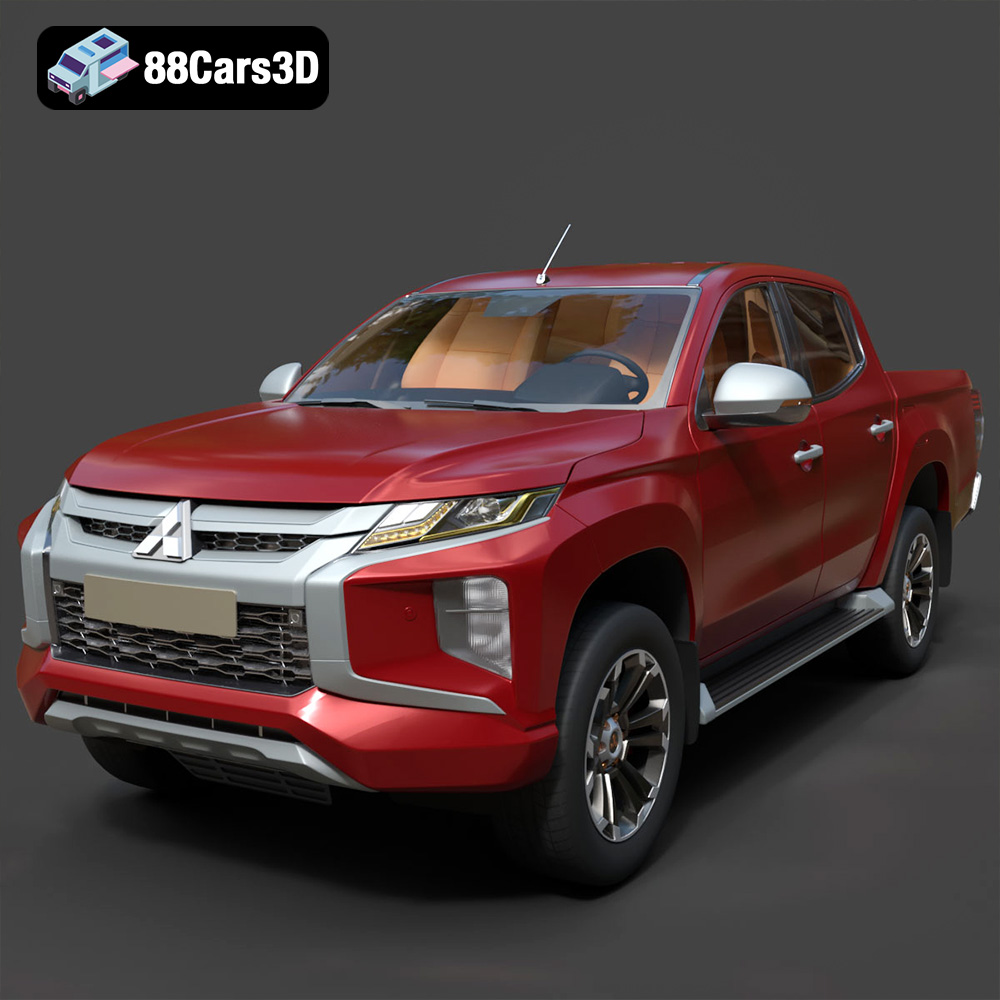
Today, we delve into an exceptional example of such an asset: the Mitsubishi L200 Crew Cab 2019 3D Model. Known as the Triton in some markets, the L200 is a symbol of rugged utility combined with modern aesthetics, and its digital counterpart is no less impressive. This particular model, available on 88cars3d.com, encapsulates the vehicle’s “Dynamic Shield” design and robust build, offering artists and developers a versatile foundation for a multitude of creative endeavors. Whether you’re building a sprawling open-world game, crafting a compelling automotive commercial, or designing a virtual showroom, this 3D model stands ready to accelerate your workflow and elevate your final output.
The 2019 Mitsubishi L200 Crew Cab is a vehicle that commands attention, blending the practicalities of a workhorse pickup with the comfort and styling of a contemporary SUV. Translating such a complex, real-world machine into a high-fidelity 3D model requires immense skill and attention to detail. This particular 3D model succeeds in capturing the essence of the L200, making it an invaluable asset for professionals across various industries.
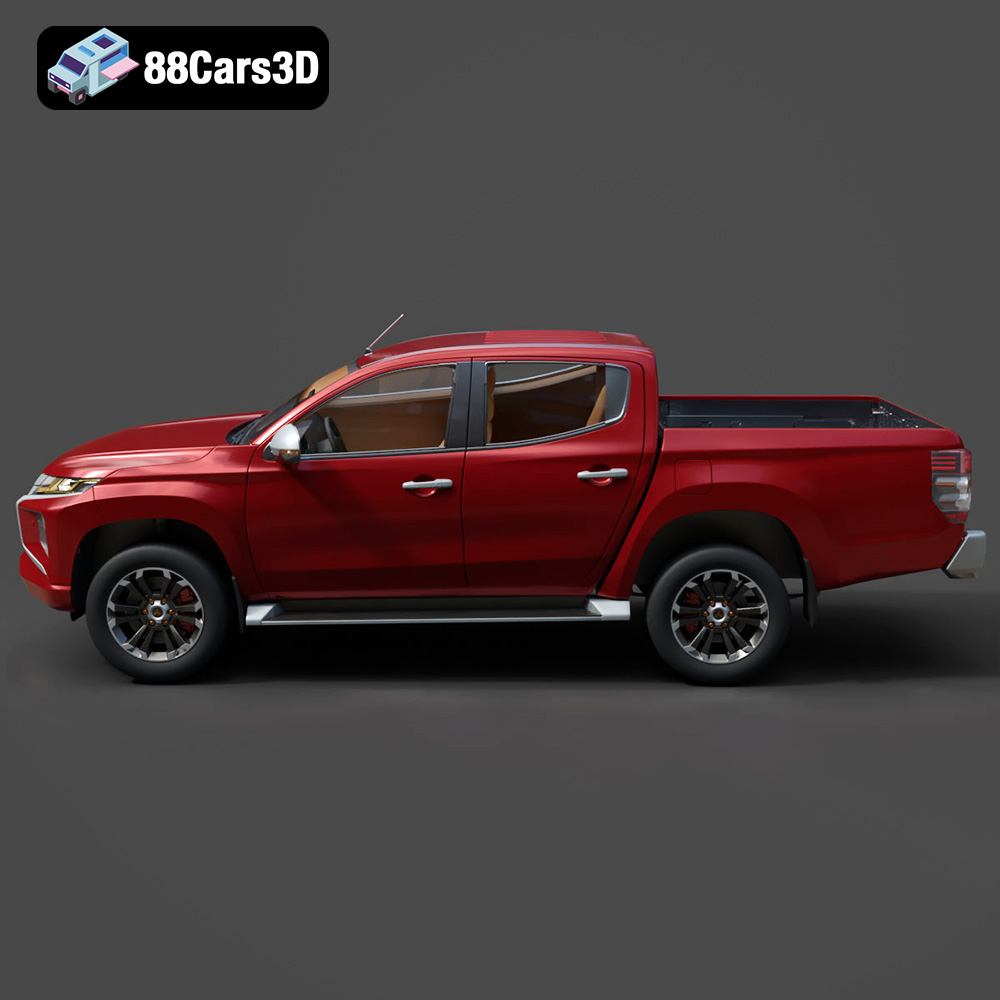
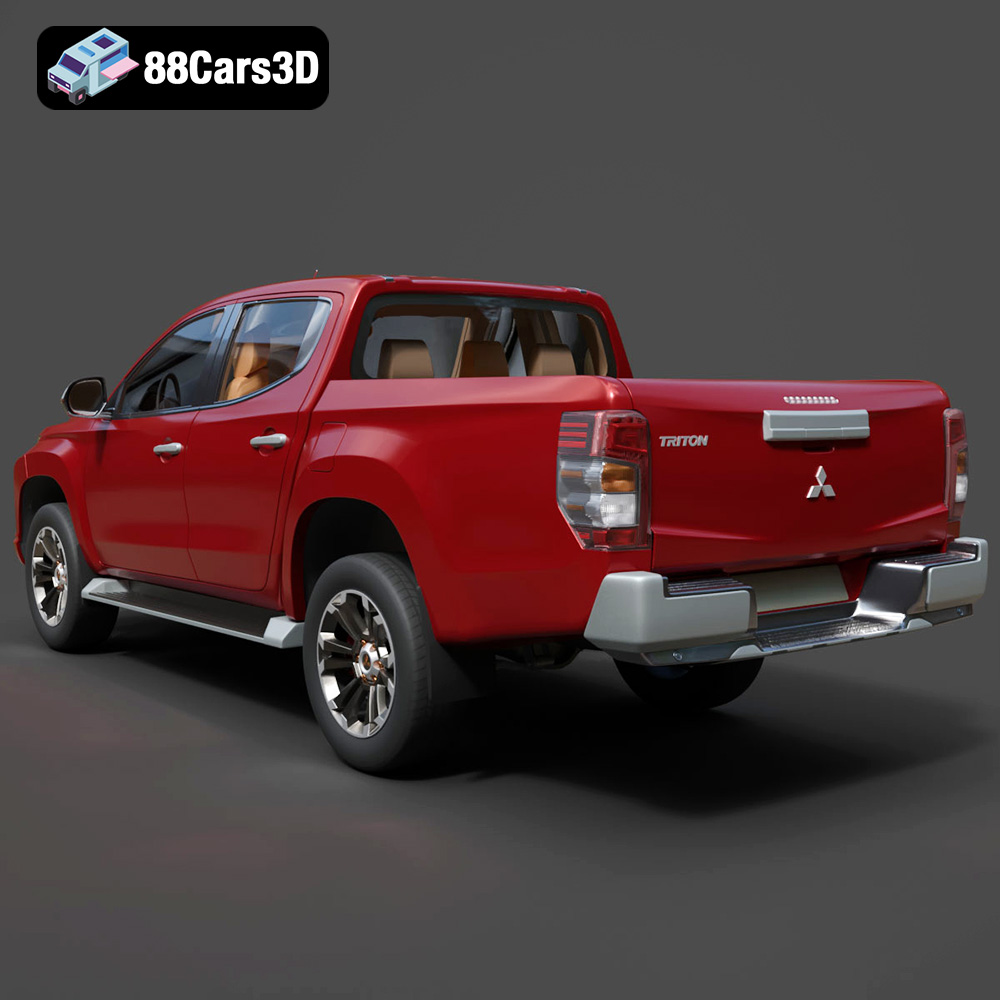
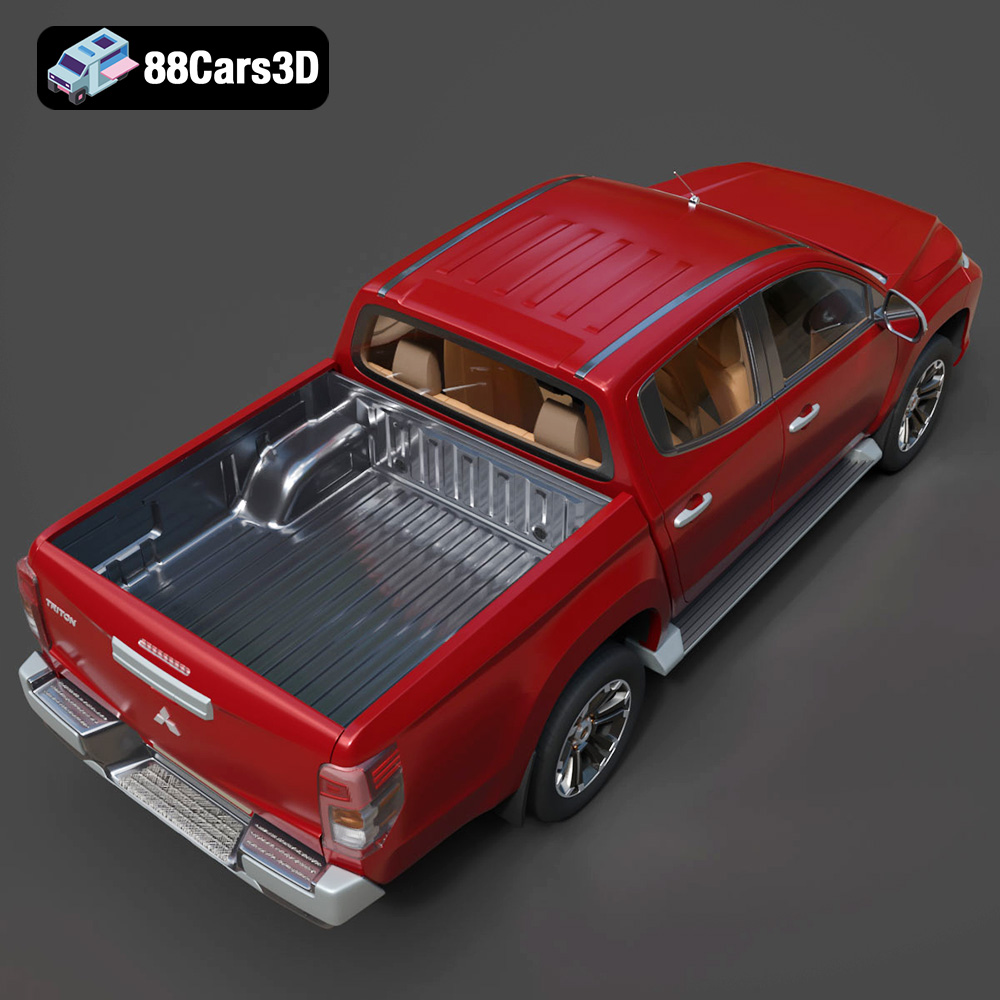
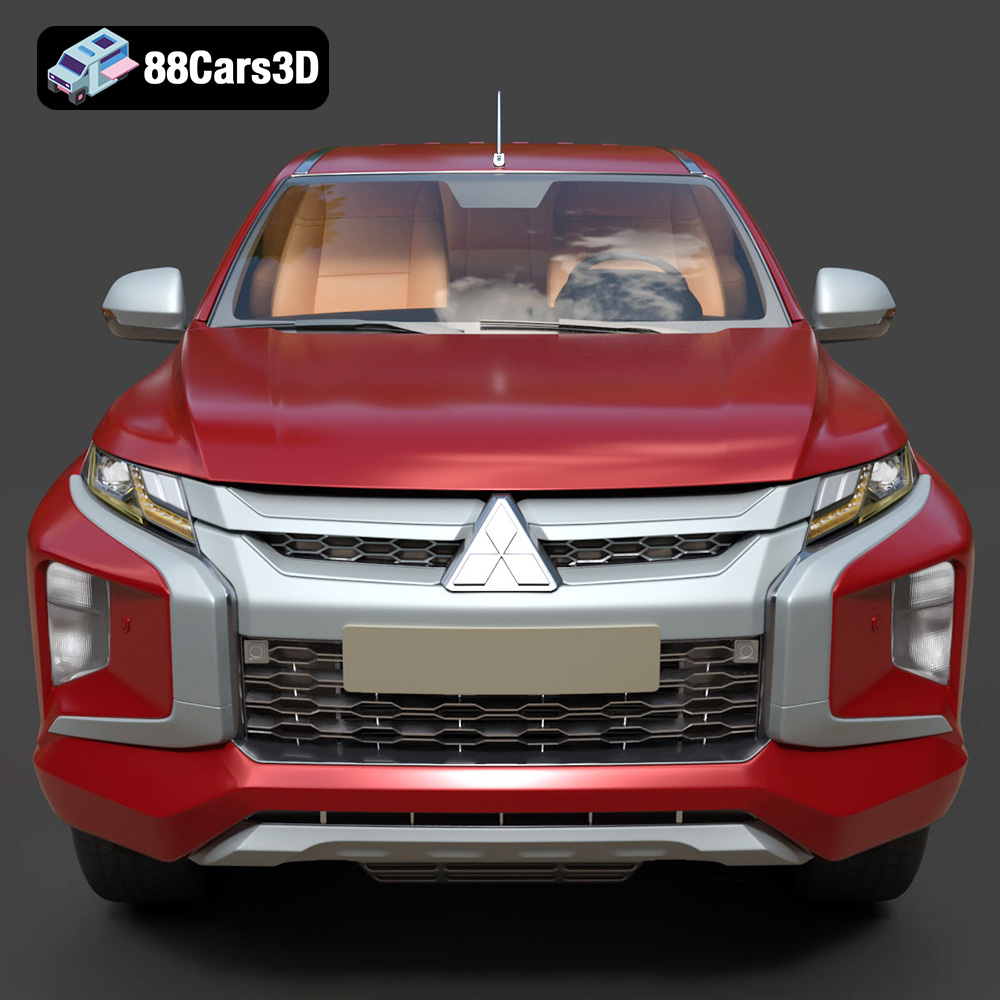
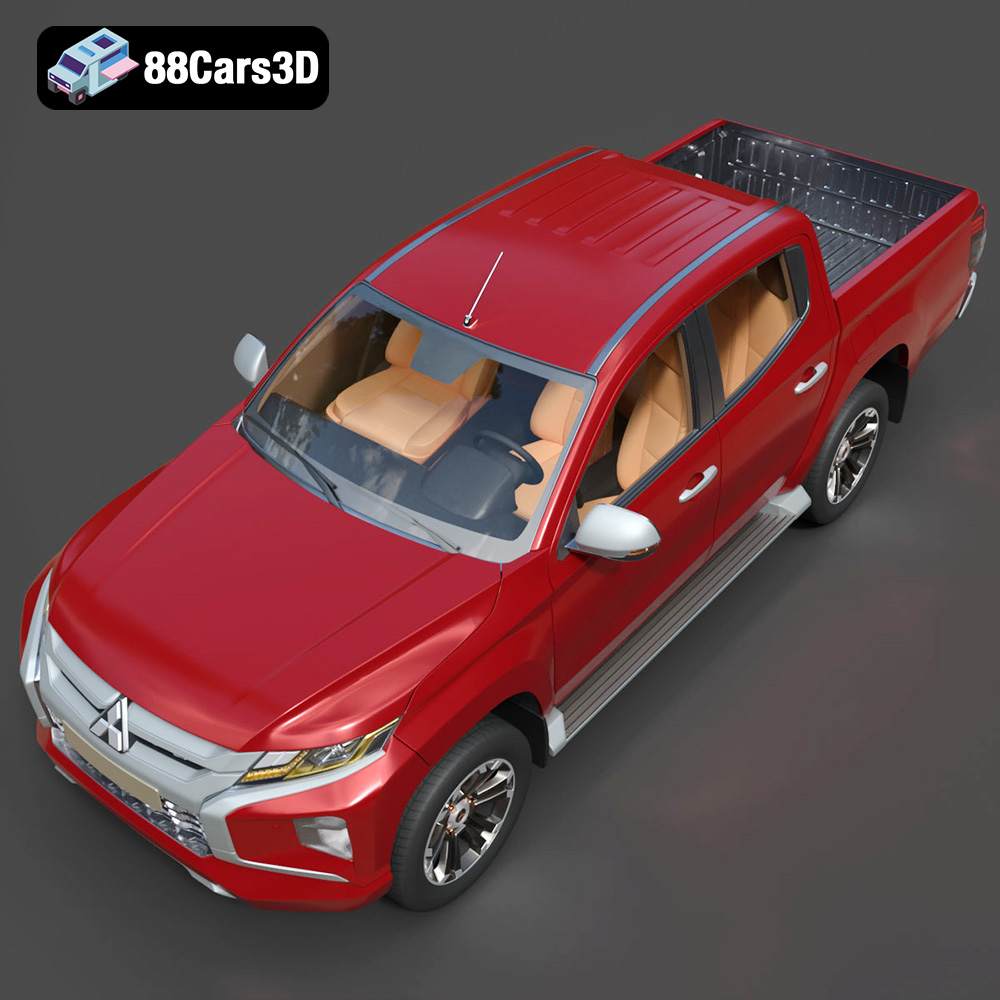
One of the most distinctive features of the 2019 L200 is its “Dynamic Shield” front fascia. This aggressive, modern design language is meticulously recreated in the 3D model, ensuring that the signature grille, striking LED headlight arrays, and sculpted lines are accurately represented. The model boasts precise geometry and proportions, mirroring the real vehicle down to the subtle curves of the body panels and the authentic details of the tailgate and tiedown points on the cargo bed. Even the alloy wheel design and all-terrain tires are rendered with care, contributing to an overall authentic look that can withstand close-up scrutiny in high-resolution renders.
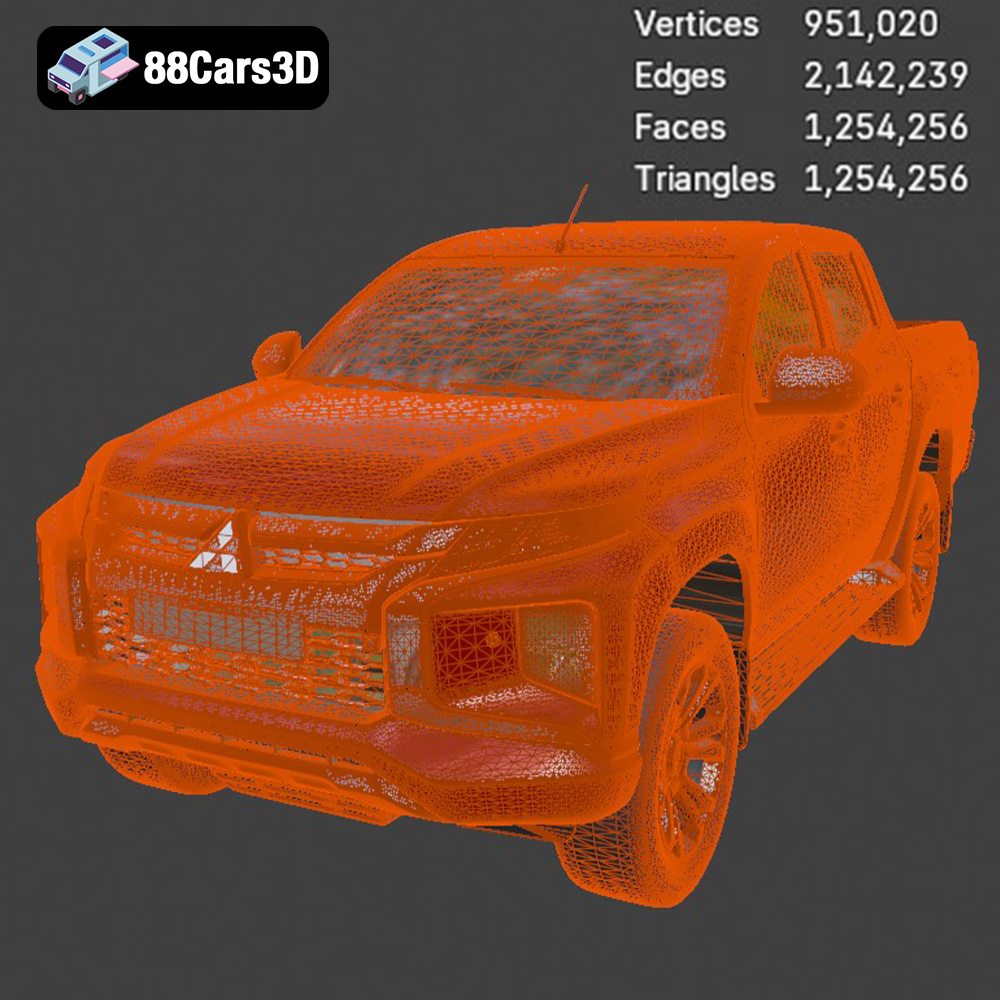
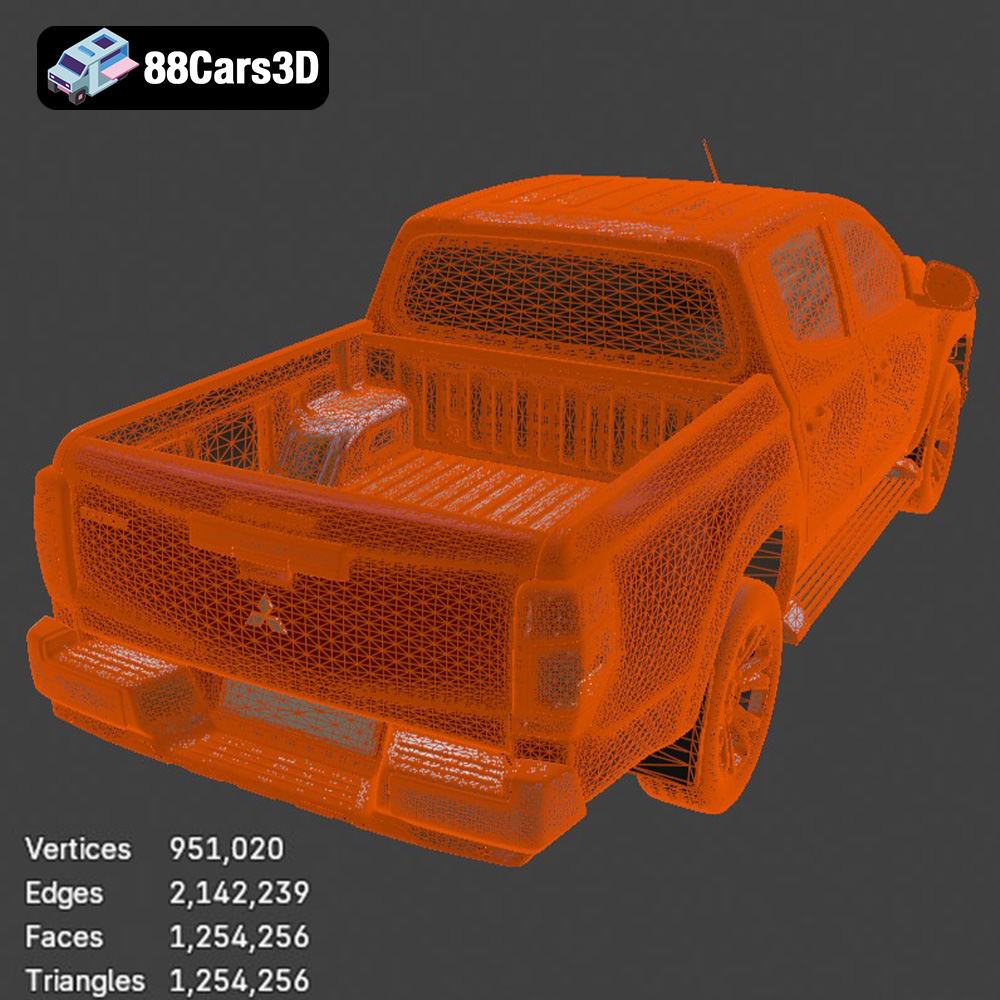
Beyond its exterior aesthetics, the Mitsubishi L200 Crew Cab 2019 3D model is engineered for performance in digital environments. With an optimized topology featuring approximately 550,000 triangles, it strikes a delicate balance between visual richness and computational efficiency. This poly count is ideal for game development, ensuring smooth frame rates in real-time engines like Unreal and Unity, while still retaining enough detail for intricate reflections and realistic shadows during automotive rendering. Crucially, separate components for wheels, suspension, and steering mean the model is primed for animation, allowing for dynamic driving simulations and interactive presentations. The interior, with its spacious five-seat crew cab configuration, detailed steering wheel, instrument cluster, and infotainment display, is also optimized for first-person perspectives, enhancing immersion in AR/VR experiences or driving simulators.
The versatility of a 3D model often hinges on the file formats it supports. Different formats are optimized for different stages of the production pipeline, from initial modeling and animation to real-time rendering and physical fabrication. The Mitsubishi L200 Crew Cab 2019 3D model offers a comprehensive suite of file formats, ensuring maximum compatibility and utility for any project. Understanding these formats is crucial for professional workflows, allowing designers to choose the right tool for the job.
The .blend file format is native to Blender, the popular open-source 3D creation suite. When you receive a .blend file, you’re getting a complete Blender scene, including the model’s geometry, materials, textures, lighting, cameras, animations, and even physics simulations. This format is fully editable, making it ideal for artists who primarily work in Blender and require full control over the asset. It preserves all native Blender features, allowing for seamless iteration and customization within the software’s powerful environment. For instance, if you wanted to adjust the L200’s material nodes or modify its internal structure, having the .blend file provides the ultimate flexibility.
.fbx (Filmbox) is an industry-standard format for 3D data exchange, developed by Autodesk. It’s incredibly versatile, supporting not only mesh data but also animation, rigging, materials, and textures. This makes .fbx the go-to format for transferring animated 3D car models between different software packages like 3ds Max, Maya, Cinema 4D, and most importantly, into game engines such as Unreal Engine and Unity. Its robust support for animations and hierarchies is critical for complex assets like vehicles, where wheels, suspension, and doors need to move independently. For the L200, an .fbx export ensures that all its animatable components retain their pivot points and relationships, ready for vehicle rigs.
.obj (Wavefront Object) is another widely adopted, universal exchange format. While it doesn’t support animation or advanced material properties like .fbx, it excels at storing pure geometric data (vertices, normals, UVs, and faces) in a human-readable text file. Its simplicity makes it highly compatible across virtually all 3D software. For simple static renders or as a fallback option when other formats encounter issues, .obj is a reliable choice. The Mitsubishi L200 in .obj format would be excellent for direct import into modeling software for further sculpting or re-topology without concern for animation data.
.glb (GL Transmission Format Binary) is the binary version of glTF, a royalty-free specification for 3D scenes and models. It’s quickly becoming the standard for 3D content on the web and in AR/VR applications due to its efficiency and PBR (Physically Based Rendering) material support. A .glb file encapsulates all necessary data—geometry, materials, textures, and even animations—into a single, compact file, making it incredibly fast to load and display in browsers, mobile apps, and immersive environments. The Mitsubishi L200 Crew Cab 2019 provided as a .glb asset is perfectly optimized for interactive online showrooms or augmented reality experiences where performance and rapid loading are paramount.
.stl (STereoLithography) is the most common file format for 3D printing. It represents a 3D model as a series of connected triangles, describing only the surface geometry of the object. While it doesn’t contain color or texture information, its simplicity makes it universally compatible with 3D printers and slicing software. For hobbyists or professionals looking to create a physical replica of the L200, the .stl format is essential for transforming the digital model into a tangible object, adhering to the recommended print settings provided for optimal results.
.ply (Polygon File Format) is a versatile format for storing 3D data, particularly useful for scanned data or models with per-vertex properties like color, normal, or even transparency. While less common for typical model exchange than .fbx or .obj, its ability to store precision mesh data makes it valuable in fields like CAD, scientific visualization, and 3D scanning. For highly detailed analyses or specialized fabrication methods, a .ply version of the Mitsubishi L200 can offer additional data integrity.
The .unreal designation implies an asset specifically prepared or packaged for Unreal Engine. This could mean a .uasset file or a pre-configured import ready for direct integration, potentially including optimized materials, LODs (Levels of Detail), and collision meshes tailored for the engine’s environment. For game developers using Unreal, this format drastically reduces setup time, allowing for immediate implementation of the Mitsubishi L200 into virtual worlds. This “engine-ready” state is a significant advantage for production pipelines.
Finally, .max is the native file format for Autodesk 3ds Max, a leading software for 3D modeling, animation, and rendering. Like .blend for Blender, a .max file contains the complete 3ds Max scene, preserving all aspects of the project, from geometry and modifiers to lights, cameras, and render settings. This is invaluable for professionals who use 3ds Max for high-end automotive rendering or complex animation sequences, providing full flexibility to modify, animate, or re-render the L200 model within its original creation environment.
The digital automotive industry thrives on immersion, whether through the interactive worlds of video games or the groundbreaking possibilities of augmented and virtual reality. The Mitsubishi L200 Crew Cab 2019 3D model is designed from the ground up for these demanding applications, offering a robust foundation for compelling interactive experiences.
Game developers constantly seek assets that are not only visually appealing but also optimized for real-time performance. The Mitsubishi L200 Crew Cab 2019 model, with its approximately 550,000 triangles, hits the sweet spot for game-ready assets. When importing into Unreal Engine or Unity, the .fbx format is typically preferred due to its comprehensive support for mesh data, skeletal animations, and material assignments. For Unreal Engine, specifically, the provided .unreal file option streamlines this process even further, often including pre-configured materials, collision meshes, and even blueprints for basic vehicle physics. In Unity, the .fbx import handles the model, textures, and material setup, allowing developers to quickly integrate the L200 into open-world environments, off-road simulators, or even racing titles. The separate geometry for wheels, suspension, and steering, combined with proper pivot points, simplifies rigging and animation within these engines, enabling realistic vehicle dynamics straight out of the box.
Beyond initial integration, optimizing the model for real-time performance involves several considerations. While 550,000 triangles is a good balance, for large-scale open-world games with many vehicles, developers might implement LODs (Levels of Detail) to reduce poly count as the vehicle moves further from the camera. The L200 model’s clean topology makes this process efficient. Furthermore, setting up physically based materials correctly is vital for realistic lighting and reflections in real-time engines. Utilizing the provided textures (or custom ones for specific needs like tire variations) with PBR workflows ensures that the L200 reacts authentically to dynamic lighting conditions, enhancing visual fidelity. For interactive elements, the separate components allow for easy scripting of door opens, hood lifts, or suspension compression, vital for vehicle configurators or interactive game mechanics.
The shift towards virtual showrooms and immersive configurators in the automotive industry is rapid. The Mitsubishi L200 Crew Cab 2019 3D model is perfectly suited for these applications. Using the .glb format, which is optimized for web and AR/VR, developers can create stunning virtual experiences. Imagine a customer exploring the L200 in a photorealistic VR environment, walking around it, opening doors, or even changing body colors in real-time. The model’s optimized geometry ensures smooth performance on VR headsets and mobile AR devices. For mobile AR experiences, the model can be placed directly into a real-world environment through a smartphone camera, allowing potential buyers to visualize the L200 in their driveway or garage. The detailed interior, designed for first-person POV, adds another layer of realism, letting users virtually “sit” inside the vehicle and interact with the digital cockpit, experiencing the spacious crew cab configuration firsthand.
For marketing campaigns, product showcases, and architectural visualization, high-quality automotive rendering is paramount. The Mitsubishi L200 Crew Cab 2019 3D model provides the fidelity and flexibility required to create breathtaking visuals that truly captivate audiences.
When it comes to professional automotive rendering, 3ds Max, often paired with renderers like V-Ray or Corona, is a powerhouse. The availability of the Mitsubishi L200 in the native .max format means designers can leverage the full capabilities of 3ds Max. This includes precise control over scene lighting, material properties, and camera angles. Artists can set up a virtual studio environment, complete with softboxes and reflectors, to highlight the L200’s distinctive “Dynamic Shield” front fascia and sculpted side panels. The model’s detailed geometry allows for the creation of intricate reflections and refractions on the body paint and glass, delivering photorealistic results. Furthermore, the ability to customize body colors, material finishes (matte, gloss, metallic), and tire textures directly within 3ds Max provides endless possibilities for showcasing different vehicle configurations for diverse marketing needs.
Automotive visualizations often place vehicles within compelling environments to tell a story. The rugged nature of the L200 makes it ideal for showcasing in diverse settings. Whether it’s navigating a bustling urban street, parked elegantly in front of a modern architectural marvel, or conquering a challenging off-road trail, this 3D model integrates seamlessly. The real-world scale accuracy of the model ensures it fits naturally into any scene, enhancing the realism of the composite image or animation. Artists can populate scenes with foliage, terrain, and other contextual elements, using advanced rendering techniques to ensure the L200’s surfaces react realistically to ambient light and environmental reflections. This capability is crucial for creating convincing brand campaigns or architectural renderings that require a vehicle to ground the scene in reality.
Every marketing campaign has unique requirements, and the L200 3D model offers extensive customization options to meet them. Beyond changing body colors to match factory palettes or custom brand identities, artists can modify tire textures to switch between aggressive off-road variants and sleek street-focused options. Adjusting material finishes allows for exploring different aesthetic approaches, from a rugged matte black to a sophisticated metallic sheen. The ability to adapt lighting for various environments—be it the harsh sun of a desert, the soft glow of a twilight urban setting, or the controlled environment of a studio—provides unparalleled creative freedom. This level of flexibility ensures that the Mitsubishi L200 Crew Cab 2019 3D model can be repurposed for numerous projects without compromising on visual quality or authenticity, making it a truly versatile game asset and rendering workhorse from 88cars3d.com.
The utility of a high-quality 3D model isn’t limited to digital screens. For enthusiasts, collectors, or designers who require a physical prototype, 3D printing offers an exciting avenue. The Mitsubishi L200 Crew Cab 2019 3D model is designed with this capability in mind, offering an .stl format suitable for physical fabrication.
Converting a high-detail rendering or game asset into a print-ready model requires specific considerations. The provided .stl format of the L200 streamlines this process, as .stl files are universally accepted by 3D printing software. Key print settings recommended include specific scales (1:12, 1:18, 1:24) to ensure manageable print sizes and preserve detail. For optimal results, especially with fine features like mirrors, door handles, and undercarriage components, resin printing is often recommended over FDM, allowing for much finer layer heights (0.04–0.12 mm). Before printing, models need to be checked for watertightness and appropriate wall thickness (1.2–2.0 mm) to ensure structural integrity and prevent print failures.
Successful 3D printing of complex automotive models like the L200 often requires strategic print orientation and support structures. For instance, printing the frame angled can improve structural integrity, while wheels are best printed separately to capture their intricate designs. Supports are almost always required for overhangs and delicate parts to prevent warping or collapse during printing. After the print is complete, post-processing is crucial. This typically involves removing supports, sanding to smooth out layer lines, applying primer, and then painting. To achieve an authentic look, hobbyists can use factory colors with metallic finishes, meticulously replicating the real L200’s aesthetic. This process transforms the digital asset into a tangible display piece, perfect for collectors or as a physical reference for designers.
In a competitive landscape, the difference between a good project and a great one often comes down to the quality of the assets used. For professionals in game development, automotive rendering, architectural visualization, and AR/VR, investing in premium 3D car models like the Mitsubishi L200 Crew Cab 2019 is a strategic decision that yields significant returns.
High-quality 3D car models offer an excellent return on investment for studios. Instead of dedicating valuable artist time to modeling a vehicle from scratch – a process that can take weeks or even months for a model of this complexity and detail – studios can acquire a ready-made, professionally optimized asset. The cost savings in artist hours alone can be substantial, allowing teams to focus on other critical aspects of project development, such as environment design, animation, or rendering setups. The Mitsubishi L200 model, with its game-ready optimization and high visual fidelity, means less time spent on optimization and more time on creative iteration, leading to faster project completion and higher overall quality.
Time is a critical resource in any production pipeline. A pre-built 3D model that comes with accurate real-world scale, proper pivot setups for animation, and support for multiple industry-standard file formats dramatically reduces the setup time. Imagine not having to meticulously rig each wheel or calibrate suspension travel – these details are already handled, allowing for immediate integration into an existing scene or game engine. For instance, the .unreal file format option for the L200 means virtually plug-and-play functionality for Unreal Engine users. This efficiency allows creative teams to take on more projects, meet tighter deadlines, and ultimately deliver superior results to their clients. Whether it’s for a high-stakes automotive commercial or an immersive VR experience, having access to such a robust asset from a reputable marketplace like 88cars3d.com is an undeniable advantage.
The world of 3D modeling continues to evolve, constantly pushing the boundaries of realism and immersion. For professionals navigating this exciting landscape, access to high-quality, versatile 3D car models is not just a convenience, but a necessity. The Mitsubishi L200 Crew Cab 2019 3D Model exemplifies what a premium asset should be: a perfect blend of intricate detail, game-ready optimization, and broad software compatibility.
Whether you’re developing the next big open-world adventure, crafting stunning automotive renders for a marketing campaign, designing an interactive AR/VR showroom, or even bringing a digital concept to life through 3D printing, this model provides the foundational quality you need. Its accurate representation of the L200’s “Dynamic Shield” design, its intelligently optimized ~550,000 triangle count, and its extensive suite of file formats—including .blend, .fbx, .obj, .glb, .stl, .ply, .unreal, and .max—ensure it integrates seamlessly into virtually any professional workflow. Explore the possibilities and elevate your projects with this exceptional asset. For more high-quality 3D car models and to acquire the Mitsubishi L200 Crew Cab 2019 3D model, visit 88cars3d.com today.
The 2019 Mitsubishi L200 Crew Cab (also known as the Triton) is a masterclass in rugged utility and modern design. Known for its robust “Dynamic Shield” front fascia, aggressive styling, and exceptional 4WD capabilities, this pickup truck bridges the gap between commercial workhorse and comfortable family vehicle. Key visual elements include the distinctive front grille, striking LED headlight arrays, sculpted side panels, and a durable cargo bed designed to handle any load.
This high-quality 3D model strikes the perfect balance between high-end visual fidelity and game-ready optimization. Featuring an optimized topology with approximately 550,000 triangles, it ensures smooth performance in real-time applications without sacrificing intricate details. It is meticulously crafted to serve primary use cases like game development, immersive AR/VR experiences, high-end animation, and architectural or automotive visualization.
Perfect for rugged off-road game environments, virtual automotive showrooms, architectural visualization scenes, and commercial rendering campaigns.
.blend, .fbx, .obj, .glb, .stl, .ply, .unreal, .max
Tags:
mitsubishi, l200, crew-cab, 2019, pickup-truck, utility-vehicle, 4×4, off-road, game-ready, low-poly, optimized, car-3d-model, game-asset, rendering, vr-ar, blend, fbx, obj, glb, stl, ply, unreal, maxMercedes Benz CLS 500 3D Model 3D Printable STL
$19.99
.2019
.4×4
.blend
.fbx
.glb
.max
.mitsubishi
.obj
.ply
.rendering
.stl
.unreal
car-3d-model
crew-cab
game asset
game-ready
l200
low-poly
off-road
optimized
pickup-truck
utility-vehicle
VR/AR