Get 20% OFF All Premium 3D & STL Models!

In the dynamic world of digital content creation, the demand for high-quality, meticulously crafted 3D assets continues to soar. From blockbuster video games to cinematic architectural visualizations and immersive virtual reality experiences, photorealistic and performance-optimized 3D car models are indispensable. These assets serve as the foundation for bringing virtual worlds to life, demanding precision, technical excellence, and versatility.
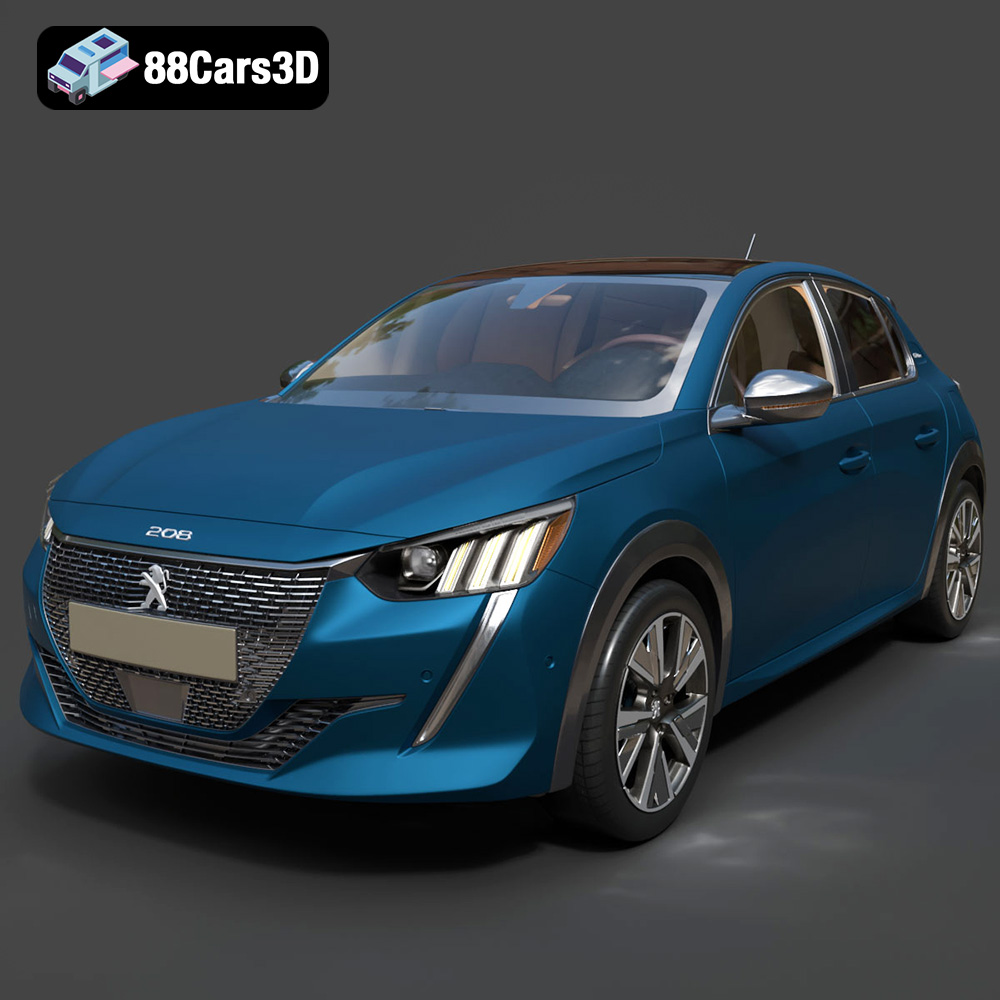
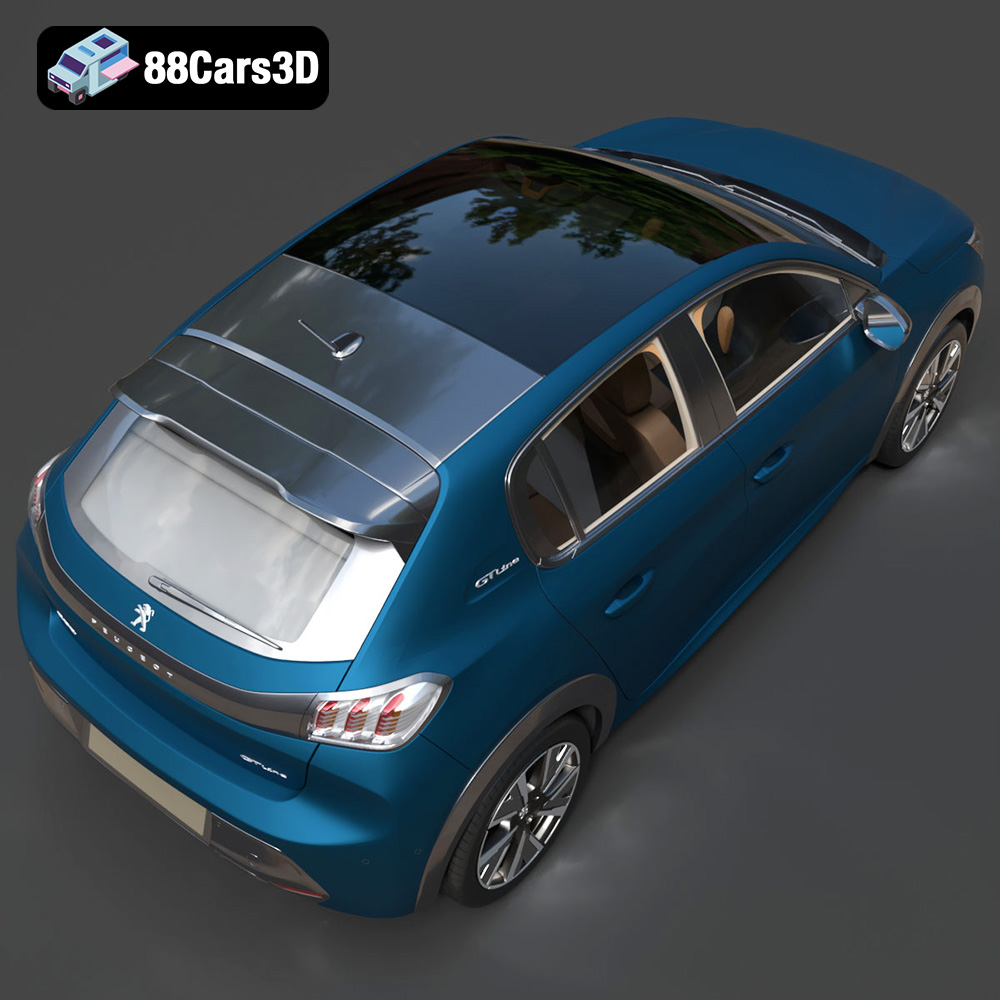
A prime example of such an asset is the Peugeot 208 2020 3D Model, available for download on 88cars3d.com. This model encapsulates the modern compact hatchback’s bold aesthetics and dynamic proportions, making it an ideal candidate for a wide array of professional applications. Its striking ‘saber-tooth’ LED daytime running lights, muscular hood, and elegant gloss-black rear light cluster fascia are all faithfully recreated in stunning digital detail. Beyond its visual appeal, this model is engineered with an optimized topology of approximately 120k triangles, striking a perfect balance between visual fidelity and game-ready performance. It’s designed not just to look good, but to perform flawlessly across various platforms, from real-time engines to high-end renderers.
This comprehensive guide will explore the intricacies of high-quality 3D automotive assets, delving into crucial technical considerations, professional workflows, and the diverse applications where models like the Peugeot 208 2020 truly shine.
Choosing the correct file format for a 3D model is a critical decision that impacts compatibility, performance, and the fidelity of your project. Each format is designed with specific use cases in mind, offering unique advantages for different stages of the digital production pipeline. The Peugeot 208 2020 3D Model comes with a comprehensive suite of formats, ensuring maximum flexibility for any professional workflow.
The .blend format is native to Blender, a powerful and increasingly popular open-source 3D creation suite. When you download a .blend file, you’re not just getting a model; you’re getting a complete Blender scene. This typically includes the model’s geometry, materials (with all their intricate node setups), textures, lighting, camera setups, and even animation data. For artists primarily working in Blender, this format offers the most flexibility for customization, direct manipulation of modifiers, and integration into existing Blender projects without any loss of data during import/export processes. It’s ideal for deep artistic customization and leveraging Blender’s robust toolset for rendering or further asset development.
The .fbx (Filmbox) format is an industry-standard proprietary file format owned by Autodesk, widely recognized for its robust support for 3D models, animation, and scene data. It excels at transferring data between different 3D software applications and is the go-to format for real-time engines like Unreal Engine and Unity. FBX efficiently stores mesh data, textures, materials, rigging, skinning, and even animation sequences. Its binary structure makes it relatively compact and fast to load, crucial for game development where asset pipelines need to be streamlined. For models like the Peugeot 208 2020, an FBX export ensures that all game-ready optimizations, such as efficient UV layouts and correct material assignments, are preserved when brought into an engine.
The .obj (Wavefront Object) format is one of the oldest and most universally supported 3D file formats. It’s a simple, text-based format primarily used to store 3D geometry – vertices, normals, UV coordinates, and faces. While it doesn’t typically store advanced scene data like animation or rigging, it’s incredibly reliable for transferring raw mesh data between almost any 3D software application. Accompanied by an .mtl (material library) file, it can also define basic material properties and reference texture maps. For maximum compatibility and fundamental mesh transfer, OBJ remains an invaluable tool, especially when working across diverse software environments or with clients using less common 3D applications.
.glb (GLB format, derived from glTF, Graphics Language Transmission Format) is an increasingly vital format for modern 3D applications, particularly in augmented reality (AR), virtual reality (VR), and web-based 3D experiences. GLB is a self-contained, binary format that efficiently bundles 3D model data (geometry, materials, textures, animations) into a single file. This “all-in-one” approach simplifies asset delivery and parsing, leading to faster loading times and easier integration into web browsers (using WebGL), mobile AR apps, and lightweight VR platforms. Its optimization for real-time rendering makes it perfect for displaying models like the Peugeot 208 2020 in interactive virtual showrooms or AR car configurators.
The .stl (Stereolithography) format is the industry standard for 3D printing. It represents a 3D model as a collection of unconnected triangular facets, defining only the surface geometry of an object without color, texture, or other CAD attributes. For hobbyists or professionals looking to bring the Peugeot 208 2020 3D Model into the physical realm, converting it to an STL is the first step. While simple, its ubiquity ensures compatibility with virtually all 3D printing software (slicers). The product description specifically mentions recommendations for scale, layer height, and support structures, highlighting the practical considerations for a successful physical print.
The .ply (Polygon File Format or Stanford Triangle Format) is another format primarily used for storing 3D data, particularly from 3D scanners. It can store a wider range of properties than STL, including color, transparency, normals, texture coordinates, and scalar values. PLY files are often used in scientific, engineering, and architectural contexts where precise data capture and analysis are crucial. While less common for general asset distribution, its inclusion for the Peugeot 208 2020 model provides an option for highly accurate mesh analysis or integration into specific CAD workflows.
The .unreal format isn’t a standalone file format in the traditional sense, but rather signifies a model that has been specifically prepared and optimized for direct import into Unreal Engine projects. This implies that the model’s geometry, UVs, materials, and pivot points are set up according to Unreal Engine’s best practices, potentially including pre-configured LODs (Levels of Detail), collision meshes, and physically based rendering (PBR) material setups. This “engine-ready” state significantly accelerates development, minimizing the need for extensive re-importing, re-texturing, and optimization within the engine itself, ensuring the Peugeot 208 2020 performs optimally within a high-fidelity real-time environment.
Similar to .blend for Blender, the .max format is native to Autodesk 3ds Max, one of the leading software packages for 3D modeling, animation, and rendering in the architectural visualization and design industries. A .max file contains the complete scene data, including all objects, lights, cameras, materials, modifiers, and animation curves. For users deeply integrated into the 3ds Max ecosystem, this format provides the most direct access to the model’s original construction, allowing for advanced modifications, re-texturing, and integration into complex rendering scenes. It’s perfect for those who require the ultimate level of control and flexibility within a 3ds Max-centric workflow for detailed automotive rendering and animation projects.
Creating a truly exceptional 3D car model is a delicate balance of artistic vision and rigorous technical execution. It’s not enough for a model to simply look good; it must also be optimized for its intended use, whether that’s a demanding real-time game or a photorealistic cinematic render. The Peugeot 208 2020 3D Model exemplifies this synergy.
The external appearance of any vehicle is its primary identifier, and for a modern car like the Peugeot 208, distinctive features are paramount. The model accurately captures the vehicle’s aggressive styling, from the detailed front grille with the prominent Peugeot lion emblem to the signature ‘fang’ LED DRLs and the elegant 3-claw taillight integration. High-resolution headlight and taillight housings, complete with realistic reflectors, are critical for achieving authentic lighting and reflections. Aerodynamic alloy wheels with detailed brake calipers and disc rotors, coupled with realistic tire treads, elevate the realism, ensuring that the vehicle looks authentic from every angle and in varying lighting conditions. This level of detail is crucial for captivating close-up shots and convincing in-game visuals.
While often overlooked in quick renders, a detailed interior is vital for complete immersion, especially in virtual reality, first-person gaming, or even high-end marketing visualizations. The Peugeot 208 2020 3D Model features a meticulously recreated cockpit, including detailed seating with realistic fabric/leather texture mapping. The ergonomic i-Cockpit layout, with its signature compact steering wheel, digital 3D instrument cluster, and modern infotainment display, is faithfully translated. Accurate central console, gear shifter, and tactile control buttons contribute to an authentic user experience. This optimization for first-person POV ensures that players or viewers stepping into the virtual cabin will find a believable and engaging environment.
The “game-ready” label isn’t just about appearance; it’s about performance. The Peugeot 208 2020 3D Model boasts an optimized topology of approximately 120k triangles. This polygon count represents a crucial sweet spot: it’s low enough to ensure flawless real-time performance in engines like Unreal and Unity, preventing frame rate drops, yet high enough to maintain a high level of visual realism, delivering crisp reflections and accurate ambient occlusion. Every polygon is placed with purpose, ensuring an immaculate flow for both rendering efficiency and close-up cinematic shots. This balance is a hallmark of professional 3D car models, designed for both aesthetic appeal and technical efficiency.
The versatility of a well-crafted 3D car model is one of its most significant assets. The Peugeot 208 2020 3D Model is engineered to seamlessly integrate into various professional pipelines, offering immense value across industries.
For game developers, performance and visual quality are in a constant tug-of-war. Assets like the Peugeot 208 2020 3D Model, with its optimized ~120k triangle count, are invaluable. They reduce development time by providing ready-to-use, high-quality vehicles for open-world games, racing titles, and simulators. The separate wheels, suspension, and steering components, along with proper pivot setups, are crucial for implementing realistic vehicle physics and animation within engines like Unreal Engine and Unity. This ensures smooth steering, accurate wheel rotation, and believable suspension travel, elevating the player’s driving experience and overall game realism.
In architectural visualization (ArchViz), adding realistic elements like cars can significantly enhance the believability and scale of a scene. A high-quality 3D car model like the Peugeot 208 2020 can transform a sterile building render into a vibrant, lived-in street scene. For product visualization, especially in the automotive industry, these models are essential for creating marketing materials, configurators, and brand campaigns without the need for expensive physical prototypes or photoshohoots. The ability to change body colors, adjust material finishes, and adapt lighting provides endless creative possibilities for conveying different moods and brand messages.
Augmented Reality (AR) and Virtual Reality (VR) are revolutionizing how consumers interact with products. Immersive virtual showrooms allow potential buyers to explore a car’s features, customize options, and even “sit” inside the vehicle from anywhere in the world. The Peugeot 208 2020 3D Model, with its optimized geometry and support for formats like .glb, is perfectly suited for these applications. It enables the creation of engaging, interactive experiences, driving customer engagement and showcasing vehicles in innovative ways, whether through a mobile AR app or a full-scale VR experience.
Beyond core integrations, the flexibility of a premium 3D model extends to significant customization and alternative uses, such as 3D printing.
A high-quality 3D car model offers unparalleled creative freedom. Artists can easily customize body colors – from Faro Yellow to Vertigo Blue or Elixir Red – to match specific branding or artistic visions. Material finishes can be adjusted between matte, gloss, or metallic to explore different aesthetics. Tire textures can be swapped between summer and all-season variants to suit environmental contexts. Furthermore, the model can be placed within diverse environments, from bustling cityscapes to serene rural roads, with lighting adapted to create various atmospheres, allowing for endless rendering possibilities and storytelling potential. This level of customization ensures the asset remains relevant and adaptable across multiple projects.
The digital world increasingly intersects with the physical, and 3D printing offers a fascinating avenue for this convergence. The Peugeot 208 2020 3D Model, specifically its .stl format, provides an excellent foundation for creating physical replicas. The product description offers detailed 3D print settings, recommending scales (1:12 / 1:18 / 1:24), layer height (0.04–0.12 mm for resin printing), wall thickness, infill, and critical support requirements for delicate parts. This guidance ensures that hobbyists and professionals can successfully translate the digital model into a tangible object, perfect for display, prototyping, or educational purposes. Post-processing steps like sanding, priming, and painting with authentic factory colors further enhance the final physical model.
Consider a major automotive manufacturer launching a new variant of the Peugeot 208. Instead of relying solely on costly physical prototypes for early marketing, they can leverage this 3D model to create stunning promotional renders and animations months in advance. A game studio could integrate it into their upcoming urban racing title, knowing it’s already optimized for performance. An architectural firm bidding on a new city development project could use the model to populate their renderings, adding an immediate sense of scale and realism. Even independent artists could use it to create personalized digital art or a unique 3D printed desk model. The flexibility and detail embedded in the Peugeot 208 2020 3D Model make it a go-to asset for these and countless other professional scenarios.
In a marketplace flooded with varying qualities of 3D assets, discerning professionals understand the immense value of sourcing premium models. 88cars3d.com stands out by providing meticulously crafted 3D car models designed to meet the rigorous demands of modern digital production.
The hallmark of a superior 3D asset is its underlying topology. The Peugeot 208 2020 3D Model’s optimized 120k triangle count is a testament to this, ensuring that it renders efficiently and performs seamlessly in real-time environments without sacrificing visual quality. Moreover, adherence to real-world scale accuracy, based on actual vehicle chassis data, is crucial for believable scene integration, whether for architectural visualization or game development. Proper pivot setups for steering, wheel rotation, and suspension travel are technical details that elevate a good model to an excellent one, providing out-of-the-box functionality for animation and physics simulations.
The inclusion of a wide array of industry-standard file formats (.blend, .fbx, .obj, .glb, .stl, .ply, .unreal, .max) with the Peugeot 208 2020 3D Model ensures unparalleled compatibility across major 3D software platforms and real-time rendering engines. This eliminates tedious conversion processes and potential data loss, allowing artists and developers to integrate the model directly into their preferred workflow with confidence. This commitment to versatility saves valuable time and resources, making the investment in such a model a smart choice for any professional.
The pursuit of digital realism and efficient workflows is at the heart of modern 3D production. High-quality 3D car models are more than just virtual objects; they are foundational assets that empower creators to build immersive worlds, visualize concepts, and push the boundaries of digital content. The Peugeot 208 2020 3D Model exemplifies the pinnacle of this craft, offering an optimized, detailed, and highly versatile asset ready for immediate deployment across game development, automotive rendering, AR/VR, and even 3D printing. By understanding the technical nuances of file formats, the importance of detailed craftsmanship, and the vast potential for application and customization, professionals can harness the full power of assets available on platforms like 88cars3d.com to elevate their projects and achieve truly stunning results.
The 2020 Peugeot 208 redefined the modern compact hatchback segment with its bold, aggressive styling and sporty proportions. Featuring the striking ‘saber-tooth’ LED daytime running lights, a muscular sculpted hood, and an elegant gloss-black rear light cluster fascia, this vehicle stands out in any urban setting. Its dynamic stance and streamlined profile perfectly capture the essence of contemporary European car design. This meticulously crafted 3D model boasts an optimized topology of approximately 120k triangles, ensuring flawless game-ready performance without compromising visual fidelity. Designed for high-end rendering and real-time engines, it delivers crisp reflections, accurate ambient occlusion, and an immaculate flow of polygons tailored for both performance and close-up cinematic shots. Perfect for modern city driving games, architectural visualization street scenes, VR automotive showrooms, and commercial lifestyle rendering.
$19.99
.2020
.208
.blend
.fbx
.glb
.hatchback
.max
.obj
.peugeot
.ply
.rendering
.stl
.unreal
car-3d-model
city-car
compact-car
game asset
game-ready
low-poly
optimized
VR/AR