Get 20% OFF All Premium 3D & STL Models!

In the dynamic world of 3D visualization, from cinematic rendering to immersive real-time experiences, the quality of your assets dictates the fidelity of your final output. Automotive models stand as a pinnacle of complexity, demanding meticulous attention to detail, optimized geometry, and versatile file format support. Professionals across game development, architectural visualization, advertising, and virtual reality constantly seek models that not only look stunning but also integrate seamlessly into their diverse pipelines.
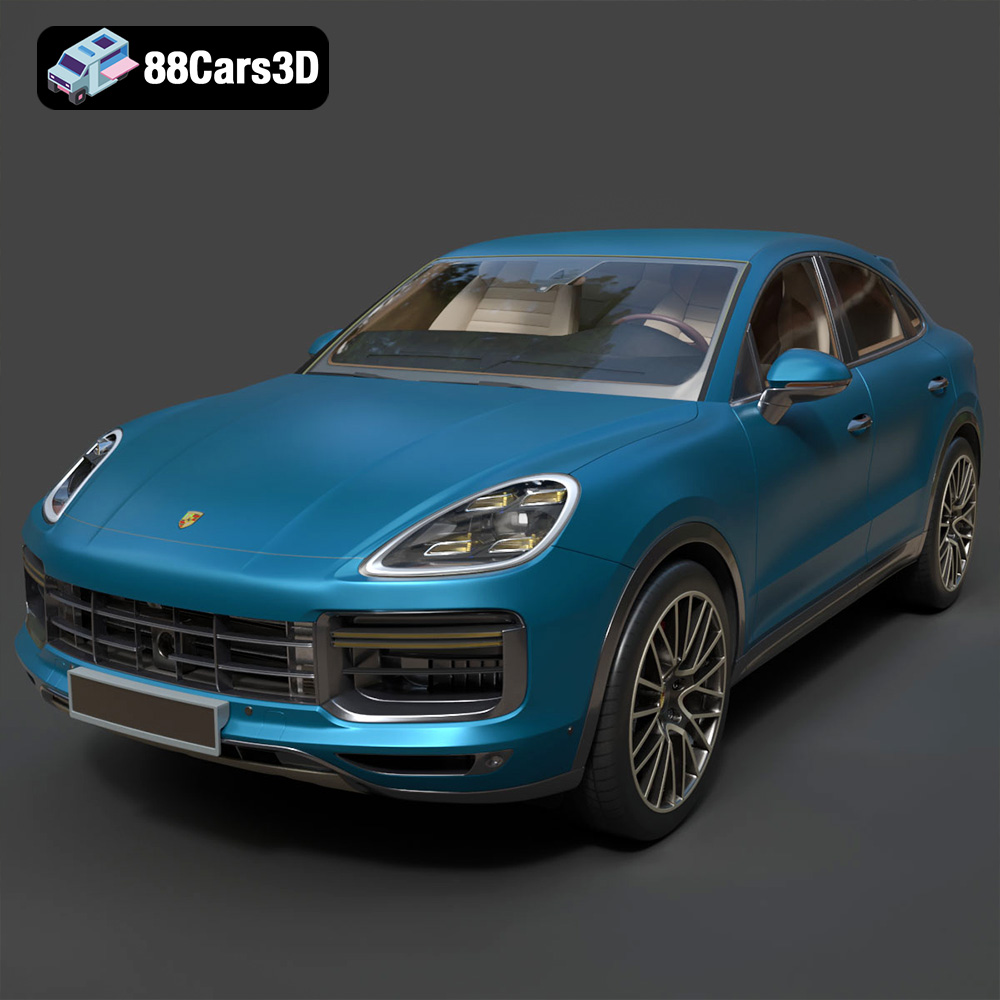
A truly exceptional 3D car model is more than just a mesh; it’s a meticulously crafted digital blueprint, engineered for performance and visual realism. It serves as the foundation for everything from high-stakes racing simulations to photorealistic brand campaigns. Today, we’re taking a closer look at a prime example of such an asset: the Porsche Cayenne Turbo Coupe 2020 3D Model. This model encapsulates the zenith of automotive design in 3D, offering an unparalleled blend of aesthetic accuracy and technical optimization, making it an indispensable tool for any serious 3D artist or developer looking to elevate their projects. Sourcing such premium 3D car models from marketplaces like 88cars3d.com ensures you start with a solid foundation.
The choice of file format is often as critical as the model’s geometry itself, dictating compatibility, feature support, and overall workflow efficiency. For professional 3D car models like the Porsche Cayenne Turbo Coupe 2020, offering a comprehensive suite of formats is essential for cross-platform integration and diverse applications. Each format has its strengths, optimized for specific tasks from real-time engines to 3D printing.
The .blend format represents a fully editable Blender scene. It’s the native file type for Blender users and contains not just the mesh data, but also materials, textures, lighting setups, cameras, animations, modifiers, and even custom scripts. For artists working primarily in Blender, this format offers the highest degree of flexibility for customization, allowing direct manipulation of every aspect of the model without any loss of data during import/export. It’s ideal for artists who want to delve deep into the model’s construction, adapt materials for Cycles or Eevee, or integrate the vehicle into an existing Blender project with minimal fuss.
.fbx (Filmbox) is arguably the most widely adopted proprietary file format for 3D content exchange, particularly within the game development and real-time visualization sectors. Developed by Autodesk, FBX supports geometry, materials (with some limitations), textures, animations (including skeletal animations and blend shapes), cameras, and lights. Its strength lies in its ability to transfer complex animated scenes between different 3D software packages (like 3ds Max, Maya, Blender) and game engines (Unreal Engine, Unity) with high fidelity. When you need to move a detailed 3D car model into Unreal for a racing game or Unity for an AR application, FBX is typically your go-to format due to its robust support for crucial game asset features.
The .obj (Wavefront OBJ) format is a universal, open-standard file type that is highly compatible across virtually all 3D applications. It’s excellent for transferring geometric data (vertices, faces, UV coordinates) and material references. While it doesn’t support animations, rigging, or advanced material setups like FBX, its simplicity and widespread support make it indispensable for basic mesh exchange. For static renders or when starting a new project in a different software where you need the pure geometry of the 3D car model, OBJ provides a clean, reliable foundation.
.glb (GL Transmission Format Binary) is the binary version of the glTF format, designed for efficient transmission and loading of 3D scenes and models by applications. It’s rapidly becoming the standard for displaying 3D models on the web, in AR/VR applications, and mobile environments due to its compact size and comprehensive support for PBR (Physically Based Rendering) materials, animations, and skeletal data. For developers creating interactive configurators or web-based virtual showrooms, the GLB format of the Porsche Cayenne Turbo Coupe 2020 is invaluable for its performance optimization and native support in many modern platforms.
The .stl (Stereolithography) format is the cornerstone of 3D printing. It represents a 3D model as a series of connected triangles (a triangulated surface mesh) without color, texture, or other attributes. Its primary purpose is to convey the geometric shape of an object for additive manufacturing. For hobbyists, engineers, or automotive collectors looking to 3D print a physical replica of the Porsche Cayenne Turbo Coupe 2020, the STL format provides the necessary data, ready for slicing software to generate print instructions.
.ply (Polygon File Format or Stanford Triangle Format) is another popular format for storing 3D data, particularly from 3D scanners. It can store a variety of properties including color, transparency, normals, texture coordinates, and scalar values for each vertex or face. While not as universally used for content creation as FBX or OBJ, PLY is valued in fields requiring precise mesh data, such as CAD, scientific visualization, and analysis, where detailed surface properties are critical.
While not a universal file extension in the same way .fbx or .obj are, an asset described as .unreal typically signifies an asset that has been specifically prepared or optimized for the Unreal Engine. This could mean it’s a meticulously configured FBX import, or in some cases, a native Unreal Engine asset package (often a .uasset file). Such an asset usually comes with optimized materials, collision meshes, LODs (Levels of Detail), and potentially blueprint setups for interactivity. This format vastly streamlines the integration process, saving developers significant time on asset preparation and configuration within the engine.
The .max format is the native file type for Autodesk 3ds Max, a powerful 3D modeling, animation, and rendering software widely used in architectural visualization, game development, and film. Like .blend, it contains all scene data including geometry, materials, textures, lighting, cameras, modifiers, and animation curves. For 3ds Max users, a .max file of the Porsche Cayenne Turbo Coupe 2020 provides complete control over the model, allowing for advanced rendering setups with V-Ray or Corona, complex animations, and detailed scene compositions without any compatibility issues.
Capturing the essence of a high-performance luxury vehicle in 3D demands a synthesis of artistic skill and technical precision. The Porsche Cayenne Turbo Coupe 2020 3D model exemplifies this fusion, delivering an asset that is both visually striking and functionally robust. It’s a testament to meticulous craftsmanship, mirroring the real-world vehicle’s athletic stance and legendary design DNA in stunning digital detail.
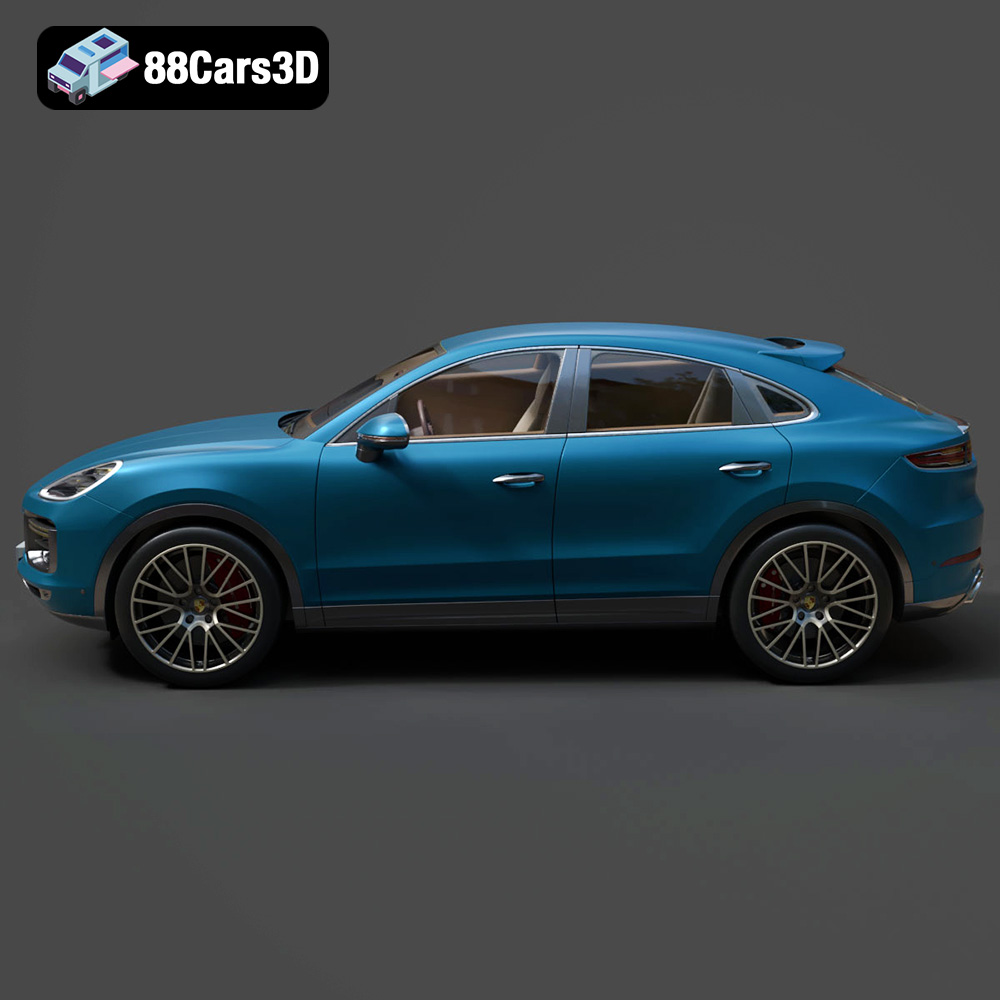
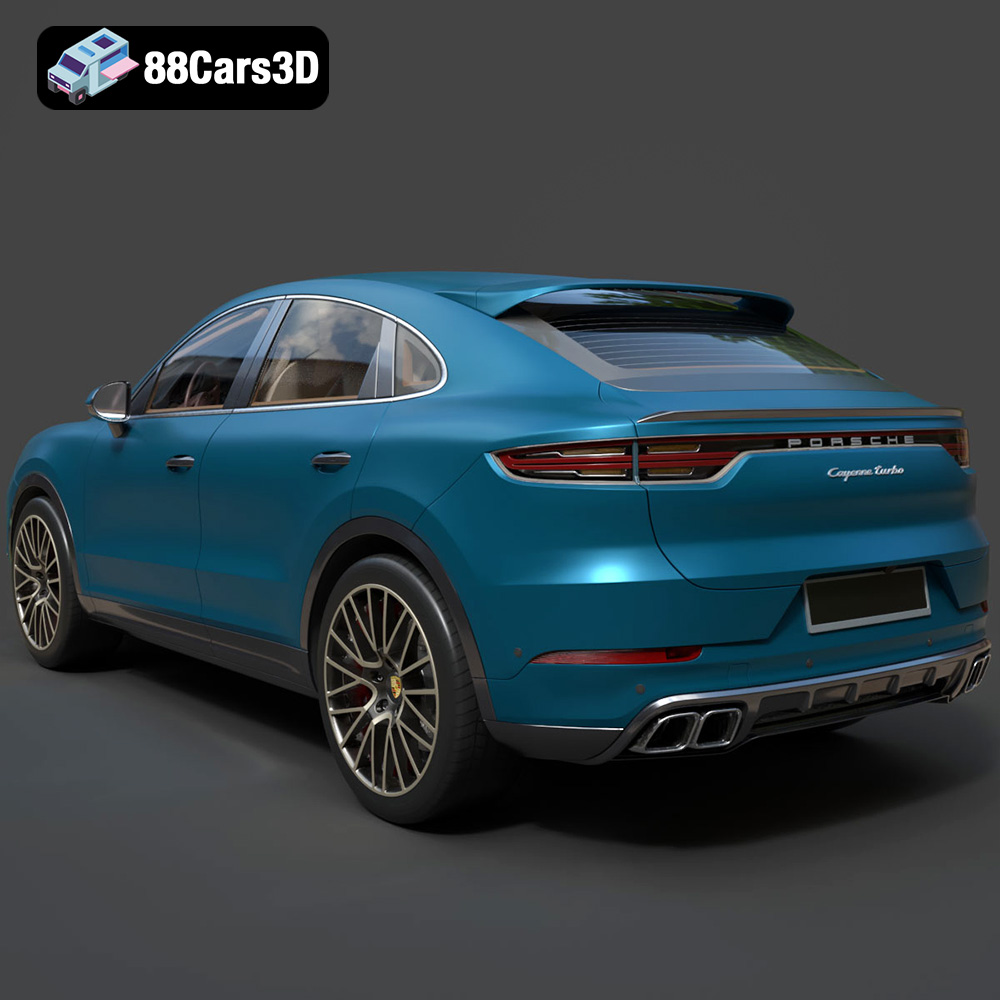
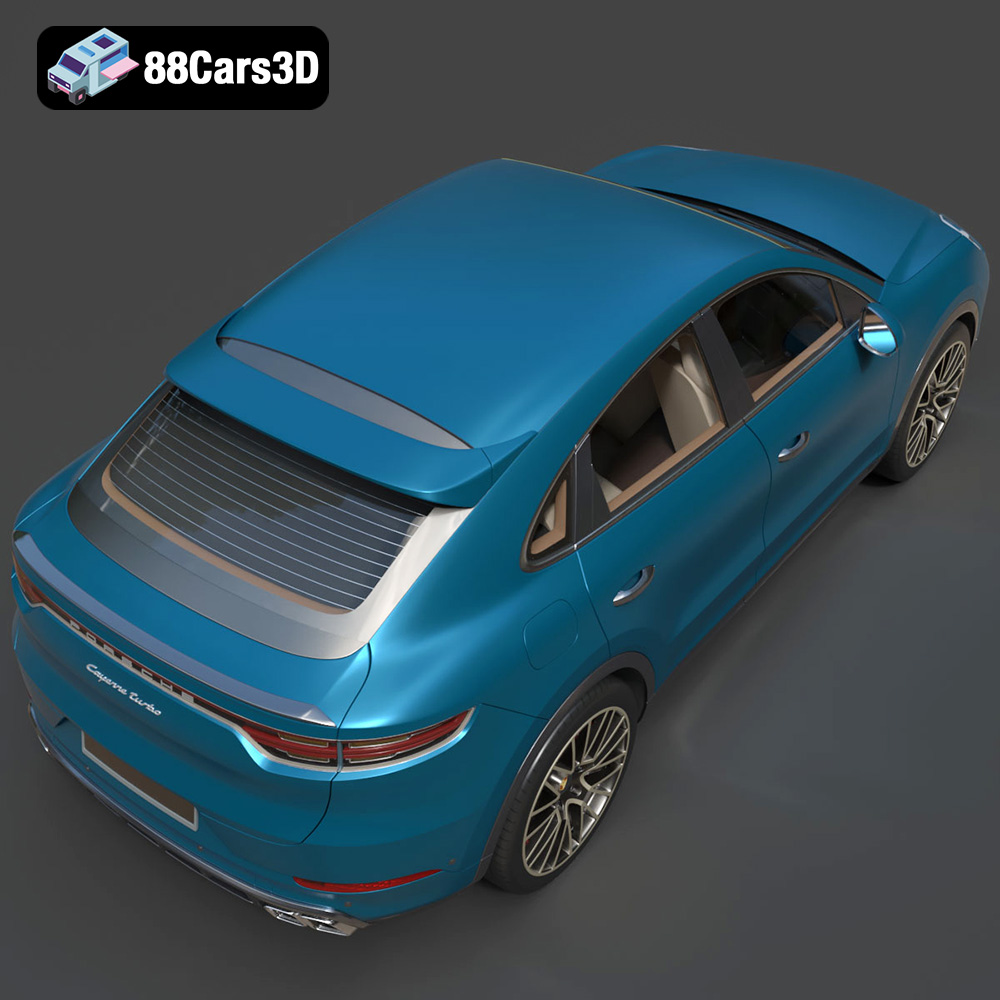
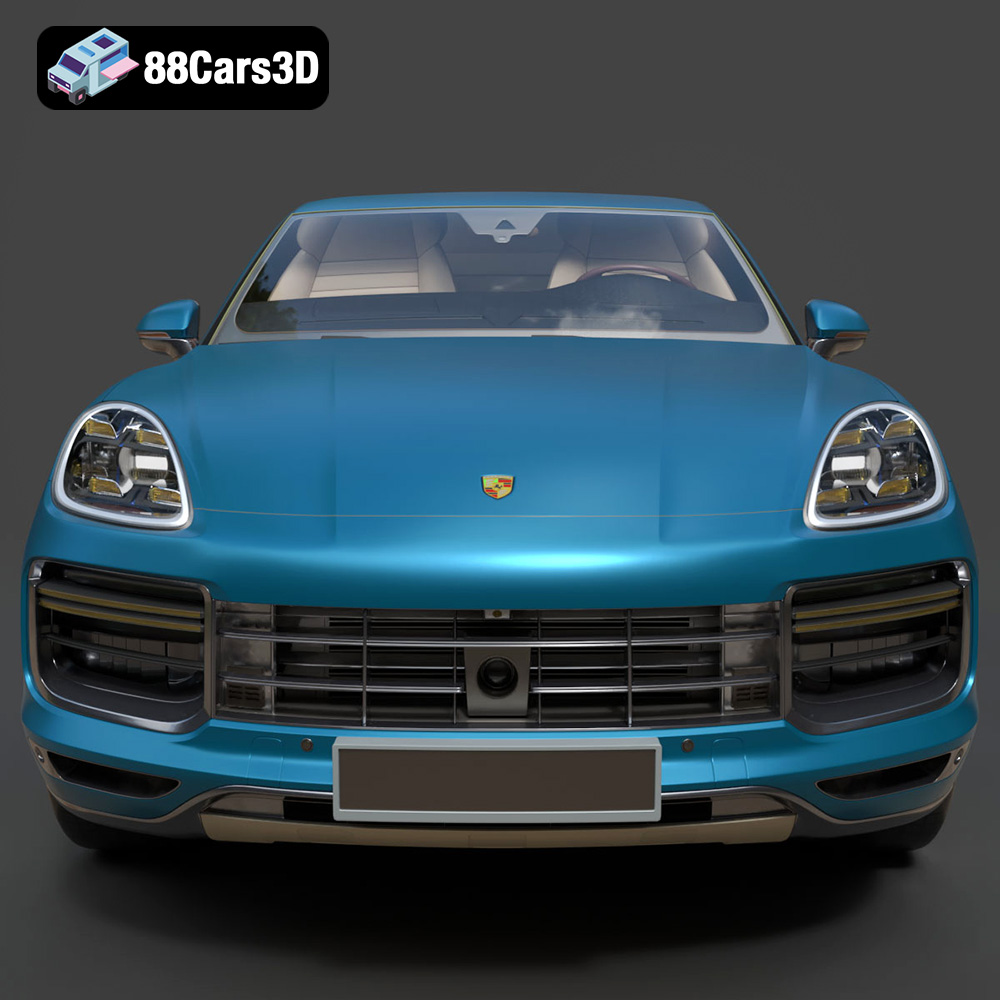
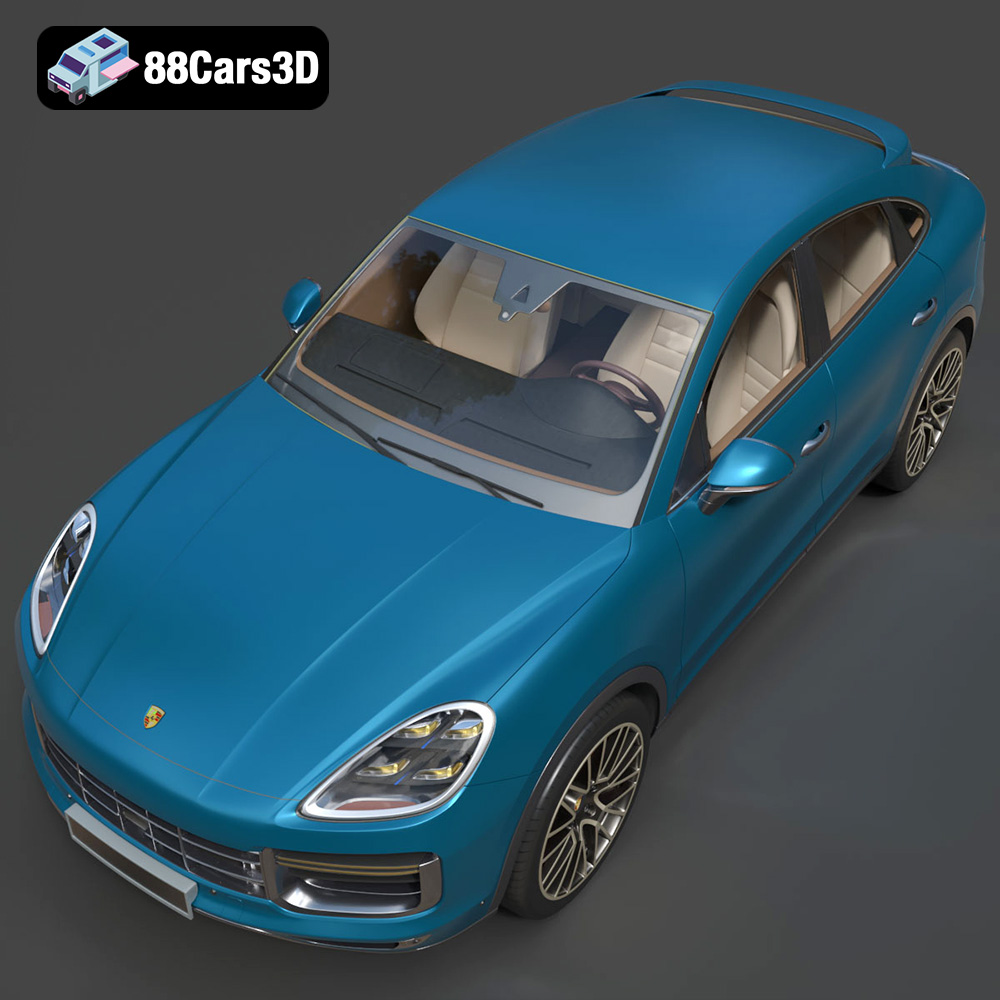
From its aggressively sculpted front air intakes to the distinctive active rear spoiler and continuous LED taillight strip, every iconic visual element of the Cayenne Turbo Coupe 2020 has been recreated with exceptional accuracy. The model boasts an accurate frame geometry and aerodynamic proportions, ensuring it scales perfectly in any scene. Beyond static beauty, the technical construction facilitates dynamic use: separate wheels, suspension components, steering elements, and the active rear spoiler are all independently modeled with proper pivot setups. This thoughtful segmentation is crucial for animators, allowing for seamless vehicle dynamics like wheel rotation, suspension travel, and the deployment of the active aero features – vital for realistic simulations and engaging cinematic sequences.
The attention to detail extends into the cockpit, offering an authentic experience for close-up shots and immersive first-person perspectives. The model features 18-way adaptive sport seats with intricate stitching, a detailed GT sports steering wheel complete with a drive mode selector, and the sophisticated Porsche Advanced Cockpit with highly detailed digital instrument clusters and infotainment screens. The center console is accurately modeled with buttons, climate controls, and a shift lever. This level of interior fidelity is particularly important for applications like VR showrooms or racing games where the user experiences the vehicle from within, demanding realism in every button and seam. The optimized interior geometry ensures smooth performance without sacrificing visual richness.
In the realm of real-time applications, performance is paramount. A beautiful model is useless if it causes frame rate drops or excessive loading times. The Porsche Cayenne Turbo Coupe 2020 3D model is specifically engineered to excel in these demanding environments, making it a perfect asset for game developers and AR/VR creators.
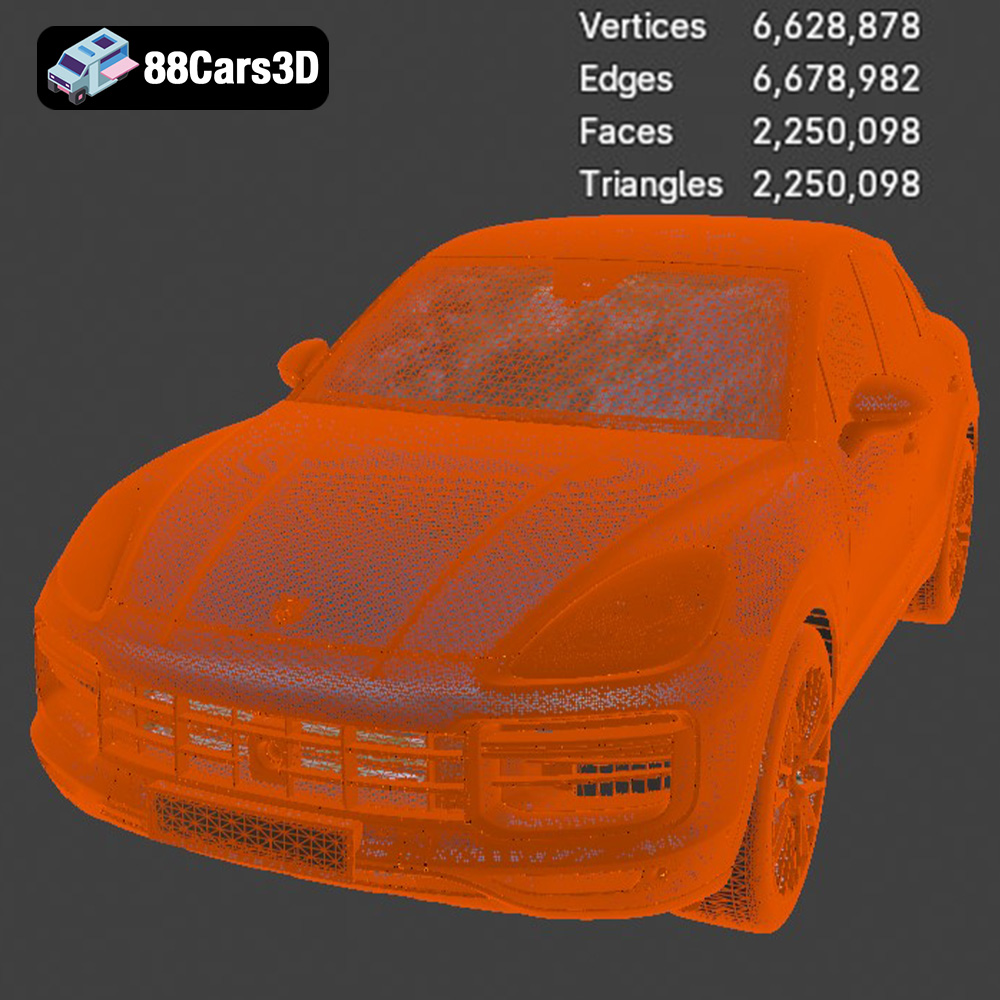
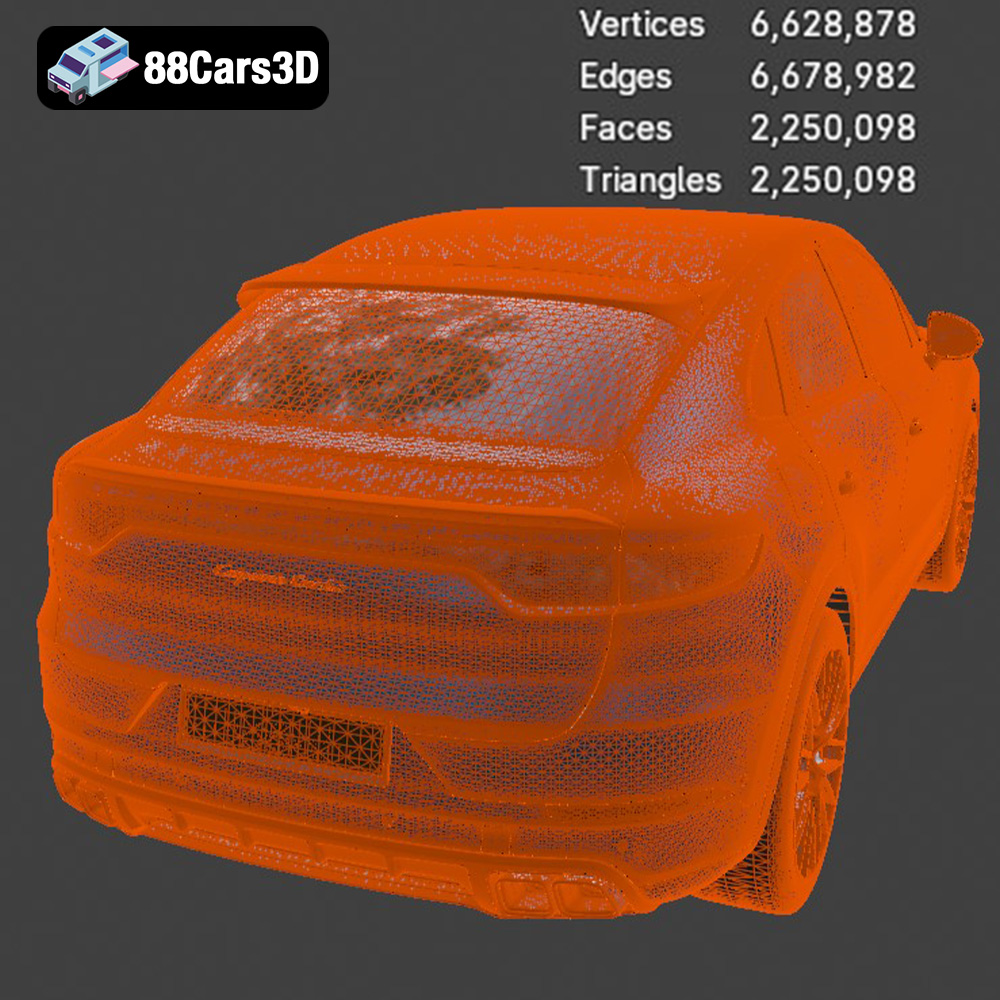
With an optimal triangle count of approximately 450,000, this 3D car model strikes an impressive balance between visual realism and real-time engine efficiency. This “game-ready” optimization means it performs exceptionally well in engines like Unreal and Unity, crucial for open-world games, racing titles, and simulators. The efficient polycount minimizes draw calls, ensuring smooth gameplay even when multiple instances of the vehicle are present or when integrated into complex game environments. Furthermore, the intelligent geometry structuring and clean topology ensure that level-of-detail (LOD) generation is straightforward, allowing developers to create lower-poly versions for distant views, further boosting performance without compromising visual quality up close. The clean UV mapping also facilitates efficient texture packing and reduces material complexity, both critical for real-time rendering pipelines.
For augmented and virtual reality experiences, low latency and high visual fidelity are critical for immersion. The Porsche Cayenne Turbo Coupe 2020 model is ideally suited for virtual showrooms, interactive configurators, and mobile AR applications. Its optimized geometry and PBR-ready materials ensure quick loading times and seamless interaction, allowing users to explore the vehicle from every angle, customize its features, and even “sit inside” in a truly immersive virtual environment. The model’s real-world scale accuracy further enhances the sense of presence in VR, making interactions feel natural and believable. The inclusion of the .glb format directly caters to the needs of modern web and mobile AR/VR platforms, simplifying deployment.
For cinematic visuals, high-end advertising, and architectural visualizations, absolute photorealism is the ultimate goal. The Porsche Cayenne Turbo Coupe 2020 3D model provides an exceptional foundation for achieving breathtaking renders that are virtually indistinguishable from reality.
The premium topology and intelligent geometry of the model are specifically designed to reflect light precisely across its curved surfaces, a critical factor for achieving photorealistic results with ray-tracing renderers like V-Ray, Corona, Redshift, or Octane. Artists can leverage the model’s clean mesh and PBR-ready materials to craft dramatic studio lighting setups, integrate it into complex environmental scenes, and create stunning visual effects for commercials or short films. The accurate representation of features like the LED Matrix headlights and the continuous rear taillight bar allows for realistic light scattering and emission, adding another layer of realism to night scenes or dynamic sequences. Customization options, such as changing body colors to iconic Porsche factory paints or adjusting material finishes (matte, gloss, metallic, carbon fiber), provide endless creative possibilities for diverse campaign needs.
Beyond automotive-specific contexts, high-quality 3D car models are indispensable for architectural visualization. Placing a meticulously detailed vehicle like the Porsche Cayenne Turbo Coupe 2020 in front of a luxury home or within a modern urban street scene instantly elevates the realism and aspirational quality of the render. It adds scale, context, and a touch of luxury, making static architectural designs feel lived-in and dynamic. The model’s real-world scale accuracy ensures it fits perfectly within scene dimensions, and its optimized polycount allows it to be efficiently integrated into larger arch-viz projects without excessively burdening rendering resources.
The utility of a comprehensive 3D model extends beyond digital screens. For enthusiasts, collectors, or even designers needing a physical representation, 3D printing offers an exciting avenue. The Porsche Cayenne Turbo Coupe 2020 3D model, with its inclusion of the .stl format, is perfectly prepared for this transition.
The .stl format, specifically designed for additive manufacturing, allows users to convert the digital asset into a tangible object. While the initial model is optimized for rendering and real-time, its clean geometry serves as an excellent base for 3D printing. The product description provides crucial recommendations for optimal print settings, such as scaling (1:12, 1:18, 1:24), layer height (0.04–0.12 mm), and infill (20–30%). Resin printing is highly recommended for capturing the intricate exterior details, ensuring that elements like the signature quad exhaust, detailed brake calipers, and the aggressive rear diffuser are faithfully reproduced. The guidance on print orientation – with the frame angled for structural integrity and delicate parts like wheels and the active spoiler printed separately – is invaluable for achieving a successful, high-quality physical model.
3D printing allows for unique customization not possible in standard physical models. Hobbyists can experiment with different materials, print multiple components in various colors, or utilize post-processing techniques to achieve a factory-fresh look. Sanding, priming, and applying authentic Porsche factory colors with gloss or metallic finishes can transform a raw 3D print into a showroom-quality display piece. This feature extends the life and application of the digital asset, bridging the gap between virtual design and physical artistry, making it a truly versatile offering from 88cars3d.com.
A high-quality 3D asset is only as valuable as its ability to be integrated smoothly into professional workflows. The Porsche Cayenne Turbo Coupe 2020 3D model’s comprehensive file format support and optimized structure are designed with this in mind, ensuring compatibility across industry-leading software.
For artists working in 3ds Max, the native .max file provides an immediate and fully editable project. This allows direct access to the model’s modifiers, materials, and any included scene elements. Users can easily integrate it into existing scenes, apply advanced rendering engines like V-Ray or Corona, and utilize 3ds Max’s powerful animation tools for vehicle kinematics. Similarly, Blender users benefit from the native .blend file, offering complete control over the model. This means seamless adaptation for Cycles or Eevee rendering, application of procedural textures, or integration with Blender’s rigging and animation systems. Both paths ensure maximum flexibility for scene composition, material development, and animation.
For real-time development, especially with the Unreal Engine, the .fbx and dedicated .unreal formats are critical. Importing the .fbx is a straightforward process, allowing developers to bring in the mesh, basic materials, and skeletal animations. The optimized polycount of the Porsche Cayenne Turbo Coupe 2020 model minimizes the need for extensive re-topology. Furthermore, if provided as an Unreal-ready asset, it can contain pre-configured materials using Unreal’s physically based shading model, LODs, and potentially even simple physics assets or blueprints for immediate use in driving simulations or interactive experiences. This significantly reduces setup time, allowing developers to focus on gameplay mechanics and environmental design rather than asset preparation.
The realm of 3D automotive design demands assets that are not only visually captivating but also technically sound and versatile. The Porsche Cayenne Turbo Coupe 2020 3D model stands as an exemplary product in this regard, offering an unparalleled combination of aesthetic fidelity, optimized geometry, and broad file format compatibility. From its meticulously recreated exterior and immersive interior to its game-ready optimization and 3D printing readiness, this model empowers professionals across diverse fields.
Whether you’re developing a cutting-edge racing game, creating a photorealistic advertisement, designing an immersive AR/VR experience, or even producing a physical scale model, this 3D car model provides the robust foundation needed for success. Its comprehensive file formats – .blend, .fbx, .obj, .glb, .stl, .ply, .unreal, and .max – ensure seamless integration into virtually any professional workflow, making it a highly valuable investment for artists and developers alike. When seeking high-quality 3D car models that truly deliver on their promise, exploring offerings like this Porsche Cayenne Turbo Coupe 2020 on 88cars3d.com is an excellent starting point for any ambitious project.
Experience the ultimate fusion of sports car performance and SUV versatility with the Porsche Cayenne Turbo Coupe 2020. This exceptional 3D model captures the striking athletic stance, the dramatically sloping coupe-style roofline, and the legendary Porsche design DNA. From its prominent front air intakes to the dynamic active rear spoiler and signature continuous LED taillight strip, every iconic visual element has been meticulously recreated to honor this high-performance luxury powerhouse. Crafted with premium topology and an optimal triangle count, this 3D model delivers spectacular visual fidelity while maintaining exceptional game-ready optimization. The geometry is intelligently structured to reflect light precisely across its curved surfaces, making it a highly versatile asset for developers and artists. Whether you are building an interactive configurator or placing background traffic in a cinematic sequence, the model’s efficient polycount ensures smooth performance in modern real-time engines. Perfect for open-world racing games, luxury architectural visualizations, high-end commercial rendering, and immersive virtual reality showrooms.
$19.99
.blend
.fbx
.glb
.luxury suv
.max
.obj
.ply
.porsche
.rendering
.stl
.unreal
car-3d-model
cayenne-turbo-coupe-2020
game asset
game-ready
low-poly
optimized
performance suv
VR/AR