Get 20% OFF All Premium 3D & STL Models!

The Sikorsky UH-60 Black Hawk is a symbol of American military might and engineering prowess. Now, thanks to 88cars3d.com, you can bring this iconic helicopter to life with the power of 3D printing. This detailed guide will walk you through every step of the process, from selecting the right materials to mastering post-processing techniques, ensuring a successful and rewarding 3D printing experience. Whether you’re a seasoned modeler or a newcomer to additive manufacturing, this article will provide the knowledge you need to create a stunning 3D printed replica of the legendary Black Hawk. The STL files available from 88cars3d.com offer an exceptional foundation for this project.
The Sikorsky UH-60 Black Hawk model from 88cars3d.com can be successfully 3D printed using either Fused Deposition Modeling (FDM) or Stereolithography (SLA) resin-based printers, each offering distinct advantages and disadvantages.
FDM 3D printing is the most common and accessible method, using thermoplastics like PLA, PETG, and ABS. For the Black Hawk model, consider PETG for its balance of strength, flexibility, and ease of printing. PLA is a good starting point for beginners due to its biodegradability and low printing temperature, but may lack the heat resistance required for a display model. ABS offers greater durability and heat resistance but requires a heated bed and enclosure to prevent warping.
* **Pros:** Lower material costs, wider range of available materials, larger build volumes, and greater part durability.
* **Cons:** Lower resolution, visible layer lines, potentially weaker details, and the need for more extensive post-processing.
* **Recommended Material:** PETG for its balance of strength and ease of printing.
Resin 3D printing, particularly SLA and MSLA, excels at producing highly detailed parts with smooth surfaces. This makes it ideal for capturing the intricate features of the Black Hawk, such as the rotor blades, landing gear, and cockpit details. However, resin printing is more expensive, requires careful handling of potentially hazardous materials, and typically results in less durable parts.
* **Pros:** Exceptional detail, smooth surface finish, and ability to print fine features.
* **Cons:** Higher material costs, smaller build volumes, potentially brittle parts, and the need for careful post-processing (washing and curing).
* **Recommended Resin:** Standard or tough resin for adequate strength and detail.
Choosing the right file format is crucial for a successful 3D printing project. The Sikorsky UH-60 Black Hawk model from 88cars3d.com is offered in several formats, each with its own strengths and weaknesses. Understanding these differences will help you optimize your workflow.
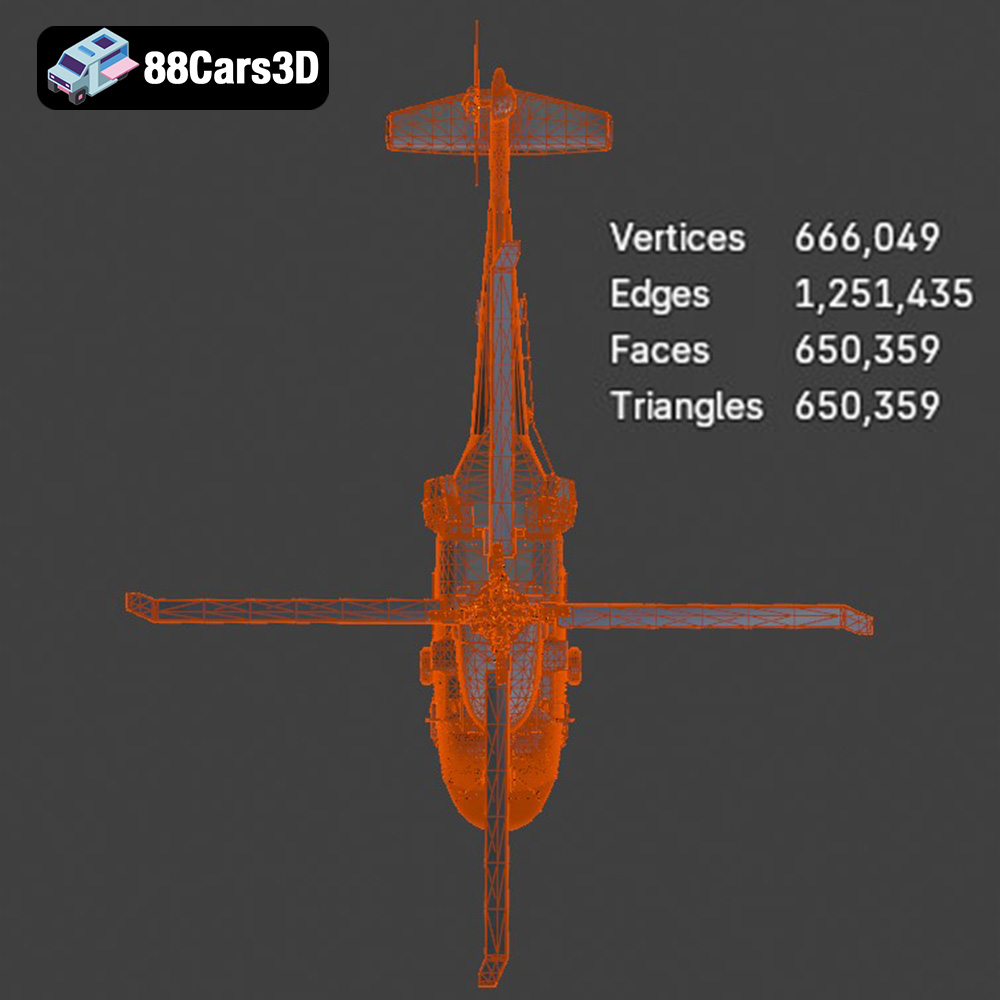
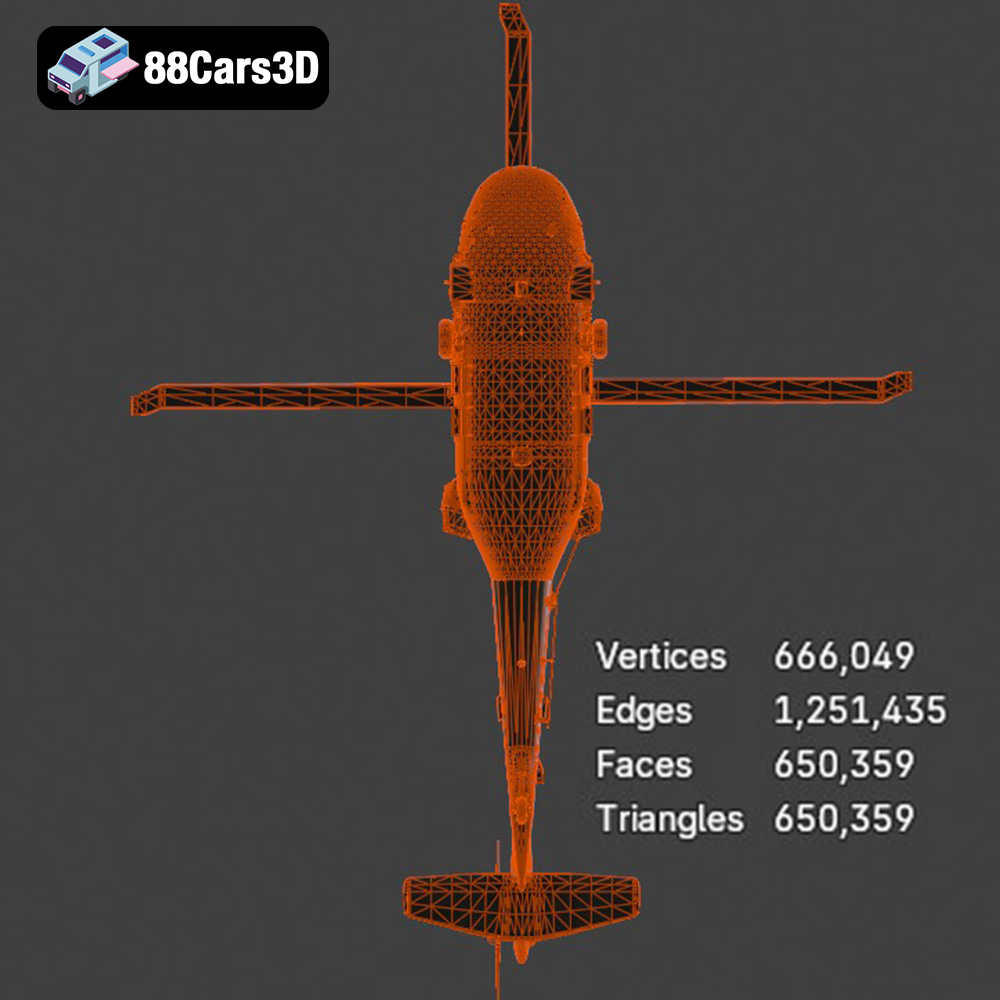
The STL (Stereolithography) format is the workhorse of 3D printing. It represents a 3D model’s surface as a collection of triangles, approximating the shape. The smaller the triangles, the higher the resolution and the smoother the final print. However, a very high-resolution STL file can be large and computationally demanding for slicing software. STL files are universally compatible with slicing software, making them the go-to choice for most 3D printing applications. When preparing the STL file of the Black Hawk, ensure the mesh is manifold (watertight) and has no self-intersections or holes. This is crucial for the slicer to generate a correct toolpath. Most slicing software includes basic mesh repair tools, but for complex issues, dedicated mesh editing software may be necessary. Keep in mind that STL files do not contain color or texture information, limiting them to single-color prints. When downloading the Black Hawk from 88cars3d.com, you’ll find the STL is carefully prepared for optimal printing.
OBJ files are another popular format, offering the advantage of storing color and texture information, unlike STL. This can be beneficial if you plan to paint your 3D printed Black Hawk model and want to use the OBJ file as a reference for color schemes. However, OBJ files can be more complex and larger than STL files, and not all slicing software fully supports OBJ with textures.
PLY (Polygon File Format) is designed for storing 3D data acquired from 3D scanners. It can represent models with high precision and supports color information. However, PLY files are less commonly used in 3D printing than STL or OBJ, and compatibility with slicing software may be limited.
The .blend format is the native file format for Blender, a powerful and free 3D modeling software. This allows you to directly edit the Black Hawk model before 3D printing, making customizations such as adding details, modifying the geometry, or separating parts for easier printing. However, you’ll need to be familiar with Blender to effectively use this format.
FBX (Filmbox) is a proprietary format developed by Autodesk, commonly used for exchanging 3D data between different software applications. It supports materials, textures, and animations. While some slicing software can import FBX files, it’s primarily used for transferring models between modeling and animation programs rather than directly for 3D printing.
GLB (GL Transmission Format Binary) is a binary file format that represents 3D models in a compact and efficient way. It’s commonly used for displaying 3D models in web browsers and augmented reality (AR) applications. While not directly used for 3D printing, a GLB file allows you to preview the Black Hawk model in AR to get a sense of its size and appearance before committing to a print.
The .max format is the native file format for Autodesk 3ds Max, another professional 3D modeling and animation software. Similar to .blend, this format allows for extensive customization of the Black Hawk model if you have access to 3ds Max and are familiar with its features.
For most 3D printing applications, the STL format will be the most suitable choice for the Sikorsky UH-60 Black Hawk model. Its universal compatibility and ease of use make it the ideal starting point for bringing this iconic helicopter to life.
Before you can start printing your Black Hawk model, you’ll need to prepare the STL file using slicing software. This software converts the 3D model into a series of instructions (G-code) that your 3D printer can understand.
Popular slicing software options include Cura, PrusaSlicer, Simplify3D, and Chitubox (for resin printing). Each offers a range of settings to optimize your print quality, speed, and material usage.
Key settings to configure include:
* **Layer Height:** This determines the resolution of your print. Lower layer heights (e.g., 0.1mm) produce smoother surfaces but increase print time. A layer height of 0.12mm is a good starting point for the Black Hawk model as suggested by 88cars3d.com.
* **Infill Density:** This controls the internal structure of your print. Higher infill densities increase strength but also increase material usage and print time. A density of 20-30% is usually sufficient for a display model.
* **Wall Thickness:** This determines the thickness of the outer walls of your print. Thicker walls increase strength and improve surface finish. 1.2-2.0 mm is a reasonable range for the Black Hawk model.
* **Supports:** These are structures that support overhanging parts of the model during printing. The Black Hawk model will likely require supports under the rotor blades, landing gear, and tail section.
* **Print Speed:** Slower print speeds generally improve print quality but increase print time.
* **Temperature:** Adjust the printing temperature based on the material you’re using. Refer to the manufacturer’s recommendations.
The orientation of your model on the print bed can significantly impact the print quality, strength, and the amount of support material required. For the Black Hawk fuselage, printing it horizontally or at a slight angle is recommended to maximize its structural integrity. This orientation minimizes the need for supports on the main body and can result in a stronger print.
The rotor blades should be printed separately, ideally with the leading edge facing down to minimize support material on the visible surface. The landing gear should also be printed separately, with careful attention to support placement to ensure accurate detail.
The Sikorsky UH-60 Black Hawk US 3D Model Download STL FBX OBJ GLB Blend offers recommended scales of 1:35, 1:48, and 1:72. Choose the scale that best suits your needs and printer’s build volume. Remember to scale all parts proportionally to maintain accuracy.
Achieving a successful 3D print depends heavily on selecting the right print settings and materials. Here’s a breakdown of recommendations specifically for the Black Hawk model.
* **Material:** PETG
* **Layer Height:** 0.1mm – 0.15mm
* **Infill Density:** 20-30%
* **Wall Thickness:** 1.2mm – 1.6mm
* **Print Speed:** 40-60 mm/s
* **Nozzle Temperature:** 230-245°C (Refer to filament manufacturer’s recommendation)
* **Bed Temperature:** 70-80°C (Refer to filament manufacturer’s recommendation)
* **Supports:** Enabled for overhangs (rotor blades, landing gear)
* **Adhesion:** Brim or raft for improved bed adhesion
* **Resin:** Standard or Tough Resin
* **Layer Height:** 0.04mm – 0.05mm
* **Bottom Layer Count:** 4-6
* **Exposure Time:** (Refer to resin manufacturer’s recommendation, typically 6-12 seconds)
* **Bottom Exposure Time:** (Refer to resin manufacturer’s recommendation, typically 30-60 seconds)
* **Lift Speed:** (Refer to resin manufacturer’s recommendation)
* **Supports:** Enabled for all overhangs
* **Hollowing:** Consider hollowing larger parts to reduce resin consumption and print time (ensure proper drain holes)
Post-processing is crucial for achieving a professional-looking finish on your 3D printed Black Hawk model.
Carefully remove the support structures using pliers, cutters, or a sharp knife. Take your time to avoid damaging the model. Sand down any remaining support marks using progressively finer grits of sandpaper.
For resin prints, thoroughly wash the model in isopropyl alcohol (IPA) to remove any uncured resin. Then, cure the model under UV light to fully harden the resin.
Start with coarse-grit sandpaper (e.g., 220 grit) to remove any major imperfections or layer lines. Gradually move to finer grits (e.g., 400, 600, 800) to achieve a smooth surface. For FDM prints, consider using a filler primer to fill in layer lines before sanding.
Apply a primer coat to the model to create a uniform surface for painting. Choose a primer that is compatible with your chosen paint type.
Paint the model using acrylic paints or spray paints. Research the correct colors and markings for the Sikorsky UH-60 Black Hawk to achieve an authentic look. Consider using stencils for accurate detailing. The customization options highlighted by 88cars3d.com become very relevant here.
Assemble the various parts of the model using glue. Cyanoacrylate (super glue) works well for most plastics and resins. Refer to reference images to ensure accurate assembly.
Even with careful preparation, you may encounter some challenges during the 3D printing process. Here are some common issues and their solutions:
* **Warping (FDM):** Ensure your bed is properly leveled and heated. Use a brim or raft to improve bed adhesion.
* **Poor Layer Adhesion (FDM):** Increase the nozzle temperature or reduce the print speed.
* **Support Failure:** Increase the support density or thickness.
* **Resin Print Delamination:** Increase the exposure time or reduce the lift speed.
* **Stringing (FDM):** Reduce the nozzle temperature or retraction settings.
By following these guidelines, you can confidently 3D print a stunning replica of the Sikorsky UH-60 Black Hawk. Remember to consult the 88cars3d.com product description for additional tips and recommendations. With patience and attention to detail, you’ll have a fantastic model to display.
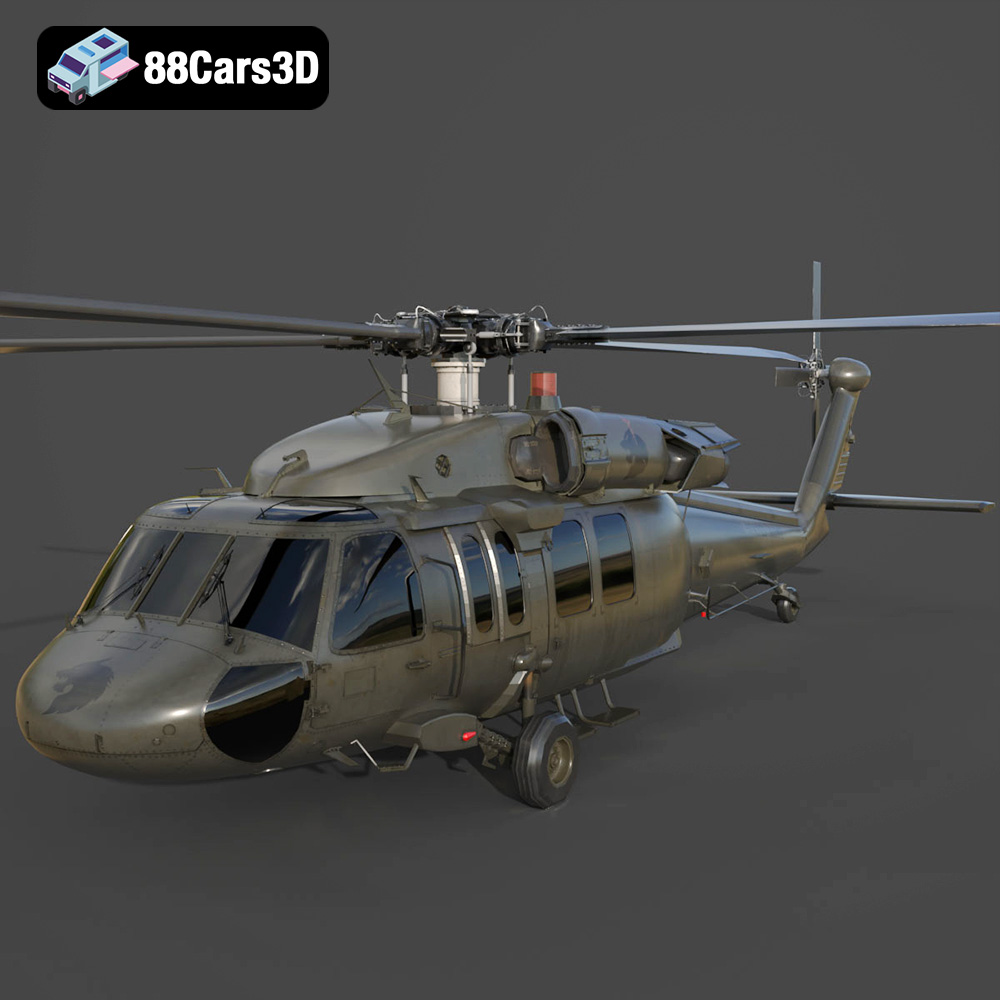
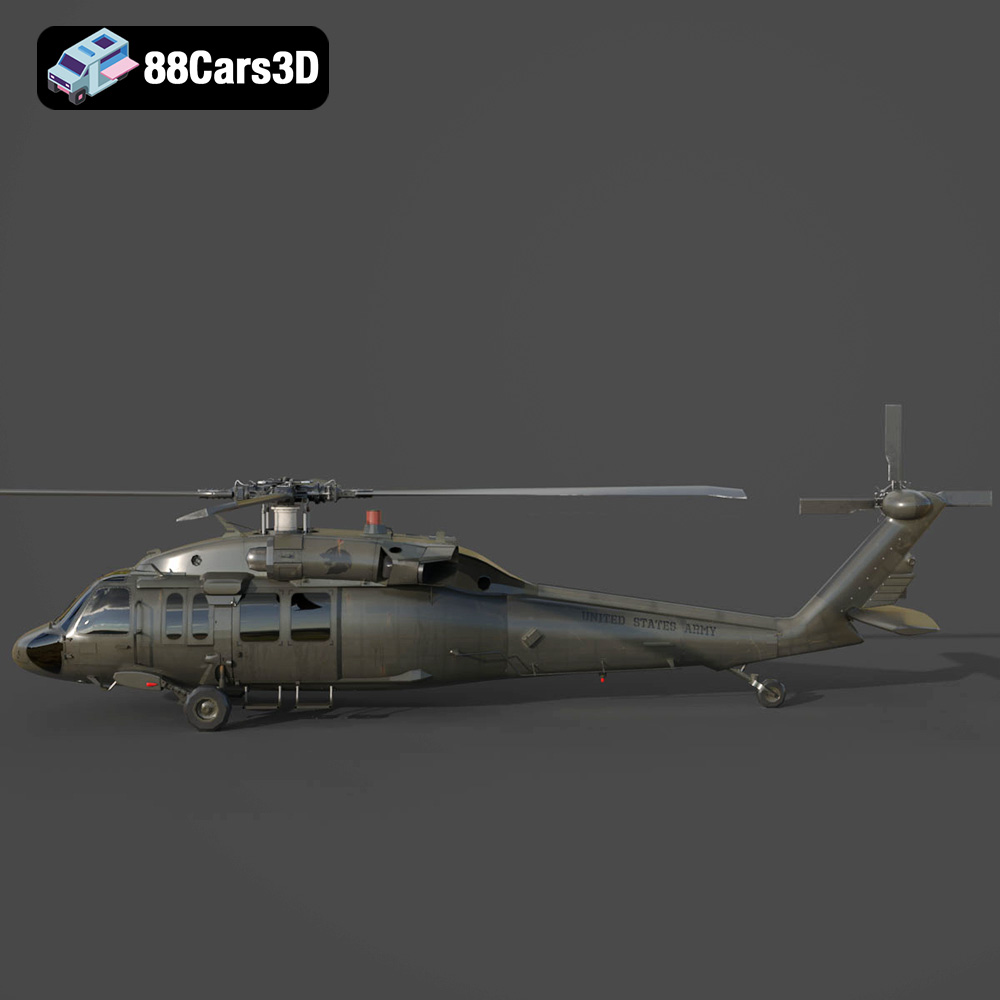
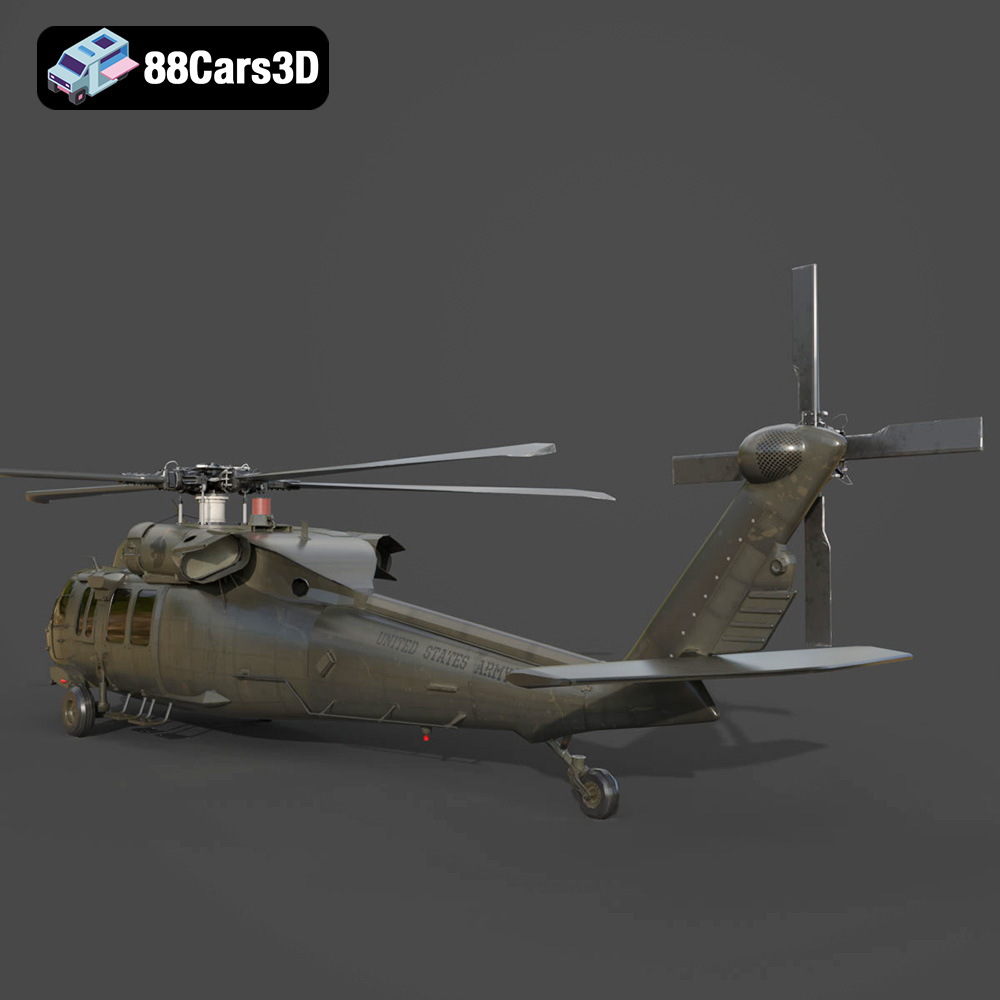
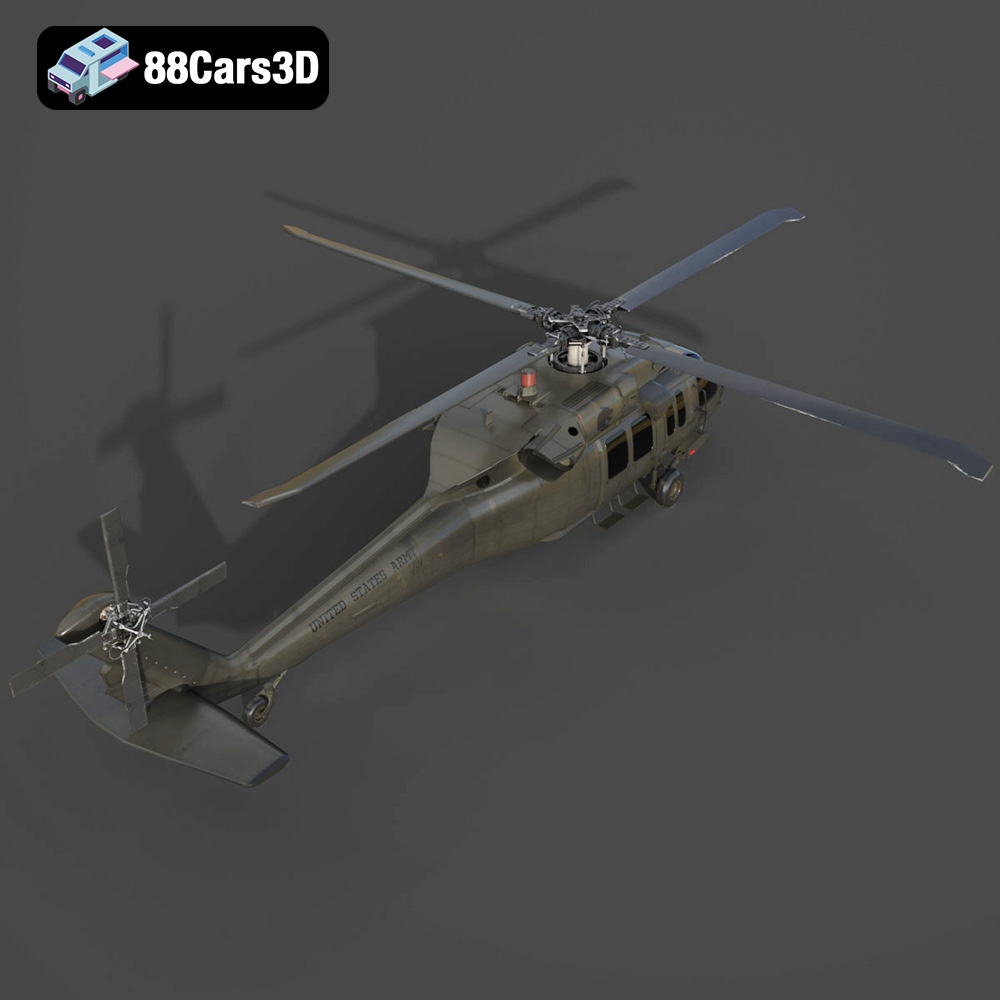
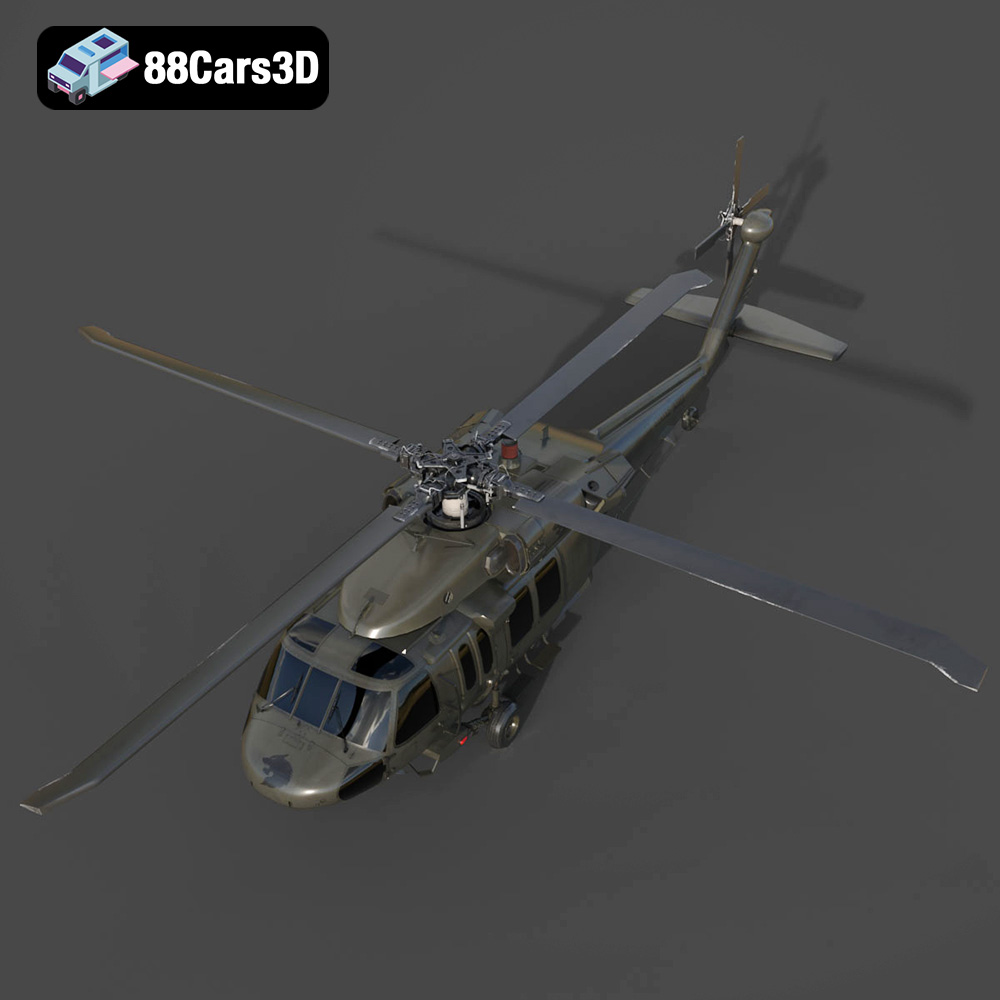
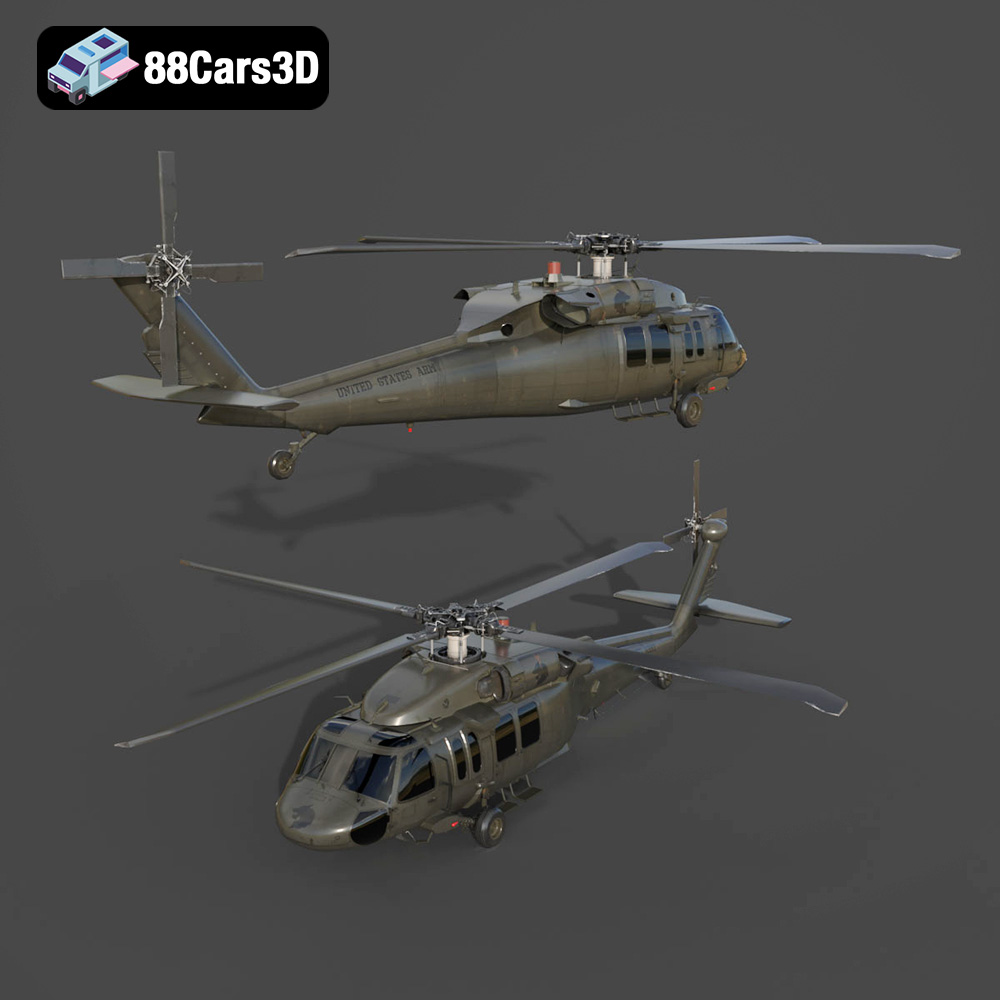
The Sikorsky UH-60 Black Hawk is the backbone of the U.S. Army’s tactical transport fleet, renowned for its versatility, ruggedness, and iconic silhouette. This 3D model meticulously captures the legendary military utility helicopter, featuring its distinct twin-engine housing, formidable four-blade main and tail rotors, and robust military fuselage. Built to reflect its real-world counterpart’s aggressive yet functional military styling, it embodies air assault, medevac, and troop transport readiness.
$19.99
.blend
.fbx
.glb
.max
.obj
.ply
.rendering
.sikorsky
.stl
.unreal
black-hawk
game asset
game-ready
helicopter-3d-model
low-poly
military-helicopter
optimized
uh-60
us-army
VR/AR