Get 20% OFF All Premium 3D & STL Models!

In the fast-paced world of digital creation, where photorealism meets performance, the demand for high-quality 3D assets is ever-growing. From captivating cinematic sequences to immersive gaming experiences and precise architectural visualizations, a foundational element remains consistent: the quality of the 3D models. Automotive design, in particular, thrives on accurate and detailed representations, whether for marketing a new vehicle, populating a virtual city, or even for producing physical prototypes.
Today, we’re delving into a prime example of such a critical asset: the Volkswagen Jetta GLI 2019 3D Model. This meticulously crafted digital recreation of the iconic sports sedan stands out as a versatile tool for professionals across various disciplines. It perfectly blends the aggressive styling and performance-driven details of the real-world vehicle with the technical optimizations necessary for seamless integration into diverse digital pipelines. Whether your project demands breathtaking automotive rendering or a game-ready asset for a sprawling open-world environment, this model, available on 88cars3d.com, is engineered to meet the highest standards of realism and efficiency.
When working with 3D assets, particularly complex ones like a detailed vehicle model, understanding the nuances of various file formats is paramount. Each format serves a specific purpose, offering unique advantages in terms of compatibility, data retention, and optimization for particular workflows. The Volkswagen Jetta GLI 2019 3D Model, recognizing this critical need for flexibility, is supplied in a comprehensive suite of formats, ensuring its utility across virtually any professional pipeline.
The .blend format is the native file type for Blender, the widely popular open-source 3D creation suite. When you download the Volkswagen Jetta GLI 2019 model in .blend format, you gain access to a fully editable Blender scene. This means not just the raw mesh data, but also all materials, textures, lighting setups, cameras, modifiers, and even animation data (if present) are perfectly preserved within the file. For artists working primarily in Blender, this is invaluable, as it allows for immediate tweaking, re-rigging, custom material adjustments, and deep scene modifications without any loss of information that might occur during format conversions. It’s the most flexible option for Blender users seeking to integrate the Jetta GLI into their existing projects or customize it extensively.
The .fbx (Filmbox) format is arguably the most widely adopted interchange format in the 3D industry, particularly popular in game development and animation. Its robust capabilities allow it to store 3D models, animation, cameras, lights, and PBR (Physically Based Rendering) material data effectively. For real-time applications like Unreal Engine and Unity, .fbx is often the go-to choice due to its efficient handling of complex scenes and animation data. The Volkswagen Jetta GLI 2019 .fbx file is optimized for these engines, ensuring that its ~250k triangle count, PBR materials, and proper pivot setups translate smoothly, making it an excellent game asset.
The .obj (Wavefront OBJ) format is a classic and highly universal standard for 3D geometry. It excels at storing vertex positions, UV coordinates, normals, and material group information. While it doesn’t support animation or advanced scene data like lights and cameras, its widespread compatibility makes it a safe bet for importing models into almost any 3D software package. If you need a clean, pure geometry export of the Jetta GLI for a custom pipeline or an older software, the .obj version provides that foundational data reliably.
The .glb (GL Transmission Format, Binary) format is quickly becoming the standard for 3D models on the web, in Augmented Reality (AR), and Virtual Reality (VR) applications. It’s a binary, self-contained format that embeds all textures, materials, and animations directly within a single file, making it incredibly efficient for streaming and display in browser-based viewers or mobile AR experiences. The Volkswagen Jetta GLI 2019 .glb file is perfect for creating interactive automotive configurators, virtual showrooms, or embedding a dynamic 3D view of the car directly onto a webpage.
The .stl (Stereolithography) format is the cornerstone of 3D printing. It represents 3D surfaces using a tessellation of triangles, defining only the geometry of the object without color, texture, or material information. The Jetta GLI .stl file allows hobbyists and professionals to physically manifest the digital model. While specific preparation may be needed for optimal print quality (like scaling and adding supports), the .stl format provides the essential mesh for producing a tangible replica of the car, whether for display or prototyping.
The .ply (Polygon File Format) is another format for storing 3D data, particularly common in 3D scanning, CAD, and scientific applications. It can store various properties like color, transparency, normals, texture coordinates, and other data associated with vertices and faces. While less common for everyday interchange than FBX or OBJ, it offers a more robust representation for specific precision-oriented tasks or when dealing with scan data, providing a more detailed mesh definition than STL in some contexts.
While not a standalone file extension in the traditional sense, the term .unreal refers to an asset specifically pre-configured and optimized for direct import and use within Unreal Engine. This typically means the asset package includes an .fbx file with correct scaling, pivot points, material assignments, and potentially pre-built Blueprints or scene setups that streamline the integration into an Unreal project. For the Jetta GLI, this signifies that the model is designed to hit the ground running in Unreal, saving developers significant time on asset preparation and material setup.
Similar to .blend for Blender, the .max format is the native file type for Autodesk 3ds Max. This format retains the complete 3ds Max scene, including all modifiers, materials (like V-Ray or Corona setups), lighting, cameras, and animation data. For professionals using 3ds Max for high-end rendering, animation, or architectural visualization, the .max file provides the utmost flexibility, allowing for direct manipulation and integration within their established workflows without any data conversion issues.
The availability of the Volkswagen Jetta GLI 2019 3D Model in these diverse formats underscores its professional appeal. It ensures that regardless of your preferred software or project requirements, you have the right tool for the job, minimizing friction and maximizing creative potential.
Creating a truly convincing 3D car model involves more than just capturing its silhouette. It demands an intricate balance of visual fidelity and technical optimization. The Volkswagen Jetta GLI 2019 3D Model exemplifies this philosophy, delivering a highly detailed representation that is simultaneously game-ready and primed for high-end rendering.
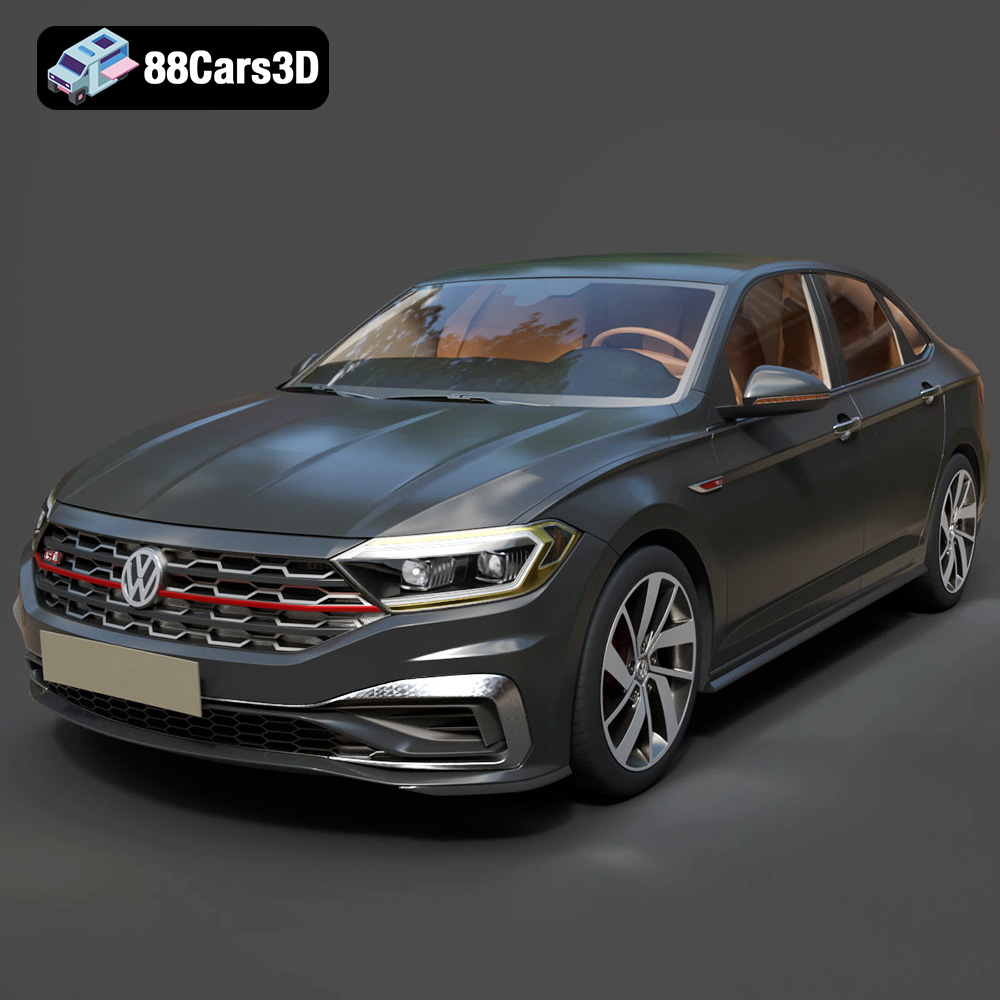
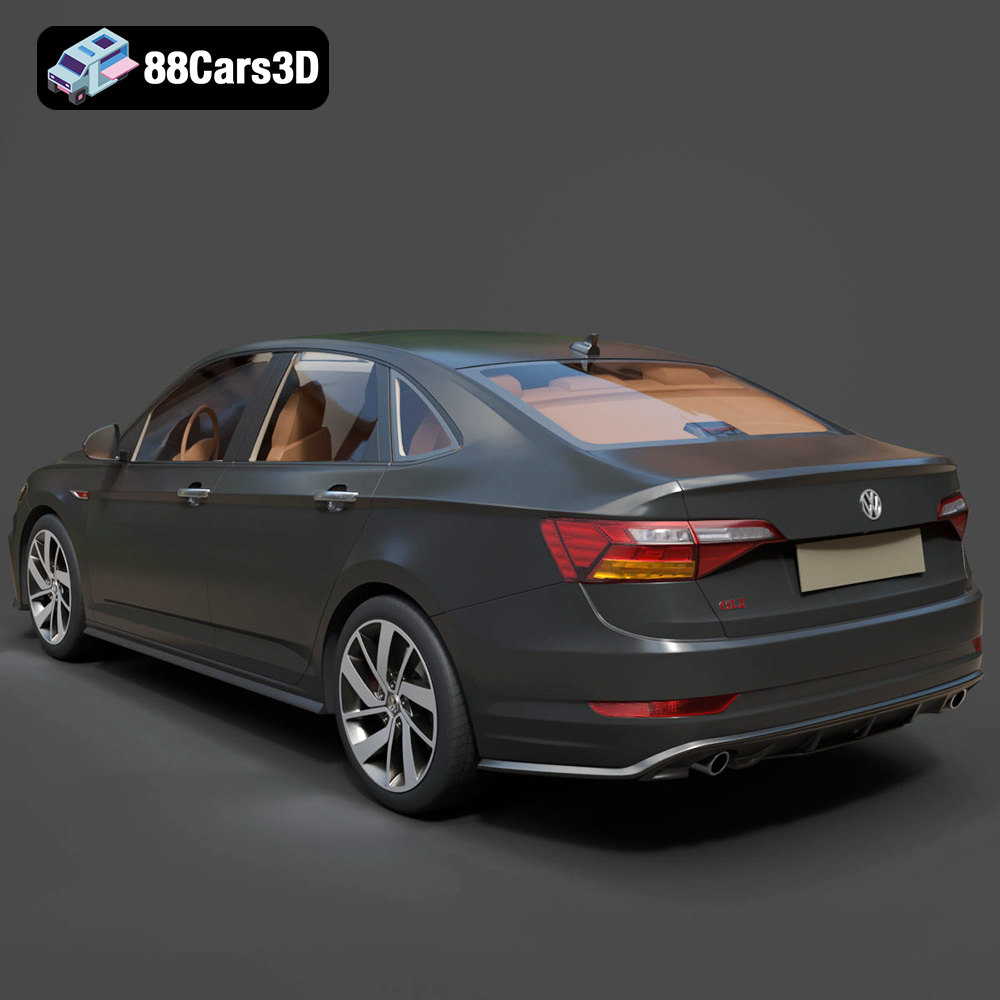
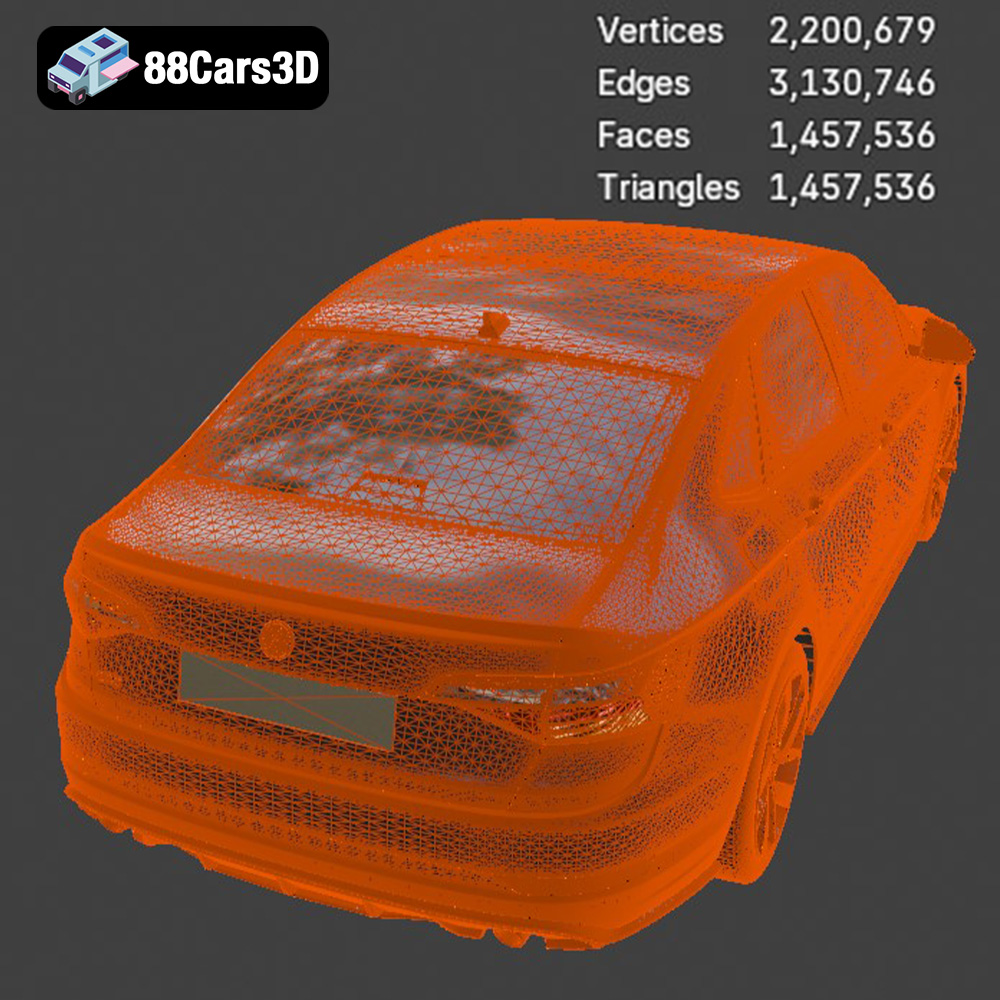
The exterior of this Volkswagen Jetta GLI 2019 model is a masterclass in precision. It accurately replicates the vehicle’s frame geometry and proportions, from the aggressive honeycomb grille with its signature red accents to the sleek aerodynamic profile. Technical specifications are paramount here: with approximately 250,000 triangles, the model strikes an ideal balance. This poly count is low enough to ensure excellent real-time performance in modern game engines like Unreal and Unity, preventing performance bottlenecks in large open-world games or racing simulators. Yet, it’s high enough to maintain stunning topological accuracy and visual fidelity, even in close-up shots.
Key details include a detailed representation of the 2.0L TSI turbocharged 4-cylinder engine block, a sport-tuned dual exhaust system with chrome tips, and signature LED projector headlights and sleek taillight clusters. The exclusive GLI alloy wheels are faithfully recreated, complete with performance tire treads and meticulously detailed red brake calipers – elements that significantly enhance any automotive rendering. Furthermore, crucial components like the wheels, suspension, and steering are provided as separate elements, allowing for realistic animation of steering, wheel rotation, and suspension travel, a must-have for dynamic simulations.
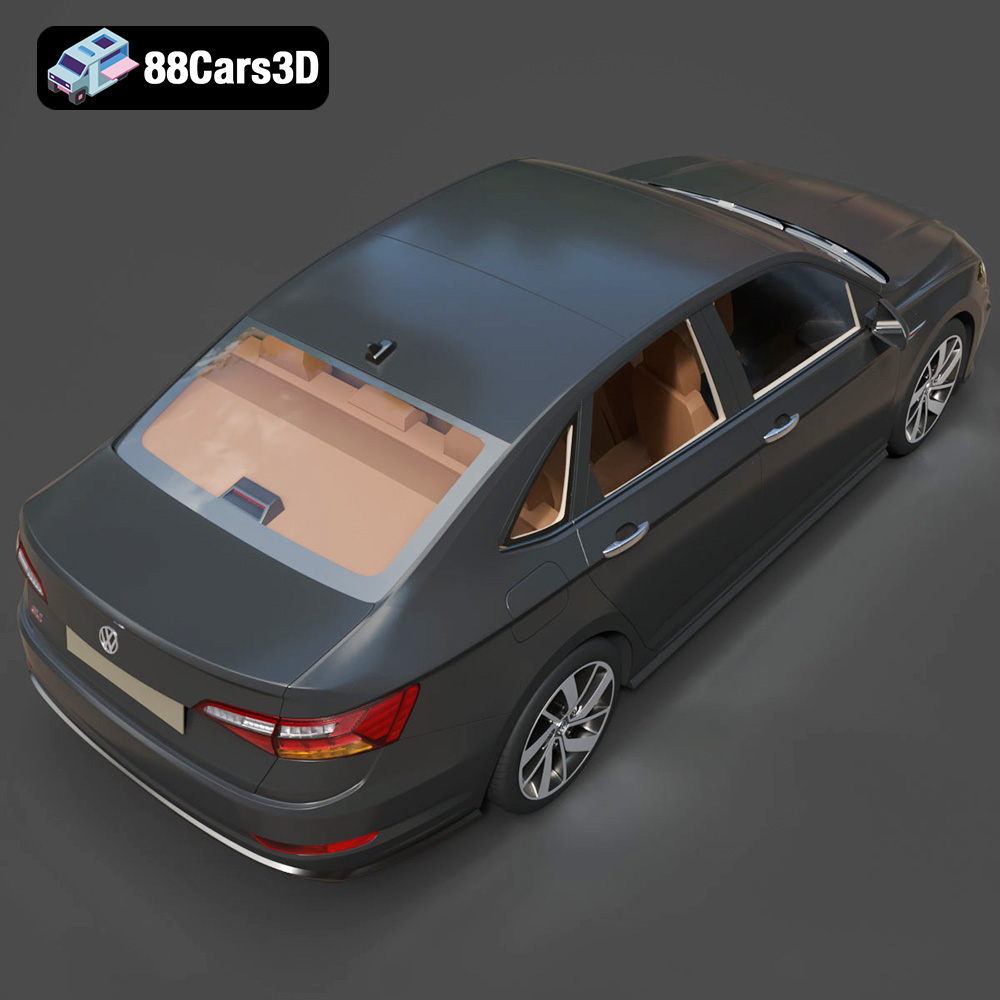
The experience of a car is not just about its exterior; the interior plays a pivotal role in creating immersion. This 3D model doesn’t disappoint, featuring a meticulously crafted cockpit that mirrors the real Jetta GLI. Artists will find sport seats with signature red contrast stitching, a leather-wrapped, flat-bottom sport steering wheel, and a detailed digital cockpit and modern infotainment instrument cluster. Every control, from the pedals and shift lever to the center console, is accurately modeled. The geometry is specifically optimized for first-person POV in gaming, ensuring that players get an authentic and visually rich experience from behind the wheel. The inclusion of highly detailed PBR materials for all interior surfaces contributes significantly to unmatched realism, making reflections and textures behave naturally under various lighting conditions.
Beyond the aesthetic appeal, the Volkswagen Jetta GLI 2019 3D Model offers several technical advantages crucial for professional workflows. It is truly game-ready & optimized, meaning it’s been engineered from the ground up to perform efficiently in real-time environments without sacrificing visual quality. The model adheres to real-world scale accuracy, based on actual vehicle chassis dimensions, which is vital for architectural visualization, AR/VR experiences, and ensuring correct integration into existing digital environments. Moreover, the proper pivot setup for steering, wheel rotation, and suspension travel simplifies the animation process, allowing animators to quickly rig and bring the vehicle to life. Compatibility is also a significant benefit, as the model supports all major 3D software platforms and real-time rendering engines, thanks to its extensive range of included file formats, making it a universal asset for any studio.
The versatility of the Volkswagen Jetta GLI 2019 3D Model extends across a broad spectrum of professional applications. Its detailed design and optimized structure make it an invaluable asset in various creative pipelines.
For game developers, finding a high-quality 3D car model that balances visual fidelity with performance is a constant challenge. The Jetta GLI model, with its ~250k triangle count, hits this sweet spot perfectly. It is an ideal game asset for integrating into racing titles, where players demand realistic car models and responsive handling. In sprawling open-world games, it can serve as a detailed player vehicle, AI traffic, or a central prop in cinematic cutscenes. The included PBR materials ensure that the car looks consistent and realistic under various in-game lighting conditions, from bright daylight to moody night scenes, leveraging the power of modern real-time engines like Unreal and Unity.
A typical workflow for a game developer might involve importing the .fbx file into Unreal Engine. After import, the developer would assign the provided PBR textures (Albedo, Normal, Roughness, Metallic, AO) to the respective material slots, create a physics asset for collision detection, and then integrate the model with a vehicle blueprint for realistic driving dynamics. The separated wheels and suspension components greatly simplify the process of rigging for animation and physics.
In architectural visualization (ArchViz) and high-end marketing campaigns, the inclusion of realistic vehicles can significantly elevate a scene, adding life, context, and a sense of scale. The Volkswagen Jetta GLI 2019 3D Model excels in this domain. Its meticulous details, accurate proportions, and high-resolution PBR materials make it perfect for:
For an ArchViz artist, the workflow in 3ds Max or Blender would typically involve importing the .max or .blend file into an existing architectural scene. They would then set up advanced lighting (e.g., HDRIs, V-Ray/Corona lights, Cycles lights) to illuminate the vehicle and its environment. Camera angles would be carefully chosen to emphasize the car’s aesthetics and its integration within the scene. The rich PBR materials would interact realistically with the light, producing authentic reflections and refractions on the paint, glass, and chrome elements, resulting in breathtakingly photorealistic automotive rendering.
The rise of Augmented Reality (AR) and Virtual Reality (VR) demands 3D assets that are not only visually appealing but also optimized for interactive, real-time performance on various devices. The Volkswagen Jetta GLI 2019 3D Model, particularly in its .glb format, is perfectly suited for these applications. It can be used to create:
The optimized geometry and embedded textures of the .glb file ensure smooth performance on mobile devices and VR headsets, making it an excellent foundation for engaging AR/VR projects. The customization options inherent in the model (like changing colors and materials) translate directly into dynamic user-driven experiences.
The utility of a premium 3D model extends beyond digital displays. The Volkswagen Jetta GLI 2019 3D Model offers the exciting possibility of tangible creation through 3D printing, transforming a digital asset into a physical object.
The inclusion of the .stl format makes this model suitable for 3D printing, catering to hobbyists, designers, and engineers alike. An .stl file defines the geometry of a 3D object using a series of connected triangles, making it the standard for additive manufacturing. While the digital model is highly detailed, some preparation may be necessary for successful physical output, depending on the printer and desired scale.
Recommended 3D print settings, as suggested for the model, provide a valuable starting point:
These guidelines ensure that the detailed geometry of the Jetta GLI translates effectively into a robust and accurate physical model.
Once printed, the physical model can be further enhanced through post-processing techniques. This typically includes sanding to smooth layer lines, applying primer to prepare the surface, and then painting with authentic factory colors, often incorporating metallic finishes to replicate the real car’s sheen. The resulting 3D-printed Jetta GLI can serve various purposes:
The ability to transition from a digital asset to a physical object truly underscores the comprehensive utility of this 3D model, expanding its relevance beyond purely screen-based applications.
A truly professional 3D model offers more than just static beauty; it provides the flexibility to adapt and customize to fit specific project needs. The Volkswagen Jetta GLI 2019 3D Model excels in this regard, offering extensive options for personalization and integration into diverse scenes.
The design of the Jetta GLI model inherently supports a wide range of aesthetic modifications without compromising its underlying quality. Users can easily:
These customization options, facilitated by editable formats like .blend and .max, empower artists to make the Volkswagen Jetta GLI 2019 3D Model uniquely their own.
Beyond the vehicle itself, its seamless integration into various digital environments is key. The model’s adaptable nature allows artists to:
This high degree of customization and environmental adaptability ensures that the Volkswagen Jetta GLI 2019 3D Model is not just a high-quality asset, but a flexible tool that can be tailored to meet the exacting demands of any creative project, enhancing its value as a foundational component for game development, automotive rendering, and interactive experiences.
The world of 3D content creation is driven by quality, versatility, and efficiency. The Volkswagen Jetta GLI 2019 3D Model embodies these principles, offering a meticulously detailed and technically optimized asset that caters to a broad spectrum of professional applications. From its game-ready polycount and PBR materials crucial for immersive game development and real-time AR/VR experiences, to its exceptional topological accuracy demanded by high-end automotive rendering and architectural visualization, this model proves to be an indispensable tool.
The comprehensive range of included file formats—from .blend and .max for native software flexibility, to .fbx for universal game engine compatibility, .glb for web and AR/VR, and .stl for tangible 3D printing—ensures that creative professionals have precisely what they need for any project. This eliminates conversion headaches and accelerates workflows, allowing artists and developers to focus on creativity rather than technical hurdles. When you acquire assets like the Jetta GLI from 88cars3d.com, you are investing in a product that not only meets but exceeds industry standards.
Whether you’re crafting the next big racing simulator, visualizing a modern architectural marvel, designing an interactive product configurator, or even printing a collectible scale model, the Volkswagen Jetta GLI 2019 3D Model stands ready to elevate your work. Its combination of aesthetic fidelity, technical optimization, and extensive customization options makes it a prime example of a premium 3D car model designed for today’s dynamic digital landscape. Explore this exceptional model and other high-quality 3D car models at 88cars3d.com to enhance your next creative endeavor.
The Volkswagen Jetta GLI 2019 combines everyday practicality with thrilling performance, standing out as a premier sports sedan in its class. Known for its GTI-borrowed turbocharged engine, aggressive honeycomb grille with iconic red accents, and sleek aerodynamic profile, this vehicle strikes the perfect balance between track-ready styling and modern sophistication. From its distinctive front fascia to the dual exhaust setup, every element of this athletic sedan has been meticulously captured. This meticulously crafted 3D model features game-ready optimization with approximately 250,000 triangles, ensuring high-end visual fidelity without compromising real-time performance in modern engines. With stunning topological accuracy and highly detailed PBR materials, it provides unmatched realism for close-up shots and gameplay alike. Perfect for immersive racing simulators, urban environment open-world games, high-end architectural visualizations, and interactive automotive configurators.
$19.99
.2019
.blend
.fbx
.glb
.max
.obj
.ply
.rendering
.sedan
.stl
.unreal
.volkswagen
car-3d-model
game asset
game-ready
jetta-gli
low-poly
optimized
sports-sedan
VR/AR