Get 20% OFF All Premium 3D & STL Models!

In the vast landscape of digital content creation, the allure of historical vehicles remains timeless. From captivating cinematic sequences to immersive game worlds and educational virtual reality experiences, meticulously crafted 3D car models serve as the cornerstone of visual authenticity. Today, we delve into a remarkable example that embodies both historical significance and technical excellence: the Volkswagen Schwimmwagen Typ 166 3D model, a standout offering available at 88cars3d.com.
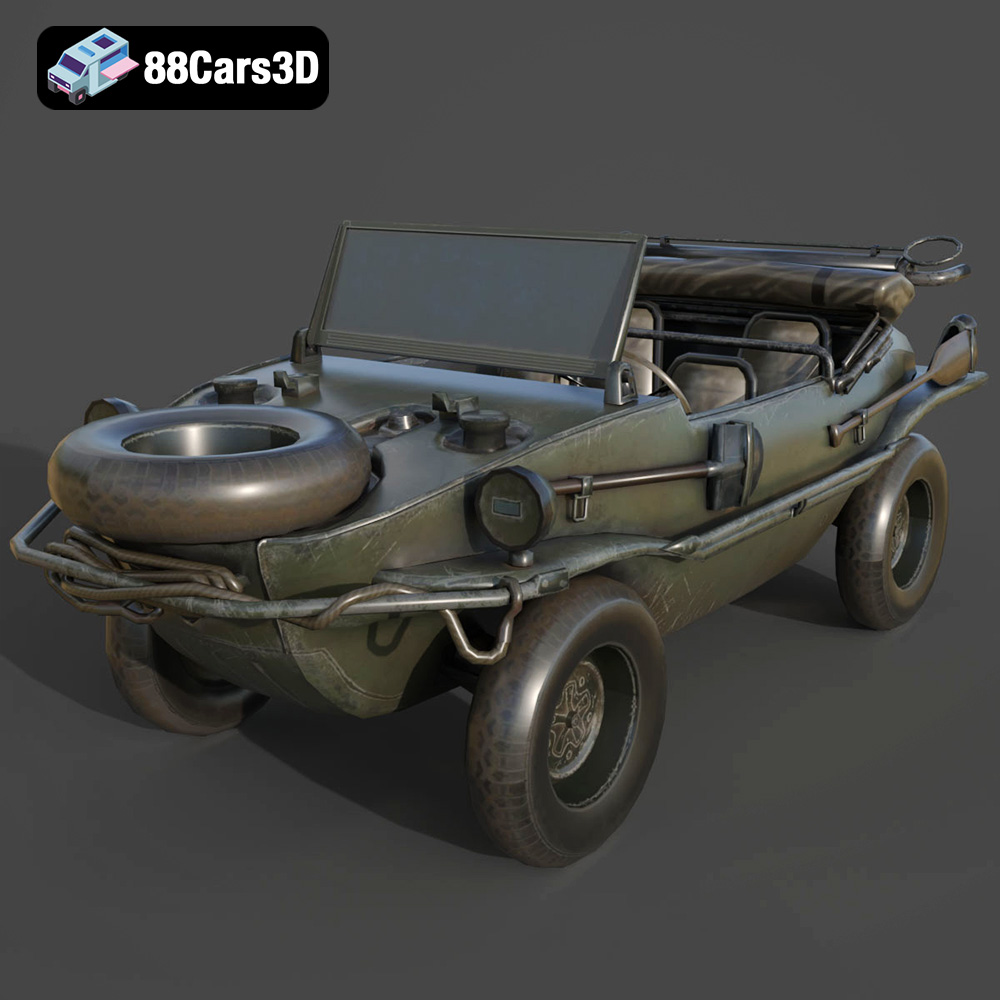
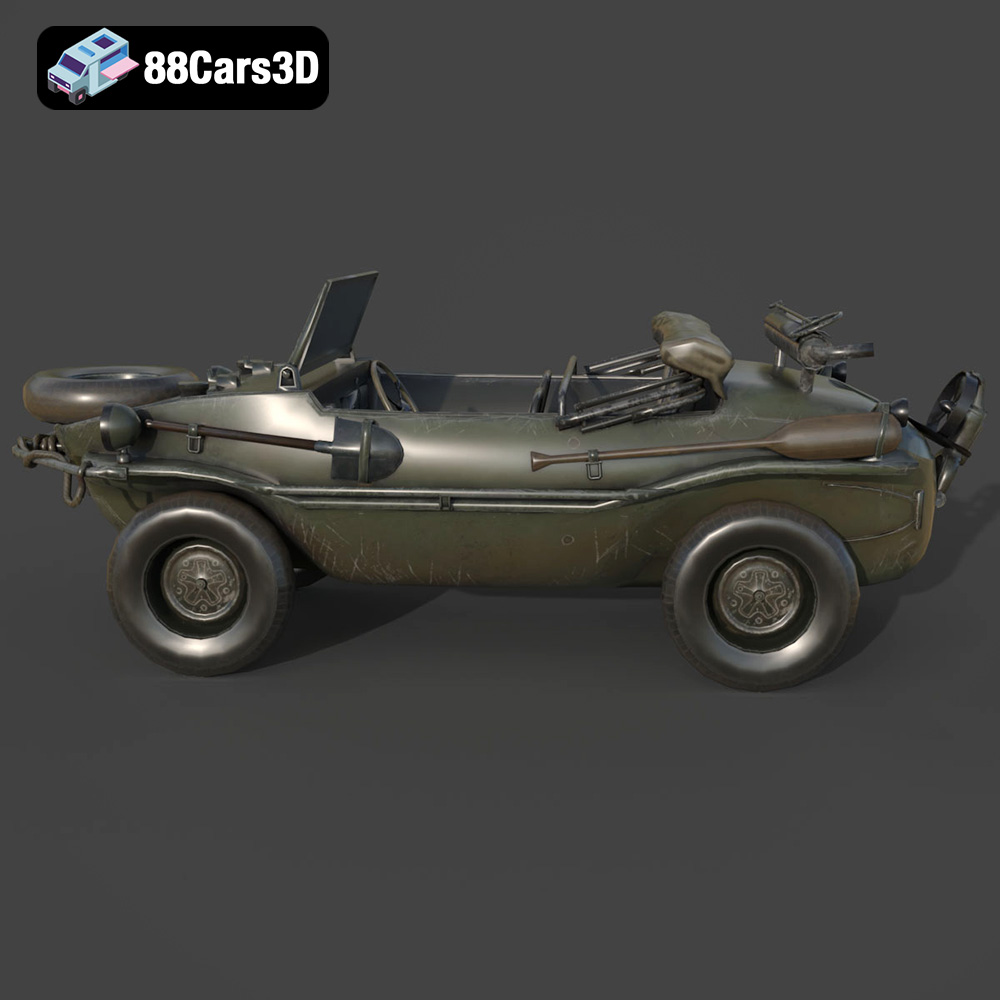
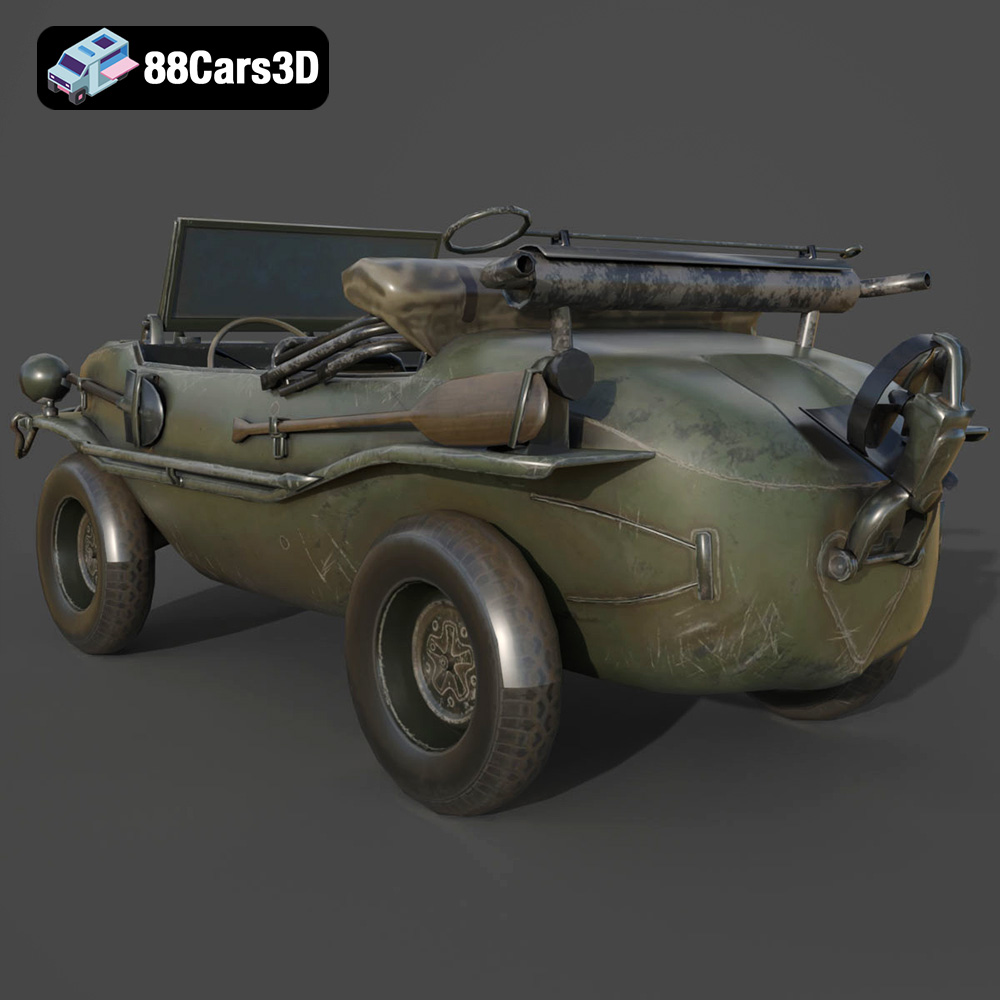
The Schwimmwagen Typ 166 is not just any vehicle; it’s an iconic World War II amphibious off-road marvel. Its rugged durability, distinctive boat-like hull, rear-mounted air-cooled flat-four engine, and ingenious fold-down propeller system make it a fascinating subject for 3D artists and developers alike. This particular 3D model meticulously captures every nuance, from the riveted watertight chassis to the period-accurate military lighting and spare tire, bringing a piece of history vividly to life in the digital realm. Whether you’re a game developer seeking authentic military assets, an architect visualizing historical scenes, or a filmmaker crafting an epic period drama, understanding the intricacies of such a model and its various applications is paramount. This post will explore the technical brilliance behind this specific 3D car model, its wide array of file formats, integration into professional workflows, and the endless creative possibilities it unlocks.
The Volkswagen Schwimmwagen Typ 166 stands as a testament to wartime innovation and engineering ingenuity. Its amphibious capability and robust off-road performance made it a unique asset during World War II, and its distinctive silhouette has cemented its place in automotive history. Translating such a complex and historically significant vehicle into a high-fidelity 3D model requires a profound understanding of both history and digital craftsmanship.
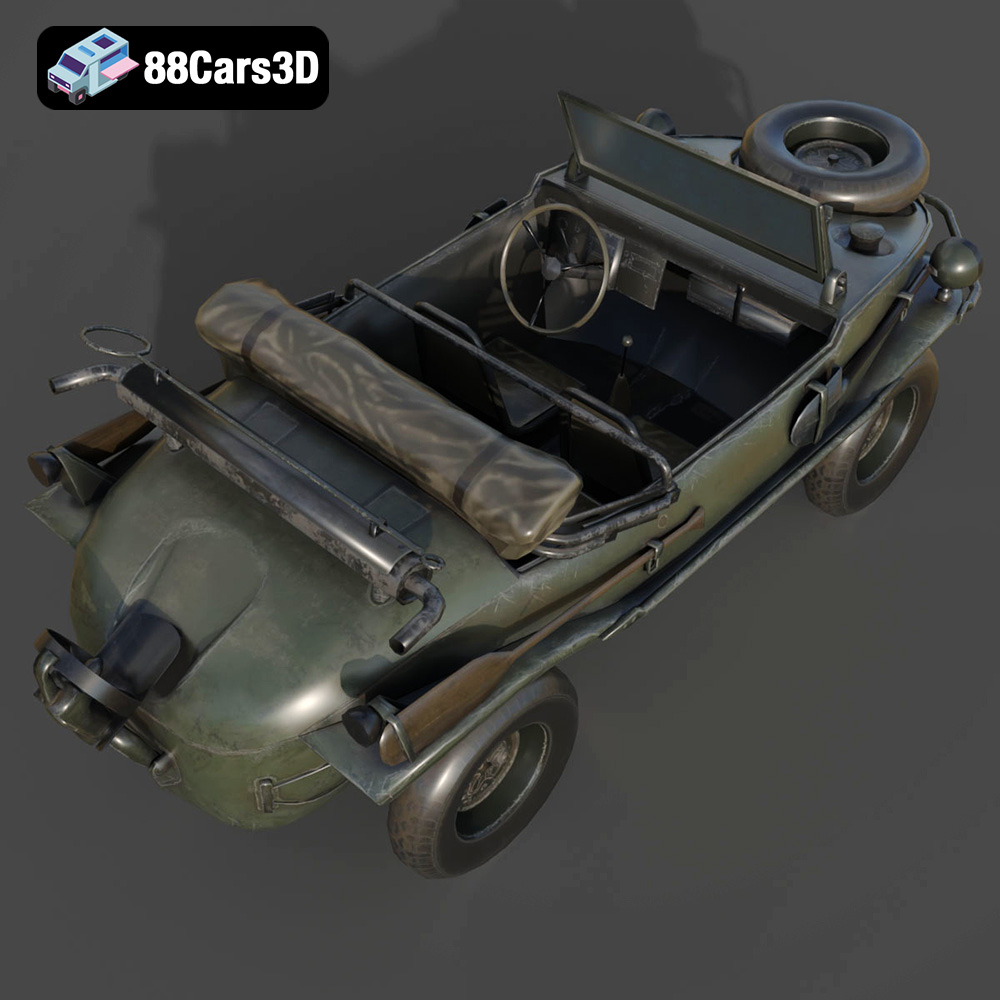
Accuracy is paramount when dealing with historical subjects. For the Volkswagen Schwimmwagen Typ 166, this means going beyond just visual resemblance. The 3D model available on 88cars3d.com exemplifies this commitment by painstakingly recreating the authentic watertight hull geometry and proportions. Details such as the rear-mounted air-cooled flat-four engine housing, the functional fold-down rear propeller mechanism, and the distinctive exhaust system are not merely aesthetic additions but are true to the original design. Even subtle elements like the blackout headlamps and the specific tread pattern on the off-road tires contribute to an immersive and historically correct representation. This level of detail is crucial for projects where authenticity can make or break the user’s experience, whether in a documentary film, a museum-quality interactive exhibit, or a historically accurate video game.
While the Schwimmwagen’s origins are military, its digital counterpart possesses far broader utility. Its unique design and robust features make it a versatile asset for a multitude of applications. Imagine its inclusion in a rugged off-road racing game, navigating challenging terrains and water bodies. Consider its role in an educational AR/VR experience, allowing users to explore its mechanics and history interactively. For cinematic renders, the Schwimmwagen can serve as a compelling focal point, enhanced by realistic lighting and environment effects. Its visual distinctiveness makes it perfect for brand campaigns seeking a nostalgic or adventurous theme, or for architectural visualization projects that require a touch of historical realism. The adaptability of such a detailed 3D car model is what makes it a truly invaluable asset for any digital library.
The choice of file format is often as critical as the model itself. A truly versatile 3D asset, like the Volkswagen Schwimmwagen Typ 166 from 88cars3d.com, is offered in a variety of formats, each optimized for different workflows and applications. Understanding these formats is crucial for seamless integration into your projects.
The .blend format is the native file type for Blender, the powerful open-source 3D creation suite. When you receive a .blend file, you’re getting a fully editable Blender scene. This means not just the mesh data, but also the materials (often node-based for advanced realism), lighting setups, cameras, animation data, modifiers, and even scene collections. For artists deeply integrated into the Blender ecosystem, this format offers unparalleled flexibility for customization, rigging, animation, and rendering directly within their preferred environment. It allows for a deep dive into the model’s construction, enabling extensive modifications without loss of data or quality.
.fbx (Filmbox) is a proprietary file format developed by Autodesk, but it has become an unofficial industry standard for exchanging 3D data between different software applications. Its strength lies in its ability to store not only geometry and UV mapping but also animation, rigging, materials (though material definitions can sometimes translate imperfectly between software), cameras, and lights. It’s particularly ideal for game engines like Unreal Engine and Unity, where it facilitates efficient import of complex assets with their associated animations and hierarchies. For the Schwimmwagen, an .fbx file ensures that separate components like wheels, propeller, and suspension maintain their hierarchy, ready for animation in any major DCC (Digital Content Creation) tool or game engine.
.obj (Wavefront Object) is one of the oldest and most widely supported 3D file formats. It’s renowned for its simplicity and universality, making it excellent for cross-software compatibility. An .obj file primarily stores geometry (vertices, normals, texture coordinates, and faces) and can reference external .mtl (material) files for basic color and texture information. While it doesn’t support advanced features like animation, rigging, or complex material networks, its straightforward nature ensures that almost any 3D software can open and interpret the mesh data accurately. It’s often the go-to format when you need a clean mesh to start a new project or transfer an asset between vastly different pipelines.
.glb (GL Transmission Format Binary) is the binary version of glTF, a royalty-free specification for the efficient transmission and loading of 3D scenes and models by applications. What makes .glb stand out is its “single file” nature, embedding all model data – geometry, materials, textures, and animation – directly into one compact file. This optimization makes it perfect for AR (Augmented Reality), VR (Virtual Reality), and browser-based display, where quick loading times and efficiency are paramount. For showcasing the Schwimmwagen in an interactive web viewer or a mobile AR experience, .glb offers superior performance and ease of deployment.
.stl (Stereolithography) is the dominant file format for 3D printing. It represents a 3D model as a series of connected triangles, forming the surface geometry without any color, texture, or material information. While simplistic, its robust nature makes it universally compatible with 3D printers and slicing software. The Schwimmwagen model’s availability in .stl means hobbyists and professionals can physically manifest this iconic vehicle, with recommended print settings and post-processing steps provided for optimal results.
.ply (Polygon File Format) is another format for storing 3D data, often used in 3D scanning and scientific applications. It can store a wide range of properties, including color per vertex, normals, and texture coordinates, and supports both polygon and point cloud data. While less common for general 3D model exchange, its ability to retain precision mesh data makes it suitable for CAD, engineering analysis, or tasks requiring highly accurate surface representation, offering another layer of versatility for the Schwimmwagen model.
While “.unreal” isn’t a single universal file extension in the same vein as .fbx or .obj, its inclusion signifies that the asset has been specifically prepared and optimized for direct import or integration into Unreal Engine projects. This often means the model has appropriate material setups, collision meshes, LODs (Levels of Detail), and pivot points configured to streamline the workflow within Unreal Engine. For game developers or real-time visualization specialists using Unreal Engine, this pre-optimized asset can save significant development time, ensuring the Volkswagen Schwimmwagen Typ 166 performs flawlessly in a real-time environment with minimal setup.
.max is the native file format for Autodesk 3ds Max, one of the industry’s leading 3D modeling, animation, and rendering software. Like .blend for Blender, a .max file contains the complete scene data, including all geometry, modifiers, materials (V-Ray, Corona, etc.), lights, cameras, and animation. For professionals working in architectural visualization, product design, or high-end cinematic rendering using 3ds Max, this format provides full access to the model’s construction for further refinement, animation, or integration into complex scene compositions.
The comprehensive range of formats offered for the Volkswagen Schwimmwagen Typ 166 3D model underscores its adaptability and value, making it an ideal choice for virtually any digital project.
The creation of a high-quality 3D car model, particularly one as detailed as the Volkswagen Schwimmwagen Typ 166, is a meticulous process that balances aesthetic accuracy with technical performance. This model exemplifies best practices in digital asset creation.
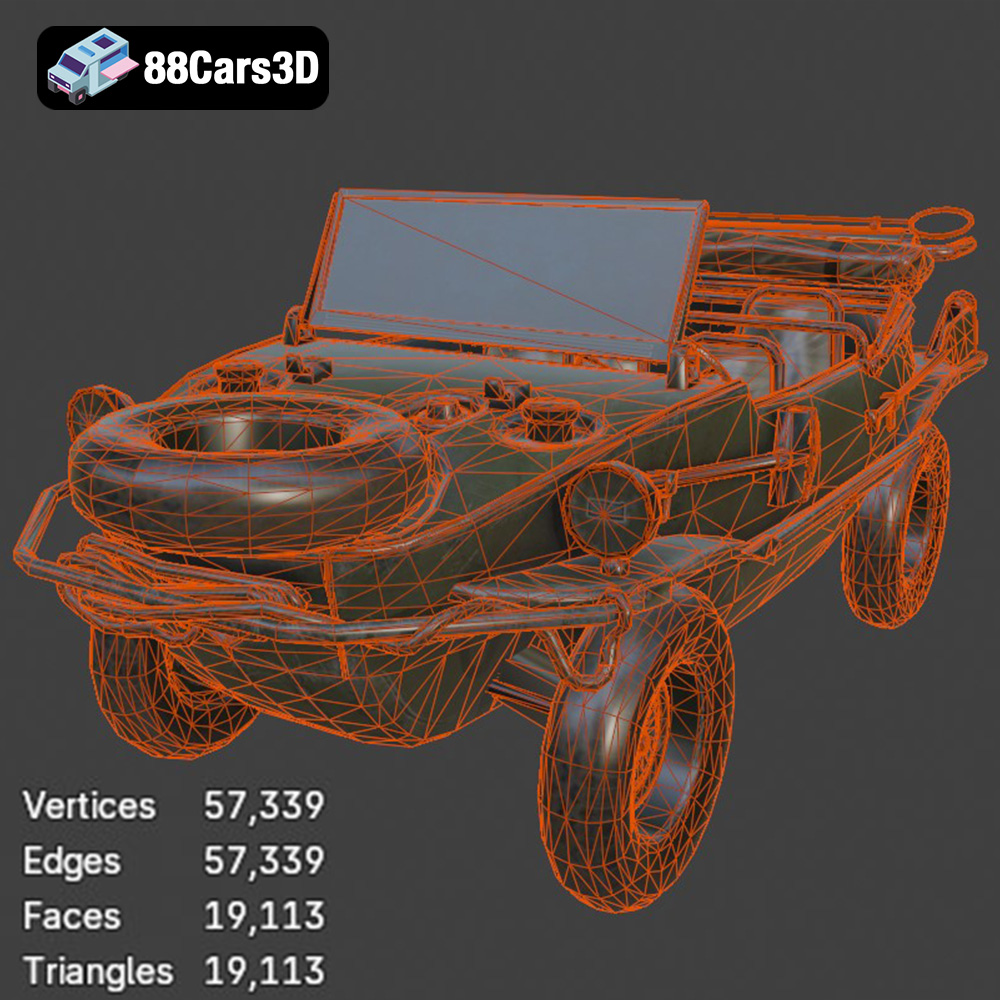
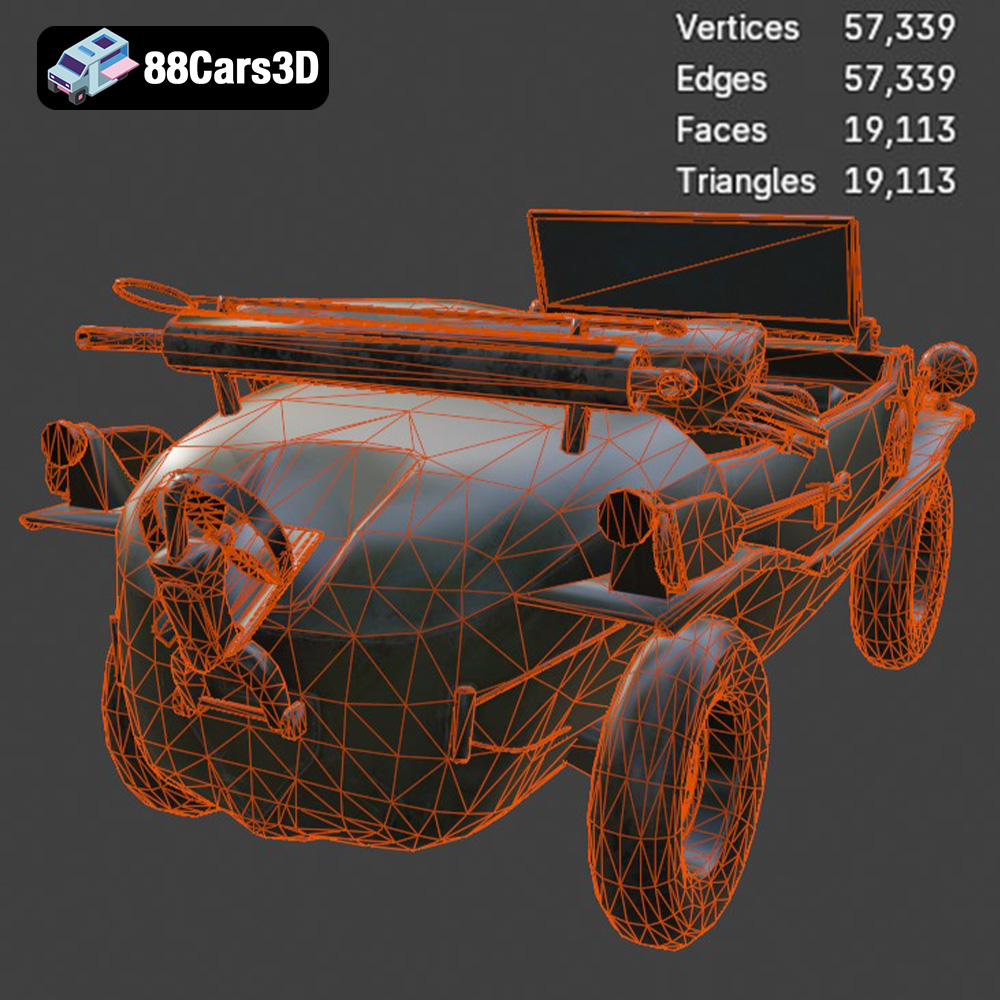
One of the most critical aspects of any 3D model, especially game assets, is its topology. The Schwimmwagen model boasts an optimized topology with approximately 150,000 triangles. This number strikes a perfect balance: it’s high enough to maintain exceptional visual realism, capturing the intricate details of the watertight hull, the engine housing, and the interior, yet efficient enough to ensure smooth performance in real-time engines like Unreal and Unity. Good topology also means clean quad-based meshes in editable formats, facilitating easy manipulation and deformation if further customization or animation is required. Furthermore, efficient UV mapping ensures that textures can be applied without stretching or distortion, maximizing visual fidelity while minimizing texture memory usage – a common challenge in large-scale game development.
A static model, however detailed, has limited utility in dynamic environments. The Schwimmwagen 3D model addresses this by featuring separate components for animation, including individual wheels, the propeller, suspension, and steering elements. Crucially, these components come with proper pivot setups, meaning they are ready for immediate rigging and animation. Imagining the propeller folding down, the wheels turning, or the suspension compressing as the vehicle traverses uneven terrain becomes straightforward. Beyond animation readiness, the model adheres to real-world scale accuracy, based on actual vehicle chassis dimensions. This attention to scale is vital for seamless integration into existing scenes, ensuring proper proportions when placed alongside other assets or within a simulated environment.
The true artistry of this 3D car model lies in its ability to replicate the finer details of the original Schwimmwagen. On the exterior, every rivet on the watertight chassis, the distinct stamping of the steel wheels, and the rugged leaf spring and torsion bar suspension are carefully modeled. The period-accurate military lighting, including the unique blackout headlamps, adds a layer of authenticity. Moving to the cockpit, the model accurately portrays the utilitarian front and rear military seating, the minimalist three-spoke steering wheel, and the sparse military-spec instrument cluster and gauges. Even the detailed floor-mounted gear shifter and 4WD engagement levers are present, providing enough detail for first-person perspective gameplay or close-up renders without excessively increasing polycount. This commitment to detail ensures that the model is not just recognizable, but genuinely believable.
The versatility of the Volkswagen Schwimmwagen Typ 166 3D model extends beyond its inherent quality; it lies in its seamless integration into various professional pipelines. Thanks to its array of file formats and optimized structure, it serves as an excellent foundation for diverse digital projects.
For game developers, time is a precious commodity, and ready-to-use, optimized assets are invaluable. The Schwimmwagen’s “game-ready & optimized” status, with its ~150,000 triangle count, makes it ideal for direct import into popular game engines like Unreal Engine and Unity. The .fbx and .unreal formats are particularly beneficial here. Developers can import the .fbx file, which typically retains skeletal and animation data, and then apply PBR (Physically Based Rendering) materials within the engine’s material editor. Proper pivot setups for steering, wheel rotation, and propeller deployment mean less time spent on rigging and more on implementing gameplay mechanics. Collision meshes can be automatically generated or custom-created for precise physics interactions. For open-world games, racing titles, or historical military simulators, this asset provides an authentic, performance-friendly vehicle that can be driven, customized, and interacted with effectively.
When the goal is photorealistic imagery for film, animation, or marketing, the .max and .blend formats offer the highest degree of flexibility. Artists can import the model into 3ds Max or Blender, where they have full control over lighting, advanced material creation (using renderers like V-Ray, Corona, Cycles, or Eevee), and complex scene composition. The model’s detailed geometry allows for exquisite close-up shots. Imagine a dramatic render of the Schwimmwagen emerging from a misty lake at dawn, or a studio render highlighting its unique engineering. Artists can customize material finishes—from a brand-new factory look to a weathered, battle-worn camouflage—and adapt lighting for specific moods and environments. This level of control empowers visualization artists to craft compelling narratives and stunning visuals around the iconic vehicle.
The immersive nature of AR/VR demands lightweight, efficiently loaded assets. The .glb format shines in this arena, offering a single-file solution that includes geometry, textures, and even basic animations, optimized for web and mobile performance. For virtual showrooms, interactive museum exhibits, or educational AR applications, the Schwimmwagen model can provide users with a truly engaging experience. Imagine a user walking around a life-size virtual Schwimmwagen in their living room, inspecting its details, or an educational app allowing students to deploy the propeller with a tap. The model’s optimized geometry ensures smooth framerates, crucial for preventing motion sickness and enhancing immersion in virtual environments.
Beyond digital screens, the Volkswagen Schwimmwagen Typ 166 3D model offers the exciting possibility of physical realization through 3D printing. The availability of the .stl format, alongside specific print recommendations, transforms the digital asset into a tangible collectible.
Converting a high-detail 3D model into a printable object requires careful consideration. The .stl format is universally recognized by 3D printing software (slicers) that prepare the model for fabrication. The recommendations provided with the model are invaluable: a suggested scale of 1:16, 1:35 (military modeling standards), or 1:24 ensures appropriate sizing for display or dioramas. Layer heights between 0.04–0.12 mm are critical for capturing fine details, with resin printing often recommended for its precision. Optimal wall thickness (1.2–2.0 mm) and infill (20–30%) contribute to structural integrity, preventing fragility without excessive material consumption. Furthermore, the explicit mention of supports being required for intricate parts like the exhaust, propeller, and steering wheel guides users in achieving successful prints. Even print orientation, such as printing the frame angled for strength and wheels separately, provides expert advice for enthusiasts.
A raw 3D print is just the beginning. The product description highlights the importance of post-processing to achieve a museum-quality finish. This includes sanding to smooth layer lines, applying primer to create an even surface for paint, and finally, painting the model. The suggestion of “authentic factory colors with metallic finishes” opens up a world of creative possibilities for hobbyists to truly personalize their physical Schwimmwagen. Whether meticulously recreating a historically accurate camouflage pattern or experimenting with custom finishes, the ability to bring this digital asset into the physical world adds another dimension to its value and appeal. It’s a testament to the comprehensive nature of the asset provided by 88cars3d.com, offering support from digital creation to tangible realization.
The inherent flexibility of a well-constructed 3D car model, such as the Volkswagen Schwimmwagen Typ 166, empowers artists and developers with extensive customization options. This capability is vital for integrating the model seamlessly into diverse projects and narratives.
The ability to modify body and tank colors is fundamental. Artists can choose to render the Schwimmwagen in its authentic factory military greens or grays, or they can experiment with custom finishes, camouflage patterns, or even vibrant, non-historical colors for stylized projects. Beyond color, modifying tire textures is crucial for environmental realism. Swapping between “off-road mud” variants and clean, new tires can drastically alter the vehicle’s context, making it suitable for pristine showroom renders or grimy battlefield simulations. Adjusting material finishes—from a matte, sun-baked paint to a high-gloss, freshly waxed look, or a weathered, metallic rust—further enhances the model’s adaptability. These modifications allow the Schwimmwagen to transcend its historical context and fit into contemporary or even futuristic settings, if desired, providing immense creative freedom.
The detailed technical specifications and separate components also enable artists to tailor the model for specific scenes and narratives. For instance, in a game scenario set during a river crossing, the propeller can be deployed and animated realistically. For a diorama depicting a maintenance scene, the individual suspension components could be highlighted. Lighting adjustments for different environments—be it the harsh glare of a desert sun, the soft glow of a twilight scene, or the artificial illumination of a studio—can dramatically alter the mood and emphasis. This level of granular control ensures that the Volkswagen Schwimmwagen Typ 166 3D model is not just an asset, but a dynamic tool that can be reinterpreted and reimagined to fulfill almost any creative vision, making it a truly versatile and valuable acquisition for any 3D professional’s toolkit.
The Volkswagen Schwimmwagen Typ 166 3D model is a prime example of excellence in digital asset creation. It masterfully combines historical accuracy with technical optimization, making it an indispensable resource for a wide array of creative and technical professionals. From its meticulously detailed exterior and interior features to its game-ready topology and animation-friendly components, every aspect of this model has been crafted for unparalleled realism and performance.
The extensive support for various file formats—including .blend, .fbx, .obj, .glb, .stl, .ply, .unreal, and .max—ensures seamless integration into virtually any professional workflow, whether you’re developing high-fidelity games, producing cinematic renders, crafting immersive AR/VR experiences, or bringing the model to life through 3D printing. This versatility, coupled with detailed customization options, empowers artists and developers to push the boundaries of their projects.
For those seeking high-quality 3D car models that offer both historical depth and cutting-edge technical execution, the Volkswagen Schwimmwagen Typ 166 is an exceptional choice. It represents the standard of premium assets available at 88cars3d.com, a trusted source for exceptional digital automotive assets. Elevate your next project with this iconic piece of automotive history, rendered in exquisite detail and optimized for modern pipelines.
The Volkswagen Schwimmwagen Typ 166 is an iconic World War II amphibious off-road vehicle, celebrated for its rugged durability and unique boat-like hull design. Serving as one of the most mass-produced amphibious cars in history, it features a distinctive rear-mounted air-cooled flat-four engine, a fold-down propeller system, and four-wheel drive capability. This highly accurate 3D model meticulously captures its utilitarian military aesthetics, from the riveted watertight chassis to the spare tire mounted on the sloping front hood. Engineered with exceptional attention to detail, this 3D model boasts optimized topology and an efficient triangle count, ensuring it is fully game-ready without compromising on visual fidelity. Whether you are developing a historic military simulator, creating an immersive AR/VR educational experience, or producing high-end cinematic renders, this model delivers unparalleled realism and performance across all major real-time engines and 3D software.
$19.99
.blend
.fbx
.glb
.max
.obj
.ply
.rendering
.stl
.unreal
.volkswagen
amphibious-vehicle
car-3d-model
classic-car
game asset
game-ready
low-poly
military-vehicle
off-road
optimized
schwimmwagen-typ-166
VR/AR
ww2-vehicle