Get 20% OFF All Premium 3D & STL Models!

In the dynamic worlds of automotive design, game development, cinematic rendering, and immersive AR/VR experiences, the quality of your 3D assets can make or break a project. As digital landscapes become increasingly sophisticated, the demand for high-fidelity, meticulously crafted 3D car models has never been greater. Professionals across industries require assets that not only look stunning but are also technically robust, optimized for performance, and versatile enough to integrate into diverse workflows.
Imagine a complex project that demands a highly detailed commercial vehicle, perhaps for an architectural visualization of a futuristic logistics hub, a cutting-edge racing simulation, or a compelling marketing animation. Sourcing or creating such a model from scratch can be an incredibly time-consuming and resource-intensive endeavor. This is where exceptional pre-made assets, like the Volvo Trucks Benz GT-001 3D Model, become indispensable. This model exemplifies the blend of aesthetic realism and technical precision required by today’s leading digital artists and developers, offering a powerful foundation for a myriad of creative and engineering applications.
This comprehensive guide delves into the intricate world of 3D car models, exploring their critical role in various industries, the technical considerations that drive their creation and implementation, and how premium assets like the Volvo Trucks Benz GT-001 model can significantly streamline professional pipelines. We’ll cover everything from file format selection to advanced rendering techniques and real-time game optimization, ensuring you understand the profound impact of choosing the right 3D assets for your endeavors.
The versatility of a 3D model often hinges on the range and quality of its available file formats. Each format is designed with specific strengths, catering to different software environments, project requirements, and output destinations. Understanding these distinctions is crucial for seamless integration and optimal performance. The Volvo Trucks Benz GT-001 3D Model, for instance, comes packaged with an extensive array of industry-standard formats, ensuring it’s ready for virtually any professional pipeline.
The .blend format is native to Blender, a leading open-source 3D creation suite. When you acquire a .blend file, you’re getting a fully editable Blender scene, often complete with materials, lighting setups, and even camera configurations. This format is ideal for artists who primarily work in Blender, offering the greatest flexibility for modifications, re-texturing, animation, and scene composition. For the Volvo Trucks Benz GT-001, the .blend file provides a complete, ready-to-render setup that can be customized to suit specific project aesthetics, leveraging Blender’s powerful Cycles or Eevee rendering engines and its extensive node-based material system.
.fbx (Filmbox) is a proprietary file format owned by Autodesk and is one of the most widely supported 3D exchange formats. It excels at transferring data between different 3D applications and is particularly favored for game development. An .fbx file can encapsulate not only mesh data but also materials, textures, animations, rigging, and even scene hierarchy. For real-time applications like Unreal Engine and Unity, the .fbx format from the Volvo Trucks Benz GT-001 model is typically the go-to, allowing for efficient import of optimized geometry, UVs, and PBR material setups directly into game engines. Its robust support for animations makes it invaluable for animated sequences or interactive elements within simulations.
.obj (Wavefront OBJ) is a universal format known for its simplicity and wide compatibility. It stores mesh geometry (vertices, normals, texture coordinates) and references to external material files (.mtl). While it doesn’t support animations or complex scene data, its straightforward structure makes it an excellent choice for transferring static 3D models between virtually any 3D software. The .obj version of the Volvo Trucks Benz GT-001 ensures cross-software compatibility, serving as a reliable fallback or primary import format when only the core mesh data is required, making it easy to bring into less common or older applications.
.glb (GL Transmission Format Binary) is the binary version of glTF, an open-standard 3D file format designed for efficient transmission and loading of 3D scenes and models by engines and applications. It’s particularly optimized for augmented reality (AR), virtual reality (VR), and web-based displays due to its compact size and self-contained nature (all assets like textures are embedded). The .glb format of the Volvo Trucks Benz GT-001 is perfect for deploying interactive truck models on websites, integrating them into mobile AR apps, or using them in VR showrooms, offering excellent performance and visual quality in these resource-constrained environments.
.stl (STereoLithography) is the most common file format for 3D printing. It represents a 3D model as a series of connected triangles, defining only the surface geometry of an object without color, texture, or other CAD attributes. While it lacks visual fidelity, its simplicity is perfect for manufacturing. The .stl variant of the Volvo Trucks Benz GT-001 can be used for rapid prototyping, creating physical models for design reviews, or even producing miniature replicas. Ensuring a clean, manifold mesh in this format is critical for successful printing, which high-quality assets like this model inherently provide.
.ply (Polygon File Format) is another format for storing 3D data, often used for data acquired from 3D scanners or for scientific and engineering applications. It can store a wider range of properties than .stl, including color, transparency, and sometimes even confidence values for scanned data, alongside geometry. For precision mesh analysis, quality control, or integration into CAD (Computer-Aided Design) workflows, the .ply version of the Volvo Trucks Benz GT-001 offers a detailed and robust representation of the vehicle’s geometry, crucial for industrial visualization or academic research.
The inclusion of a .unreal file (or specific Unreal Engine asset files/project structure) signifies that the model is pre-configured and optimized for direct use within Unreal Engine. This often means textures are set up with proper PBR materials, collision meshes are generated, LODs (Levels of Detail) might be implemented, and perhaps even basic blueprints for interactive elements are included. This format saves significant time for Unreal developers, allowing them to drag and drop the Volvo Trucks Benz GT-001 into their scenes with minimal setup, instantly benefiting from its high fidelity and optimized performance.
Finally, the .max format is native to Autodesk 3ds Max, a powerhouse for professional visualization, animation, and modeling. A .max file of the Volvo Trucks Benz GT-001 provides access to the original project file, complete with modifiers, scene hierarchy, complex material setups (e.g., V-Ray, Corona), lighting, and camera rigs. This is invaluable for high-end rendering studios, architectural visualization firms, or animators who require the most flexibility for complex scene assembly, advanced material tweaking, or cinematic animation sequences, offering an unparalleled level of control over the asset.
The comprehensive file format support for the Volvo Trucks Benz GT-001 3D Model underscores its professional-grade nature, reflecting a deep understanding of diverse industry needs. Such versatility is a hallmark of the high-quality assets available at 88cars3d.com.
Automotive rendering is more than just creating pretty pictures; it’s about crafting a narrative, evoking emotion, and conveying complex design intent with stunning clarity. High-quality 3D car models are the bedrock of this process, providing the precision necessary for photorealistic outcomes.
Photorealism in 3D rendering is a meticulous blend of accurate geometry, believable materials, and realistic lighting. A model like the Volvo Trucks Benz GT-001, with its “authentic proportions and realistic materials,” provides an excellent starting point. Professional artists leverage Physically Based Rendering (PBR) workflows, where materials (like car paint, glass, rubber, or metal) are defined by properties such as albedo, roughness, metallic, and normal maps, mimicking how light interacts with surfaces in the real world. Coupled with high-dynamic-range imaging (HDRI) environments for realistic ambient lighting and global illumination, these elements transform a static mesh into a lifelike object. Imagine the GT-001 reflecting a bustling cityscape in its polished chrome, or the subtle imperfections in its paint catching the golden hour sun – these details hinge on superior model data.
For cinematic sequences, the Volvo Trucks Benz GT-001 becomes a character in itself. Animators use 3ds Max or Blender to rig the vehicle for dynamic movements – suspensions reacting to terrain, wheels turning, doors opening to reveal the “fully modeled interior.” Camera work is critical, employing techniques used in live-action film to showcase the truck’s robust presence and intricate aesthetic. From dramatic wide shots highlighting its scale against an epic backdrop to intimate close-ups revealing texture details, every frame tells a story. Post-processing in tools like Adobe After Effects or Nuke adds depth of field, motion blur, and color grading, elevating the raw render into a polished, film-quality visual experience.
Consider an architectural firm presenting plans for a modern logistics center. Simply showing the building isn’t enough; clients need to visualize it in context. Integrating a realistic 3D commercial vehicle, such as the Volvo Trucks Benz GT-001, provides critical scale and realism. Placed strategically within the scene, it demonstrates how vehicles will navigate loading docks, emphasizes the building’s massive scale, and adds a layer of believability to the overall visualization. The clean geometry and optimized polygon count of a model from 88cars3d.com ensure that adding such an asset doesn’t bog down complex architectural scenes, maintaining smooth interaction and rendering times.
Game development places unique demands on 3D assets, balancing visual fidelity with stringent performance requirements for real-time interaction. High-quality 3D car models are central to creating immersive and engaging driving experiences.
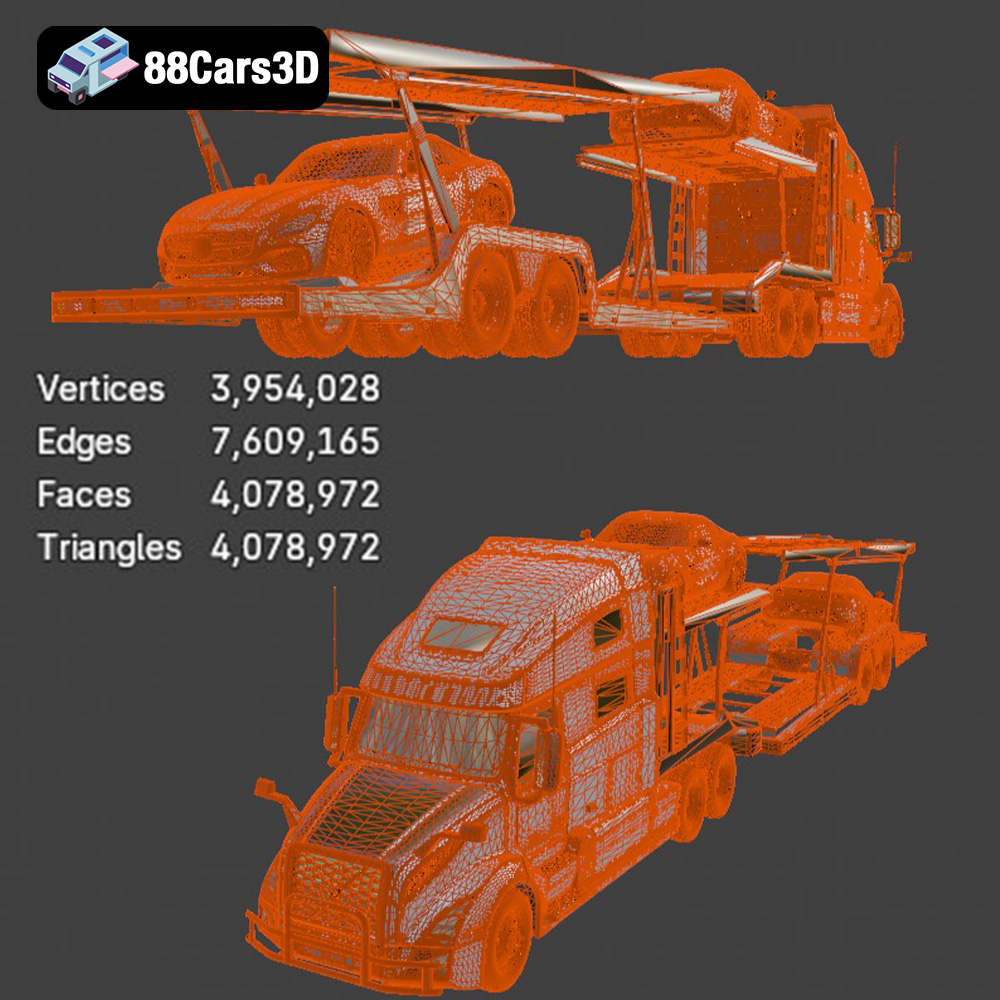
Unlike pre-rendered animations, game assets must be rendered hundreds of times per second. This necessitates rigorous optimization. A model described as having “clean geometry” and “without unnecessary polygon overhead” – like the Volvo Trucks Benz GT-001 – is inherently suitable. Developers implement Levels of Detail (LODs), creating multiple versions of the same model with varying poly counts. The game engine then swaps these models based on the player’s distance, ensuring maximum detail up close and efficient rendering from afar. Efficient UV mapping for textures and careful material setup are also paramount to minimize draw calls and optimize memory usage, directly impacting frame rates.
A well-modeled vehicle can profoundly enhance gameplay. The “fully modeled interior” of the Volvo Trucks Benz GT-001 is a game-changer for first-person driving simulations or games where players can enter and exit vehicles. It allows for immersive cockpit views, interactive dashboards, and a greater sense of presence. Accurate physics models, coupled with visually convincing vehicles, contribute to a more satisfying and believable driving experience, whether it’s a high-speed chase or a realistic trucking simulation.
The workflow for integrating a 3D car model into a game engine typically begins in a Digital Content Creation (DCC) tool like Blender or 3ds Max. After modeling and texturing, the asset is exported, usually as an .fbx file, and imported into Unreal Engine or Unity. Here, developers set up PBR materials, add collision meshes to define physical boundaries, create LODs, and potentially rig the vehicle for suspension, steering, and wheel rotations. For the Volvo Trucks Benz GT-001, the availability of a dedicated .unreal asset significantly streamlines this process, potentially providing a drag-and-drop solution that’s ready for immediate use, complete with pre-configured materials and collision setups, saving invaluable development time.
The utility of high-quality 3D car models extends far beyond traditional screens, enabling groundbreaking applications in augmented reality, virtual reality, and even physical manufacturing.
AR/VR environments demand lightweight yet visually rich models. The “optimized for AR/VR and web-based visualization” .glb format of the Volvo Trucks Benz GT-001 is perfectly suited for this. In AR, users can place a virtual GT-001 in their real-world environment, interacting with it as if it were physically present – walking around it, opening doors, or even changing its color. In VR, users can step inside the virtual truck, experiencing its interior and exterior in full 3D, providing an unparalleled sense of scale and immersion for training simulations, virtual showrooms, or concept evaluations. The clean geometry and efficient texturing are crucial for maintaining high frame rates and preventing motion sickness in these demanding applications.
While 3D printing often uses less visually complex models, accuracy is paramount. The .stl and .ply formats of the Volvo Trucks Benz GT-001 enable designers to create physical prototypes or scale models. This is invaluable for industrial design, allowing engineers to test ergonomics, visualize assembly processes, or conduct aerodynamic studies with tangible representations. A perfectly manifold (water-tight) mesh, free from errors, is a prerequisite for successful 3D printing – a quality inherent in professionally crafted models like those found on 88cars3d.com. This allows for rapid iteration of design concepts, bridging the gap between digital ideation and physical realization.
For manufacturers, 3D models like the GT-001 are central to design reviews and simulation. Engineers can load the detailed model into specialized software to perform stress analyses, visualize fluid dynamics, or simulate assembly line processes. The precision of the “detailed polygon mesh for analysis and visualization” provided by the .ply format ensures that these simulations are based on accurate geometric data, leading to more reliable insights and informed design decisions before any physical part is ever manufactured.
The journey from a conceptual idea to a final rendered image or interactive experience is complex and multifaceted. High-quality 3D car models play a pivotal role in streamlining this process.
Modern design and development teams are highly collaborative. A single 3D asset, like the Volvo Trucks Benz GT-001, might pass through the hands of multiple specialists: a modeler for geometry, a texture artist for materials, an animator for movement, and a lighting artist for presentation. The comprehensive suite of file formats (from editable .max and .blend files to exchange-friendly .fbx and .obj) facilitates this iterative process. Each team member can work in their preferred software, knowing that the core asset maintains its integrity and can be seamlessly shared, reducing bottlenecks and ensuring consistency across all project phases.
Starting with a high-quality base model like the Volvo Trucks Benz GT-001 significantly reduces production time and costs. Instead of building a complex truck from scratch, which could take weeks or months, artists can immediately focus on scene composition, customization, or specific animations. This “professional standard without unnecessary polygon overhead” means less time spent cleaning up geometry or optimizing meshes, allowing creative teams to dedicate resources to innovation and refinement. It accelerates the creative pipeline, making ambitious projects more achievable within tight deadlines.
Even with a premium pre-made model, customization is often key. A well-constructed 3D model allows for easy modification. For the Volvo Trucks Benz GT-001, artists can re-texture the paintwork, add company logos, modify interior components, or even integrate additional external equipment without compromising the model’s underlying structure. Its clean topology and organized UVs simplify this process, making it adaptable for various client demands or specific project requirements, ensuring that the asset remains versatile throughout its lifecycle.
Investing in professional-grade 3D car models is a strategic decision that pays dividends across the entire project lifecycle, enhancing both efficiency and aesthetic impact.
The most immediate benefit of using pre-made, high-quality 3D assets is the immense time and resource savings. Developing a detailed vehicle like the Volvo Trucks Benz GT-001 from scratch requires specialized skills in modeling, texturing, and optimization, along with hundreds of hours of labor. By leveraging ready-to-use models from platforms like 88cars3d.com, studios can reallocate those resources to other critical project areas, accelerating delivery schedules and reducing overall costs without compromising on visual fidelity.
The visual impact of a project directly correlates with the quality of its assets. A model with “exceptional digital realism,” “authentic proportions,” and “realistic materials” elevates the entire production. This is particularly crucial in client presentations, marketing campaigns, or high-stakes game releases where every visual detail contributes to the brand perception and user engagement. The Volvo Trucks Benz GT-001 ensures that your automotive visualizations stand out with stunning accuracy and aesthetic appeal, making a powerful statement.
High-quality 3D models are built with longevity in mind. Their clean geometry, robust material setups, and comprehensive file format support ensure they remain usable and adaptable for future technologies and evolving project needs. As AR/VR platforms mature, or as rendering engines introduce new features, well-structured assets will seamlessly integrate, providing a foundational investment that continues to yield returns. The versatility of the Volvo Trucks Benz GT-001 3D Model across various platforms and applications underscores its value as a future-proof asset in your digital toolkit.
The digital realm is constantly evolving, demanding an ever-increasing level of detail, realism, and efficiency from 3D assets. From cinematic rendering and immersive game worlds to industrial design reviews and cutting-edge AR/VR experiences, high-quality 3D car models are no longer a luxury but a fundamental necessity for professionals aiming for excellence.
The Volvo Trucks Benz GT-001 3D Model stands as a testament to this principle, offering a meticulously crafted asset that combines aesthetic realism with robust technical specifications. Its clean geometry, realistic materials, fully modeled interior, and comprehensive file format support (including .blend, .fbx, .obj, .glb, .stl, .ply, .unreal, and .max) ensure seamless integration into virtually any professional workflow. Whether you’re optimizing for real-time performance in a game engine, striving for photorealistic renders in 3ds Max or Blender, or preparing assets for AR/VR deployment and 3D printing, this model provides the precision and versatility required to elevate your projects.
By investing in such expertly crafted 3D models, artists and developers can significantly reduce production time, enhance visual fidelity, and ensure their creations are ready for the diverse demands of today’s digital landscape. Explore the possibilities and find your next essential 3D asset at 88cars3d.com, where quality meets innovation.
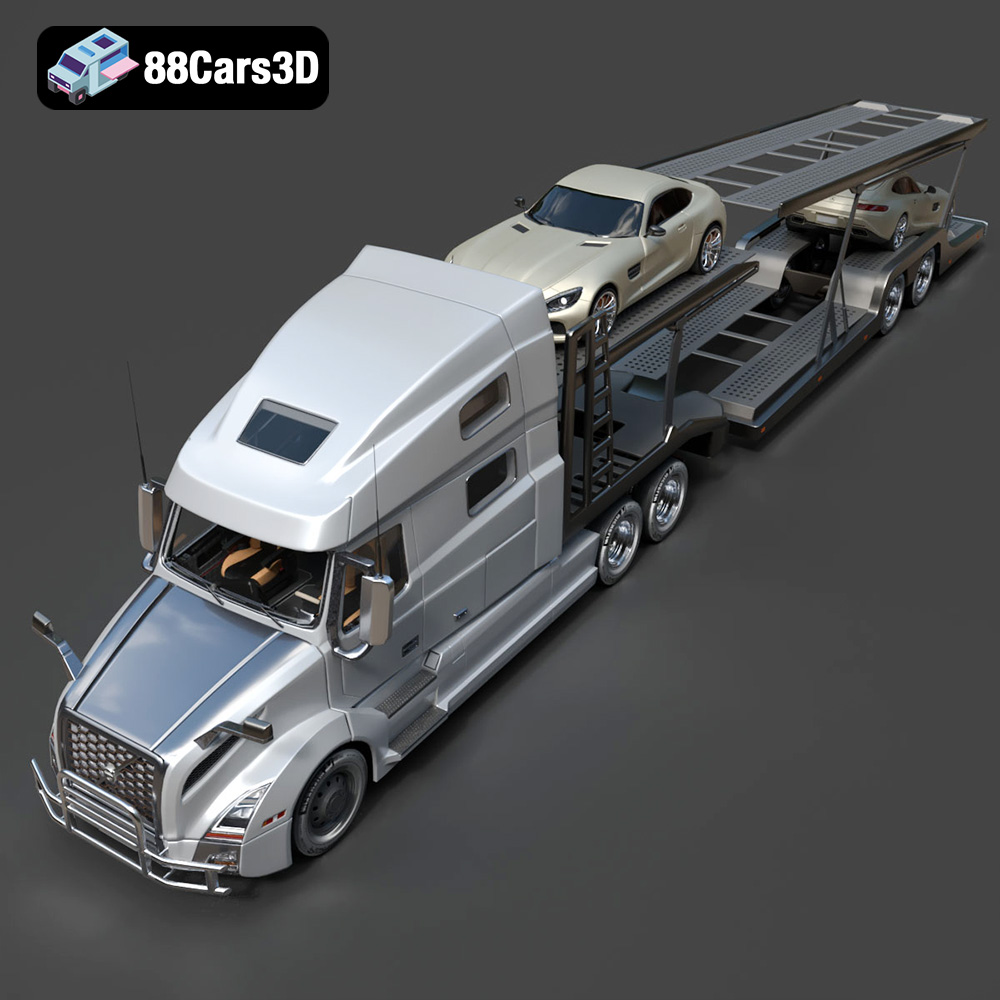
Discover exceptional digital realism with the Volvo Trucks Benz GT-001 3D Model, crafted for professionals seeking precision and accuracy in vehicle design. This model captures the robust presence and intricate aesthetic of the original vehicle, providing an incredible asset for your digital environment. Engineered with clean geometry, authentic proportions, and realistic materials, this model delivers a professional standard without unnecessary polygon overhead. Every detail is meticulously constructed to ensure optimal performance across various platforms. It perfectly highlights the modern design elements and functional features synonymous with premium truck concepts. Whether you are working on game development, creating cinematic rendering sequences, building interactive AR/VR experiences, or producing industrial visualizations, this versatile model provides the foundation you need. The inclusion of a fully modeled interior expands its utility for both external showcase shots and immersive first-person simulation setups. The package includes a comprehensive set of industry-standard file formats to guarantee seamless integration into any pipeline:
$29.99
.arvr
.benz
.blend
.car3dmodel
.commercialvehicle
.concepttruck
.fbx
.gameasset
.glb
.gt001
.max
.obj
.ply
.rendering
.simulation
.stl
.truck
.unreal
.volvo
.volvotrucks