Get 20% OFF All Premium 3D & STL Models!

In the dynamic world of digital creation, the quest for realism and efficiency drives innovation across industries from game development to architectural visualization and cinematic production. At the heart of this pursuit, particularly within the automotive sector, lies the critical role of high-fidelity 3D car models. These aren’t just decorative assets; they are foundational elements that can make or break the visual impact and technical performance of a project. They represent the meticulous fusion of art and engineering, translating intricate physical designs into robust digital representations.
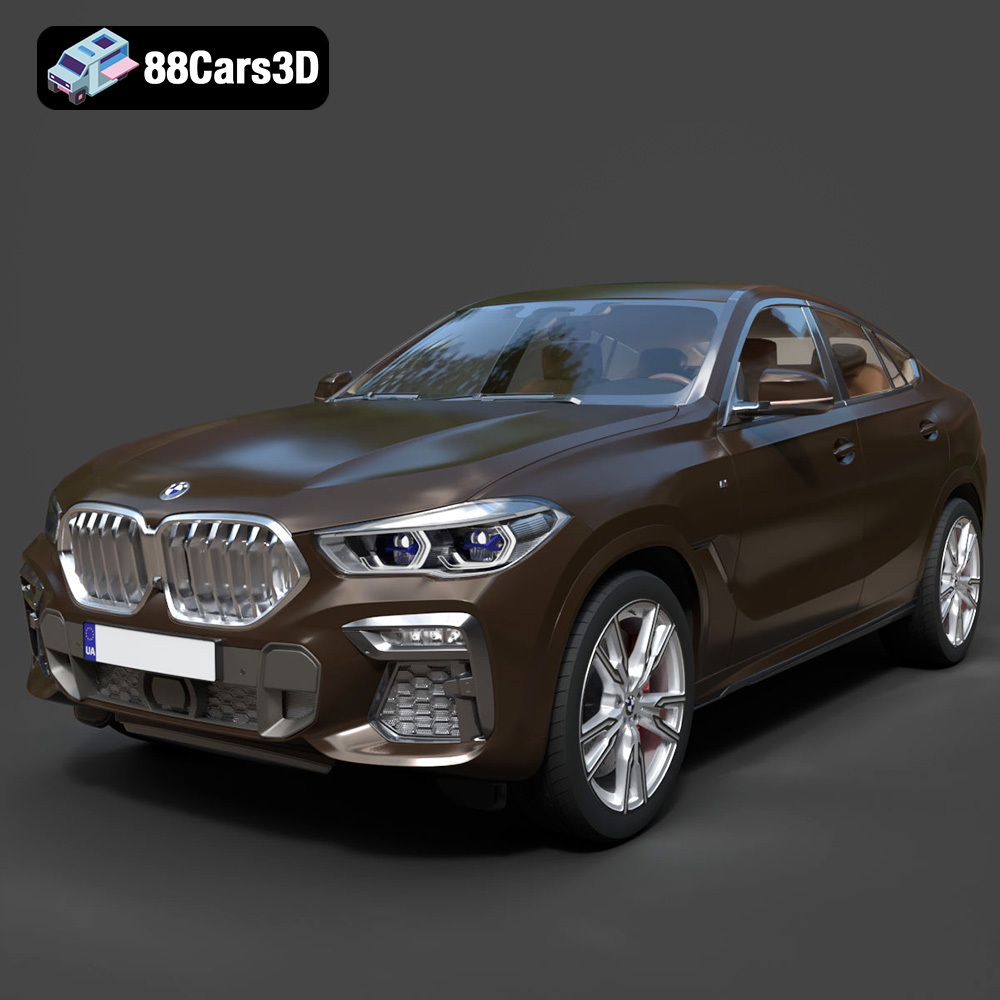
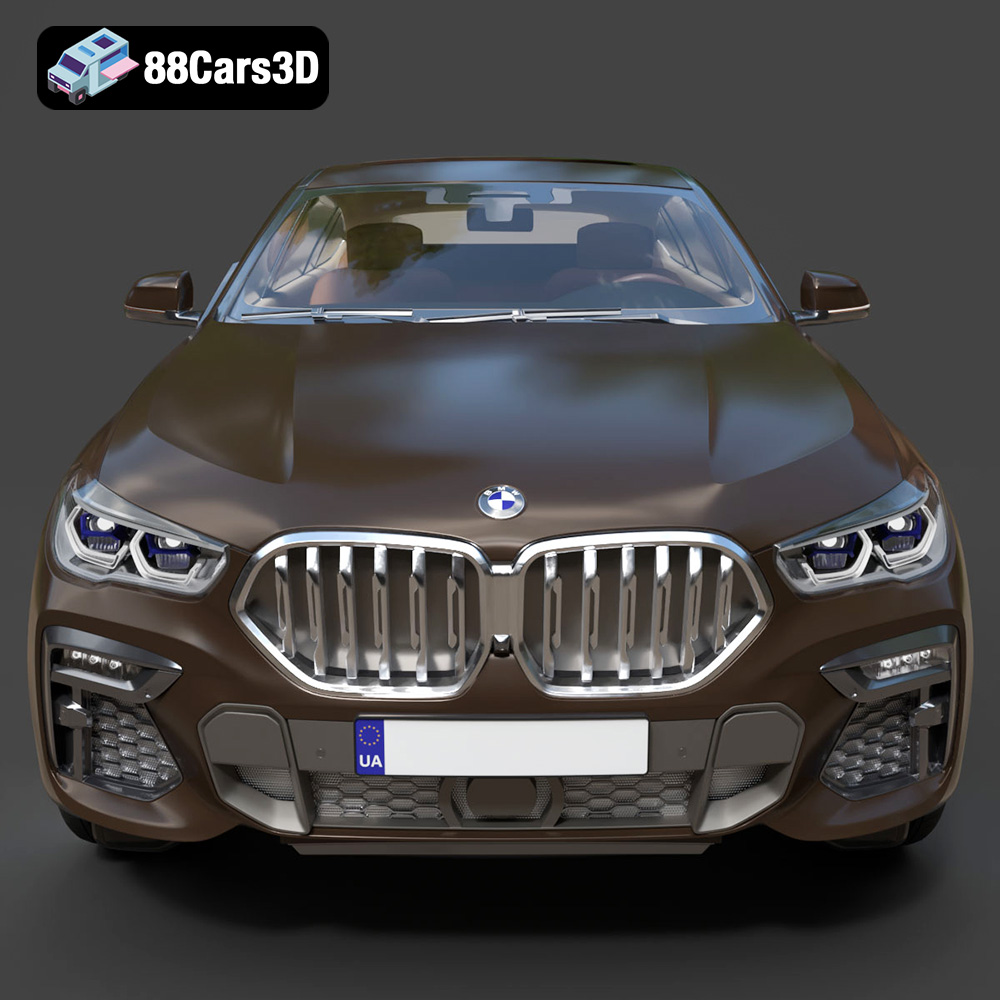
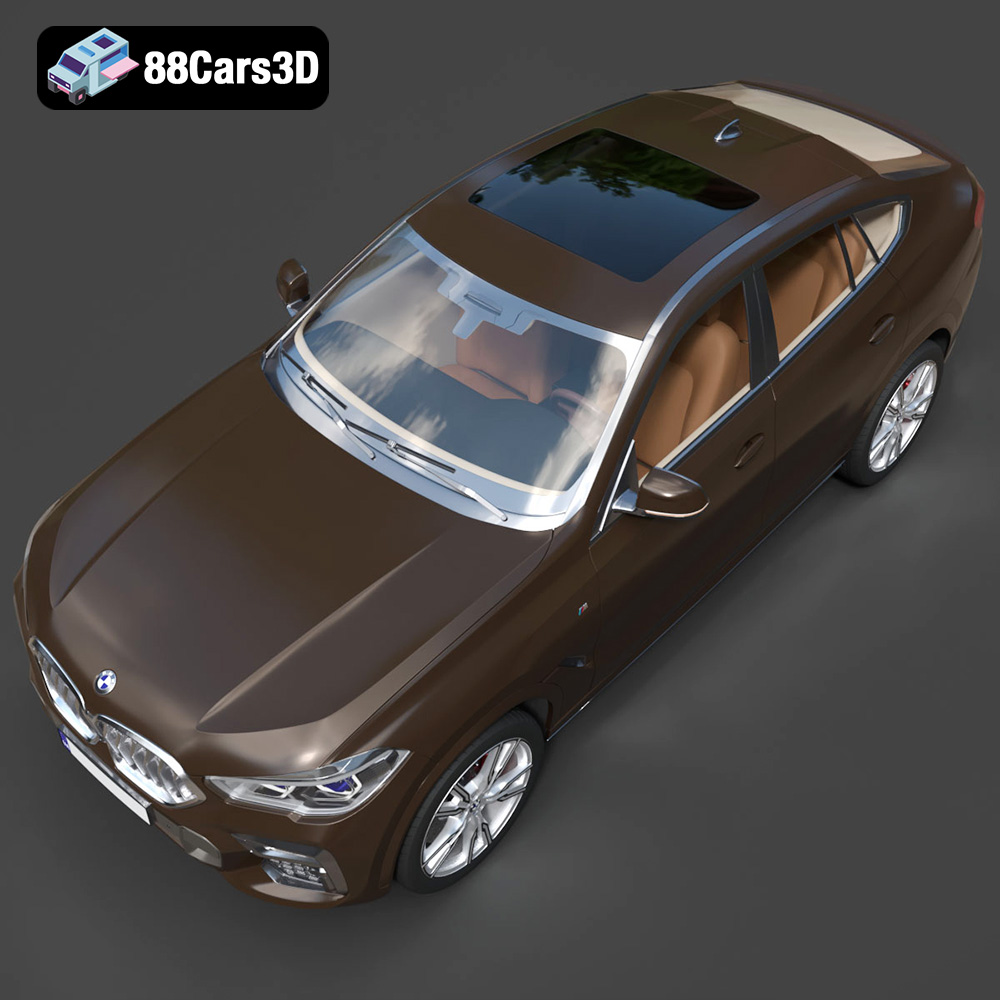
Imagine bringing the sleek lines and powerful stance of a luxury SUV to life, whether for an interactive game environment, a photorealistic advertisement, or a cutting-edge AR experience. This demands more than just a surface-level model; it requires an asset built with precision, optimized for performance, and versatile enough to adapt to diverse pipelines. This is precisely where models like the BMW X6 (Mk3) (G06) M Sport 2020 3D Model excel. It stands as a testament to what’s achievable when technical expertise meets artistic dedication, providing creators with an indispensable resource for their most demanding projects. Throughout this article, we’ll explore the technical nuances and creative potential unlocked by such professional-grade 3D car models, demonstrating their impact across the digital landscape.
The world of 3D modeling is rich with various file formats, each designed to serve specific purposes, workflows, and software ecosystems. Understanding these formats is crucial for any professional working with 3D assets, as selecting the correct one can significantly impact project efficiency, compatibility, and final output quality. The BMW X6 (Mk3) (G06) M Sport 2020 3D Model, for instance, offers a comprehensive suite of these formats, ensuring maximum versatility for any creative endeavor.
At one end of the spectrum, we have software-specific formats that encapsulate an entire scene’s data, offering maximum flexibility within their native environments.
For interchange between different software packages, real-time applications, or specific use cases like 3D printing, more generalized or optimized formats are preferred.
The availability of such a diverse array of formats for models like the BMW X6 on 88cars3d.com underscores the commitment to professional workflows, allowing users to select the exact file type needed for their specific project requirements.
Creating a truly compelling 3D car model, especially for a vehicle as iconic as the BMW X6 (Mk3) (G06) M Sport 2020, goes far beyond simply mimicking its shape. It involves a meticulous process of translating complex physical design into a digital form that maintains aesthetic integrity while also being technically robust. The description of this model highlights several key characteristics that define a professional-grade automotive asset.
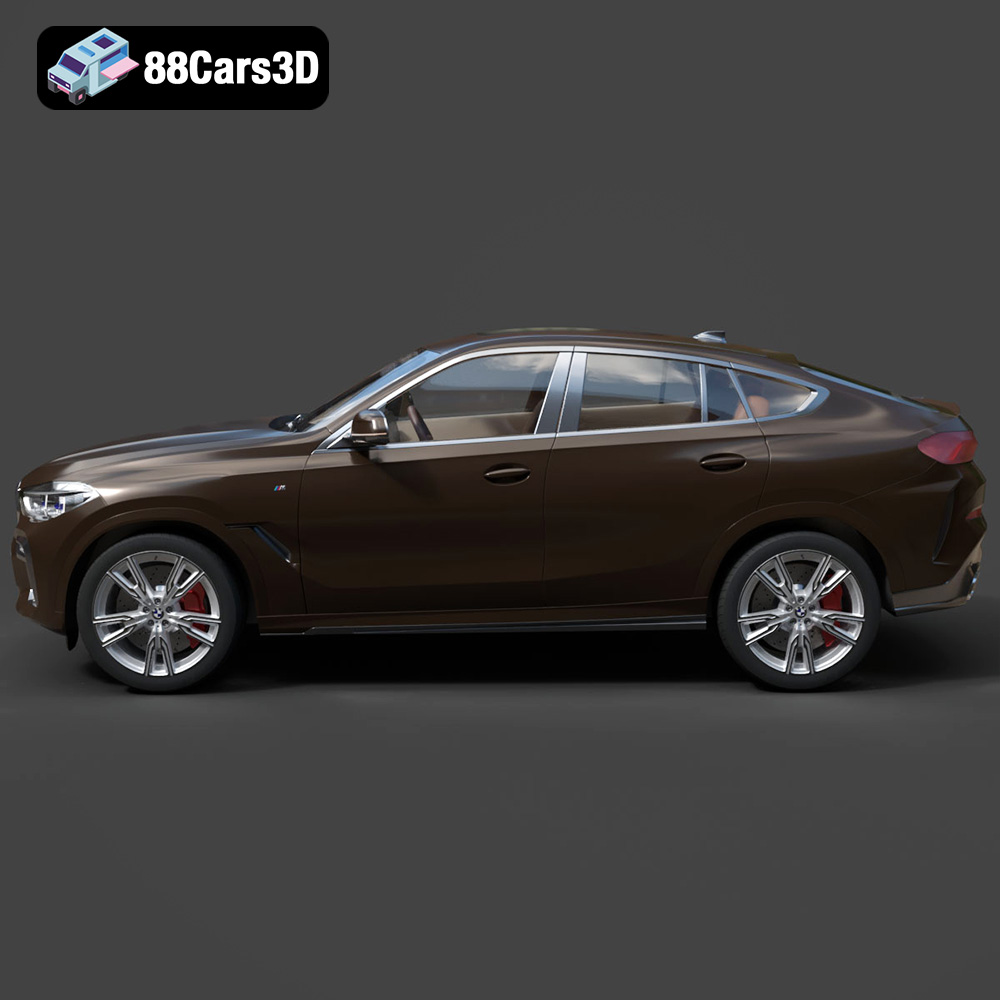
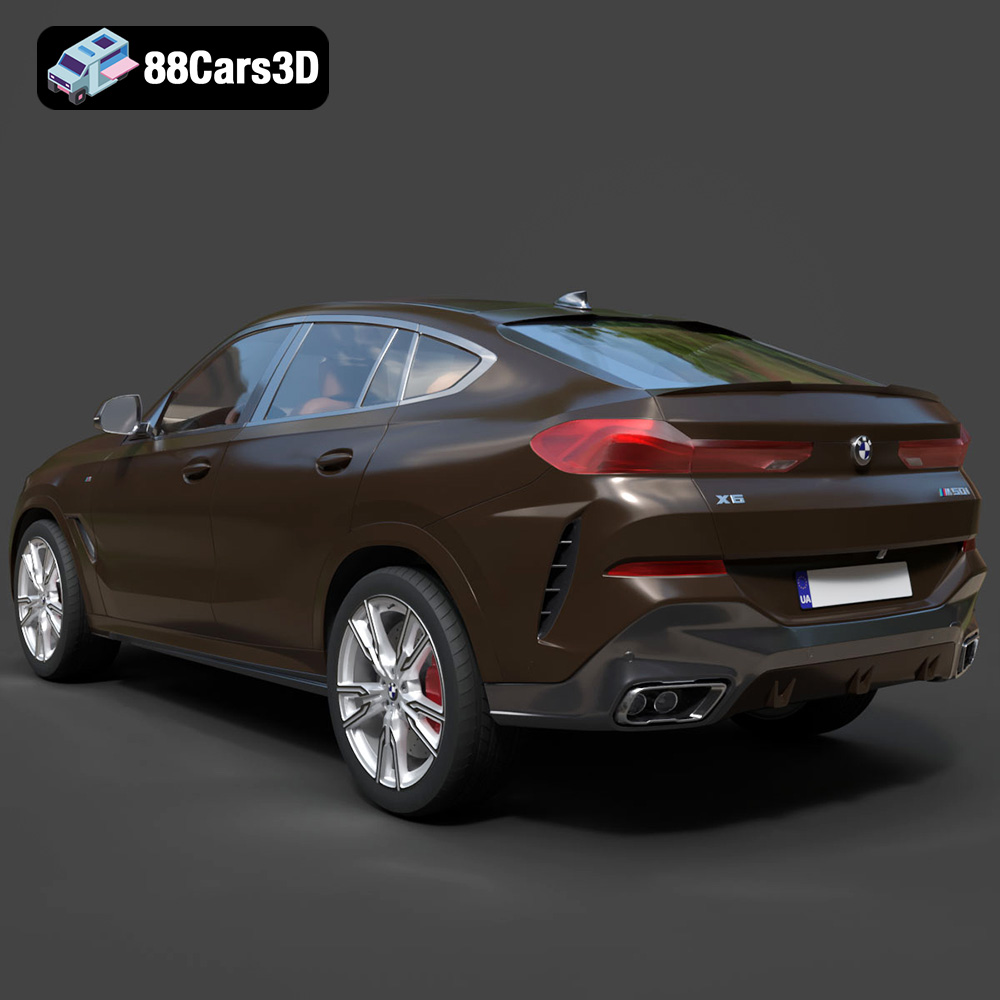
The “meticulously crafted digital asset” claim is validated by the emphasis on “distinct proportions, aggressive styling, and luxurious detailing.” This speaks to the accuracy of the model’s primary and secondary forms. Automotive design is incredibly sensitive to subtle curves, panel gaps, and body lines. An expertly made 3D car model captures these nuances, ensuring that the silhouette and surface reflections behave authentically. For instance, the M Sport package introduces specific aerodynamic elements and badging that must be replicated with photographic precision.
Beyond geometry, “realistic materials that seamlessly interact with diverse lighting scenarios” is a critical feature. Modern rendering relies heavily on Physically Based Rendering (PBR) workflows. This means materials are set up with real-world properties like albedo (base color), roughness, metallicness, normal maps (for subtle surface imperfections or panel lines), and potentially clear coat layers for automotive paint. When these materials are accurately calibrated, the model will look convincing under any lighting condition, from a sunny exterior shot to a dramatic studio render, accurately portraying the reflectivity of the paint, the sheen of the chrome, or the texture of the tires.
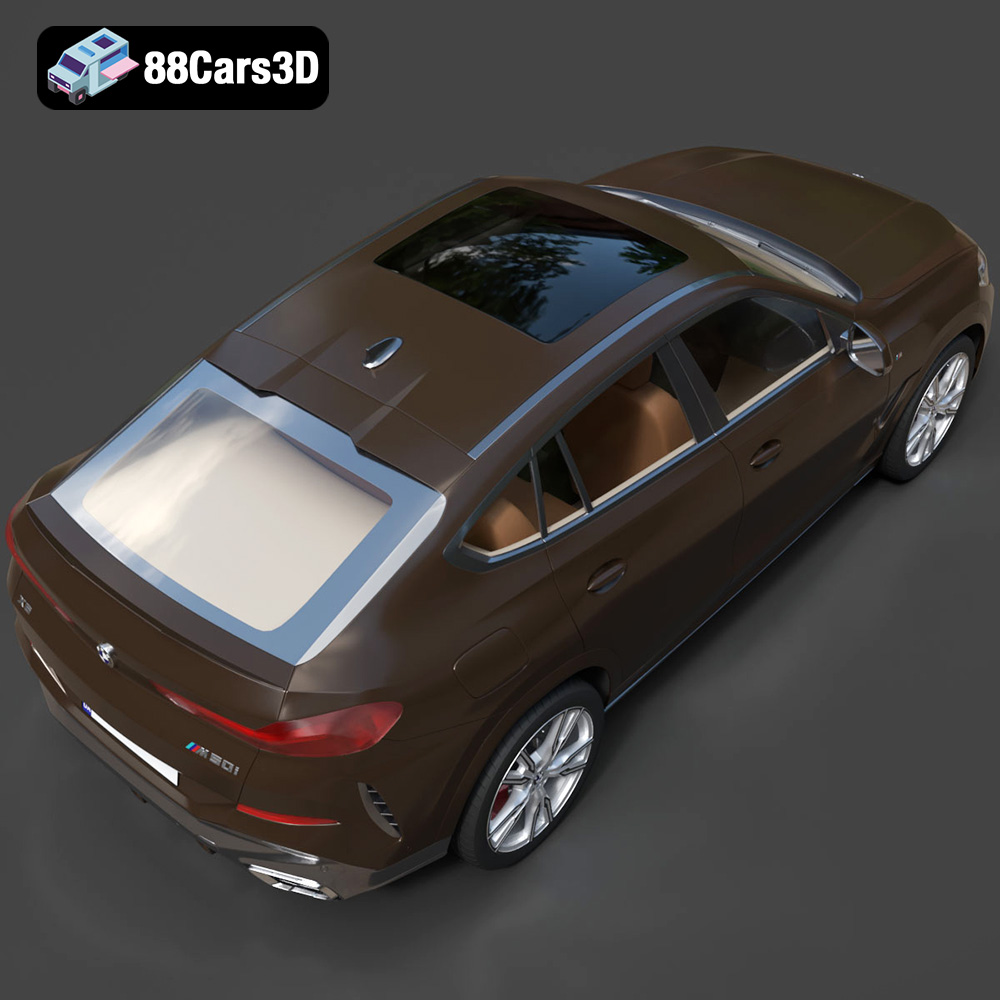
A truly comprehensive 3D car model doesn’t stop at the exterior. The product description mentions “fully detailed interior components,” which is a significant value proposition. For close-up renders, virtual tours, or interactive experiences, a well-modeled interior is indispensable. This means carefully sculpted dashboards, seats with realistic stitching, functioning steering wheel components, door panels, and accurate infotainment screens. The complexity of an automotive interior is immense, involving numerous small parts, diverse material types (leather, plastic, metal, carbon fiber), and intricate assembly. The “outstanding results, even in close-up renders” promise confirms that these details are not merely suggested but fully realized, with clean geometry and proper UV unwrapping for detailed texture application.
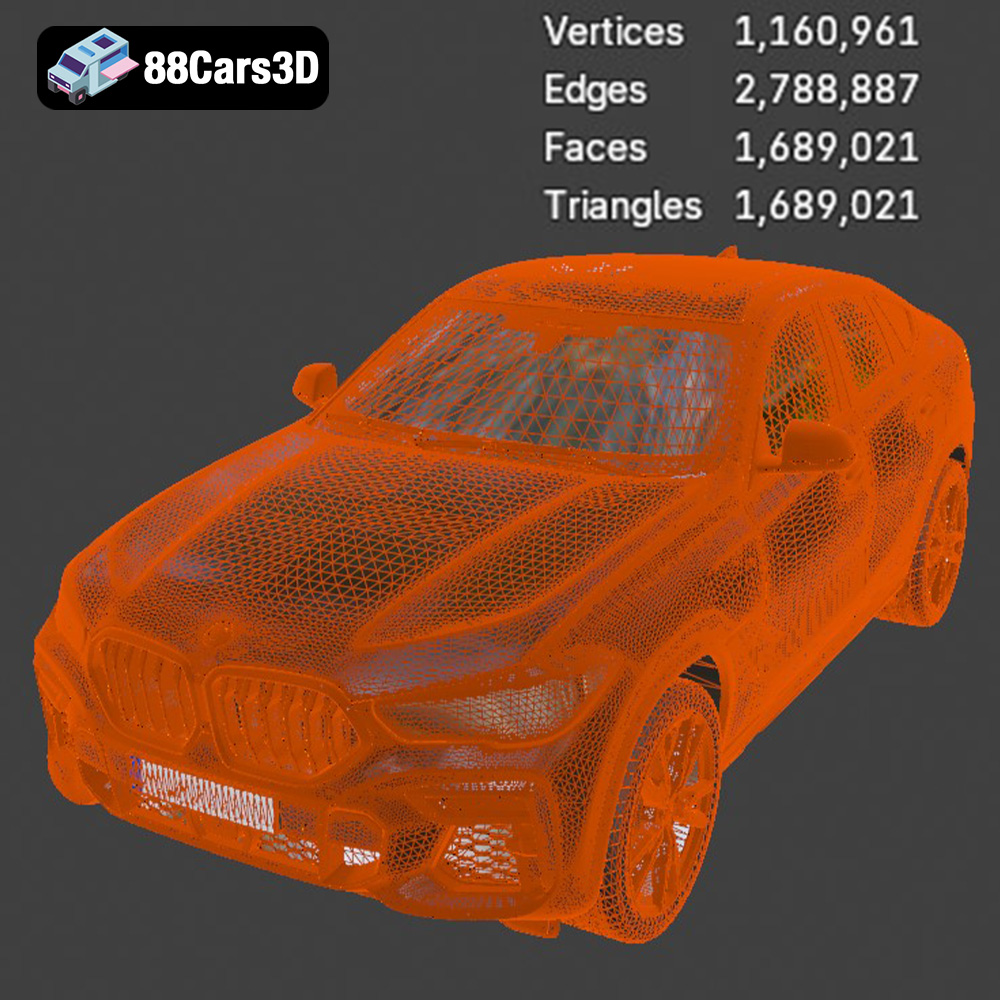
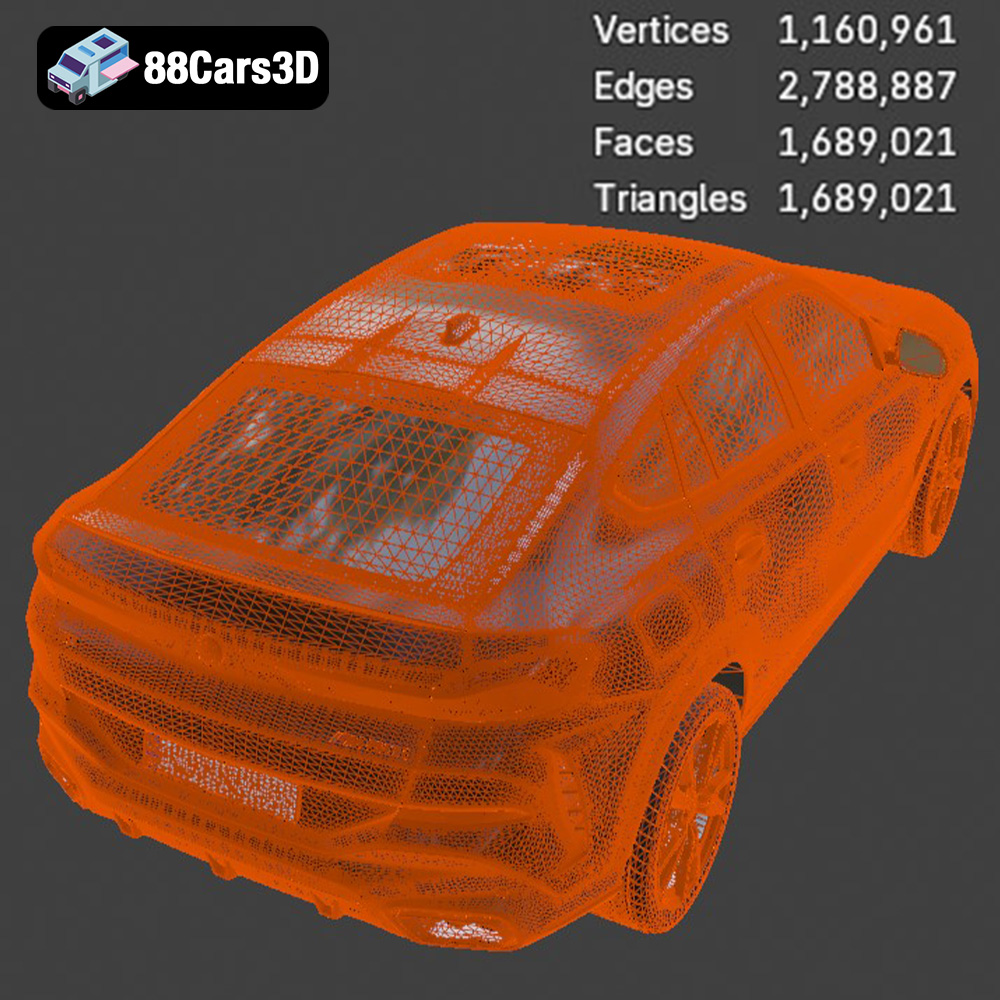
The phrase “exceptionally clean geometry” and “precise edge flow” points directly to the technical quality crucial for professional applications. Clean geometry means the model is built with efficient polygon counts, avoiding unnecessary subdivisions or Ngons (polygons with more than four sides) that can cause rendering artifacts or performance issues. Precise edge flow ensures that the mesh deforms predictably if animated (e.g., opening doors, steering) and that subdivision surfaces (used to smooth low-poly models for high-quality renders) produce smooth, natural curves without pinches or distortions. This attention to topology also facilitates efficient UV mapping.
UV layouts are the 2D representations of a 3D model’s surface, used for applying textures. A good 3D car model will have carefully unwrapped UVs that minimize stretching and allow for high-resolution texture application, ensuring that decals, labels, and material patterns appear crisp and accurate. This level of optimization ensures that the BMW X6 (Mk3) (G06) M Sport 2020 3D Model is not only visually stunning but also performant and easy to work with across various 3D software and real-time engines.
The true value of a high-quality 3D car model lies in its ability to seamlessly integrate into diverse professional pipelines, empowering artists and developers to achieve their creative visions with efficiency. The BMW X6 (Mk3) (G06) M Sport 2020 3D Model, with its multiple file formats and professional construction, is designed for this very purpose, making it a stellar offering from 88cars3d.com.
For automotive rendering, 3ds Max remains a cornerstone in many studios, especially for advertising, product visualization, and cinematic sequences. When working with the .max file of the BMW X6, artists have immediate access to the full scene setup. This means:
Refined Lighting and Shading: The pre-configured materials within the .max file provide an excellent starting point for advanced rendering engines like V-Ray, Corona, or Arnold. Artists can fine-tune paint reflectivity, glass refraction, and interior fabric textures to match specific brand guidelines or artistic directions. Complex studio lighting setups, HDRI environments, or custom light sources can be effortlessly applied to highlight the BMW X6’s aggressive M Sport styling, creating breathtaking photorealistic images or animations. The clean geometry ensures smooth subdivisions for high-resolution renders, free from artifacts.
Animation and Staging: The fully editable nature of the .max file allows for intricate animation of the car itself (e.g., driving sequences, tire rotations, suspension compression) and its interaction with a surrounding scene. Architects can place the BMW X6 into an urban architectural visualization, animating it to drive through a street to demonstrate scale and context, enhancing the realism of their proposals. The precise edge flow is critical here, ensuring natural deformations during animation.
Game engines like Unreal Engine demand highly optimized assets for real-time performance. The .fbx and especially the “.unreal” pre-configured file for the BMW X6 model are invaluable here.
Seamless Integration and Optimization: Using the .fbx, developers can import the model, ensuring proper scale and pivot points. Unreal Engine’s advanced material editor allows for PBR materials to be set up, accurately replicating the car’s surfaces for in-game lighting. The pre-configured “.unreal” asset takes this a step further, providing an asset that’s often already optimized with appropriate LODs (Levels of Detail) to manage performance based on distance, collision meshes for realistic physics interaction, and properly scaled components ready for immediate use in blueprints and interactive sequences. This significantly reduces development time and ensures the car performs efficiently within the game environment.
Interactive Experiences and Customization: In racing games, car configurators, or virtual showrooms, the BMW X6 model can be integrated into interactive systems. Players or users can change paint colors, wheel options, or interior trims in real-time. The clean geometry and well-defined materials allow for this level of customization without compromising visual quality, providing an immersive and engaging user experience.
Blender’s rise as a professional tool has made the .blend file format increasingly important for independent artists and smaller studios.
Flexible Creation and Rendering: The .blend file provides a complete project file, allowing artists to leverage Blender’s Cycles or Eevee render engines. Independent artists can use the BMW X6 model for personal projects, short films, or freelance client work, benefiting from Blender’s powerful modeling, sculpting, and animation toolsets. Its open-source nature makes it accessible to a wide audience, while the quality of models like the X6 ensures professional results.
Architectural Visualization and Context: For architectural visualization, placing a highly realistic 3D car model like the BMW X6 in front of a building render adds immediate context, scale, and a sense of luxury. Blender artists can quickly drop the .blend file into their scene, adjust lighting, and render stunning exterior shots that ground their architectural designs in a believable world, enhancing client presentations significantly.
While photorealistic rendering is a primary application, the utility of a meticulously crafted 3D car model extends far beyond static images or cinematic animations. The BMW X6 (Mk3) (G06) M Sport 2020 3D Model is engineered for versatility, making it a robust asset across a spectrum of cutting-edge digital and even physical applications.
Augmented Reality (AR) and Virtual Reality (VR) represent new frontiers for immersive experiences, and high-quality 3D car models are central to their success.
Interactive Product Showcases: Imagine a customer using an AR app on their phone to place the BMW X6 (G06) M Sport 2020 3D Model directly in their driveway, rotating it, changing colors, and even peeking inside, all before stepping into a dealership. The .glb format, optimized for web and mobile performance, is perfectly suited for such applications. Its efficient, self-contained nature ensures quick loading and smooth interaction, crucial for AR experiences where computational resources might be limited. The detailed interior, as mentioned in the product description, becomes a key feature here, allowing for virtual walkthroughs and detailed exploration of the luxury cabin.
Virtual Showrooms and Training: In VR, the BMW X6 model can form the centerpiece of a virtual showroom, allowing potential buyers to explore the vehicle in a fully immersive 3D environment, examine every detail, and even simulate driving positions. For training purposes, automotive technicians could use a VR simulation to familiarize themselves with the car’s components and assembly, offering a safe and cost-effective learning platform.
Precision and accuracy are paramount in simulation, whether for engineering analysis, autonomous vehicle development, or driver training.
Physics-Based Simulations: The clean geometry and precise proportions of the BMW X6 model make it an excellent candidate for integration into physics engines. Engineers can use it to simulate aerodynamics, crash testing (though typically with highly simplified models for performance), or vehicle dynamics, informing design decisions without the need for expensive physical prototypes. The .ply format, with its ability to store detailed polygon mesh data, could be particularly useful for certain types of analytical simulations or precise surface measurements.
Driver Training and Autonomous Systems: For advanced driver-assistance systems (ADAS) or autonomous vehicle development, realistic 3D environments require accurate vehicle models. The BMW X6 can populate virtual traffic scenarios, allowing AI systems to learn to recognize and react to specific car types. In professional driving simulators, the model provides the visual fidelity necessary to make training exercises feel realistic, preparing drivers for real-world situations. The “game-engine ready” formats ensure it performs optimally in these demanding real-time simulation environments.
While a digital asset, the BMW X6 model also offers a tangible bridge to the physical world through 3D printing.
Concept Prototyping and Scale Models: The .stl file format, specifically included for 3D printing, allows designers and enthusiasts to bring the digital BMW X6 model into physical existence. This can range from small-scale collectible models to larger prototypes used for concept validation or presentation. The “meticulously crafted” geometry directly translates into a more accurate and higher-quality physical print, capturing the original design’s essence and details.
Educational Tools: Educators can use 3D printed models of the BMW X6 to teach principles of automotive design, engineering, or aerodynamics, providing students with a physical object to analyze and study alongside digital representations. This blend of digital and physical learning enhances comprehension and engagement.
The comprehensive format support, especially for AR/VR (.glb), simulation (.fbx, .unreal), and 3D printing (.stl), underscores the BMW X6 (Mk3) (G06) M Sport 2020 3D Model’s adaptability. It is truly a versatile asset designed to meet the diverse and evolving needs of modern digital creation across multiple industries.
In the highly competitive and visually driven landscape of digital media, the quality of your assets is paramount. From breathtaking automotive rendering for advertising campaigns to immersive game environments and cutting-edge AR/VR experiences, the foundational element of success often lies in the fidelity and technical robustness of your 3D car models. As we’ve explored, models built with “exceptionally clean geometry,” “precise edge flow,” and “realistic materials” are not merely aesthetically pleasing; they are crucial enablers of efficient workflows and superior final products.
The BMW X6 (Mk3) (G06) M Sport 2020 3D Model exemplifies this professional standard. Its detailed exterior and interior, combined with optimized construction and a comprehensive suite of file formats (from .blend and .max for native software excellence, to .fbx and .unreal for game engines, .glb for AR/VR, and .stl for 3D printing), ensure it seamlessly integrates into virtually any professional pipeline. This versatility saves valuable development time, reduces technical hurdles, and ultimately allows creators to focus on their artistic vision, confident in the quality of their foundational assets.
Whether you’re an automotive designer visualizing a new concept, a game developer crafting the next AAA racing title, an architect placing realistic context in a scene, or an AR/VR innovator building immersive experiences, investing in premium 3D car models like the BMW X6 from 88cars3d.com is an investment in unparalleled realism and efficiency. It’s about leveraging the power of precision to bring your digital worlds to life with breathtaking detail and performance, setting a new benchmark for your creative endeavors.
Experience unparalleled realism with the BMW X6 (Mk3) (G06) M Sport 2020 3D Model. This meticulously crafted digital asset accurately replicates the distinct proportions, aggressive styling, and luxurious detailing of the renowned sports activity coupe. Engineered with precision, this model provides an exceptional level of accuracy, making it an indispensable resource for creators seeking top-tier automotive models.Key features include exceptionally clean geometry, precise edge flow, and realistic materials that seamlessly interact with diverse lighting scenarios. The accurately modeled exterior and fully detailed interior components guarantee outstanding results, even in close-up renders. Optimized for seamless integration into various pipelines, this model sets a professional standard for 3D vehicle assets.This versatile 3D model is ideal for a broad spectrum of applications, including advanced visualization, game development, realistic rendering, and simulation projects. Whether deployed in augmented and virtual reality (AR/VR) environments or used for cinematic productions and architectural visualizations, it delivers consistent, professional-grade performance.The package includes a comprehensive selection of industry-standard file formats to accommodate any workflow:
$39.99
.arvr
.blend
.bmw
.car3dmodel
.fbx
.g06
.gameasset
.glb
.luxurycar
.max
.mk3
.msport
.obj
.ply
.rendering
.simulation
.sportSUV
.stl
.unreal
.x6
SUV