Get 20% OFF All Premium 3D & STL Models!

In the dynamic world of digital content creation, from cinematic masterpieces to immersive interactive experiences, the foundational element remains the quality of 3D assets. Professionals across industries – game developers, architectural visualizers, product designers, and military simulation specialists – consistently seek models that offer both breathtaking realism and technical efficiency. Crafting these assets from scratch is a time-consuming endeavor, often requiring hundreds of hours of expert artist time. This is where pre-built, production-ready 3D models become invaluable, acting as accelerators for complex projects and ensuring a consistent standard of excellence.
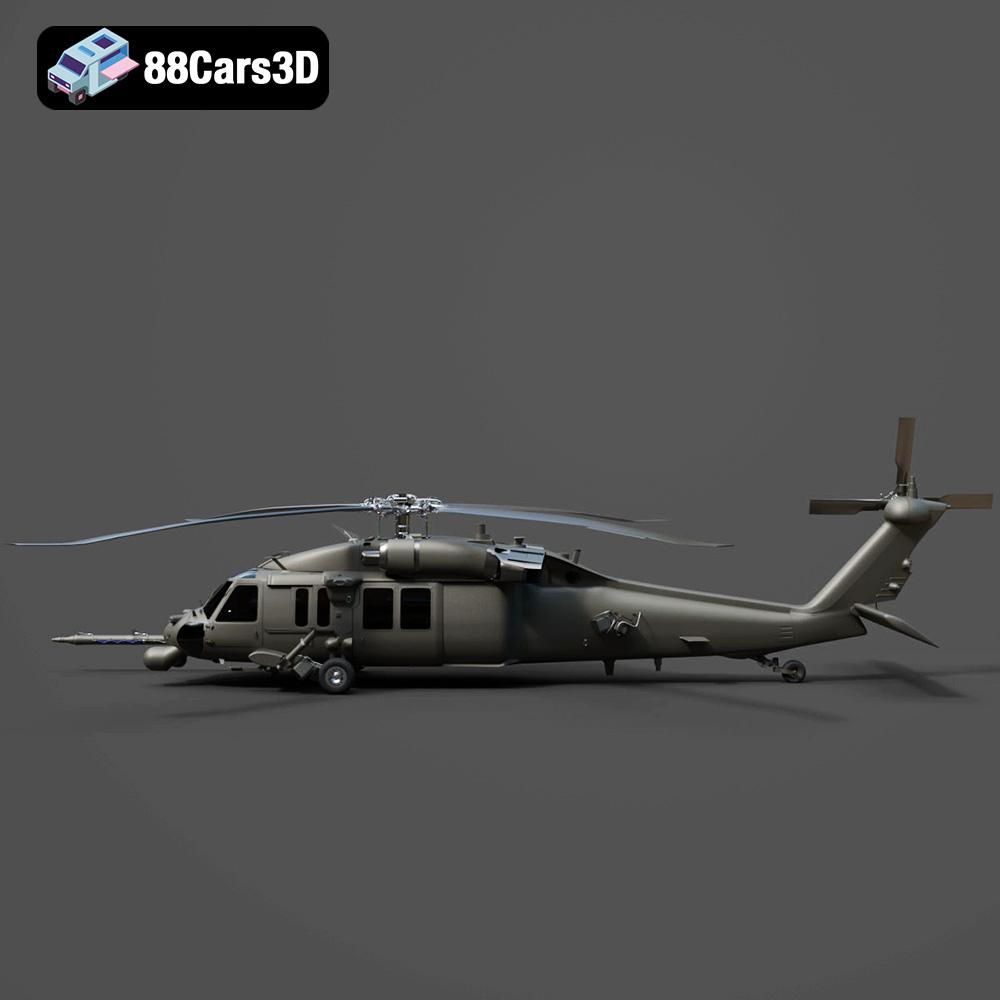
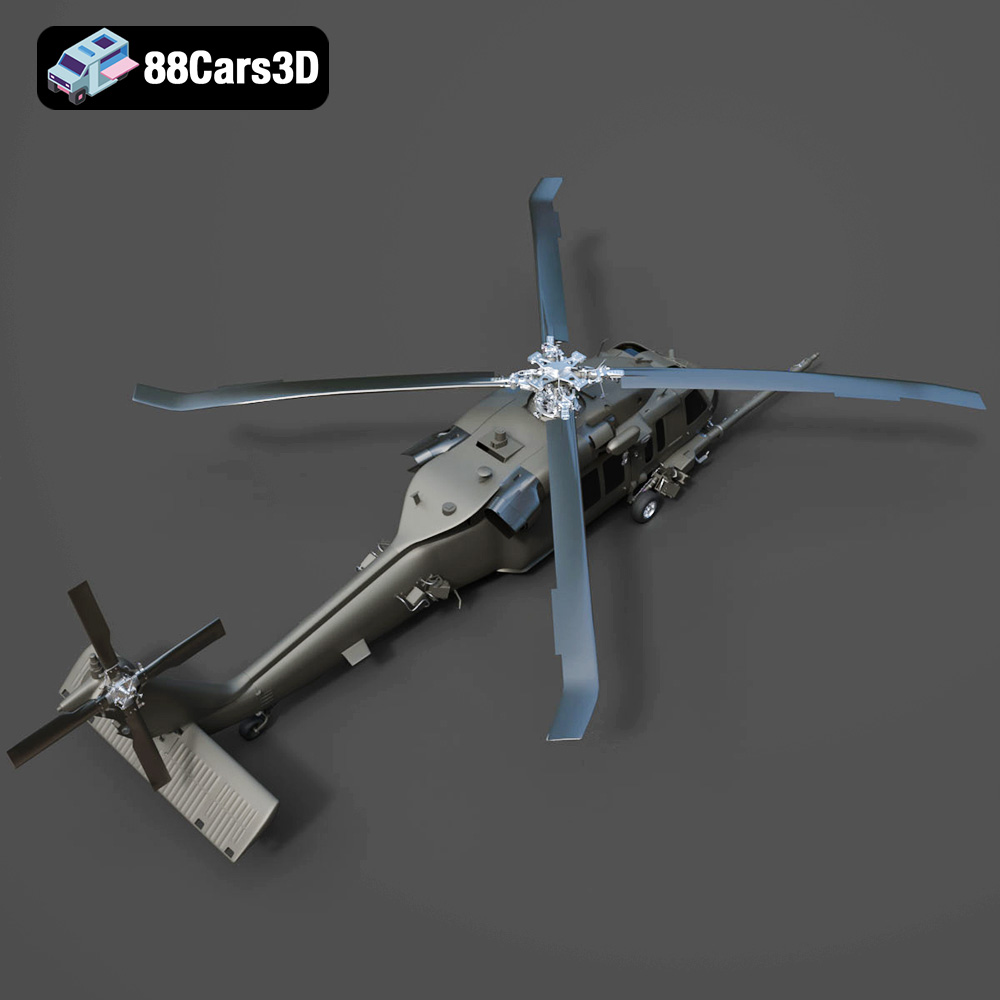
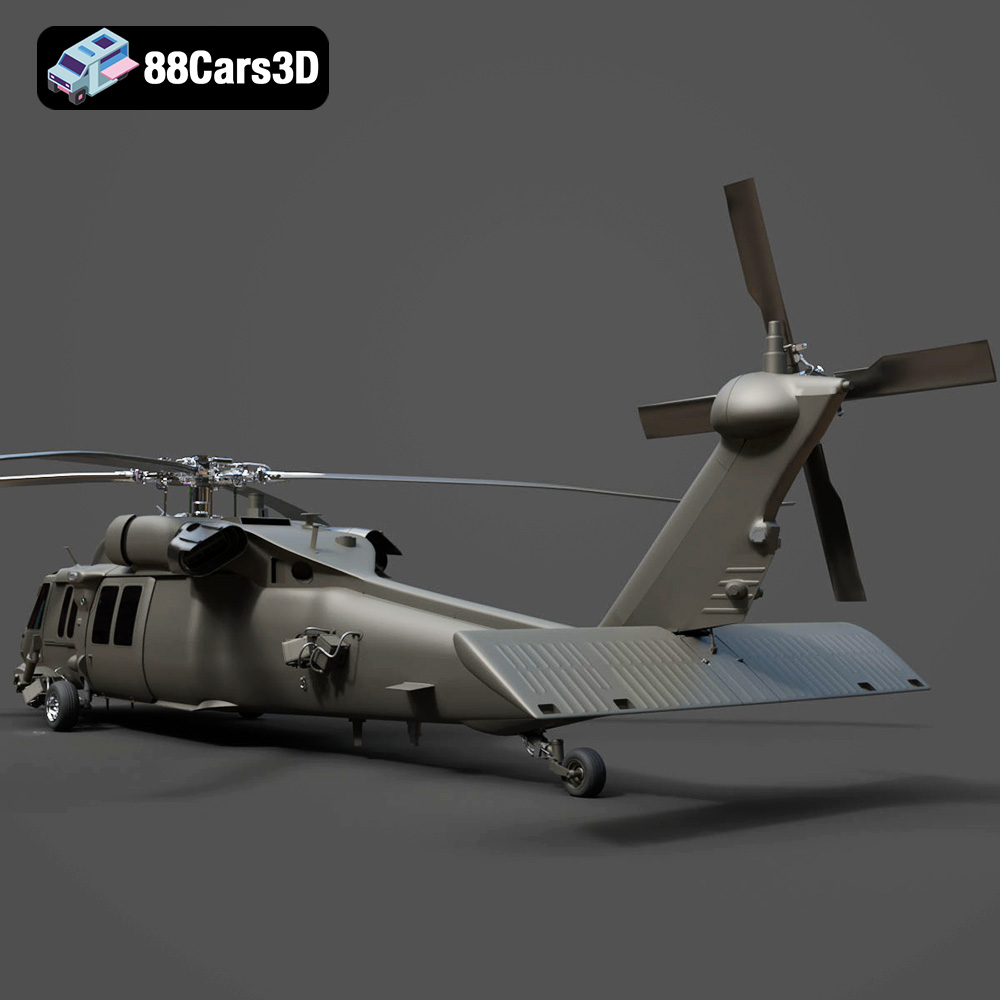
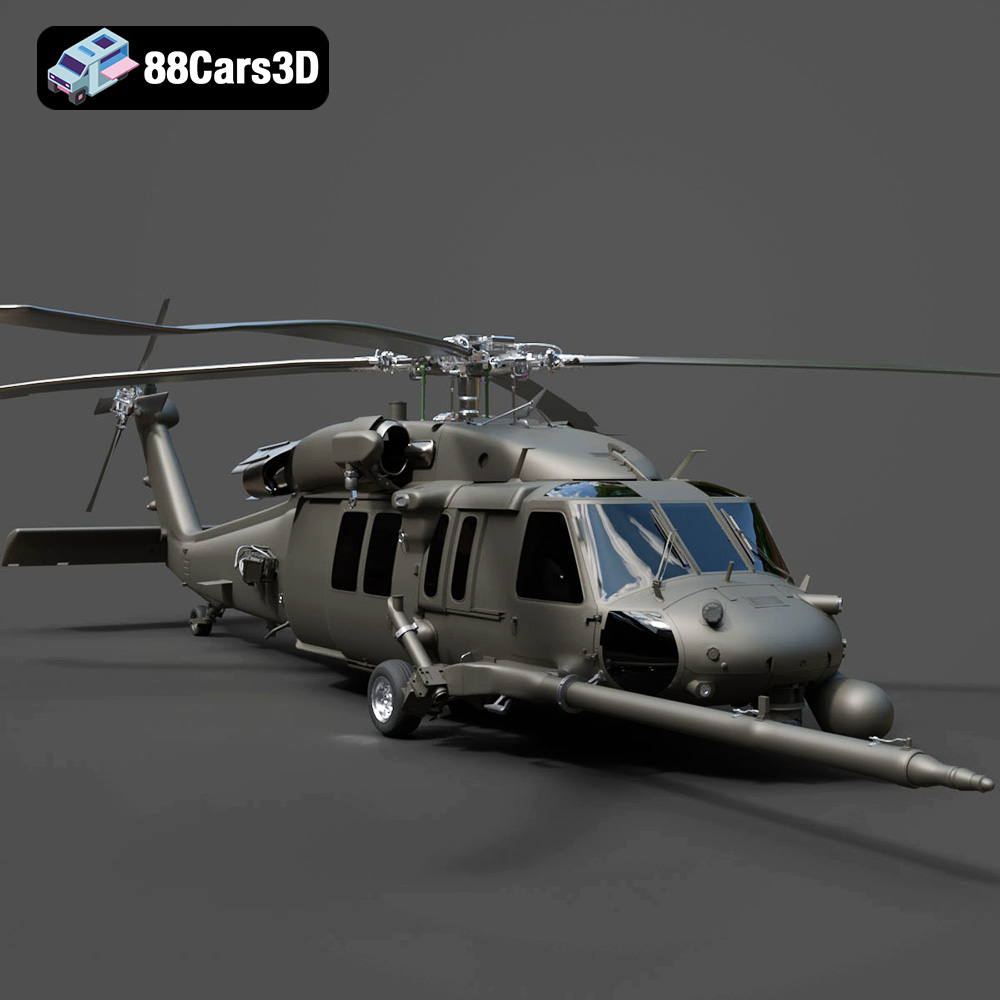
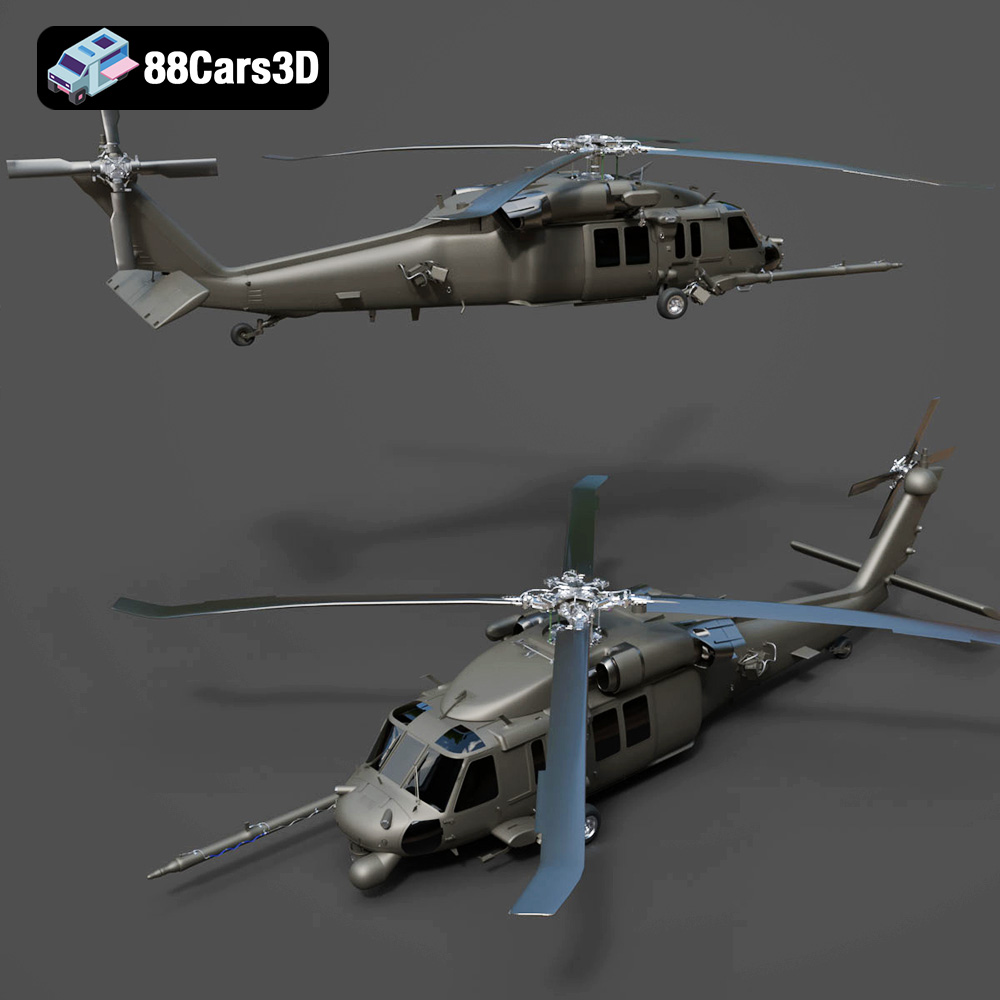
A prime example of such a critical asset is the Helicopter UH-40 3D Model. This meticulously crafted asset isn’t just a collection of polygons; it’s a robust solution designed to integrate seamlessly into diverse professional pipelines. With its precise structural accuracy, fully modeled interior, and optimized topology, it exemplifies the kind of asset that empowers creators to focus on their artistic vision and project goals, rather than getting bogged down in the intricacies of model construction. Whether destined for a high-resolution render, a real-time game environment, or an augmented reality training scenario, the UH-40 model delivers the versatility and quality demanded by today’s leading professionals.
The selection of the correct file format is a critical technical decision that dictates a 3D model’s compatibility, features, and performance within various software environments and pipelines. A comprehensive asset, like the Helicopter UH-40 3D Model available at 88cars3d.com, provides a suite of formats, ensuring its utility across the spectrum of professional applications.
The Helicopter UH-40 3D Model in .blend format offers a fully editable Blender scene. This is a game-changer for artists deeply integrated into the Blender ecosystem. It typically includes the complete scene setup, object hierarchies, materials (often PBR-ready with Cycles/Eevee nodes), textures, and even lighting configurations. For the UH-40, this means direct access to modify geometry, rig the rotors, animate doors, adjust materials, or re-texture elements without complex import/export issues. It’s ideal for artists who want maximum flexibility and control for custom renders, animations, or integration into existing Blender projects.
FBX (Filmbox) is a proprietary file format owned by Autodesk, widely adopted as an interchange format between 3D software and, crucially, game engines like Unreal Engine and Unity. When the UH-40 is provided as .fbx, it’s stripped down to essential data like mesh geometry, UVs, basic materials (often just texture references), skeletal animations (if present), and sometimes blend shapes. Its strength lies in its ability to efficiently transfer complex scenes with animation data. For game developers, the .fbx version of the UH-40 is almost always the preferred starting point for importing into their engine, offering robust support for instancing and LODs (Levels of Detail).
OBJ (Wavefront Object) is one of the oldest and most universally supported 3D file formats. It’s a simple, text-based format that primarily stores geometry (vertices, normals, UVs) and material references (via an accompanying .mtl file). While it doesn’t support advanced features like animation or scene hierarchy, its widespread compatibility makes it a safe bet for ensuring a model, like the Helicopter UH-40, can be opened and worked with in virtually any 3D software, from Maya to Cinema 4D to Substance Painter. It’s an excellent choice for straightforward mesh transfer and texturing workflows.
GLB (GL Transmission Format Binary) is a modern, open-standard format designed for efficient transmission and loading of 3D scenes and models, particularly in web-based applications, AR (Augmented Reality), and VR (Virtual Reality) environments. A .glb version of the UH-40 model would typically embed all textures and materials directly within the single file, making it incredibly easy to share and display across platforms. Its optimization for real-time rendering and small file size makes it perfect for AR/VR applications where performance and rapid loading are paramount.
STL (STereoLithography) is the de facto standard file format for 3D printing and rapid prototyping. It represents a 3D model as a series of connected triangles, describing only the surface geometry without color, texture, or material information. While not suitable for rendering or animation, the .stl version of the UH-40 is essential for engineers and hobbyists looking to physically manifest the digital model. It requires careful preparation to ensure the mesh is watertight and manifold for successful printing.
PLY (Polygon File Format) is another format for storing 3D data, often used in scientific and engineering applications, particularly for scanned data. It can store a wider range of data than STL, including color, transparency, and different data types associated with vertices and faces. For the UH-40, a .ply version could be valuable for detailed mesh analysis, reverse engineering, or integration into CAD software where precise surface data is critical.
The inclusion of a dedicated .unreal file or a pre-configured asset package specifically for Unreal Engine signifies a high level of optimization and preparation. This isn’t a standard generic file format but rather an asset package tailored for Unreal’s content pipeline. It implies that the Helicopter UH-40 3D Model has likely undergone specific material setup (e.g., Unreal’s PBR shader system), collision mesh generation, LODs, and potentially even blueprinting for interactive elements. This significantly accelerates integration for Unreal Engine developers, saving countless hours of manual setup and optimization.
The .max file is the native scene format for Autodesk 3ds Max. Similar to the .blend file for Blender, it contains the full 3ds Max scene, including geometry, modifiers, materials, textures, lighting, cameras, and animation data. For professionals using 3ds Max for architectural visualization, product rendering, or animation, the .max version of the UH-40 provides maximum editability and fidelity. Artists can leverage 3ds Max’s powerful rendering engines (like V-Ray or Corona) and animation tools directly with the native model, making it an ideal starting point for high-end cinematic production.
Achieving truly convincing digital realism, especially for complex machinery like an aircraft, requires a deep understanding of both artistic principles and technical precision. A high-fidelity model, such as the Helicopter UH-40 3D Model, is the culmination of meticulous effort.
The foundation of any realistic model is accuracy. For the UH-40, this means an unwavering commitment to replicating the real-world counterpart. This involves extensive research, utilizing blueprints, photographic references, and technical drawings to capture every rivet, panel line, and intricate component. From the precise curvature of the fuselage to the complex mechanics of the main and tail rotors, structural integrity is paramount. This level of detail ensures that whether the model is viewed from a distance or in a macro close-up, it maintains its authentic appearance. A fully modeled interior further elevates this, allowing for immersive first-person experiences or detailed internal renders.
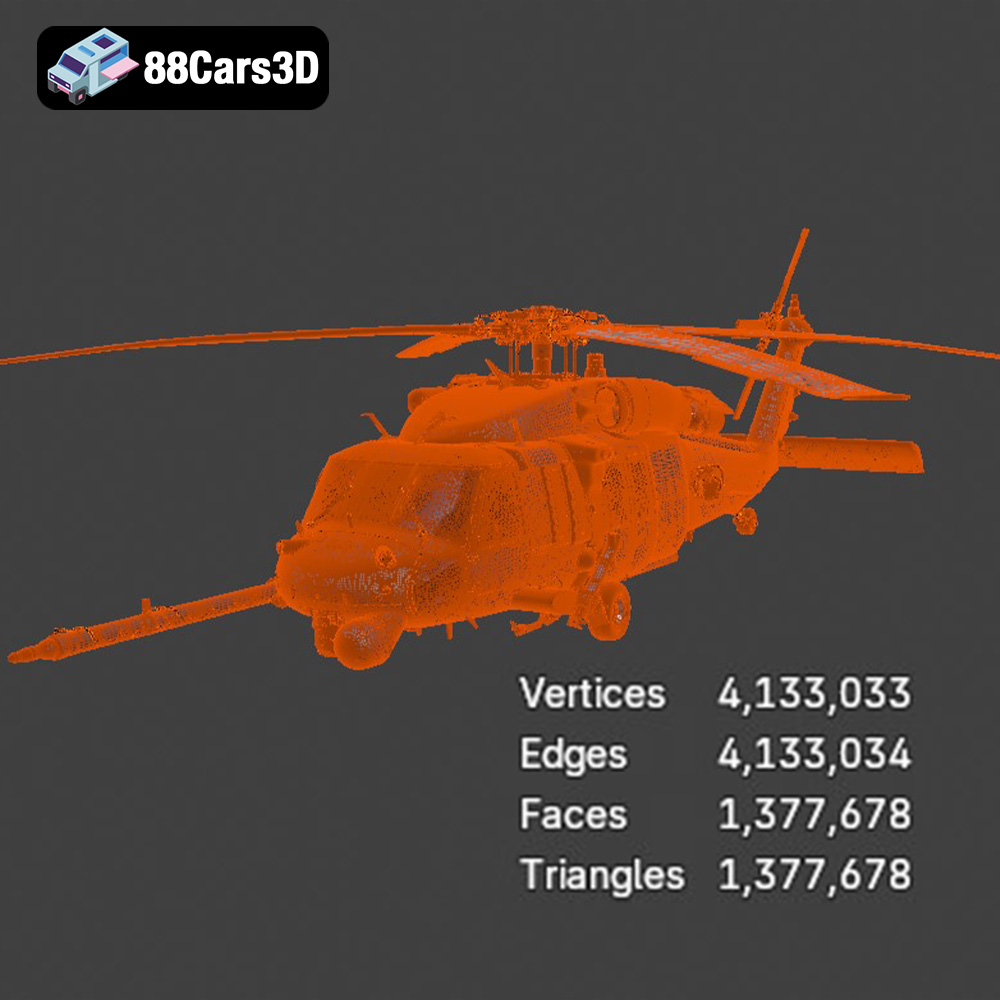
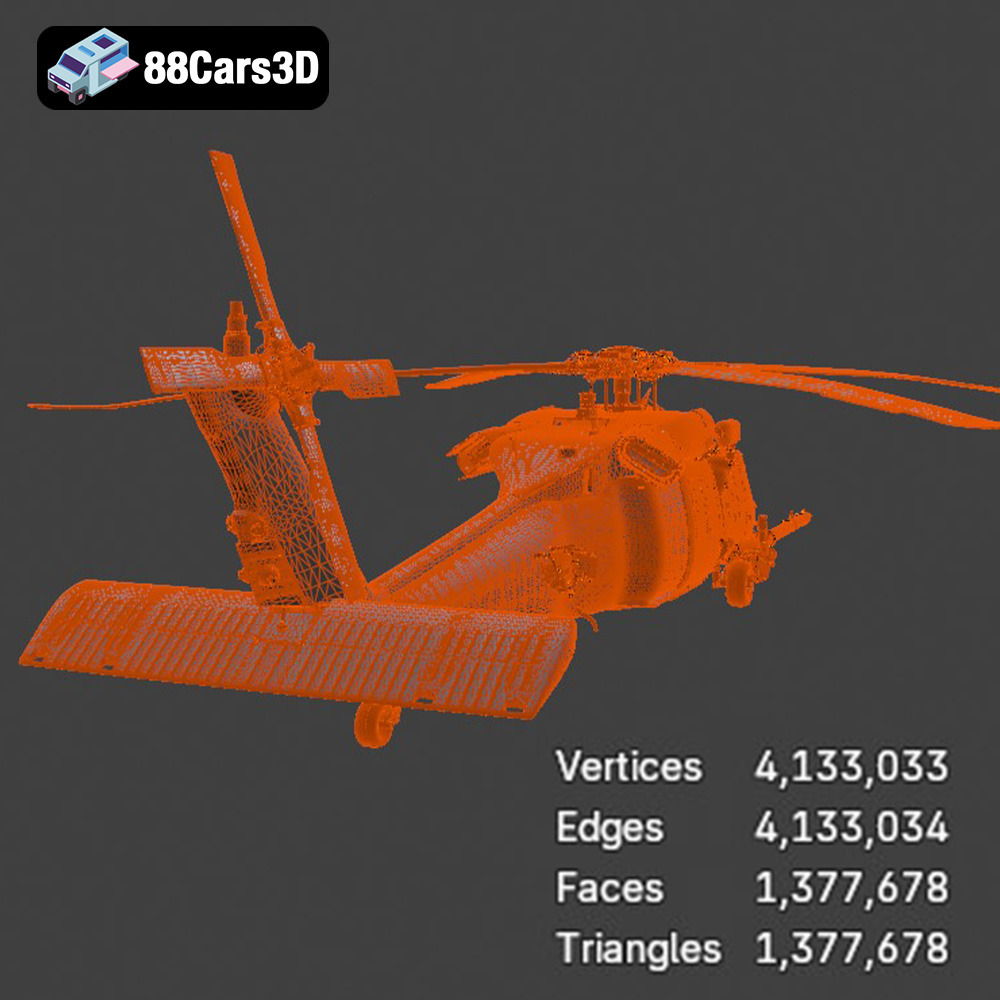
Beyond visual accuracy, technical cleanliness is crucial. “Optimized topology” refers to the efficient and deliberate arrangement of polygons (mostly quads) to create a mesh that is both visually smooth and functionally robust. Clean geometry prevents shading artifacts, facilitates smooth deformation during animation, and allows for efficient subdivision for extreme close-up renders. For a model like the UH-40, this means careful edge flow around vents, doors, and complex mechanical parts, ensuring that the model performs well in real-time engines while also being suitable for high-polygon renders when subdivided.
The visual appeal of a 3D model is largely determined by its materials and textures. Modern workflows heavily rely on Physically Based Rendering (PBR), which accurately simulates how light interacts with surfaces in the real world. This involves creating a suite of texture maps – Albedo (color), Normal (surface detail), Roughness (specularity spread), Metallic (conductivity), Ambient Occlusion (contact shadows) – that work together to define the surface properties. For the UH-40, this translates to realistic paint finishes, weathered metallic components, transparent cockpit glass, and worn interior fabrics, all contributing to a tangible sense of realism. The inclusion of PBR-ready materials in formats like .blend and .unreal significantly streamlines the integration process.
The versatility of a well-designed 3D asset is measured by its ability to integrate seamlessly into various professional software environments. The Helicopter UH-40 3D Model is engineered precisely for this flexibility.
For cinematic quality renders and complex animations, 3ds Max and Blender are industry staples. The .max and .blend versions of the UH-40 are ideal starting points. In 3ds Max, artists can easily import the model, apply advanced V-Ray or Corona Renderer materials, set up sophisticated lighting rigs, and create dynamic flight sequences. Similarly, Blender users can leverage Cycles or Eevee, utilizing the provided PBR materials for stunning visuals or expanding upon them. The clean topology of the UH-40 ensures that it can be subdivided for ultra-smooth surfaces in high-resolution renders, making it suitable for film, television, or marketing visualizations where every detail counts.
For real-time interactive applications, game engines like Unreal Engine and Unity are essential. The .fbx and .unreal formats of the UH-40 model are specifically optimized for these environments. Developers can import the .fbx into Unity, where its optimized mesh and UVs will perform efficiently. In Unreal Engine, the .unreal asset provides a pre-configured package, potentially including LODs, collision meshes, and properly set up PBR materials, drastically reducing setup time. The model’s performance optimization ensures smooth frame rates even in complex scenes, vital for immersive game experiences or detailed military simulations. Imagine the UH-40 seamlessly integrated into a sprawling combat zone or a search-and-rescue mission simulation.
Augmented Reality (AR) and Virtual Reality (VR) are rapidly expanding fields, demanding highly optimized yet visually rich 3D assets. The .glb format of the UH-40 is specifically designed for this purpose, offering efficient loading and rendering in AR/VR viewers and web browsers. For technical visualization, such as flight training simulators or interactive maintenance manuals, the detailed interior and precise structural accuracy become paramount. The model can be used to create interactive virtual cockpits or AR overlays that provide real-time information or step-by-step assembly guides, offering an unparalleled level of immersion and utility.
The utility of a robust 3D model like the Helicopter UH-40 extends far beyond simple aesthetics, impacting critical real-world applications across various sectors.
One of the most impactful applications of high-fidelity aircraft models is in military and aviation simulation. The UH-40 3D Model, with its precise structural accuracy and fully modeled interior, serves as an exceptional asset for training pilots, ground crew, and combat personnel. These simulations demand absolute realism to be effective. For instance, a flight simulator could utilize the UH-40’s detailed cockpit for procedural training, allowing trainees to familiarize themselves with instrument layouts, switch functions, and emergency protocols in a risk-free virtual environment. Similarly, military strategy simulations could employ the model to visualize airborne asset deployment, tactical maneuvers, or search-and-rescue operations, offering invaluable insights without the immense cost and danger of real-world exercises.
Film and television productions rely heavily on accurate 3D models for breathtaking visual effects (VFX). Whether it’s a dramatic helicopter chase, a serene aerial shot, or a historical reenactment, the UH-40 model can be a cornerstone asset. VFX artists can integrate it into live-action footage, leveraging its high detail for close-up shots or realistic motion blur during fast-paced sequences. The flexibility of its native formats (.max, .blend) allows for extensive customization, enabling artists to create bespoke paint schemes, add weathering effects specific to a scene, or even simulate damage for battle-worn appearances, enhancing the storytelling and visual impact of any production.
The gaming industry thrives on immersive experiences, and realistic vehicles are often central to gameplay. The optimized topology and game-engine-ready formats (.fbx, .unreal) of the Helicopter UH-40 3D Model make it an ideal game asset. Imagine it featuring in an open-world action title where players can pilot it, or in a detailed combat simulator where its performance characteristics are precisely replicated. Developers can implement complex physics, damage systems, and interactive cockpit elements, offering players a truly engaging and believable experience. This level of detail elevates the realism of the virtual world, making gameplay more compelling and believable.
While visual fidelity is crucial, true professional-grade 3D models strike a delicate balance between detail and performance. The Helicopter UH-40 3D Model exemplifies this optimization strategy.
In real-time applications like games or VR, rendering every polygon of a high-detail model can quickly cripple performance. This is where Levels of Detail (LODs) come into play. A well-prepared asset will often include multiple versions of the model, each with progressively fewer polygons. As the camera moves further away from the UH-40, the game engine automatically swaps to a lower-polygon LOD, significantly reducing the computational load without a noticeable drop in visual quality. This intelligent scaling ensures smooth frame rates across varying distances and hardware specifications, a critical factor for immersive experiences.
Beyond geometry, the efficiency of texture application is paramount. UV mapping is the process of flattening the 3D surface of a model into a 2D space, allowing textures to be painted onto it without distortion. For the UH-40, clean and non-overlapping UVs are essential for flawless texture application and optimization. Furthermore, professional models often utilize texture packing, where multiple texture maps (like roughness, metallic, and ambient occlusion) are combined into the different color channels of a single image. This reduces the number of texture lookups the GPU needs to perform, leading to faster rendering and more efficient memory usage, crucial for high-performance applications.
For interactive environments, accurate collision detection is vital. While high-polygon visual meshes are for rendering, simple, low-polygon collision meshes are used for physics calculations. The Helicopter UH-40 3D Model, particularly in its game-engine-ready formats, would typically come with optimized collision geometry. This allows the helicopter to interact realistically with the environment – landing on surfaces, colliding with obstacles, or even taking damage – without the performance overhead of calculating collisions against its complex visual mesh. This separation of visual and physical representation is a hallmark of professional game asset development.
The proliferation of 3D models online can make selection daunting. However, knowing what to look for can significantly streamline your workflow and guarantee success. When investing in 3D assets, especially for demanding projects, prioritize quality, technical integrity, and comprehensive support.
Before making a purchase, scrutinize the model’s technical specifications. Does it explicitly mention optimized topology, clean geometry, and PBR materials? Is the poly count suitable for your target platform (high for cinematic renders, optimized for real-time)? For a model like the Helicopter UH-40, check for details regarding its interior modeling and structural accuracy. The more detail provided, the more confidence you can have in the asset’s professionalism. Reputable marketplaces like 88cars3d.com often provide clear descriptions and high-resolution previews to aid in this evaluation.
As discussed, the variety of included file formats is a strong indicator of a model’s versatility and the developer’s foresight. A model offering .blend, .fbx, .obj, .glb, .stl, .ply, .unreal, and .max covers nearly every conceivable professional use case. This comprehensive support means you won’t be caught off guard by compatibility issues or need to spend valuable time converting and re-optimizing the asset for different software or project requirements. It’s an investment in flexibility, ensuring the model can grow with your project’s needs.
Ultimately, the core value of a high-quality, pre-built asset like the Helicopter UH-40 3D Model is its ability to accelerate production. Instead of dedicating weeks or months to modeling, texturing, and optimizing an asset from scratch, you can acquire a professionally made model and integrate it within hours or even minutes. This allows your team to focus on the higher-level creative aspects of your project – designing compelling scenes, crafting engaging narratives, or building innovative gameplay mechanics. In fast-paced industries, this time-saving advantage translates directly into cost savings and earlier project delivery, giving you a competitive edge.
The journey from conceptualization to a fully realized digital experience is paved with countless technical and creative challenges. High-quality 3D assets serve as critical enablers, empowering artists and developers to push the boundaries of realism and immersion. The Helicopter UH-40 3D Model stands as a testament to the meticulous craftsmanship and technical prowess required in modern 3D production. Its precise structural accuracy, fully modeled interior, optimized topology, and comprehensive file format support make it an indispensable tool for a wide array of applications – from military simulations and cinematic rendering to game development and cutting-edge AR/VR experiences.
By leveraging assets like the UH-40, creators can significantly reduce development time, maintain consistent visual fidelity, and allocate their resources more effectively to innovation and storytelling. For professionals seeking to elevate their projects with production-ready, high-performance 3D models, exploring curated marketplaces like 88cars3d.com is a strategic move. Investing in such meticulously crafted assets is not just about acquiring a digital object; it’s about investing in efficiency, quality, and the boundless potential of your creative vision.
Enhance your digital hangar with the detailed Helicopter UH-40 3D Model. Designed to meet the demands of visualizers and developers, this model delivers precise structural accuracy. The exterior captures the robust aerodynamics of the UH-40 aircraft, while the internal layout provides a fully modeled interior, ensuring it stands up to close-up renders and immersive experiences. Built with optimized topology, this model features clean geometry and realistic materials that integrate seamlessly into your workflow. Whether you are crafting cinematic sequences, producing military simulations, or developing interactive applications, this versatile asset elevates the visual fidelity of your projects. Ideal for game development, rendering, AR/VR experiences, and detailed technical visualization, the Helicopter UH-40 3D Model is optimized for performance without sacrificing visual depth. It includes a comprehensive suite of industry-standard file formats.
$39.99
.aircraft
.arvr
.aviation
.blend
.car3dmodel
.fbx
.gameasset
.glb
.helicopter
.max
.military
.obj
.ply
.rendering
.simulation
.stl
.uh40
.unreal