Get 20% OFF All Premium 3D & STL Models!

In the rapidly evolving landscape of 3D visualization, the demand for high-quality, meticulously crafted digital assets has never been greater. From cinematic automotive renders to immersive game environments and precise architectural visualizations, the foundation of any compelling project lies in the fidelity and technical integrity of its 3D models. Creating photorealistic vehicles from scratch is a monumental task, often consuming hundreds of hours of a designer’s valuable time. This is where pre-optimized, expertly built 3D car models become indispensable tools for professionals seeking efficiency without compromising on visual excellence.
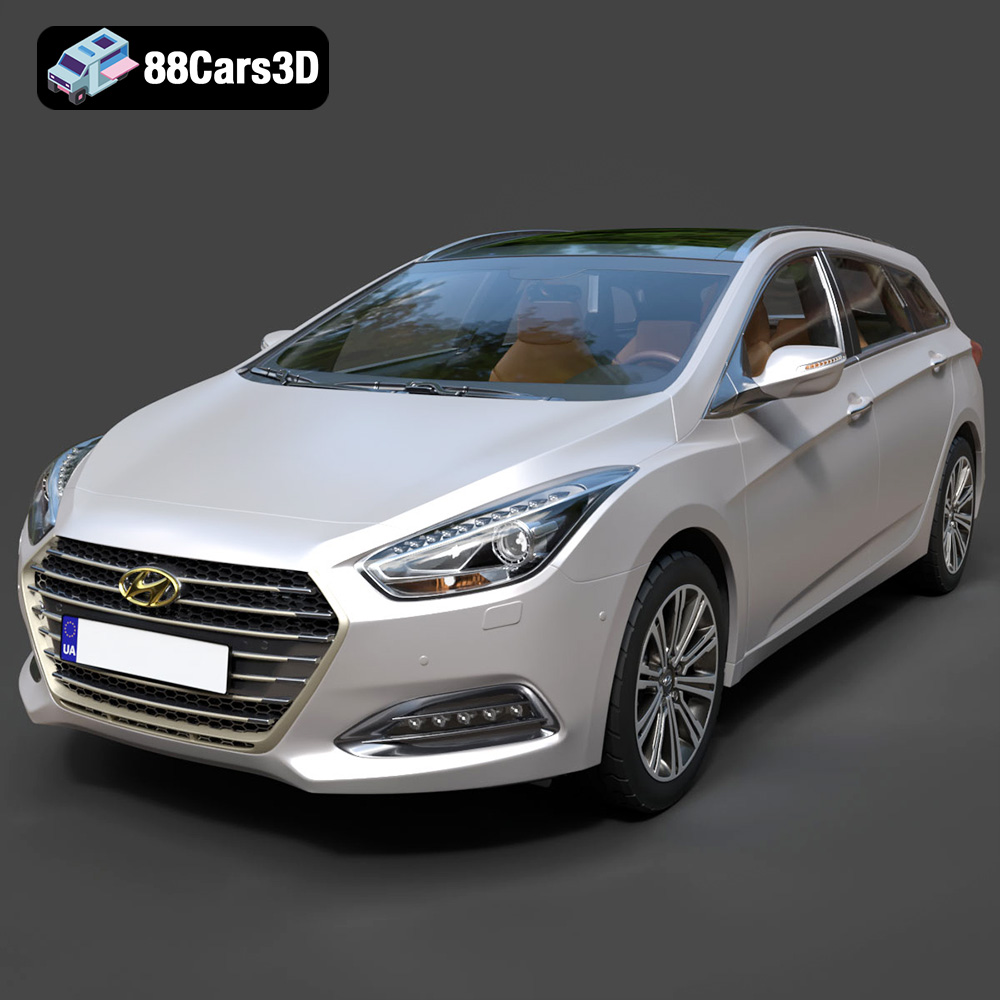
Imagine needing to populate a bustling street scene for an architectural walkthrough, develop a racing simulator, or create a detailed product showcase for a car manufacturer. Each scenario requires vehicles that not only look authentic but also perform flawlessly within various software ecosystems. Today, we’ll delve into the technical intricacies and versatile applications of such assets, using the Hyundai i40 Wagon 2015 3D Model as a prime example of the caliber available for demanding projects. This specific model, with its carefully crafted geometry and comprehensive file format support, exemplifies how a single digital asset can cater to a multitude of professional needs, from high-fidelity rendering to real-time simulations.
The versatility of a 3D model is often defined by the range and quality of its supported file formats. Each format serves a specific purpose, optimized for particular software, pipelines, or end-use applications. Understanding these distinctions is crucial for any 3D professional to ensure seamless integration, maintain data integrity, and achieve desired outcomes. The Hyundai i40 Wagon 2015 3D Model, for instance, comes equipped with a comprehensive suite of formats, each offering unique advantages.
The .blend format is the native file type for Blender, one of the most popular open-source 3D creation suites. When you acquire a .blend file for a model like the Hyundai i40 Wagon 2015, you’re receiving a complete, fully editable scene. This includes not just the raw mesh data, but also all associated materials (often set up with Physically Based Rendering, or PBR, principles), textures, lighting rigs, camera setups, and even animation data if present. For Blender artists, this means immediate access to a production-ready asset that can be easily modified, re-textured, or integrated into existing projects with minimal fuss. It’s ideal for deep customization, animation, and rendering within Blender’s Cycles or Eevee engines.
Autodesk’s .fbx (Filmbox) format is an industry-standard for interoperability, particularly favored in game development and animation. It’s designed to carry a broad range of data, including geometry, materials, textures, animations, and skeletal deformation, making it highly robust for complex scenes. For assets like the Hyundai i40, an .fbx file is game-engine ready, meaning it’s optimized for import into platforms like Unreal Engine and Unity. Its strength lies in its ability to transfer scene data accurately between different 3D applications while maintaining hierarchy and transformations, crucial for efficient real-time environment creation.
The .obj (Wavefront Object) format is a widely supported, universal 3D model format. While it doesn’t carry advanced features like rigging or animation, it excels at storing pure geometric data (vertices, normals, UV coordinates) and references to external material files (.mtl). Its simplicity ensures maximum compatibility across virtually all 3D software packages, from 3ds Max to Cinema 4D, Maya, and ZBrush. For the Hyundai i40 model, the .obj version serves as a reliable fallback, guaranteeing that the core geometry and UVs can be accessed and utilized regardless of an artist’s primary software, allowing for easy re-texturing or custom material setups.
The .glb (GL Transmission Format Binary) is a modern, compact file format designed for the efficient transmission and loading of 3D scenes and models by applications. It’s become the go-to standard for Augmented Reality (AR), Virtual Reality (VR), and web-based 3D viewers due to its self-contained nature (embedding textures and other assets directly) and optimized structure. The Hyundai i40 Wagon 2015 model in .glb format is perfect for developers building interactive web experiences, AR filters, or VR applications where performance and rapid loading are paramount.
The .stl (Stereolithography) format is almost exclusively used for 3D printing. It represents a 3D model as a series of connected triangles, describing only the surface geometry without color, texture, or other advanced attributes. When a 3D model like the Hyundai i40 is provided in .stl, it means it has been prepared for physical fabrication, ensuring a watertight mesh suitable for slicer software. This allows designers to create physical prototypes, scale models, or even functional parts of the vehicle for various industrial design or hobbyist applications.
The .ply (Polygon File Format, or Stanford Triangle Format) is another format for storing 3D data, particularly known for its ability to store properties beyond just geometry, such as color per vertex, transparency, and range data. While less common for everyday artistic workflows than .fbx or .obj, it’s frequently used in scientific applications, CAD, and precise scanning workflows. For the Hyundai i40, a .ply version offers a detailed polygon mesh that can be valuable for complex analysis, reverse engineering, or specialized visualization tasks requiring high precision.
The .unreal designation often refers to assets that are either native Unreal Engine projects or specifically configured assets ready for direct import with optimal settings into the engine. This goes beyond a generic .fbx, potentially including pre-set materials, collision meshes, LODs (Levels of Detail), and even blueprint configurations that streamline integration into an Unreal project. For a 3D car model like the Hyundai i40, an .unreal asset significantly reduces the setup time for game developers and architectural visualizers working within the Unreal ecosystem, ensuring out-of-the-box performance and visual fidelity.
The .max format is the native file type for Autodesk 3ds Max, a leading software in architectural visualization, design visualization, and animation. A .max file of the Hyundai i40 Wagon 2015 provides a complete 3ds Max scene, including all geometry, materials (often V-Ray, Corona, or standard Max materials), textures, lighting, and camera setups. This format is ideal for professionals whose primary workflow revolves around 3ds Max, allowing them to instantly access and modify the model for high-end rendering, complex scene integration, or detailed animation sequences, leveraging 3ds Max’s powerful toolset.
The heart of any professional 3D car model lies in its ability to achieve photorealistic results in rendering. This isn’t just about high polygon counts; it’s about a holistic approach to geometry, materials, and optimization. The Hyundai i40 Wagon 2015 3D Model exemplifies this dedication, offering a robust foundation for stunning visual output in diverse rendering engines.
Modern rendering relies heavily on Physically Based Rendering (PBR) materials, which accurately simulate how light interacts with surfaces in the real world. A top-tier 3D car model, like the Hyundai i40, will typically come with meticulously calibrated PBR textures including albedo (base color), roughness, metallic, normal, and sometimes ambient occlusion maps. These maps are crucial for depicting realistic paint finishes, glass reflections, rubber tires, and intricate chrome details. Using these PBR textures with rendering engines like V-Ray, Corona Renderer, Blender Cycles, or Arnold ensures that the car model responds correctly to dynamic lighting, producing believable reflections, refractions, and surface imperfections that elevate realism.
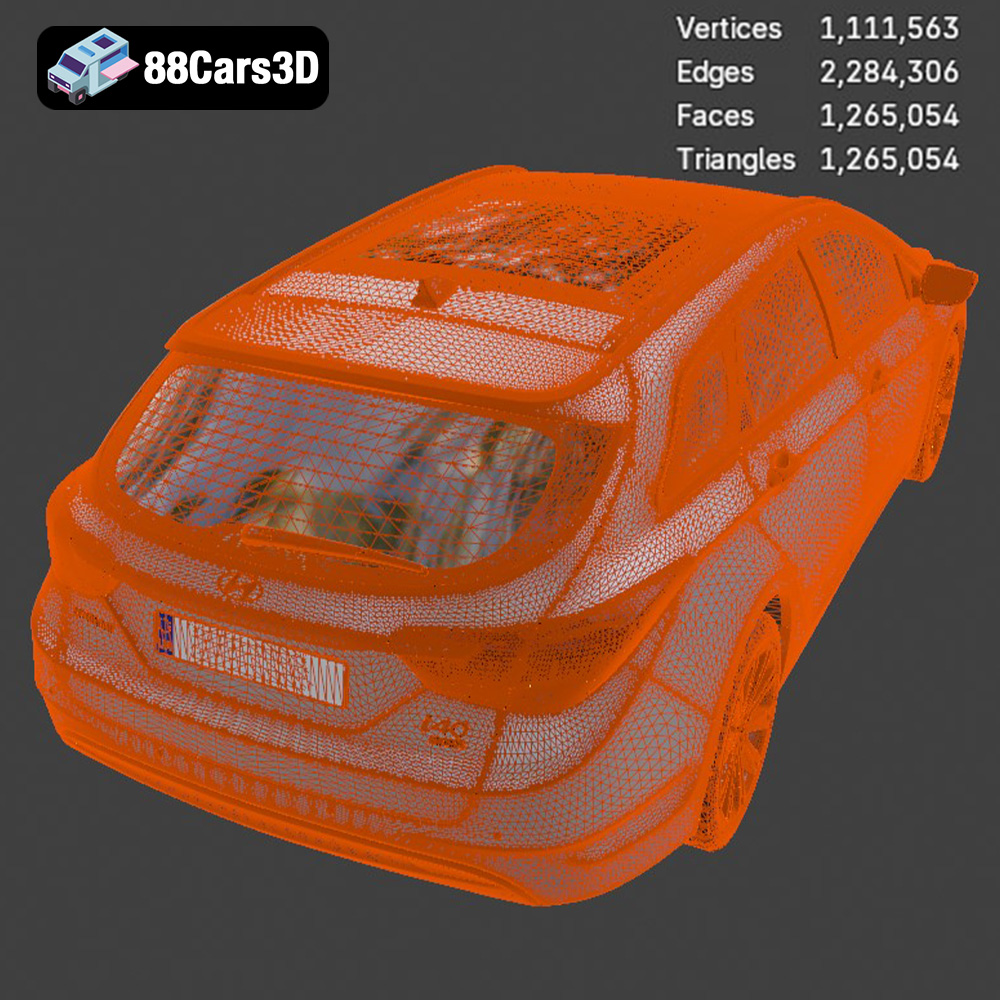
Beyond material quality, the way a 3D car model integrates into a scene and reacts to lighting is paramount. The clean geometry and optimized UV mapping of assets like the Hyundai i40 Wagon 2015 3D Model mean that lighting calculations are precise, avoiding artifacts or unnatural shadows. For architectural visualization, dropping this model into an exterior scene requires minimal adjustments to blend seamlessly with HDRI lighting and environmental reflections. For automotive advertising, artists can place the model in a studio environment, leveraging advanced lighting setups to highlight specific design elements, showcasing the car’s sleek contours and practical elegance with breathtaking clarity. The precision of the model ensures that light bounces and scatters realistically, making the vehicle feel truly present within the digital space.
While photorealistic rendering demands extreme detail, real-time applications like game development and AR/VR experiences necessitate a delicate balance between visual fidelity and performance. A professionally built 3D car model is designed with this equilibrium in mind, offering optimized assets that run smoothly without sacrificing quality.
For game developers, importing 3D car models into engines like Unreal Engine or Unity needs to be a streamlined process. Assets such as the Hyundai i40 Wagon 2015 3D Model, provided in game-engine-ready formats like .fbx or even pre-configured .unreal files, significantly accelerate this. These models are often structured with considerations for polygon counts, which directly impact frame rates. While detailed, they are typically optimized with clean topology that allows for efficient culling and LOD (Levels of Detail) generation, enabling the engine to switch to simpler versions of the model when viewed from a distance. Proper UV unwrapping ensures that texture atlases can be used efficiently, reducing draw calls, while collision meshes can be easily generated or included to facilitate realistic physics interactions within the game world.
Augmented Reality (AR) and Virtual Reality (VR) applications have unique demands. Performance is critical, as any lag can lead to motion sickness or break immersion. The Hyundai i40 Wagon 2015 3D Model, especially in its .glb format, is ideal for these environments. The .glb format is optimized for web and mobile platforms, bundling textures and materials into a single, compact file that loads quickly. For AR, the model’s precise scale and proportions are essential for accurate placement in the real world via a device’s camera. In VR, clean geometry and efficient materials help maintain high frame rates necessary for a comfortable and immersive user experience. These optimized assets allow for seamless integration into applications that might showcase the car in a virtual showroom, allow users to customize it in AR, or even drive it in a VR simulation.
The utility of a high-quality 3D car model extends far beyond screen-based visualization. Industrial design, engineering, and rapid prototyping workflows can significantly benefit from digital assets that are robust enough for physical fabrication.
When a 3D model like the Hyundai i40 Wagon 2015 is supplied in formats such as .stl or .ply, it opens up a new realm of possibilities: 3D printing. The .stl format, specifically, is a triangulation of the model’s surface, demanding a “watertight” mesh – one without holes or non-manifold geometry – to ensure successful printing. Professional 3D car models are built with this structural integrity in mind, making them directly compatible with 3D slicer software. This allows designers to rapidly generate physical prototypes, scale models for presentations, or even create custom aftermarket parts using various 3D printing technologies, from FDM to SLA. The precision of the digital model translates directly into the accuracy of the physical object.
In the automotive design industry, iterating on concepts is a core process. Having a high-fidelity 3D model of a production vehicle like the Hyundai i40 Wagon 2015 available in an editable format can be invaluable. Designers can use it as a reference, a base for modifications, or even to test new accessory designs by physically printing them and fitting them onto a scale model of the car. The .ply format, with its detailed polygon mesh, can also be used for more in-depth analysis or as a starting point for reverse engineering projects or CAD applications. This bridge between digital design and physical prototyping accelerates development cycles, reduces costs, and allows for tactile evaluation of design choices, all stemming from a high-quality digital asset.
The true value of a versatile 3D asset, such as the Hyundai i40 Wagon 2015 3D Model, becomes apparent when integrated into diverse professional pipelines. Its adaptability means it can serve as a cornerstone for projects ranging from marketing campaigns to immersive simulations.
Architectural visualization (ArchViz) firms frequently require realistic entourage elements to bring their proposed buildings and urban scenes to life. A well-placed, photorealistic 3D car model like the Hyundai i40 Wagon can dramatically enhance the credibility and narrative of an ArchViz render. Imagine a sprawling residential development render; populating the driveways and streets with a variety of realistic 3D car models, including this family-friendly wagon, grounds the scene in reality. Architects using 3ds Max or Blender can effortlessly import the respective .max or .blend files, integrate them into their scene, and leverage existing PBR materials for lifelike rendering. The model’s optimized geometry ensures that even when dozens of cars are present, rendering times remain manageable, providing a professional finish to the visualization.
For advertising agencies and automotive marketing departments, creating compelling visuals of vehicles is paramount. Rather than organizing expensive photoshoots, 3D artists can utilize models like the Hyundai i40 Wagon 2015 3D Model to generate bespoke marketing collateral. This could involve animating the car driving through a picturesque landscape, creating a 360-degree interactive viewer for a website, or even placing the car in abstract, conceptual environments impossible to achieve in reality. The ability to control every aspect of the lighting, camera angles, and environment allows for unparalleled creative freedom. Furthermore, for quick mock-ups or social media campaigns, the game-engine-ready formats can be deployed for rapid renders or even interactive web experiences showcasing the car’s features.
In today’s fast-paced digital production environment, time is a critical resource. Developing every asset from scratch is simply not feasible for most projects. This is where the strategic acquisition of high-quality, pre-made 3D car models from reputable marketplaces like 88cars3d.com offers a significant competitive edge.
The primary benefit of using professional 3D car models, such as the Hyundai i40 Wagon 2015 3D Model, is the immense saving in production time. Modeling a complex vehicle from the ground up, including accurate proportions, clean topology, precise UV mapping, and PBR material setup, can take weeks or even months for a single artist. By leveraging ready-to-use assets, designers can bypass this arduous initial phase and directly dive into scene composition, lighting, and rendering. This accelerated workflow allows studios to meet tighter deadlines, take on more projects, and allocate their skilled artists to more specialized, creative tasks rather than repetitive foundational modeling. The immediate availability of multiple file formats also means less time spent on conversion and optimization across different software packages.
Beyond speed, the quality of commercially available 3D car models is often superior to what can be achieved under tight project constraints. Marketplaces like 88cars3d.com curate models that have been meticulously crafted by experienced 3D artists, adhering to industry best practices. This ensures clean geometry, accurate dimensions, optimized polygon counts for various applications, and well-organized material setups. Such attention to detail guarantees a high level of visual fidelity that translates into stunning renders and smooth real-time performance. For projects demanding the utmost realism, having an asset like the Hyundai i40 Wagon 2015 3D Model that is “carefully crafted to represent the sleek contours and practical elegance” provides a reliable foundation, removing the guesswork and potential for errors associated with bespoke, rushed asset creation. It’s an investment in quality that pays dividends in every aspect of the production pipeline.
The journey through the intricate world of 3D car modeling reveals that true digital excellence is a confluence of artistic vision and technical precision. From the fundamental importance of understanding diverse file formats to the nuanced demands of photorealistic rendering and optimized real-time experiences, every aspect contributes to a model’s utility and impact. The Hyundai i40 Wagon 2015 3D Model stands as a testament to this, offering a comprehensive and versatile solution for professionals across various industries.
Whether you are an architectural visualizer populating a city scene, a game developer crafting an immersive open world, an industrial designer prototyping a new accessory, or an animator creating a compelling advertisement, this specific 3D car model provides the foundation you need. Its availability in multiple formats – .blend, .fbx, .obj, .glb, .stl, .ply, .unreal, and .max – ensures unparalleled compatibility and flexibility, empowering you to seamlessly integrate it into your preferred workflow. By choosing high-quality, pre-made 3D car models, you not only save invaluable time but also guarantee a level of visual fidelity and technical robustness that elevates your projects to new heights.
For discerning professionals seeking to enhance their digital creations with premium assets, exploring the carefully curated collection at 88cars3d.com is a logical next step. Invest in assets that are built for performance, designed for realism, and optimized for your success.
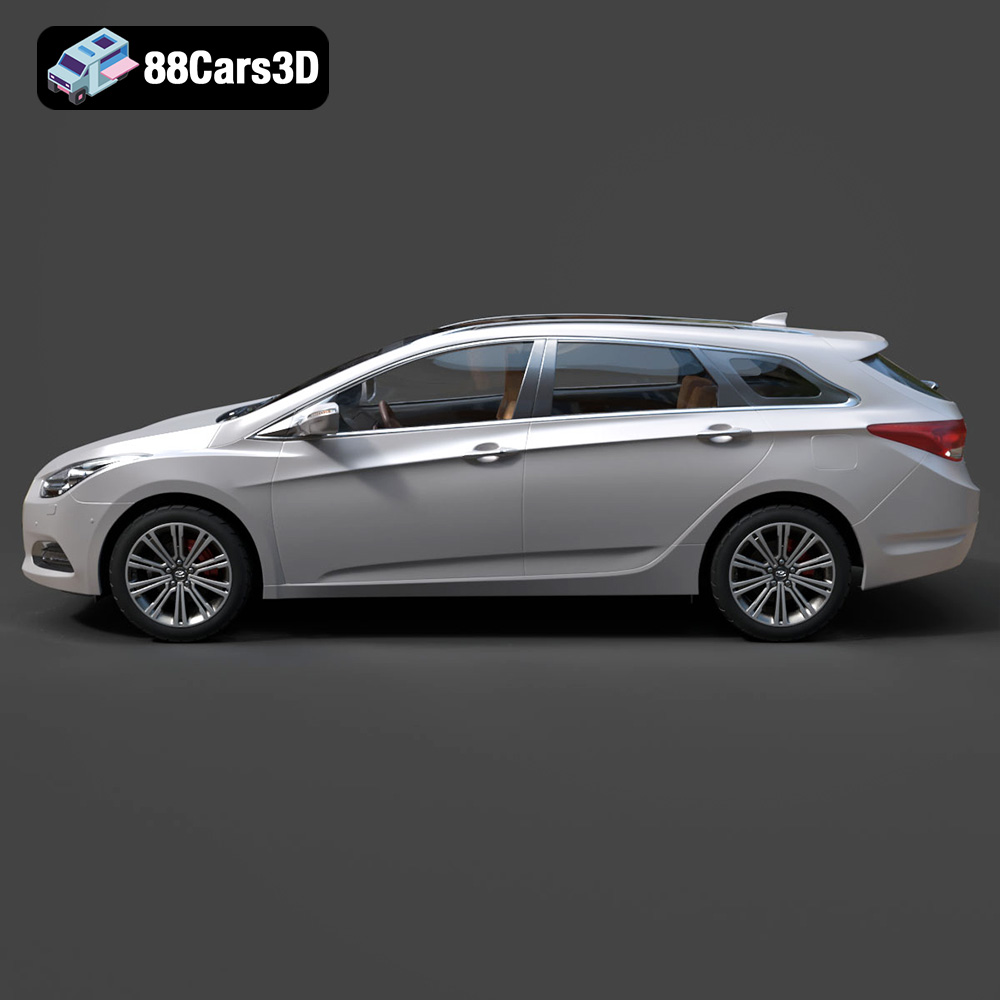
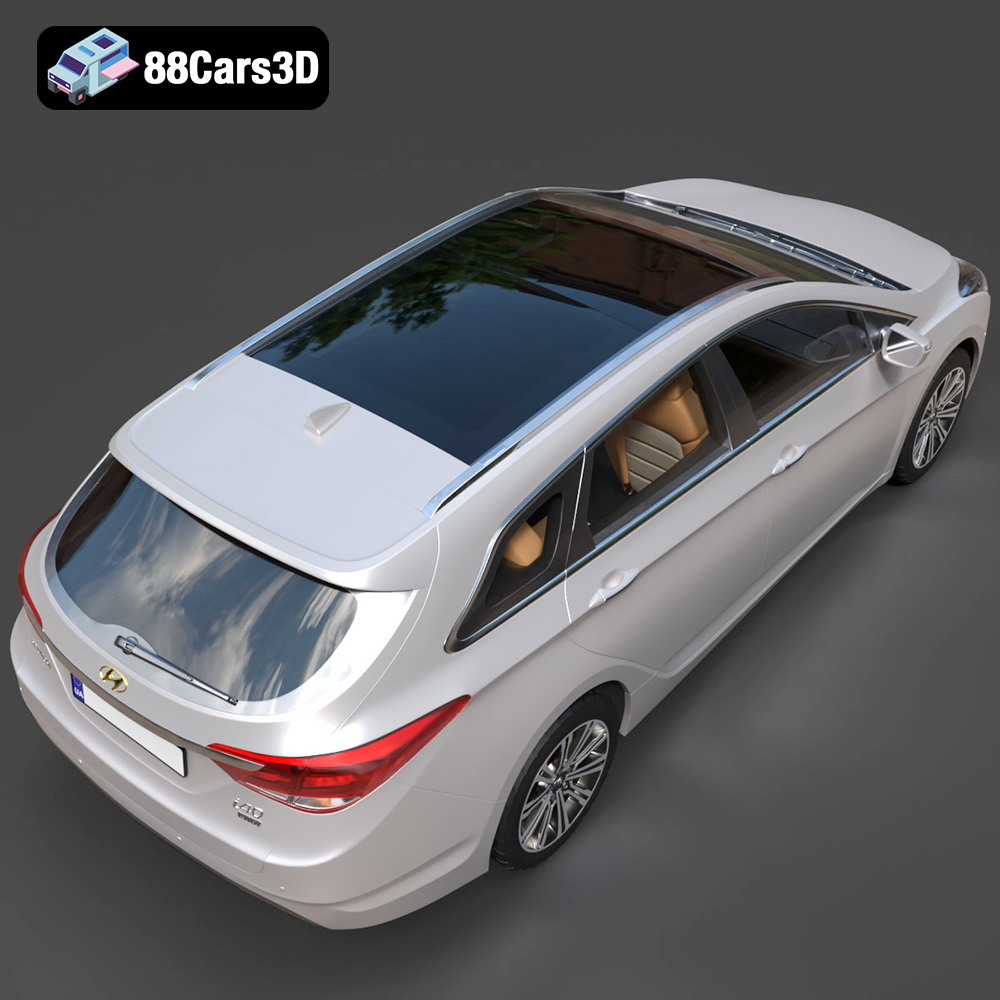
Experience true-to-life automotive design with the Hyundai i40 Wagon 2015 3D Model. Carefully crafted to represent the sleek contours and practical elegance of this popular estate vehicle, this digital asset delivers exceptional realism for any demanding project. Constructed with professional precision, the model features clean geometry and realistic materials. The meticulously detailed exterior and well-proportioned dimensions ensure seamless integration into digital environments, offering an uncompromising visual experience while maintaining optimized performance. Perfectly suited for a wide range of professional applications, this vehicle asset is ideal for game development, cinematic rendering, architectural visualization, and immersive AR/VR experiences. Whether deployed in dynamic interactive simulations or static professional renders, its versatile design meets the rigorous standards of 3D artists and developers. Available in a comprehensive suite of file formats to guarantee compatibility across diverse software pipelines: .blend – Editable Blender file with materials and lighting setup; .fbx – Game-engine ready format for Unreal Engine and Unity; .obj – Standard 3D model format compatible with all major software; .glb – Optimized for AR/VR and web-based visualization; .stl – Suitable for 3D printing and prototyping; .ply – Detailed polygon mesh for analysis and visualization; .unreal – Pre-configured for Unreal Engine use; .max – Editable 3ds Max file for rendering and animation.
$39.99
.arvr
.blend
.car3dmodel
.estate
.familycar
.fbx
.gameasset
.glb
.hyundai
.i40
.max
.obj
.ply
.rendering
.simulation
.stationwagon
.stl
.unreal
.wagon