Get 20% OFF All Premium 3D & STL Models!

In the dynamic world of digital content creation, the demand for high-fidelity 3D assets is ever-growing. From hyper-realistic cinematic sequences to immersive real-time gaming environments and innovative AR/VR experiences, professional artists and developers consistently seek assets that blend visual integrity with technical efficiency. Automotive models, in particular, stand at the forefront of this demand, requiring meticulous attention to detail to capture the essence of real-world vehicles. The quality of a 3D car model can significantly impact a project’s overall authenticity and performance, making the choice of asset a critical decision.
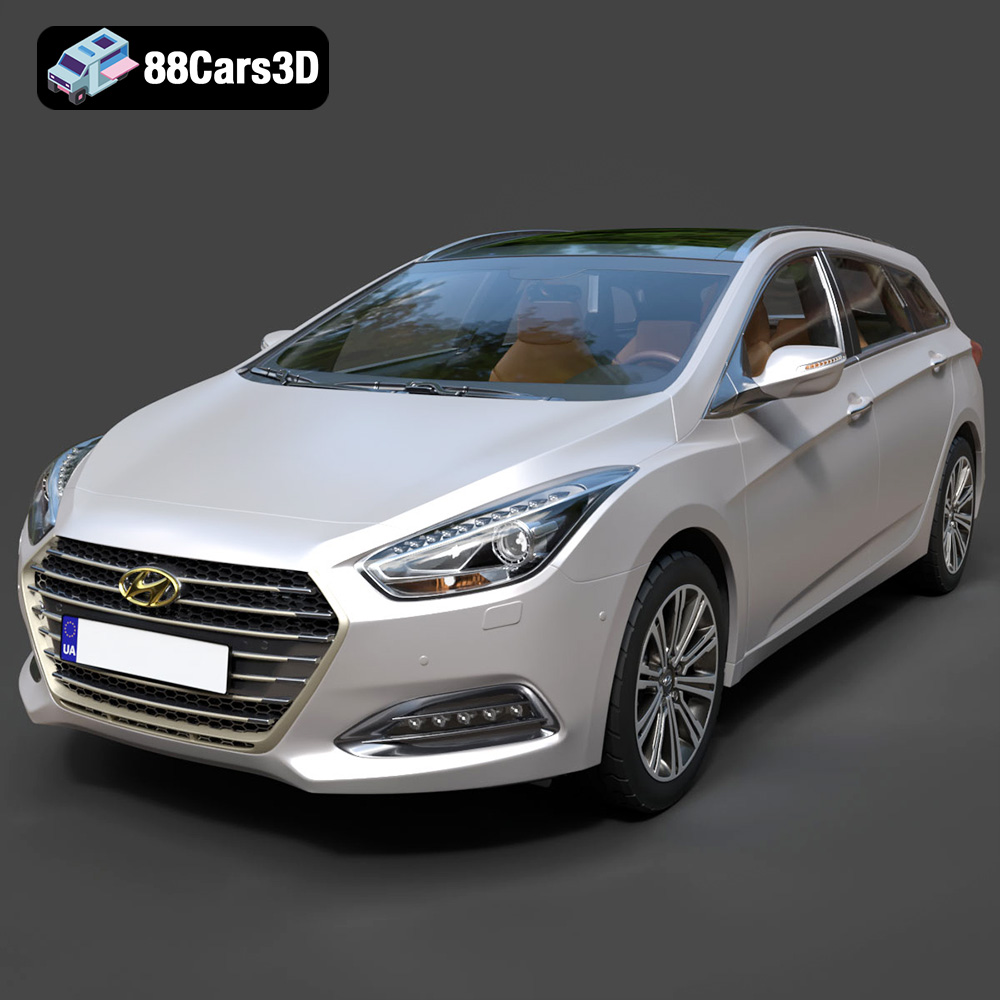
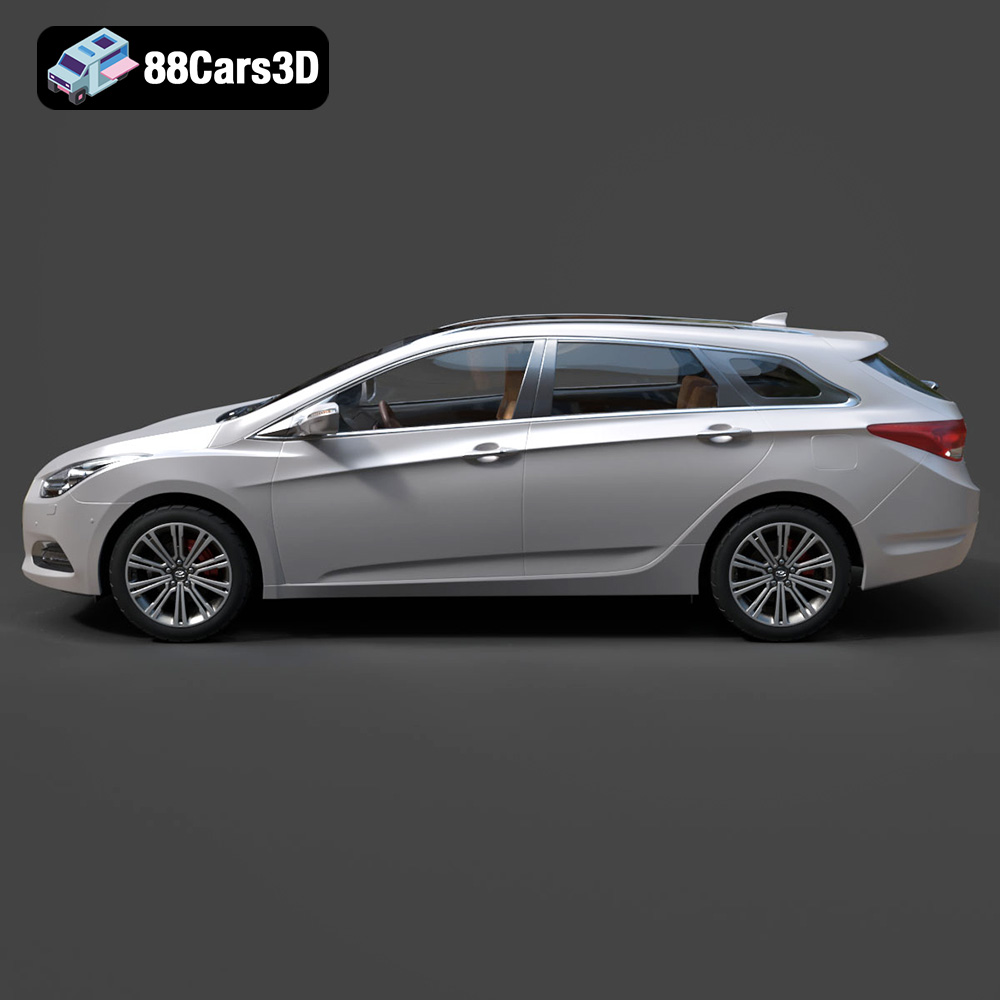
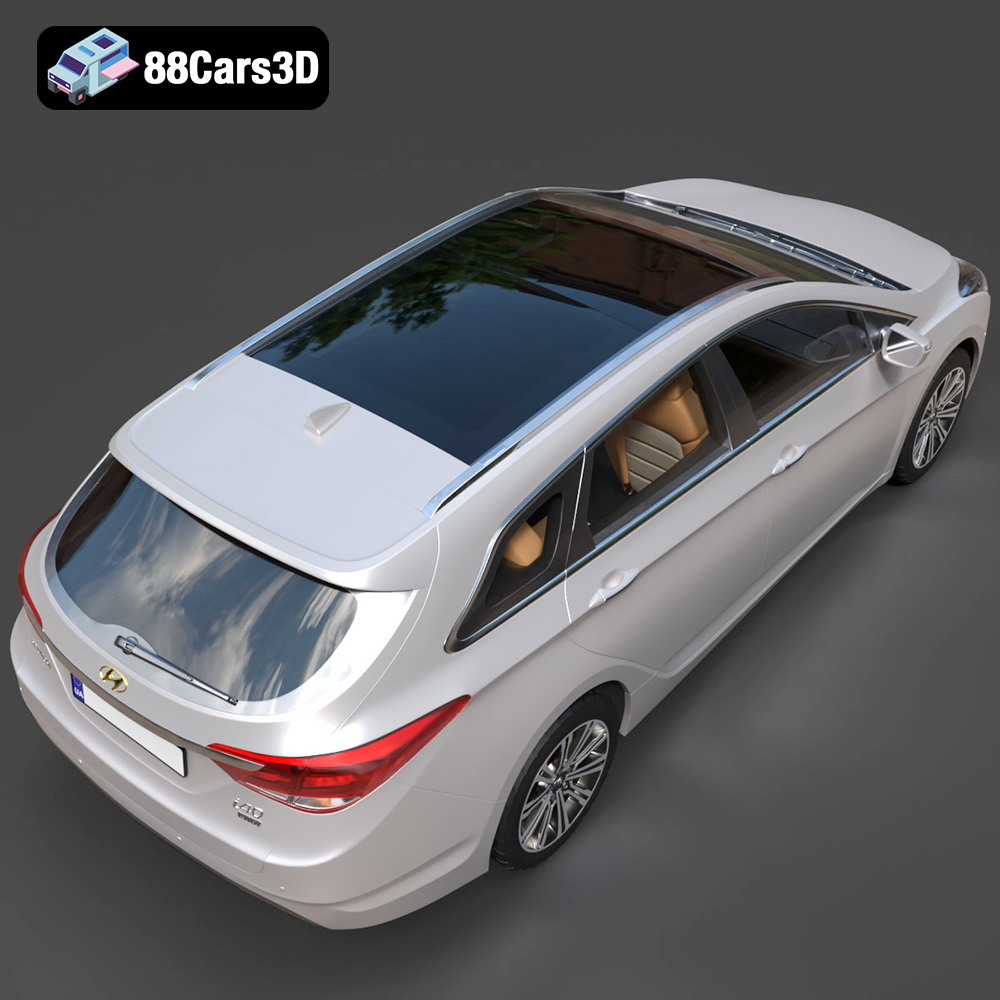
This commitment to excellence is precisely what we find in models like the Hyundai i40 Wagon 2015 3D Model. This meticulously crafted digital representation of a popular estate vehicle exemplifies the standards expected by professionals. Its clean geometry, realistic materials, and optimized structure make it a versatile foundation for a myriad of projects. Whether you’re an architect visualizing a new development with a lifelike vehicle in the foreground, a game developer populating a virtual city, or a filmmaker creating a compelling automotive scene, understanding the intricacies of such an asset and its place within various professional pipelines is paramount.
This article delves deep into the technical aspects and practical applications of high-quality 3D car models, using the Hyundai i40 Wagon 2015 as a prime example. We will explore the critical role of file formats, discuss workflows in leading 3D software and game engines, and highlight how such assets contribute to breathtaking visual experiences across diverse industries.
The selection of the correct file format is a foundational decision in any 3D project, directly impacting compatibility, workflow efficiency, and the ultimate output quality. High-quality 3D car models, such as those available on 88cars3d.com, typically offer a range of formats to ensure seamless integration into diverse professional pipelines. Each format serves a distinct purpose, catering to specific software environments, real-time demands, or physical production needs. Understanding these nuances is crucial for optimizing your workflow and achieving your project’s objectives.
The `.blend` file format is native to Blender, an open-source 3D creation suite. When you acquire a `.blend` file, you’re not just getting a model; you’re gaining access to the entire Blender scene. This includes the model’s geometry, textures, materials (often set up with Cycles or Eevee renderers), lighting setups, camera positions, and sometimes even animations or rigging. For artists heavily invested in the Blender ecosystem, this format offers unparalleled flexibility. You can dissect the model, understand its construction, modify its topology, adjust materials, or re-render it directly within Blender without any conversion losses. It’s ideal for deep customization, learning from expert setups, or continuing a project exclusively within Blender.
`FBX` (Filmbox) is a proprietary file format developed by Autodesk, serving as one of the most widely used interchange formats in the 3D industry. Its strength lies in its ability to store not just geometry but also animation, rigging, materials, textures, and even embedded media. For game development, particularly with engines like Unreal Engine and Unity, `.fbx` is the de facto standard. It provides a robust and efficient way to transfer complex 3D car models with all their associated data, ensuring consistent results when moving from a DCC (Digital Content Creation) tool like 3ds Max or Blender into a real-time environment. Its optimization features, such as baked animations and support for level-of-detail (LOD) groups, make it indispensable for performance-critical applications.
The `.obj` (Wavefront OBJ) format is one of the oldest and most universally supported 3D file formats. It’s a simple, text-based format that primarily stores geometric data (vertices, normals, texture coordinates, and faces) and can reference an external `.mtl` (Material Template Library) file for basic material properties. While it doesn’t support advanced features like animation, rigging, or complex shader networks, its widespread compatibility makes it an excellent choice for basic model exchange between virtually any 3D software. If you need to import a 3D car model into an obscure package or simply require the raw geometric data, `.obj` is a reliable, lowest common denominator.
`GLB` (GL Transmission Format Binary) is the binary version of `glTF`, a relatively new, royalty-free specification for the efficient transmission and loading of 3D scenes and models by applications. `GLB` encapsulates the model’s geometry, textures, and animations into a single binary file, making it incredibly easy to share and integrate. It’s rapidly becoming the standard for augmented reality (AR), virtual reality (VR), and web-based 3D applications because of its small file size and quick loading times. For showcasing a Hyundai i40 Wagon 2015 3D Model in a web configurator or an AR product viewer, `.glb` is the optimal choice.
`STL` (stereolithography) is the standard file format for 3D printing and rapid prototyping. Unlike other formats that store various attributes, `.stl` files exclusively describe the surface geometry of a 3D object using a collection of triangular facets. It doesn’t contain color, texture, or material information. When preparing a 3D car model like the Hyundai i40 for physical production via additive manufacturing, converting it to `.stl` is typically the final step, ensuring the printer can accurately interpret the object’s form.
`PLY` (Polygon File Format) is primarily used for storing 3D data from 3D scanners. It can store a wider range of properties than `.obj`, including color, transparency, and often normal vectors, making it excellent for representing point clouds and polygon meshes with additional attribute data. It’s frequently employed in scientific applications, CAD (Computer-Aided Design), and detailed geometric analysis where precision and data integrity are paramount. While less common for general rendering, it’s invaluable for reverse engineering or analyzing intricate forms.
The `.unreal` format isn’t a standalone file format in the traditional sense but rather signifies an asset that is pre-configured and optimized specifically for Unreal Engine. This typically means the asset has already undergone the necessary import processes, material setups (using Unreal’s PBR workflow), LOD generation, and potentially collision mesh creation within the Unreal Editor. Acquiring a `.unreal` asset means bypassing much of the initial setup work, allowing for immediate integration and use within your Unreal Engine project, saving considerable development time.
`MAX` is the native file format for Autodesk 3ds Max, one of the leading software packages for 3D modeling, animation, and rendering in professional visualization. A `.max` file contains the complete 3ds Max scene, including geometry, modifiers, materials, textures, lighting, cameras, animation data, and rendering settings. Similar to `.blend` for Blender users, a `.max` file provides maximum flexibility and editability for artists working within 3ds Max. It allows for advanced customization, integration into complex production pipelines, and utilization of 3ds Max’s powerful rendering engines like V-Ray, Corona, or Arnold.
The availability of multiple formats for the Hyundai i40 Wagon 2015 3D Model underscores its versatility and the commitment of marketplaces like 88cars3d.com to cater to a broad spectrum of professional users. Choosing the right format at the outset can streamline your entire creative process.
Automotive rendering is a specialized field that demands an exceptional level of realism. To make a digital car indistinguishable from its real-world counterpart, artists must master not only modeling but also advanced material creation, lighting, and composition. A high-quality 3D car model, such as the Hyundai i40 Wagon 2015 from 88cars3d.com, provides the perfect canvas for achieving photorealistic results, whether for marketing, product visualization, or cinematic sequences.
The journey to photorealism begins with sophisticated material setups. Modern rendering engines like V-Ray, Corona Renderer, Redshift, and Arnold rely heavily on Physically Based Rendering (PBR) workflows. This means materials are defined by real-world physical properties such as metallicness, roughness, albedo, and normal maps, rather than arbitrary color values. For the Hyundai i40, this translates to accurately simulating the subtle reflections on its paintwork, the intricate textures of its tires, the transparency and refractions of its windows, and the nuanced reflectivity of chrome trim. Each surface must react to light precisely as it would in reality, making the clean UVs and well-defined material IDs of a professional 3D car model invaluable for applying these complex PBR textures. Without a solid base mesh and proper UV unwrapping, even the best textures will fall short.
Beyond materials, realistic lighting is paramount. Automotive rendering often leverages HDR (High Dynamic Range) imagery to capture real-world lighting environments, providing accurate reflections and illuminations. Imagine placing the Hyundai i40 Wagon 2015 in an outdoor scene. An HDRI of a sunny parking lot or an overcast industrial area will automatically provide lifelike sky reflections on the car’s body and windows, as well as soft, natural shadows. Beyond global illumination, strategic use of virtual studio lights can accentuate the car’s contours and highlights, just as a professional automotive photographer would. Coupled with thoughtful camera angles and depth of field, artists can create stunning visual narratives that showcase the vehicle’s design and features in their best light.
In game development, the challenge isn’t just about visual fidelity; it’s also about performance. Real-time environments demand assets that are both visually appealing and highly optimized to maintain smooth frame rates. 3D car models play a central role in various game genres, from racing simulators to open-world adventures. The Hyundai i40 Wagon 2015 3D Model, optimized for game engines, perfectly illustrates how high-quality assets can empower developers without compromising on performance.
A common misconception is that “high-quality” means excessively high polygon counts. While models used for cinematic rendering might have millions of polygons, game assets require a more strategic approach. Professional 3D car models for games are often provided with multiple Levels of Detail (LODs). This means there are several versions of the model, each with a progressively lower polygon count. When the player’s camera is close to the Hyundai i40, the high-poly version is displayed. As the car moves further away, the game engine automatically switches to a lower-poly version, saving computational resources without noticeable loss of detail to the player. Furthermore, clean geometry, efficient UV mapping, and a streamlined material setup are crucial for minimizing draw calls and optimizing rendering performance within game engines like Unreal Engine and Unity.
Integrating a 3D car model like the Hyundai i40 into a game engine is a well-defined process. Using the `.fbx` format is typically the most efficient route. In Unreal Engine, for instance, you would import the `.fbx` file, which brings in the mesh, its UVs, and often a basic material setup. Then, artists would create PBR materials using the engine’s node-based material editor, applying high-resolution texture maps (albedo, normal, roughness, metallic, ambient occlusion). Crucially, game assets also require collision meshes – simplified geometry that defines the car’s physical boundaries for interactions within the game world. Sometimes, car models might also include basic rigging for wheels and suspension, allowing for realistic physics simulation. The `.unreal` format option for the Hyundai i40 Wagon 2015 3D Model further streamlines this by offering a pre-configured, engine-ready asset, saving valuable time and expertise in the initial setup phase.
Beyond traditional rendering and game development, high-quality 3D car models are opening up new frontiers in immersive experiences and architectural design. Augmented Reality (AR) and Virtual Reality (VR) thrive on compelling 3D content, while architectural visualization (ArchViz) increasingly relies on realistic environmental details to sell concepts.
Imagine a potential car buyer using their smartphone to place a full-scale Hyundai i40 Wagon 2015 virtually in their driveway, rotating it, changing colors, and even peeking inside – all before visiting a dealership. This is the power of AR. For such applications, 3D car models must be highly optimized for mobile chipsets, featuring efficient geometry and streamlined textures, often leveraging formats like `.glb` for fast loading and display. In VR, users can explore virtual showrooms, participate in simulated test drives, or even interact with the car’s features in a fully immersive environment. The realistic detail and optimized performance of models from 88cars3d.com are perfectly suited to create these engaging and interactive AR/VR experiences, pushing the boundaries of marketing and product demonstration.
Architectural visualization often benefits immensely from the inclusion of realistic context. A stunning building render can feel empty without the presence of lifelike elements like trees, people, and, crucially, vehicles. Placing a Hyundai i40 Wagon 2015 3D Model in a rendered street scene or a driveway instantly adds realism, scale, and a sense of lived-in authenticity. Architects can use these models to illustrate traffic flow, parking solutions, or simply to add visual interest to their proposed designs. The model’s detailed exterior and accurate proportions ensure that it blends seamlessly into the scene, enhancing the overall credibility and appeal of the architectural presentation. High-quality `3D car models` contribute significantly to creating compelling narratives around architectural projects.
The utility of a detailed 3D car model extends beyond purely digital realms. For product designers, engineers, and even hobbyists, the ability to transition from a digital asset to a physical prototype is invaluable. Here, formats like `.stl` and `.ply` become critical, enabling applications in 3D printing, rapid prototyping, and sophisticated analytical visualization.
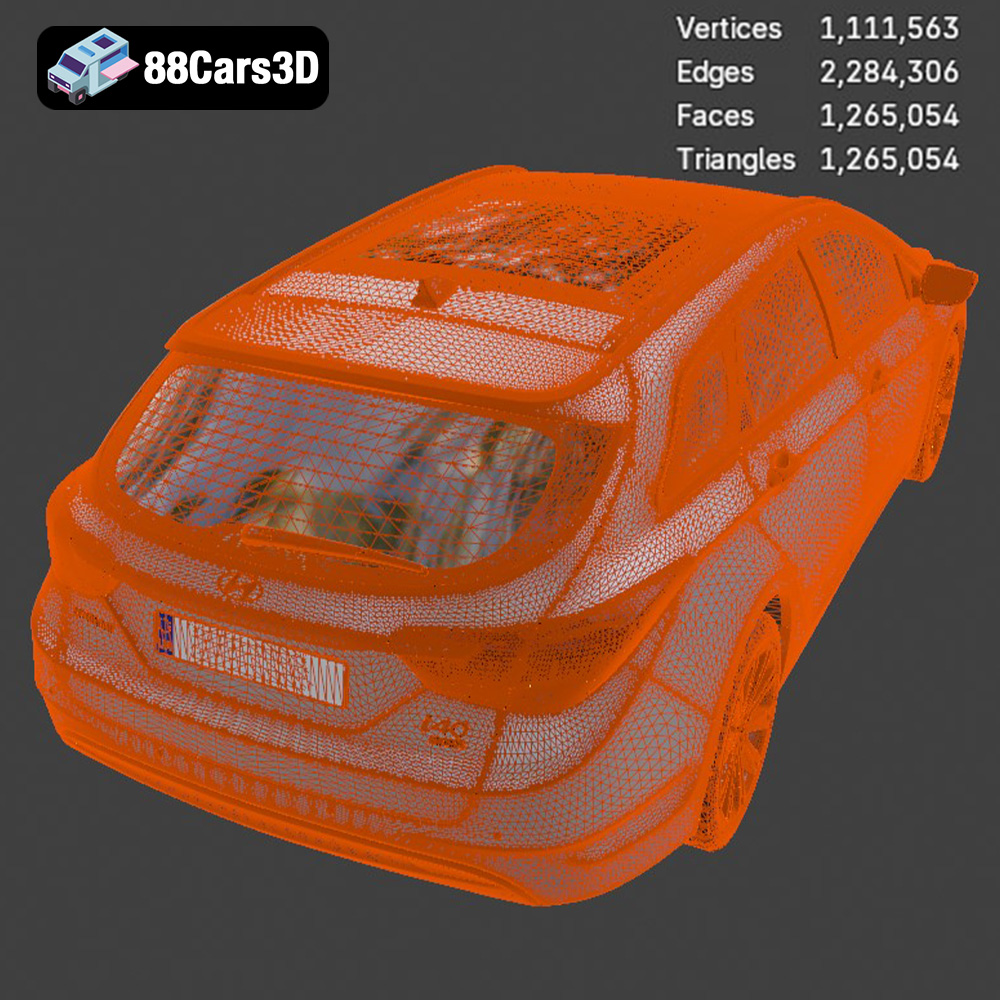
The `.stl` format is the industry standard for 3D printing. When a high-fidelity model like the Hyundai i40 Wagon 2015 is converted to `.stl`, its surface geometry is translated into a series of interconnected triangles. This triangulated mesh guides the 3D printer, layer by layer, in constructing a physical replica. This process allows designers to quickly produce scaled models for form factor analysis, aerodynamic testing (on a conceptual level), or simply to hold a tangible representation of their digital work. The precision and clean geometry of the original 3D car model are crucial here, as any imperfections in the digital mesh can translate directly into flaws in the physical print. This capability opens doors for automotive design students, independent car modders, or even car enthusiasts who want a tangible collectible of their favorite vehicle.
The `.ply` format, while less common for typical rendering, shines in contexts requiring detailed mesh data and attribute storage. For engineers performing structural analysis, aerodynamic simulations, or reverse engineering, a `.ply` file can capture intricate details and sometimes even color data from 3D scans. While the Hyundai i40 Wagon 2015 3D Model might not originate from a scan, its accurate geometry in `.ply` format could serve as a robust base for computational fluid dynamics (CFD) analysis or stress testing of specific components if further modeled internally. This precision mesh format is particularly valuable in CAD environments for designers who need to integrate vehicle models into larger engineering assemblies or perform detailed geometric inspections.
In today’s fast-paced production environment, time is a precious commodity. Creating a truly high-quality 3D car model from scratch, like the Hyundai i40 Wagon 2015, is an incredibly time-consuming and skill-intensive process. It involves extensive blueprint research, complex polygon modeling, intricate UV unwrapping, detailed texture painting, and sophisticated material setup. For many projects, particularly those with tight deadlines or budget constraints, building every asset internally is simply not feasible.
This is where professional 3D asset marketplaces like 88cars3d.com prove invaluable. They offer a curated selection of pre-made, high-quality 3D models that have been meticulously crafted by expert artists. When you purchase an asset from 88cars3d.com, you’re not just buying a file; you’re investing in quality assurance. These models are typically optimized, have clean topology, accurate dimensions, and come with professionally set up materials, saving countless hours of development time. For instance, the Hyundai i40 Wagon 2015 3D Model is ready to be dropped into a scene, instantly elevating the visual fidelity of a project without the need for extensive post-purchase work. This allows artists and developers to focus their efforts on more unique, project-specific elements.
The versatility offered by models like the Hyundai i40 Wagon 2015 3D Model, with its array of file formats, makes it suitable for a vast range of applications. Whether your project is for high-end cinematic rendering, demanding game development, immersive AR/VR experiences, precise architectural visualization, or even 3D printing, having a ready-to-use, robust asset streamlines the entire production pipeline. It democratizes access to professional-grade content, empowering independent creators and large studios alike to achieve stunning results efficiently. The investment in a premium asset from a reputable source ensures that the digital vehicle you integrate will meet the rigorous standards of any demanding project.
The journey through the creation and application of high-quality 3D car models reveals a complex interplay of artistic skill, technical precision, and strategic optimization. From the initial polygonal structure to the final rendered pixel or printed prototype, every step is critical in delivering a compelling and functional digital asset. Models like the Hyundai i40 Wagon 2015 3D Model stand as a testament to the meticulous work involved in capturing the essence of a real-world vehicle in a digital format.
Whether you are pushing the boundaries of automotive rendering, building immersive game worlds, designing cutting-edge AR/VR experiences, or crafting sophisticated architectural visualizations, the foundation of your success often lies in the quality of your 3D assets. By understanding the nuances of different file formats, the demands of various software pipelines, and the importance of optimization, artists and developers can make informed decisions that significantly enhance their creative output.
Investing in professionally crafted 3D car models from trusted sources like 88cars3d.com not only ensures visual integrity and technical compatibility but also provides an invaluable time-saving advantage. The Hyundai i40 Wagon 2015 3D Model, with its clean geometry, realistic materials, and comprehensive file format support, is more than just a digital object; it is a gateway to accelerating your creative workflow and achieving unparalleled realism in your next project.
Experience true-to-life automotive design with the Hyundai i40 Wagon 2015 3D Model. Carefully crafted to represent the sleek contours and practical elegance of this popular estate vehicle, this digital asset delivers exceptional realism for any demanding project. Constructed with professional precision, the model features clean geometry and realistic materials. The meticulously detailed exterior and well-proportioned dimensions ensure seamless integration into digital environments, offering an uncompromising visual experience while maintaining optimized performance. Perfectly suited for a wide range of professional applications, this vehicle asset is ideal for game development, cinematic rendering, architectural visualization, and immersive AR/VR experiences. Whether deployed in dynamic interactive simulations or static professional renders, its versatile design meets the rigorous standards of 3D artists and developers. Available in a comprehensive suite of file formats to guarantee compatibility across diverse software pipelines: .blend – Editable Blender file with materials and lighting setup; .fbx – Game-engine ready format for Unreal Engine and Unity; .obj – Standard 3D model format compatible with all major software; .glb – Optimized for AR/VR and web-based visualization; .stl – Suitable for 3D printing and prototyping; .ply – Detailed polygon mesh for analysis and visualization; .unreal – Pre-configured for Unreal Engine use; .max – Editable 3ds Max file for rendering and animation.
$39.99
.arvr
.blend
.car3dmodel
.estate
.familycar
.fbx
.gameasset
.glb
.hyundai
.i40
.max
.obj
.ply
.rendering
.simulation
.stationwagon
.stl
.unreal
.wagon