Get 20% OFF All Premium 3D & STL Models!

In the rapidly evolving landscape of digital content creation, the demand for hyper-realistic and versatile 3D assets has never been greater. From cinematic automotive advertisements to immersive virtual reality experiences and high-fidelity video games, the quality of 3D models directly dictates the success and believability of a project. Professional artists and developers understand that a truly exceptional 3D asset goes beyond mere aesthetics; it embodies clean topology, meticulous material work, and optimized performance across diverse platforms.
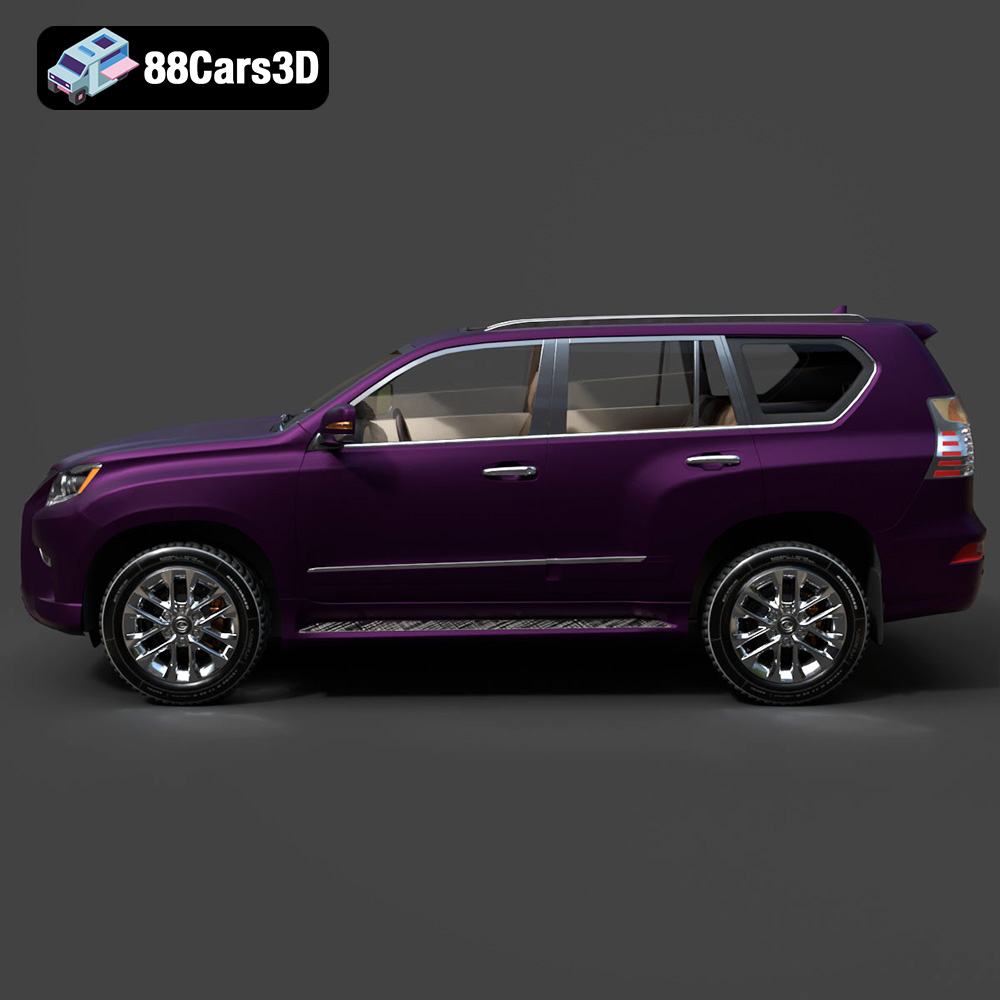
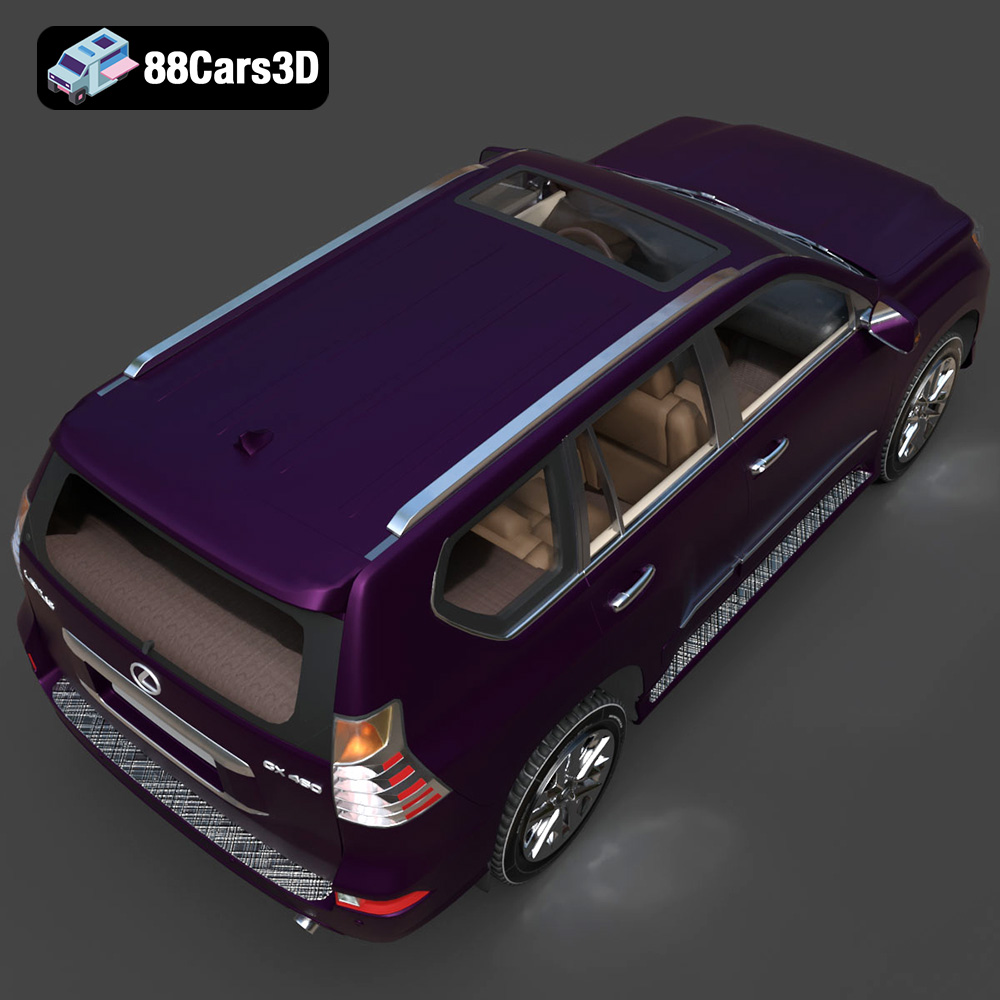
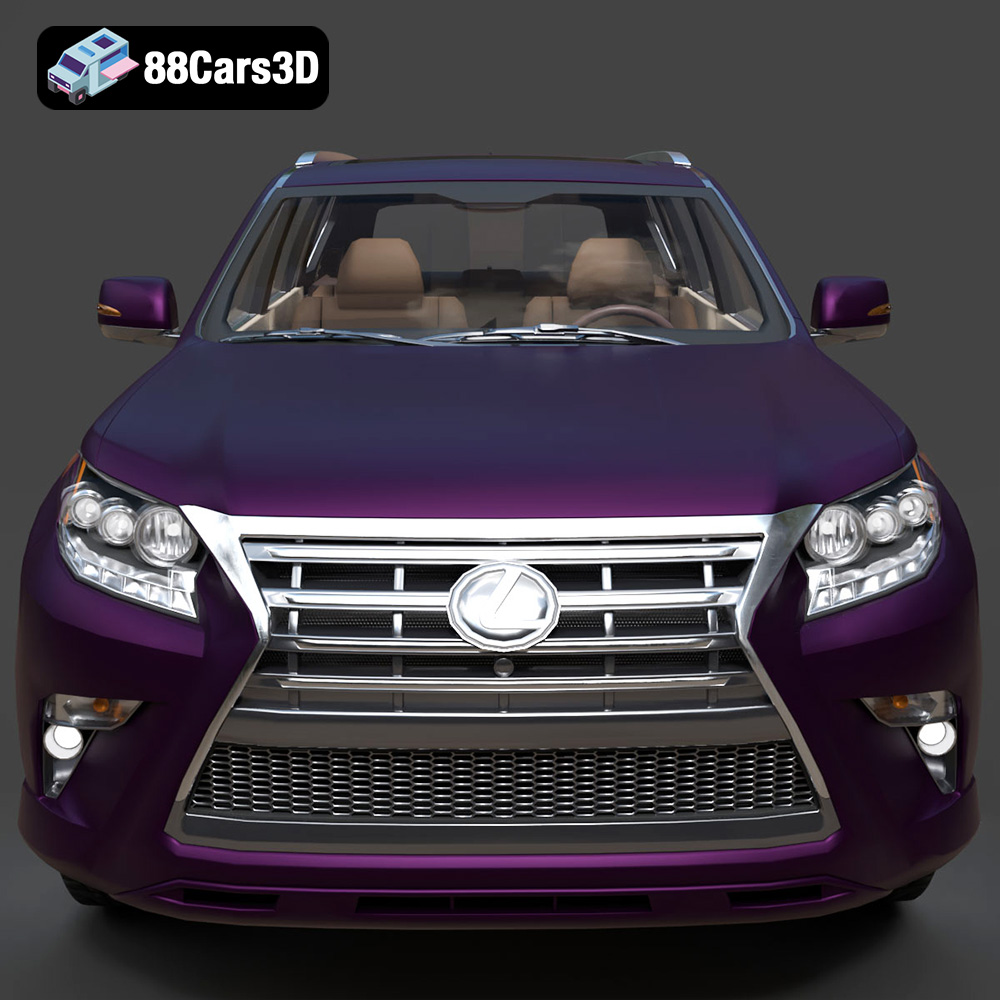
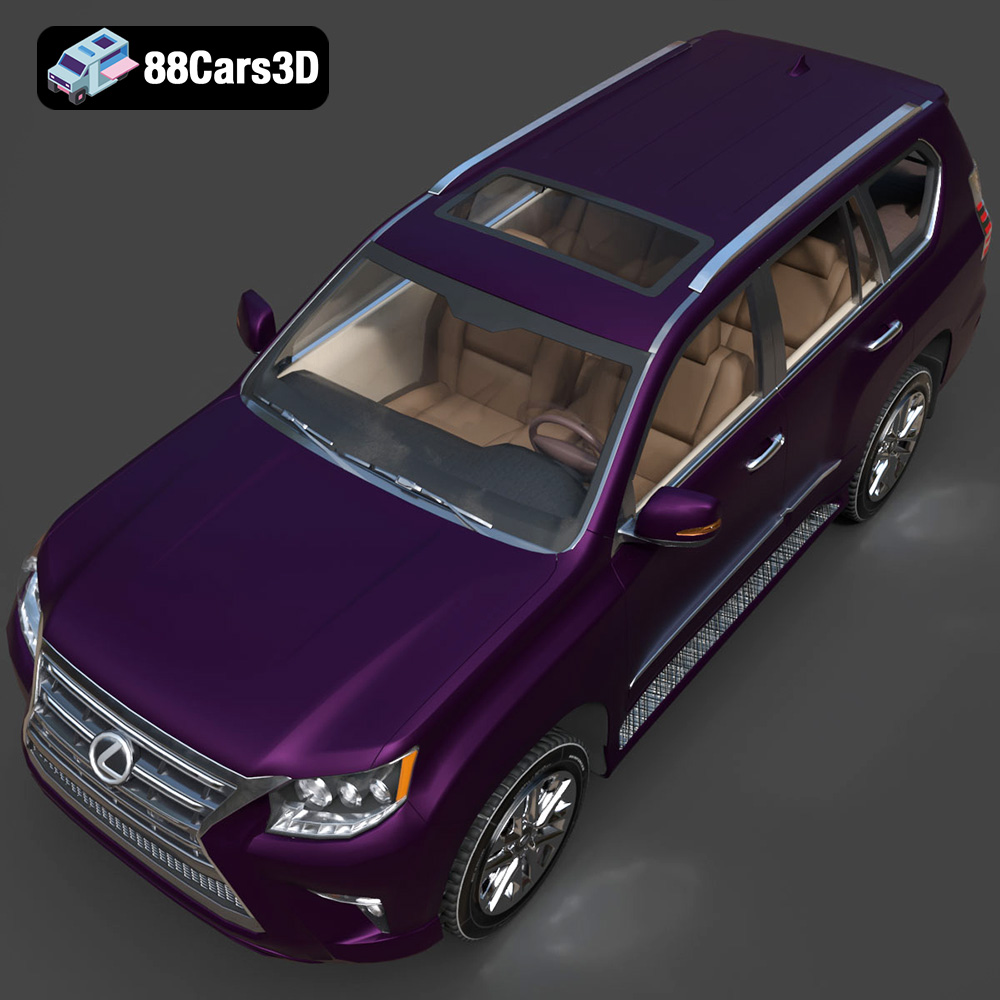
It is within this demanding context that products like the Lexus GX460 2014 3D Model stand out. This meticulously crafted digital asset offers a powerful blend of realism and technical robustness, perfectly replicating the luxurious design and formidable stance of the iconic SUV. For anyone seeking to elevate their projects with a ready-to-deploy, high-quality vehicle, understanding the intricacies of such assets and their integration into various workflows is paramount. This deep dive will explore the technical considerations, practical applications, and the sheer value a premium 3D car model brings to the table.
The versatility of a 3D model often hinges on the range of file formats it supports. Each format is designed with specific use cases in mind, offering different levels of data retention, compatibility, and optimization. A comprehensive package, such as that offered by the Lexus GX460 2014 3D Model, typically includes multiple industry-standard formats, ensuring maximum adaptability for any project. Navigating these options effectively is crucial for professional workflows.
The .blend format is the native file type for Blender, a popular open-source 3D creation suite. When you receive a .blend file, you’re getting a fully editable Blender scene, complete with materials, textures, lighting setups, and even camera configurations. This is invaluable for artists who primarily work within Blender, as it allows for immediate manipulation, rendering, and adaptation of the model without any loss of data or conversion artifacts. The clean geometry and node-based materials often come pre-configured, making it a plug-and-play solution for Blender users aiming for photorealistic renders with Cycles or real-time visualization with Eevee.
.fbx (Filmbox) is arguably the most widely used format for 3D data exchange across different software platforms and, critically, for game engines like Unreal Engine and Unity. Developed by Autodesk, FBX can store a vast array of 3D data, including mesh geometry, materials, textures, animations, rigging, and even camera data. Its strength lies in its ability to maintain complex scene hierarchies and animations, making it the ideal choice for importing animated vehicles or characters into real-time environments. For a 3D car model, an FBX ensures that UVs are preserved, materials are often correctly referenced, and the model is ready for performance optimization and integration into an interactive experience.
The .obj (Wavefront OBJ) format is a cornerstone of 3D modeling, renowned for its universal compatibility. It primarily stores geometric data (vertices, normals, UV coordinates) and references external material files (.mtl). While OBJ doesn’t typically support animation or rigging, its simplicity and widespread support make it an excellent choice for transferring static mesh data between virtually any 3D software application. It’s a reliable fallback for ensuring that the core geometry of the Lexus GX460 3D Model can be opened and worked with in any environment, from ZBrush to Cinema 4D.
.glb (GL Transmission Format Binary) is a modern, efficient format specifically designed for web-based 3D, augmented reality (AR), and virtual reality (VR) applications. It’s a binary version of glTF, which packages all necessary assets – geometry, materials, textures, and animations – into a single, compact file. This “all-in-one” characteristic makes .glb incredibly efficient for streaming and displaying 3D models directly in browsers or mobile AR/VR viewers. For showcasing the Lexus GX460 in an interactive web configurator or an AR app, .glb offers superior loading times and performance compared to multi-file setups.
The .stl (Stereolithography) format is the ubiquitous standard for 3D printing. It represents the surface geometry of a 3D object using a tessellation of triangular facets. STL files do not contain color, texture, or material information, focusing solely on the object’s form. When a 3D car model like the Lexus GX460 is provided in .stl, it signifies that the mesh is watertight and optimized for physical output, allowing designers and enthusiasts to bring the digital model into the tangible world through rapid prototyping.
The .ply (Polygon File Format) is another popular format for storing 3D data, often used in scientific and engineering applications, as well as for models derived from 3D scanning. PLY files can store more complex data than STL, including color, transparency, surface normals, and even confidence values. This makes them suitable for high-precision visualization, CAD integration, and scenarios where detailed mesh information is critical for analysis or rendering with specific shading models. For the Lexus GX460, a .ply file ensures that even the most minute surface details captured in the model are preserved for specialized uses.
While not a standalone file format in the traditional sense, the inclusion of a .unreal asset typically means a pre-configured, engine-ready package specifically designed for Unreal Engine. This usually involves an imported FBX that has undergone the necessary setup within Unreal: correct material instances, optimized texture sets, proper collision meshes, and potentially even blueprint integrations for interactive elements. For developers using Unreal Engine, this format significantly reduces setup time, allowing for immediate deployment of the Lexus GX460 into game levels, architectural visualizations, or cinematic sequences.
The .max format is the native project file for Autodesk 3ds Max, a powerful 3D modeling, animation, and rendering software widely used in architectural visualization, film, and game development. A .max file provides the complete editable scene, including all geometry, modifiers, materials (often V-Ray or Corona specific), lighting, and animation data. For professionals deeply integrated into the 3ds Max ecosystem, having the Lexus GX460 3D Model in .max format means having full control over every aspect of the asset, enabling complex animations, advanced material tweaking, and seamless integration into existing 3ds Max projects.
Automotive rendering is an art form that demands precision, a keen eye for detail, and a deep understanding of lighting and materials. A high-quality 3D car model like the Lexus GX460 2014 provides the perfect canvas for creating breathtaking visuals, whether for marketing, design reviews, or personal portfolios.
When working with the Lexus GX460 3D Model in 3ds Max, utilizing renderers like V-Ray or Corona is the pathway to photorealism. The .max file provided often includes materials already set up for these render engines, significantly streamlining the process. Key steps involve setting up realistic studio lighting (using HDRI environments for global illumination and additional area lights for highlights), adjusting camera settings to mimic real-world photography (depth of field, aperture, focal length), and refining material properties. For the GX460, this means meticulously tuning the car paint shader for metallic flakes and clear coat reflections, ensuring chrome elements have accurate reflectivity, and crafting believable glass with proper refraction and tint. Even the rubber of the tires and the intricate details of the wheel rims require specific material attributes to truly come alive.
Blender users can leverage the included .blend file of the Lexus GX460 2014 to achieve stunning results. Cycles, Blender’s physically-based renderer, offers incredible realism, while Eevee provides fast, high-quality real-time previews and renders. Artists can delve into Blender’s powerful node-based shader editor to customize the car’s materials, experimenting with different paint finishes, interior fabrics, and tire compounds. HDRI lighting setups combined with strategically placed area lights will define the mood and showcase the vehicle’s form. Eevee is particularly useful for rapid iteration and pre-visualization, allowing artists to quickly test different lighting scenarios and material variations before committing to a longer Cycles render.
The rendering process is only half the battle. Post-production in software like Adobe Photoshop or Affinity Photo is essential for elevating renders to a professional standard. Techniques such as color grading to enhance mood, adding subtle lens flares or chromatic aberration, and incorporating depth of field or motion blur (if not handled directly in the renderer) can dramatically increase the visual impact. Compositing the Lexus GX460 render into a real-world backplate or a virtual environment requires careful attention to matching lighting, perspective, and atmospheric effects, ensuring a seamless and believable final image.
For game developers, 3D car models are central to creating immersive and engaging driving experiences. The Lexus GX460 2014 3D Model, with its optimized geometry and game-engine-ready formats, is a robust asset for projects ranging from open-world simulations to racing games.
The inclusion of a dedicated .unreal asset and .fbx file simplifies integration into Unreal Engine. Developers can import the FBX, which typically includes the mesh, UVs, and material slots. From there, the focus shifts to creating efficient material instances, setting up Levels of Detail (LODs) to manage performance at varying distances, and generating accurate collision meshes for realistic physics interactions. Implementing vehicle blueprints, integrating wheel colliders, and configuring suspension and engine parameters are crucial steps to bring the Lexus GX460 to life within the game environment. The clean geometry of the model ensures a smooth UV unwrapping and texture baking process, which is vital for PBR (Physically Based Rendering) materials in Unreal Engine.
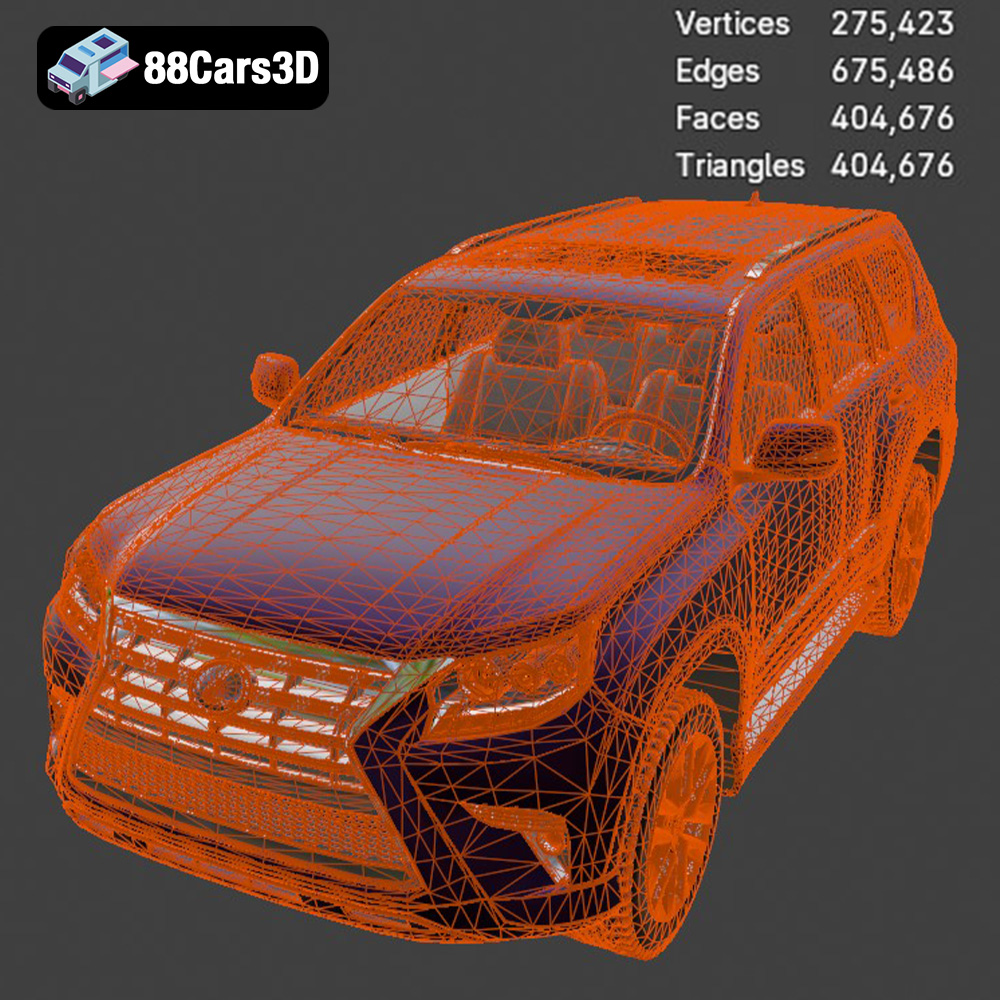
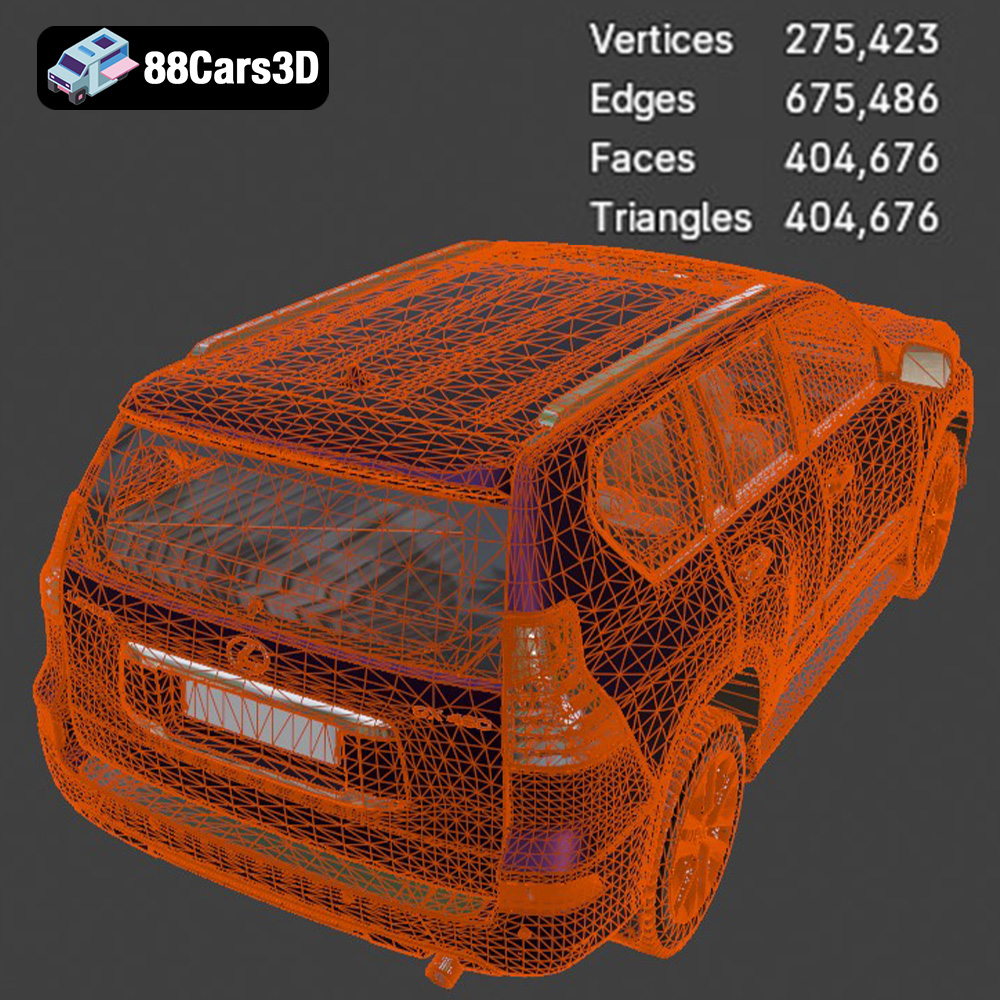
Game development is a delicate balance between visual fidelity and performance. An optimized 3D car model, like the Lexus GX460 2014 from 88cars3d.com, is built with this in mind. Its “optimized polygon count” means that while it retains significant detail, it avoids unnecessary geometry that could bog down frame rates. Developers further optimize by employing techniques like texture atlasing (combining multiple textures into one sheet to reduce draw calls), carefully managing shader complexity, and using efficient LODs. The quality of the base model ensures that these optimizations can be performed effectively without sacrificing visual integrity.
Augmented Reality (AR) and Virtual Reality (VR) demand highly optimized assets due to the stringent performance requirements and the need for seamless interaction. The .glb format, included with the Lexus GX460 3D Model, is particularly valuable here. Its single-file nature and efficient packaging make it ideal for quick loading and smooth rendering on mobile devices or VR headsets. When integrating the GX460 into an AR/VR experience, developers must consider accurate real-world scale, intuitive interaction methods (e.g., opening doors, changing paint colors), and careful placement within the virtual or augmented environment to maintain user immersion. The model’s realistic materials translate well into these immersive platforms, adding to the overall sense of presence.
The utility of a professional-grade 3D car model extends far beyond traditional rendering and game development, touching various industries that benefit from accurate digital representations.
The inclusion of the .stl and .ply formats makes the Lexus GX460 2014 3D Model suitable for 3D printing and physical prototyping. Industrial designers, automotive enthusiasts, and model makers can use these files to produce scale models for concept validation, presentation, or simply as collectible items. When preparing for 3D printing, it’s essential to check for mesh integrity, wall thickness, and printability, though a well-constructed source model typically provides a clean base. The ability to translate a digital model into a tangible object opens up a new dimension of creative and practical applications.
The automotive industry frequently employs 3D models for advanced simulations and training purposes. The Lexus GX460 3D Model can be integrated into driving simulators for training new drivers, testing vehicle dynamics in virtual environments, or even for virtual reality-based repair and maintenance training. The accuracy of the model, from its external dimensions to the representation of its interior, is critical for creating realistic and effective simulation scenarios. Engineers can utilize the precise mesh data for aerodynamic analysis or structural integrity studies in a virtual setting.
Architectural visualization (ArchViz) and environmental design projects often require realistic vehicles to populate scenes and add a sense of scale and realism. Placing the Lexus GX460 2014 in a driveway, a parking lot, or an urban street scene instantly brings life and context to an architectural render. Its high fidelity ensures that it doesn’t detract from the primary focus of the visualization but rather enhances it, grounding the design in a believable reality. The model’s versatility allows it to seamlessly integrate into exterior renders of luxury homes, commercial developments, or even urban planning concepts.
In a professional production environment, efficiency is king. The decision to purchase a ready-made, high-quality 3D asset, rather than creating one from scratch, can have a profound impact on project timelines and resource allocation.
Building a complex 3D car model like the Lexus GX460 2014 from the ground up is a time-intensive process that requires specialized skills in modeling, UV mapping, texturing, and material creation. For many studios and individual artists, allocating weeks or even months to this task is simply not feasible. By acquiring a production-ready asset from a marketplace like 88cars3d.com, creators can bypass this entire initial phase, saving significant amounts of time and freeing up valuable artistic and technical resources for other critical aspects of their projects. This efficiency directly translates to faster turnaround times and reduced production costs.
When purchasing 3D assets, quality is non-negotiable. The Lexus GX460 3D Model from 88cars3d.com exemplifies the “meticulous attention to detail” and “professional quality results” that artists expect. This includes clean, quad-based geometry, optimized polygon counts for performance, accurate UV layouts for seamless texturing, and realistic, well-configured materials. Such assets undergo rigorous quality checks to ensure they meet industry standards, meaning fewer headaches for the end-user in terms of mesh errors, broken UVs, or poorly optimized materials. This assurance of quality allows artists to focus on creativity rather than troubleshooting.
A diverse and high-quality asset library is a powerful tool for any digital artist or studio. Investing in assets like the Lexus GX460 2014 3D Model from 88cars3d.com continuously enriches this library, providing a versatile collection of models that can be reused across multiple projects. This not only offers creative flexibility but also builds a foundation of reliable assets that can be deployed quickly when new opportunities arise, further enhancing efficiency and ensuring consistent visual quality across various productions. Whether it’s for a new advertising campaign, a game level, or an AR prototype, having a readily available, high-caliber model is an invaluable advantage.
The journey from concept to final render or interactive experience is paved with countless technical and creative decisions. At the heart of many visually compelling projects lies the quality of their foundational 3D assets. The Lexus GX460 2014 3D Model serves as an excellent illustration of how a meticulously crafted, technically robust, and format-diverse asset can significantly empower artists and developers across a multitude of industries.
From achieving breathtaking photorealistic renders in 3ds Max and Blender to optimizing performance for demanding game engines like Unreal, and even enabling innovative applications in AR, VR, and 3D printing, this model demonstrates the profound impact of professional-grade 3D car models. By choosing assets that adhere to the highest standards of detail, optimization, and versatility, creators can elevate their projects, save invaluable time, and focus their energy on pushing the boundaries of digital artistry. For premium 3D models that meet these exacting standards, exploring the comprehensive collection at 88cars3d.com is a clear path to enhancing your digital production capabilities.
Discover the exceptional realism and precision of the Lexus GX460 2014 3D Model. Crafted with meticulous attention to detail, this digital asset perfectly replicates the powerful stance and luxurious design of the iconic SUV, making it an outstanding addition to your digital library. Designed for optimal performance, this model features clean geometry, realistic materials, and an optimized polygon count. Every exterior curve and interior element has been modeled to deliver professional quality results. The asset is fully textured and ready for immediate deployment in your chosen software. Whether you are developing an immersive video game, creating photorealistic architectural visualizations, producing interactive AR/VR experiences, or conducting automotive simulations, this versatile 3D model adapts seamlessly to any demanding production environment. This comprehensive package includes multiple industry-standard file formats to ensure maximum compatibility: .blend – Editable Blender file with materials and lighting setup; .fbx – Game-engine ready format for Unreal Engine and Unity; .obj – Standard 3D model format compatible with all major software; .glb – Optimized for AR/VR and web-based visualization; .stl – Suitable for 3D printing and prototyping; .ply – Detailed polygon mesh for analysis and visualization; .unreal – Pre-configured for Unreal Engine use; .max – Editable 3ds Max file for rendering and animation.
$39.99
.arvr
.blend
.car3dmodel
.fbx
.gameasset
.glb
.gx460
.lexus
.luxury
.max
.obj
.offroad
.ply
.rendering
.simulation
.stl
.unreal
SUV