Get 20% OFF All Premium 3D & STL Models!

The automotive industry has always been at the forefront of design and engineering innovation. In today’s digital age, this innovation extends far beyond the physical realm, into the sophisticated world of 3D modeling and visualization. From crafting lifelike car configurators to populating vast open-world games and producing cinematic advertisements, high-fidelity 3D car models are indispensable tools for professionals across various creative fields. They serve as the foundational building blocks for everything from rapid prototyping and virtual reality experiences to detailed architectural visualizations and intricate game development projects.
The demand for precise, optimized, and versatile 3D assets continues to grow, pushing the boundaries of what’s possible in digital realism. As such, selecting the right 3D model can be the difference between a project that merely exists and one that truly captivates and immerses its audience. This requires not only an eye for aesthetic detail but also a profound understanding of technical specifications, file formats, and workflow optimizations. We’ll explore these critical aspects, using the sophisticated Lexus LS 500 2018 3D Model from 88cars3d.com as a prime example of excellence in digital automotive design.
Navigating the world of 3D modeling often begins with understanding the myriad of file formats available, each designed for specific purposes and workflows. The choice of format can significantly impact compatibility, performance, and the ease of use across different software platforms and applications. The Lexus LS 500 2018 3D Model, available on 88cars3d.com, is a testament to versatility, offering a comprehensive suite of formats to cater to virtually any professional need. Let’s break down these essential formats:
The .blend format is the native file type for Blender, the powerful open-source 3D creation suite. When you acquire a .blend file, you’re getting a fully editable Blender scene. This includes not just the mesh geometry, but also materials, textures, lighting setups, cameras, animations, and even physics simulations. For artists and studios deeply integrated into the Blender ecosystem, this format offers unparalleled flexibility for customization, rigging, animation, and rendering directly within their preferred software. It’s ideal for those who want to dissect, learn from, or heavily modify the original model’s structure and shaders.
.fbx (Filmbox) is a proprietary file format owned by Autodesk, but it has become an industry-standard for 3D data interchange due to its robust support for mesh geometry, materials, textures, animations, and skeletal data. It’s particularly ideal for game development, as it seamlessly integrates with real-time engines like Unreal Engine and Unity. When exporting to .fbx, it’s crucial to ensure proper scaling, pivot points, and baked animations for optimal results in game pipelines. The Lexus LS 500 2018 3D Model in .fbx ensures a smooth transfer into these demanding environments, ready for optimization and integration.
The .obj (Wavefront Object) format is one of the oldest and most universally supported 3D formats. It’s a simple, text-based format primarily used for transferring static mesh data, including vertices, normals, UV coordinates, and groups. While it doesn’t store animation or rigging information, its widespread compatibility makes it a safe bet for cross-software transfers. It’s often accompanied by an .mtl (material) file for basic material definitions. For scenarios where pure geometry is the priority, such as importing into CAD software or a less common 3D application, .obj remains an excellent choice.
.glb (GL Transmission Format Binary) is the binary version of glTF, a royalty-free specification for the efficient transmission and loading of 3D scenes and models by engines and applications. It’s highly optimized for web-based 3D, augmented reality (AR), and virtual reality (VR) experiences due to its compact file size and efficient parsing. A .glb file encapsulates all necessary data—geometry, textures, animations, and materials—into a single file, making it incredibly convenient for distribution and real-time display in browsers or mobile AR applications. The Lexus LS 500 2018 3D Model in .glb is perfectly suited for interactive virtual showrooms or product configurators.
.stl (STereoLithography) is the de facto standard for 3D printing. It describes only the surface geometry of a 3D object using a tessellation of triangles. It lacks color, texture, or material information, focusing purely on the physical form. For turning the digital Lexus LS 500 into a tangible collectible, a precisely constructed .stl file is essential. However, preparing an .stl for printing often involves checking for manifold geometry, wall thickness, and scaling to ensure a successful print without errors or structural weaknesses, as detailed in the product’s 3D print settings.
.ply (Polygon File Format or Stanford Triangle Format) is another format used to store 3D data, particularly from 3D scanners. It’s capable of storing a wide range of properties, including color, transparency, surface normals, and texture coordinates, in addition to standard XYZ coordinates. While less common for general 3D model distribution than .fbx or .obj, it’s valuable in scientific, CAD, and engineering applications where precise mesh data, often derived from scanning, is crucial for analysis or reverse engineering workflows. For the Lexus LS 500, a .ply option offers maximum data integrity for specific technical applications.
The .unreal format signifies an asset specifically prepared and optimized for direct integration into Unreal Engine. While typically this isn’t a single file format but rather a set of imported assets (meshes, materials, textures), its inclusion here highlights that the Lexus LS 500 2018 3D Model is pre-configured for Unreal’s demanding real-time rendering pipeline. This usually means proper material setups, scaled dimensions, collision meshes, and potentially LODs (Levels of Detail) are already taken care of, significantly reducing setup time for game developers and architectural visualization artists working within Unreal.
Similar to .blend, the .max format is the native file type for Autodesk 3ds Max, a leading software for 3D modeling, animation, rendering, and visualization. A .max file contains the complete scene data, including geometry, materials, textures, lighting, cameras, animation keyframes, and modifiers. For professionals who utilize 3ds Max extensively for high-end rendering, complex rigging, or detailed architectural visualization, the .max file provides full access to the original project, allowing for intricate adjustments and advanced rendering techniques. Having the Lexus LS 500 in .max format ensures maximum flexibility for custom studio renders and animations.
The availability of the Lexus LS 500 2018 3D Model in such a diverse array of formats underlines its professional-grade quality and adaptability, making it an invaluable asset for any digital creator.
The allure of the Lexus LS 500 2018 lies in its masterful blend of aggressive styling, executive comfort, and meticulous *Takumi* craftsmanship. Translating such a nuanced vehicle into a high-quality 3D model is no small feat, requiring an unparalleled attention to detail and a deep understanding of automotive aesthetics. The Lexus LS 500 2018 3D Model available on 88cars3d.com exemplifies this dedication, offering a digital rendition that captures the very essence of its real-world counterpart.
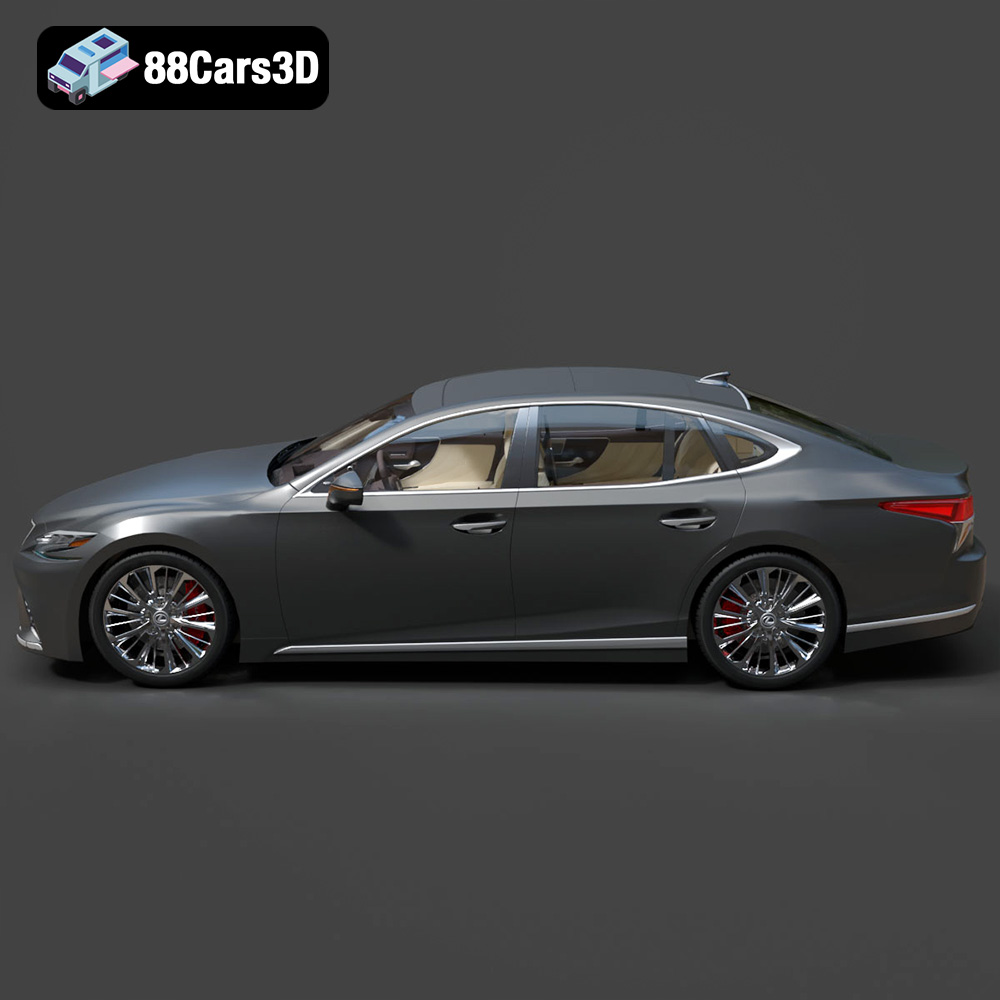
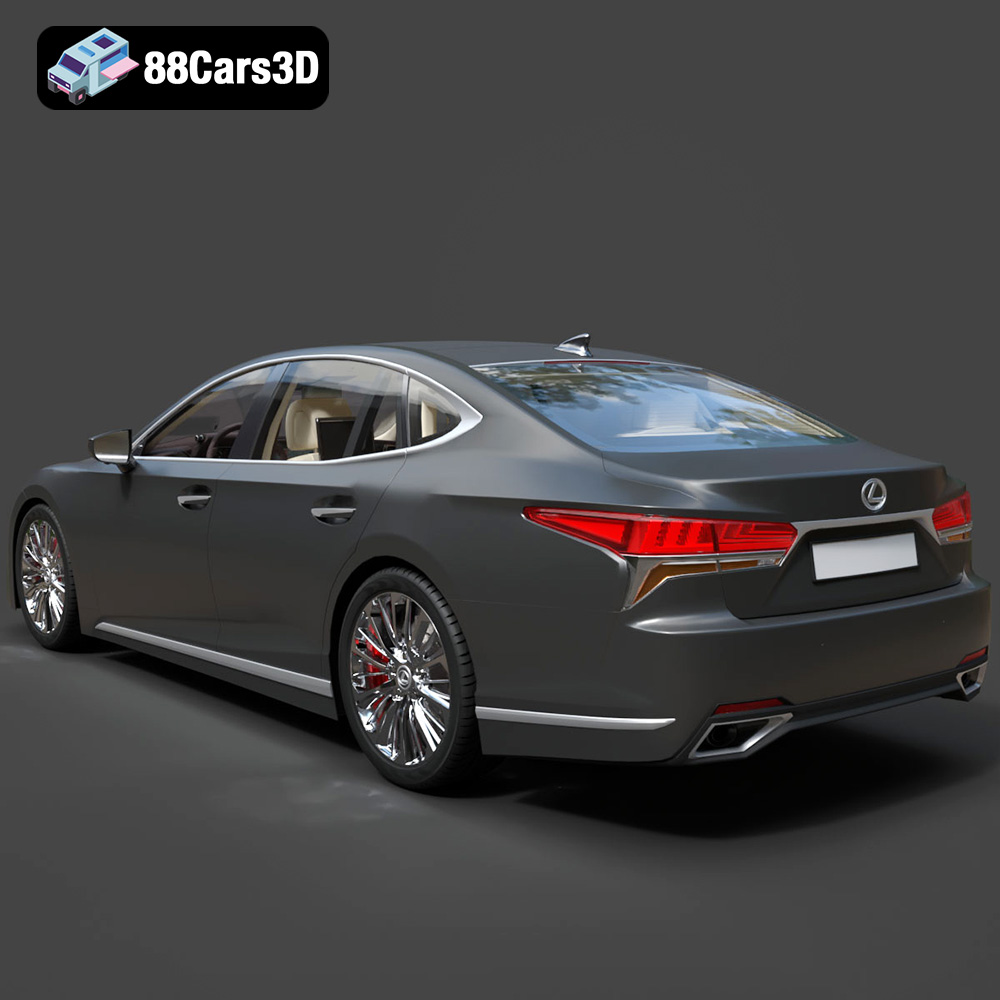
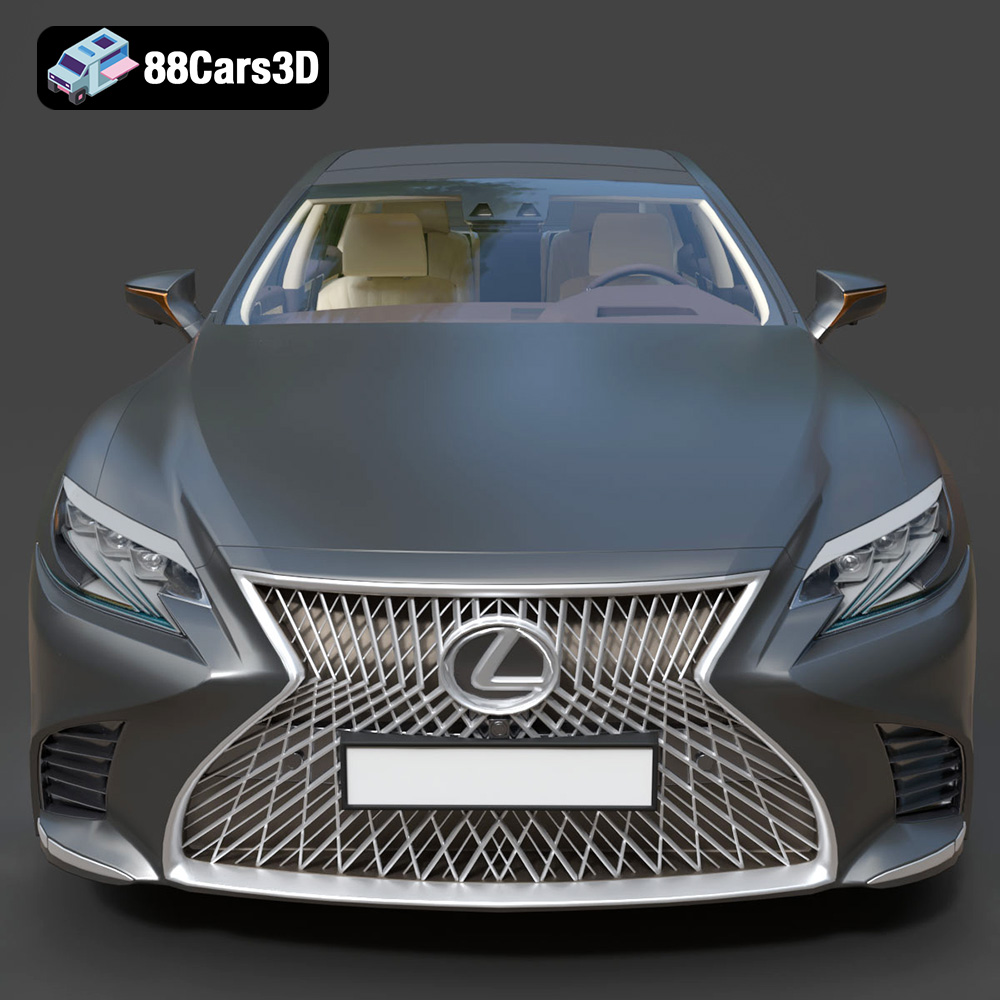
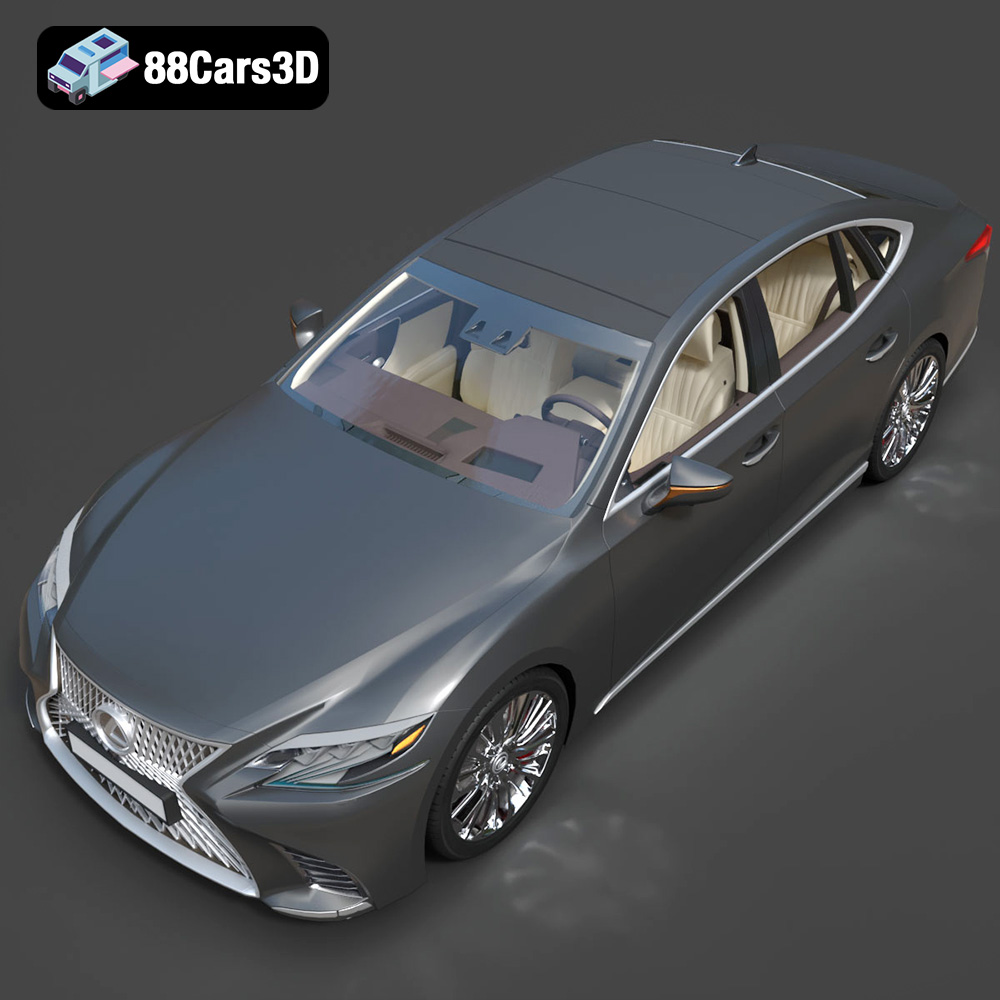
The physical Lexus LS 500 is a showcase of Japanese luxury, defined by its striking spindle grille and an elegant, coupe-like silhouette. This digital model meticulously reproduces these iconic elements. The complex mesh geometry of the signature spindle grille is accurately detailed, reflecting the intricate design work of the original vehicle. From the flowing lines of the frame to the integrated dual exhaust finishers with their subtle chrome detailing, every exterior feature is faithfully rendered. The distinctive Z-shaped LED headlights and L-shaped taillights, complete with internal projector detailing, are recreated to convey the car’s dynamic road presence, whether in a still render or a moving animation. Furthermore, authentic 19-inch/20-inch alloy wheels with low-profile tires and detailed brake calipers ensure that even up-close shots maintain photorealistic quality.
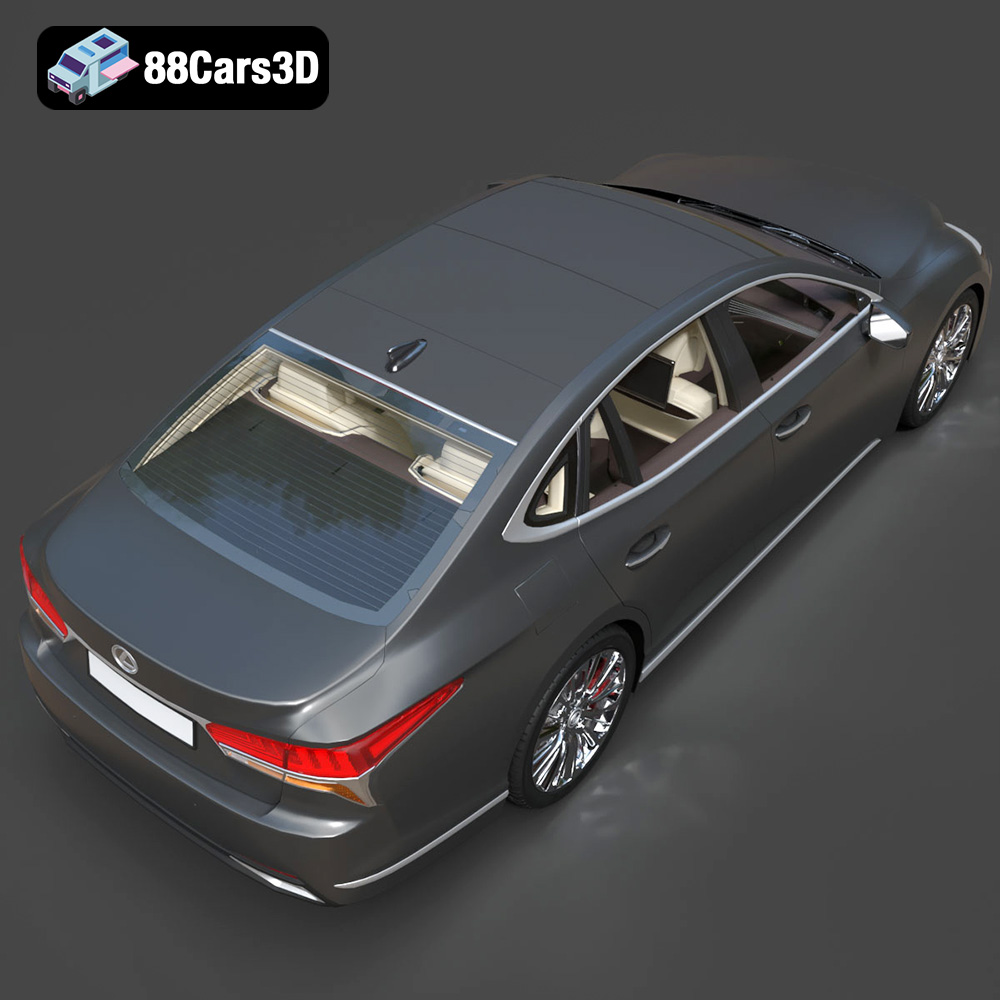
Beyond the impressive exterior, the Lexus LS 500 2018 3D Model provides a rich and detailed interior, crucial for immersive experiences. The luxurious leather-trimmed seating, featuring intricate quilting and stitching details, immediately conveys a sense of high-end comfort. The steering wheel, complete with integrated controls and paddle shifters, is accurately modeled, as are the high-resolution digital instrument cluster and the center infotainment display screen. Accurately placed center console controls, the trackpad, shifter, and pedals ensure that the cockpit is fully realized. This level of interior fidelity is particularly vital for applications like virtual reality (VR) simulations and games that feature first-person perspectives, allowing users to feel truly inside the vehicle.
The beauty of this 3D model extends beyond its visual accuracy to its underlying technical precision. It boasts real-world scale accuracy, based on actual vehicle chassis dimensions, ensuring that it integrates seamlessly into any scene without needing scale adjustments. For animators and game developers, the model comes with proper pivot setups for steering, individual wheel rotation, and suspension travel, enabling realistic vehicle dynamics and complex animations. Moreover, key components such as wheels, doors, suspension, and steering are separated, providing maximum flexibility for creating interactive elements or complex cinematic sequences. This thoughtful technical groundwork makes the Lexus LS 500 2018 3D Model not just visually stunning but also highly functional for professional workflows.
In the fast-paced world of game development and real-time visualization, the demands on 3D assets are immense. Models must not only look stunning but also perform flawlessly within strict engine budgets. The Lexus LS 500 2018 3D Model is engineered with “game-ready” excellence in mind, making it an ideal choice for developers seeking high-quality 3D car models that don’t compromise on performance.
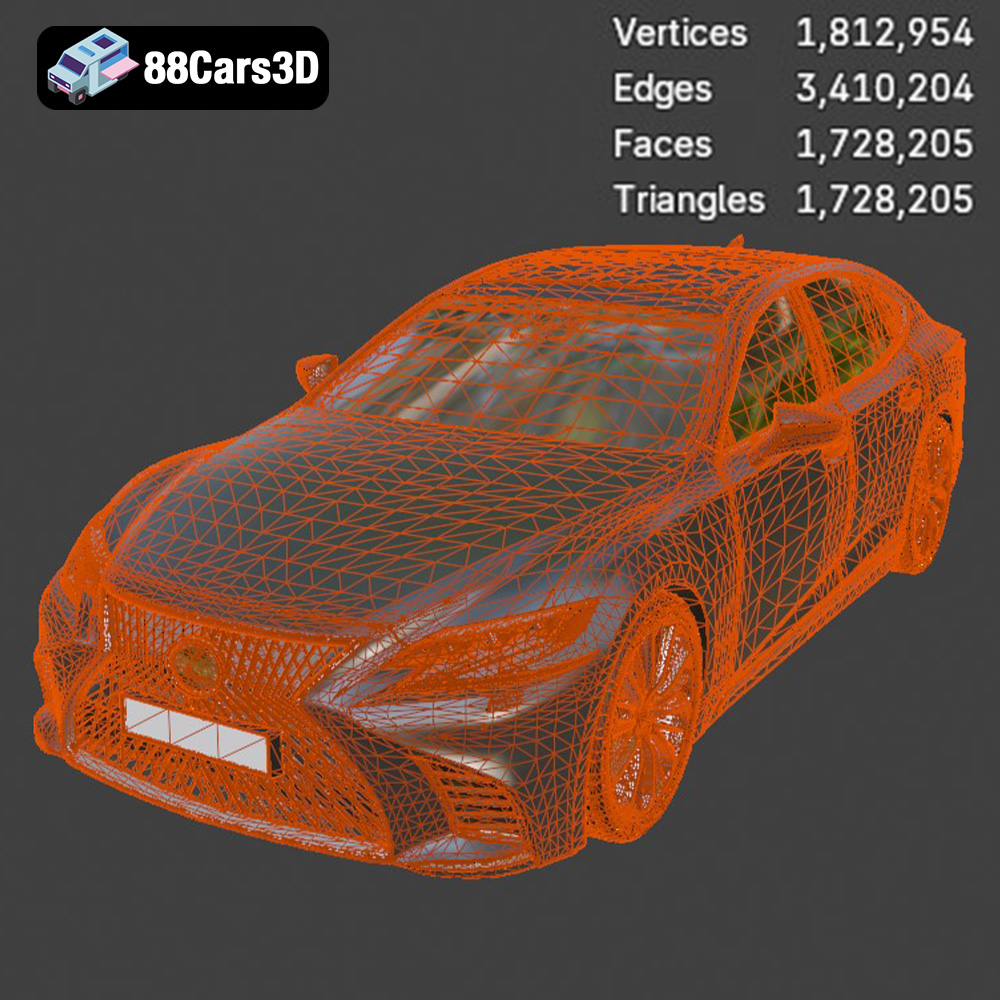
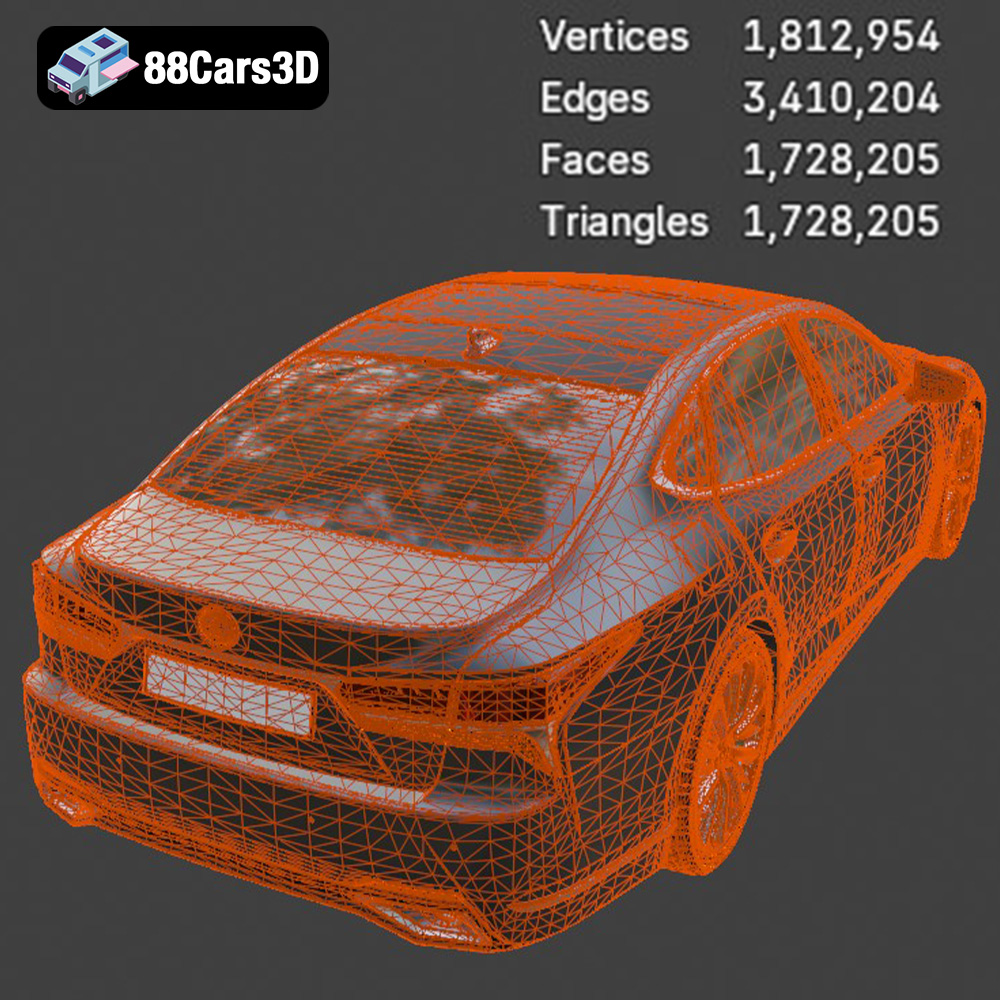
A critical challenge in game asset creation is striking the perfect balance between polygon count (polycount) and visual fidelity. Too many polygons can cripple performance, while too few can result in a blocky, unrealistic appearance. The Lexus LS 500 2018 3D Model achieves this balance with approximately 200,000 triangles. This optimized topology ensures top-tier visual realism for modern game titles and simulations, yet remains efficient enough for real-time engines like Unreal Engine and Unity. This careful optimization means developers can integrate the model into bustling open-world games or demanding racing simulators without causing frame rate drops, ensuring a smooth and immersive user experience.
The journey of a 3D model into a game engine requires more than just optimized geometry. It demands clean UVs, well-organized material IDs, and potentially physics assets and LODs (Levels of Detail). With its clean geometry and high-resolution textures, the Lexus LS 500 2018 3D Model simplifies this integration. Its availability in formats like .fbx and .unreal directly caters to game development pipelines, facilitating quick import and setup. The model’s proper pivot setup for steering and wheel rotation, along with separate components for animation, are vital features for creating dynamic and believable vehicle behaviors within a game environment. Developers can leverage these pre-configured elements to save significant production time, focusing instead on gameplay mechanics and overall world design.
The immersive nature of Augmented Reality (AR) and Virtual Reality (VR) applications places unique demands on 3D models. They must be lightweight enough for mobile devices and real-time rendering, yet detailed enough to withstand close inspection. The optimized polycount and high-resolution textures of the Lexus LS 500 2018 3D Model make it perfect for AR/VR experiences. Imagine a virtual showroom where potential buyers can explore the car’s interior and exterior in full 3D, customize colors, and even “sit” inside through a VR headset. Or an AR app that allows users to place the Lexus LS 500 in their driveway via their smartphone. The model’s availability in the .glb format, specifically optimized for web, AR, and VR, further streamlines its use in these cutting-edge interactive applications, allowing for impressive virtual showrooms, configurators, and mobile AR experiences that captivate audiences.
While real-time applications demand efficiency, high-end rendering and visualization often prioritize absolute fidelity and artistic control. Here, 3D car models serve a different, equally critical purpose: to create breathtaking, photorealistic imagery for marketing, brand campaigns, and architectural contexts. The Lexus LS 500 2018 3D Model provides the necessary detail and flexibility to excel in these demanding environments.
For cinematic quality renders and static visualizations, software like 3ds Max and Blender are industry staples. The Lexus LS 500 2018 3D Model, provided in .max and .blend formats, offers artists complete control over every aspect of the scene. In a 3ds Max workflow, for instance, artists can leverage V-Ray or Corona Renderer to achieve hyper-realistic lighting and material interactions. They can fine-tune the car’s paint shader to mimic metallic flake or pearl finishes, adjust the reflectivity of chrome trim, and sculpt the perfect studio lighting setup to highlight the LS 500’s elegant curves. Similarly, Blender users can utilize Cycles or Eevee, coupled with advanced node-based materials, to achieve stunning visual results. These editable formats mean materials can be swapped, textures can be refined, and the model can be integrated into complex scenes with ease, producing visuals indistinguishable from reality.
In architectural visualization (arch-viz), the inclusion of realistic context models, especially vehicles, can dramatically elevate a rendering. A luxury sedan like the Lexus LS 500 2018, meticulously rendered, adds a layer of realism, scale, and lifestyle to architectural presentations. Placing this high-fidelity 3D car model outside a contemporary residence or parked within a commercial building’s lobby immediately communicates a sense of scale, functionality, and aspiration. It helps potential clients envision themselves and their lives within the proposed design, transforming a sterile architectural drawing into a vibrant, lived-in space. The model’s accurate real-world scale and detailed exterior make it an invaluable asset for arch-viz artists looking to enhance their scene’s narrative and visual impact, providing perfect context for luxury property showcases or urban planning visualizations.
The ability to customize a 3D model is paramount for creative professionals. The Lexus LS 500 2018 3D Model offers extensive customization options, allowing artists to adapt it to any creative brief. Users can easily change body colors to match factory palettes, custom metallic, or even pearl finishes, giving each render a unique aesthetic. Tire textures can be modified to reflect street or performance variants, altering the car’s character. Material finishes can be adjusted from matte to gloss, metallic, or chrome, providing flexibility for diverse visual styles and brand requirements. Furthermore, lighting can be adapted to suit different environments—from bright daylight and moody night driving scenes to dramatic studio setups—all contributing to a versatile and powerful asset for high-end brand campaigns and lifestyle renderings.
The journey of a 3D model doesn’t always end on a screen. For enthusiasts, collectors, and even designers engaged in rapid prototyping, the ability to translate a digital asset into a tangible object through 3D printing opens up a world of possibilities. The Lexus LS 500 2018 3D Model is not only designed for digital excellence but also prepared for physical manifestation, offering a pathway to owning a miniature version of this luxury sedan.
The transformation from a complex digital mesh to a physical object is a fascinating process that relies heavily on the quality and preparation of the 3D model. The .stl format, included with the Lexus LS 500 2018 3D Model, is the universal gateway to 3D printing. This format simplifies the geometry into a series of triangles that 3D printers can interpret to build up layers of material. For automotive models, this means carefully ensuring that all surfaces are manifold (watertight), there are no self-intersecting geometries, and fine details are preserved within the limitations of additive manufacturing. The model’s optimized topology, initially designed for real-time performance, also translates well to 3D printing, providing a clean base for manufacturing.
Achieving a high-quality 3D print, especially for a detailed car model, requires careful attention to print settings and post-processing. The Lexus LS 500 2018 3D Model comes with recommended print settings tailored for optimal results. Recommended scales of 1:12, 1:18, or 1:24 allow for various display options. For layer height, a fine resolution of 0.04–0.12 mm is suggested, with resin printing often recommended over FDM for its ability to capture intricate details like the spindle grille and interior elements. Adequate wall thickness (1.2–2.0 mm) and infill (20–30%) ensure structural integrity. Supports are crucial for overhangs and delicate parts such as the exhaust outlets, mirrors, and grille. Furthermore, strategic print orientation, such as printing the frame angled and wheels separately, minimizes support marks and maximizes detail. Post-processing, including sanding, priming, and applying authentic factory colors with metallic finishes, is essential to truly bring the printed model to life, mirroring the high standards of the digital original.
The utility of 3D printable car models extends across various users. For hobbyists, it offers the satisfaction of constructing and painting a detailed replica of their favorite luxury vehicle, perhaps even customizing it with unique modifications. Car enthusiasts can collect scale models that are otherwise difficult or impossible to find commercially. For design students and professionals, 3D printing the Lexus LS 500 can be a valuable tool for tactile prototyping, allowing them to physically examine forms, proportions, and design nuances before committing to larger, more expensive prototypes. It’s a bridge between the digital and physical, offering a tangible representation of design excellence that started as a high-quality 3D car model from platforms like 88cars3d.com.
In the dynamic landscape of digital content creation, the value of high-quality 3D car models cannot be overstated. From captivating audiences in next-generation video games to immersing users in augmented and virtual reality experiences, and from producing stunning photorealistic renders for advertising to enabling the tactile creation of physical models, a meticulously crafted automotive asset is a cornerstone for professional success. The Lexus LS 500 2018 3D Model stands as a prime example of such excellence, embodying precision in its geometry, optimization for performance, and versatility across a spectrum of demanding applications.
Its comprehensive suite of file formats, detailed exterior and interior features, and game-ready optimization ensure that whether your project demands real-time efficiency or rendering fidelity, this model delivers. It empowers creators to bring the sophisticated elegance of the Lexus LS 500 into any digital environment, providing a robust foundation for creativity and innovation. For professionals seeking top-tier 3D car models that blend aesthetic accuracy with technical prowess, platforms like 88cars3d.com offer an invaluable resource, ensuring your projects achieve the highest standards of realism and immersion.
The 2018 Lexus LS 500 is the pinnacle of Japanese luxury, featuring a striking spindle grille, elegant coupe-like silhouette, and a powerful twin-turbo V6 engine. Known for its meticulous Takumi craftsmanship, whisper-quiet ride, and aggressive yet refined styling, the LS 500 represents the intersection of executive comfort and cutting-edge automotive design. From its complex front fascia to the dual exhaust outlets, every curve is captured to convey its dynamic road presence.
This highly detailed, game-ready 3D model boasts optimized topology (approximately 200,000 triangles), ensuring top-tier visual fidelity without sacrificing real-time performance. Designed with clean geometry and high-resolution textures, it delivers photorealistic results ideal for modern game development, immersive AR/VR experiences, high-end animation, and architectural visualization.
Perfect for luxury car configurators, urban open-world games, cinematic architectural renderings, and high-end brand showcases.
.blend, .fbx, .obj, .glb, .stl, .ply, .unreal, .max
Tags:
lexus, ls-500, 2018, luxury-sedan, executive-car, game-ready, low-poly, optimized, car-3d-model, game-asset, rendering, vr-ar, blend, fbx, obj, glb, stl, ply, unreal, maxBMW 328 Mille Miglia Touring Coupe 3D Model 3D Printable STL
$39.99
.2018
.blend
.fbx
.glb
.lexus
.max
.obj
.ply
.rendering
.stl
.unreal
car-3d-model
executive-car
game asset
game-ready
low-poly
ls-500
luxury-sedan
optimized
VR/AR