Get 20% OFF All Premium 3D & STL Models!

In the dynamic world of 3D visualization, game development, and interactive experiences, the demand for exceptionally crafted 3D car models has never been higher. From the nuanced reflections on a polished chrome bumper to the intricate stitching on an interior seat, every detail contributes to immersion and realism. Professionals across industries seek assets that not only look stunning but are also technically robust, optimized for performance, and versatile enough to integrate into diverse pipelines. This quest for perfection often leads to specialized marketplaces offering meticulously engineered models.
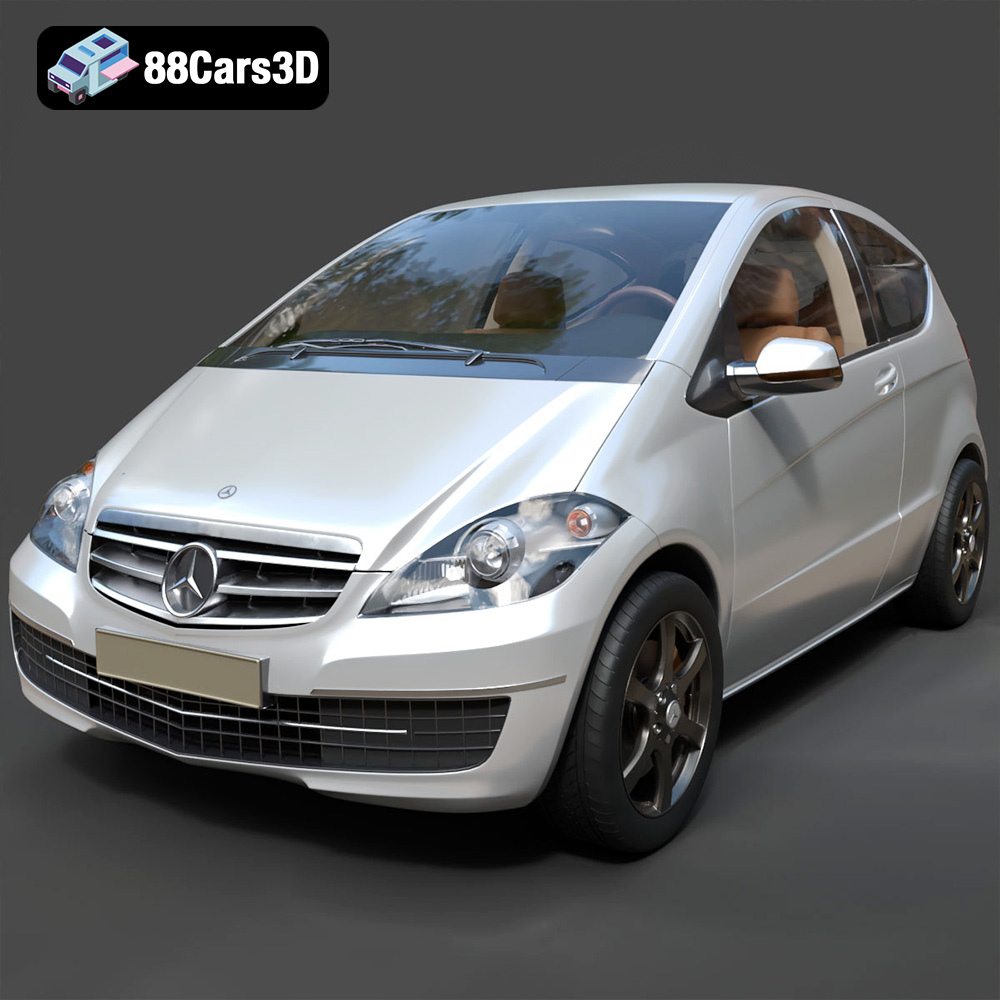
Consider, for example, the **Mercedes Benz A Class 3 Door 2010 3D Model**. This particular asset stands as a prime illustration of a high-quality, multi-purpose vehicle model. It captures the essence of a defining era of compact luxury, translating the real-world practicality and distinct design of the A-Class W169 into a digital format. Such a model isn’t merely an aesthetic object; it’s a foundational building block for game designers simulating urban environments, architectural visualizers populating street scenes, or AR/VR developers crafting interactive showrooms. Its game-ready optimization and comprehensive file format support make it an invaluable asset, bridging the gap between artistic vision and technical execution.
The versatility of a 3D car model, such as the Mercedes Benz A Class 3 Door 2010, is significantly amplified by the range of file formats it supports. Each format serves a specific purpose, catering to different software, workflows, and end applications. Understanding these formats is crucial for any professional working with 3D assets to ensure seamless integration and optimal performance.
The `.blend` file is the native format for Blender, the powerful open-source 3D creation suite. When you acquire a model in `.blend` format, you’re getting a complete Blender scene, often including the model’s geometry, materials, textures, lighting, camera setups, and even animation rigs. This offers the highest degree of editability and flexibility for Blender users. For an asset like the Mercedes A-Class, the `.blend` file allows artists to delve deep into its construction, modify shaders, adjust topology, or even re-rig parts for custom animations, all within a familiar environment. It’s ideal for artists who want to customize every aspect without losing original data.
The Filmbox (`.fbx`) format is an industry-standard interchange format developed by Autodesk. It’s renowned for its ability to store not just mesh data but also animation, cameras, lights, and materials in a single, well-structured file. This makes `.fbx` indispensable for game engines like Unreal Engine and Unity, where importing complex animated assets efficiently is paramount. The game-ready Mercedes A-Class model provided as an `.fbx` ensures that its optimized mesh (~150,000 triangles), pivot points for wheels and steering, and material assignments translate accurately into these real-time environments, minimizing setup time and ensuring consistent performance.
The Wavefront Object (`.obj`) format is one of the oldest and most widely supported 3D file formats. It’s a simple, text-based format that primarily stores geometry data (vertices, normals, texture coordinates, and faces) and references to external material files (`.mtl`). While it doesn’t typically store advanced features like animation or rigging, its universal compatibility makes it a safe bet for transferring models between almost any 3D software application. If you need to import the Mercedes A-Class into a less common renderer or a legacy software package, `.obj` is usually the most reliable choice, offering a clean mesh for further processing.
GL Transmission Format Binary (`.glb`) is the binary version of glTF (Graphics Library Transmission Format), a relatively new standard designed for efficient transmission and loading of 3D scenes and models by engines and applications. `.glb` files package all model data—geometry, textures, materials, and animations—into a single file, making them highly portable and optimized for web-based 3D, augmented reality (AR), and virtual reality (VR) experiences. The Mercedes A-Class in `.glb` format is perfect for embedding in websites, mobile AR applications, or quickly showcasing the model in a browser-based viewer without complex setups, thanks to its compact nature and performance optimizations.
Stereolithography (`.stl`) is the de facto standard format for 3D printing. It represents a 3D model as a series of connected triangles (a tessellated mesh) that define the surface geometry of an object without color, texture, or other CAD attributes. For hobbyists or professionals looking to bring the Mercedes A-Class from the screen into the physical world, the `.stl` format is essential. It provides the raw, printable geometry, allowing users to configure print settings like layer height and supports for accurate physical reproduction, as detailed in the product specifications.
The Polygon File Format (`.ply`), also known as the Stanford Triangle Format, is primarily used to store 3D data from 3D scanners. It can store a wider range of properties for each vertex or face, including color, transparency, normals, texture coordinates, and even reliability information. While less common for typical asset exchange than FBX or OBJ, `.ply` is valuable when precision mesh data is critical, often for scientific, CAD, or reverse-engineering applications where detailed surface information for the Mercedes A-Class might be analyzed.
The `.unreal` format, or typically an Unreal Engine project asset, signifies that the model is specifically prepared and exported for direct import into an Unreal Engine project. This means it has likely undergone specific optimizations, material setups using Unreal’s physically based rendering (PBR) pipeline, and potentially even collision meshes or LOD (Level of Detail) configurations tailored for the engine. While not a standalone file format in the traditional sense, providing an “Unreal” ready asset, as with the Mercedes A-Class model, implies a highly streamlined workflow for developers using Unreal Engine, saving significant time on asset preparation and integration.
Similar to `.blend` for Blender, the `.max` file is the native format for Autodesk 3ds Max, a leading software for 3D modeling, animation, and rendering in architectural visualization, product design, and visual effects. A `.max` file for the Mercedes A-Class contains the full 3ds Max scene, including geometry, materials (often V-Ray or Corona ready), lighting, cameras, and any applied modifiers or animation data. This format provides 3ds Max users with maximum flexibility for advanced rendering, scene integration, or creating custom animations, offering deep control over every aspect of the model.
This comprehensive support for various file formats ensures that whether you’re a game developer, an architect, a product designer, or a 3D printing enthusiast, the Mercedes Benz A Class 3 Door 2010 3D Model from 88cars3d.com can seamlessly integrate into your workflow.
Creating a compelling 3D car model is far more than just replicating a vehicle’s appearance. It’s a meticulous process that marries artistic sensibility with rigorous technical understanding, ensuring that the digital representation is both visually stunning and functionally sound. The Mercedes Benz A Class 3 Door 2010 3D Model exemplifies this synthesis, offering a design that prioritizes both beauty and practicality in the 3D pipeline.
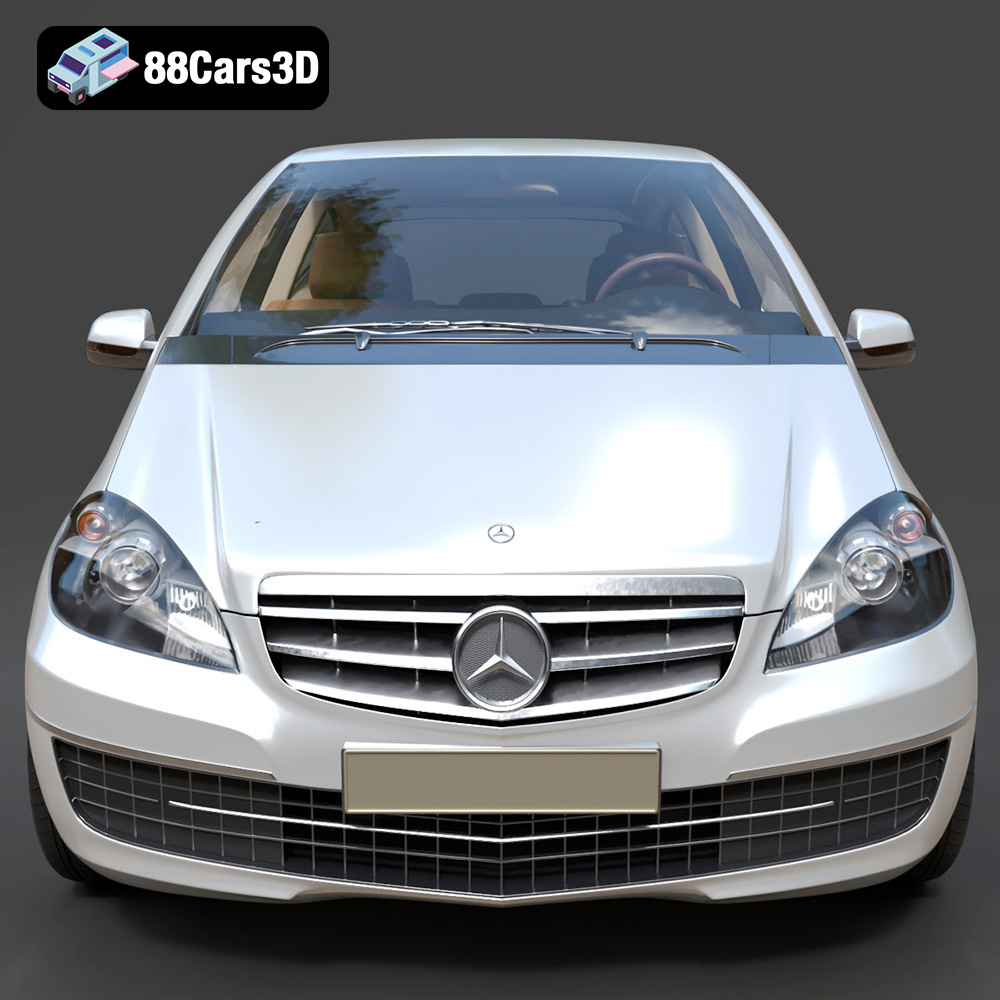
At the core of any accurate 3D automotive model is precision. Replicating the distinct wedge-shaped silhouette and the iconic three-pointed star of the Mercedes-Benz A-Class W169 requires an acute eye for detail and painstaking geometric construction. This involves meticulous referencing of real-world schematics and photographs to ensure that every curve, panel gap, and proportion is true to the original vehicle. From the swept-back headlights and distinct taillight clusters to the accurately modeled exhaust system and factory-spec alloy wheel designs, every component is carefully crafted. This adherence to real-world scale and accurate geometry is paramount, especially for applications like architectural visualization, where cars populate scenes, or simulations where scale profoundly impacts realism. The separated components—wheels, doors, and steering—further enhance this realism, allowing for authentic articulation and animation.
While high detail is crucial, it must be balanced with optimization, particularly for real-time applications. A common challenge in 3D modeling is creating meshes that are rich in detail without becoming overly dense, which can cripple performance in game engines or AR/VR experiences. The Mercedes A-Class model solves this by featuring a highly efficient topology with an optimized triangle count of approximately 150,000 triangles. This figure strikes a perfect balance, maintaining exceptional visual fidelity for close-up renders while being lean enough for smooth real-time performance. Good topology isn’t just about poly count; it’s about clean, quad-based geometry, efficient UV mapping for texture application, and proper mesh flow that facilitates deformation and animation, all of which are hallmarks of professional-grade assets.
The utility of a high-quality 3D car model like the Mercedes Benz A Class 3 Door 2010 extends across numerous professional pipelines. Its versatility and optimization make it a plug-and-play solution for various industries, significantly accelerating project timelines and elevating visual quality.
For game developers, performance is king. Assets must be highly optimized to run smoothly in real-time environments. The Mercedes A-Class 3D model is explicitly designed with game-ready optimization, featuring a poly count of approximately 150,000 triangles. This makes it an ideal candidate for open-world games, racing titles, and urban simulators.
* **Import and Setup:** Using the `.fbx` or the `.unreal` (Unreal Engine specific) format, developers can seamlessly import the model into Unreal Engine or Unity. The model’s proper pivot setup for steering, wheel rotation, and suspension travel is a huge time-saver, as it comes pre-configured for dynamic animations without complex rigging.
* **Material Integration:** With PBR (Physically Based Rendering) materials, the model’s textures and shaders can be quickly adapted to the respective engine’s rendering pipeline, ensuring realistic metallic finishes, glass reflections, and tire textures.
* **Collision and LODs:** For larger open-world games, developers might add simple collision meshes and generate Level of Detail (LOD) models from the base mesh to ensure the car renders efficiently even at a distance, further maximizing performance.
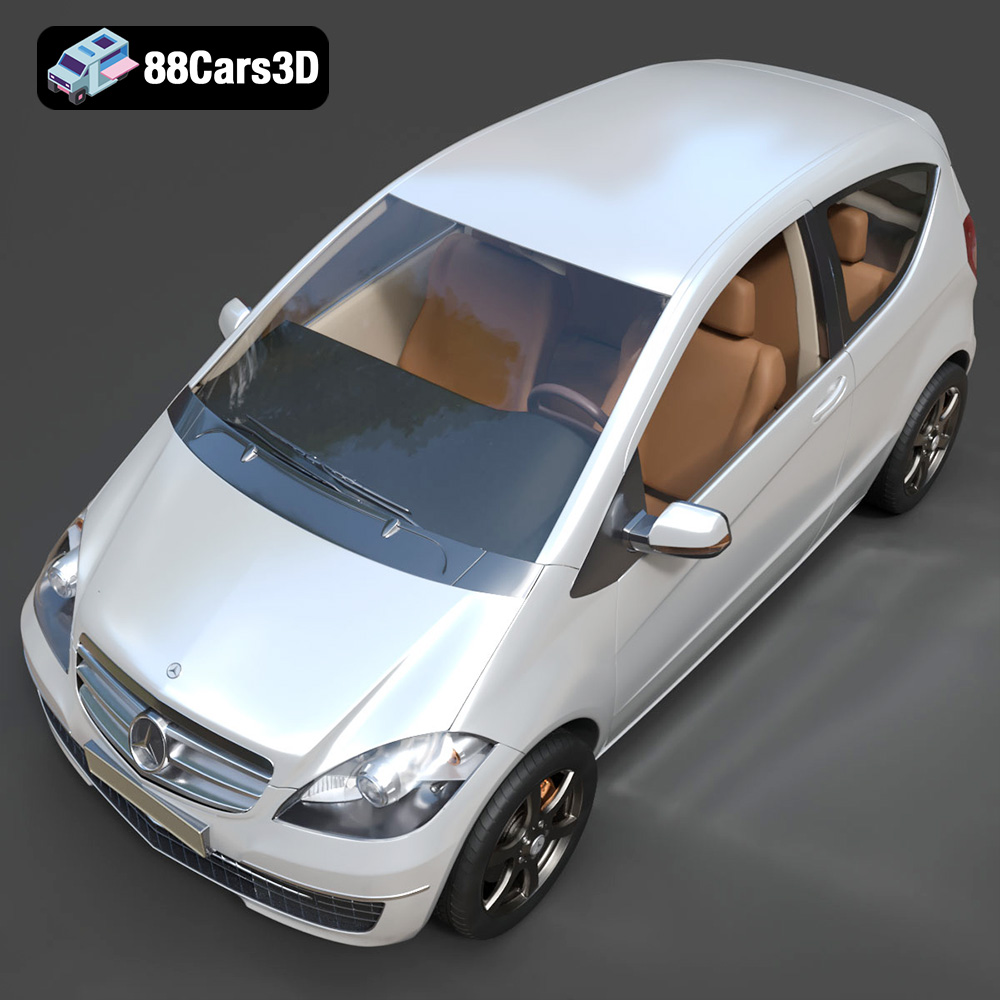
Architectural visualization (ArchViz), product rendering, and cinematic animations demand the highest level of visual fidelity. The Mercedes A-Class model excels in these areas due to its detailed exterior and interior features.
* **Software Integration:** Leveraging the `.max` or `.blend` files, artists can integrate the model into 3ds Max or Blender. This gives full control over the scene.
* **Advanced Materials and Lighting:** Artists can apply advanced materials, such as V-Ray or Corona shaders in 3ds Max, or Cycles/Eevee shaders in Blender, to achieve photorealistic results. The “Detailed Product Description” mentions the ability to change body colors, modify tire textures, and adjust material finishes (matte, gloss, metallic), which are crucial for creating diverse rendering scenarios. Lighting setups, from studio conditions to environmental HDRIs, can transform the car’s appearance for brand campaigns or lifestyle renders.
* **Animation and Scene Building:** The separate components (doors, wheels, steering) are perfect for creating dynamic animations—a car driving through an urban landscape, doors opening in a virtual showroom, or suspension reacting to road conditions. The detailed cockpit and interior features make it suitable for first-person POV shots, enhancing immersion in any rendered scene.
Augmented and Virtual Reality demand models that are not only high-quality but also highly optimized for real-time mobile and headset platforms.
* **Optimization for Mobile:** The optimized polycount and `.glb` format are perfectly suited for AR/VR. `.glb` files consolidate all assets into a single binary, reducing load times and simplifying distribution.
* **Interactive Showrooms:** Imagine a virtual showroom where potential buyers can walk around the Mercedes A-Class, open its doors, examine the detailed interior, and even customize its color or wheel options in real-time. This level of interaction is possible with such an optimized model, creating immersive virtual experiences for configurators or product showcases.
The journey of a 3D model doesn’t always end on a screen. For many enthusiasts and designers, bringing a digital creation into the physical world through 3D printing is the ultimate goal. The Mercedes Benz A Class 3 Door 2010 3D Model is well-equipped for this transition, offering the necessary `.stl` format and detailed guidelines for successful physical reproduction.
The `.stl` (Stereolithography) format is the industry standard for 3D printing, representing the model’s surface geometry as a collection of triangles. For the Mercedes A-Class, providing an `.stl` file means the model is ready to be sliced and printed. However, successful 3D printing requires more than just the right file; it demands precise print settings.
* **Scale and Precision:** Recommended scales like 1:12, 1:18, or 1:24 cater to various display and hobbyist needs. For fine details, especially for miniature cars, resin printing is often recommended over FDM, along with a layer height of 0.04–0.12 mm.
* **Structural Integrity and Supports:** Details like wall thickness (1.2–2.0 mm) and infill (20–30%) are critical for the physical model’s durability. Furthermore, parts like the exhaust, mirrors, and steering components will inevitably require supports during printing to prevent drooping or collapse. The suggestion to print the frame angled for structural integrity and wheels separately highlights a professional understanding of 3D printing best practices.
* **Post-processing:** The quality of a 3D print can be significantly enhanced through post-processing. Sanding removes layer lines, primer creates a smooth surface for paint, and applying authentic factory colors with metallic finishes can elevate a printed model to a museum-quality display piece.
The ability to 3D print the Mercedes A-Class model opens up several practical avenues:
* **Hobbyist Collectibles:** Enthusiasts can create custom miniature versions of their favorite car, perhaps even painting them to match their own vehicles.
* **Design Prototypes:** Automotive designers can quickly print scale models for physical review and iteration before committing to costly full-scale prototypes.
* **Display and Education:** Printed models serve as excellent display pieces, educational tools, or unique gifts, showcasing the car’s design in a tangible form.
The true value of a professional 3D car model lies not just in its initial quality but also in its adaptability. The digital landscape is constantly evolving, and projects often require specific modifications to fit a unique vision. The Mercedes Benz A Class 3 Door 2010 3D Model is designed with this flexibility in mind, offering extensive customization options that empower artists and developers.
One of the most immediate and impactful customization options is the ability to alter materials and colors. A high-quality model will have logically separated material IDs and clean UV mapping, making these changes straightforward.
* **Body Colors:** The freedom to change body colors, from factory standards to custom metallic or matte finishes, allows the model to blend seamlessly into any scene or brand identity. For instance, an urban render might feature the A-Class in a sleek silver, while a sporty advertisement could use a vibrant red.
* **Tire Textures:** Modifying tire textures, such as swapping between street and winter variants, adds another layer of realism and context. This is crucial for simulations where environmental conditions play a role, or for showcasing a vehicle’s multi-season capabilities.
* **Material Finishes:** Adjusting gloss, metallic, or matte finishes can drastically alter the car’s perception, reflecting different moods or premium qualities. A matte finish might evoke a sense of modern sportiness, while a high-gloss metallic paint screams luxury.
Beyond static renders, the ability to animate a 3D car model unlocks a vast array of creative possibilities. The Mercedes A-Class model comes with separate components like wheels, doors, and steering, which are essential for creating dynamic, interactive scenes.
* **Realistic Movement:** Proper pivot setups for these components mean that animating wheel rotation, steering, or suspension travel is intuitive and yields realistic movement. This is invaluable for game development where cars are driven, or for cinematic sequences where vehicles need to interact with their environment.
* **Interactive Elements:** The ability to open and close doors, for example, is critical for AR/VR car configurators, allowing users to virtually explore the interior. This level of interaction significantly enhances user engagement and realism in virtual experiences.
* **Environment Adaptation:** Adjusting lighting for different environments, from a sunny outdoor scene to a dimly lit garage, further showcases the model’s versatility. High-quality PBR materials ensure that the car reacts accurately to varying light sources, maintaining realism across diverse settings.
In a competitive digital landscape, the foundation of exceptional projects often lies in the quality of their assets. A meticulously crafted 3D car model like the **Mercedes Benz A Class 3 Door 2010 3D Model** from 88cars3d.com is more than just a digital replica; it’s a versatile tool engineered for professional success. From its game-ready optimization and comprehensive file format support to its detailed interior and exterior features, it provides an unparalleled blend of visual fidelity and technical robustness.
Whether you’re developing the next big open-world game, creating photorealistic architectural visualizations, designing immersive AR/VR experiences, or even bringing a digital car to life through 3D printing, the right 3D car model can significantly enhance your workflow and the final output. The included file formats—.blend, .fbx, .obj, .glb, .stl, .ply, .unreal, and .max—ensure that this asset is ready to integrate into virtually any professional pipeline, saving valuable time and resources. By choosing high-quality 3D car models, professionals can focus on innovation and creativity, confident that their foundational assets are precise, performant, and perfectly suited for the demands of modern 3D production.
The Mercedes-Benz A-Class 3-Door (2010) represents a defining era of compact luxury, blending urban practicality with premium German engineering. This 3D model captures the distinctive wedge-shaped silhouette, prominent front grille with the iconic three-pointed star, and the sleek 3-door configuration that gives it a sportier edge over its 5-door sibling.
Expertly crafted with game-ready optimization, this model features a highly efficient topology while maintaining exceptional visual fidelity. With an optimized triangle count, it perfectly bridges the gap between high-end architectural visualization and real-time performance, making it an ideal asset for game development, AR/VR experiences, and high-quality animations.
Perfect for urban driving simulations, virtual showrooms, architectural traffic populations, and lifestyle renders.
.blend, .fbx, .obj, .glb, .stl, .ply, .unreal, .max
Tags:
mercedes-benz, a-class, 3-door, 2010, hatchback, compact-car, game-ready, low-poly, optimized, car-3d-model, game-asset, rendering, vr-ar, blend, fbx, obj, glb, stl, ply, unreal, maxBMW 328 Mille Miglia Touring Coupe 3D Model 3D Printable STL
$39.99
.2010
.blend
.fbx
.glb
.hatchback
.max
.obj
.ply
.rendering
.stl
.unreal
3-door
a-class
car-3d-model
compact-car
game asset
game-ready
low-poly
mercedes-benz
optimized
VR/AR