Get 20% OFF All Premium 3D & STL Models!

In the fast-paced realms of automotive design, game development, and high-fidelity rendering, the quality of your 3D assets is not just a preference; it’s a fundamental requirement. From photorealistic marketing visuals to immersive virtual environments, the precision and optimization of a 3D model can make or break a project. We’re talking about the difference between a passable scene and a truly breathtaking experience, between fluid gameplay and frustrating lag, between a convincing prototype and a crude approximation.
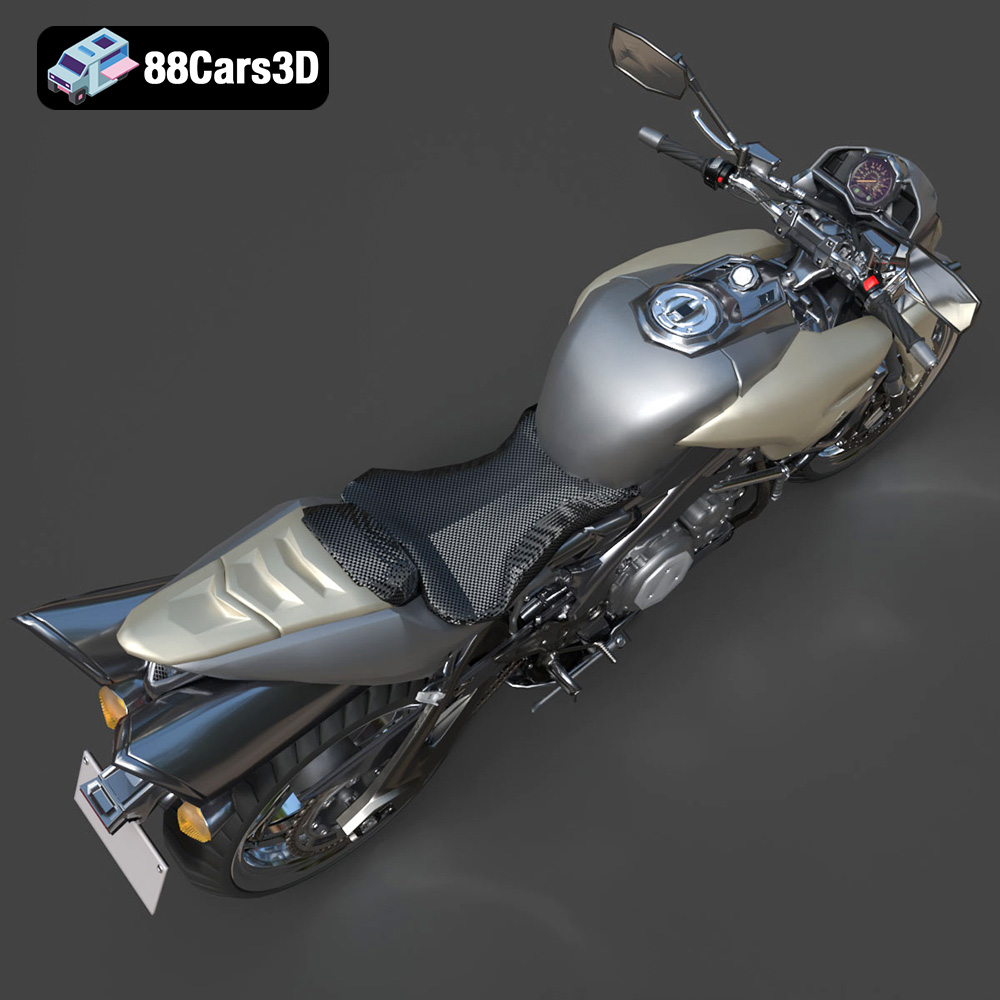
Today, we’re diving deep into the technical intricacies that elevate a 3D model from mere polygons to a powerful creative tool. We’ll explore how expertly crafted assets streamline workflows, enhance visual fidelity, and open new avenues for innovation. Our journey will focus on a prime example of digital craftsmanship: the Suzuki King B 2008 3D Model. This legendary naked streetfighter, known for its imposing stance and Hayabusa-derived engine, translates into a versatile 3D asset designed for a multitude of professional applications, from high-octane racing games to detailed architectural visualizations. A model of this caliber, available on platforms like 88cars3d.com, becomes an invaluable resource for any serious digital artist or developer.
Investing in superior 3D models is a strategic decision that pays dividends across various digital disciplines. It’s about efficiency, visual integrity, and future-proofing your projects in an ever-evolving technological landscape. When you acquire a meticulously crafted asset, you’re not just buying a mesh; you’re buying countless hours of expert modeling, texturing, and optimization.
Many artists and developers, especially those early in their careers or on tight budgets, might be tempted by free or low-quality 3D models. However, this often leads to significant technical debt. Poor topology, non-manifold geometry, excessive poly counts, or messy UV layouts require extensive cleanup – a process that can often take far longer than simply creating the model from scratch. This isn’t just about time; it’s about resource allocation, missed deadlines, and the frustration of dealing with assets that break rather than build your scene. In game development, unoptimized models can cripple frame rates, leading to a poor user experience. For rendering, bad UVs result in texture stretching and artifacts, undermining the realism you’re striving for. For visualization, inaccurate scaling or proportions can mislead clients and stakeholders.
In contrast, a production-ready 3D model like the Suzuki King B 2008 provides immediate value. It arrives clean, optimized, and ready for integration. This means artists can spend their valuable time on creative iteration and artistic refinement rather than technical troubleshooting. For game developers, a game-ready model with an optimized triangle count (e.g., ~120,000 triangles for the King B) ensures smooth performance in real-time engines while maintaining visual fidelity. For automotive rendering, precise geometry and accurate real-world scale are critical for creating believable marketing materials. High-quality assets are built with flexibility in mind, offering proper pivot setups for animation and organized material IDs for easy customization. This foundational quality streamlines every subsequent step in the production pipeline, making it an indispensable component for professional success.
The choice of file format for your 3D models is far from trivial; it dictates compatibility, workflow efficiency, and the specific capabilities you can leverage in different software and applications. Understanding the strengths and weaknesses of each format is crucial for any professional working with 3D assets. The Suzuki King B 2008 3D model, for instance, offers a comprehensive suite of formats, ensuring maximum versatility across various pipelines.
By offering this diverse range of formats, the Suzuki King B 2008 3D model from 88cars3d.com ensures that users across different industries and software preferences can seamlessly integrate this high-quality asset into their specific pipelines.
The Suzuki King B 2008 3D model is a testament to meticulous digital craftsmanship, engineered to meet the stringent demands of professional production. Its technical specifications reveal a thoughtful balance between visual fidelity and real-time performance, making it a highly adaptable asset.
At the core of any high-quality 3D model lies its geometry and topology. The Suzuki King B 2008 boasts an optimized triangle count of approximately 120,000. This figure is critical: it’s low enough to ensure game-ready performance in demanding real-time engines like Unreal and Unity, preventing performance bottlenecks. Yet, it’s high enough to maintain exceptional visual realism, capturing the intricate curves and aggressive lines of the original motorcycle without resorting to excessive detail that would burden a render engine. The topology is clean, typically composed of quads or well-structured triangles, ensuring smooth subdivisions if needed and allowing for easy UV unwrapping and deformation. This optimized mesh is a hallmark of professional 3D car models.
A static model has its uses, but a truly versatile asset is built for motion. The Suzuki King B 2008 3D model is designed with animation in mind. Its components, such as wheels, suspension, and steering, are separated and properly pivoted. This means a technical artist can easily rig the model for complex animations – wheel rotation, suspension compression, steering articulation, and even dynamic body lean. This modularity not only facilitates animation but also simplifies customization, allowing individual parts to be modified, replaced, or hidden as needed for specific scene requirements or configurator applications. The real-world scale accuracy further aids in creating believable motion, ensuring that the physics and kinematics applied to the model feel authentic.
The strength of this model lies in its faithful reproduction of the Suzuki King B’s distinctive features. The exterior accurately reflects the bike’s aggressive styling, from the massive 1340cc inline-four engine block with prominent radiator cowls to the signature dual under-seat exhaust system. The futuristic headlight design, integrated taillights, multi-spoke alloy wheels, and inverted front forks are all meticulously modeled. Inside the cockpit, the attention to detail continues with a sculpted ergonomic saddle, a wide streetfighter handlebar setup, and a hyper-detailed digital/analog hybrid instrument cluster. Authentic foot pegs, brake pedals, and shifter levers are all present, and the geometry is optimized for first-person POV in gaming, ensuring an immersive experience for the player. This level of granular detail, while optimized, prevents the model from feeling generic or simplified.
The true measure of a high-quality 3D model is its utility across diverse professional workflows. The Suzuki King B 2008 3D model is designed for seamless integration into various industry-standard applications, enabling artists and developers to achieve stunning results efficiently.
For automotive rendering, precision and aesthetic appeal are paramount. In Autodesk 3ds Max, professionals can import the .max or .fbx version of the Suzuki King B 2008 and leverage powerful renderers like V-Ray or Corona. The model’s clean topology and accurate scale facilitate the creation of photorealistic studio renders, lifestyle shots, or dynamic action sequences. Artists can easily assign advanced materials for paint, chrome, rubber, and glass, taking advantage of the model’s well-defined UVs for texture mapping. Similarly, in Blender, the native .blend file provides a complete scene, allowing artists to work with Cycles or Eevee, utilizing Blender’s robust material nodes for infinite customization. Both workflows benefit from the model’s inherent quality, reducing setup time and allowing for focused attention on lighting, composition, and post-processing to achieve breathtaking visuals for marketing campaigns or design reviews.
Game developers demand performance and visual fidelity in equal measure. The Suzuki King B 2008 3D model, with its game-ready optimization (~120,000 triangles) and inclusion of the .unreal file, is a perfect fit for real-time engines. In Unreal Engine, the pre-configured asset or an .fbx import can be rapidly integrated. Its proper pivot setups for steering, wheel rotation, and suspension travel are invaluable for vehicle physics and animation systems, making it ideal for open-world games, racing titles, or simulators. The optimized geometry ensures minimal draw calls and smooth frame rates, even when multiple instances of the bike are present. In Unity, the .fbx format imports seamlessly, ready for shader setup, collision mesh generation, and integration into existing game mechanics. The authentic cockpit details are particularly important for first-person camera perspectives, enhancing player immersion significantly.
The burgeoning fields of Augmented Reality (AR) and Virtual Reality (VR) require highly optimized yet detailed models to maintain immersion and performance. The Suzuki King B 2008 model’s .glb format is tailor-made for these applications, offering a single, optimized file that packages geometry, materials, and textures for efficient loading on mobile devices or VR headsets. This makes it perfect for virtual motorcycle showrooms, interactive configurators where users can customize colors and features, or mobile AR experiences where the King B can appear realistically superimposed onto the real world. For architectural visualization, integrating such a detailed vehicle provides context and scale to scenes, making them feel lived-in and dynamic. The high visual fidelity, even at optimized polycounts, ensures that the model holds up to close scrutiny in immersive, interactive environments.
While digital rendering and real-time applications are primary uses, a versatile 3D model can also bridge the gap to the physical world through 3D printing. The Suzuki King B 2008 3D model offers this exciting possibility, allowing enthusiasts and designers to create tangible replicas.
The .stl file format included with the Suzuki King B 2008 is specifically for 3D printing. However, preparing a digital model for physical output often involves specific considerations. The model’s geometry needs to be watertight (no gaps or holes in the mesh) and manifold (no self-intersecting geometry), qualities that professional 3D car models typically maintain. For complex assemblies like a motorcycle, breaking the model into manageable, printable parts can significantly improve print success and detail retention. For the Suzuki King B, components like wheels, frame, and exhaust might be separated to optimize print orientation and support placement, preventing fragile overhangs from failing during the print process.
The provided 3D print settings for the Suzuki King B 2008 offer an excellent starting point. Recommended scales (1:12, 1:18, 1:24) cater to different display preferences. A layer height of 0.04–0.12 mm, especially with resin printing, is crucial for capturing the fine details of the engine block, handlebar controls, and wheel spokes. Wall thickness (1.2–2.0 mm) ensures structural integrity. Supports are absolutely necessary for intricate parts like the dual under-seat exhaust, mirrors, and handlebars to prevent warping and ensure fidelity. Post-processing is where the model truly comes to life: sanding to smooth layer lines, applying primer for an even base, and painting with authentic factory colors, metallic finishes, and clear coats can transform a raw print into a stunning display piece. This transition from digital asset to physical object showcases the model’s robust design and attention to detail.
One of the most powerful advantages of a professionally built 3D model is the freedom it offers for customization. The Suzuki King B 2008 3D model provides a flexible foundation for artists to infuse their creative vision.
The ability to change body and tank colors is fundamental. Artists can easily apply a range of finishes, from factory-accurate hues to custom metallic paints, matte wraps, or high-gloss clears. Modifying tire textures allows for variations like off-road knobbies versus sleek street performance tires, instantly altering the bike’s character. Adjusting material properties beyond color – such as reflectivity, roughness, and clear coat thickness – allows for nuanced aesthetic shifts. This flexibility is vital for creating diverse visual content, enabling the same base model to appear in multiple contexts without needing entirely new assets. For example, a single Suzuki King B model can be rendered in a gritty urban setting with matte black, or in a pristine studio with a vibrant metallic blue finish for a luxury advertisement.
Beyond surface aesthetics, the model’s adaptability extends to its integration into varying environments. Lighting is key; artists can adapt scene lighting to evoke different moods, from the harsh glare of a streetlamp to the soft ambient light of a showroom. The modular design also means components can be easily exchanged or removed. Perhaps a project requires a modified exhaust system or custom aftermarket wheels – the clean geometry and separated parts of the King B model make these changes feasible. This level of customization ensures that the Suzuki King B 2008 3D model is not a static object but a dynamic tool that can be tailored to meet virtually any creative or technical brief, saving immense time and resources compared to building custom models for every scenario. Whether it’s for a high-concept marketing piece or a specialized game asset, the flexibility is built-in.
As we’ve explored, the journey from concept to compelling visual is paved with critical decisions, none more impactful than the quality of your 3D assets. The Suzuki King B 2008 3D model stands as a shining example of what a premium, production-ready asset can deliver: impeccable detail, optimized performance, and unparalleled versatility across a spectrum of professional applications. From the intricate geometry that breathes life into its aggressive design to its game-ready poly count and modular components, every aspect is engineered for excellence.
Whether you’re a seasoned game developer integrating a hyper-naked bike into your next racing title, an automotive designer crafting stunning visualizations, an AR/VR enthusiast building immersive experiences, or a hobbyist bringing digital models to life through 3D printing, the value of a meticulously crafted asset is undeniable. It streamlines workflows, reduces technical debt, and most importantly, empowers your creative vision.
Platforms like 88cars3d.com are dedicated to providing these high-caliber 3D car models, ensuring that professionals have access to the tools they need to succeed. By choosing assets such as the Suzuki King B 2008 3D model, you’re not just making a purchase; you’re making an investment in efficiency, quality, and the boundless potential of your digital projects. Elevate your work and accelerate your creative process with assets that truly perform.
The Suzuki King B (B-King) 2008 is a legendary naked streetfighter motorcycle that commands attention with its imposing stance and aggressive styling. Born from a radical concept, it features the heart of the iconic Hayabusa, showcasing a massive 1340cc inline-four engine, dual under-seat exhausts, and distinctive muscular bodywork that defined a new era of hyper-naked bikes.
This premium 3D model features exceptional topology and an optimized triangle count, ensuring game-ready performance without compromising visual fidelity. It is expertly crafted for high-end rendering, game development, AR/VR experiences, and animation, capturing every intricate detail of the original super naked motorcycle.
Perfect for high-octane racing games, urban street environments, virtual motorcycle showrooms, and detailed architectural visualization scenes.
.blend, .fbx, .obj, .glb, .stl, .ply, .unreal, .max
Tags:
suzuki, king-b, b-king, 2008, motorcycle, streetfighter, naked-bike, hyper-naked, game-ready, low-poly, optimized, motorcycle-3d-model, game-asset, rendering, vr-ar, blend, fbx, obj, glb, stl, ply, unreal, maxVespa VNB 125 3D Model 3D Printable STL
$39.99
.2008
.blend
.fbx
.glb
.max
.motorcycle
.obj
.ply
.rendering
.stl
.streetfighter
.suzuki
.unreal
b-king
game asset
game-ready
hyper-naked
king-b
low-poly
motorcycle-3d-model
naked-bike
optimized
VR/AR