Get 20% OFF All Premium 3D & STL Models!

The digital frontier of automotive design, visualization, and interactive experiences is expanding at an unprecedented rate. From blockbuster video games to cutting-edge virtual reality showrooms and photorealistic architectural visualizations, the demand for high-fidelity 3D car models has never been greater. Professional artists, developers, and designers rely on meticulously crafted assets that offer both aesthetic excellence and technical robustness. It’s in this dynamic landscape that a model like the Toyota RAV4 LE 2019 stands out, offering a versatile foundation for a myriad of projects that demand realism and performance.
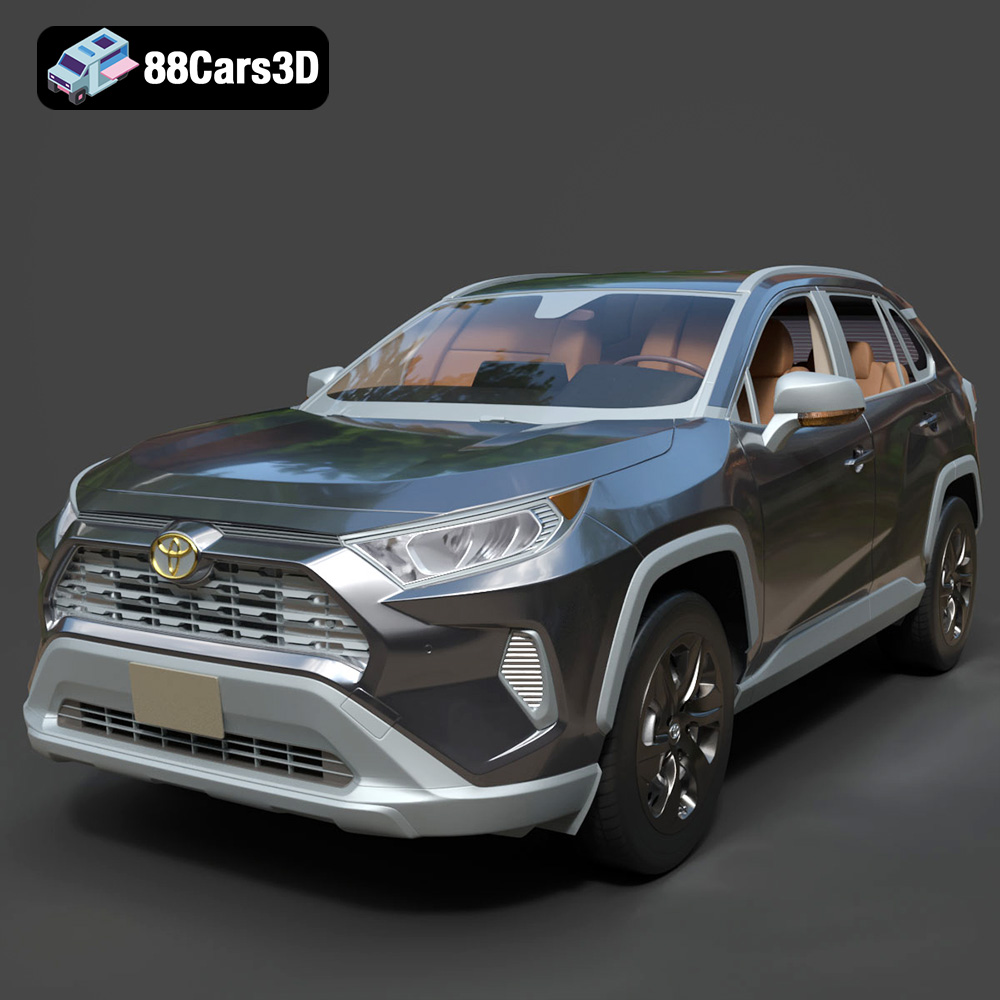
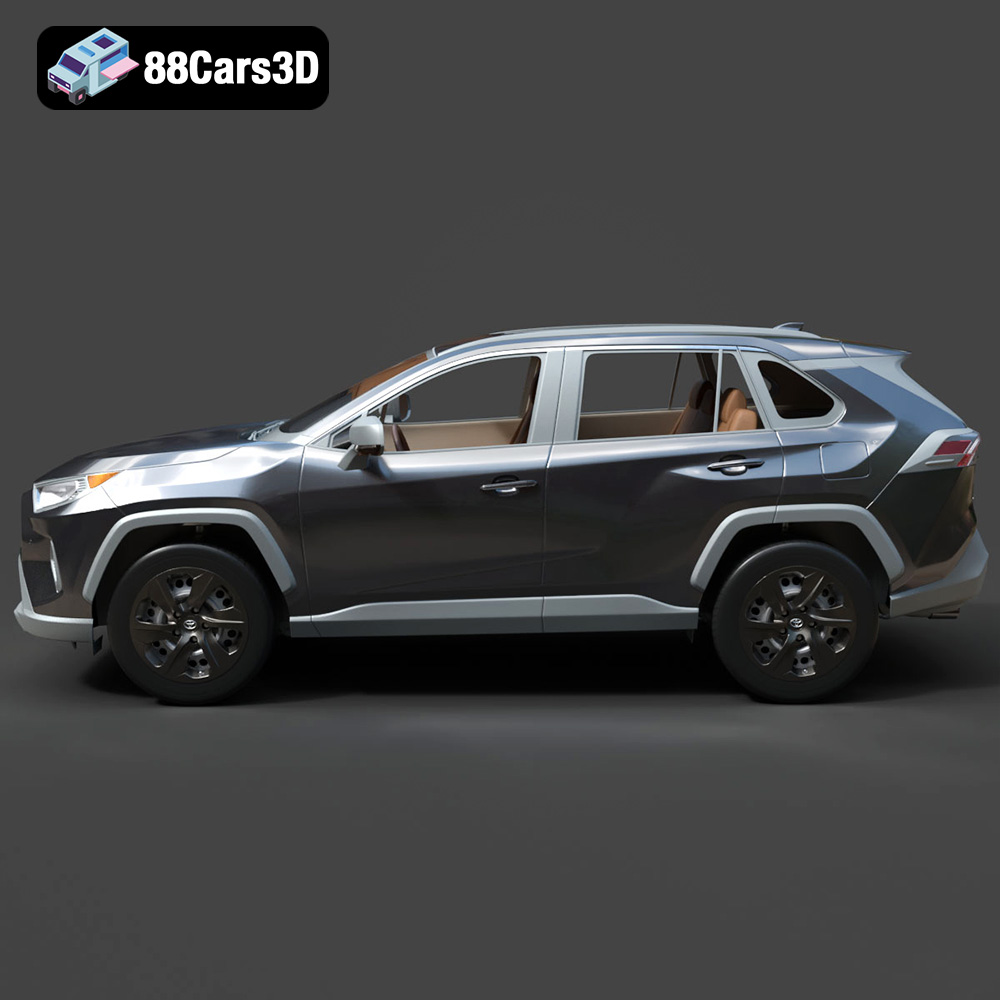
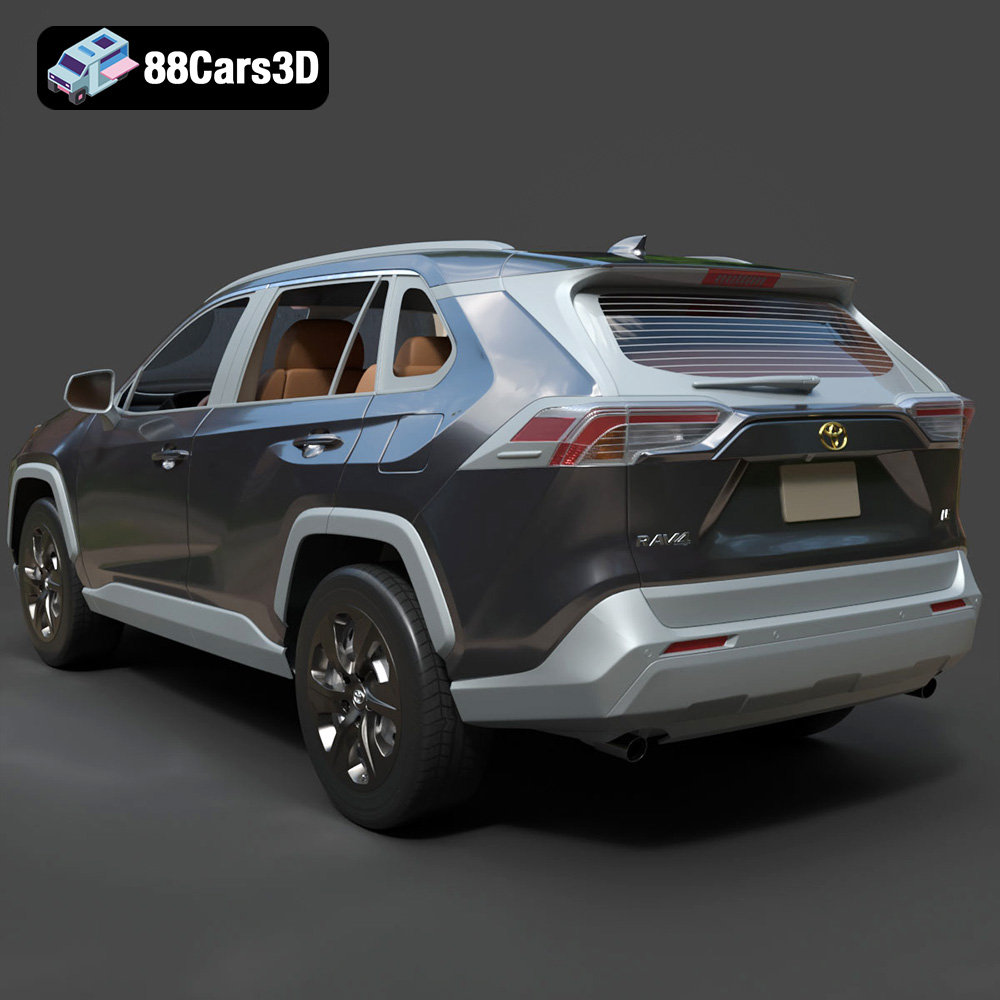
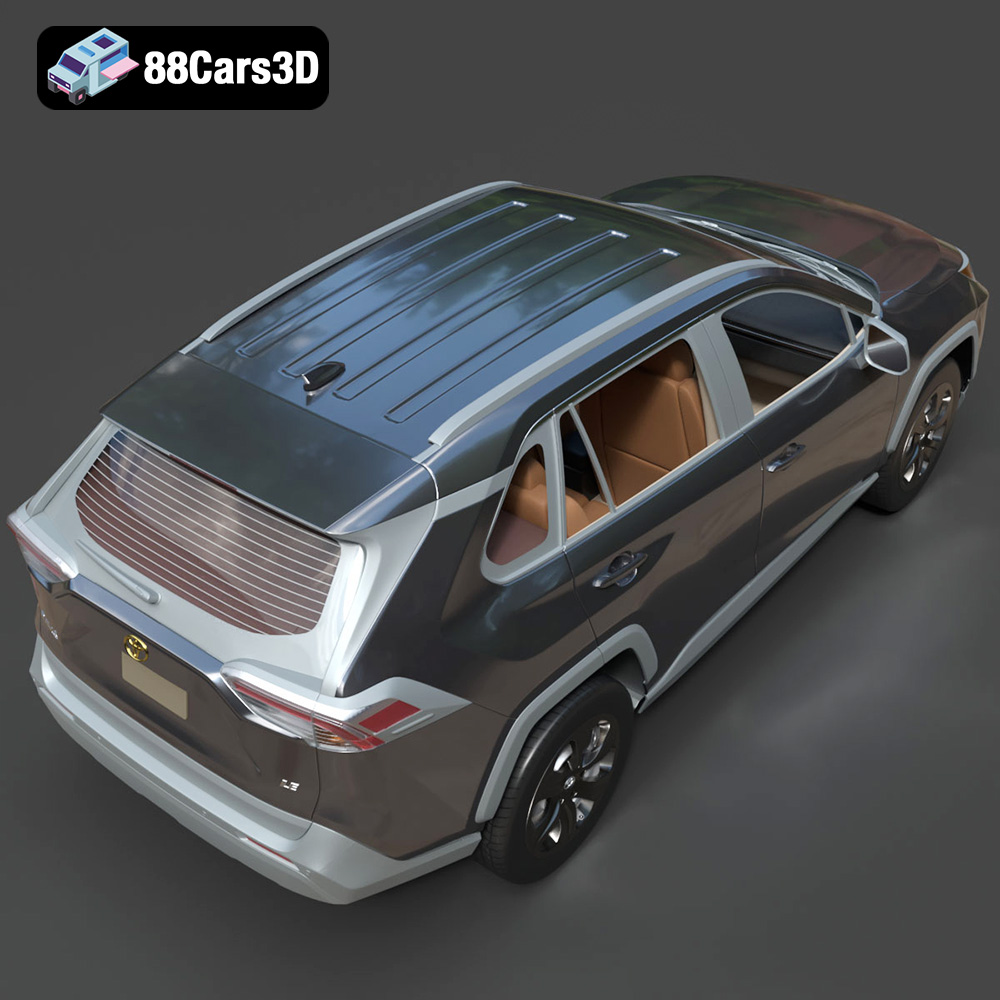
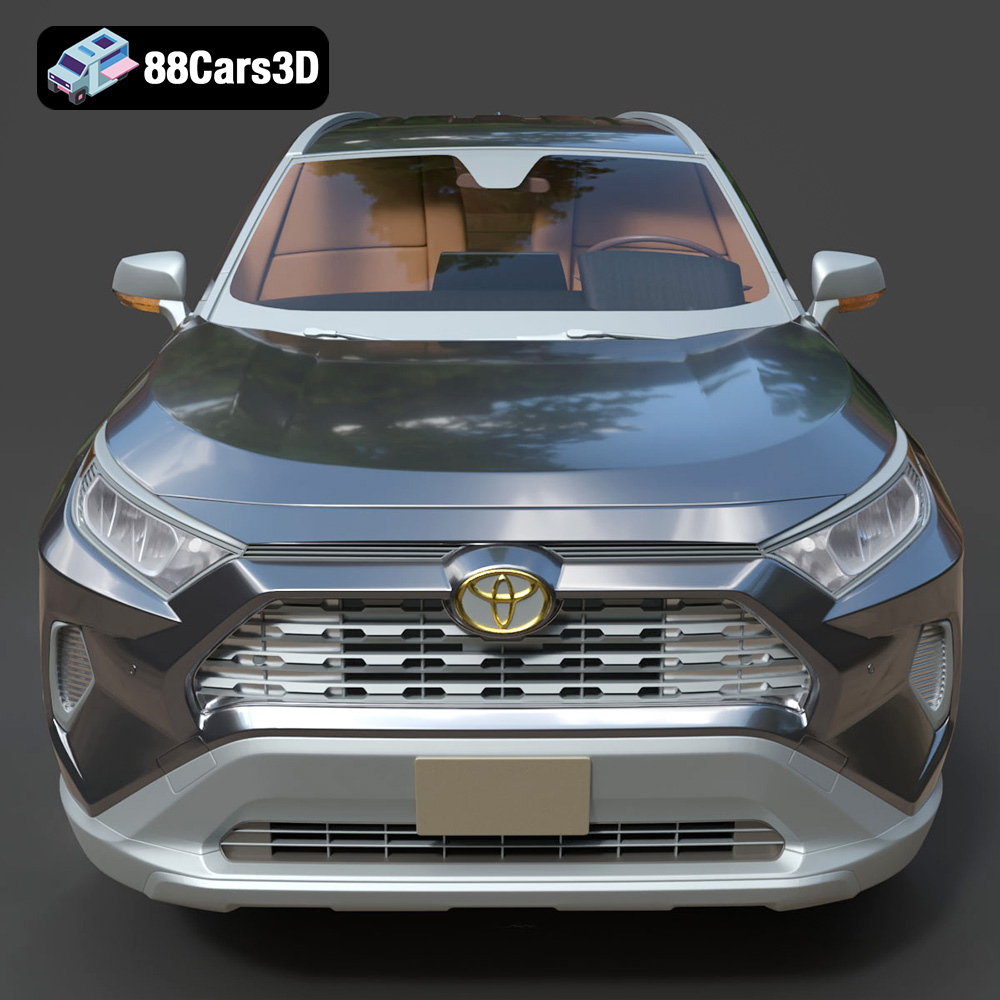
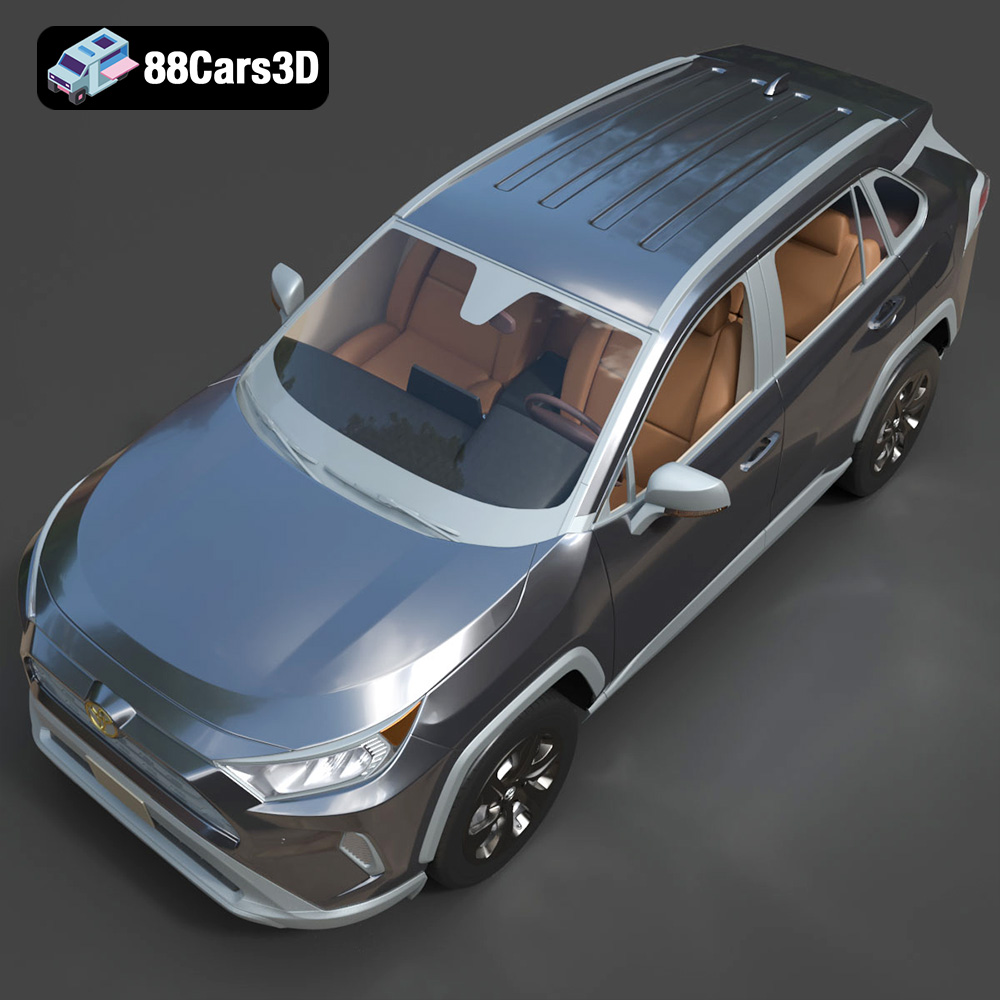
The Toyota RAV4 LE 2019 3D model, available on 88cars3d.com, represents a pinnacle of digital craftsmanship. It captures the rugged yet refined essence of the real-world vehicle, from its distinctive front grille and LED headlights to its aerodynamic profile and accurate interior details. This isn’t just a static representation; it’s a fully articulated, game-ready asset designed to integrate seamlessly into complex production pipelines. Whether your goal is to simulate urban driving, populate a suburban scene, or create an interactive vehicle configurator, a model of this caliber provides the essential building blocks for success.
One of the most crucial aspects of working with 3D assets, especially in professional environments, is understanding the various file formats available. Each format serves a specific purpose, offering unique advantages for different stages of a project or different target platforms. The Toyota RAV4 LE 2019 3D model, for instance, comes equipped with a comprehensive suite of formats, ensuring maximum compatibility and flexibility for users across various disciplines.
The .blend file is Blender’s native format, providing a complete, editable scene. For artists who use Blender as their primary 3D creation suite, this is invaluable. It encapsulates not just the mesh geometry, but also materials, textures, lighting, cameras, animation data, and even the viewport setup. This means you can open the RAV4 model in Blender and have immediate access to all its construction details, allowing for extensive modifications, rig adjustments, and rendering directly within Blender’s powerful Cycles or Eevee engines. For educational purposes or deep customization, the .blend format offers the most flexibility.
.fbx (Filmbox) is arguably the most widely adopted interchange format in the 3D industry. Developed by Autodesk, it excels at transferring 3D data between different software applications while retaining complex information like animations, skeletal rigs, and PBR (Physically Based Rendering) materials. For game developers, .fbx is the go-to format for importing assets into real-time engines like Unreal Engine and Unity. The Toyota RAV4 LE 2019 model in .fbx ensures that its optimized geometry, separate animatable components (wheels, suspension), and material assignments translate accurately into these demanding environments, making it ideal for simulation and interactive experiences.
The .obj (Wavefront OBJ) format is a venerable and universal standard primarily used for transferring mesh data. While it might not retain complex animation or advanced material setups as robustly as .fbx, its simplicity makes it incredibly compatible across virtually every 3D application, from CAD software to rendering engines. An .obj file typically includes vertex positions, UV coordinates, normals, and material group definitions, often accompanied by a separate .mtl (material) file. This format is excellent when you need pure geometry for re-texturing, retopology, or integration into less common software packages where .fbx might pose compatibility challenges. For the RAV4, the .obj provides a solid geometric foundation for any custom workflow.
.glb (GLB, the binary version of glTF) is a relatively newer format that has rapidly gained traction, especially in the realms of Augmented Reality (AR), Virtual Reality (VR), and web-based 3D applications. It’s an efficient, compact format that packs all necessary data (geometry, textures, animations, materials) into a single binary file. This makes .glb ideal for fast loading and deployment on mobile devices and browsers, which are often constrained by bandwidth and processing power. If you’re developing an AR experience to view the Toyota RAV4 LE 2019 in a real-world setting or integrating it into a web-based configurator, the .glb format offers unparalleled optimization and ease of use.
.stl (STereoLithography) is the undisputed standard for 3D printing. This format represents a 3D model as a collection of unconnected triangular facets, defining only the surface geometry without color or texture information. When converting a detailed 3D car model like the RAV4 to .stl, it’s crucial to ensure the mesh is watertight (no holes) and that fine details are preserved within the printing resolution. The inclusion of the .stl format for the Toyota RAV4 LE 2019 means hobbyists and professionals can easily translate the digital model into a physical prototype or collectible, following recommended settings for scale, layer height, and support structures.
The .ply (Polygon File Format, or Stanford Triangle Format) is often used for storing 3D data from 3D scanners, CAD systems, and other precise measurement tools. It can store a wider range of properties than .obj or .stl, including color per vertex, normal information, and even material properties or transparency. While less common for general game assets, .ply is excellent for scientific visualization, point cloud data, or when high-precision mesh data is required for engineering analysis or reverse engineering workflows. The RAV4’s .ply export provides a robust option for users requiring highly accurate geometric data.
While not a standalone file format in the traditional sense, the term .unreal often refers to an asset that has been specifically prepared and optimized for direct import and use within Unreal Engine. This typically means the .fbx has been structured with proper naming conventions, LODs (Levels of Detail), collision meshes, and sometimes pre-configured materials that leverage Unreal Engine’s PBR workflow. For the Toyota RAV4 LE 2019, an “unreal” specific asset implies it’s designed for minimal setup, allowing developers to drop it straight into their scenes and begin working with its high-fidelity visuals and functional components immediately, saving significant production time.
Lastly, the .max file is the native format for Autodesk 3ds Max, a leading software for 3D modeling, animation, and rendering in professional visualization and game development. Similar to the .blend file, a .max file contains the complete scene data, including all geometry, textures, materials, lighting, cameras, and animation keyframes within the 3ds Max environment. For professionals accustomed to 3ds Max, having the RAV4 model in its native .max format allows for the deepest level of customization, complex rendering setups with V-Ray or Corona, and intricate animation sequences, leveraging all the robust tools 3ds Max has to offer.
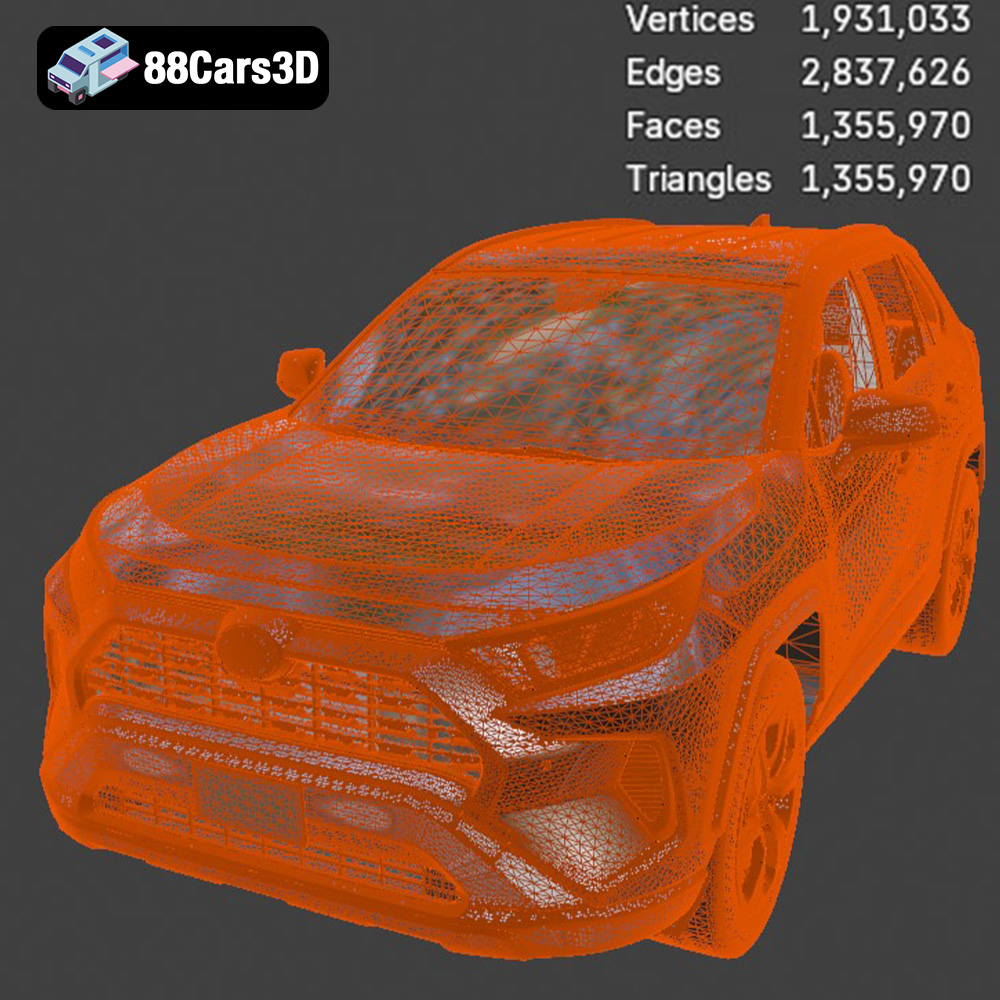
Creating a high-quality 3D car model that excels in various applications, from real-time game engines to photorealistic renders, requires a delicate balance between polygon count, visual detail, and optimization. The Toyota RAV4 LE 2019 model embodies this principle, showcasing how a strategic approach to mesh construction can yield exceptional results without compromising performance.
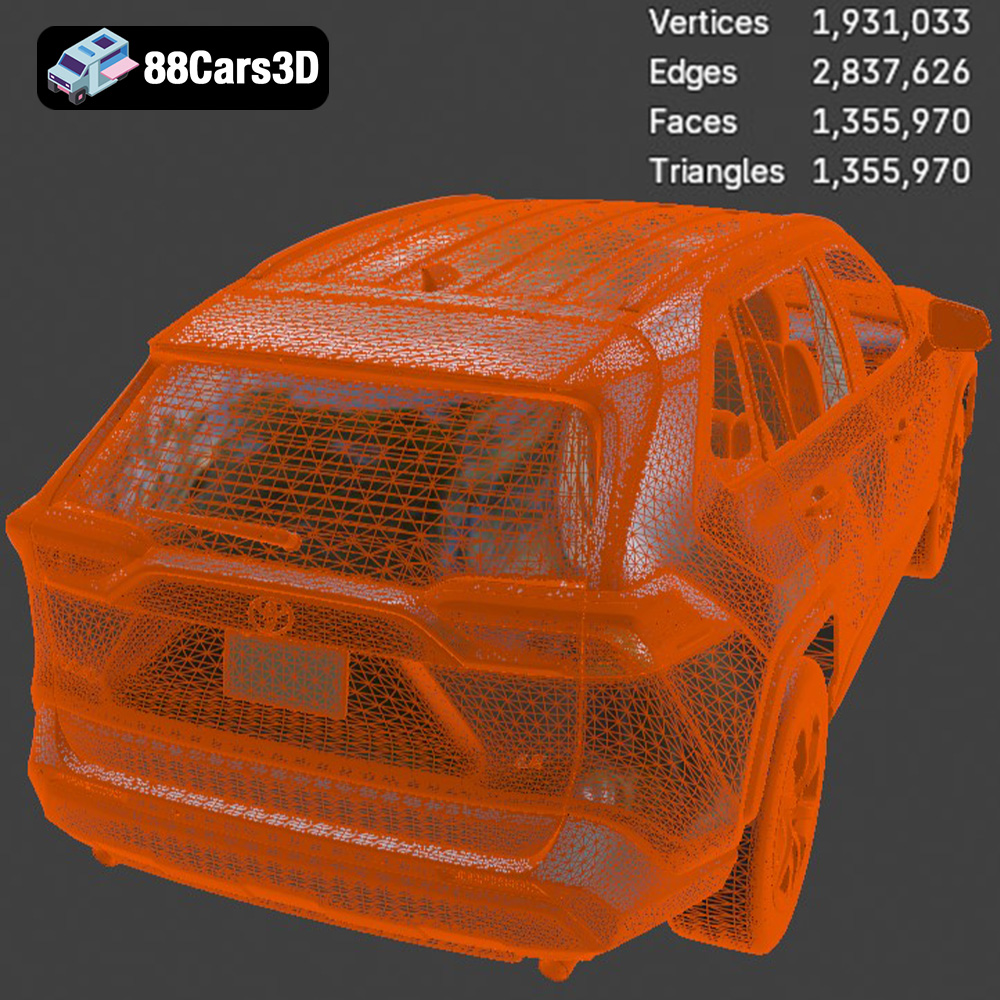
The backbone of any good 3D model is its topology – the arrangement of polygons. For game assets, efficient topology is paramount. The Toyota RAV4 LE 2019 boasts an optimized triangle count of approximately 200,000. This figure is a sweet spot: it’s high enough to capture the intricate curves and chiseled styling of the RAV4’s exterior, including details like the distinctive LED headlight signatures and the aggressive front grille, yet low enough to ensure smooth frame rates in real-time engines like Unreal and Unity. For automotive rendering and visualization, this optimized mesh still provides ample detail, and with proper subdivision surfaces applied in a rendering package, it can achieve stunning photorealism for high-resolution stills or animations. Excellent topology also means clean deformation if the model is ever rigged for complex animations beyond basic wheel rotation and suspension travel.
Beyond raw polygon count, the quality of a 3D model’s UV mapping and material setup is critical for visual fidelity. While not explicitly detailed in the product description, an “optimized” and “game-ready” model implicitly means it features clean, non-overlapping UV layouts. These UVs allow textures—such as the realistic paint finishes, tire treads, and interior fabric details—to be applied accurately without distortion. The model is built for PBR (Physically Based Rendering) workflows, which are standard in modern engines and renderers. This means its materials are designed to react realistically to light, providing accurate reflections, specular highlights, and diffuse properties, making the car look authentic in any lighting condition, from studio setups to outdoor environments. Customization options, such as changing body colors or material finishes, are straightforward thanks to a well-structured material ID and UV setup.
Accuracy in 3D modeling extends beyond visual appeal to include real-world scale and mechanical articulation. The Toyota RAV4 LE 2019 model is built to actual vehicle chassis dimensions, ensuring it integrates perfectly into scenes without requiring manual scaling adjustments. This is crucial for architectural visualizations where scale models interact with buildings, or in simulations where accurate physical properties are desired. Furthermore, the model features separately modeled wheels, suspension components (like the independent MacPherson strut front suspension), and steering parts, all with proper pivot setups. This enables realistic animation for driving simulations, virtual test drives, or showcasing the vehicle’s dynamic capabilities in a compelling visual presentation.
The true value of a versatile 3D asset like the Toyota RAV4 LE 2019 lies in its seamless integration into various professional workflows. From interactive game development to high-stakes automotive marketing, the model provides a robust starting point, significantly reducing production time and costs for studios and freelancers alike.
For game developers, time is a precious commodity. Starting a project with a meticulously crafted, game-ready asset like this RAV4 model from 88cars3d.com is a tremendous advantage. Its optimized polycount (~200k triangles) ensures it won’t bog down frame rates, making it ideal for open-world games, racing titles, and vehicle simulators. The inclusion of .fbx and .unreal formats means direct import into engines like Unreal Engine and Unity is smooth, often with pre-configured materials that can be easily adjusted. The separate components for wheels, suspension, and steering allow developers to implement realistic physics and animation, essential for immersive driving mechanics. Imagine populating a virtual city with realistic traffic or featuring the RAV4 as a playable vehicle in an adventure game—the technical foundation is already solid.
Architectural visualization (ArchViz) studios, advertising agencies, and automotive designers frequently require photorealistic renders of vehicles to showcase concepts, populate scenes, or create marketing collateral. The Toyota RAV4 LE 2019 model, with its accurate geometry, detailed interior (fabric-trimmed seating, multi-function steering wheel, detailed instrument cluster), and robust material setup, is perfect for this. Using the .max or .blend files, artists can leverage powerful rendering engines like V-Ray, Corona Renderer (for 3ds Max), or Cycles (for Blender) to produce stunning images. Whether it’s showcasing the RAV4 in a suburban driveway setting, highlighting its rugged aesthetic against an urban backdrop, or creating a pristine studio shot for a brand campaign, the model provides the fidelity needed to achieve a convincing final image.
Augmented Reality (AR) and Virtual Reality (VR) are transforming how consumers interact with products, especially in the automotive sector. Virtual showrooms, interactive configurators, and mobile AR experiences allow users to explore vehicles in unprecedented detail. The RAV4 model’s inclusion of the .glb format is particularly beneficial here. .glb files are highly optimized for web and mobile platforms, enabling fast loading times and smooth performance in AR/VR applications. Imagine a potential buyer using their smartphone to place a virtual Toyota RAV4 LE 2019 in their driveway, change its color, or even “sit inside” the detailed cockpit in VR. The optimized geometry and clean structure of this model make these immersive experiences not just possible, but highly performant and engaging.
While digital visualization is a primary use case for 3D car models, the ability to translate these virtual assets into tangible objects opens up another realm of possibilities. The Toyota RAV4 LE 2019 model’s inclusion of the .stl format caters directly to this growing demand, offering avenues for collectors, hobbyists, and even designers for rapid prototyping.
Converting a high-detail digital model for 3D printing requires careful consideration. The .stl format provided ensures a ready-to-print mesh. For best results, especially with complex geometries like a vehicle, it’s often recommended to print in parts. The product description suggests printing the frame angled for structural integrity and wheels separately. This approach not only optimizes printing time and material usage but also allows for finer detail on components and easier post-processing. Key considerations for printability include ensuring the mesh is “watertight” (no gaps or holes) and that wall thicknesses meet minimum requirements for the chosen printing method. The RAV4 model is designed with these considerations in mind, making it suitable for display-scale hobbyists.
The quality of a 3D print is heavily influenced by the chosen material and post-processing. For a model as detailed as the Toyota RAV4 LE 2019, resin printing is recommended due to its ability to achieve finer layer heights (0.04-0.12 mm) and capture intricate details like the engine block, exhaust styling, and suspension components. After printing, post-processing steps such as sanding, priming, and painting are essential to achieve a professional finish. Enthusiasts can meticulously apply authentic factory colors, metallic finishes, and even weathering effects to create highly realistic miniature replicas. The physical model serves as an excellent display piece, a tangible representation of the digital asset, and even a scale model for design evaluation or educational purposes.
A truly versatile 3D model isn’t just about its initial quality; it’s about its adaptability. Professional projects often require unique touches, specific branding, or integration into diverse environments. The Toyota RAV4 LE 2019 3D model offers extensive customization options, allowing artists to tailor it precisely to their creative and technical requirements.
The ability to easily change material attributes is fundamental. With the RAV4 model, artists can readily modify body and tank colors to match factory palettes, custom finishes, or even incorporate bespoke liveries for racing simulations or promotional materials. Adjusting material properties like gloss, matte, or metallic sheens can drastically alter the vehicle’s perceived aesthetic to suit different lighting conditions or stylistic choices. Tire textures can be swapped between off-road and street variants to match the scene’s context. This level of material control empowers artists to brand the vehicle, fit it into existing design schemes, or experiment with various visual themes without needing to rebuild the model from scratch. This flexibility is critical for agencies working on multiple campaigns or game studios requiring vehicle variations.
Integrating a 3D car model seamlessly into a digital environment often depends on how it interacts with light and its surroundings. The RAV4 model’s robust PBR material setup ensures it will react realistically to any lighting scenario, from a sunny outdoor scene to an overcast urban setting or a dramatic studio light rig. Artists can adapt lighting setups to emphasize specific design features, create dynamic shadows, or achieve a particular mood. Beyond lighting, the model’s precise real-world scale makes it easy to place within architectural scenes, populate virtual cities, or use as a hero asset in a virtual showroom. The separate wheels, suspension, and steering components further enable dynamic scene creation, allowing for car posing that reflects real-world physics and movement, enhancing overall scene realism and visual storytelling.
In the fast-evolving world of 3D visualization, game development, and interactive experiences, the demand for high-quality, versatile 3D car models is constant. The Toyota RAV4 LE 2019 3D model from 88cars3d.com stands as an exemplary asset, meticulously crafted to meet the rigorous demands of professional pipelines. Its optimized topology, detailed interior and exterior features, and robust technical specifications—including approximately 200,000 triangles for game-readiness—make it a powerful tool for a diverse range of applications.
From powering immersive game environments and creating stunning automotive renders to facilitating AR/VR experiences and even enabling accurate 3D prints, this model’s comprehensive file format support (.blend, .fbx, .obj, .glb, .stl, .ply, .unreal, .max) ensures unparalleled flexibility and compatibility across virtually any creative software or platform. Professionals seeking to accelerate their workflows, achieve exceptional visual fidelity, and maintain peak performance will find the Toyota RAV4 LE 2019 to be an indispensable addition to their asset library. It’s more than just a 3D model; it’s a foundation for innovation in digital automotive design and visualization.
The Toyota RAV4 LE 2019 represents a bold, dynamic shift in the compact SUV segment. Known for its rugged, chiseled styling inspired by Toyota’s off-road heritage, this 3D model captures the essence of the LE trim with its distinctive front grille, striking LED headlights, and aerodynamic profile. Crafted with precision, this high-quality 3D model features excellent topology with an optimized triangle count, ensuring game-ready performance without compromising visual fidelity. It is perfectly suited for use in real-time engines, game development, AR/VR experiences, and high-end architectural or lifestyle visualizations.
$39.99
.blend
.fbx
.glb
.max
.obj
.ply
.rendering
.stl
.toyota
.unreal
car-3d-model
compact-suv
game asset
game-ready
low-poly
optimized
rav4
rav4-le-2019
SUV
VR/AR