Get 20% OFF All Premium 3D & STL Models!

In the vibrant world of digital creation, high-fidelity 3D models are the bedrock of immersive experiences. From hyper-realistic automotive rendering in advertising campaigns to the fast-paced thrill of racing simulators, the quality of your 3D assets dictates the impact of your project. For designers, game developers, and visualization specialists, the quest for precision, optimization, and versatility in 3D car models and vehicle assets is a continuous journey.
Imagine recreating the visceral excitement of a legendary supersport motorcycle, bringing its sleek lines and formidable power to life in a digital realm. This is where models like the Triumph Daytona 675R ABS 2015 3D Model truly shine. A meticulously crafted digital replica, it encapsulates the spirit of one of the most celebrated middleweight sportbikes, making it an invaluable asset for a diverse range of applications. Whether for a game-ready asset in a new racing title, a stunning visualization for a marketing campaign, or an interactive AR experience, a model of this caliber provides the foundation for excellence.
Choosing the right file format for your 3D car models or other assets is crucial for seamless integration into your workflow and optimal performance across different platforms. Each format serves a specific purpose, offering unique advantages in terms of compatibility, data retention, and optimization. Understanding these distinctions is key to maximizing the utility of assets like the Triumph Daytona 675R ABS 2015 3D Model.
The .blend file is Blender’s native format, offering a complete and fully editable scene. This includes not just the mesh data, but also materials, textures, lighting, cameras, animation data, and even modifiers. For artists working primarily in Blender, this format is ideal as it preserves all aspects of the original creation, allowing for deep customization and iteration. When you acquire a .blend file, you’re gaining access to the artist’s full workspace, making it perfect for educational purposes, further refinement, or adapting the model’s setup for specific rendering engines within Blender’s ecosystem.
Autodesk’s .fbx (Filmbox) format is arguably the most widely used interchange format in 3D production. It excels at transferring 3D model data, including geometry, materials, textures, animations, and even rigging information, between various 3D software applications. Its robustness makes it the go-to choice for game development, especially for engines like Unreal Engine and Unity. When integrating assets like our Daytona 675R into a real-time pipeline, .fbx ensures that crucial elements like pivot points, hierarchy, and basic material assignments are preserved, streamlining the import process and minimizing setup time.
The .obj (Wavefront OBJ) format is a venerable and universally compatible standard for 3D geometry. While it primarily stores vertex positions, UV coordinates, normals, and material group information, it typically requires separate accompanying .mtl (material library) files for basic material definitions and texture paths. Its widespread support makes it an excellent choice for cross-software compatibility when the primary concern is the mesh itself, allowing artists to bring the Daytona 675R into virtually any 3D package, from ZBrush to Maya to 3ds Max, for further sculpting or rendering.
The .glb (GL Transmission Format Binary) is a modern, compact format specifically designed for efficient transmission and loading of 3D scenes and models in web-based and real-time applications. It’s a binary container that bundles geometry, materials, textures, and animation into a single file, making it incredibly easy to use for AR, VR, and browser-based display. For interactive virtual showrooms or mobile AR experiences featuring the Triumph Daytona 675R, .glb offers superior performance and a simplified deployment process.
The .stl (Stereolithography) format is the ubiquitous standard for 3D printing. It represents 3D objects as a series of connected triangles, defining only the surface geometry without color, texture, or material information. When preparing the Daytona 675R for physical production, converting it to .stl is the first step, ensuring that the printer receives a watertight, unambiguous mesh. Precision and correct scaling are paramount here for a successful print.
The .ply (Polygon File Format) is often used for storing 3D data from scanners and CAD applications. It can store a wider range of properties than .obj, including color per vertex, normal vectors, and even transparency, making it suitable for scientific data visualization or detailed analysis where high precision is required. While less common for general artistic asset transfer, it offers a robust alternative for specific technical applications.
While not a universal file extension in the traditional sense, a designation like .unreal typically implies a model that has been specifically prepared and perhaps even packaged for direct import into Unreal Engine. This often means the FBX file has been correctly scaled, pivoted, had its materials optimized for Unreal’s PBR workflow, and potentially includes pre-configured blueprints or static mesh assets. This level of preparation significantly accelerates development time for projects utilizing the Daytona 675R within Unreal Engine.
Similar to .blend for Blender, the .max file is the native project format for Autodesk 3ds Max. It stores the entire scene, including all models, lights, cameras, animations, and render settings. For artists and studios heavily invested in the 3ds Max ecosystem, having the .max file for the Daytona 675R provides maximum flexibility for further animation, rendering, or integration into larger scene compositions within Max.
The Triumph Daytona 675R ABS 2015 is more than just a motorcycle; it’s a testament to engineering prowess and a benchmark in the supersport category. Translating such an iconic vehicle into a high-quality 3D model requires an obsessive attention to detail, a deep understanding of its physical form, and expert digital craftsmanship. This specific 3D model available on 88cars3d.com embodies this philosophy, providing an exceptionally accurate and versatile asset.
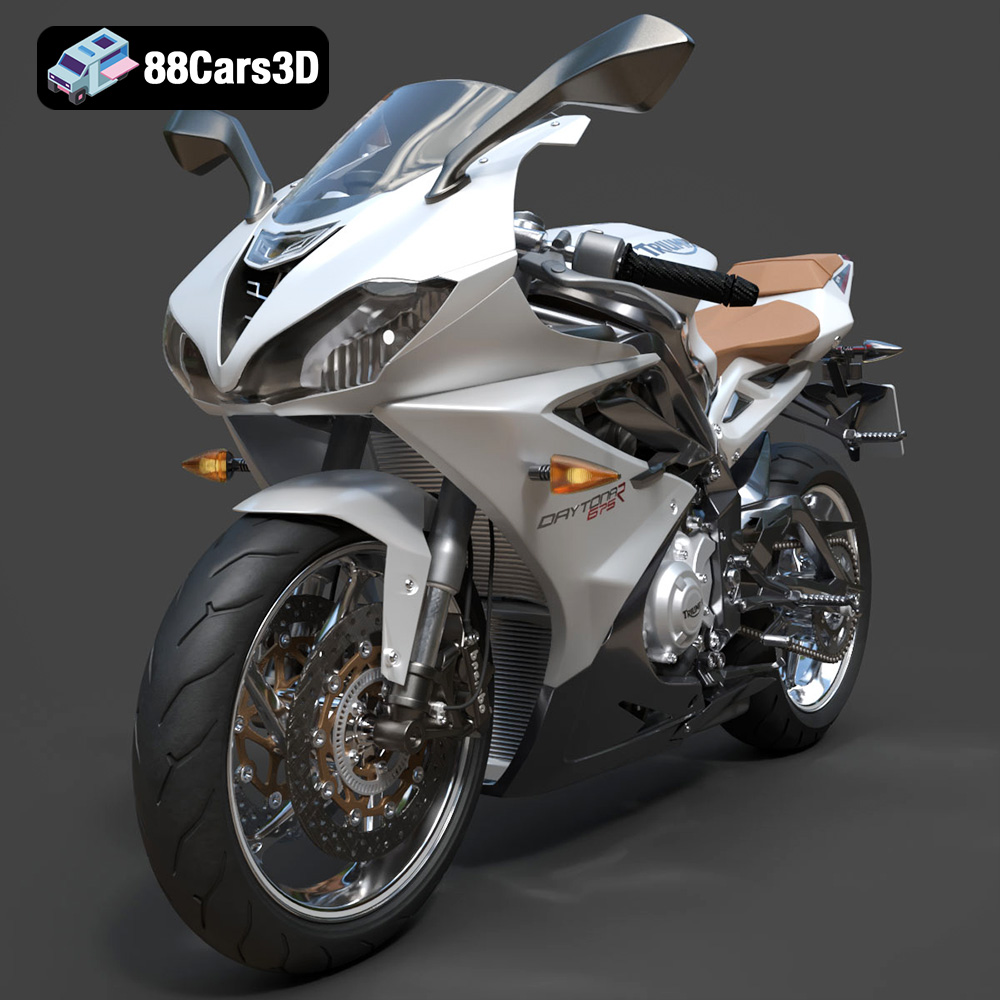
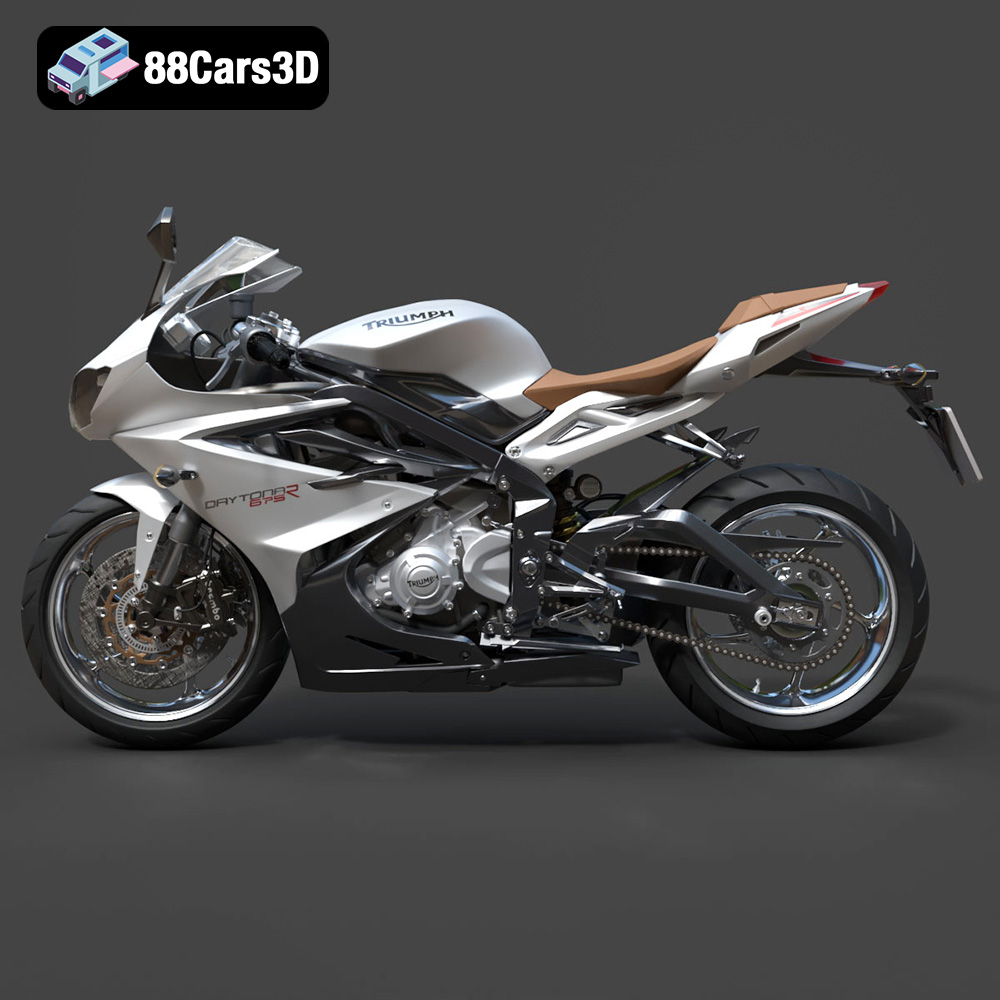
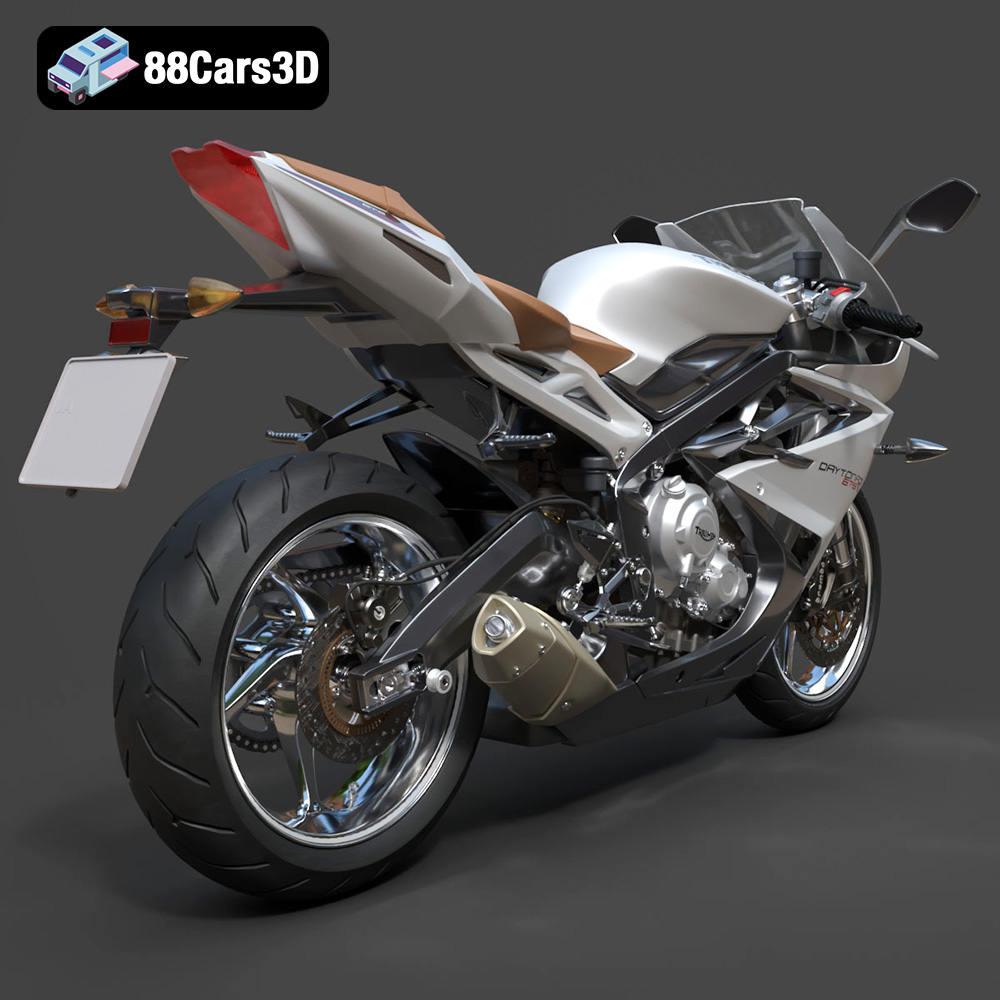
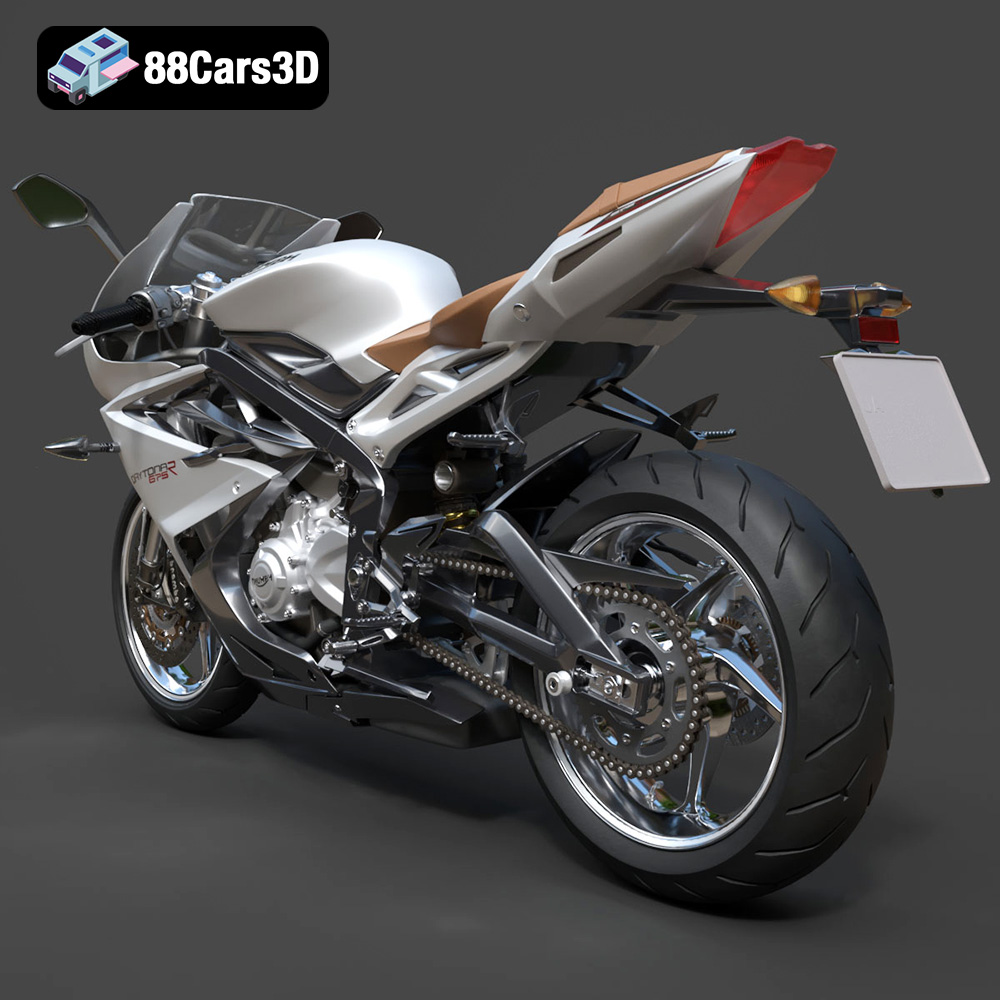
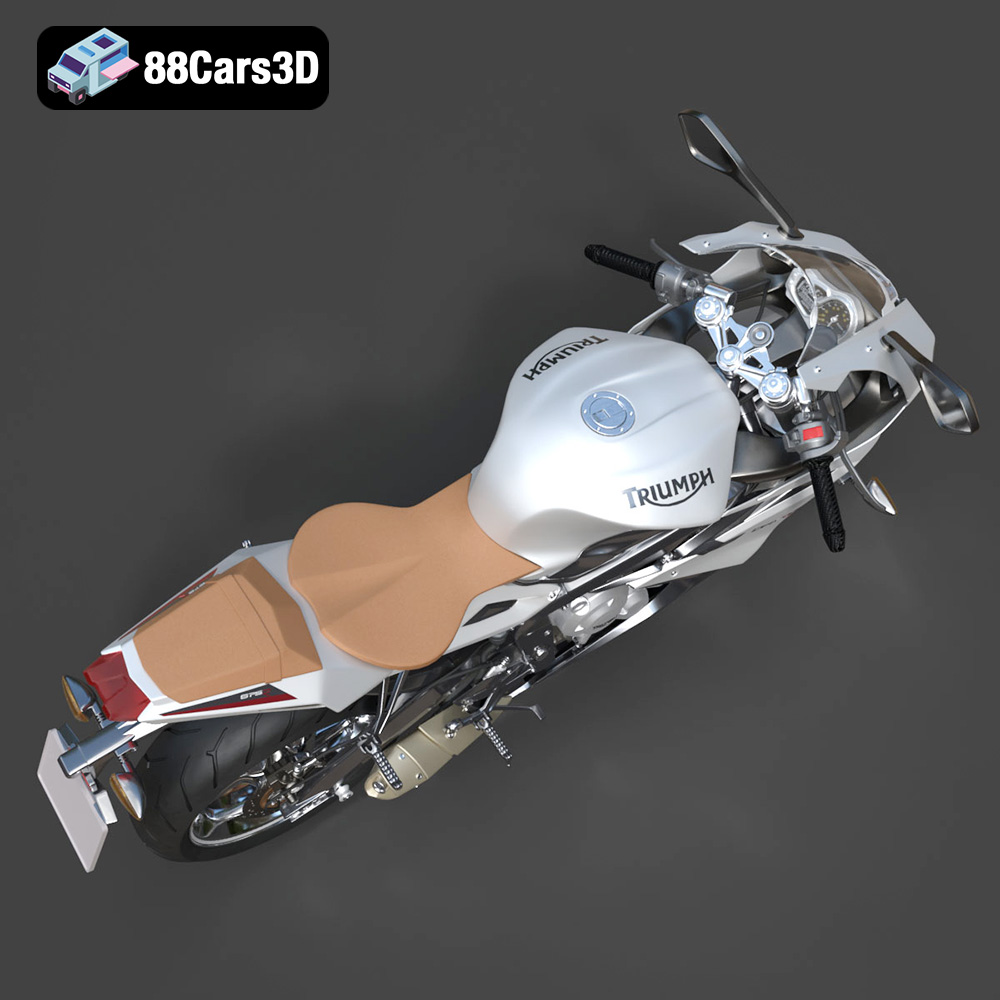
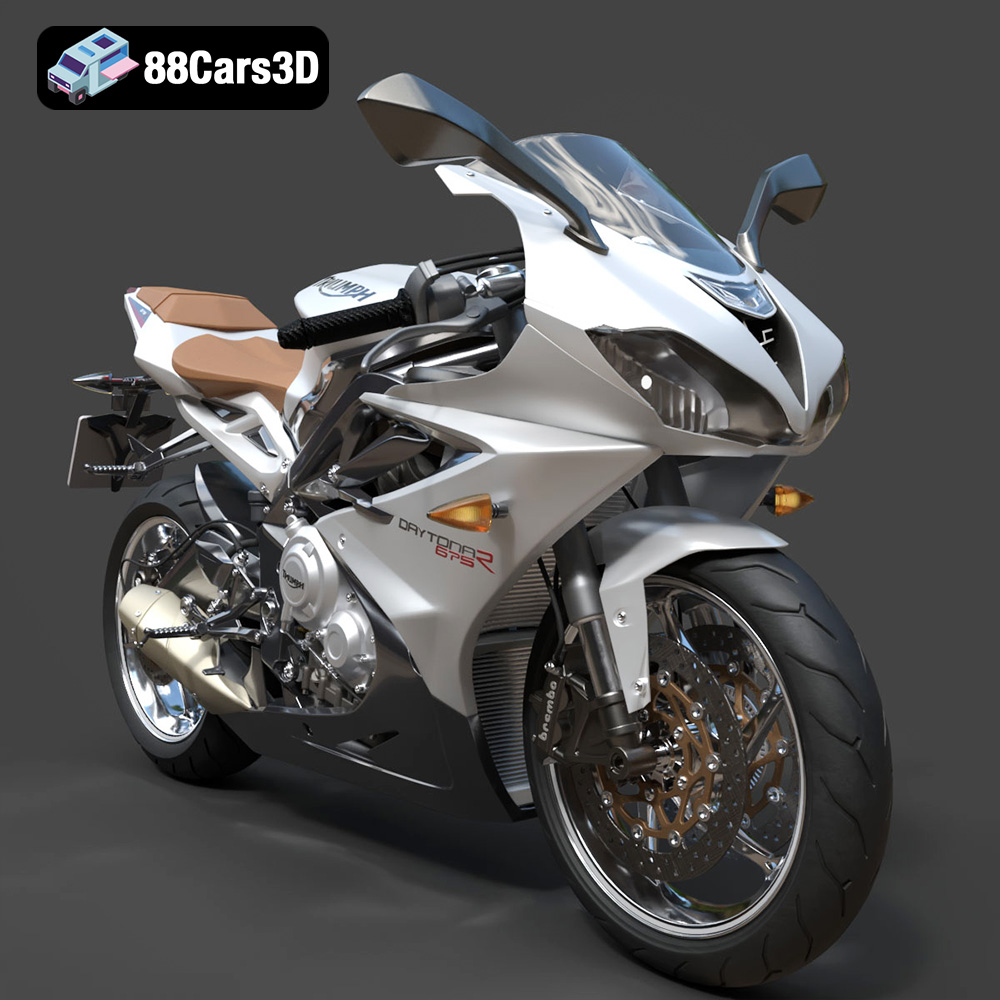
From its aggressively styled aerodynamic fairings to the signature triple-cylinder engine, every curve and component of the Daytona 675R ABS 2015 has been faithfully replicated. The model boasts accurate frame geometry and proportions, ensuring that its digital counterpart conveys the same powerful stance as the real machine. Details like the sleek side-mounted exhaust with carbon fiber heat shield elements, the sharp LED taillights, and the premium Öhlins suspension components (NIX30 fork and TTX36 rear shock) are all present, lending unparalleled realism. Even the lightweight cast aluminum wheels with their track-oriented tire treads are meticulously modeled. Crucially, components like the wheels, suspension, and steering are separate, allowing for dynamic animation that mimics real-world physics.
The interior, or cockpit, is equally detailed, with a sculpted sport saddle, clip-on handlebars featuring intricate grips and switchgear, and an accurate digital/analog instrument cluster. Rearset footpegs, brake levers, and even the quickshifter mechanism are modeled, ensuring that the experience, even from a first-person perspective in a game, is entirely convincing.
Beyond visual accuracy, the technical specifications of this model make it incredibly adaptable. It’s built to real-world scale, a fundamental requirement for realistic visualization and seamless integration into virtual environments. Proper pivot setups are implemented for steering, wheel rotation, and suspension travel, drastically reducing the animation setup time. This attention to functional detail is what elevates a good 3D model to a truly professional-grade asset.
The versatility of a well-made 3D vehicle model like the Triumph Daytona 675R ABS 2015 is truly evident when you consider its potential across various professional disciplines. It acts as a central digital twin, adaptable for different creative outputs.
For game developers, the Triumph Daytona 675R ABS 2015 3D Model is an ideal game asset. With approximately 150,000 triangles, it strikes an optimal balance between visual fidelity and real-time performance. This polycount is perfectly suited for modern game engines like Unreal Engine and Unity, allowing for the creation of immersive racing titles, open-world motorcycle adventures, or even interactive educational simulations. The separated components (wheels, suspension, steering) are critical for implementing realistic physics and animation, enabling developers to rig the model for dynamic gameplay, crash deformation, and responsive handling. Importing the .fbx or .unreal format directly into your engine streamlines the asset pipeline, minimizing conversion issues and maximizing development efficiency.
In advertising and visualization, photo-realism is paramount. The high detail and accurate geometry of this 3D motorcycle model make it perfect for creating breathtaking renders. Imagine a studio lighting setup in 3ds Max or Blender, showcasing the Daytona 675R’s sleek lines with ray-traced reflections and global illumination. Artists can utilize the .max or .blend files to fully leverage their preferred rendering engine’s capabilities, apply custom PBR materials, and craft cinematic animations for product launches, virtual showrooms, or lifestyle marketing campaigns. The ability to change body colors, adjust material finishes, and adapt lighting provides endless possibilities for creative expression and brand storytelling.
Augmented Reality (AR) and Virtual Reality (VR) are transforming how we interact with products. The Triumph Daytona 675R ABS 2015 3D Model is perfectly suited for these emerging platforms. Its optimized geometry and the availability of the .glb format make it an excellent choice for creating immersive virtual showrooms where customers can explore the bike in 3D, rotate it, and even “sit” on it virtually. For AR, the model can be placed in a real-world environment via a smartphone, allowing potential buyers to see the motorcycle in their garage or driveway. Interactive configurators, where users can instantly change colors, accessories, and view different angles, become powerful sales tools.
In the realm of 3D, especially for interactive applications, “game-ready” isn’t just a buzzword; it’s a critical technical distinction. An optimized asset like the Triumph Daytona 675R ABS 2015 3D Model is designed to deliver visual quality without bogging down real-time performance, a balance that requires skilled artistry and technical insight.
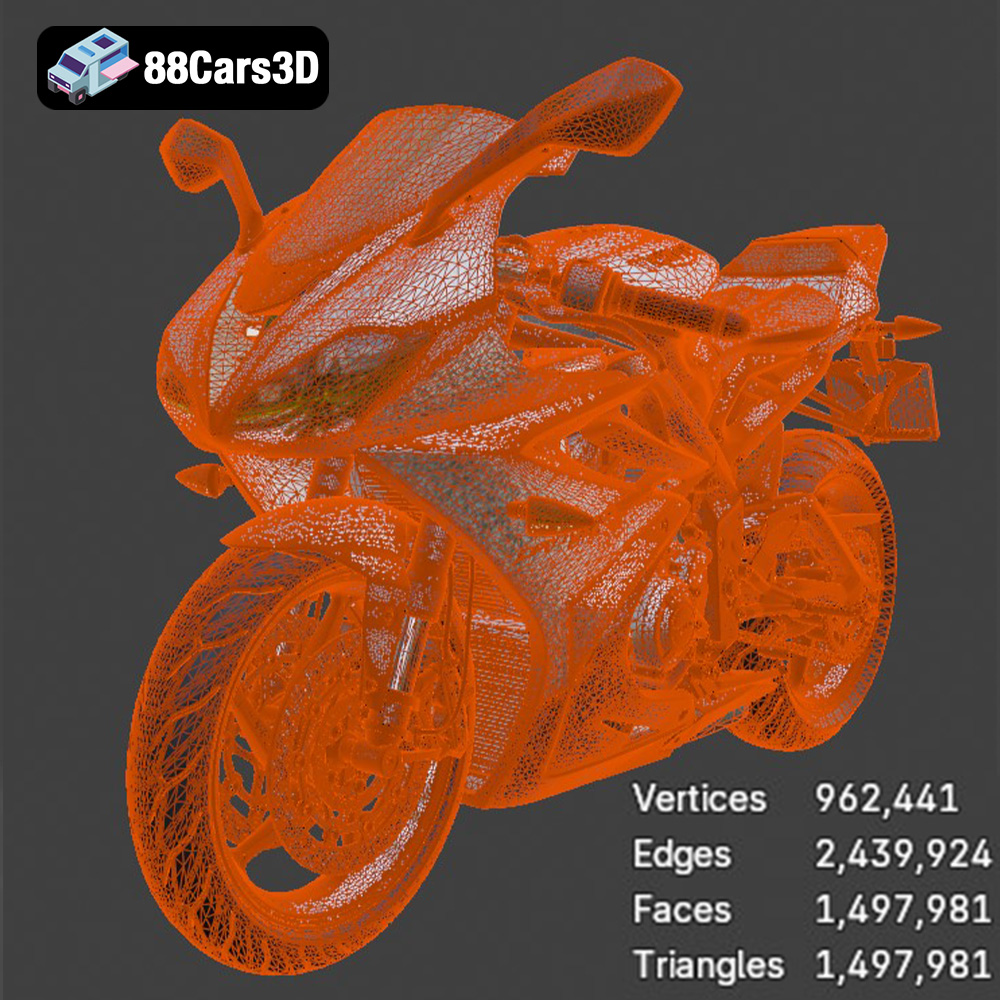
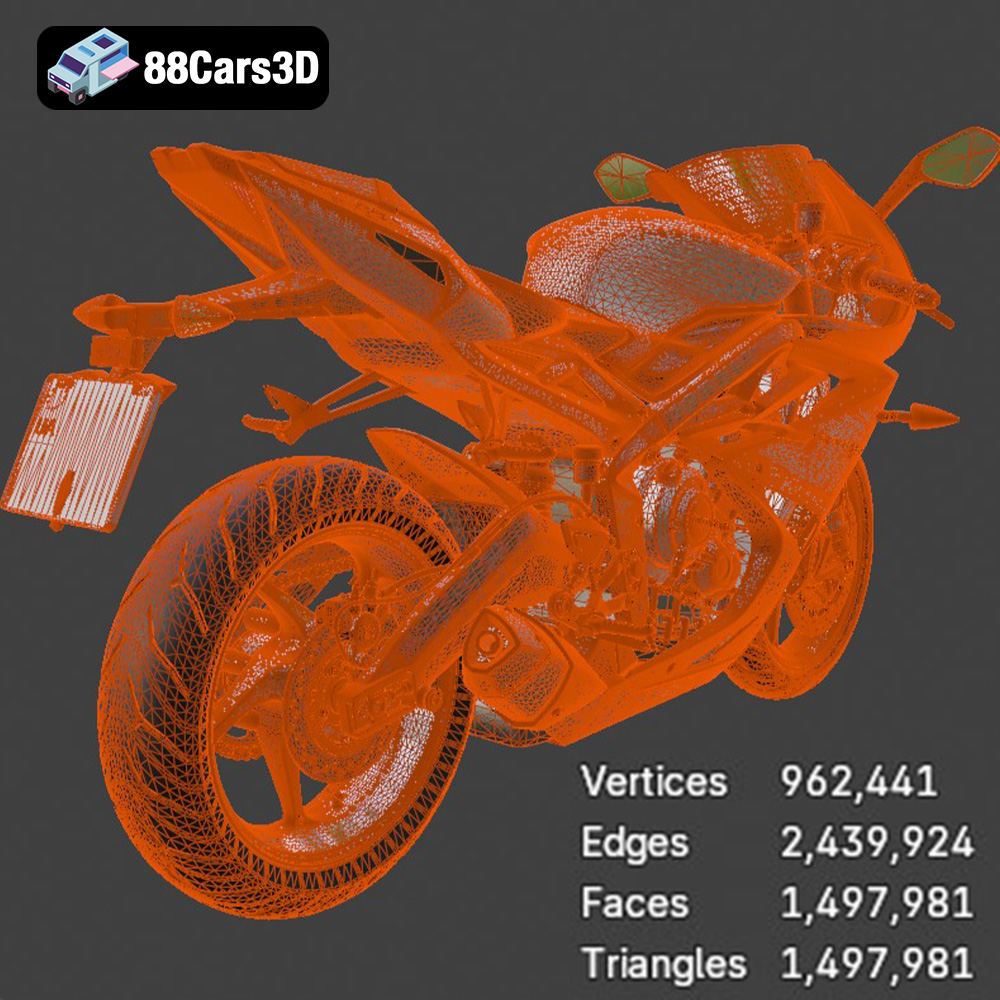
The model’s approximately 150,000 triangles represent a carefully chosen polycount that allows for significant detail without excessive computational load. This ‘optimized topology’ means that the mesh is clean, efficient, and free of unnecessary polygons or geometric errors. Good topology is essential for smooth deformations during animation, efficient UV unwrapping, and predictable performance in game engines. A lower, well-managed triangle count translates directly to faster render times and higher frame rates, crucial for a fluid user experience in games or VR.
Modern 3D models rely heavily on Physically Based Rendering (PBR) materials for realistic appearance. This model is designed to work seamlessly with PBR workflows, utilizing textures for albedo (base color), roughness, metallic, normal maps, and potentially ambient occlusion. These textures, when applied correctly in an engine like Unreal or Unity, accurately simulate how light interacts with different surfaces, from the glossy paintwork to the matte finish of carbon fiber and the metallic sheen of the engine. The ability to customize tire textures (e.g., off-road vs. street) further enhances its adaptability.
Effective UV unwrapping is crucial for texture mapping. The Daytona 675R model will feature clean, non-overlapping UV layouts, ensuring that textures are applied without distortion. Furthermore, proper material IDs facilitate assigning different PBR materials to various parts of the model (e.g., paint, rubber, chrome, glass), making it easier to manage and modify appearances without affecting the entire asset. This granular control is invaluable for both rendering and real-time customization.
The journey of a 3D model doesn’t always end on a screen. For enthusiasts and professionals alike, the possibility of bringing a digital creation into the physical world through 3D printing is incredibly exciting. The Triumph Daytona 675R ABS 2015 3D Model offers this capability, convertible to the .stl format for display-scale hobbyists.
Converting the model to .stl is the first step in preparing it for 3D printing. This format simplifies the geometry to a series of triangles, creating a watertight mesh that a 3D printer can understand. However, successful 3D printing requires more than just a file conversion; it demands an understanding of print settings and model preparation.
The recommended scales (1:12, 1:18, 1:24) offer a good balance between detail retention and manageable print size. For fine details, such as those on the exhaust, mirrors, or handlebars, resin printing is highly recommended, paired with a layer height of 0.04–0.12 mm. This process allows for extremely smooth surfaces and sharp edges that filament printers often struggle to achieve. Careful consideration of wall thickness (1.2–2.0 mm) and infill (20–30%) ensures structural integrity without excessive material usage.
Supports are almost always required for complex models like a motorcycle, especially for overhangs and intricate parts. Strategic print orientation, such as printing the frame at an angle, can improve structural integrity and minimize visible layer lines. Printing wheels separately allows for optimal detail and easier post-processing. After printing, processes like sanding, priming, and painting with authentic factory colors and metallic finishes transform the raw print into a stunning miniature replica. This hands-on process brings a new dimension to appreciating the intricate design of the Daytona 675R.
One of the most powerful advantages of working with high-quality 3D car models or motorcycle models is the boundless potential for customization. The Triumph Daytona 675R ABS 2015 3D Model provides a robust foundation upon which artists and developers can unleash their creativity, adapting the model to fit specific project needs or artistic visions.
The most straightforward customization involves altering the visual appearance of the model. Users can easily change body and tank colors, moving beyond the factory finishes to custom hues, metallic sheens, or even matte textures. This is achieved by adjusting material parameters within the 3D software or game engine, or by swapping out texture maps. Imagine a unique racing livery for a game, or a distinct brand color palette for an advertising campaign. The flexibility extends to modifying tire textures, allowing for differentiation between track-oriented, street, or even fictional futuristic variants.
Beyond the model itself, customizing the environment and lighting can dramatically alter the perception of the Daytona 675R. Whether placing it in a sun-drenched virtual garage, a rainy cityscape, or a futuristic sci-fi setting, the ability to adapt lighting setups is crucial. This includes adjusting the intensity, color, and direction of lights, adding emissive materials for glowing elements, or implementing advanced global illumination techniques. This level of control allows the model to seamlessly integrate into any scene or mood, enhancing its narrative impact. The detailed geometry also means that even subtle changes in lighting will realistically highlight its curves and contours.
These customization options ensure that the Triumph Daytona 675R ABS 2015 3D Model is not a static asset but a dynamic canvas for endless creative possibilities, making it a truly valuable addition to any digital arsenal, readily available on platforms like 88cars3d.com.
In the rapidly evolving landscape of 3D content creation, the demand for high-quality, versatile, and optimized 3D car models and vehicle assets is constant. The Triumph Daytona 675R ABS 2015 3D Model exemplifies what a premium digital asset should be: a meticulously detailed replica engineered for seamless integration across a multitude of platforms and applications. From its precise exterior and interior features to its game-ready optimization and broad file format compatibility, it serves as a powerful tool for professionals and hobbyists alike.
Whether you’re developing an immersive racing game with Unreal Engine, crafting stunning automotive rendering for a global marketing campaign in 3ds Max, building an interactive AR/VR showroom, or even bringing a physical manifestation to life through 3D printing, this model provides the foundational quality needed for exceptional results. Its technical specifications, including a balanced polycount and proper pivot setups, ensure that it performs efficiently while maintaining visual fidelity. The extensive customization options further extend its utility, allowing artists to tailor its appearance and integrate it into any digital environment imaginable.
Investing in such a high-caliber asset, like those found on 88cars3d.com, empowers creators to accelerate their workflows, achieve unparalleled realism, and focus their energies on innovation. The Triumph Daytona 675R ABS 2015 3D Model isn’t just a digital object; it’s a gateway to bringing your most ambitious creative visions to life with speed, precision, and breathtaking detail.
The Triumph Daytona 675R ABS 2015 is a legendary middleweight supersport motorcycle celebrated for its track-focused performance, iconic triple-cylinder engine, and razor-sharp handling. Distinctive features include its aggressively styled aerodynamic fairings, sleek side-mounted exhaust system, striking red subframe, premium Öhlins suspension components, and high-performance Brembo brakes.
This high-quality 3D model boasts optimized topology with a balanced triangle count, making it a perfect game-ready asset without sacrificing visual fidelity. Built with precision for game development, AR/VR environments, dynamic animation, and high-end automotive visualization.
Perfect for track racing simulators, high-speed cinematic animations, virtual dealership showrooms, and interactive motorcycle configurators.
.blend, .fbx, .obj, .glb, .stl, .ply, .unreal, .max
Tags:
triumph, daytona-675r, daytona-675r-abs-2015, supersport, sportbike, motorcycle-3d-model, game-ready, low-poly, optimized, game-asset, rendering, vr-ar, blend, fbx, obj, glb, stl, ply, unreal, maxVespa VNB 125-B 3D Model 3D Printable STL
$39.99
.blend
.fbx
.glb
.max
.obj
.ply
.rendering
.sportbike
.stl
.supersport
.triumph
.unreal
daytona-675r
daytona-675r-abs-2015
game asset
game-ready
low-poly
motorcycle-3d-model
optimized
VR/AR