Get 20% OFF All Premium 3D & STL Models!

In the dynamic worlds of automotive design, game development, and advanced visualization, the quest for realism and performance is unending. High-fidelity 3D models are no longer a luxury but a fundamental necessity, serving as the bedrock for everything from breathtaking cinematic renders to immersive virtual experiences. Professionals across these industries demand assets that are not only visually stunning but also technically robust, optimized for diverse applications, and ready to integrate seamlessly into complex pipelines.
Today, we delve into the intricate details that elevate a good 3D model to an indispensable asset, using a prime example from the celebrated collection at 88cars3d.com: the Triumph Daytona 675R ABS 2015 3D Model. This legendary middleweight supersport motorcycle, renowned for its track-focused performance and iconic triple-cylinder engine, offers a perfect case study for exploring the blend of artistic accuracy and technical optimization required in contemporary 3D asset creation.
The distinction between a generic 3D asset and a high-quality, professional-grade model lies in a myriad of factors, each contributing to its usability, aesthetic appeal, and overall value. For industries where precision and visual integrity are paramount, such as automotive rendering and game development, compromising on model quality can lead to significant setbacks, from poor performance to an unconvincing final product.
Automotive visualization demands an unparalleled level of detail and accuracy. Whether it’s for a new product launch, a marketing campaign, or an engineering review, the digital representation must faithfully replicate every curve, panel gap, and material finish of its real-world counterpart. This requires a meticulous approach to modeling, ensuring correct proportions, accurate surface topology, and realistic material properties. A high-quality 3D car model, like the Triumph Daytona 675R ABS 2015, isn’t just a mesh; it’s a digital blueprint that reflects hours of careful observation and technical execution. Artists and designers rely on these models to convey the essence of a vehicle, evoke emotion, and provide an immersive experience that can often precede the physical creation of the product itself.
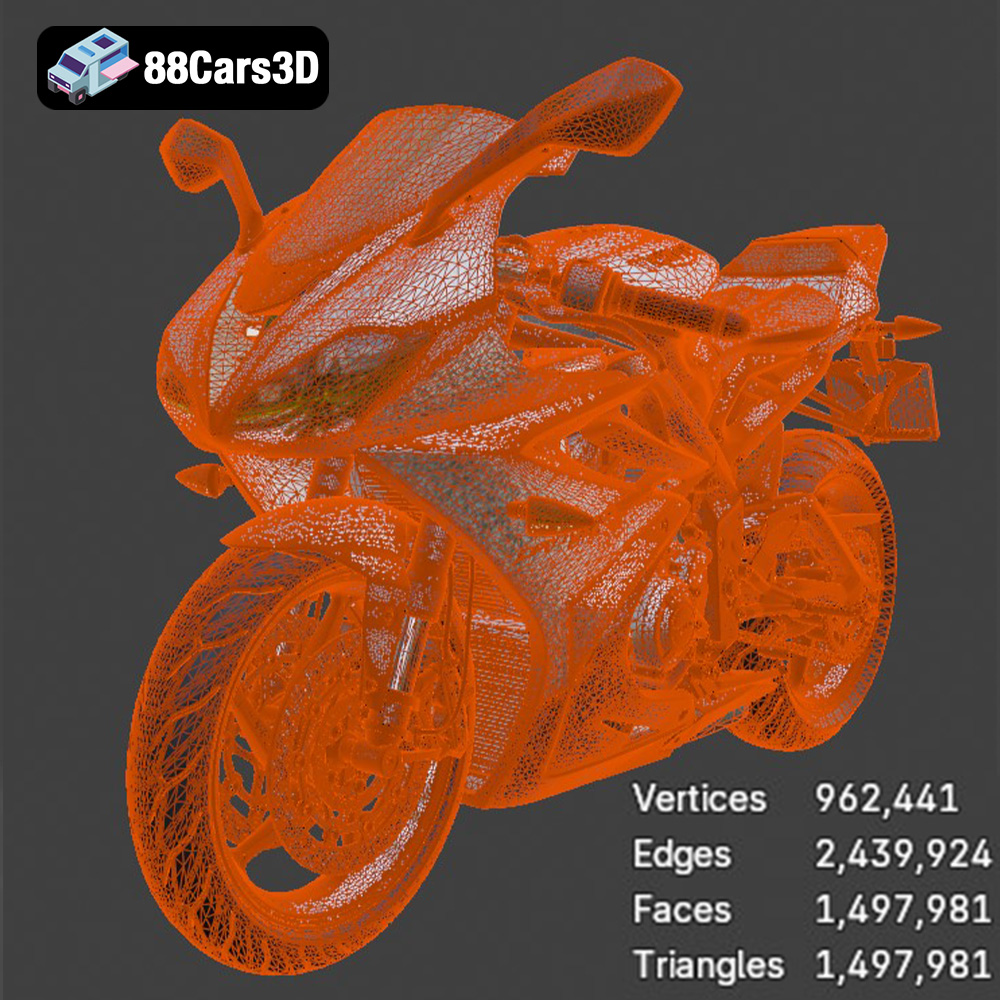
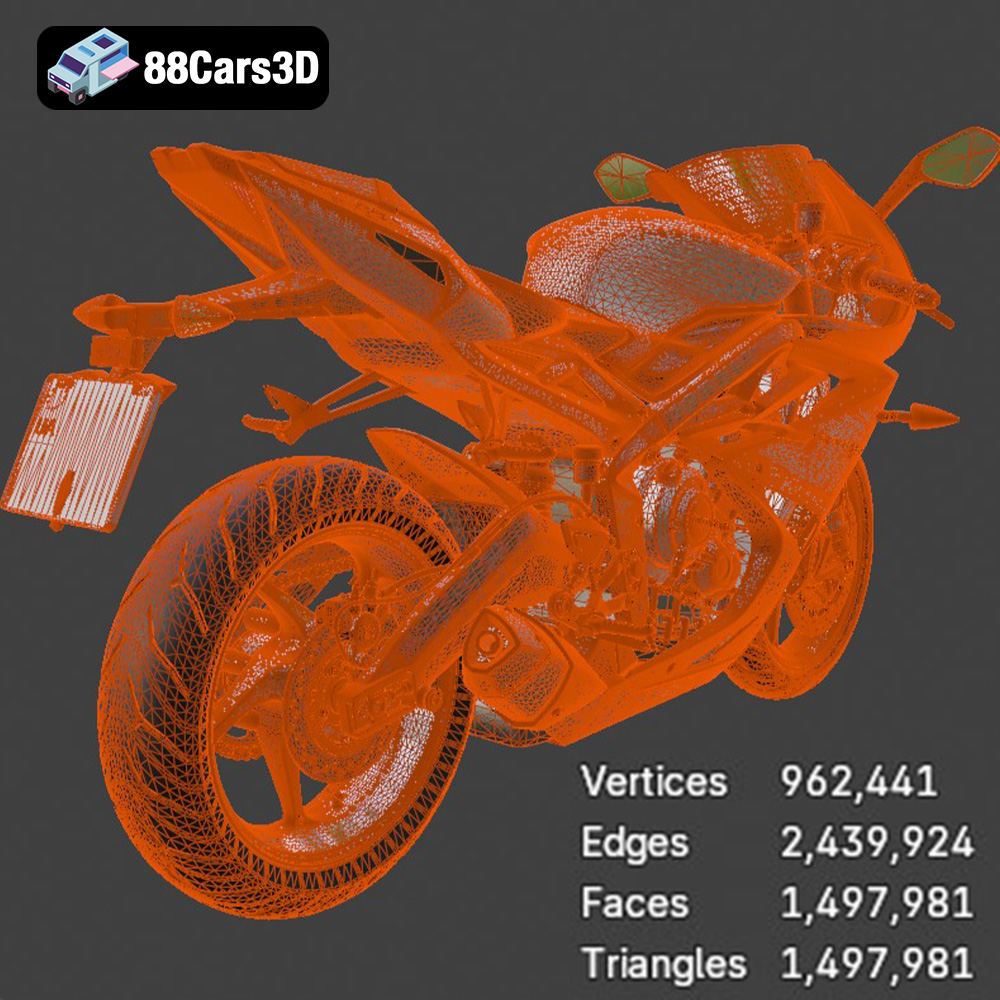
In interactive environments such as video games, AR, and VR, the demands on 3D assets are even more stringent. Models must strike a delicate balance between visual fidelity and performance efficiency. Overly complex meshes can cripple frame rates, while models lacking detail break immersion. A truly game-ready asset is optimized with careful polycount management, efficient UV mapping, and a robust material setup. The Triumph Daytona 675R ABS 2015 3D Model, for instance, boasts an optimized ~150,000 triangles. This polycount is perfectly balanced to deliver stunning visual realism without compromising real-time performance, making it ideal for racing simulators, open-world games, and interactive VR experiences where every frame counts. The ability to render intricate details like the Öhlins suspension or Brembo brakes in real-time significantly enhances player engagement and the sense of presence.
Navigating the diverse landscape of 3D software and applications requires a comprehensive understanding of various file formats. Each format serves specific purposes, offering unique advantages in terms of compatibility, data retention, and optimization for particular workflows. Selecting the correct format is crucial for maintaining model integrity and ensuring smooth integration into your project pipeline. The Triumph Daytona 675R ABS 2015 3D Model exemplifies versatility by offering a wide array of formats, catering to virtually any professional need.
The .blend format is Blender’s native file format. It’s an all-encompassing archive that stores not just the mesh data, but also materials, textures, animations, camera settings, lighting, scene setup, and even scripts. This makes it incredibly powerful for Blender users, as it allows for full editability and preserves every aspect of the project. If you’re working primarily within Blender for rendering with Cycles or Eevee, animation, or game asset creation, the .blend file is your go-to. It’s the most robust format for continuing development within Blender, ensuring that all specific node setups, modifiers, and rigging are intact.
The comprehensive availability of these formats ensures that the Triumph Daytona 675R ABS 2015 3D Model from 88cars3d.com can be integrated into virtually any professional workflow, making it an incredibly versatile and future-proof asset.
The choice of subject matter for a 3D model is often as critical as its execution. The Triumph Daytona 675R ABS 2015 is an icon, and its digital representation must live up to its real-world legacy. This model exemplifies the meticulous detail required to bring a legendary vehicle to life in the digital realm.
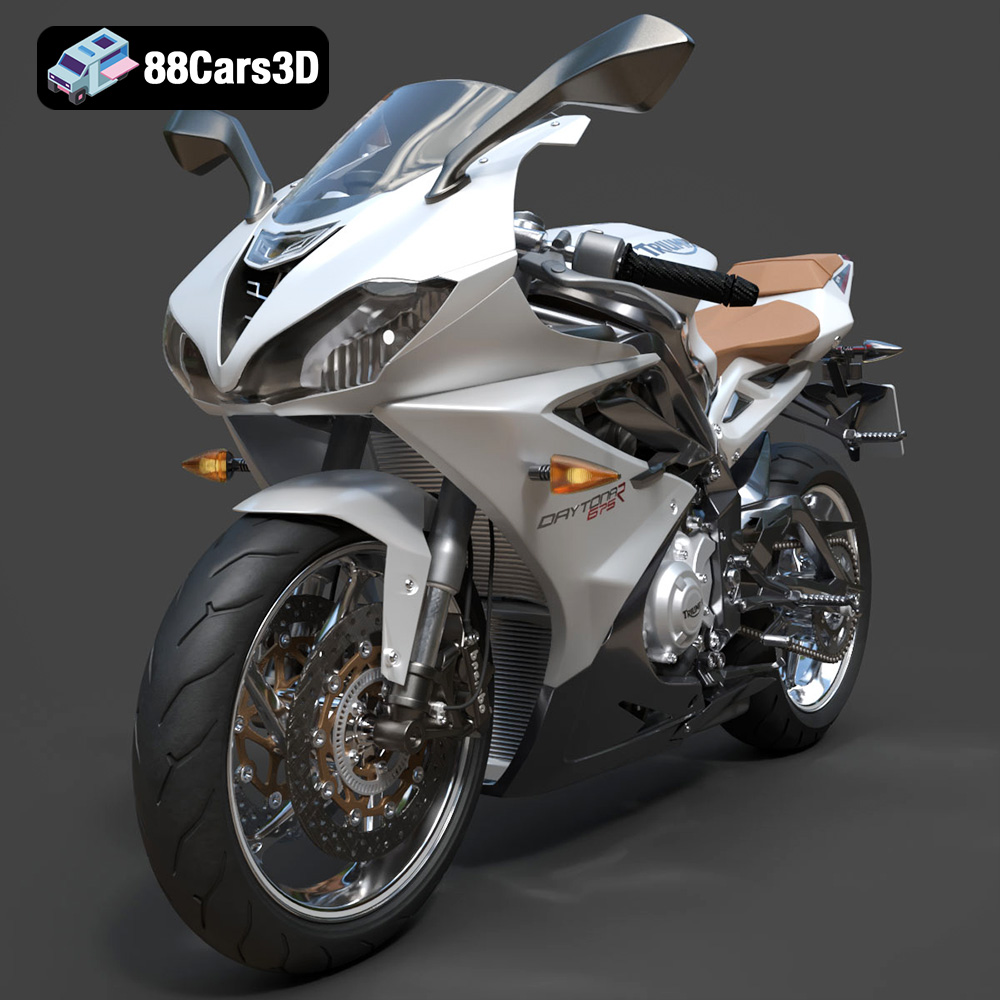
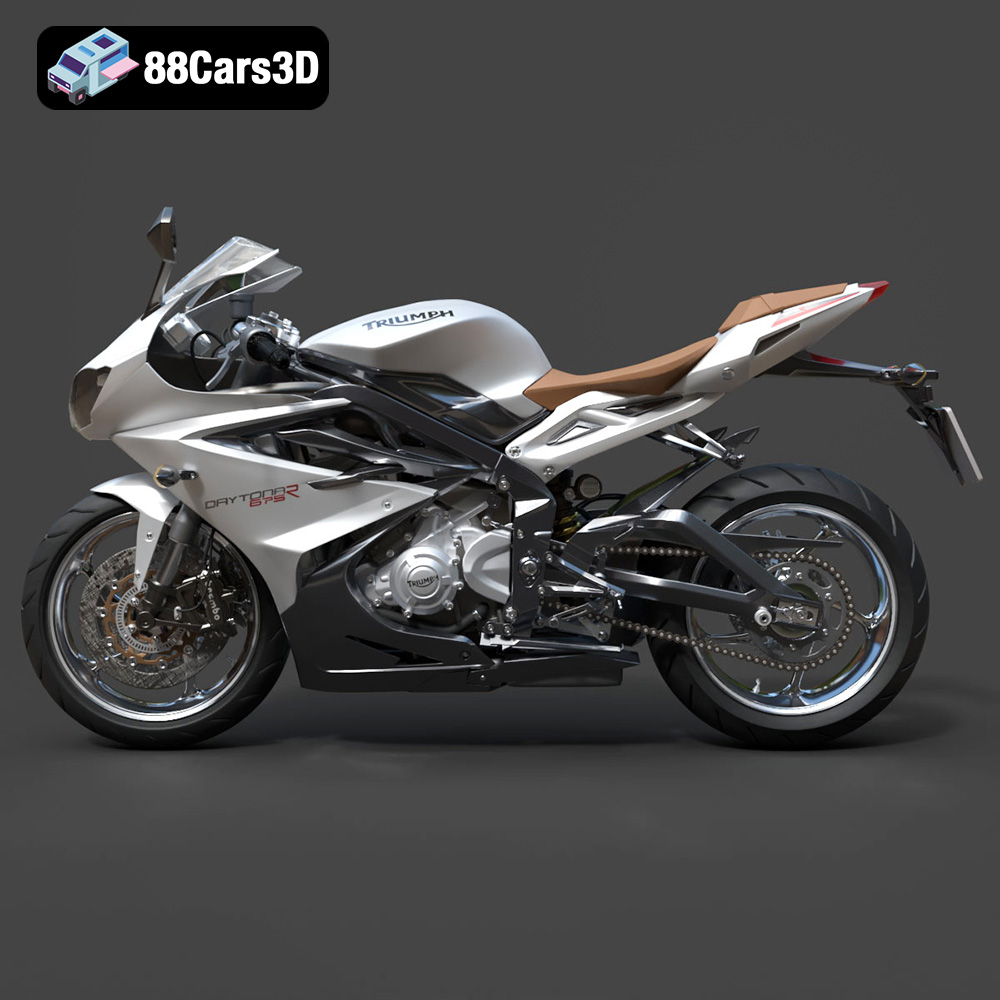
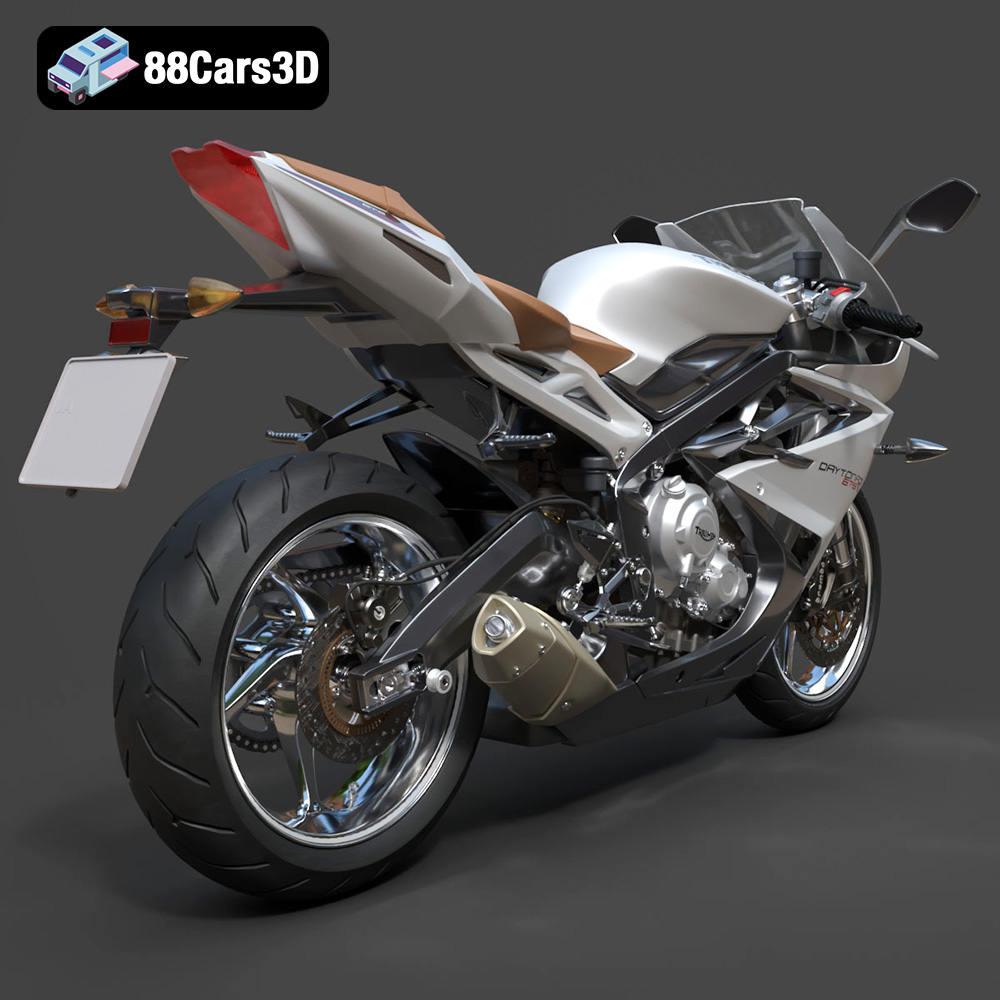
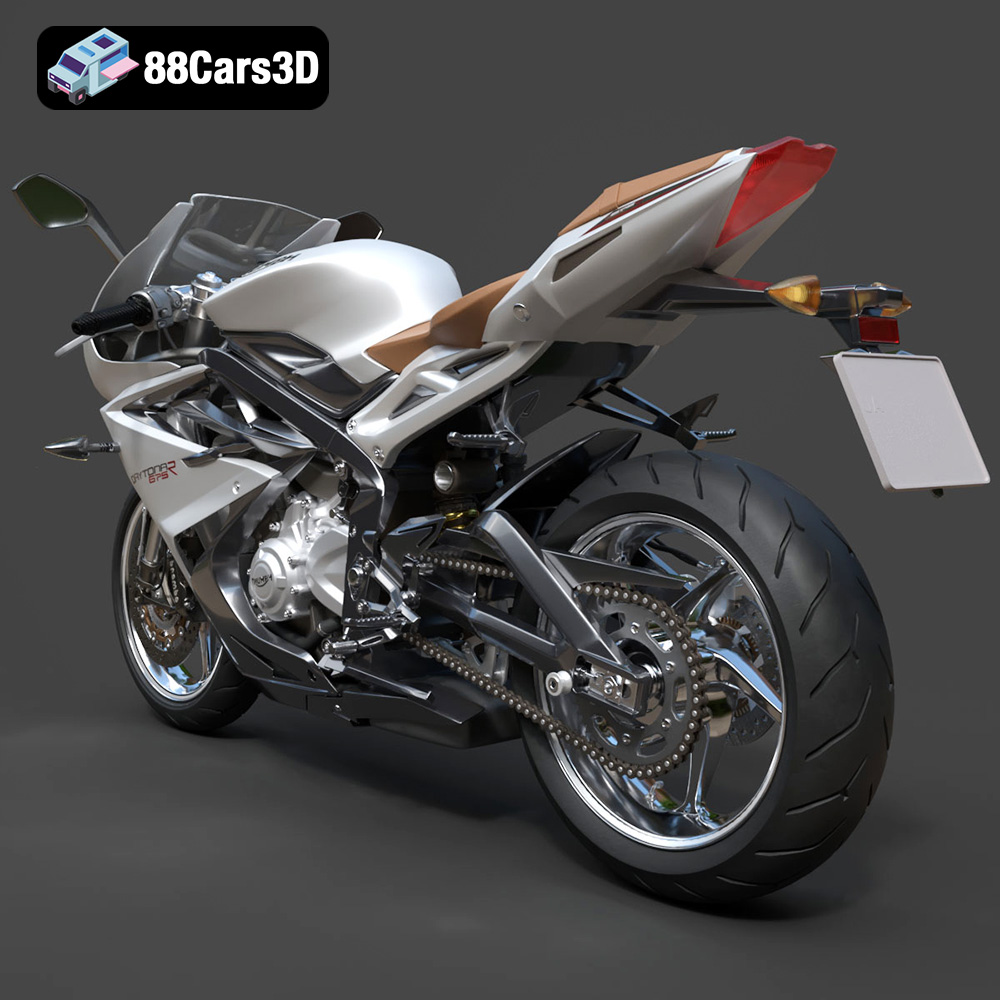
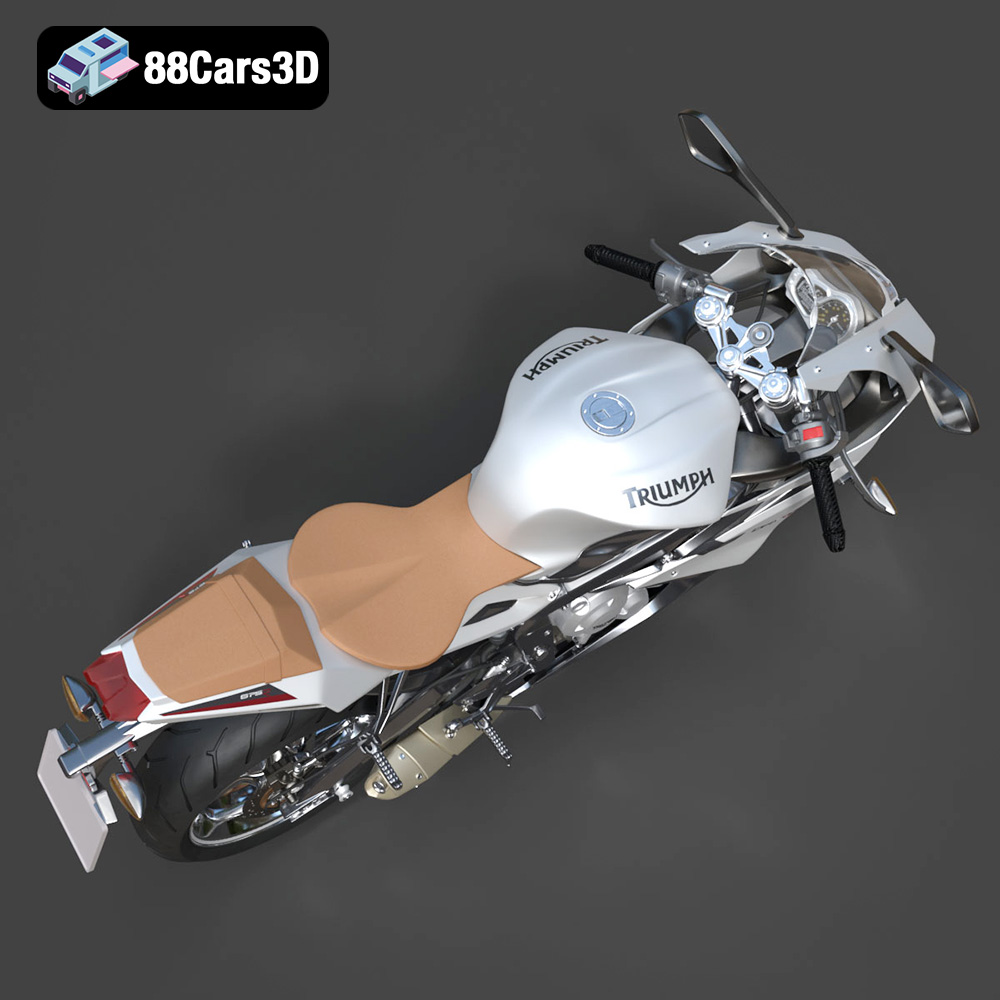
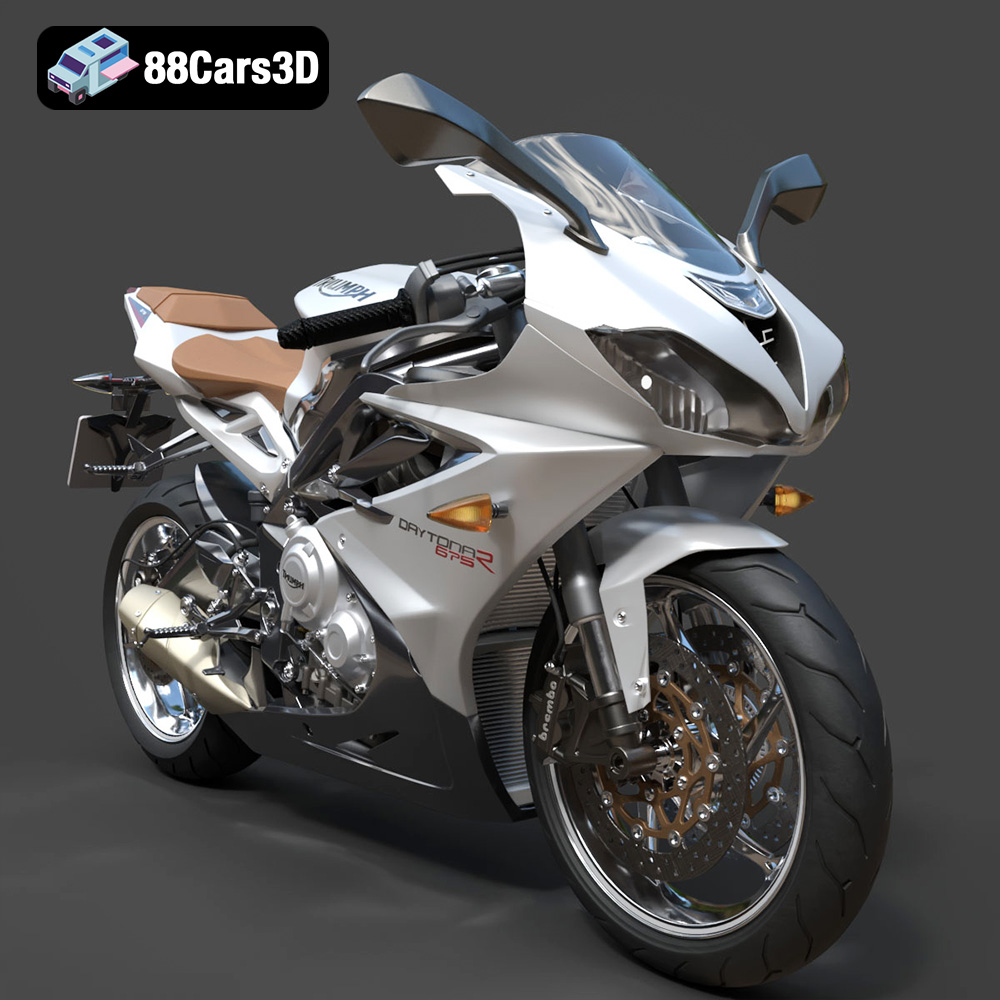
From its aggressively styled aerodynamic fairings to its sleek side-mounted exhaust system, every element of the real Daytona 675R ABS 2015 has been faithfully replicated. The distinctive red subframe, a hallmark of the ‘R’ variant, is present, as are the premium Öhlins suspension components and high-performance Brembo brakes. The model captures the motorcycle’s razor-sharp handling and track-focused aesthetics, making it instantly recognizable. Accurate frame geometry and proportions, detailed engine block based on the signature 675cc inline-triple powerplant, and lightweight cast aluminum wheels with sticky track-oriented tire treads all contribute to this authentic digital recreation.
Technical specifications are paramount for professional-grade 3D car models. The Triumph Daytona 675R model achieves a remarkable balance: ~150,000 triangles. This optimized topology allows for high-end visual realism in renders while remaining perfectly suitable as a game-ready asset for real-time engines like Unreal and Unity. Furthermore, the model is built with real-world scale accuracy, based on actual vehicle chassis dimensions, ensuring it integrates flawlessly into existing environments and scenarios without requiring tedious scaling adjustments. Crucially, the model features proper pivot setups for steering, wheel rotation, and suspension travel. This attention to detail is invaluable for animators and game developers, providing immediate control over crucial dynamic elements without additional rigging effort.
The model’s exterior boasts features such as the aggressive twin-headlight design, sharp LED taillights, and separate wheels, suspension, and steering components, facilitating complex animations. Moving to the cockpit, the sculpted sport saddle with a pillion seat cowl, clip-on handlebars with detailed grips, switchgear, and mirrors immerse the viewer. The accurate digital/analog combination instrument cluster and detailed rearset footpegs, brake levers, and quickshifter mechanism are all meticulously modeled. This level of granular detail, especially in areas visible during first-person gameplay or close-up renders, significantly enhances the overall immersion and quality of any project.
A high-quality 3D asset’s true value is realized when it seamlessly integrates into various professional workflows, saving time and resources while elevating the final product. The Triumph Daytona 675R ABS 2015 3D Model is designed with this versatility in mind.
For game developers, time is often the most critical resource. Having a pre-optimized, game-ready asset like the Daytona 675R significantly accelerates production. Its ~150,000 triangle count is ideal for both high-fidelity racing titles and expansive open-world environments. With formats like FBX and engine-ready .unreal assets, developers can quickly import the model into Unreal Engine or Unity, leveraging physically-based rendering (PBR) workflows for realistic materials. The separate, animatable components (wheels, steering, suspension) mean developers can implement realistic vehicle physics and animations without having to dissect and re-rig the model from scratch. This direct integration allows for rapid prototyping and iteration, crucial for hitting deadlines and delivering compelling gameplay experiences.
For cinematic sequences, marketing visuals, or product showcases, rendering quality is paramount. The 88cars3d.com Triumph Daytona model, available in .max and .blend formats, provides a perfect starting point. Artists using 3ds Max can utilize its robust rendering engines like V-Ray or Corona to produce photorealistic images, applying advanced lighting and material shaders to truly bring out the bike’s premium finishes. Blender users benefit from the native .blend file, enabling full access to Cycles or Eevee for stunning visuals and complex animation setups. The accurate proportions and detailed geometry ensure that reflections, refractions, and shadows behave realistically, creating compelling visuals that captivate audiences in brand campaigns or lifestyle scenes.
The emerging fields of Augmented Reality (AR) and Virtual Reality (VR) demand highly optimized, yet visually rich assets. The GLB format, specifically designed for web and mobile AR/VR, makes the Daytona 675R ideal for virtual showrooms, interactive configurators, or even mobile AR experiences where users can place the bike in their real-world environment. Its balanced polycount ensures smooth performance on a range of devices, while the detailed features maintain realism. Imagine a potential buyer interacting with the bike, changing colors, examining details up close in a virtual dealership – this model provides the foundation for such immersive, next-generation marketing and sales tools.
While most 3D models live within digital environments, some are destined for the physical world. The versatility of the Triumph Daytona 675R ABS 2015 3D Model extends to 3D printing, offering enthusiasts and professionals the opportunity to bring a tangible representation of this iconic motorcycle into existence.
Converting a high-resolution rendering or game asset into a 3D printable model requires specific considerations. The .stl format is universally recognized for 3D printing, but the underlying mesh needs to be “manifold” – meaning it’s a completely sealed, watertight surface without holes or intersecting geometry. The Triumph Daytona 675R ABS 2015 3D Model is designed with this in mind, making it suitable for conversion and printing. For complex models like motorcycles, it’s often beneficial to separate parts, like wheels, frame, and handlebars, to facilitate easier printing, reduce support material, and improve detail resolution.
For hobbyists looking to 3D print the Daytona 675R, specific settings are recommended to achieve optimal results. Scales like 1:12, 1:18, or 1:24 are popular for display models. A fine layer height (0.04–0.12 mm) is crucial, especially if using resin printing, to capture the intricate details of the engine, suspension, and cockpit. Adequate wall thickness (1.2–2.0 mm) ensures structural integrity, while infill of 20-30% provides strength without excessive material use. Supports are almost always required for complex overhangs like the exhaust, mirrors, and handlebars. Post-processing, including sanding, priming, and painting with authentic factory colors and metallic finishes, transforms a raw 3D print into a stunning miniature replica. This blend of digital and physical craftsmanship is a testament to the model’s versatility.
Beyond initial integration, a valuable 3D asset offers room for customization and adaptation, ensuring its relevance across multiple projects and evolving requirements. The Triumph Daytona 675R ABS 2015 model provides ample opportunities for creative modification.
The ability to easily change body and tank colors is fundamental for automotive models. Users can apply factory colors, custom finishes, or experiment with unique liveries to suit specific branding or project themes. Modifying tire textures from track-oriented to street variants or even off-road patterns allows for scenario-specific adaptations. Adjusting material finishes – from matte and gloss to various metallic effects – gives artists granular control over the aesthetic, allowing them to create anything from a showroom-pristine bike to a weathered, race-worn machine. This flexibility is critical for artists creating diverse scenes or interactive experiences.
Project requirements can shift, and a well-structured 3D model can accommodate these changes. The separated components of the Daytona 675R allow for individual adjustments or replacements, such as swapping out suspension types or modifying exhaust configurations. Adaptable lighting for different environments, from bright outdoor scenes to moody studio setups, further enhances its utility. This inherent adaptability ensures that the investment in a high-quality 3D asset like this one continues to pay dividends across various stages of production and even into future projects, truly making it a future-proof addition to any professional’s library.
The demand for high-quality 3D car models and game assets continues to grow, pushing the boundaries of realism and immersion. The Triumph Daytona 675R ABS 2015 3D Model stands as an exemplary representation of what a premium asset should be: meticulously detailed, technically optimized, and incredibly versatile. From its game-ready polycount and animatable components to its broad file format compatibility, it serves as a powerful tool for professionals in automotive rendering, game development, AR/VR, and even 3D printing.
Acquiring such a high-caliber model empowers creators to save invaluable time, elevate their projects with stunning visual fidelity, and ensure seamless integration into diverse production pipelines. When seeking assets that blend artistic excellence with engineering precision, resources like 88cars3d.com offer an unparalleled selection designed to meet the rigorous demands of today’s most ambitious digital endeavors. Invest in quality, and unlock the full potential of your creative vision.
The Triumph Daytona 675R ABS 2015 is a legendary middleweight supersport motorcycle celebrated for its track-focused performance, iconic triple-cylinder engine, and razor-sharp handling. Distinctive features include its aggressively styled aerodynamic fairings, sleek side-mounted exhaust system, striking red subframe, premium Öhlins suspension components, and high-performance Brembo brakes. This high-quality 3D model boasts optimized topology with a balanced triangle count, making it a perfect game-ready asset without sacrificing visual fidelity. Built with precision for game development, AR/VR environments, dynamic animation, and high-end automotive visualization.
$39.99
.blend
.fbx
.glb
.max
.obj
.ply
.rendering
.sportbike
.stl
.supersport
.triumph
.unreal
daytona-675r
daytona-675r-abs-2015
game asset
game-ready
low-poly
motorcycle-3d-model
optimized
VR/AR