Get 20% OFF All Premium 3D & STL Models!

In the dynamic worlds of game development, cinematic rendering, virtual reality, and advanced visualization, the demand for exceptionally detailed and optimized 3D car models has never been higher. Automotive assets are not just static objects; they are characters, performance machines, and critical elements that define the realism and immersion of any digital experience. From the sleek lines of a modern sports car to the intricate mechanics beneath the hood, every curve and component must be meticulously recreated to stand up to the scrutiny of today’s discerning audiences.
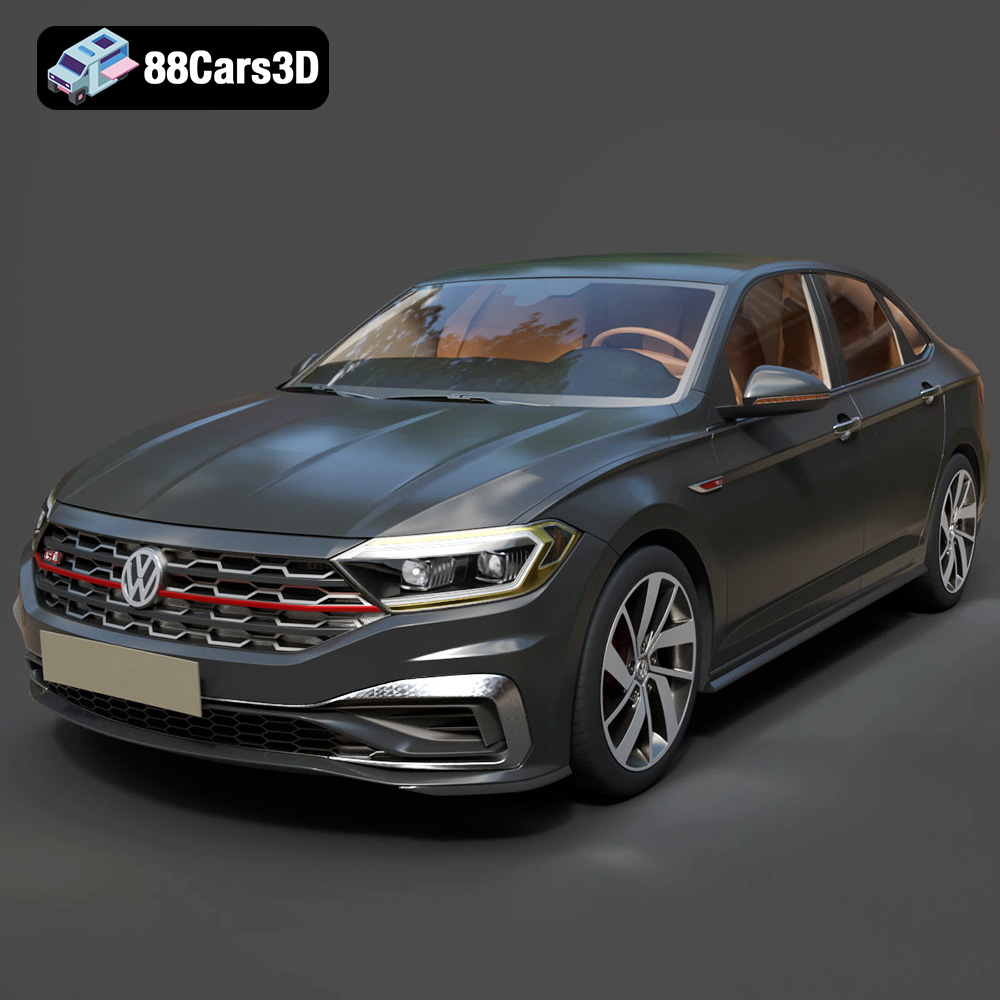
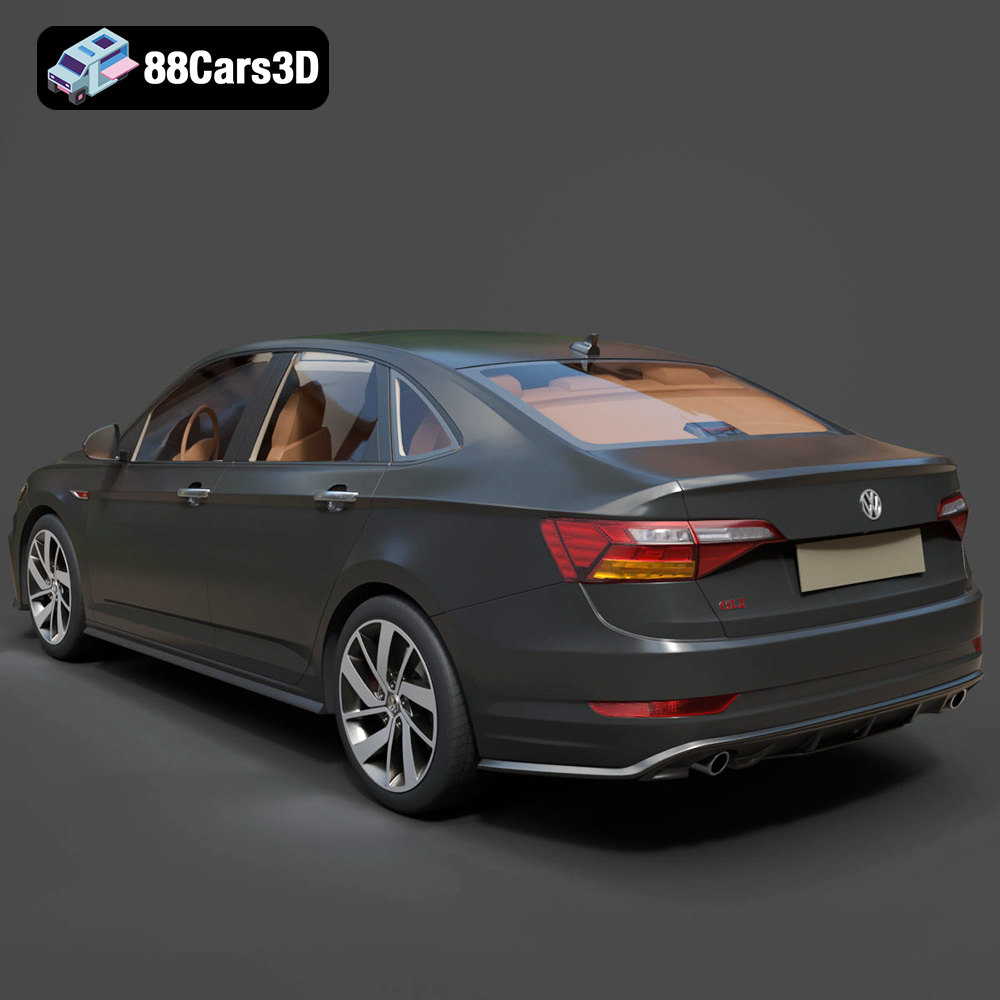
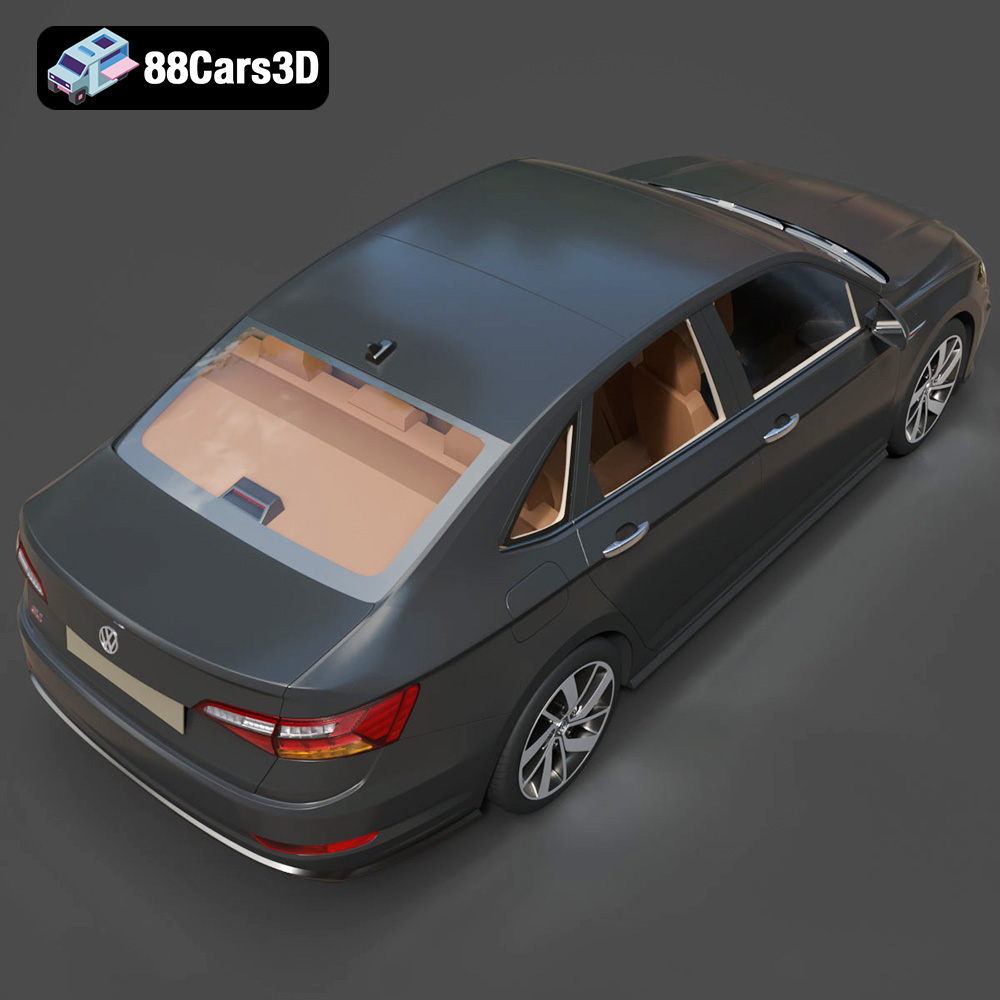
Achieving this level of fidelity requires a deep understanding of 3D modeling principles, optimization techniques, and the unique challenges presented by vehicle design. It’s about more than just aesthetics; it’s about delivering a model that is technically robust, animatable, and compatible across a multitude of platforms and engines. This is where specialized assets truly shine, enabling professionals to bypass countless hours of modeling and jump straight into bringing their creative visions to life. A prime example of such an asset is the Volkswagen Jetta GLI 2019 3D Model available on 88cars3d.com, an asset that perfectly encapsulates the blend of everyday practicality with thrilling performance, meticulously captured for digital applications. This model is engineered to provide both visual stunningness and technical efficiency, making it an invaluable tool for any project.
The journey of a 3D model from concept to deployment involves navigating a landscape of various file formats, each with its unique strengths, compatibility, and intended use case. Choosing the correct format is paramount for ensuring seamless integration into your workflow and achieving optimal results. High-quality 3D car models, like the Volkswagen Jetta GLI 2019, often come packaged with multiple formats to cater to diverse professional needs. Let’s delve into the most common and critical ones:
The .blend file is Blender’s native format, preserving all aspects of a Blender scene. This includes not just the mesh data, but also materials (Cycles/Eevee nodes), textures, lighting setups, cameras, animations, physics simulations, modifiers, and even scene organization (collections, layers). When you receive a .blend file, you’re essentially getting the fully editable project as the artist intended it, offering maximum flexibility for customization, rigging, animation, and rendering directly within Blender. It’s ideal for those who primarily work in Blender and require full access to the original scene’s intricacies.
.fbx (Filmbox) is a proprietary file format developed by Autodesk, serving as a widely adopted exchange format across various 3D applications and game engines. Its strength lies in its ability to store comprehensive scene data, including geometry (meshes), materials (often simplified PBR references), textures, animations (skeletal and blend shapes), cameras, and lights. .fbx is particularly favored for real-time pipelines, making it the go-to format for importing assets into game engines like Unreal Engine and Unity. The Volkswagen Jetta GLI 2019’s .fbx ensures that its optimized mesh, PBR material assignments, and separate animatable components are readily available for game development and cinematics.
The .obj (Wavefront Object) format is one of the oldest and most universally supported 3D formats. It primarily stores geometric data, including vertex positions, UV coordinates, normals, and face definitions. While it can reference external material files (.mtl) for basic color and texture assignments, it doesn’t store complex PBR material properties, animation, or rigging data directly within the file. Its simplicity and widespread compatibility make it an excellent choice for basic mesh exchange between different software packages when complex scene data isn’t required, or for foundational modeling tasks.
.glb (GL Transmission Format Binary) is the binary version of glTF, an open-standard 3D file format designed for efficient transmission and loading of 3D scenes and models by applications. It’s often referred to as the “JPEG of 3D” due to its focus on compactness and efficiency. .glb files embed all assets (geometry, textures, animations, PBR materials) into a single, self-contained file, making them ideal for web-based 3D viewers, augmented reality (AR), virtual reality (VR) applications, and mobile platforms where file size and quick loading are critical. The Jetta GLI 2019 in .glb format is perfectly suited for interactive virtual showrooms or AR car configurators.
The .stl (Stereolithography) format is the undisputed standard for 3D printing. It represents a 3D model as a series of connected triangles (a triangulated surface mesh) without any color, texture, or material information. It’s a pure geometry format, defining the surface shape of an object for physical fabrication. For hobbyists or professionals looking to bring the Volkswagen Jetta GLI 2019 into the physical world through 3D printing, the .stl file provides the necessary data, often requiring specific scaling and print settings as detailed in the product description.
.ply (Polygon File Format or Stanford Triangle Format) is another format for storing 3D data, particularly useful for scanned data, CAD applications, and scientific analysis. Like .obj, it stores geometric information but can also include properties like color, transparency, surface normals, and even data from 3D scanners. While less common for general animation or game development than .fbx, it offers a robust way to preserve precise mesh data and associated attributes, making it valuable for specific engineering or visualization tasks.
The .unreal format typically refers to assets that have been specifically prepared and exported for direct integration into Unreal Engine projects. This often means the asset has been properly scaled, has collision meshes, LODs (Levels of Detail), and materials set up in a way that minimizes work once imported into the engine. While .fbx is the primary import method, an “.unreal” file might imply pre-packaged Unreal Engine asset files (like a .uasset) or an optimized .fbx/package with a dedicated Unreal workflow in mind. This ensures the Volkswagen Jetta GLI 2019 can be dropped into an Unreal project with minimal friction, ready for real-time rendering.
The .max file is the native project file format for Autodesk 3ds Max. Similar to .blend for Blender, it encapsulates the entire 3ds Max scene, including geometry, complex material networks (e.g., V-Ray, Corona), lighting setups, cameras, animation rigs, particle systems, and more. For professionals working within the 3ds Max ecosystem for high-end rendering, architectural visualization, or detailed automotive animation, the .max file provides the fullest control and fidelity to the original design, allowing for deep customization and leveraging 3ds Max’s powerful rendering capabilities.
Understanding these formats empowers you to make informed decisions for your projects, ensuring that assets like the Volkswagen Jetta GLI 2019 from 88cars3d.com integrate seamlessly into your chosen workflow.
Integrating a high-quality 3D car model into a professional pipeline requires more than just importing a file. It demands a nuanced approach to leverage the asset’s strengths within specific software environments. The Volkswagen Jetta GLI 2019 model is designed for versatility, offering multiple formats that support various industry-standard workflows.
For architectural visualization, automotive advertising, or cinematic sequences, 3ds Max remains a cornerstone of the industry. Importing the Jetta GLI 2019 using the .max or .fbx format provides immediate access to its detailed geometry and PBR material setup. Artists can then fine-tune materials using advanced renderers like V-Ray or Corona, setting up realistic studio lighting or integrating the vehicle into a vast urban scene. The model’s accurate proportions and detailed components, such as the engine block and sport-tuned dual exhaust system, come alive under physically-based lighting. Separate wheels, suspension, and steering components are crucial here, allowing for complex animations like wheel spins, suspension travel over uneven terrain, or a full steering lock for dynamic camera angles in a high-fidelity rendering pipeline.
Blender, with its robust suite of modeling, sculpting, animation, and rendering tools, offers a powerful alternative for artists and studios. The native .blend file for the Volkswagen Jetta GLI 2019 provides an immediate head start, allowing users to dive directly into the scene with pre-configured materials, likely set up for Cycles or Eevee. Artists can easily modify the body color, adjust metallic finishes, or swap out tire textures to customize the look. For animators, the separated components are invaluable. Imagine animating a thrilling chase sequence with the GLI, where individual wheels spin realistically, the suspension reacts to bumps, and the steering wheel turns in sync with the front wheels. Blender’s node-based material system offers unparalleled flexibility to achieve custom paint shaders or subtle wear-and-tear effects, pushing the visual realism further.
The game-ready optimization of the Jetta GLI 2019 truly shines in real-time engines like Unreal Engine. Importing via .fbx or the specialized .unreal package ensures that the approximately 250,000 triangle count strikes the perfect balance between visual fidelity and real-time performance. Upon import, artists can easily create material instances from the provided PBR textures, allowing for quick customization of body colors or material properties without altering the base material. The properly set up pivots for steering, wheel rotation, and suspension travel are critical for game logic. Developers can quickly integrate these into vehicle blueprints, enabling realistic driving physics, interactive car configurators, or dynamic AI traffic. From open-world urban environments to dedicated racing simulators, the Jetta GLI 2019 is engineered to perform flawlessly, offering an immersive experience to players.
In the realm of real-time graphics, every polygon, every texture, and every draw call counts. An excellent 3D model isn’t just about high detail; it’s about smart detail, optimized for efficiency without sacrificing visual quality. The Volkswagen Jetta GLI 2019 3D model exemplifies this philosophy, making it a powerful asset for modern game development and interactive applications.
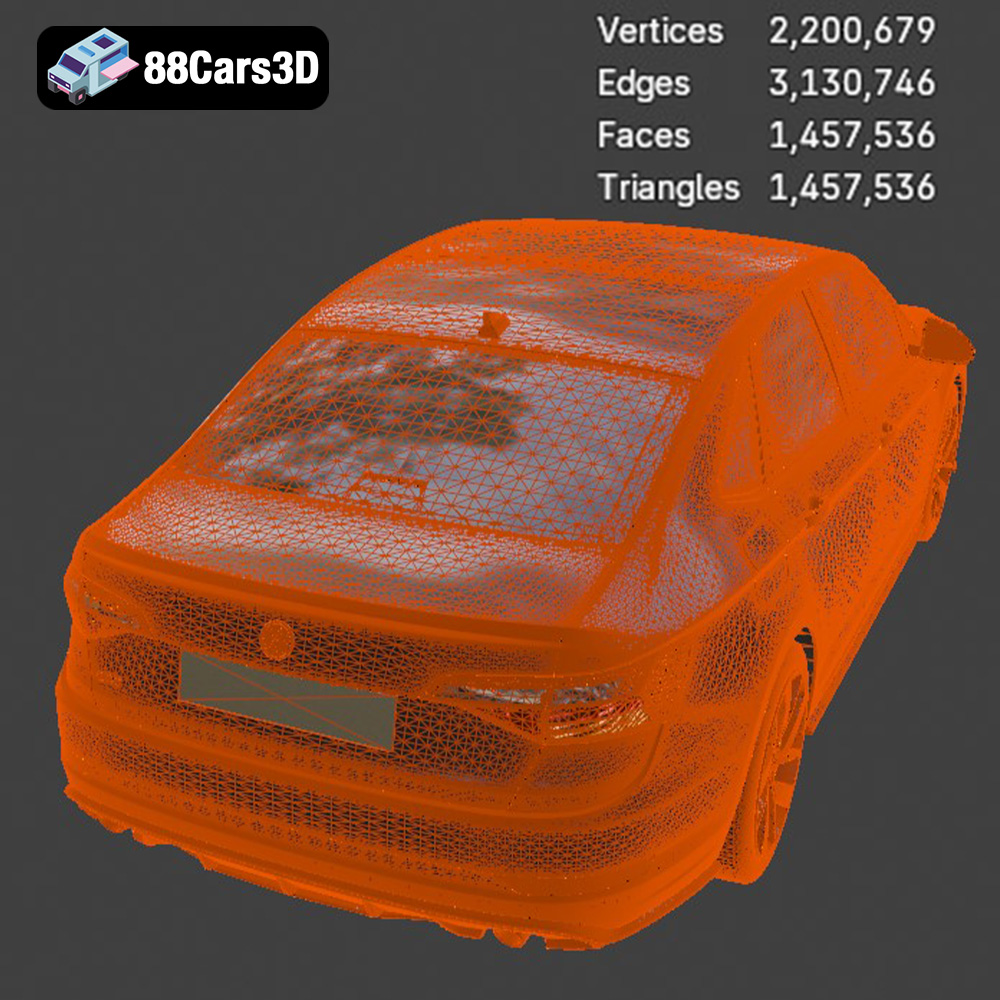
The stated ~250,000 triangle count for the Jetta GLI 2019 is a carefully chosen sweet spot. For comparison, a typical modern game might budget anywhere from 50k to 300k triangles for a primary vehicle, depending on its importance and proximity to the camera. 250k triangles allows for incredibly accurate frame geometry, detailed curves, and distinct features like the aggressive honeycomb grille and signature LED projector headlights, all while remaining highly efficient. This polycount ensures the car looks stunning up close in a racing game or as a central feature in a virtual showroom, without overburdening the GPU when multiple vehicles or complex environments are rendered simultaneously. This optimization is a testament to the meticulous craftsmanship involved in creating 3D car models that truly deliver on their promise of realism and performance.
Physically Based Rendering (PBR) materials are fundamental to achieving photorealistic results in both real-time and offline rendering. The Jetta GLI 2019 model features highly detailed PBR materials, meaning textures for albedo, normal, roughness, metallic, and ambient occlusion are provided. These maps accurately simulate how light interacts with different surfaces of the car – from the metallic flake of the paint to the subtle sheen of the leather-wrapped steering wheel and the intricate performance tire treads. The advantage of PBR is consistency; materials will look correct and respond naturally to lighting conditions across various engines and renderers, drastically reducing the time spent tweaking values. This consistent, realistic appearance is vital for creating believable automotive rendering and ensures the GLI stands out in any scene.
While polycount and PBR materials are critical, the underlying structure of a 3D model, its topology, and UV mapping are equally vital. Clean topology, composed predominantly of quads (four-sided polygons), ensures smooth deformations during animation and prevents rendering artifacts. For an asset like the Jetta GLI 2019, this means the car will deform gracefully if involved in a crash simulation, or its surfaces will catch reflections without distortion. Equally important is professional UV mapping – the process of unwrapping the 3D model’s surfaces onto a 2D texture map. Well-executed UVs ensure textures are applied without stretching or distortion, allowing for high-resolution details like the GLI badging, subtle panel gaps, or tire sidewall text to be rendered with crisp clarity. This attention to detail guarantees that every aspect of the model contributes to its overall realism and usability.
The utility of a meticulously crafted 3D car model extends far beyond traditional game development and cinematic rendering. Assets like the Volkswagen Jetta GLI 2019 are catalysts for innovation across emerging technologies and specialized visualization fields, proving the versatility of well-engineered 3D content.
Augmented Reality (AR) and Virtual Reality (VR) are transforming how consumers interact with products, particularly in the automotive industry. The Jetta GLI 2019 is perfectly suited for these immersive environments. Imagine a prospective buyer exploring the car in a virtual showroom, walking around it, opening doors, and even “sitting” inside to experience the digital cockpit and sport seats with signature red contrast stitching. For AR applications, the .glb format is invaluable. It allows the Jetta GLI to be seamlessly projected into a user’s real-world environment via a smartphone or tablet, providing an interactive, scalable preview right in their driveway. This capability is not just for marketing; it’s a powerful tool for training, design review, and creating engaging, memorable brand experiences that traditional media cannot replicate.
The inclusion of an .stl file and detailed 3D print settings for the Volkswagen Jetta GLI 2019 opens up a fascinating avenue for hobbyists and professionals alike: physical model creation. While digital models exist in the virtual realm, 3D printing bridges the gap to the tangible. Enthusiasts can print highly accurate scale models (e.g., 1:12, 1:18, 1:24) of their favorite car, displaying the intricate details like the exclusive GLI alloy wheels and sport suspension lowering. The provided print settings – recommending resin printing for fine details, specific layer heights, and support strategies – are critical for successful fabrication. Post-processing, including sanding, priming, and applying authentic factory colors, transforms the raw print into a collector’s item, showcasing the detailed engine block representation and dual exhaust setup in a physical form. This fusion of digital design and physical manufacturing adds another layer of value to a versatile 3D asset.
Beyond its automotive-centric applications, the Jetta GLI 2019 3D model serves as an excellent prop for architectural visualizations and general product renders. Placing a realistic car in front of a newly designed building instantly adds scale, context, and a sense of lived-in realism. For marketing campaigns, integrating the Jetta GLI into lifestyle scenes or studio lighting setups can create stunning promotional materials. The model’s accurate real-world scale and topological fidelity make it an ideal candidate for creating believable environments that require a touch of automotive elegance. With customization options to change body colors or adjust material finishes, artists can adapt the vehicle to perfectly match the mood and aesthetic of any visualization project, whether for an urban cityscape, a suburban driveway, or a sleek, futuristic concept garage.
The true power of a premium 3D model lies not just in its foundational geometry, but also in the rich details of its surface characteristics and the flexibility it offers for customization. The Volkswagen Jetta GLI 2019 model excels in both these areas, providing artists with a robust platform for creative expression and photorealistic results.
As mentioned, PBR materials are crucial for modern rendering pipelines. For the Jetta GLI 2019, this means every surface, from the glossy paintwork to the matte plastics, the reflective chrome of the exhaust tips, and the texture of the performance tire treads, is represented with physically accurate properties. The highly detailed PBR materials ensure that light interacts correctly with each surface, creating realistic reflections, refractions, and shadows. This level of detail extends to the interior, where sport seats with signature red contrast stitching, the leather-wrapped flat-bottom sport steering wheel, and the digital cockpit all benefit from carefully crafted PBR maps. This meticulous approach guarantees that the model provides unmatched realism for close-up shots in cinematics or first-person POV in gaming.
A key advantage of purchasing a professional 3D car model is the ability to easily customize it to fit specific project needs. The Jetta GLI 2019 model offers several practical customization options:
This flexibility ensures that the Volkswagen Jetta GLI 2019 isn’t just a static representation but a versatile tool that can be adapted to countless scenarios and artistic visions, offering exceptional value for any project requiring high-quality 3D car models.
In the demanding landscape of modern digital production, the efficiency and quality of your assets can make or break a project. Investing in meticulously crafted 3D car models like the Volkswagen Jetta GLI 2019 isn’t just a convenience; it’s a strategic decision that saves invaluable development time, ensures technical integrity, and elevates visual fidelity. We’ve explored how this specific model, with its game-ready optimization, accurate topology, and detailed PBR materials, stands as a testament to what premium 3D content should offer. From its detailed exterior features, including the aggressive honeycomb grille and signature LED lights, to its meticulously recreated cockpit with red contrast stitching, every element has been captured for maximum impact.
The versatility provided by a comprehensive suite of file formats – from .blend for native Blender users, to .fbx for seamless game engine integration, .glb for AR/VR, and .stl for tangible 3D prints – ensures that the Jetta GLI 2019 can be deployed across a multitude of applications. Whether you’re a game developer creating an immersive racing simulator, an architect needing realistic vehicles for visualization, or a marketer building an interactive product configurator, this model provides the foundation for exceptional results. The attention to technical specifications, such as its optimized 250k triangle count and proper pivot setups, underscores its readiness for professional workflows in software like 3ds Max, Blender, and Unreal Engine.
For artists and developers seeking to enhance their projects with top-tier automotive rendering and game assets, the Volkswagen Jetta GLI 2019 3D model represents an intelligent choice. It embodies the blend of performance and practicality that defines its real-world counterpart, translated into a digital asset that is both visually stunning and incredibly efficient. Explore this exceptional model and a wide range of other high-quality 3D car models at 88cars3d.com, and accelerate your creative journey with assets built for success.
The Volkswagen Jetta GLI 2019 combines everyday practicality with thrilling performance, standing out as a premier sports sedan in its class. Known for its GTI-borrowed turbocharged engine, aggressive honeycomb grille with iconic red accents, and sleek aerodynamic profile, this vehicle strikes the perfect balance between track-ready styling and modern sophistication. From its distinctive front fascia to the dual exhaust setup, every element of this athletic sedan has been meticulously captured. This meticulously crafted 3D model features game-ready optimization with approximately 250,000 triangles, ensuring high-end visual fidelity without compromising real-time performance in modern engines. With stunning topological accuracy and highly detailed PBR materials, it provides unmatched realism for close-up shots and gameplay alike. Perfect for immersive racing simulators, urban environment open-world games, high-end architectural visualizations, and interactive automotive configurators.
$39.99
.2019
.blend
.fbx
.glb
.max
.obj
.ply
.rendering
.sedan
.stl
.unreal
.volkswagen
car-3d-model
game asset
game-ready
jetta-gli
low-poly
optimized
sports-sedan
VR/AR