Get 20% OFF All Premium 3D & STL Models!

In today’s visually-driven digital landscape, the demand for high-fidelity 3D assets is more pronounced than ever. From blockbuster video games to cutting-edge architectural visualizations and immersive augmented reality experiences, realistic 3D models form the very backbone of digital content creation. Automotive models, in particular, hold a special place, requiring an intricate blend of artistic vision and technical precision to accurately capture the essence of real-world vehicles.
Crafting a truly authentic 3D car model is a labor-intensive process, demanding expert knowledge of modeling, texturing, rigging, and optimization. It’s about more than just recreating shapes; it’s about conveying the tactile feel of materials, the subtle reflections of paintwork, and the intricate engineering hidden beneath the surface. This is where specialized marketplaces like 88cars3d.com excel, providing professionals and enthusiasts alike with access to pre-built, production-ready assets that can dramatically accelerate project timelines and elevate visual quality. Imagine needing a robust, iconic vehicle for your next project – the
The versatility of a 3D model often hinges on its supported file formats. Each format is designed with specific use cases and software compatibility in mind, making it crucial for digital artists and developers to understand their strengths and limitations. The Jeep Gladiator Rubicon 2020 3D Model, for instance, offers a comprehensive suite of formats, ensuring maximum adaptability across various professional pipelines.
The .blend file is Blender’s native format, encapsulating a complete scene with all its elements: geometry, materials, textures, lighting, cameras, animations, and even modifiers. It’s the ideal choice for artists working primarily within Blender, offering full editability and access to Blender’s powerful non-destructive workflows. When you acquire a .blend file, you gain the ability to dissect the model, modify its topology, adjust materials using Blender’s node-based shader editor, tweak lighting setups, or even re-rig and animate the vehicle from scratch. For the Jeep Gladiator Rubicon 2020 3D Model, a .blend file means having the original working file, complete with pre-configured Cycles or Eevee materials, ready for immediate rendering or further customization.
.fbx (Filmbox) is an industry-standard proprietary file format developed by Autodesk, widely adopted for its excellent interoperability, especially between 3D software and game engines like Unreal Engine and Unity. It efficiently stores 3D models, animation, cameras, and lights, making it perfect for complex scene transfers. Its binary structure ensures relatively small file sizes and fast loading. When using the .fbx version of the Jeep Gladiator Rubicon 2020 3D Model, you’re getting a package optimized for real-time applications, typically with baked-in animations (if present), skeletal data, and PBR (Physically Based Rendering) material assignments that translate well into game engine material systems.
.obj (Wavefront OBJ) is a universal 3D model format known for its simplicity and wide compatibility. It stores vertex positions, normals, texture coordinates, and faces, often accompanied by an .mtl (material) file for basic material definitions. While it doesn’t support animation or complex scene data, its widespread support across virtually all 3D software makes it an excellent choice for geometry transfer. If you need to import the Jeep Gladiator Rubicon 2020 3D Model into a niche 3D application or require a clean mesh for sculpting or retopology, the .obj format is your go-to for ensuring basic geometric integrity across platforms.
.glb (GLB format) is the binary representation of glTF (GL Transmission Format), a royalty-free specification for the efficient transmission and loading of 3D scenes and models by engines and applications. It’s often referred to as the “JPEG of 3D” due to its optimization for web and real-time environments. A .glb file contains all necessary data—model, textures, animations—in a single, self-contained binary file, making it incredibly lightweight and perfect for browser-based 3D viewers, AR/VR experiences, and social media integration. The .glb version of the Jeep Gladiator Rubicon 2020 3D Model would be ideal for web configurators or augmented reality apps.
.stl (Stereolithography) is almost exclusively used for 3D printing. It represents a 3D model as a series of connected triangles, defining only the surface geometry of an object without color, texture, or material information. While not suitable for rendering or animation, its simplicity makes it the standard for additive manufacturing. If your project involves physical prototyping or creating miniature replicas of the Jeep Gladiator Rubicon 2020, the .stl file provides a watertight, print-ready mesh.
.ply (Polygon File Format) is another format for storing 3D data, particularly suited for storing data from 3D scanners. It supports vertex properties (color, normal vectors, transparency) and face properties, making it useful for capturing precise surface details. While less common for general 3D asset distribution compared to .fbx or .obj, it’s valuable in scientific, engineering, and CAD applications where detailed mesh analysis or high-precision geometric representation is required. The .ply file for the Jeep Gladiator Rubicon 2020 could be used for advanced simulation or metrology.
This is a custom designation, often indicating that the asset has been specifically prepared and optimized for direct import into Unreal Engine. This typically means the model comes with a pre-configured Unreal Engine project or a highly optimized .fbx file alongside dedicated material instances, collision meshes, LODs (Levels of Detail), and sometimes even blueprint setups. For the Jeep Gladiator Rubicon 2020, an .unreal designation signifies a streamlined workflow for game developers, minimizing the setup time within Unreal Engine and ensuring the model performs optimally within that real-time environment.
The .max file is the native project file for Autodesk 3ds Max, one of the leading 3D modeling, animation, and rendering software packages. Similar to .blend, it contains the entire scene, including geometry, modifiers, materials, lighting, cameras, and animation data. Professionals relying on 3ds Max for architectural visualization, product design, or cinematic rendering will find the .max file of the Jeep Gladiator Rubicon 2020 indispensable. It allows for full control over rendering settings, material adjustments (using V-Ray, Corona, or Arnold renderers), and complex animation sequences.
The provision of such a wide array of formats with the Jeep Gladiator Rubicon 2020 3D Model underscores its professional-grade quality and the understanding that different projects demand different technical specifications.
The creation of a truly outstanding 3D car model, such as the Jeep Gladiator Rubicon 2020, involves a meticulous, multi-stage process that prioritizes accuracy, aesthetic appeal, and technical optimization. It’s a blend of artistry and engineering, where every polygon and pixel contributes to the final realism.
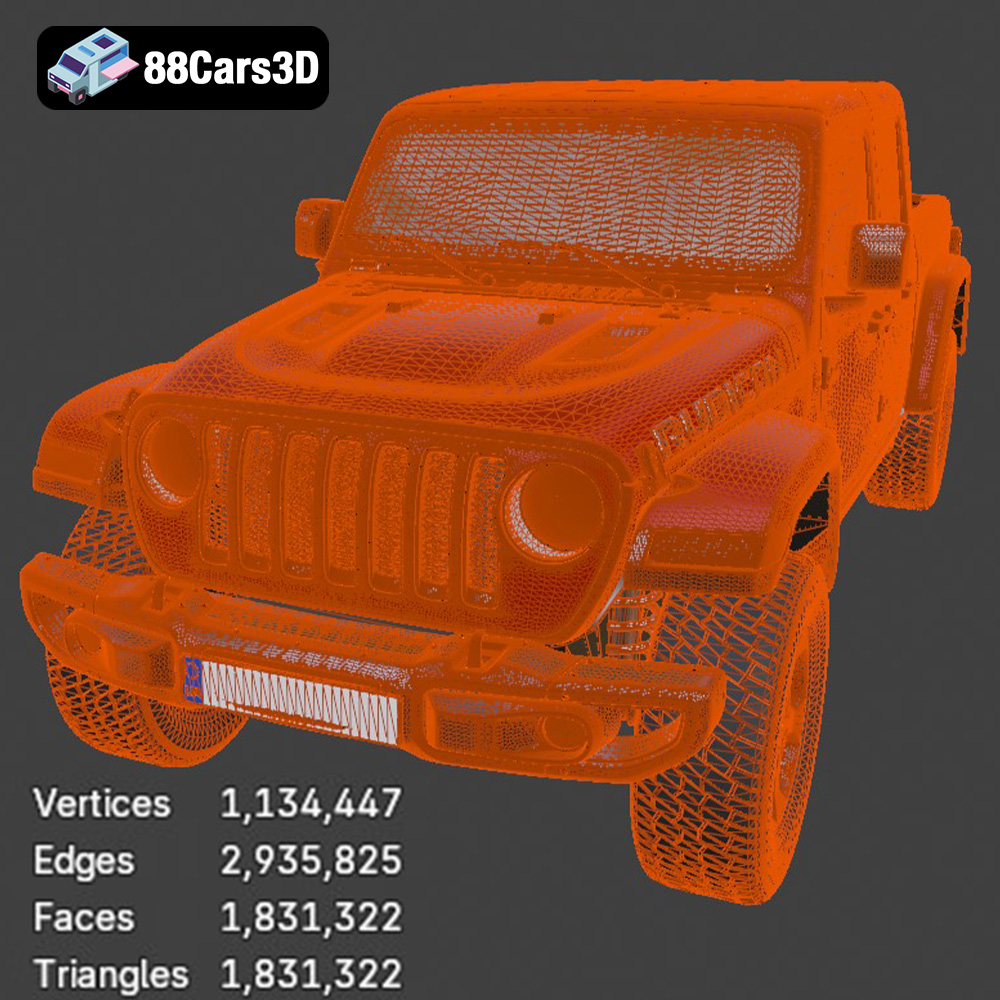
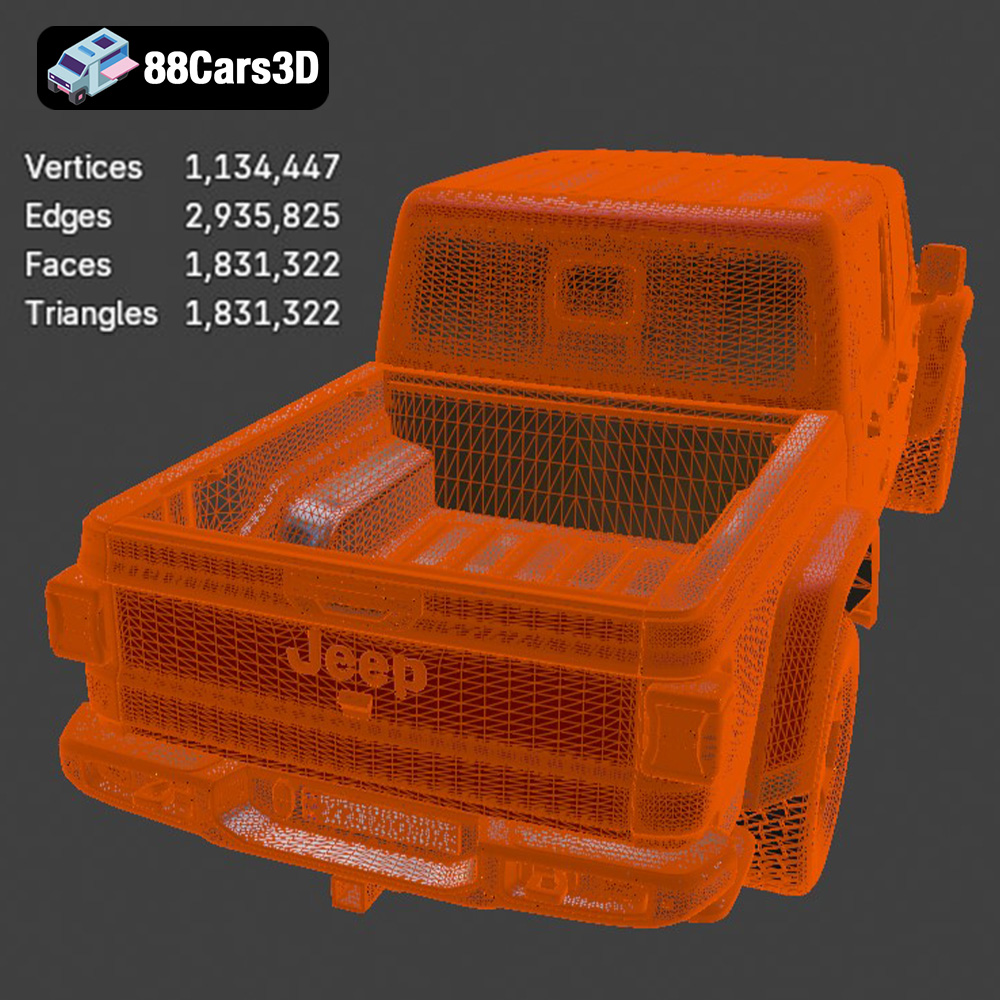
The foundation of any high-quality 3D car model is its geometry. Artists begin by referencing extensive blueprints, photographs, and real-world measurements to ensure anatomical accuracy. This involves careful polygon modeling, typically using techniques that result in “clean” or “quad-based” topology. Good topology is crucial for smooth subdivisions, distortion-free deformation during animation, and efficient UV unwrapping. For a vehicle like the Jeep Gladiator Rubicon 2020, this means accurately recreating its distinctive grille, rugged body lines, detailed undercarriage components, and interior elements with careful attention to edge flow and polygon density. An optimized polygon count is vital – sufficient detail for close-up renders without burdening real-time engines with unnecessary geometry.
Beyond the form, it’s the surface properties that breathe life into a 3D model. Modern 3D car models utilize Physically Based Rendering (PBR) materials, which accurately simulate how light interacts with different surfaces. This involves creating a suite of textures: diffuse (albedo/color), roughness, metallic, normal, ambient occlusion, and sometimes emissive maps. For the Jeep Gladiator Rubicon 2020, this translates to accurately portraying the matte finish of its plastic trim, the reflective sheen of its painted bodywork, the subtle texture of its tires, and the intricate details of its headlights and taillights. UV mapping – the process of flattening the 3D surface into 2D space for texture application – must be clean and organized, preventing stretching or seams that would detract from realism.
A beautiful 3D model is only truly useful if it performs well across its intended applications. Optimization is a key phase, particularly for game development and AR/VR. This involves reducing polygon counts where detail isn’t critical (LODs), merging meshes, baking high-detail normal maps from high-poly models onto low-poly versions, and optimizing texture sizes. For the Jeep Gladiator Rubicon 2020 3D Model to be “game-engine ready,” these steps are paramount. The clean geometry mentioned in its description hints at this careful optimization, ensuring it runs efficiently in demanding real-time environments without sacrificing visual fidelity.
High-quality 3D car models, like those found on 88cars3d.com, are versatile assets that empower professionals across a multitude of industries to create compelling visual content.
For car manufacturers and marketing agencies, 3D car models are revolutionary. Instead of costly physical prototypes and elaborate photoshoots, companies can generate photorealistic renders and animations of vehicles that don’t even exist yet, or showcase various trim levels, paint options, and accessories with ease. The Jeep Gladiator Rubicon 2020 3D Model could be used to create stunning digital brochures, interactive online configurators, or dynamic television commercials. Artists often utilize industry-standard rendering engines like V-Ray, Corona Renderer (within 3ds Max or Cinema 4D), or Cycles (Blender) to achieve hyper-realistic results, complete with accurate lighting, reflections, and environmental integration.
The gaming industry is a primary consumer of 3D car models. From open-world driving simulations to racing games and immersive role-playing titles, realistic vehicles are essential for player immersion. The “game-engine ready” and “.unreal” formats of the Jeep Gladiator Rubicon 2020 3D Model are specifically designed for this purpose. Developers can import the model directly into Unreal Engine or Unity, leveraging its optimized geometry, PBR materials, and potentially pre-configured collision meshes and LODs. This significantly reduces development time, allowing teams to focus on gameplay mechanics and environmental design rather than foundational asset creation. The robust nature of the Gladiator makes it an excellent choice for off-road game environments or even as a hero vehicle in adventure titles.
Augmented Reality (AR) and Virtual Reality (VR) are transforming how we interact with digital content. 3D car models are at the forefront of this revolution, enabling immersive virtual showrooms, interactive training simulations, and engaging entertainment. The .glb format, included with the Jeep Gladiator Rubicon 2020 3D Model, is perfect for these applications due to its optimization for web and mobile platforms. Imagine a customer using their smartphone to place a virtual Jeep Gladiator in their driveway via AR, or exploring its interior in full 360-degree VR. These interactive experiences offer a level of engagement far beyond traditional media, providing a glimpse into the future of product visualization.
The versatility of a well-crafted 3D asset like the Jeep Gladiator Rubicon 2020 3D Model is best illustrated through its potential applications in various professional scenarios.
In architectural visualization (ArchViz), the placement of vehicles often serves to add scale, context, and a sense of lifestyle to rendered scenes. A high-end residential complex might be showcased with the rugged Jeep Gladiator Rubicon parked prominently in the driveway, suggesting adventure, freedom, and a connection to the outdoors. An ArchViz studio, working in 3ds Max, could easily import the .max file, adjust its materials to match the scene’s lighting, and place it within a lavish estate render. The attention to detail in the Gladiator model would elevate the overall realism of the architectural presentation, making the property more appealing to potential buyers looking for that specific lifestyle.
Beyond entertainment, 3D models play a critical role in professional simulation and training. Imagine a virtual training module for off-road rescue operations or a driving simulator designed to teach defensive driving techniques in challenging terrains. The Jeep Gladiator Rubicon 2020, with its reputation as a formidable off-road vehicle, would be an ideal candidate for such scenarios. Using the .fbx or .unreal format, developers could integrate the model into a simulator built on Unreal Engine, complete with realistic physics, damage models, and interactive components. This allows for safe, repeatable training in a controlled digital environment, saving significant costs and reducing risks associated with real-world training exercises.
The global community of 3D artists and modders constantly seeks high-quality base models to customize, enhance, and integrate into their personal projects or larger modding efforts for popular simulation games. The .blend and .obj files of the Jeep Gladiator Rubicon 2020 3D Model provide an excellent starting point. A modder could take the .blend file, modify the truck bed to add custom accessories, change the tire tread patterns, or even design entirely new body kits. The clean geometry ensures that these modifications can be applied without encountering topological issues, empowering creators to unleash their imagination and expand upon the already detailed base model.
Investing in a professional 3D car model, such as the Jeep Gladiator Rubicon 2020, is not just about acquiring an asset; it’s about gaining a valuable tool that can contribute to numerous projects over time, ensuring a high return on investment for creative professionals and studios.
A high-quality 3D model, built with clean geometry and PBR materials, is inherently future-proof. As rendering technologies evolve and game engines become more sophisticated, these models can often be easily updated or re-textured to meet new standards. The comprehensive file format support, including .blend, .fbx, and .max, means that if your studio transitions to a different primary software in the future, your investment in the Jeep Gladiator Rubicon 2020 3D Model remains viable. This longevity is a hallmark of professional-grade assets, distinguishing them from lower-quality alternatives that might quickly become obsolete.
When you acquire a model from a reputable source like 88cars3d.com, you’re not just buying a single file; you’re gaining access to a curated collection of high-quality 3D car models. This allows for consistency in asset quality across your projects. If you need a complementary vehicle or another automotive model for a different scene, you can rely on the same level of detail and optimization from 88cars3d.com’s extensive library. This streamlined access to professional assets saves countless hours that would otherwise be spent on modeling from scratch, allowing artists and developers to focus on creativity and innovation.
The digital realm thrives on realism and precision, especially when it comes to capturing the intricate details of real-world objects like vehicles. High-quality 3D car models are no longer a luxury but a necessity for professionals across automotive design, game development, architectural visualization, and interactive media. The
Whether you’re developing an immersive off-road game, rendering a photorealistic advertisement, or designing a cutting-edge AR experience, investing in a robust and versatile 3D asset like this Gladiator model from 88cars3d.com provides an unparalleled advantage. It accelerates production, elevates visual quality, and frees up valuable creative resources, proving that in the fast-paced world of 3D content creation, superior assets are truly the key to unlocking extraordinary digital experiences.
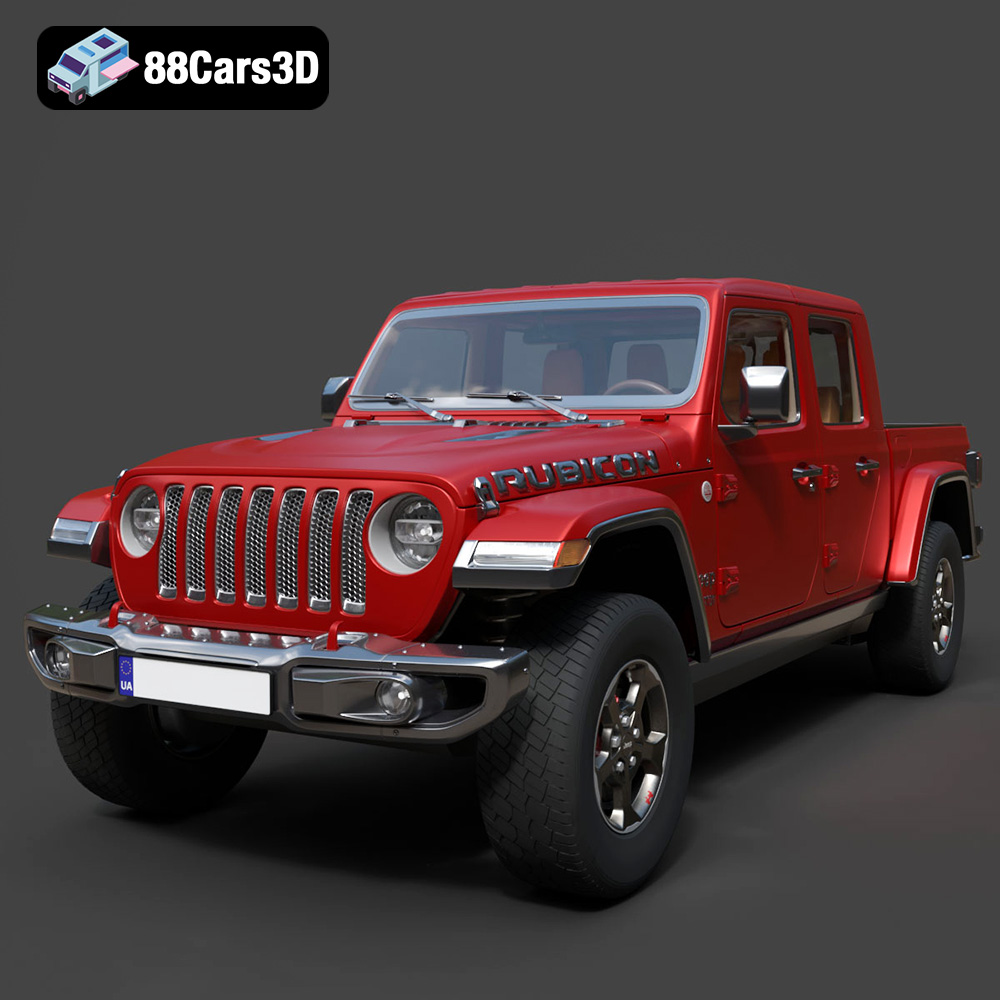
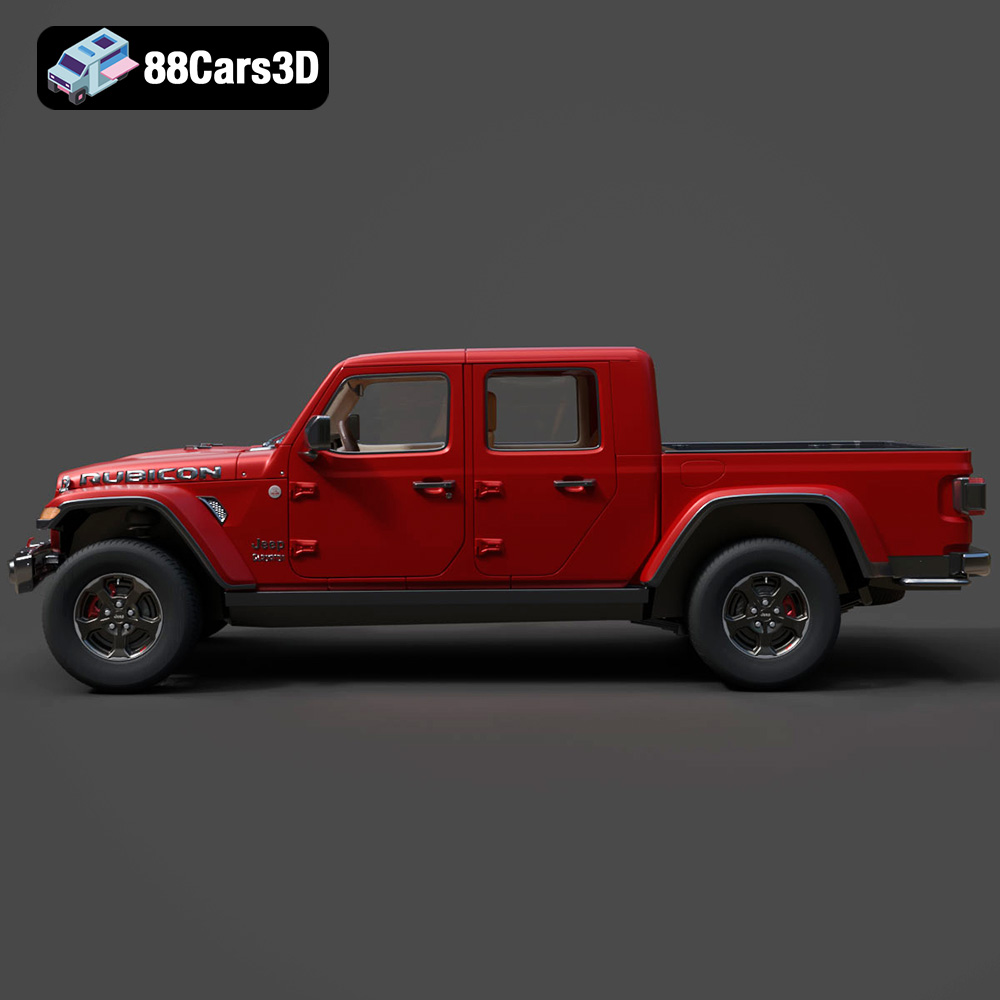
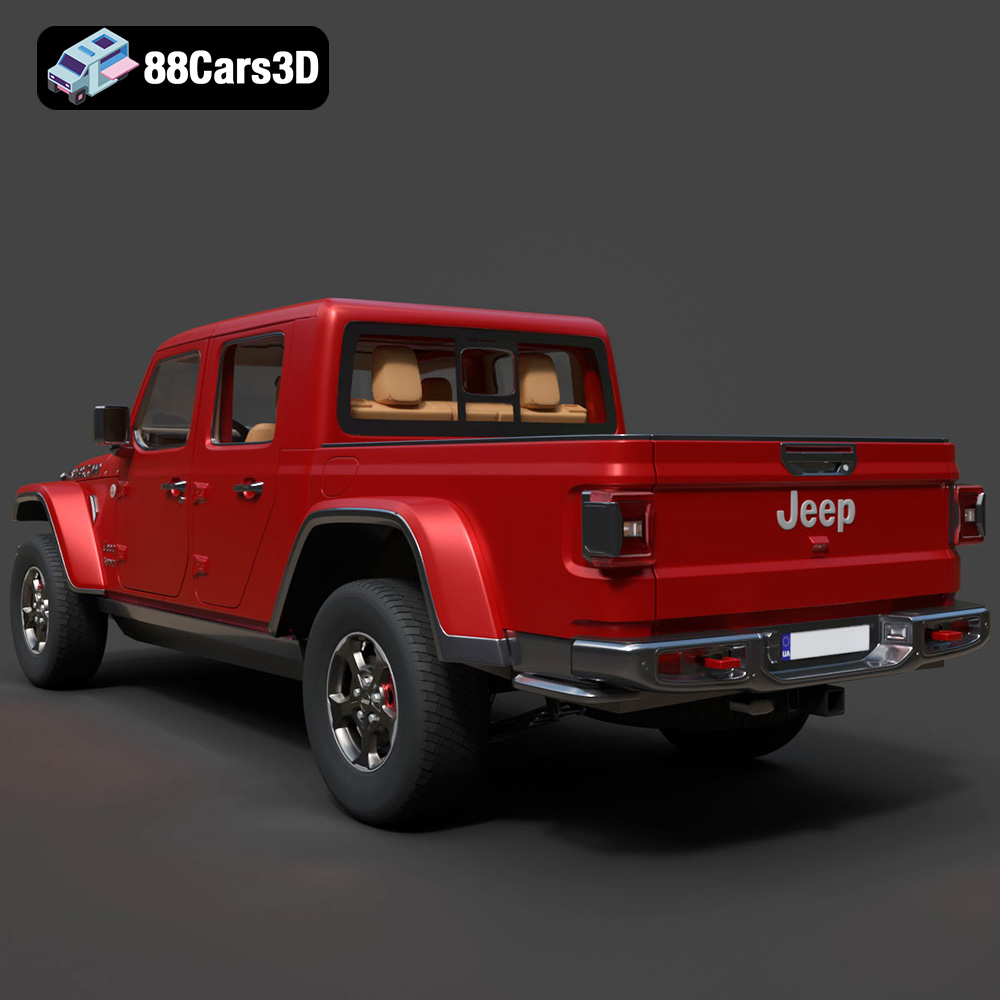
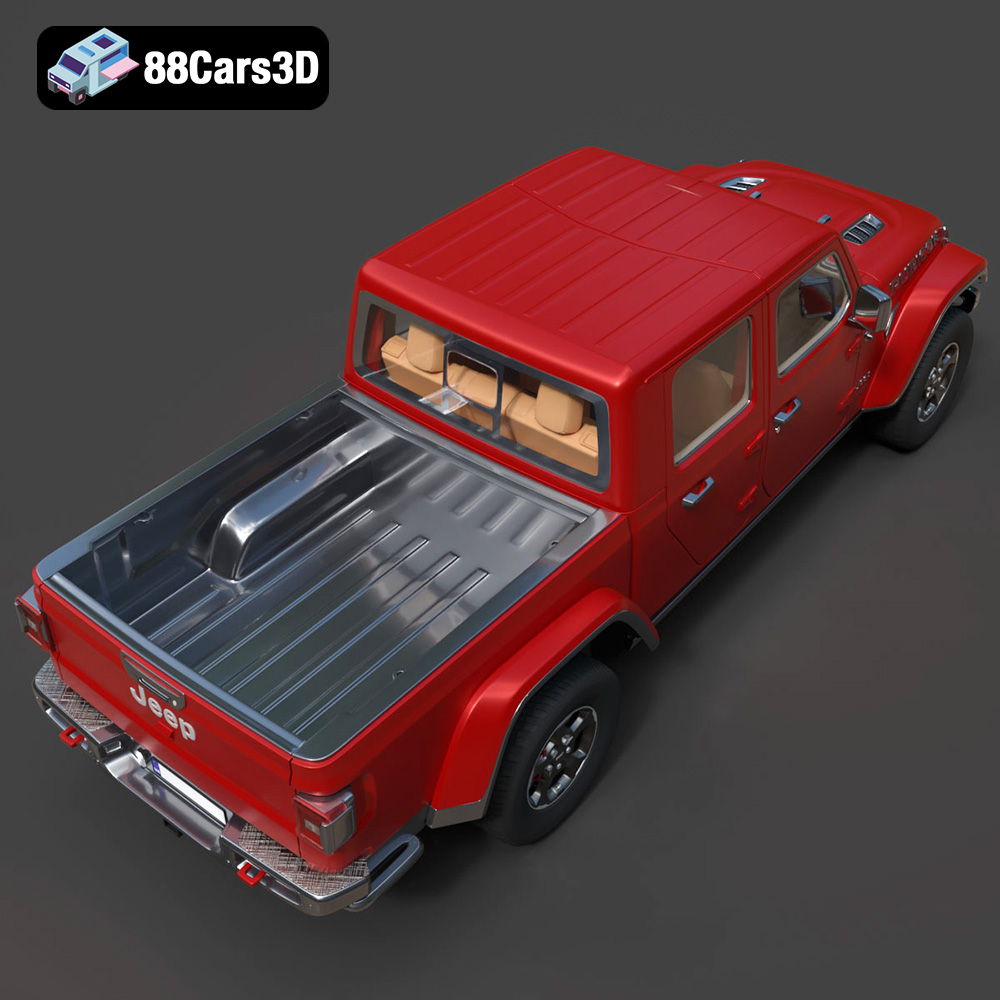
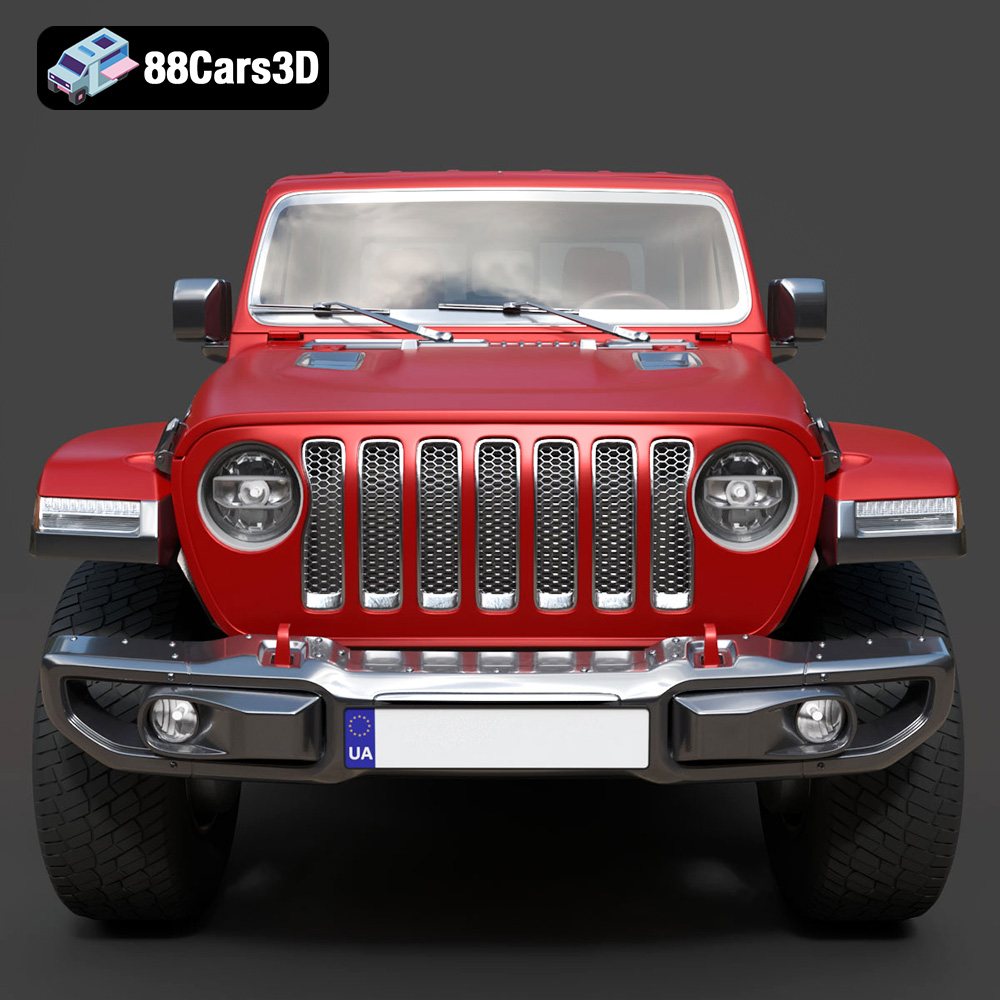
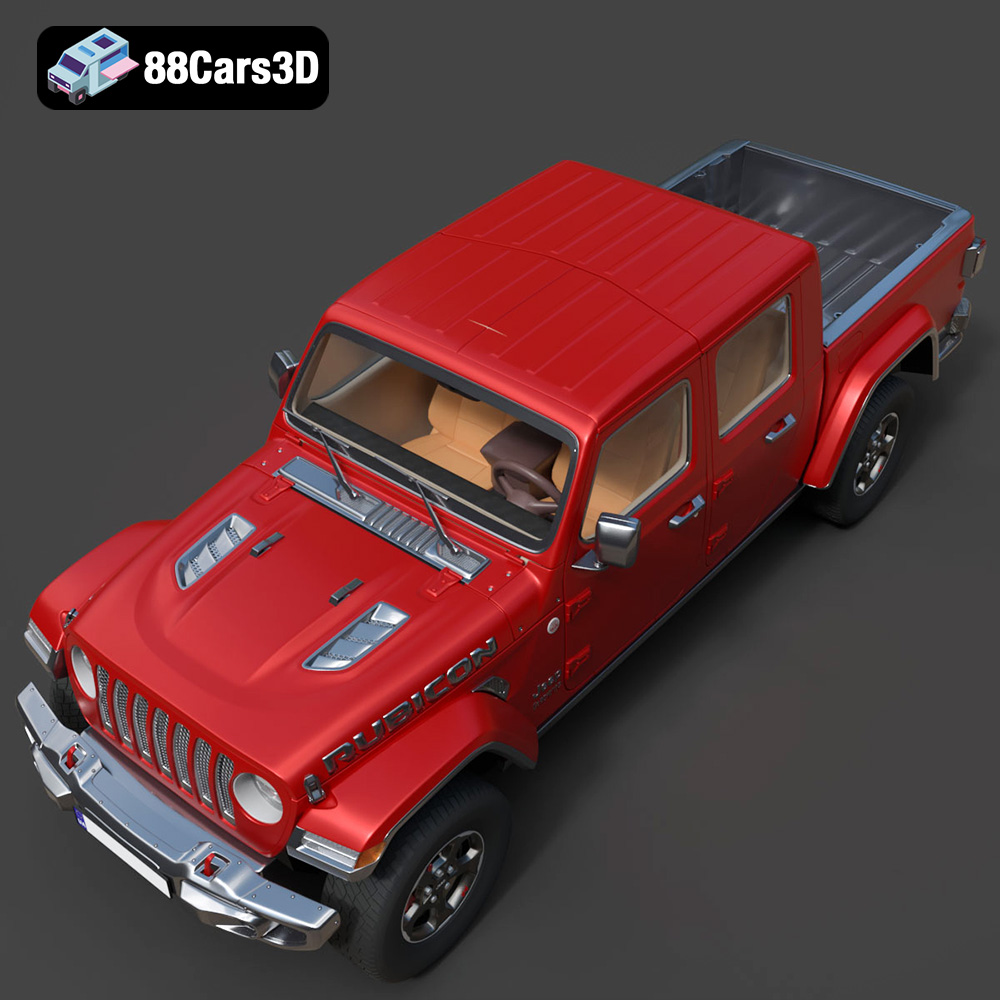
Discover the realistic digital representation of the Jeep Gladiator Rubicon 2020 3D Model, meticulously crafted to deliver an authentic digital twin of this rugged off-road vehicle. This model captures the iconic exterior styling and intricate structural details, making it an ideal asset for professional digital projects. Built with precision, the model features clean geometry, an optimized polygon count, and realistic materials. Every element has been designed to meet professional standards, ensuring seamless integration into your scenes while maintaining excellent performance. Perfect for a wide range of applications, this versatile 3D model excels in game development, architectural rendering, automotive visualization, AR/VR experiences, and animations.
$39.99
.4×4
.arvr
.blend
.car3dmodel
.fbx
.gameasset
.gladiator
.glb
.jeep
.jt
.max
.obj
.offroad
.pickup
.ply
.rendering
.rubicon
.simulation
.stl
.truck
.unreal