Get 20% OFF All Premium 3D & STL Models!

In the rapidly evolving landscape of digital content creation, the demand for highly detailed, professional-grade 3D assets is constant. Whether you’re crafting breathtaking automotive visualizations, developing immersive game environments, or pushing the boundaries of AR/VR experiences, the quality of your foundational models dictates the success of your project. A meticulously crafted 3D model doesn’t just look good; it seamlessly integrates into diverse pipelines, saves invaluable production time, and provides the flexibility needed to meet demanding client specifications.
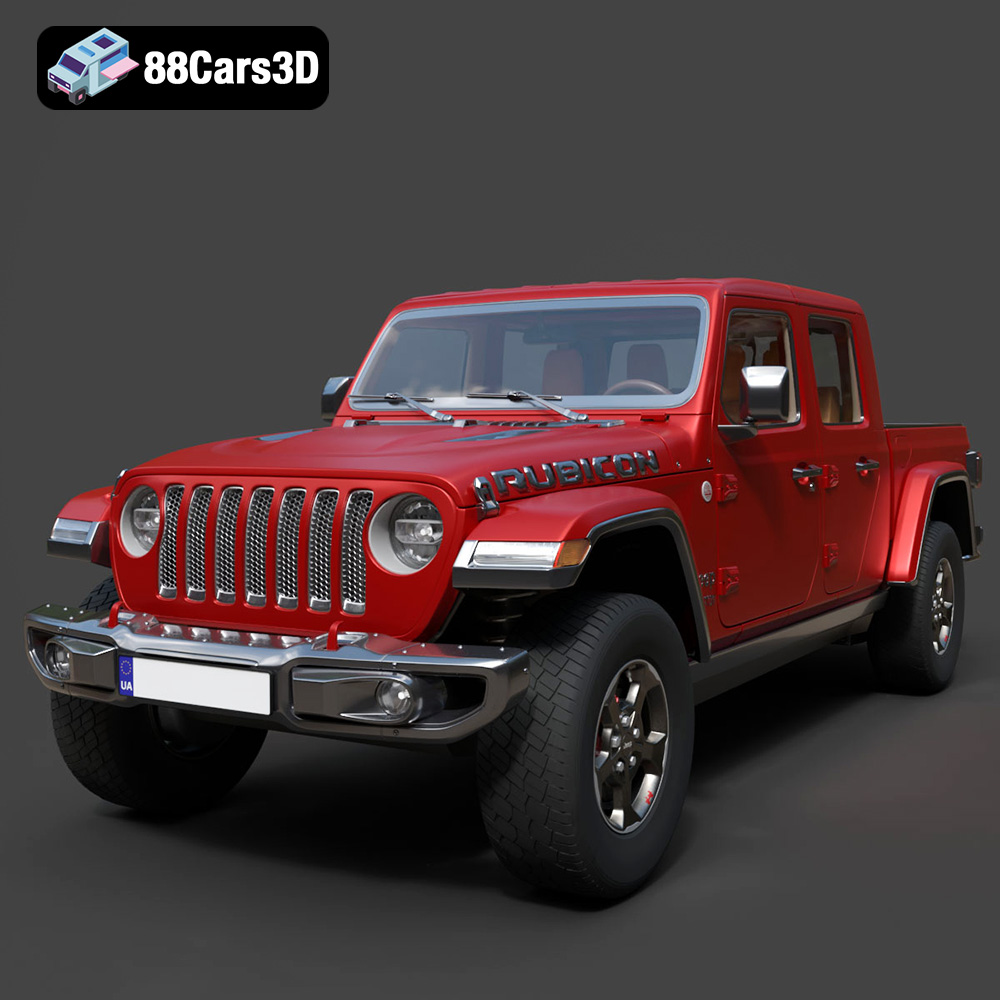
Imagine needing a robust, iconic vehicle to anchor your next project – something that embodies power, adventure, and unmistakable style. This is where a truly versatile asset like the Jeep Gladiator Rubicon 2020 3D Model becomes indispensable. It’s more than just a collection of polygons; it’s an authentic digital twin, engineered for performance across a spectrum of professional applications. From its rugged exterior styling to its intricate structural details, this model stands ready to elevate your digital endeavors, ensuring realism and efficiency from concept to final render.
The flexibility of a 3D model often hinges on the range of file formats it supports. Each format is designed with specific use cases in mind, offering unique advantages for different stages of a professional workflow. Understanding these distinctions is crucial for selecting the right model and integrating it efficiently. The Jeep Gladiator Rubicon 2020 3D Model, for instance, comes with a comprehensive suite of formats, ensuring maximum compatibility and utility across virtually any platform or software package.
The .blend format is native to Blender, a powerful open-source 3D creation suite. When a model is provided in .blend, it means you’re getting a fully editable Blender scene. This typically includes the mesh data, materials, textures, lighting setups, and even camera configurations. For artists and studios primarily working within Blender, this offers unparalleled flexibility. You can dive deep into the model’s structure, modify its topology, tweak materials, adjust scene lighting, or animate directly without any loss of data or conversion artifacts. It’s the perfect starting point for full customization and advanced rendering using Blender’s Cycles or Eevee engines.
.fbx (Filmbox) is arguably the most widely adopted proprietary file format for 3D data exchange, especially prevalent in the game development and animation industries. Developed by Autodesk, it excels at storing not just mesh and material data, but also animation, rigging, skinning, and camera information. It’s the go-to format for transferring assets between different 3D software packages like 3ds Max, Maya, and Blender, and is the preferred format for importing into game engines such as Unreal Engine and Unity. Its robust support for complex scene data makes it ideal for real-time pipelines where animation and hierarchy are critical.
The .obj (Wavefront OBJ) format is a venerable and universally compatible 3D model format. It primarily stores geometric data – vertices, normals, UV coordinates, and faces – and can reference external material (.mtl) files for basic shading information. While it doesn’t support animation or rigging, its simplicity ensures near-perfect compatibility across almost all 3D software. If you need to quickly transfer a static mesh between disparate applications without worrying about complex scene data, .obj is an excellent, reliable choice. It’s a fundamental format for cross-software compatibility.
.glb (GL Transmission Format Binary) is a modern, compact, and efficient format designed specifically for the transmission of 3D scenes and models for web, AR (Augmented Reality), and VR (Virtual Reality) applications. It bundles textures, animations, and other data directly into a single file, making it incredibly easy to load and display in browsers or mobile AR/VR viewers. Its optimization for real-time rendering and smaller file sizes makes it perfect for interactive web experiences, e-commerce product visualization, and quick AR prototyping where performance and accessibility are paramount.
.stl (Stereolithography) is the standard file format for 3D printing and rapid prototyping. It represents a 3D model as a series of connected triangles, essentially describing the surface geometry without any color or texture information. For a model to be successfully 3D printed, its .stl representation must be “watertight” or “manifold,” meaning it has no holes or intersecting surfaces. The Jeep Gladiator’s inclusion of this format allows for the creation of physical prototypes or scale models directly from the digital asset, bridging the gap between virtual and tangible.
The .ply (Polygon File Format) is another format primarily used for storing 3D data, particularly from 3D scanners. It’s capable of storing not just geometry, but also color, transparency, texture coordinates, and even properties like confidence values. While less common for general 3D asset exchange, it’s highly valued in scientific, engineering, and CAD applications where precise mesh data, often from high-resolution scans, is critical for analysis, measurement, and visualization. Its flexibility in storing various properties makes it a powerful format for detailed data preservation.
The .unreal format signifies an asset specifically prepared and optimized for direct import into Unreal Engine. This often means the model has been exported with Unreal-specific settings, potentially including collision meshes, LODs (Levels of Detail), and a proper material setup tailored for Unreal’s PBR (Physically Based Rendering) pipeline. Having a pre-configured Unreal asset saves developers significant time and effort in the import and setup process, ensuring that the model is game-engine ready right out of the box, with minimal adjustments required.
Similar to .blend for Blender, the .max format is native to Autodesk 3ds Max, a leading software for 3D modeling, animation, and rendering. A .max file contains the complete 3ds Max scene, including all geometry, modifiers, materials (V-Ray, Corona, Standard), lighting, cameras, and animation data. For professionals relying on 3ds Max for high-fidelity rendering and complex animation sequences, having the model in its native .max format ensures full editability and seamless integration into existing 3ds Max projects without any conversion issues or loss of scene information. It guarantees maximum control for advanced rendering setups.
The inclusion of all these formats with the Jeep Gladiator Rubicon 2020 3D Model from 88cars3d.com demonstrates a deep understanding of professional needs, providing a truly adaptable asset for any project.
Automotive rendering is an art form that demands precision, realism, and an understanding of light and materials. A high-quality 3D car model, such as the Jeep Gladiator Rubicon 2020, is the cornerstone of achieving photographic realism in digital scenes. It’s about more than just a model; it’s about the interplay of surfaces, reflections, and the environment.
The visual impact of any 3D automotive render heavily relies on its materials. The Jeep Gladiator model excels here with its optimized polygon count and realistic materials, built with professional standards in mind. This means utilizing Physically Based Rendering (PBR) workflows, where properties like metallic, roughness, and normal maps accurately simulate how light interacts with surfaces. Think about the subtle glint of metallic paint, the matte finish of plastic trim, the textured grip of rubber tires, or the transparency of glass. Each element demands a unique material setup, often involving layers of textures for scratches, dirt, or subtle imperfections that breathe life into the digital vehicle. Clean UV mapping, an essential attribute of a professional model, ensures that these textures wrap flawlessly around the complex geometry of the Gladiator, avoiding distortions and seams.
Once materials are applied, the magic of automotive rendering unfolds through expert lighting. In software like 3ds Max (using renderers like V-Ray or Corona) or Blender (with Cycles or Eevee), artists employ High Dynamic Range Images (HDRIs) to simulate real-world lighting environments, casting accurate reflections and ambient illumination. Physical cameras are meticulously positioned and adjusted, mimicking real photography techniques with settings for aperture, shutter speed, and ISO to achieve depth of field and motion blur. For the Jeep Gladiator, this might involve placing it in a rugged outdoor scene bathed in golden hour light, or under the precise studio lighting of an automotive showroom. The model’s clean geometry and accurate scale ensure it interacts naturally with these complex lighting scenarios, producing believable shadows and reflections.
The final step in achieving truly cinematic automotive renders often involves significant post-production. This phase, typically performed in image editing software, involves compositing multiple render passes (e.g., diffuse, reflection, shadow, Z-depth) to gain granular control over the final image. Color grading is applied to set the mood and enhance visual appeal, depth of field effects are refined, and subtle lens flares or atmospheric effects might be added. For the Jeep Gladiator Rubicon 2020, this could mean accentuating its rugged presence with dramatic vignetting, enhancing the contrast to highlight its powerful stance, or adding a touch of dust and grit to emphasize its off-road capabilities, transforming a good render into an exceptional one.
Game development places unique demands on 3D assets. Performance, efficiency, and seamless integration are paramount. A model must not only look great but also perform flawlessly in real-time environments. The Jeep Gladiator Rubicon 2020 3D Model is specifically designed with these considerations in mind, making it an excellent game asset.
Achieving smooth frame rates in games requires models with optimized polygon counts. While the Jeep Gladiator features intricate detail, it’s also built with an “optimized polygon count” to balance visual fidelity with real-time performance. This often involves creating Levels of Detail (LODs) – progressively lower polygon versions of the model that swap in as the vehicle moves further from the camera. This drastically reduces the computational load without sacrificing visual quality up close. Efficient UV mapping is also crucial, allowing multiple textures to be packed onto a single texture atlas, minimizing draw calls and optimizing GPU performance. The model’s clean geometry ensures that LOD generation and UV unwrapping are straightforward, leading to a highly efficient game asset.
The inclusion of game-engine ready formats like .fbx and the specific .unreal format makes integrating the Jeep Gladiator into Unreal Engine or Unity a streamlined process. Importing the .fbx file brings in the mesh, materials, and potentially basic rigging. Developers can then leverage the engine’s powerful material editors to set up PBR materials, using the provided textures to create realistic paint, glass, tire, and interior shaders. For Unreal Engine, the .unreal file takes this a step further, potentially providing a pre-configured asset with correct material instances, collision meshes, and even basic physics definitions. This significantly cuts down on setup time, allowing developers to focus on gameplay mechanics and environmental design rather than asset preparation. Collision meshes are essential for physical interactions, and the accurate representation of the Gladiator ensures robust vehicle physics.
Augmented Reality (AR) and Virtual Reality (VR) experiences demand not only realism but also extremely low latency and high performance to prevent motion sickness and maintain immersion. The .glb format included with the Jeep Gladiator Rubicon 2020 3D Model is optimized for exactly these environments. Its compact, single-file nature and real-time rendering optimizations make it ideal for web-based AR/VR applications and mobile platforms. Developers can quickly integrate the model into AR frameworks like ARKit or ARCore, or into VR applications, allowing users to interact with a highly realistic representation of the Gladiator in their own environment or a virtual world. The model’s authenticity grounds the virtual experience, making interactions feel more tangible and believable.
The utility of a premium 3D model extends far beyond traditional rendering and game development. Its inherent detail and diverse file format support open doors to a multitude of other professional applications, making the Jeep Gladiator Rubicon 2020 3D Model a truly versatile investment.
One fascinating application is 3D printing. With the included .stl and .ply formats, the digital twin of the Jeep Gladiator can be transformed into a physical prototype or a scale model. The .stl format, in particular, is the industry standard for additive manufacturing. Professionals can use this to create physical representations for design reviews, promotional items, or even custom parts. Key considerations for 3D printing include ensuring the model has manifold geometry (no holes or self-intersections) and appropriate wall thickness, which a professionally crafted model like this is likely to possess. This capability allows for tangible exploration of design and form directly from the digital asset.
Architectural visualization (ArchViz) often benefits from realistic contextual elements. A building render, no matter how detailed, can feel sterile without the presence of real-world objects that provide scale and a sense of lived-in authenticity. The Jeep Gladiator Rubicon 2020 3D Model can be a powerful asset for scene dressing, adding a dynamic and recognizable element to exterior architectural renders. Placing the Gladiator in a driveway, on a construction site, or parked outside a commercial building immediately enhances the realism and narrative of the scene, allowing viewers to better imagine themselves within the environment. Its detailed design ensures it stands up to close-up scrutiny even within an ArchViz context.
For industries involved in simulation and training, highly accurate 3D models are indispensable. The Jeep Gladiator Rubicon 2020 3D Model could be integrated into driving simulators for driver training, off-road navigation simulations, or even virtual maintenance and assembly training. Its authentic representation allows for realistic physics-based interactions and visual feedback, critical for effective learning environments. Imagine a virtual reality training scenario where mechanics practice working on the Gladiator’s engine or suspension – the digital model provides a safe, repeatable, and cost-effective platform for such specialized training.
When investing in 3D assets, quality is not a luxury; it’s a necessity. The difference between a generic model and a professionally crafted asset like the Jeep Gladiator Rubicon 2020 3D Model available on 88cars3d.com is profound. It’s about ensuring your project starts with a solid foundation, saving you time, resources, and the headache of fixing subpar geometry or poorly optimized textures.
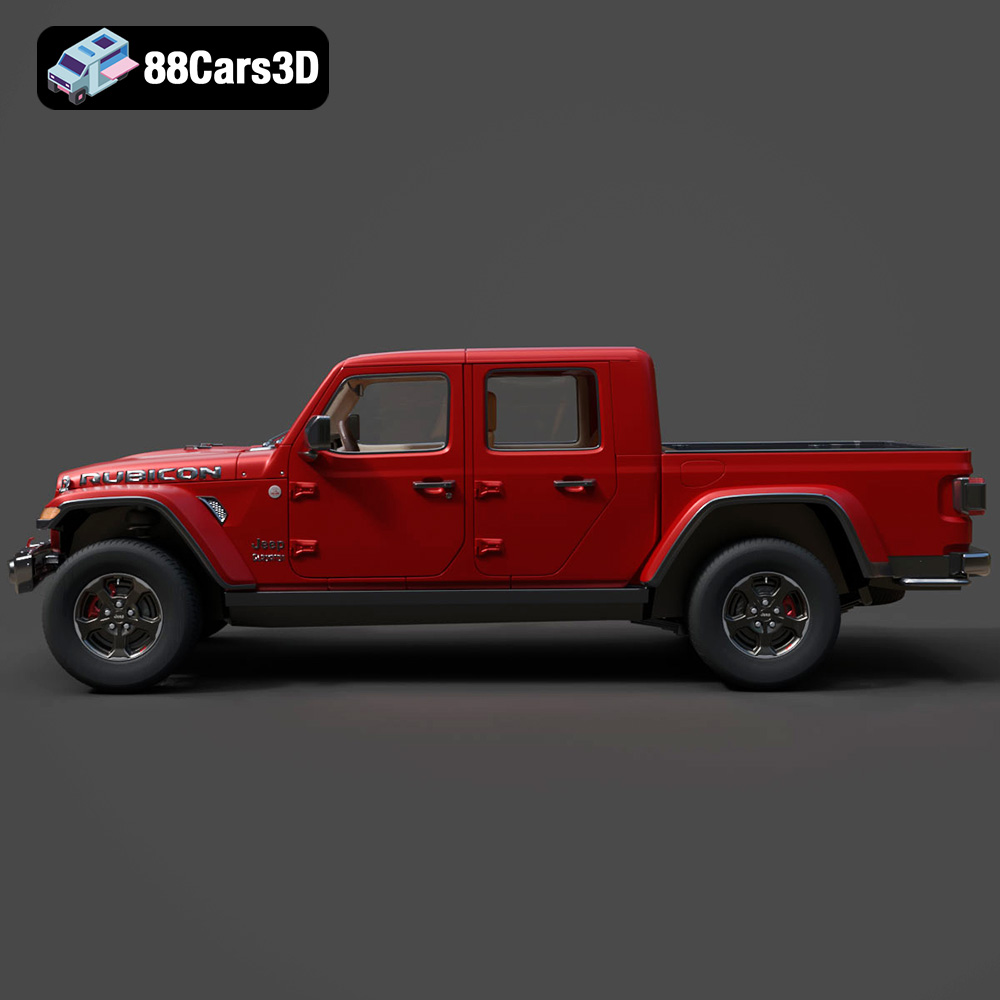
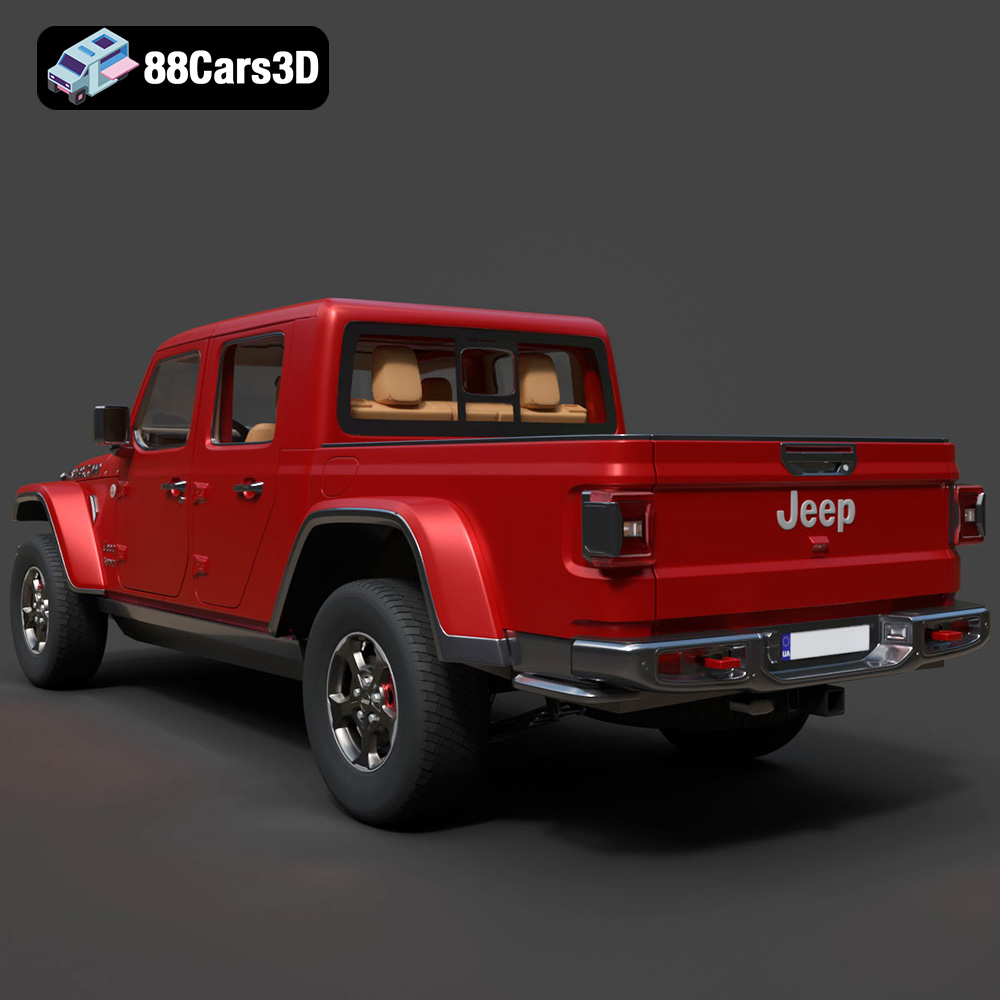
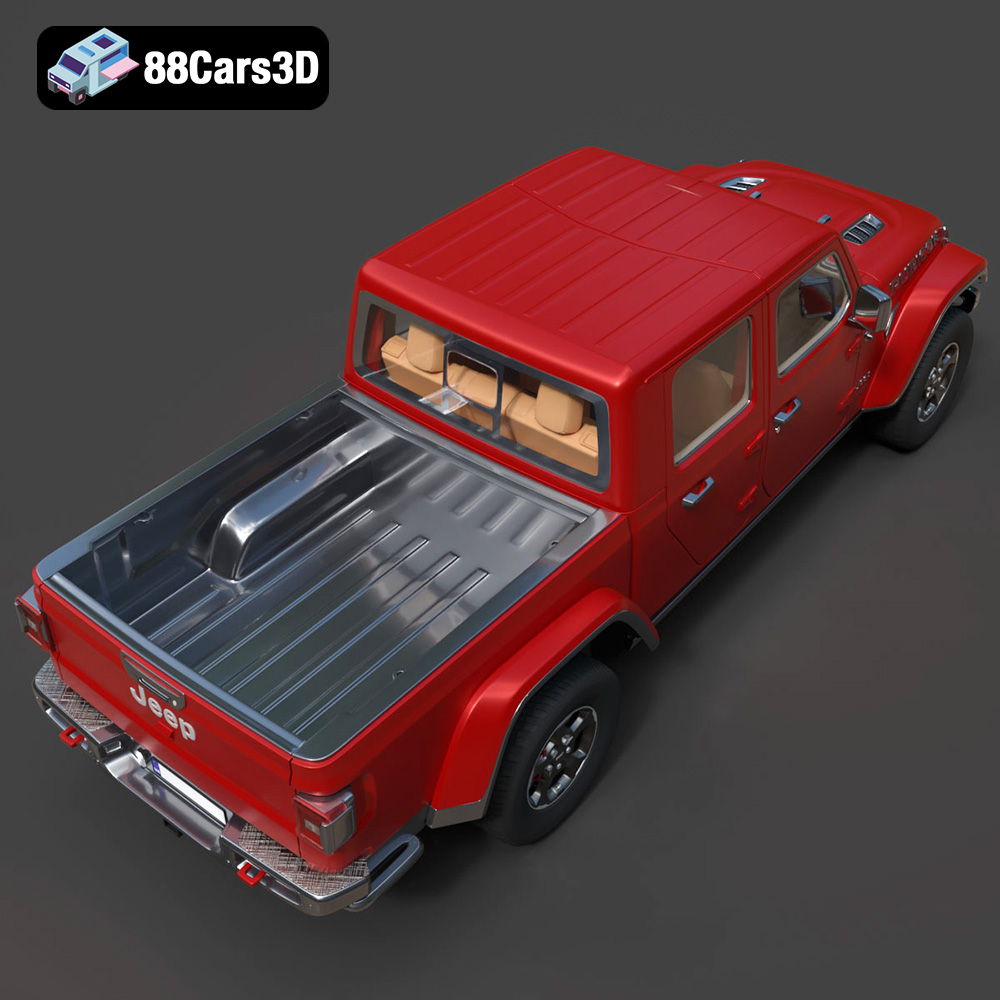
The description of the Jeep Gladiator Rubicon 2020 3D Model highlights its “meticulously crafted” nature and its status as an “authentic digital twin.” This isn’t just marketing speak; it signifies a commitment to accuracy in scale, proportion, and the intricate details that define the real vehicle. From the specific contours of the body panels to the tread patterns on the tires and the precise design of the grille, every element is faithfully reproduced. This level of precision is critical for high-end rendering and ensures that the model holds up under the closest scrutiny, whether in a cinematic shot or a detailed product visualization.
Time is a valuable commodity in any professional production pipeline. Starting with a pre-made, high-quality asset from 88cars3d.com significantly streamlines workflows. Instead of spending days or weeks modeling a vehicle from scratch, artists can immediately jump into texturing, lighting, animation, or scene integration. This not only accelerates project timelines but also reduces the potential for errors and inconsistencies that can arise from custom modeling. The “clean geometry” and “optimized polygon count” further contribute to this efficiency, allowing for smooth navigation and manipulation within 3D software and robust performance in real-time applications.
Perhaps one of the most compelling advantages of models from 88cars3d.com, particularly the Jeep Gladiator Rubicon 2020, is the comprehensive array of included file formats. As explored earlier, having .blend, .fbx, .obj, .glb, .stl, .ply, .unreal, and .max at your disposal means unparalleled flexibility. It eliminates the need for potentially problematic format conversions and ensures that the model is instantly usable across virtually any major 3D software, game engine, or specialized application. This foresight in providing multiple formats caters directly to the diverse toolsets and pipelines used by professionals today, solidifying the model’s value as a truly versatile and future-proof asset.
In the demanding world of professional 3D content creation, the difference between a good project and an outstanding one often lies in the quality and versatility of its core assets. The Jeep Gladiator Rubicon 2020 3D Model epitomizes this principle, offering an authentic digital twin of an iconic vehicle, meticulously crafted for peak performance across a vast spectrum of applications. Whether your focus is on achieving breathtaking automotive renders with nuanced materials and expert lighting, integrating a robust vehicle into a high-performance game engine, or exploring innovative uses in AR/VR, 3D printing, or simulations, this model provides the necessary foundation.
Its comprehensive file format support—including .blend, .fbx, .obj, .glb, .stl, .ply, .unreal, and .max—ensures seamless integration into virtually any professional workflow, eliminating compatibility headaches and empowering creators with ultimate flexibility. By choosing such a high-fidelity, optimized asset, you not only elevate the visual integrity of your projects but also significantly streamline your production pipeline, allowing you to focus on creativity rather than technical remediation. For professionals seeking premium 3D car models that deliver on both detail and adaptability, 88cars3d.com offers a curated selection of assets designed to meet the highest industry standards.
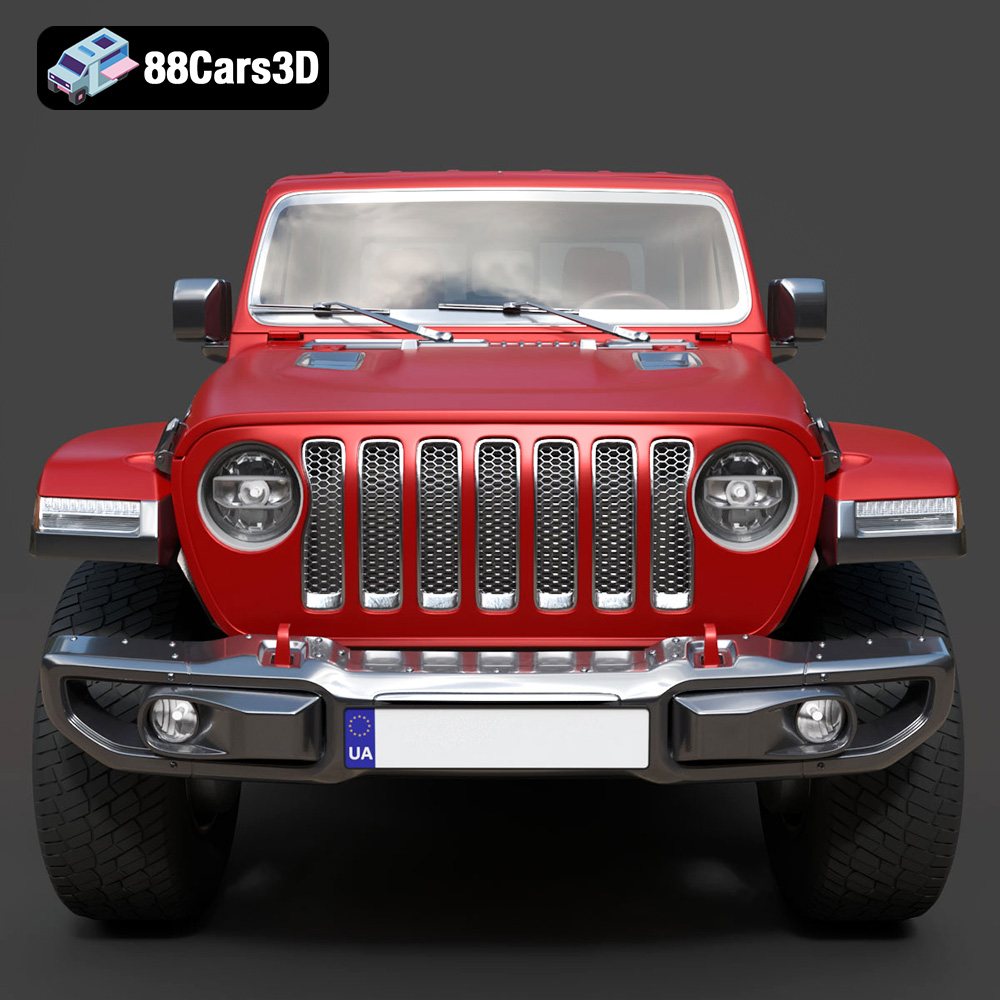
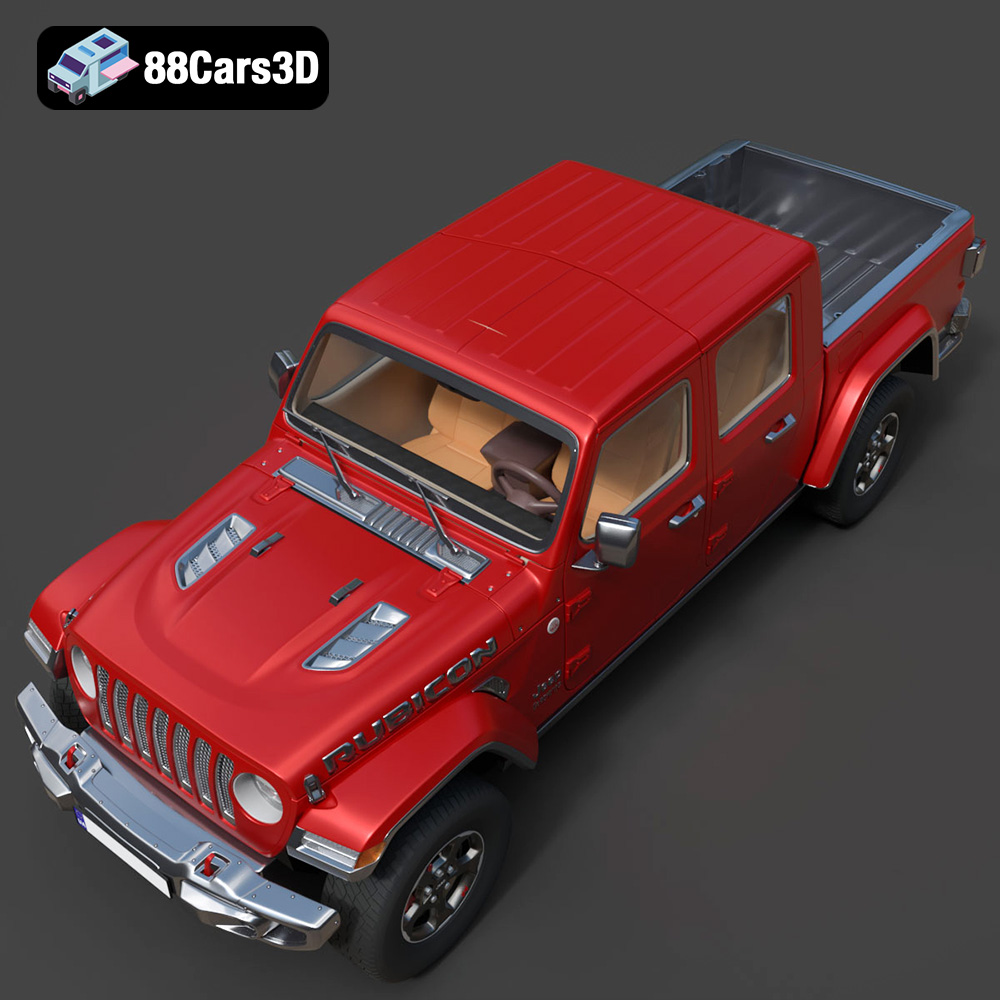
Discover the realistic digital representation of the Jeep Gladiator Rubicon 2020 3D Model, meticulously crafted to deliver an authentic digital twin of this rugged off-road vehicle. This model captures the iconic exterior styling and intricate structural details, making it an ideal asset for professional digital projects.
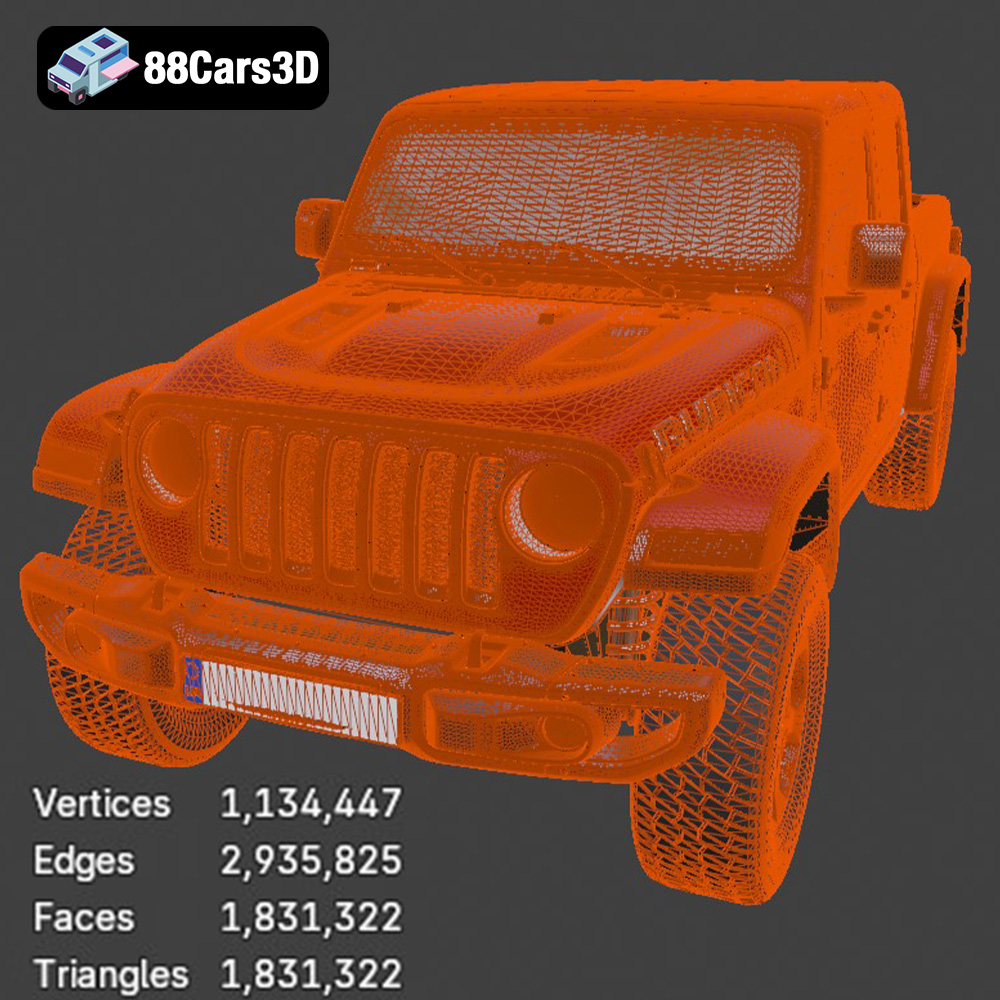
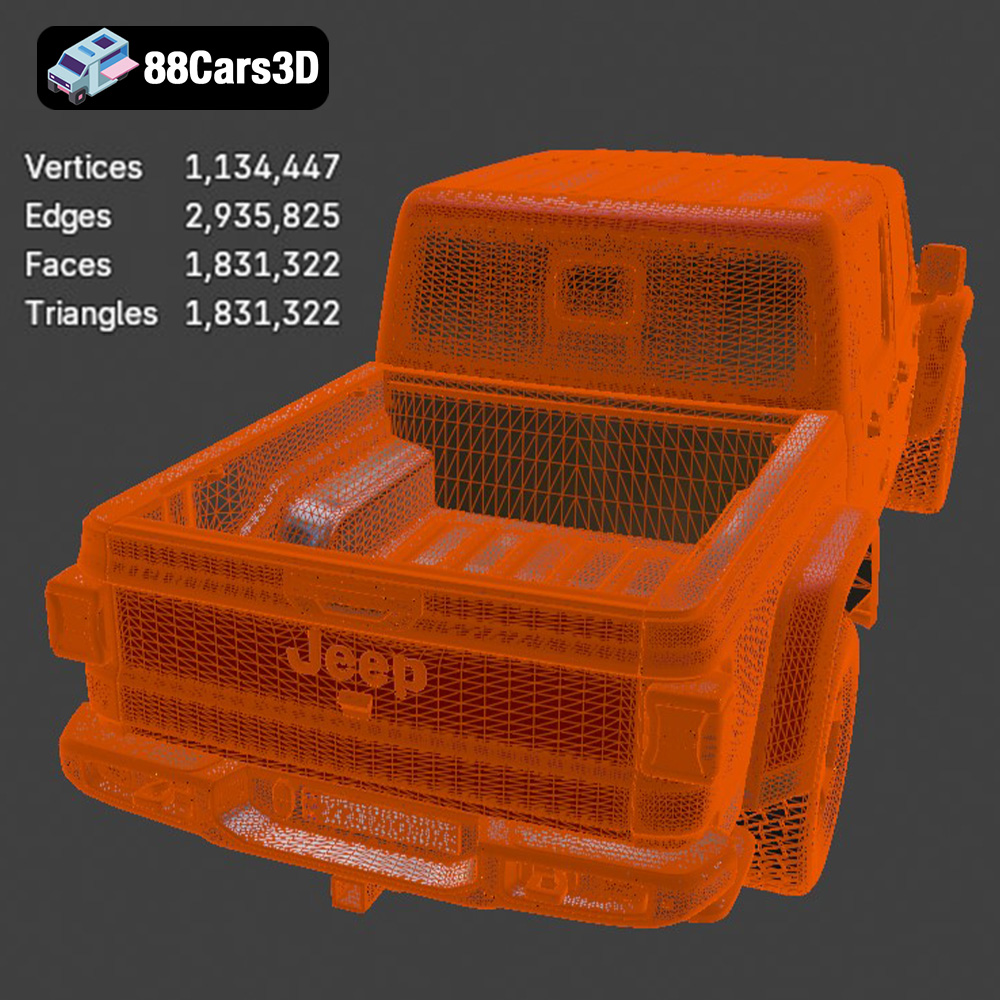
Built with precision, the model features clean geometry, an optimized polygon count, and realistic materials. Every element has been designed to meet professional standards, ensuring seamless integration into your scenes while maintaining excellent performance.
Perfect for a wide range of applications, this versatile 3D model excels in game development, architectural rendering, automotive visualization, AR/VR experiences, and animations.
$39.99
.4×4
.arvr
.blend
.car3dmodel
.fbx
.gameasset
.gladiator
.glb
.jeep
.jt
.max
.obj
.offroad
.pickup
.ply
.rendering
.rubicon
.simulation
.stl
.truck
.unreal