Get 20% OFF All Premium 3D & STL Models!

In the rapidly evolving landscape of 3D visualization, game development, and immersive experiences, the demand for high-quality, meticulously crafted 3D car models has never been greater. Whether you’re an automotive designer seeking to visualize a new concept, a game developer building an expansive open-world environment, or an architect populating a photorealistic street scene, the foundational element remains the same: a versatile and accurate 3D vehicle asset. The sheer complexity of modern vehicles, from their intricate chassis to their detailed interiors, necessitates models that strike a perfect balance between visual fidelity and technical optimization.
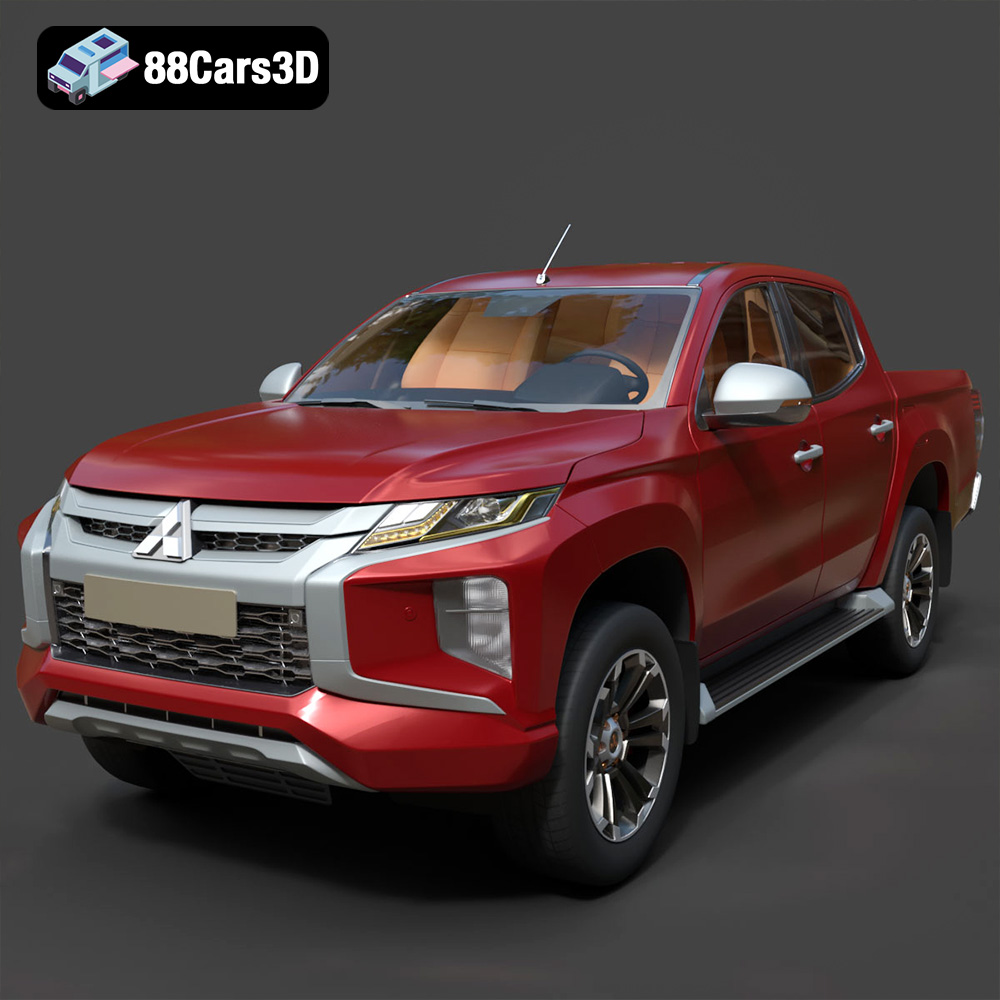
Enter the 2019 Mitsubishi L200 Crew Cab 3D Model, a prime example of a professional-grade asset designed to meet these diverse and demanding requirements. Known globally as the Triton, this pickup truck epitomizes rugged utility combined with contemporary design. Its distinctive “Dynamic Shield” front fascia, aggressive styling, and renowned 4WD capabilities make it a formidable presence, both in the real world and as a digital twin. A high-quality 3D representation of such a vehicle is not just a digital sculpture; it’s a meticulously engineered asset, ready to be integrated into a multitude of professional pipelines. This particular model, available at 88cars3d.com, is crafted to deliver both stunning visuals and game-ready performance, making it an invaluable addition to any digital arsenal. From photorealistic renders to real-time interactive simulations, understanding the nuances of such assets and their underlying file formats is crucial for maximizing their potential.
The foundation of any successful 3D project lies not just in the quality of the model itself, but also in its compatibility and suitability for specific software and pipelines. A comprehensive 3D asset, such as the Mitsubishi L200 Crew Cab 2019 3D model, typically comes in a variety of file formats, each serving a unique purpose and offering distinct advantages. Understanding these formats is paramount for any professional working with 3D content, ensuring seamless integration and optimal performance across different platforms.
The .blend format is the native file type for Blender, a powerful open-source 3D creation suite. When you acquire a .blend file, you’re receiving a fully editable Blender scene, complete with all its associated data: mesh geometry, materials, textures, lighting, camera setups, and even animation data. This format is ideal for users who primarily work in Blender, offering the highest level of flexibility for modifications, rigging, and rendering within the Blender ecosystem. For the Mitsubishi L200 model, a .blend file would allow a user to dive directly into the setup, inspect the material nodes, adjust topology, or even re-rig components with Blender’s native tools, making it invaluable for extensive customization or further development.
FBX (Filmbox) is a proprietary file format developed by Autodesk, widely regarded as the industry standard for exchanging 3D data between different software applications. Its strength lies in its ability to store not just geometry, but also complex scene data like animation, rigging, materials, and textures in a single file. This makes .fbx incredibly versatile for pipelines involving Unreal Engine, Unity, 3ds Max, Maya, and Cinema 4D. For game developers, the .fbx format of the Mitsubishi L200 is often the go-to for importing into game engines, as it reliably transfers animation data (like wheel rotation pivots or suspension travel) and hierarchical structures, ensuring that the model is ready for real-time applications with minimal setup.
The OBJ (Object) format is one of the oldest and most universally supported 3D file formats. It’s a simple, text-based format primarily used for transferring 3D geometry (vertices, normals, UVs, and polygonal faces) between different applications. While it doesn’t typically store advanced scene information like animation or complex material setups as comprehensively as FBX, it excels in ensuring maximum compatibility. If you need to import the Mitsubishi L200 3D model into a niche application or simply require the raw mesh data, .obj is a reliable choice. It’s often accompanied by an .mtl (material template library) file for basic material definitions and texture references.
GLB is the binary version of glTF (Graphics Language Transmission Format), a modern, open-standard file format designed for the efficient transmission and loading of 3D scenes and models by applications. Its primary advantage is its optimization for AR, VR, and web-based applications, as it can embed textures and other assets directly within the single .glb file, making it incredibly portable and fast to load. For showcasing the Mitsubishi L200 in a virtual showroom on a website, integrating it into an AR app for mobile devices, or displaying it within a metaverse platform, the .glb format offers excellent performance and ease of deployment.
STL (Stereolithography) is the standard file format used for 3D printing. It represents a 3D model as a series of connected triangles, defining only the surface geometry without color, texture, or other CAD attributes. While simple, its ubiquity in the 3D printing world is unmatched. Converting the Mitsubishi L200 3D model to .stl allows hobbyists and professionals to physically manifest the digital design, perhaps for scale models, prototyping, or detailed collectibles. The product description for the Mitsubishi L200 even includes specific 3D print settings, highlighting its readiness for physical output.
PLY (Polygon File Format) is another format that stores 3D data, often used in scientific and engineering applications, particularly for scanned 3D data. It can store a wider range of properties than .obj or .stl, including color, transparency, normals, texture coordinates, and confidence values for each vertex or face. While less common for general-purpose asset exchange than .fbx, it offers a robust way to preserve detailed mesh information, making it suitable for CAD workflows, reverse engineering, or detailed mesh analysis if precision is paramount.
While not a universal file extension in the same vein as .fbx or .obj, the inclusion of “.unreal” typically indicates that the asset has been specifically prepared, optimized, or even pre-imported into an Unreal Engine project. This means it likely comes with PBR materials set up, proper collision meshes, LODs (Levels of Detail), and possibly Blueprints for interactive functionality, ready for immediate use in Unreal Engine. For the Mitsubishi L200, an “.unreal” offering would drastically cut down setup time for game developers or virtual production artists working in Unreal, delivering an engine-ready asset out of the box.
The .max format is the native file type for Autodesk 3ds Max, another industry-leading 3D modeling, animation, and rendering software. Similar to .blend for Blender, a .max file contains the complete scene information, including geometry, materials, textures, lighting, cameras, animation, and any modifiers applied. This format is crucial for 3ds Max users who need to fully inspect the model’s construction, modify its rigging, fine-tune materials using V-Ray or Corona renders, or integrate it into complex architectural or automotive visualization scenes directly within their preferred software.
The provision of the Mitsubishi L200 Crew Cab 2019 3D Model in such a comprehensive array of formats underscores its versatility and the foresight of its creators at 88cars3d.com. This multi-format approach ensures that regardless of your software preference or project requirements, you have a direct path to integrate this high-quality 3D car model into your workflow.
Beyond the technical specifications of file formats, the inherent quality and design of a 3D model are what truly define its value. The Mitsubishi L200 Crew Cab 2019 3D model stands out as a testament to meticulous craftsmanship, balancing the visual demands of high-end rendering with the performance requirements of real-time applications. It encapsulates the essence of the real-world vehicle, making it an ideal candidate for a vast array of digital projects.
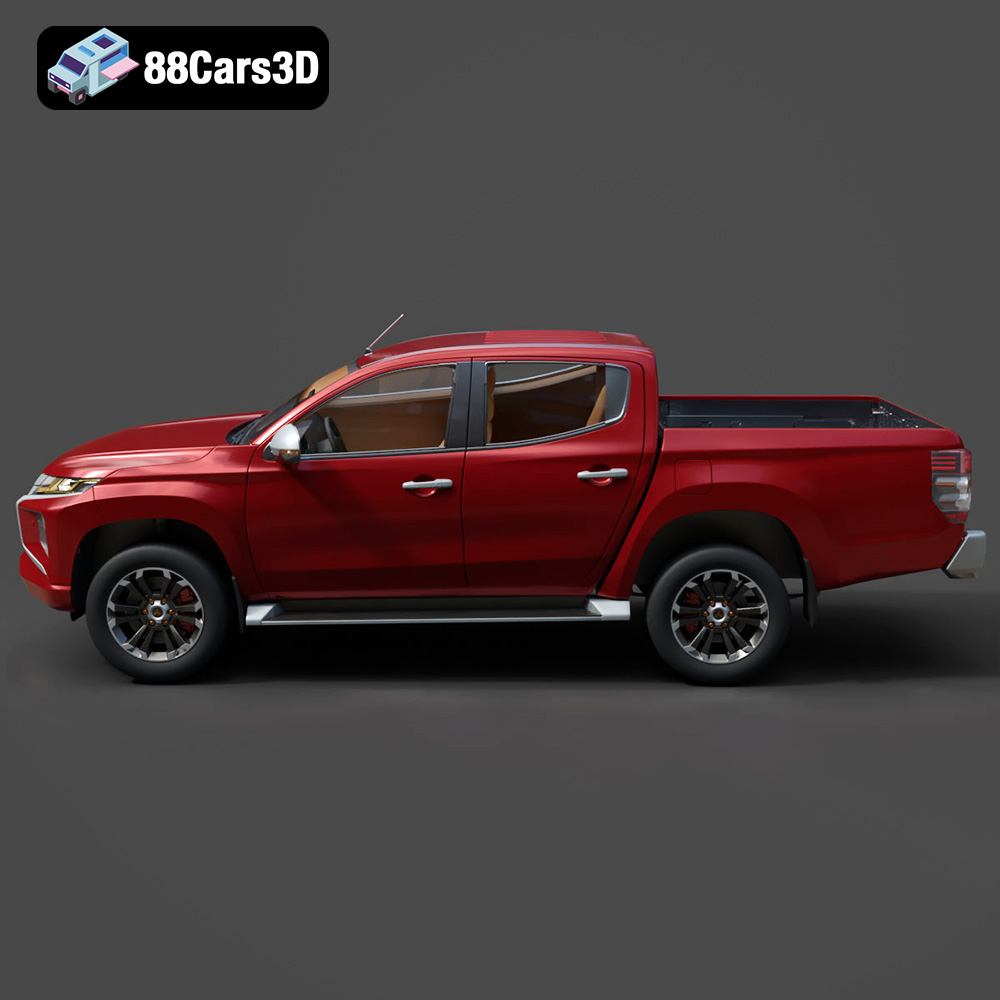
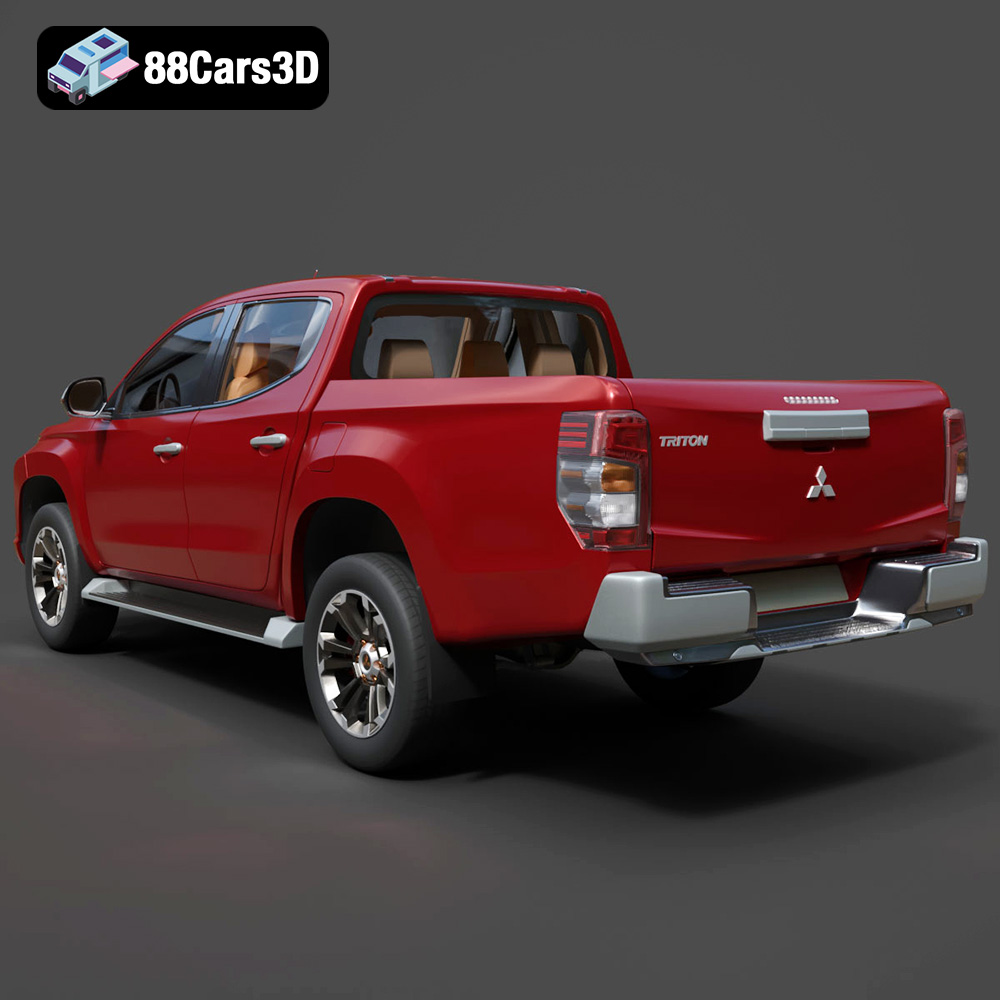
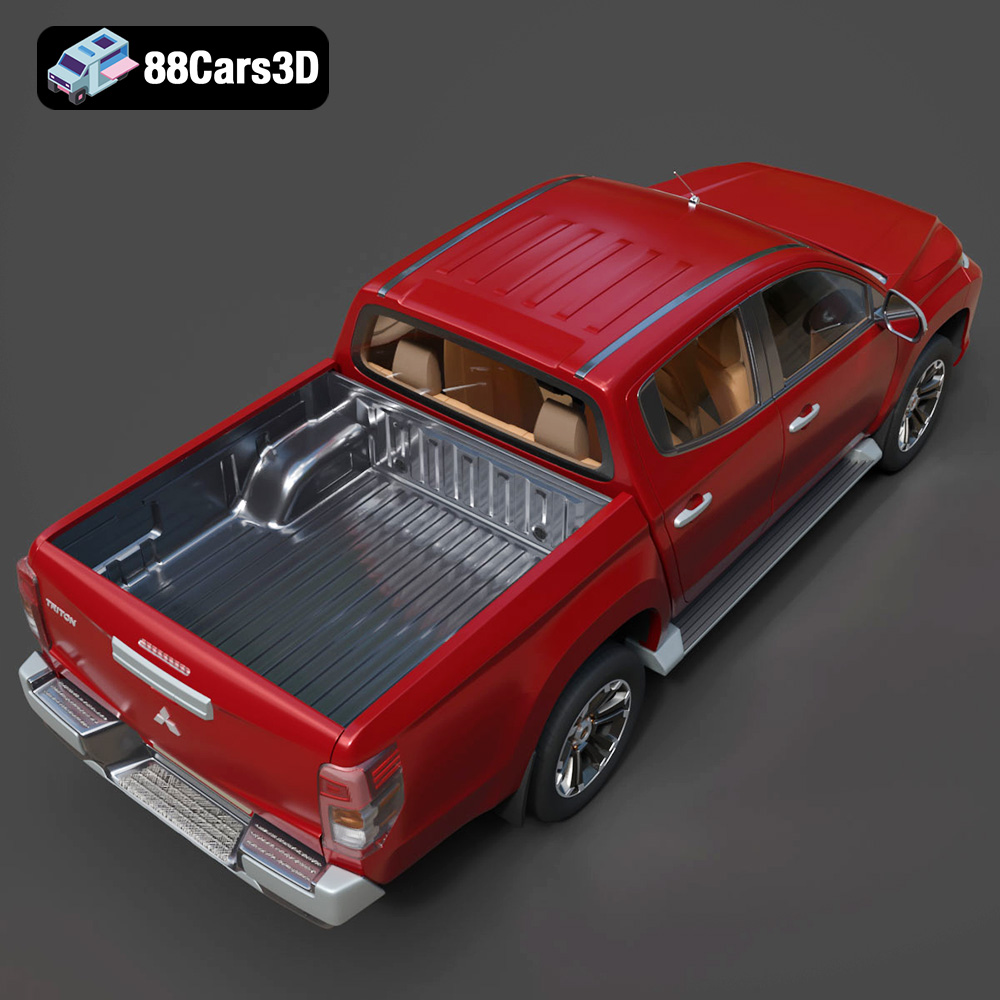
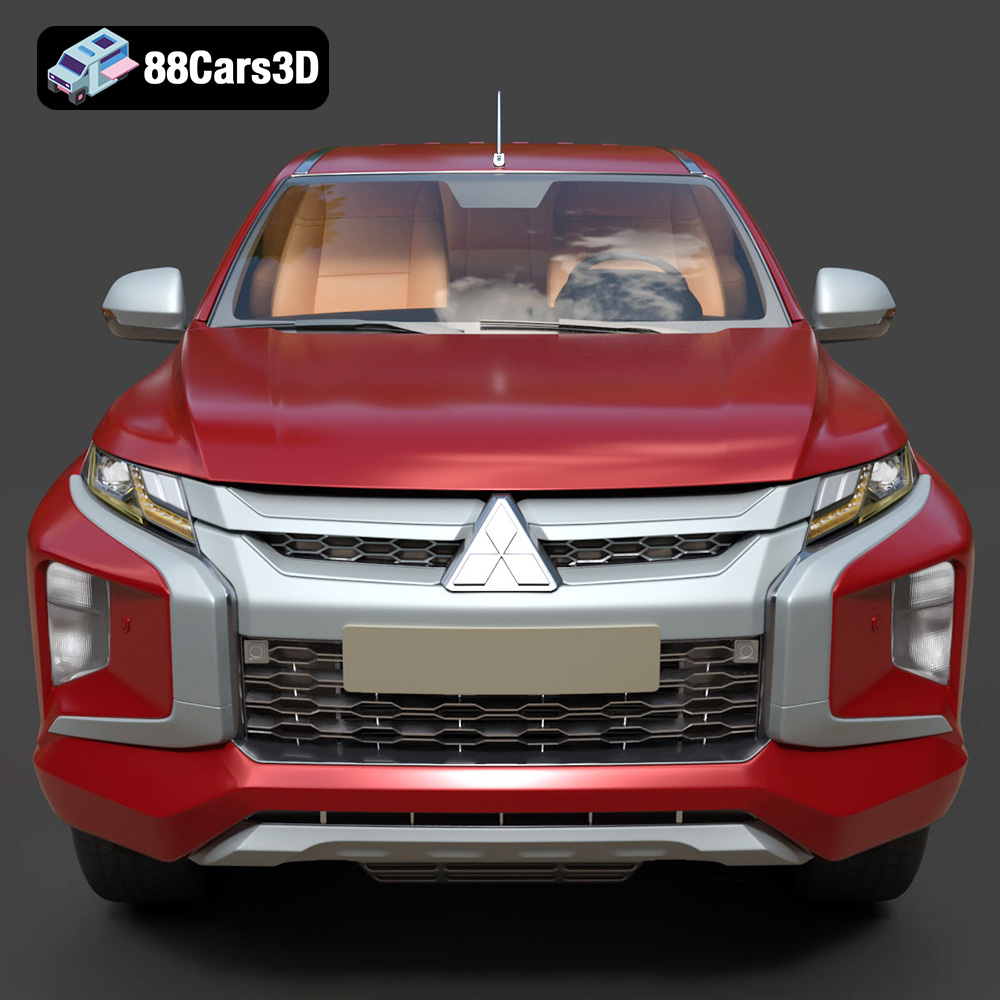
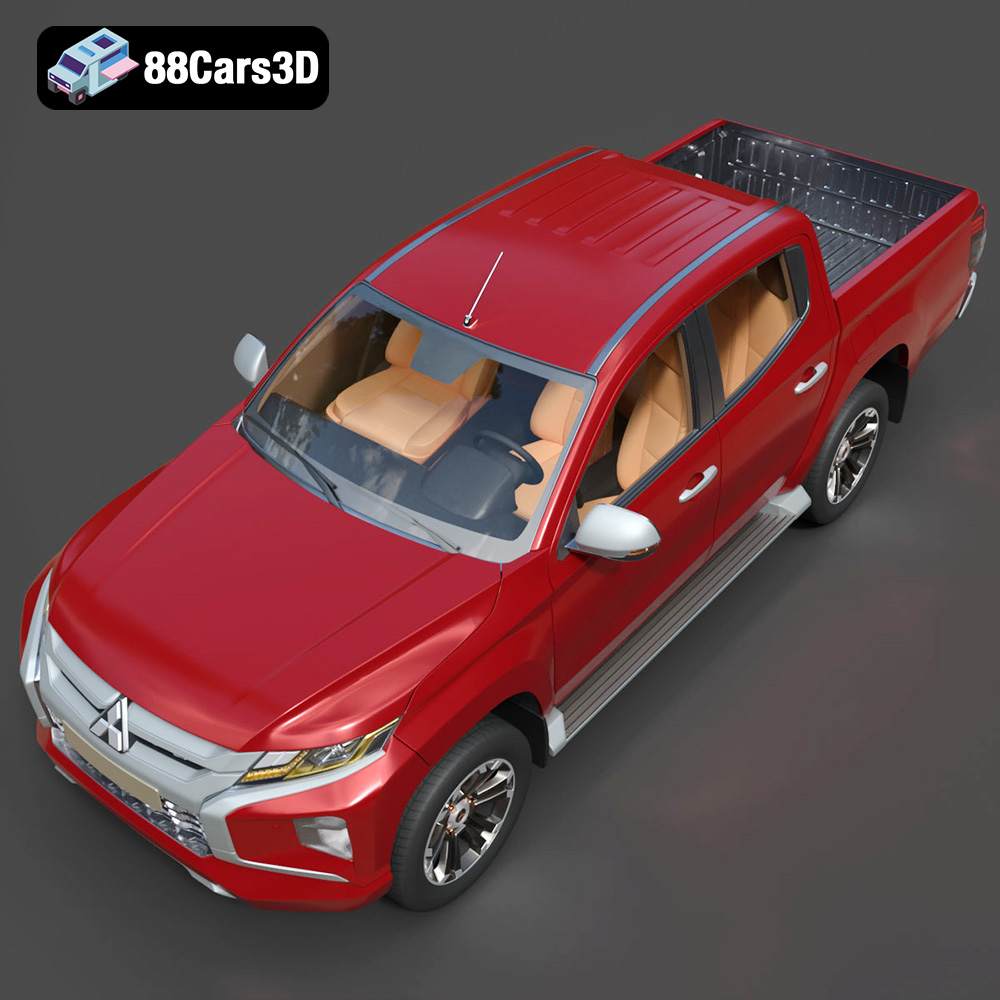
The exterior of this 3D car model is a highlight of its design. It accurately captures the rugged yet modern aesthetic of the 2019 L200, particularly its signature “Dynamic Shield” front fascia. Every curve and panel line is replicated with precision, from the aggressive front grille to the striking LED headlight clusters and distinct taillight housings. The sculpted side panels, the robust cargo bed with authentic tailgate and tiedown details, and the accurate alloy wheel designs with detailed all-terrain tires all contribute to an authentic representation. Crucially for animators and game developers, components such as the wheels, suspension, and steering are separated, allowing for realistic animation. This means that if you’re building an off-road simulator, the vehicle can articulate and react convincingly to terrain, enhancing immersion.
The quality doesn’t stop at the exterior. The 3D model also features a detailed cockpit and interior. The spacious five-seat crew cab configuration is accurately represented, complete with upholstery details that give a sense of realism. The steering wheel carries the brand insignia and includes multi-function buttons, while the instrument cluster and modern center infotainment display are precisely modeled. Even finer details like pedals, the gear selector, and climate vents are included. This level of interior fidelity is vital for first-person POV in gaming, VR experiences where users can virtually step inside the vehicle, or even for architectural visualization where a fully detailed interior enhances the overall scene realism.
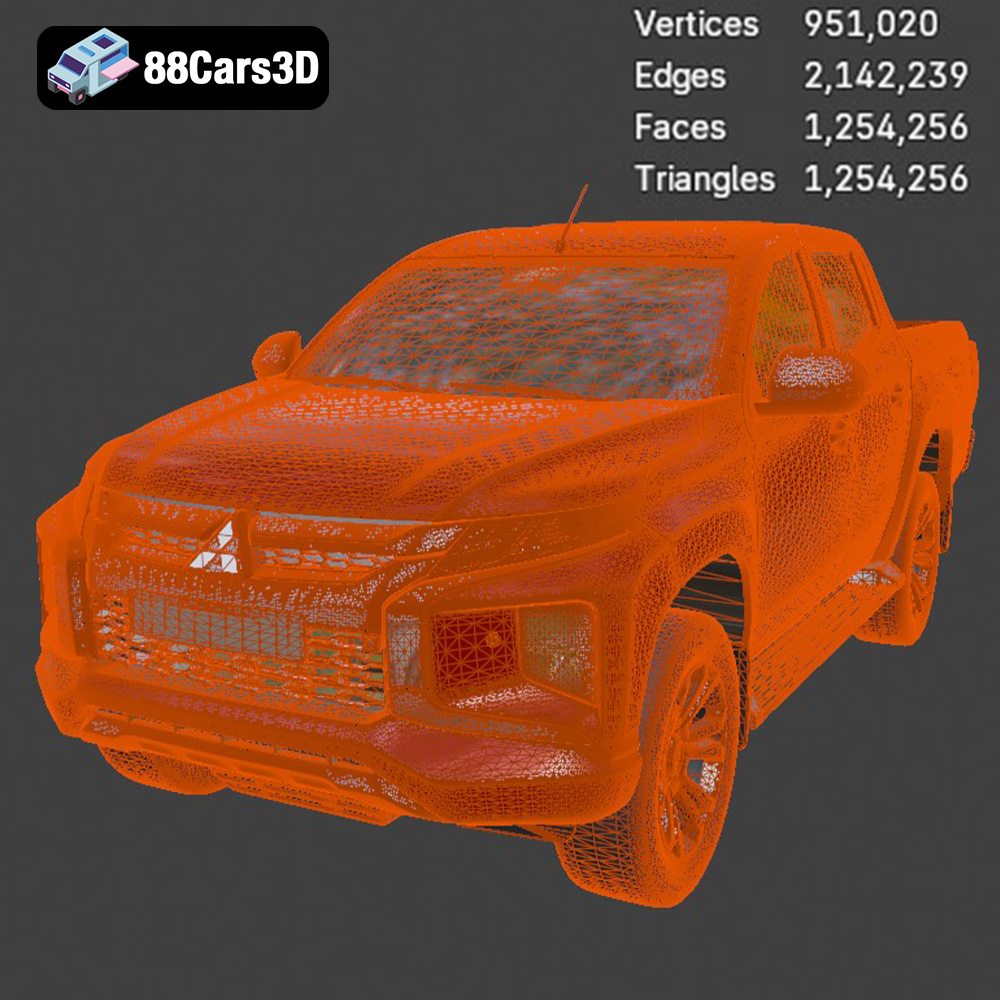
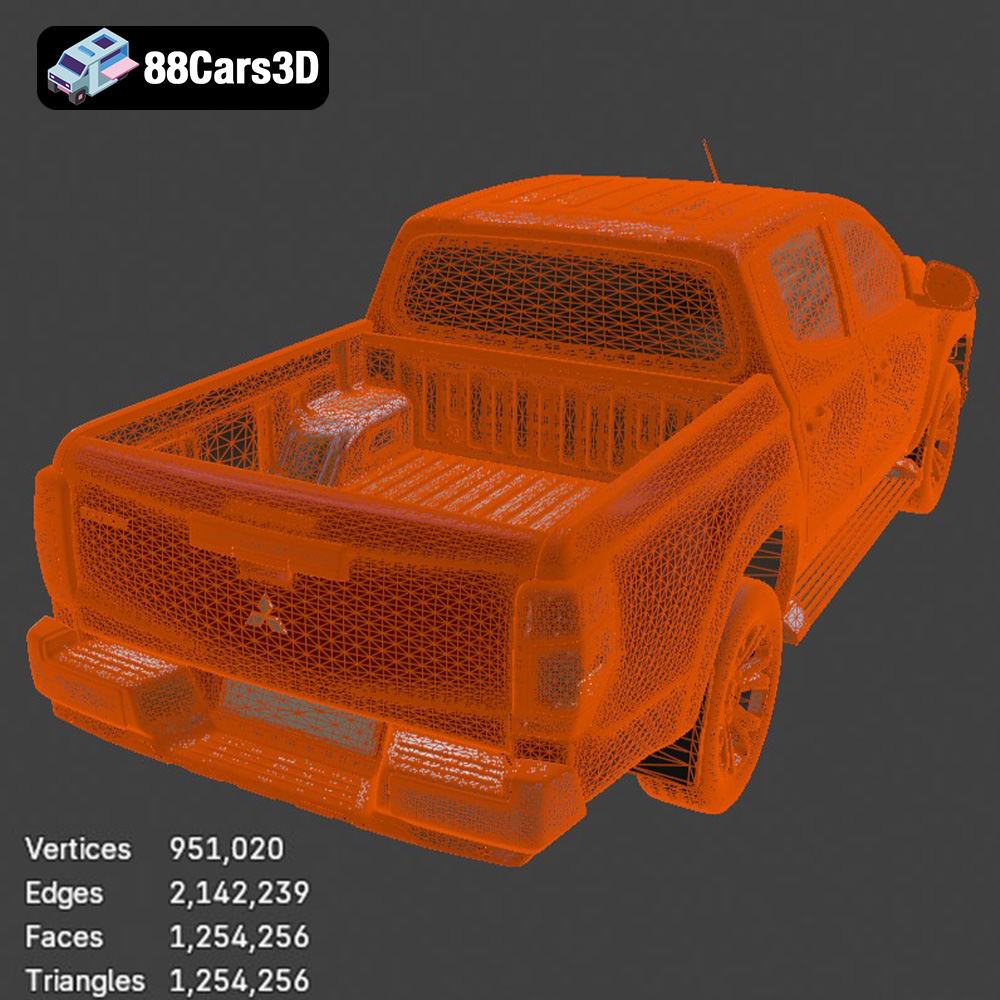
One of the most significant technical advantages of this Mitsubishi L200 3D model is its optimized geometry. With approximately 550,000 triangles, it achieves a perfect balance between high-end visual realism and game-ready performance. This polycount is sufficiently detailed for close-up renders and cinematic sequences, yet efficient enough to ensure smooth frame rates in real-time engines like Unreal and Unity. Furthermore, the model boasts real-world scale accuracy, which is non-negotiable for seamless integration into existing scenes or for ensuring correct proportions in architectural and simulation projects. Proper pivot setups for steering, wheel rotation, and suspension travel further streamline the animation process, saving countless hours for artists and developers.
The gaming industry is constantly pushing the boundaries of realism, demanding assets that are not only visually stunning but also perform flawlessly in dynamic, real-time environments. High-quality 3D car models, like the Mitsubishi L200 Crew Cab 2019, are at the forefront of this revolution, enabling developers to create more immersive and believable virtual worlds.
For game developers, the challenge is always to strike a delicate balance between visual fidelity and performance. An overly complex model can cripple frame rates, while a too-simple one can break immersion. The Mitsubishi L200 3D model, with its optimized ~550,000 triangle count, is specifically designed for this sweet spot. This allows game engines like Unreal Engine and Unity to render the vehicle with intricate details—such as the “Dynamic Shield” fascia and detailed wheel wells—without bogging down the system. Developers can leverage the included FBX or Unreal formats for quick integration, benefiting from pre-configured pivots and, potentially, LODs (Levels of Detail) that automatically swap in simpler meshes at a distance, further boosting performance.
Integrating a 3D car model into a game goes beyond just placing it in a scene. It involves setting up physics, collision detection, and interactive elements. The Mitsubishi L200 Crew Cab 3D model’s separate components for wheels, suspension, and steering, along with proper pivot setups, are crucial for this. Game programmers can easily rig the model for advanced vehicle physics, allowing for realistic driving mechanics, suspension compression, and steering responses. Accurate collision meshes can be generated from the optimized geometry, ensuring realistic interactions with the game world. This enables developers to create compelling driving experiences, whether it’s navigating challenging off-road terrains or performing precise maneuvers in a city street.
Consider an open-world adventure game where players traverse vast landscapes, or a dedicated off-road simulator. The Mitsubishi L200 Crew Cab 2019, with its reputation for ruggedness and its detailed 4WD capabilities, is an ideal candidate for such scenarios. Imagine players driving this virtual L200 through mud, over rocky trails, or across deserts, with the detailed suspension articulating and the all-terrain tires gripping the uneven surfaces. The optimized polycount ensures that multiple vehicles can be rendered simultaneously without performance dips, allowing for convoy missions or multiplayer races. Its robust design lends itself perfectly to scenarios where durability and utility are key, enriching the gameplay experience and providing players with a visually authentic and mechanically responsive vehicle.
While game development represents a significant application, high-quality 3D car models are equally indispensable in the realms of automotive rendering, architectural visualization, and immersive AR/VR experiences. These fields demand unparalleled visual fidelity, often pushing the boundaries of photorealism.
For automotive studios, advertising agencies, or visualization artists, the ability to produce stunning, photorealistic images of vehicles before they even leave the factory floor is invaluable. The Mitsubishi L200 3D model, with its accurate geometry and detailed material zones, is perfectly suited for high-end rendering. In software like 3ds Max (using the .max file) or Blender (with the .blend file), artists can leverage powerful render engines like V-Ray, Corona, Cycles, or Octane. They can experiment with studio lighting setups, apply advanced PBR (Physically Based Rendering) materials to mimic metallic paints, realistic glass, and textured plastics, and create cinematic animations. The model’s fine details, such as the LED headlight arrays and subtle body panel reflections, truly shine under professional rendering conditions, producing visuals indistinguishable from real-world photography.
Augmented Reality (AR) and Virtual Reality (VR) are transforming how we interact with products, especially in the automotive sector. Virtual showrooms, interactive configurators, and mobile AR apps allow customers to explore vehicles in unprecedented ways. The Mitsubishi L200 3D model’s optimized geometry and multiple file formats (especially .glb for web and mobile AR) make it an excellent asset for these applications. Imagine a potential buyer walking around a virtual L200 in a VR headset, opening doors, exploring the interior, and even changing paint colors or wheel designs in real-time. Or, using an AR app on a smartphone, placing a virtual L200 in their driveway to see how it fits. The balanced polycount ensures smooth, interactive experiences without latency, offering a powerful tool for marketing and sales.
Architectural visualization benefits immensely from realistic contextual elements, and vehicles are a common fixture in modern streetscapes and property renderings. Integrating the Mitsubishi L200 Crew Cab 2019 into an architectural scene can instantly elevate its realism, providing scale, context, and a sense of lived-in authenticity. Its rugged aesthetic can particularly complement industrial buildings, rural properties, or adventure-themed resort visualizations. Beyond static scenes, the model is also perfect for commercial rendering campaigns, product unveilings, or lifestyle shoots, allowing brands to showcase the vehicle in diverse virtual settings that might be costly or impossible to achieve in physical photography. The attention to detail, from accurate proportions to the subtle curves of its “Dynamic Shield,” ensures that the vehicle enhances, rather than detracts from, the overall visual narrative.
Acquiring a high-quality 3D car model is the first step; effectively integrating it into your specific project pipeline is the next. The Mitsubishi L200 Crew Cab 2019 3D model from 88cars3d.com is designed for straightforward integration, but understanding the typical workflow can significantly accelerate your project.
Upon downloading, the first step is to import the model into your preferred 3D software. If you’re using Blender, the .blend file offers native integration. For 3ds Max users, the .max file provides a complete scene. For cross-software compatibility or game engine integration, the .fbx file is usually the best choice, as it reliably transfers geometry, basic materials, and crucial animation pivot points. When importing, always verify the scale, as some software might interpret units differently. The real-world scale accuracy of this model minimizes post-import adjustments. Check the hierarchy of the model in your scene explorer; components like wheels, doors, and suspension should be logically grouped and parented for easy manipulation.
While the model typically comes with default materials and texture references, customization is often key to matching your project’s aesthetic. Most high-quality 3D car models use PBR workflows (Physically Based Rendering), which involve maps like Albedo (color), Normal (fine surface detail), Roughness (shininess/matte), Metallic (metalness), and Ambient Occlusion (contact shadows). In Blender, you’d adjust shader nodes; in 3ds Max, you’d modify material slots with render-engine specific shaders (e.g., V-Ray, Corona). The product description notes customization options like changing body colors, modifying tire textures, and adjusting material finishes (matte, gloss, metallic), all of which are easily achievable by swapping or tweaking these PBR maps. This flexibility allows the Mitsubishi L200 to seamlessly fit into any scene, from a gritty off-road environment to a pristine showroom.
For dynamic projects like games, animations, or simulations, rigging the vehicle is essential. The Mitsubishi L200 3D model is designed with animation in mind, featuring separate components and proper pivot setups. This means the wheels are already centered on their rotation axis, the steering wheel pivots correctly, and suspension components are distinct. For advanced animation, you might create an armature or a set of control objects (e.g., bone-based rigging in Blender/Maya or wire parameters in 3ds Max) to control steering, suspension compression, and wheel rotation dynamically. For game engines, these pivots are crucial for implementing vehicle physics systems, ensuring that the digital L200 reacts to the virtual terrain with the same realism as its real-world counterpart.
The versatility of a well-crafted 3D model extends beyond digital screens. The Mitsubishi L200 Crew Cab 2019 3D model offers the unique opportunity to bridge the gap between the virtual and the physical through 3D printing, alongside robust customization options for unique digital projects.
For hobbyists, collectors, or prototyping, converting the 3D model into a physical object via 3D printing is an exciting prospect. The inclusion of the .stl format, specifically optimized for this purpose, is a significant advantage. The product description provides excellent guidance for 3D printing, recommending scales (1:12, 1:18, 1:24) and detailed settings for layer height, wall thickness, infill, and crucially, support structures. Resin printing is suggested for capturing fine details, which is important for elements like mirrors, door handles, and the undercarriage. Proper print orientation, with the frame angled and wheels printed separately, highlights the attention to detail required for successful physical replication. Post-processing steps like sanding, priming, and painting with authentic factory colors can bring the miniature L200 to life, making it a tangible piece of automotive art.
Beyond standard integration, the ability to deeply customize a 3D model is invaluable for creative professionals. The Mitsubishi L200 Crew Cab 2019 3D model offers extensive customization options to tailor it to specific project requirements. Artists can effortlessly change body colors to match factory options or introduce custom finishes like matte, gloss, or metallic effects. Tire textures can be modified to switch between aggressive off-road variants and smoother street-oriented designs, altering the vehicle’s character. Furthermore, adapting lighting for different environments—be it a sunny desert, a dimly lit urban alley, or a dynamic studio setup—can dramatically change the model’s appearance and mood. This level of flexibility ensures that the Mitsubishi L200 isn’t just a static asset, but a dynamic canvas for artistic expression and project-specific adaptation.
The modern digital landscape thrives on high-quality, versatile 3D assets, and the automotive sector is a prime beneficiary. From the adrenaline-pumping realism of next-generation games to the photorealistic precision of architectural visualizations and the immersive interactivity of AR/VR experiences, robust 3D car models are the unsung heroes of countless digital endeavors. The Mitsubishi L200 Crew Cab 2019 3D Model exemplifies this versatility, offering a meticulously crafted digital replica that balances visual fidelity with game-ready optimization across a comprehensive array of file formats.
Its detailed exterior, immersive interior, and technical specifications, including an optimized triangle count and real-world scale, make it an indispensable asset for professionals across various industries. Whether you’re a game developer integrating it into an open-world environment, a visualization artist rendering a compelling advertisement, or a designer bringing a physical model to life through 3D printing, this model provides the foundation for success. Understanding the nuances of each file format – from the editable .blend and .max files to the universally compatible .fbx and .obj, the AR/VR-optimized .glb, and the print-ready .stl – empowers creators to maximize their workflow efficiency and creative potential.
For those seeking top-tier 3D car models that stand up to the most demanding professional applications, resources like 88cars3d.com are invaluable. They provide access to assets such as the Mitsubishi L200 Crew Cab 2019 3D Model, enabling artists and developers to elevate their projects with confidence and precision. Investing in such high-quality assets is not just about acquiring a digital file; it’s about unlocking a world of creative possibilities and streamlining your path to exceptional results.
The 2019 Mitsubishi L200 Crew Cab (also known as the Triton) is a masterclass in rugged utility and modern design. Known for its robust “Dynamic Shield” front fascia, aggressive styling, and exceptional 4WD capabilities, this pickup truck bridges the gap between commercial workhorse and comfortable family vehicle. Key visual elements include the distinctive front grille, striking LED headlight arrays, sculpted side panels, and a durable cargo bed designed to handle any load.
This high-quality 3D model strikes the perfect balance between high-end visual fidelity and game-ready optimization. Featuring an optimized topology with approximately 550,000 triangles, it ensures smooth performance in real-time applications without sacrificing intricate details. It is meticulously crafted to serve primary use cases like game development, immersive AR/VR experiences, high-end animation, and architectural or automotive visualization.
Perfect for rugged off-road game environments, virtual automotive showrooms, architectural visualization scenes, and commercial rendering campaigns.
.blend, .fbx, .obj, .glb, .stl, .ply, .unreal, .max
Tags:
mitsubishi, l200, crew-cab, 2019, pickup-truck, utility-vehicle, 4×4, off-road, game-ready, low-poly, optimized, car-3d-model, game-asset, rendering, vr-ar, blend, fbx, obj, glb, stl, ply, unreal, maxMercedes Benz CLS 500 3D Model 3D Printable STL
$39.99
.2019
.4×4
.blend
.fbx
.glb
.max
.mitsubishi
.obj
.ply
.rendering
.stl
.unreal
car-3d-model
crew-cab
game asset
game-ready
l200
low-poly
off-road
optimized
pickup-truck
utility-vehicle
VR/AR