Get 20% OFF All Premium 3D & STL Models!

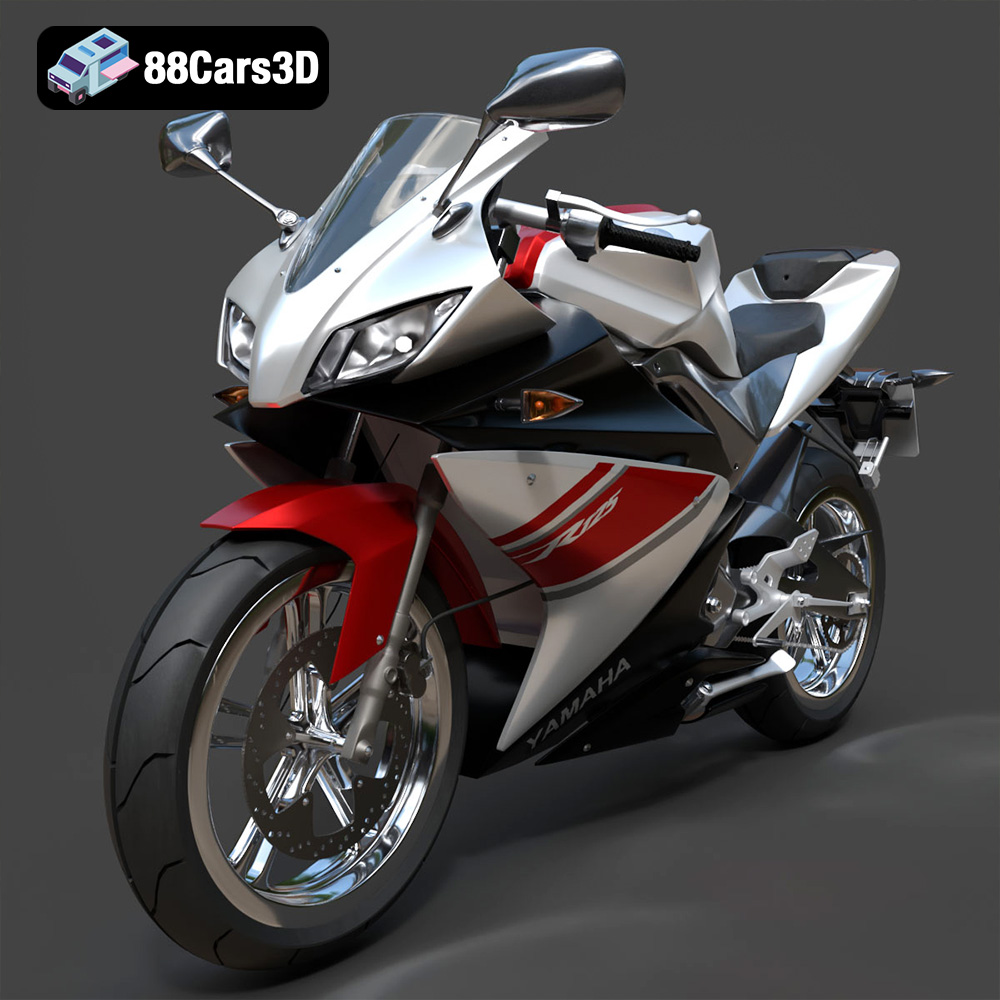
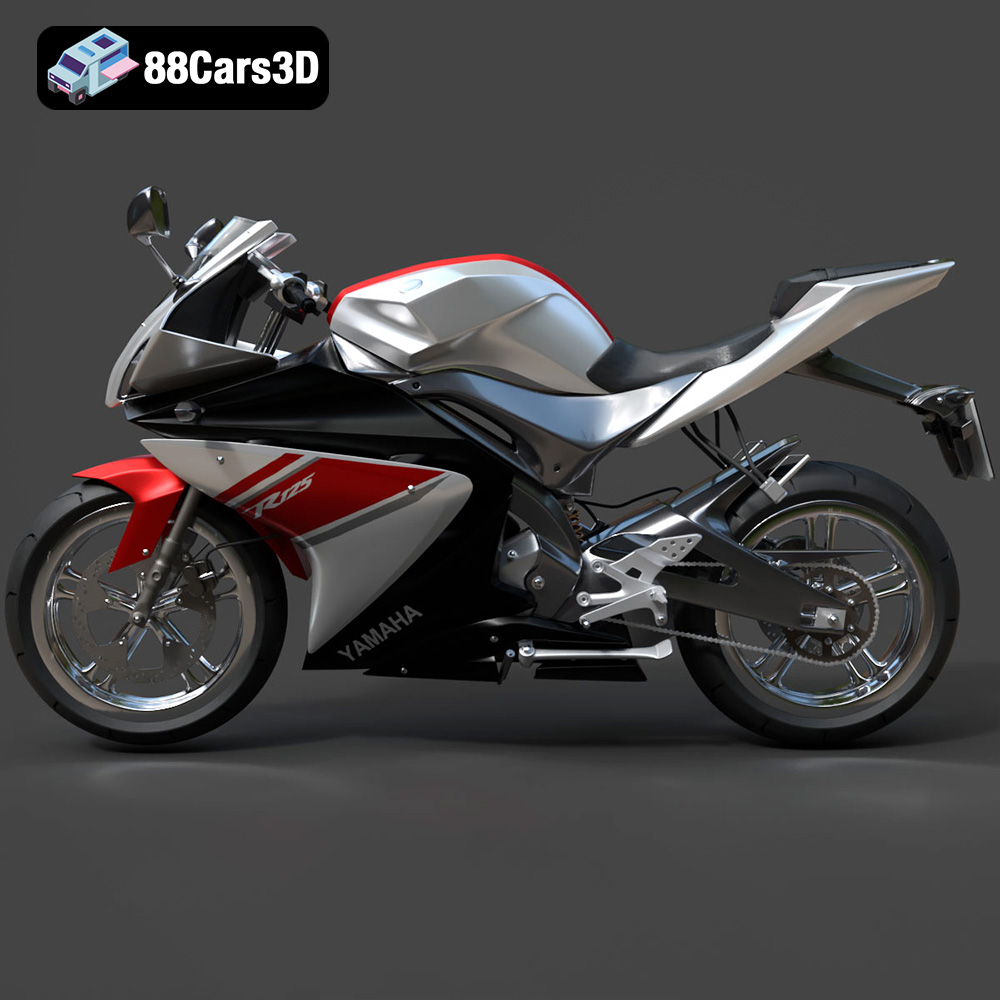
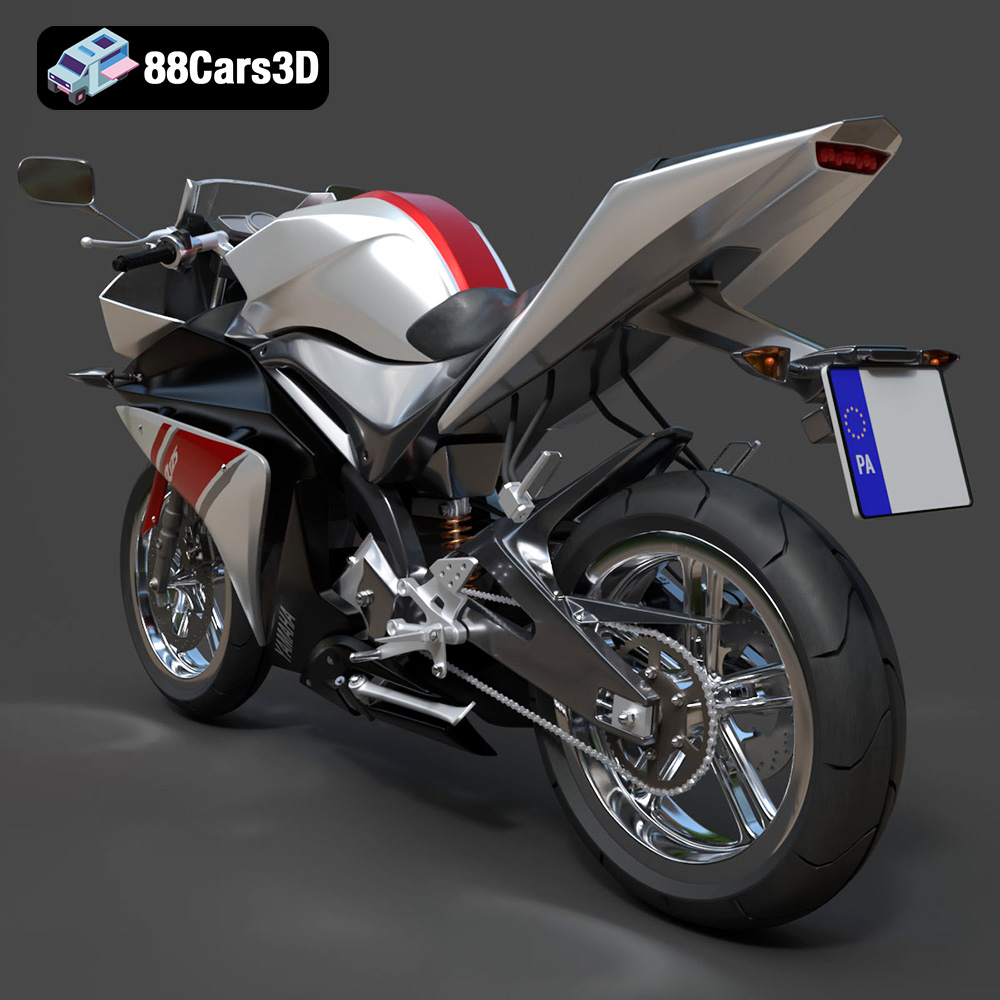
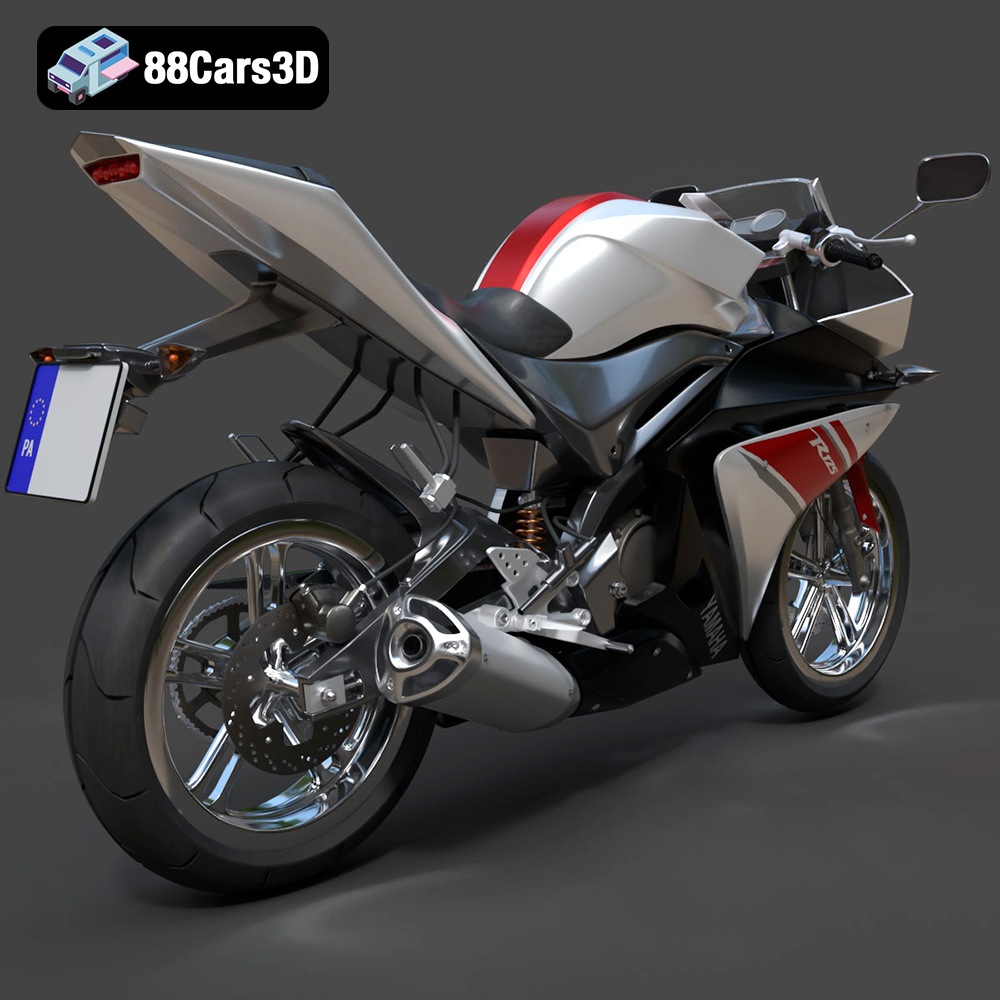
The Yamaha YZF-R125 EU is a stunning piece of engineering, capturing the essence of a true supersport motorcycle in a compact and accessible package. Now, thanks to 88cars3d.com, you can bring this iconic bike to life with the power of 3D printing. This blog post will guide you through the entire process, from preparing your STL files to achieving a showroom-worthy finish. We’ll delve into the optimal settings, materials, and techniques needed to create a stunning 3D printed replica of the Yamaha YZF-R125 EU. Get ready to rev up your printer and embark on this exciting journey!
Selecting the correct file format is crucial for a successful 3D printing experience. While various formats are available, each offers unique characteristics affecting compatibility, detail, and overall print quality. Let’s explore the common formats included with the Yamaha YZF-R125 EU 3D model from 88cars3d.com and how they relate to 3D printing.
The STL (stereolithography) format is the workhorse of 3D printing. It represents the surface geometry of a 3D object as a collection of triangles, forming a mesh. Its simplicity and widespread support across slicing software make it the primary choice for additive manufacturing.
* **Advantages:** Universally compatible with almost all 3D printers and slicing software. Simple, lightweight, and easy to process.
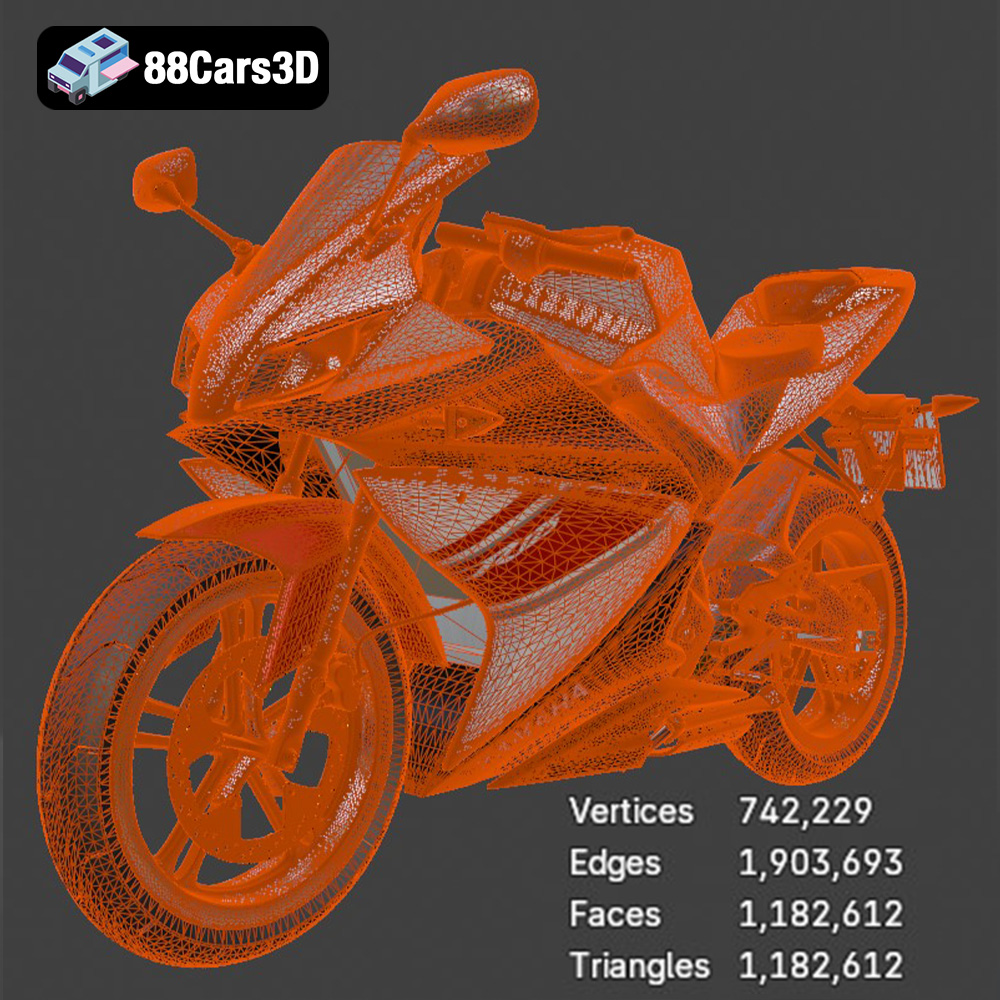
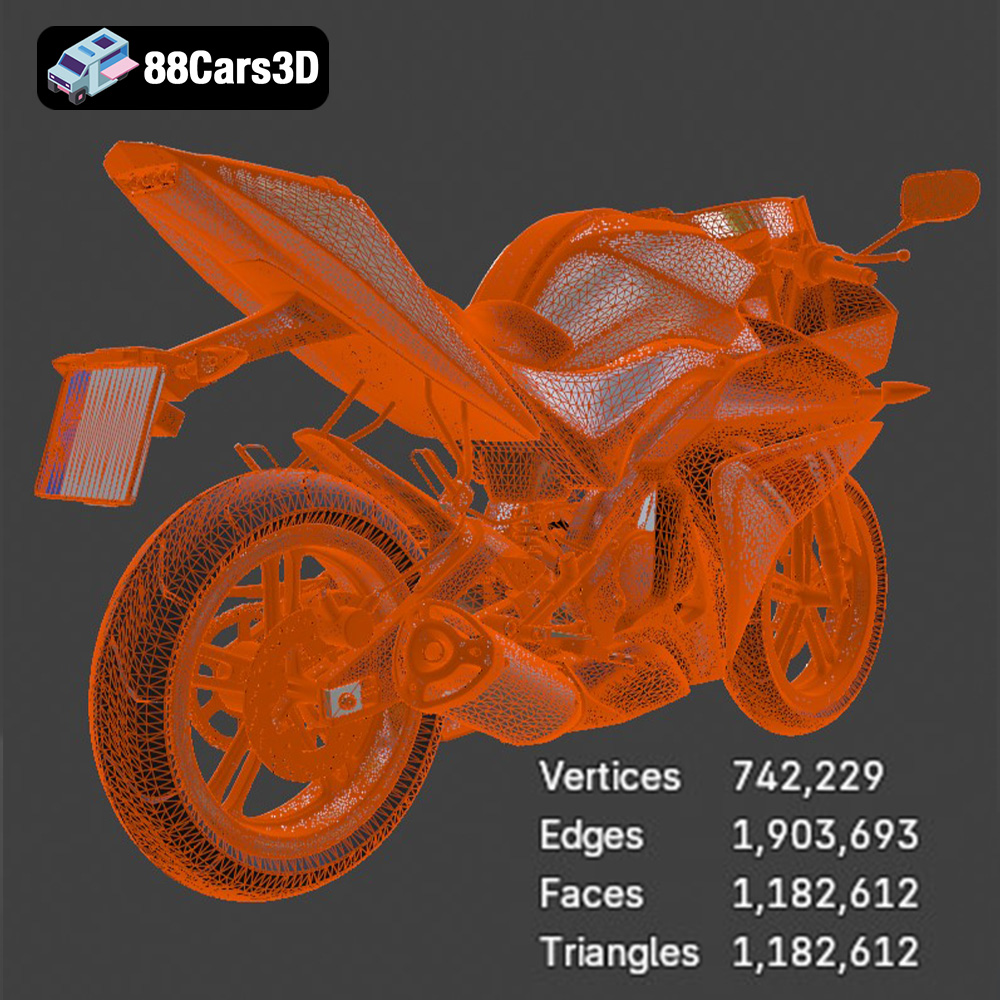
* **Disadvantages:** STL files only contain geometric data; they do not store color, texture, or material information. The resolution and smoothness of the printed object depend on the density of the triangle mesh used to create the STL file. Lower resolution meshes can result in faceted surfaces, especially on curved areas.
When preparing the Yamaha YZF-R125 EU model for 3D printing, ensure the STL file has sufficient triangle density to capture the fine details of the fairing, engine, and other components. Slicing software allows you to adjust the mesh quality (resolution) during the import process.
OBJ is a more versatile format than STL, as it can store color and texture information in addition to geometric data. This makes it suitable for printing multi-colored models or applying textures during post-processing.
* **Advantages:** Supports color and texture mapping, enabling more realistic and visually appealing prints.
* **Disadvantages:** Larger file sizes compared to STL due to the additional texture data. Not all 3D printers support printing with multiple colors or textures.
While the Yamaha YZF-R125 EU model itself might not be natively multi-colored, the OBJ format allows for easier application of painted textures during post-processing, making it a useful format for advanced users.
PLY (Polygon File Format) is designed to store 3D data acquired from 3D scanners. It can handle complex meshes and supports various data types, including color, normals, and texture coordinates.
* **Advantages:** Higher precision and detail retention compared to STL, especially for scanned models.
* **Disadvantages:** Less widely supported than STL. Larger file sizes.
If you are aiming for the highest possible level of detail in your 3D printed Yamaha YZF-R125 EU, and your slicing software supports it, experimenting with the PLY format might yield slightly better results than STL, although the difference might be subtle.
The .blend format is the native file format for Blender, a free and open-source 3D creation suite. It contains the entire Blender scene, including the model, materials, textures, lighting, and camera settings.
* **Advantages:** Offers maximum flexibility for modifying and customizing the model before exporting it for 3D printing.
* **Disadvantages:** Requires Blender software. The .blend file itself is not directly printable; you must export it to STL or another printable format after making modifications.
The .blend file included with the Yamaha YZF-R125 EU model provides a powerful opportunity to personalize your print. You can change the model’s scale, add custom details, split the model into smaller parts for easier printing, or even modify the geometry before exporting it as an STL file.
FBX (Filmbox) is a popular format for exchanging 3D data between different software applications. It supports geometry, materials, textures, animations, and other scene elements.
* **Advantages:** Preserves material information during import into some slicing software.
* **Disadvantages:** Material support in slicing software is not universal. You may still need to manually configure materials and colors within your slicing program.
The FBX file can be useful for importing the Yamaha YZF-R125 EU model into slicing software that supports material import, potentially simplifying the process of assigning different materials to different parts of the model.
GLB is a binary file format representing 3D models in the GL Transmission Format (glTF). It’s designed for efficient transmission and loading of 3D scenes on the web and in augmented reality (AR) applications.
* **Advantages:** Optimized for real-time rendering and AR applications.
* **Disadvantages:** Not directly printable.
The GLB file is primarily useful for previewing the Yamaha YZF-R125 EU model in AR on your smartphone or tablet, giving you a sense of its size and appearance in the real world before committing to 3D printing it.
The .max format is the native file format for Autodesk 3ds Max, a professional 3D modeling, animation, and rendering software. Similar to .blend, it contains the entire scene data, allowing for extensive modifications.
* **Advantages:** Provides complete control over the model’s geometry, materials, and textures.
* **Disadvantages:** Requires Autodesk 3ds Max software, which is a paid product. Not directly printable.
If you’re familiar with 3ds Max, the .max file offers the same level of customization as the .blend file, allowing you to tailor the Yamaha YZF-R125 EU model to your specific preferences before exporting it as an STL for 3D printing.
Ultimately, for 3D printing the Yamaha YZF-R125 EU, the STL format will be your primary file. Ensure the STL file has adequate resolution to capture the model’s details. Consider using the .blend or .max files for customization before exporting to STL. The other formats are helpful for previewing, material transfer (potentially), or AR experiences, but STL is where the printing magic happens.
The success of your Yamaha YZF-R125 EU 3D print hinges on selecting the appropriate 3D printing technology and material. Each method offers unique advantages and disadvantages in terms of detail, strength, cost, and post-processing requirements.
FDM is the most common and affordable 3D printing technology. It works by extruding molten plastic filament layer by layer to build the object.
* **Materials:** PLA, ABS, PETG, Nylon, TPU, and various composites.
* **Pros:** Low cost, wide range of materials, relatively easy to use.
* **Cons:** Lower detail compared to resin printing, visible layer lines, can require significant support structures.
For the Yamaha YZF-R125 EU model, PLA or PETG are good starting points for FDM printing. PLA is biodegradable and easy to print with, while PETG offers greater strength and temperature resistance.
* **Specific Considerations for FDM:** Due to the complexity of the model, expect to use significant support structures, especially for overhanging features like the handlebars, exhaust, and fairing. Careful orientation is crucial to minimize support usage and improve surface finish.
SLA and DLP are resin-based 3D printing technologies that use a light source (laser or projector) to cure liquid resin layer by layer.
* **Materials:** Variety of resins, including standard, tough, flexible, and castable resins.
* **Pros:** High detail, smooth surface finish, ideal for intricate geometries.
* **Cons:** Higher cost than FDM, limited build volume, resin can be messy and requires proper handling.
Resin printing is highly recommended for achieving the fine details of the Yamaha YZF-R125 EU model. The recommended layer height of 0.04-0.12 mm mentioned in the product description highlights the suitability of resin printing.
* **Specific Considerations for SLA/DLP:** Support structures are still necessary, but they tend to be finer and easier to remove than FDM supports. Choose a resin with good strength and impact resistance to avoid breakage, especially for thin parts.
* **PLA (FDM):** Easy to print, good for beginners, suitable for display models.
* **PETG (FDM):** Stronger and more durable than PLA, good for functional parts.
* **Standard Resin (SLA/DLP):** High detail, smooth surface finish, ideal for intricate parts.
* **Tough Resin (SLA/DLP):** Offers increased strength and impact resistance compared to standard resin.
Before hitting the print button, you need to prepare the Yamaha YZF-R125 EU model using slicing software. This involves setting print parameters, generating support structures, and optimizing the model for successful printing.
* **Popular Options:** Cura (free), PrusaSlicer (free), Simplify3D (paid), Chitubox (free/paid, for resin printing).
* **Key Features:** Support generation, layer height control, infill settings, orientation optimization, model repair tools.
Choose a slicing software that is compatible with your 3D printer and offers the features you need for optimal printing.
* **FDM:** Orient the model to minimize support usage and improve surface finish. Consider printing the frame at an angle for structural integrity. Print wheels and other components separately.
* **Resin:** Orient the model at an angle to minimize suction forces and prevent warping. Use automatic support generation features, but manually adjust support placement to ensure adequate support for critical areas.
Pay close attention to the recommended print orientation mentioned in the product description.
* **Layer Height:** As mentioned in the product description for the Yamaha YZF-R125 EU model on 88cars3d.com, a layer height of 0.04-0.12 mm is recommended, especially for resin printing, to capture fine details. For FDM, a layer height of 0.1-0.2 mm is a good starting point.
* **Infill:** Use an infill density of 20-30% for most parts. Increase infill density for parts that require greater strength.
Adjust these settings based on your desired balance between print time, material usage, and part strength.
* **Check for Errors:** Use the slicing software to check for non-manifold edges, holes, and other errors in the STL file.
* **Repair Tools:** Utilize the built-in repair tools in your slicing software or dedicated mesh repair software like MeshMixer or Netfabb to fix any errors.
Ensuring a clean and error-free model is crucial for a successful print.
Achieving a high-quality 3D print of the Yamaha YZF-R125 EU model requires careful attention to printer settings and parameters. The optimal settings will vary depending on your chosen 3D printing technology, material, and printer model.
* **Layer Height:** 0.1-0.2 mm
* **Nozzle Temperature:** 200-220°C (PLA), 230-250°C (PETG)
* **Bed Temperature:** 60°C (PLA), 70-80°C (PETG)
* **Print Speed:** 40-60 mm/s
* **Retraction:** 4-6 mm, 40-60 mm/s
* **Infill Density:** 20-30%
* **Support Structure:** Enable supports, optimize placement and density.
* **Wall Thickness:** 1.2-2.0 mm (3-5 perimeters)
* **Layer Height:** 0.04-0.12 mm
* **Bottom Layer Exposure Time:** 60-80 s
* **Normal Layer Exposure Time:** 6-12 s
* **Lift Distance:** 5-7 mm
* **Lift Speed:** 60-80 mm/min
* **Support Structure:** Enable supports, optimize placement and density.
* **Anti-aliasing:** Enable anti-aliasing to improve surface smoothness.
* **FDM:** Print time can range from 10-30 hours depending on the scale and complexity of the print. Material cost can vary from $5-15 depending on the material used.
* **Resin:** Print time can range from 8-20 hours depending on the layer height and number of parts being printed. Material cost can vary from $10-30 depending on the resin used.
These are just estimates. Your actual print time and material cost will depend on your specific printer, settings, and model complexity.
Once your Yamaha YZF-R125 EU model is printed, post-processing is essential to remove support structures, smooth the surface, and achieve a professional finish.
* **FDM:** Carefully remove support structures using pliers, cutters, or a hobby knife. Be patient and avoid damaging the model.
* **Resin:** Remove support structures while the resin is still slightly flexible. Use a sharp blade or flush cutters to minimize damage to the surface.
* **Sanding:** Start with coarse sandpaper (220-grit) to remove any remaining support marks or imperfections. Gradually move to finer grits (400-grit, 600-grit, 800-grit) to smooth the surface.
* **Smoothing:** Use filler primer to fill in any remaining imperfections. Sand the primer smooth after it dries.
* **Priming:** Apply a coat of primer to the model to provide a smooth and uniform surface for painting.
* **Painting:** Use high-quality acrylic paints to replicate the authentic factory colors of the Yamaha YZF-R125 EU. Apply multiple thin coats for best results.
* **Clear Coat:** Apply a clear coat to protect the paint and add a glossy finish.
* **Metallic Finishes:** Use metallic paints or pigments to achieve the desired metallic accents.
Consider the customization options mentioned in the product description on 88cars3d.com and experiment with different fairing colors, tire textures, and material finishes to personalize your model.
* Carefully assemble the printed parts using glue or other adhesives.
* Refer to reference images or the original 3D model to ensure correct assembly.
Even with careful preparation, you may encounter some challenges during the 3D printing process. Here are some common issues and their solutions:
* **Cause:** Uneven cooling, poor bed adhesion.
* **Solution:** Increase bed temperature, use a brim or raft, ensure proper bed leveling, reduce print speed.
* **Cause:** Excessive retraction, high nozzle temperature.
* **Solution:** Adjust retraction settings, lower nozzle temperature, reduce print speed.
* **Cause:** Poor layer adhesion, low temperature (FDM), insufficient exposure time (Resin).
* **Solution:** Increase temperature (FDM), increase exposure time (Resin), improve bed adhesion.
* **Cause:** Insufficient support density, weak support structure.
* **Solution:** Increase support density, use thicker support structures, optimize support placement.
By understanding these common issues and their solutions, you can overcome challenges and achieve a successful 3D print of your Yamaha YZF-R125 EU model.
3D printing the Yamaha YZF-R125 EU model is a rewarding project that allows you to create a stunning replica of this iconic motorcycle. By carefully selecting the right 3D printing technology, materials, and settings, you can achieve a high level of detail and accuracy. Remember to pay close attention to pre-print preparation, including slicing and model optimization, and don’t underestimate the importance of post-processing techniques to achieve a showroom-worthy finish. With patience, attention to detail, and the resources available on 88cars3d.com, you can successfully bring the Yamaha YZF-R125 EU to life in your own home.
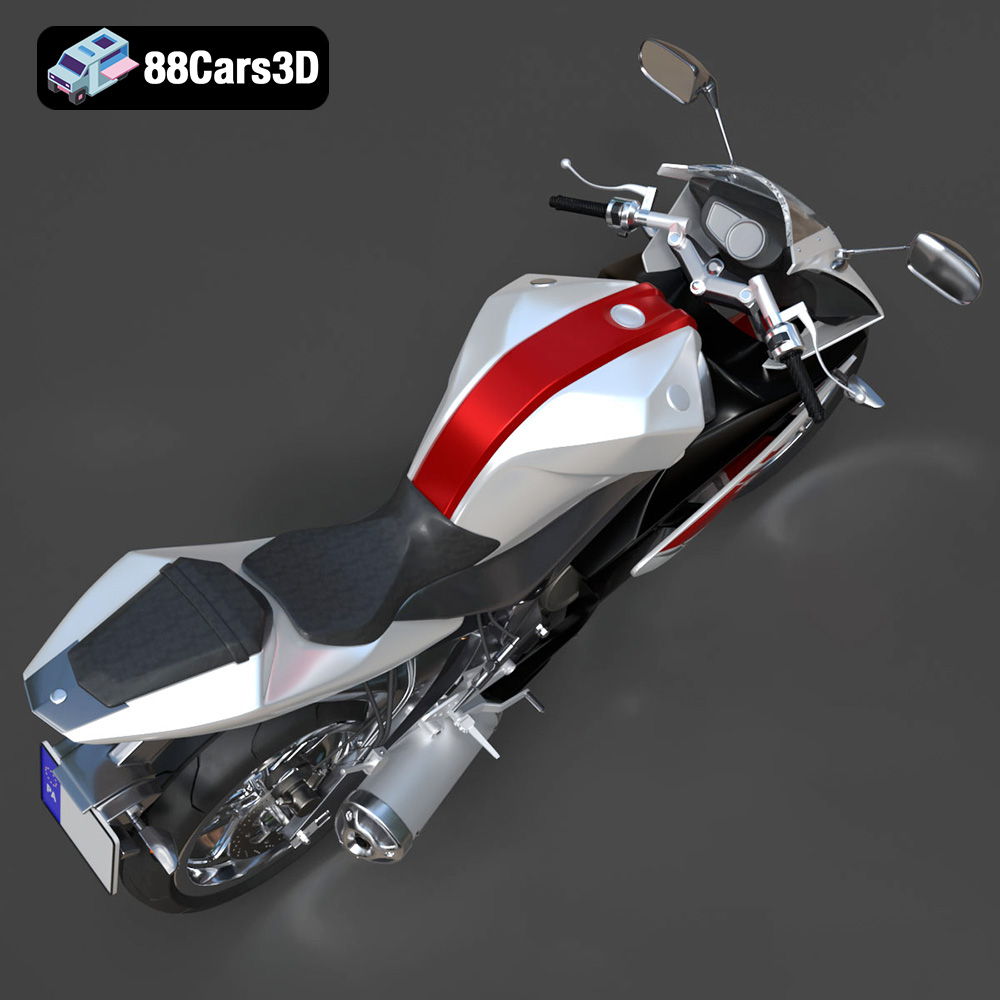
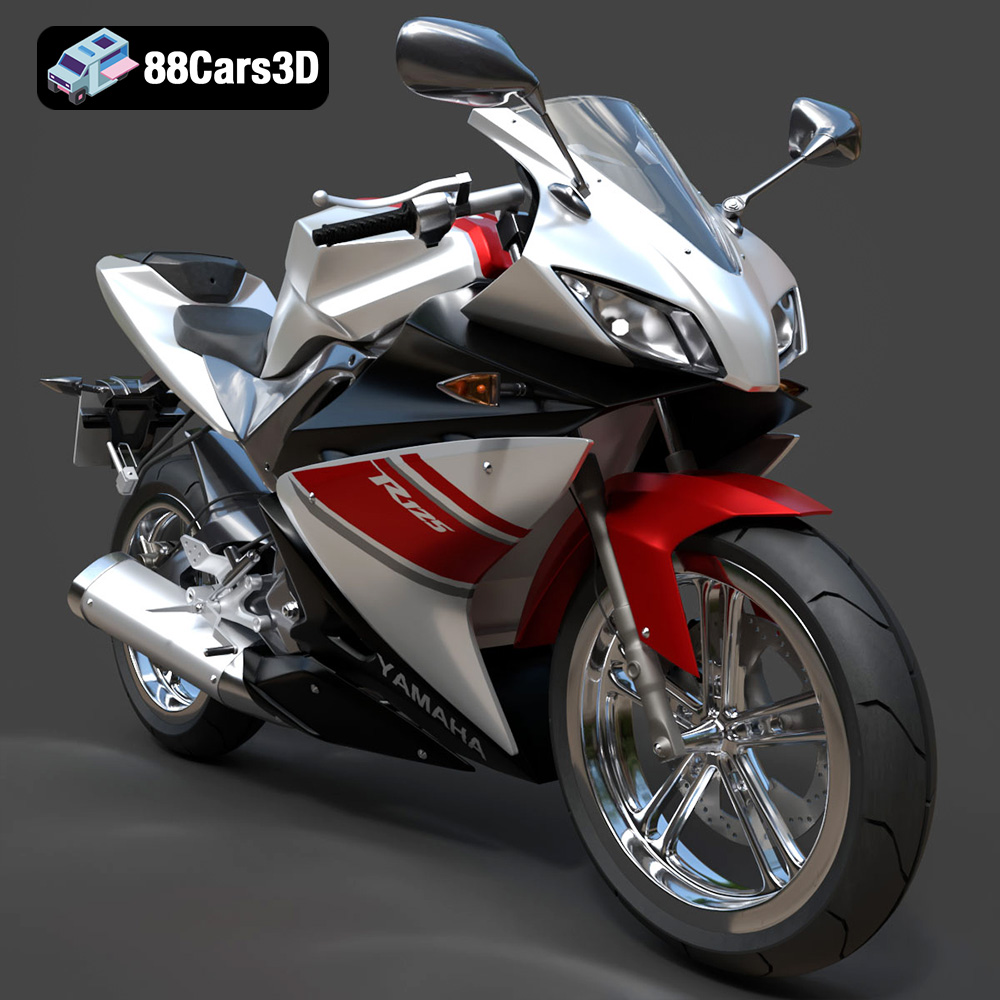
The Yamaha YZF-R125 EU is a lightweight supersport motorcycle that brings authentic R-Series DNA to the A1 license class. Renowned for its aggressive styling inspired by the iconic R1, this dynamic sportbike features a high-revving 125cc liquid-cooled engine with Variable Valve Actuation (VVA), a sculpted aerodynamic fairing, and a lightweight twin-spar Deltabox frame. Every aspect of this motorcycle is designed to deliver a thrilling, high-performance riding experience, making it a standout in the entry-level sportbike category. This high-quality 3D model is optimized for 3D printing and various other applications.
$19.99
.blend
.fbx
.glb
.max
.obj
.ply
.rendering
.stl
.supersport
.unreal
.yamaha
game asset
game-ready
low-poly
motorcycle-3d-model
optimized
sports-bike
VR/AR
yzf-r125
yzf-r125-eu