Get 20% OFF All Premium 3D & STL Models!

“`html
The world of 3D printing thrives on digital models, and these models speak a language understood by 3D printers – file formats. Among the most common are STL, OBJ, and FBX. While all three serve the purpose of representing 3D objects, they differ significantly in their capabilities and suitability for 3D printing. Choosing the right format can drastically impact the final print quality, workflow efficiency, and even the success of your project. Whether you’re downloading printable car models from platforms like 88cars3d.com, designing your own creations, or preparing files for professional printing, understanding the nuances of these formats is crucial. This comprehensive guide will delve into the technical details of each format, exploring their strengths, weaknesses, and ideal applications in the context of 3D printing.
In this article, we will cover:
By the end of this guide, you’ll possess the knowledge to make informed decisions about file formats and unlock the full potential of your 3D printer.
STL (Stereolithography) files have been the workhorse of 3D printing for decades. Its simplicity and widespread compatibility made it the de facto standard for transferring 3D models to slicer software. However, this very simplicity also presents limitations. STL files represent 3D models as a collection of triangles, defining only the surface geometry. They don’t store color, texture, or material information. This makes them ideal for basic shapes but less suitable for complex models requiring visual fidelity.
At its core, an STL file is a list of triangular faces. Each triangle is defined by the coordinates of its three vertices and the normal vector, which indicates the direction the triangle is facing. The accuracy of the STL representation depends on the number of triangles used – a higher triangle count results in a smoother, more accurate representation but also a larger file size. This process of approximating a curved surface with triangles is called tessellation. The finer the tessellation, the smoother the final 3D print, but excessive tessellation can lead to unwieldy file sizes and slower slicing times. For printing detailed automotive models, it’s best to find an STL from a site like 88cars3d.com that is optimized for printing with a balance between detail and file size.
STL files come in two flavors: ASCII and Binary. ASCII STL files are human-readable text files, while Binary STL files are more compact and efficient for storage and processing. While ASCII files can be useful for debugging or manual editing, Binary STL files are generally preferred for 3D printing due to their smaller size and faster loading times. Slicing software handles binary files much more efficiently, especially when dealing with complex models with hundreds of thousands or even millions of triangles. Most CAD and 3D modeling programs allow you to choose between ASCII and Binary STL export.
OBJ (or .OBJ) files offer a step up from STL in terms of functionality. While still relying on polygonal representation, OBJ files can store color and texture information, allowing for more visually appealing 3D prints. This makes OBJ files suitable for models where aesthetics are important, such as figurines, decorative objects, or even prototypes with color-coded elements. However, like STL, OBJ files are primarily geometry-focused and may not be the best choice for models requiring precise mechanical properties or intricate internal structures.
OBJ files can reference external material files (typically .MTL files) that define the color, texture, and other material properties of the model’s surfaces. This allows for applying different materials to different parts of the model, creating visually rich and detailed 3D prints. Textures are usually stored as image files (e.g., JPEG, PNG) that are mapped onto the model’s surface. Slicers often allow importing textures for visualization, but not all 3D printing technologies can reproduce the full color range represented in the texture. For multi-material printing, the OBJ file needs to be carefully prepared with assigned material IDs for each part.
In addition to vertex coordinates and face definitions, OBJ files also store vertex normals. These normals define the direction of each vertex, which is crucial for shading and rendering the model correctly. OBJ files can also define smoothing groups, which indicate which faces should be rendered as smooth surfaces, even if they are technically separate triangles. These features contribute to the overall visual quality of the 3D model and can significantly impact the final appearance of the 3D print. The orientation of normals is critical for printing, since flipped normals result in inverted geometry, and could leave holes in your printed model.
FBX (Filmbox) is a proprietary file format developed by Autodesk and is significantly more versatile than STL or OBJ. It is designed for complex scenes containing animation, rigging, and other advanced data. While not as commonly used for basic 3D printing, FBX is invaluable for applications like stop-motion animation, creating game assets for 3D printing, or complex mechanical prototypes. When it comes to printing car models from sites like 88cars3d.com, FBX files might be available for certain models where articulated parts or moving components are desired.
The key advantage of FBX is its ability to store animation data. This includes bone structures (rigging), keyframe animations, and skinning information that defines how the model deforms. While most 3D printers cannot directly print animated models, the animation data can be used to pose the model in specific configurations for printing or to create a series of still images for stop-motion animation. Complex rigging is often required when dealing with vehicle suspension systems and other dynamic components.
FBX files can also store camera positions, lighting information, and other scene data. This makes them suitable for transferring entire scenes between different 3D software packages. While this information is not directly relevant for 3D printing, it can be useful for visualizing the model in its intended environment or for creating marketing materials. Furthermore, FBX files can store embedded media (textures, audio, etc.) within the file itself, making it a self-contained format for distributing complex 3D assets.
Selecting the appropriate file format depends heavily on the specific requirements of your 3D printing project. Here’s a breakdown to guide your decision:
Choose STL when:
Choose OBJ when:
Choose FBX when:
Regardless of the file format you choose, optimizing your files for 3D printing is crucial for achieving high-quality results. This involves ensuring the mesh is watertight, properly oriented, and has sufficient resolution to capture the desired details. Poorly prepared files can lead to printing errors, weak prints, and a frustrating experience. Here are some key optimization techniques:
A watertight mesh is one without any holes or gaps in the surface. Non-manifold geometry refers to edges or vertices that are shared by more than two faces. Both issues can cause problems during slicing and printing. Mesh repair tools like Meshmixer, Netfabb, or the built-in repair functions in slicer software can automatically detect and fix these errors. Check for flipped normals as well – these can be corrected in most mesh editing software.
The orientation of your model on the build plate can significantly impact the print quality and the amount of support material required. Choose an orientation that minimizes overhangs and maximizes bed adhesion. Support structures are temporary structures that support overhanging parts of the model during printing. Slicer software can automatically generate support structures, but it’s important to optimize their placement and density to minimize material usage and make removal easier. Consider the layer lines of the 3D printed automotive model. If you want a smooth finish on a particular curved section, orient the model so that layer lines are less visible in that area.
A higher resolution (more triangles) results in a smoother, more detailed print, but it also increases the file size and processing time. Finding the right balance between resolution and file size is crucial. Experiment with different tessellation settings when exporting from your 3D modeling software. Consider using adaptive tessellation, which concentrates triangles in areas with high curvature and uses fewer triangles in flat areas. Also, simplify the mesh where it is not visible (e.g. internal parts). When using STL models, choose a file optimized for the specific scale and printer you are using.
Even with careful file preparation, you may encounter issues during the 3D printing process. Here are some common problems related to file formats and how to troubleshoot them:
If your slicer software fails to slice the model correctly or shows missing geometry, it’s likely due to errors in the mesh. Use a mesh repair tool to fix any non-manifold geometry, holes, or flipped normals. Ensure that the file format is compatible with your slicer software and that the model is properly scaled. Consider simplifying the mesh if the file size is excessively large.
Weak prints or layer delamination can be caused by poor bed adhesion, incorrect printing parameters (temperature, speed), or issues with the material. However, they can also be caused by incorrect normal orientations within the 3D model itself. Ensure your bed is level, that you’re using appropriate print settings for your chosen material, and that the model is properly supported. Verify that the layer lines are oriented in a way that reinforces areas prone to breaking. Flipped normals can be especially problematic here. Also, try increasing the infill density for parts that need to be stronger.
If you’re using too much support material or finding it difficult to remove, try optimizing the print orientation, reducing the support density, or using different support patterns. Experiment with different support settings in your slicer software. Consider using dissolvable support material for complex geometries. Make sure the air gap between the support structure and the model is optimal for your printer settings. Also, reducing the overhang angle at which supports are needed can also reduce the amount of supports required.
Choosing the right file format for 3D printing is a critical step in ensuring a successful outcome. While STL remains the ubiquitous standard, understanding the capabilities of OBJ and FBX can unlock new possibilities for complex and visually stunning prints. Remember that file format is just one piece of the puzzle. Optimizing your files through mesh repair, proper orientation, and careful selection of printing parameters is equally important. By mastering these techniques, you’ll be well-equipped to tackle a wide range of 3D printing projects, from functional prototypes to artistic creations. So, whether you are printing detailed car models from platforms like 88cars3d.com or designing your own innovative creations, the insights from this guide will empower you to achieve exceptional results. Experiment with these formats and settings, and always refer back to the best practices outlined here to troubleshoot any issues you encounter. Happy printing!
“`
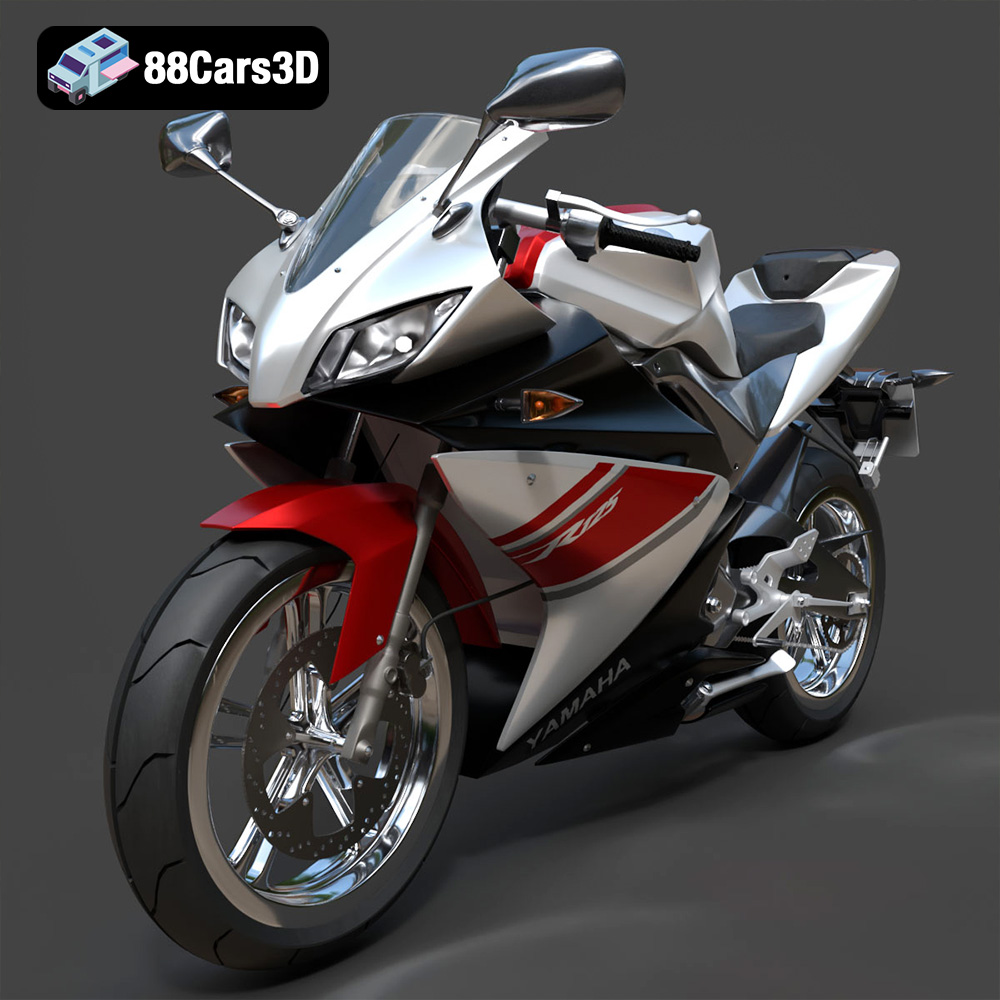
Texture: Yes | Material: Yes
Download the highly detailed, game-ready Yamaha YZF-R125 EU 3D Model. Features an aggressive aerodynamic fairing, twin LED headlights, and a detailed 125cc engine block. Includes .blend, .fbx, .obj, .glb, .stl, .ply, .unreal, and .max formats for game development, AR/VR, and rendering.
Price: $19.99
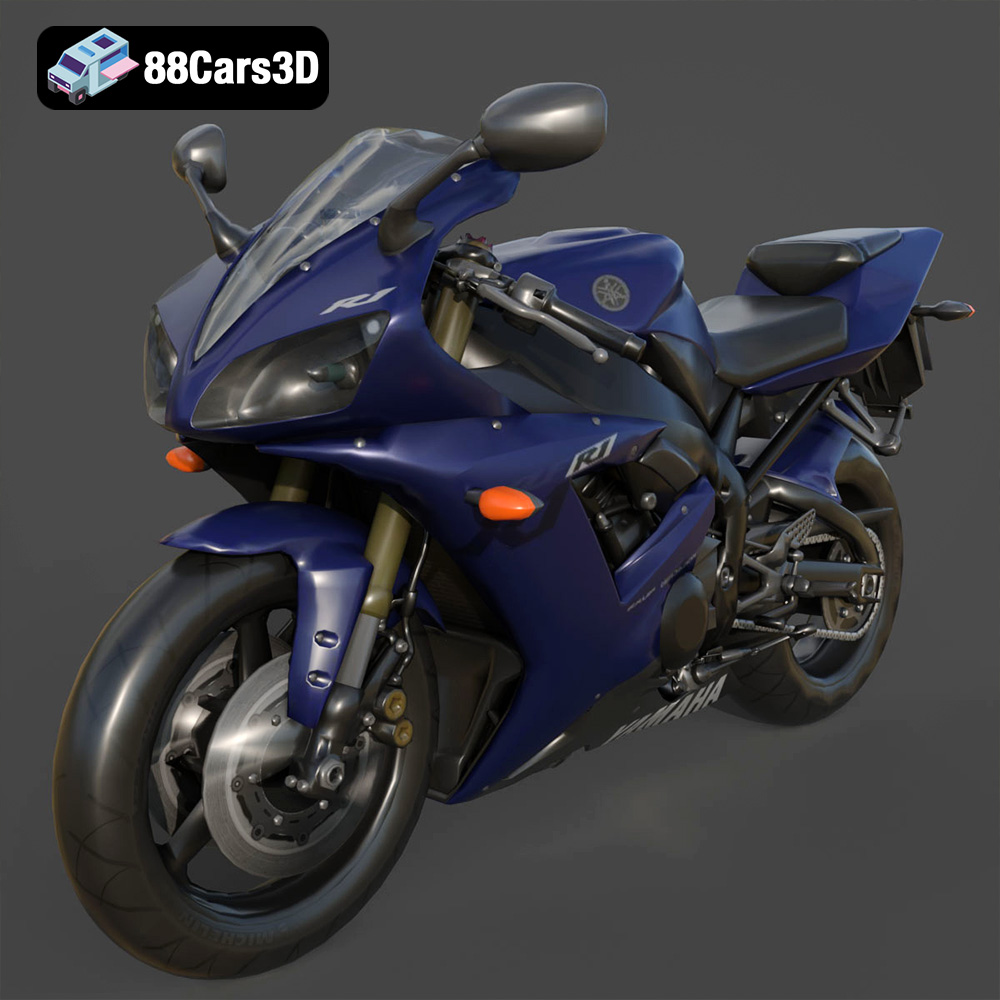
Texture: Yes | Material: Yes
Download the highly detailed, game-ready Yamaha R1 3D Model. Features aggressive aerodynamic fairings, a detailed crossplane inline-4 engine, and track-focused suspension geometry. Includes .blend, .fbx, .obj, .glb, .stl, .ply, .unreal, and .max formats for game development, AR/VR, and rendering.
Price: $19.99
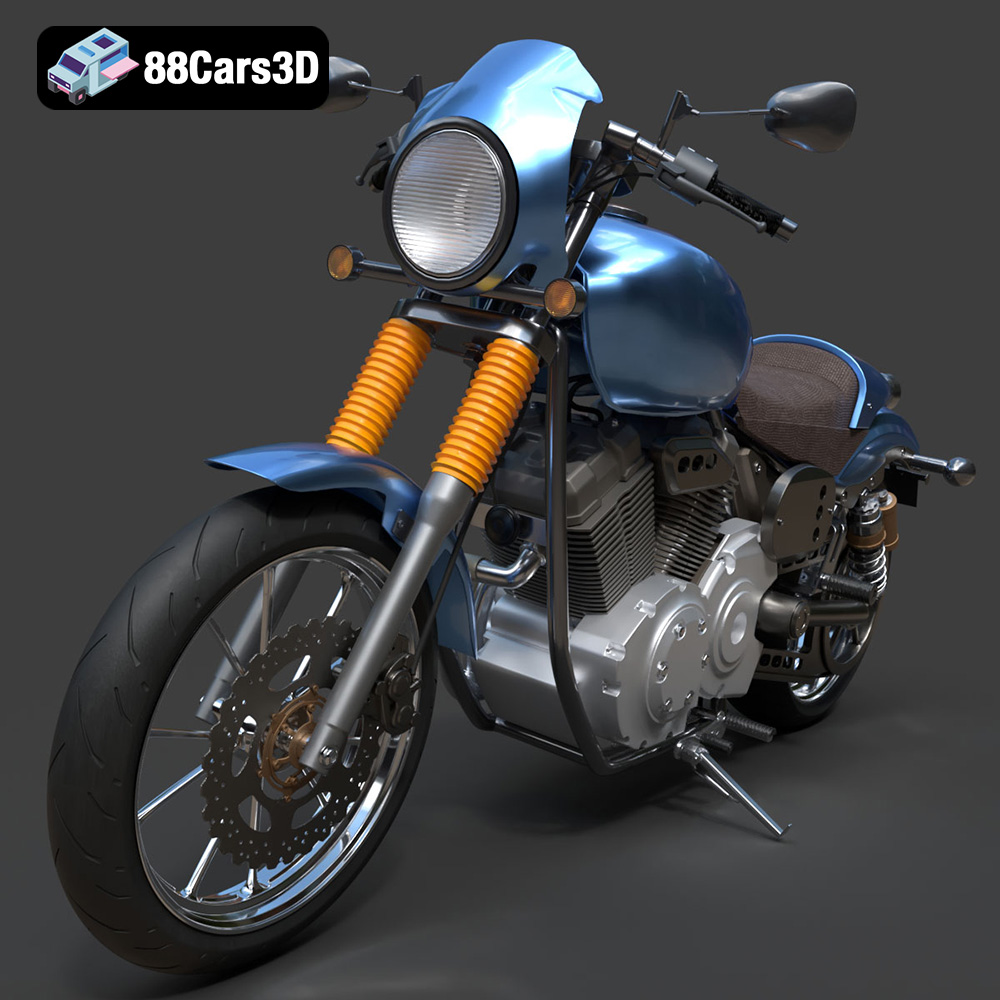
Texture: Yes | Material: Yes
Download the highly detailed, game-ready Yamaha XV950 Racer 3D Model. Features an aggressive cafe-racer front cowl, detailed air-cooled V-twin engine, and classic retro styling. Includes .blend, .fbx, .obj, .glb, .stl, .ply, .unreal, and .max formats for game development, AR/VR, and rendering.
Price: $19.99

Texture: Yes | Material: Yes
Download the highly detailed, game-ready Volvo VNL Tractor Truck 2002 3D Model. Features iconic aerodynamic styling, detailed fifth-wheel coupling, and heavy-duty chassis. Includes .blend, .fbx, .obj, .glb, .stl, .ply, .unreal, and .max formats for game development, AR/VR, and rendering.
Price: $39.99
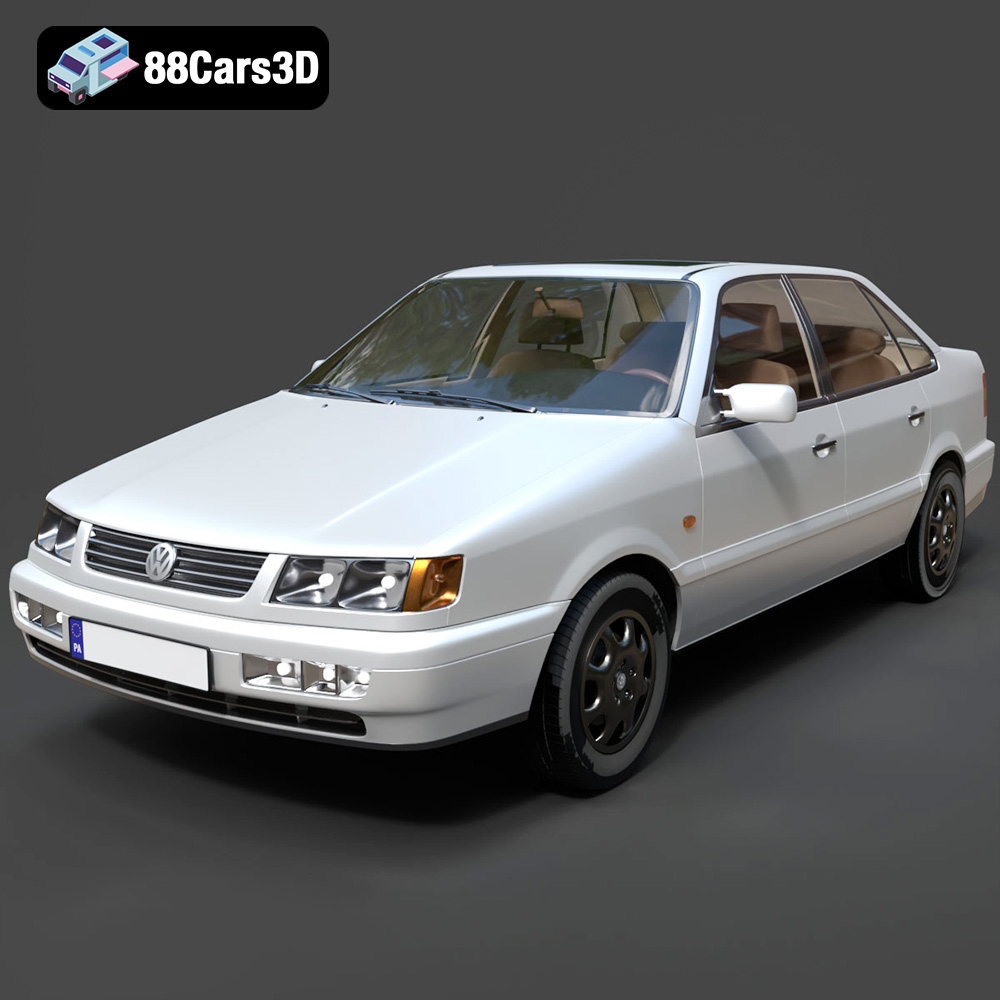
Texture: Yes | Material: Yes
Download the highly detailed, game-ready Volkswagen Passat Mk4 B4 Sedan 1993 3D Model. Features accurate 90s sedan styling, detailed front grille-less fascia, and a classic interior setup. Includes .blend, .fbx, .obj, .glb, .stl, .ply, .unreal, and .max formats for game development, AR/VR, and rendering.
Price: $39.99
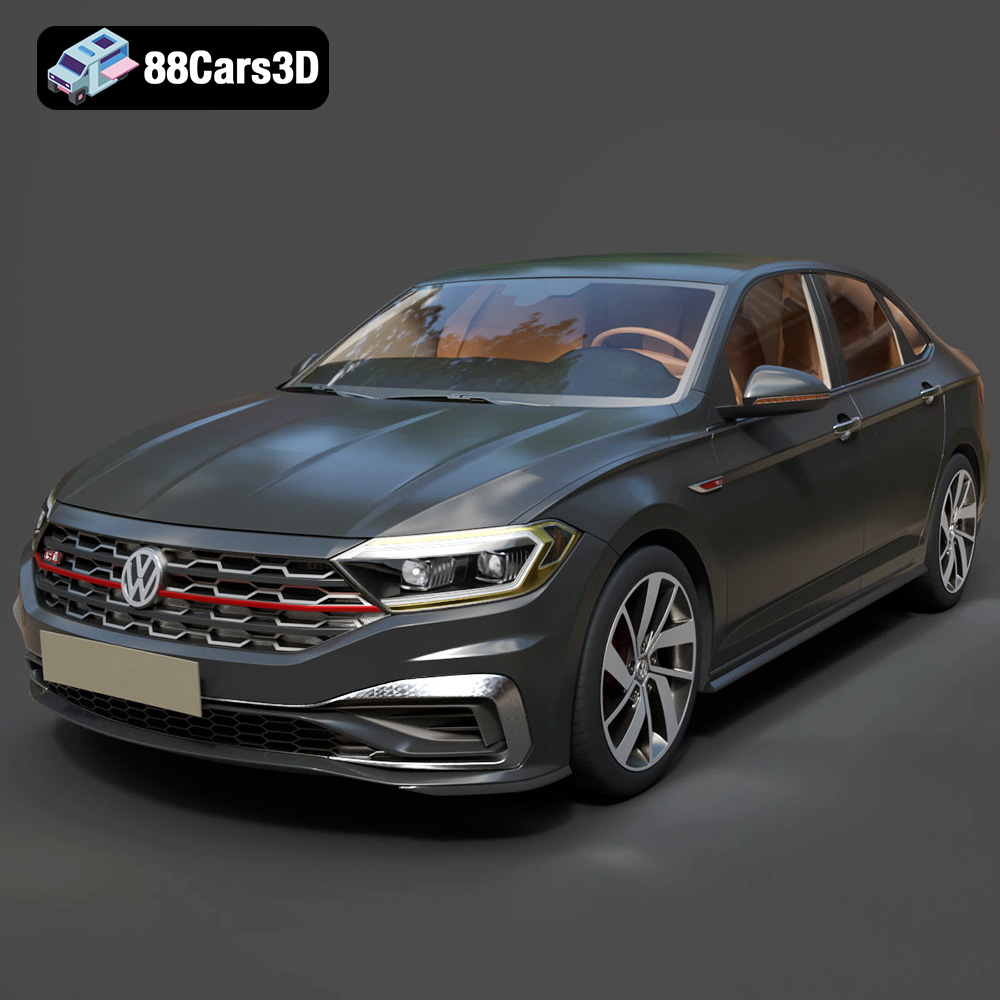
Texture: Yes | Material: Yes
Download the highly detailed, game-ready Volkswagen Jetta GLI 2019 3D Model. Features an aggressive honeycomb grille with red accents, sleek aerodynamic profile, and exclusive GLI sport wheels. Includes .blend, .fbx, .obj, .glb, .stl, .ply, .unreal, and .max formats for game development, AR/VR, and rendering.
Price: $39.99
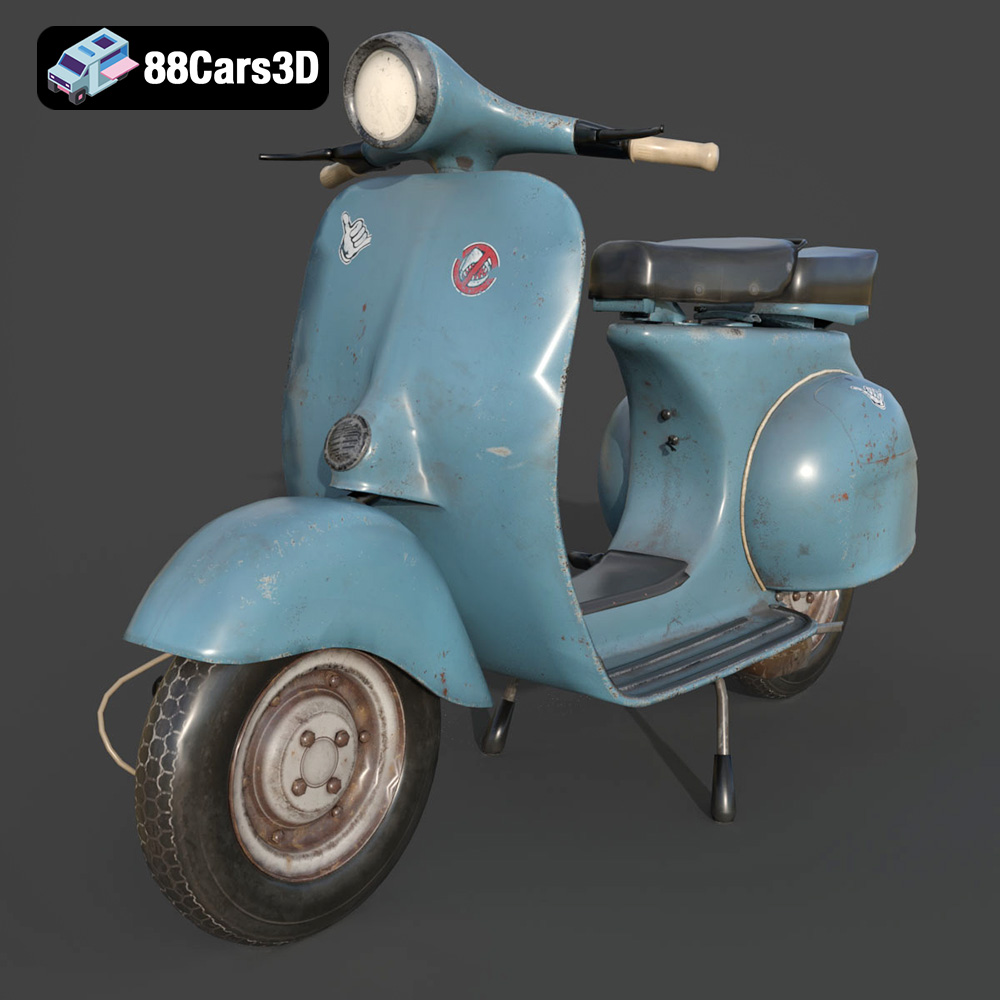
Texture: Yes | Material: Yes
Download the highly detailed, game-ready Vintage Vespa 3D Model. Features iconic rounded monocoque styling, classic saddle, and chrome accents. Includes .blend, .fbx, .obj, .glb, .stl, .ply, .unreal, and .max formats for game development, AR/VR, and rendering.
Price: $39.99

Texture: Yes | Material: Yes
Download the highly detailed, game-ready Vespa GS 150 3D Model. Features elegant aerodynamic curves, classic leg shield, and detailed engine casing. Includes .blend, .fbx, .obj, .glb, .stl, .ply, .unreal, and .max formats for game development, AR/VR, and rendering.
Price: $39.99
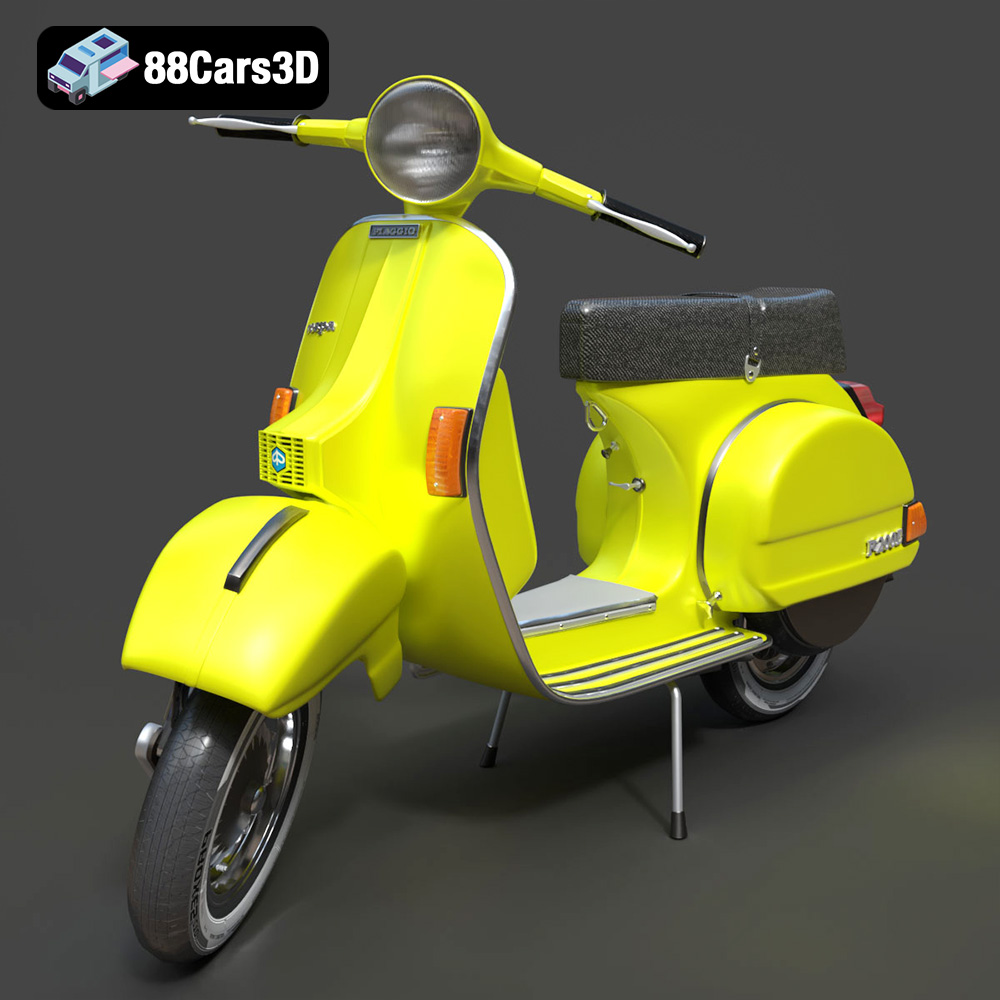
Texture: Yes | Material: Yes
Download the highly detailed, game-ready Vespa P200E 3D Model. Features classic vintage styling, accurate step-through frame geometry, and authentic detailing. Includes .blend, .fbx, .obj, .glb, .stl, .ply, .unreal, and .max formats for game development, AR/VR, and rendering.
Price: $39.99
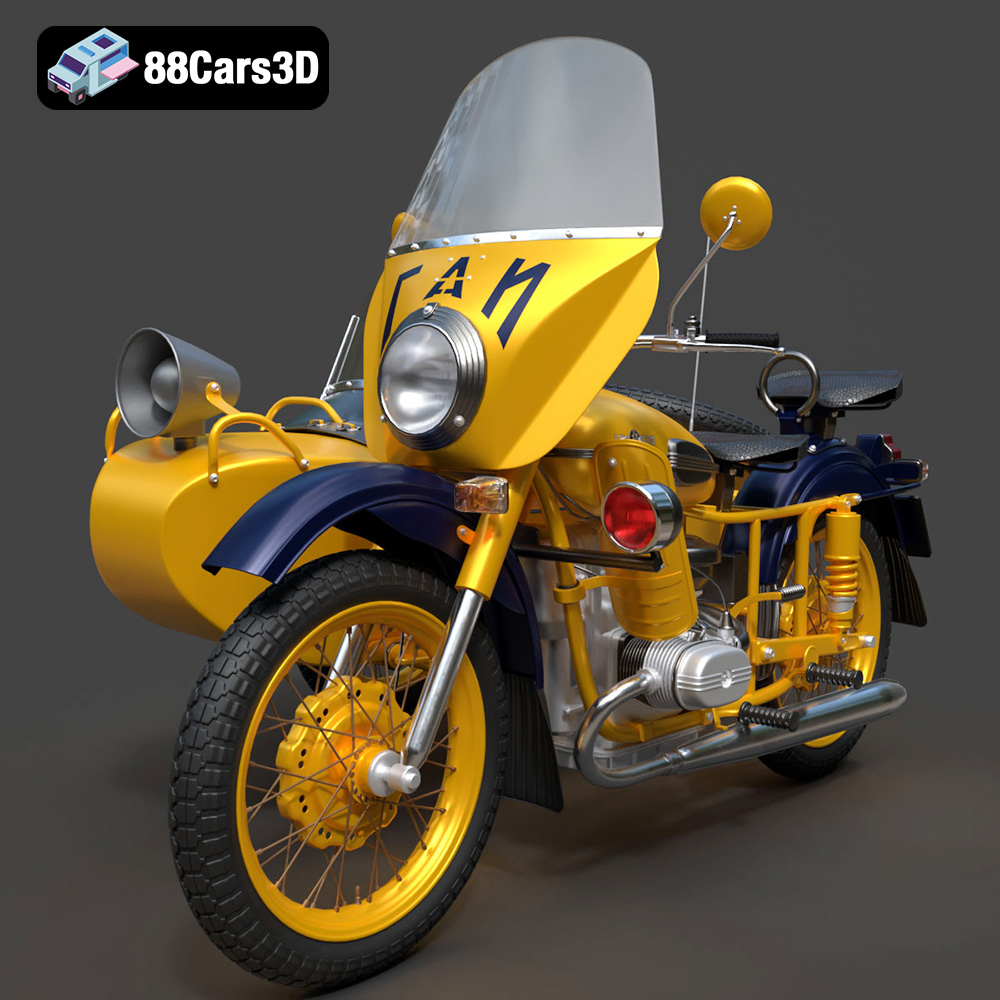
Texture: Yes | Material: Yes
Download the highly detailed, game-ready Ural M67-36-P 1976 3D Model. Features the iconic air-cooled boxer engine, vintage utilitarian styling, and authentic spoked wheels. Includes .blend, .fbx, .obj, .glb, .stl, .ply, .unreal, and .max formats for game development, AR/VR, and rendering.
Price: $39.99

