Get 20% OFF All Premium 3D & STL Models!

“`html
3D printing vehicle models is an exciting venture, whether you’re a hobbyist building a collection, an engineer prototyping a new design, or an educator demonstrating automotive concepts. However, transforming a digital STL file into a tangible, high-quality model requires a deep understanding of crucial settings, particularly wall thickness and support structures. These parameters are not mere afterthoughts; they are fundamental to the structural integrity, surface finish, and overall success of your print. In this comprehensive guide, we’ll delve into the technical intricacies of wall thickness and support settings, providing you with the knowledge and techniques to produce stunning, durable, and accurate 3D printed vehicle models. We’ll explore the best practices for both FDM and resin printing, cover common pitfalls, and offer actionable tips to optimize your prints.
Wall thickness, simply put, is the width of the outer shell of your 3D printed object. This seemingly simple parameter has a profound impact on the model’s strength, weight, printing time, and material consumption. In the context of vehicle models, which often feature intricate details and complex geometries, selecting the appropriate wall thickness is paramount. Too thin, and your model will be fragile and prone to breakage. Too thick, and you’ll waste material, increase printing time unnecessarily, and potentially obscure fine details.
The ideal wall thickness depends on several factors, including the size and complexity of the model, the intended use, and the material being used. A general rule of thumb for FDM printing with PLA or PETG is to aim for a wall thickness that is a multiple of your nozzle diameter. For example, with a 0.4mm nozzle, a wall thickness of 1.2mm (3 perimeters) is often a good starting point for a small-scale vehicle model. For larger, more structural components, you might increase this to 1.6mm or even 2.0mm. Resin printing typically allows for thinner walls due to the higher resolution and material properties. A wall thickness of 0.8mm to 1.2mm is usually sufficient for many resin-based vehicle models. Remember to adjust these values based on experimentation and observation. If you’re printing a highly detailed model car, such as those offered on platforms like 88cars3d.com, you might opt for a slightly thinner wall to preserve those details.
The relationship between nozzle size and wall thickness is crucial for achieving proper adhesion between layers and avoiding gaps or weak spots. A wall thickness that is not a multiple of your nozzle diameter can lead to uneven extrusion and inconsistent results. Material properties also play a significant role. ABS, for instance, tends to shrink more than PLA during cooling, so you might need to compensate with slightly thicker walls to maintain dimensional accuracy and prevent warping. When selecting your material, refer to the manufacturer’s recommendations for optimal wall thickness and printing settings. Furthermore, be aware that some slicing software automatically adjusts wall thickness based on the nozzle size and layer height, so double-check these settings before starting your print.
Support structures are temporary scaffolding that provides support for overhanging features and bridges during 3D printing. Without proper support, these features would collapse or deform, resulting in a failed print. Vehicle models, with their intricate curves, spoilers, and other complex shapes, often require extensive support structures. Understanding the different types of support, how to generate them effectively, and how to remove them cleanly is essential for achieving high-quality results.
For FDM printing, the most common types of support structures are linear supports, tree supports, and grid supports. Linear supports are simple vertical columns that provide direct support to overhanging areas. They are easy to generate and remove but can leave noticeable marks on the surface of the model. Tree supports, on the other hand, branch out like a tree, providing more targeted support with less material. They are often preferred for complex geometries and can be easier to remove without damaging the surface. Grid supports are a network of interconnected lines that provide broad support. They are typically used for large, flat overhangs. Resin printing typically uses tree-like supports or variations optimized for resin’s properties. These supports need to be strategically placed to minimize scarring on the final print.
Slicing software offers a wide range of settings for customizing support structures, including support density, overhang angle, and support placement. Support density determines the amount of material used for the supports. A higher density provides more support but can be more difficult to remove. Overhang angle specifies the angle at which support structures are generated. A lower angle results in more supports, while a higher angle reduces the number of supports but may compromise the quality of the overhang. Support placement allows you to manually add or remove supports to fine-tune the support structure. A critical setting is the Z distance (or support gap), which controls the gap between the support and the model. A smaller gap results in better support but can make removal more difficult. A larger gap makes removal easier but may reduce the quality of the supported surface. Experiment with these settings to find the optimal balance for your specific model and printing setup. When downloading models from marketplaces such as 88cars3d.com, be sure to review the recommended support settings provided by the designer.
Print orientation refers to the way your model is positioned on the build plate. This seemingly simple decision can have a significant impact on print quality, strength, and the amount of support required. Optimizing print orientation is crucial for minimizing overhangs, reducing support material, and improving the overall aesthetic of your vehicle model.
The primary goal of optimizing print orientation is to minimize the number of overhangs that require support. Overhangs are areas of the model that extend outwards without direct support from below. These areas are prone to sagging or deformation if not properly supported. By strategically rotating your model, you can often reduce the number of overhangs and the amount of support material required. For example, printing a car body upside down can often reduce the need for supports on the roof and hood. However, this may introduce the need for more supports on the underside of the model. Evaluate the trade-offs and choose the orientation that minimizes the overall impact on print quality and support removal.
Print orientation also affects the strength of the printed model. 3D printed parts are inherently anisotropic, meaning that they are stronger in some directions than others. This is due to the layer-by-layer printing process, which creates weak points between layers. By orienting your model so that the forces it will experience are aligned with the layers, you can maximize its strength. For example, if your vehicle model will be subjected to bending forces, orient it so that the layers are perpendicular to the direction of the force. Also consider the “grain” of the print – the direction the nozzle moved when creating each layer. Aligning this grain to be parallel with the stress direction will often produce a stronger part.
Slicing is the process of converting your 3D model into a series of instructions that your 3D printer can understand. Slicing software allows you to adjust a wide range of parameters that affect the print quality, speed, and strength. Mastering these parameters is essential for achieving optimal results when printing vehicle models.
Layer height is the thickness of each layer of plastic that is deposited by the 3D printer. A smaller layer height results in a smoother surface finish and finer details but increases printing time. A larger layer height reduces printing time but can compromise the surface finish and detail. For vehicle models, a layer height of 0.1mm to 0.2mm is generally recommended for achieving a good balance between detail and speed. For highly detailed models or areas with intricate curves, you might consider reducing the layer height to 0.05mm or even lower. However, be aware that extremely small layer heights can increase the risk of printing failures and require more precise printer calibration.
Infill density refers to the amount of material used to fill the interior of the 3D printed object. A higher infill density results in a stronger and heavier model, while a lower infill density results in a lighter and weaker model. For vehicle models, an infill density of 15% to 25% is usually sufficient for providing adequate strength without adding excessive weight. For parts that require more structural support, such as chassis components or suspension arms, you might increase the infill density to 50% or even 100%. Choose an infill pattern that suits the application. Gyroid infill is strong in all directions, while rectilinear infill prints quickly but can be weaker in certain orientations. Platforms like 88cars3d.com offer print-ready STL files which sometimes include recommendations for infill density based on the model.
Post-processing refers to the steps taken to improve the appearance and functionality of your 3D printed model after it has been printed. This can include removing support structures, sanding the surface, painting the model, and assembling multiple parts.
Removing support structures cleanly is crucial for preserving the surface finish of your model. Use appropriate tools, such as pliers, cutters, and sandpaper, to carefully remove the supports without damaging the surrounding areas. For FDM prints, you can use sandpaper to smooth out any remaining imperfections. Start with a coarse grit sandpaper and gradually work your way up to finer grits. For resin prints, you can use wet sanding to achieve a smoother surface. You can also use chemical smoothing techniques, such as vapor smoothing, to further improve the surface finish. However, be aware that these techniques can affect the dimensional accuracy of the model.
Painting is a great way to add color and realism to your 3D printed vehicle model. Use acrylic paints or spray paints specifically designed for plastic models. Apply multiple thin coats of paint, allowing each coat to dry completely before applying the next. You can also use decals and stencils to add details. If your model consists of multiple parts, use glue or epoxy to assemble them together. Make sure the parts are properly aligned before applying the adhesive. Consider using alignment jigs or fixtures to ensure accurate assembly.
Even with careful planning and preparation, 3D printing can sometimes present challenges. Understanding common issues and how to troubleshoot them is essential for achieving consistent results.
Warping occurs when the corners of the 3D printed object lift off the build plate during printing. This is often caused by uneven cooling and shrinkage of the plastic. To prevent warping, ensure that your build plate is properly leveled and heated. You can also use a brim or raft to improve adhesion. Delamination occurs when the layers of the 3D printed object separate from each other. This is often caused by insufficient bed adhesion or low printing temperatures. To prevent delamination, increase the bed temperature and ensure that your printer is properly calibrated. Bed adhesion problems can be resolved by using a bed adhesive, such as glue stick or hairspray, or by cleaning the bed with isopropyl alcohol.
Stringing occurs when the 3D printer extrudes small strands of plastic while moving between different parts of the model. This is often caused by excessive retraction settings or high printing temperatures. To prevent stringing, reduce the retraction distance and speed, and lower the printing temperature. Blobs and zits are small imperfections that appear on the surface of the 3D printed object. These are often caused by inconsistent extrusion or changes in printing speed. To prevent blobs and zits, calibrate your extruder and adjust the printing speed settings. You may also need to clean the nozzle and ensure that it is not clogged.
Mastering wall thickness and support settings is crucial for achieving 3D printing excellence when creating vehicle models. By understanding the technical intricacies of these parameters and applying the best practices outlined in this guide, you can produce stunning, durable, and accurate 3D printed models. Remember to experiment with different settings, materials, and techniques to find what works best for your specific printer and model. From carefully calibrating your slicer settings to implementing effective post-processing techniques, each step contributes to the final quality of your print. So, dive in, experiment, and enjoy the rewarding experience of bringing your favorite vehicle models to life through the power of 3D printing! Now that you’ve absorbed this knowledge, consider visiting 88cars3d.com to find your next exciting 3D printing project and put your newly acquired skills to the test.
“`
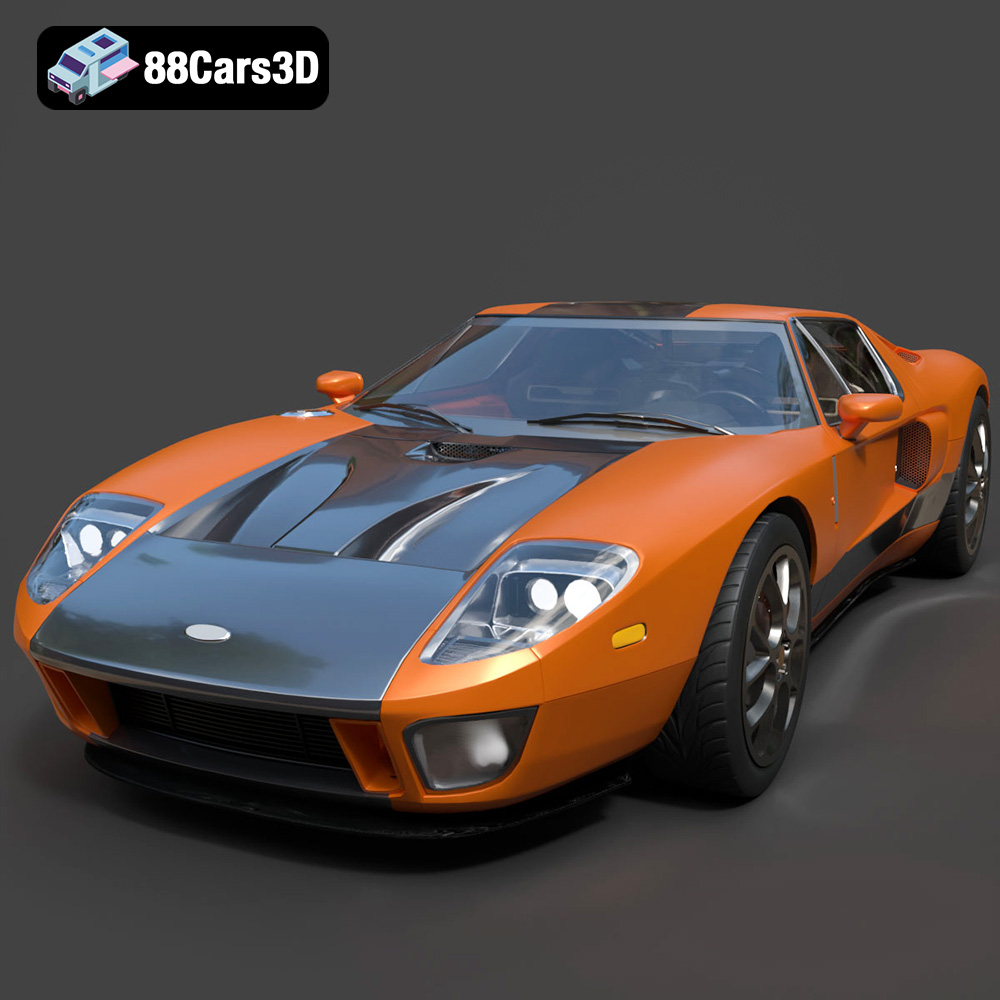
Texture: Yes | Material: Yes
Download the highly detailed, game-ready Ford GT 2005 3D Model. Features signature aerodynamic bodylines, mid-mounted supercharged V8 detailing, and iconic racing stripes. Includes .blend, .fbx, .obj, .glb, .stl, .ply, .unreal, and .max formats for game development, AR/VR, and rendering.
Price: $19.99
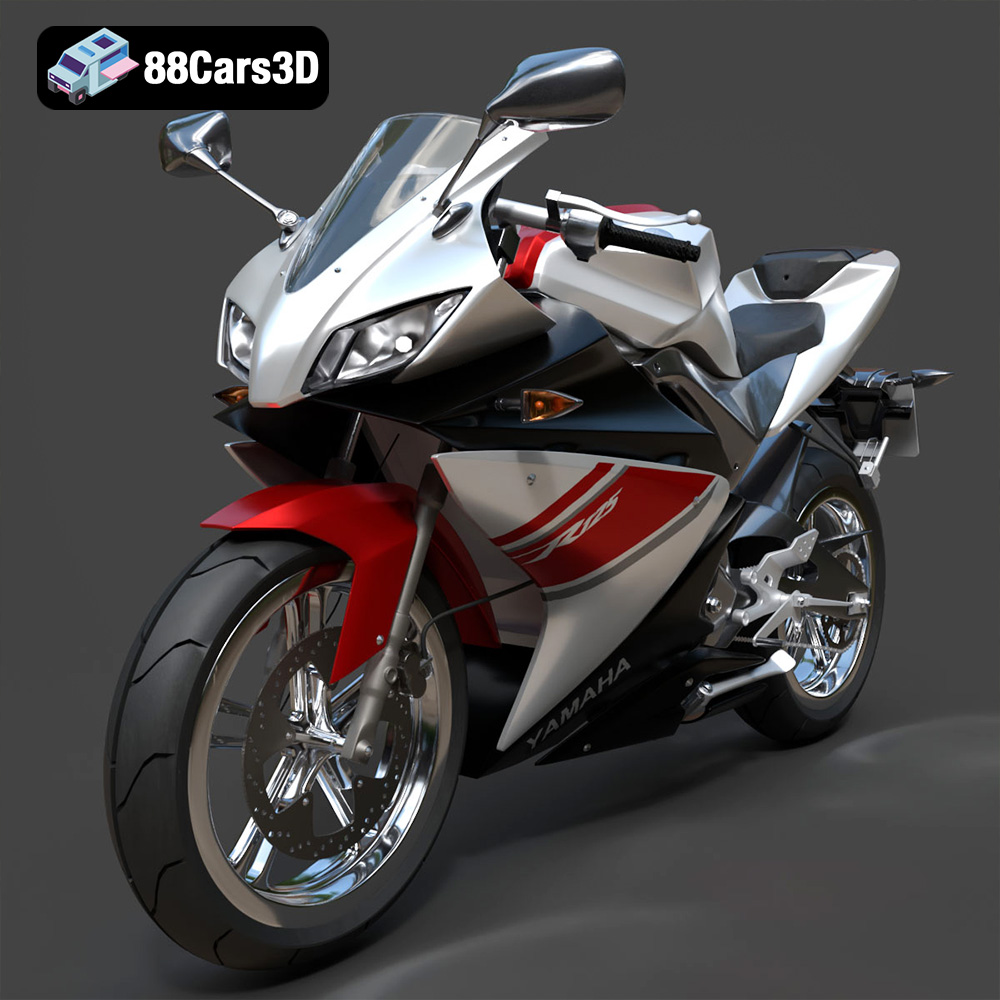
Texture: Yes | Material: Yes
Download the highly detailed, game-ready Yamaha YZF-R125 EU 3D Model. Features an aggressive aerodynamic fairing, twin LED headlights, and a detailed 125cc engine block. Includes .blend, .fbx, .obj, .glb, .stl, .ply, .unreal, and .max formats for game development, AR/VR, and rendering.
Price: $19.99
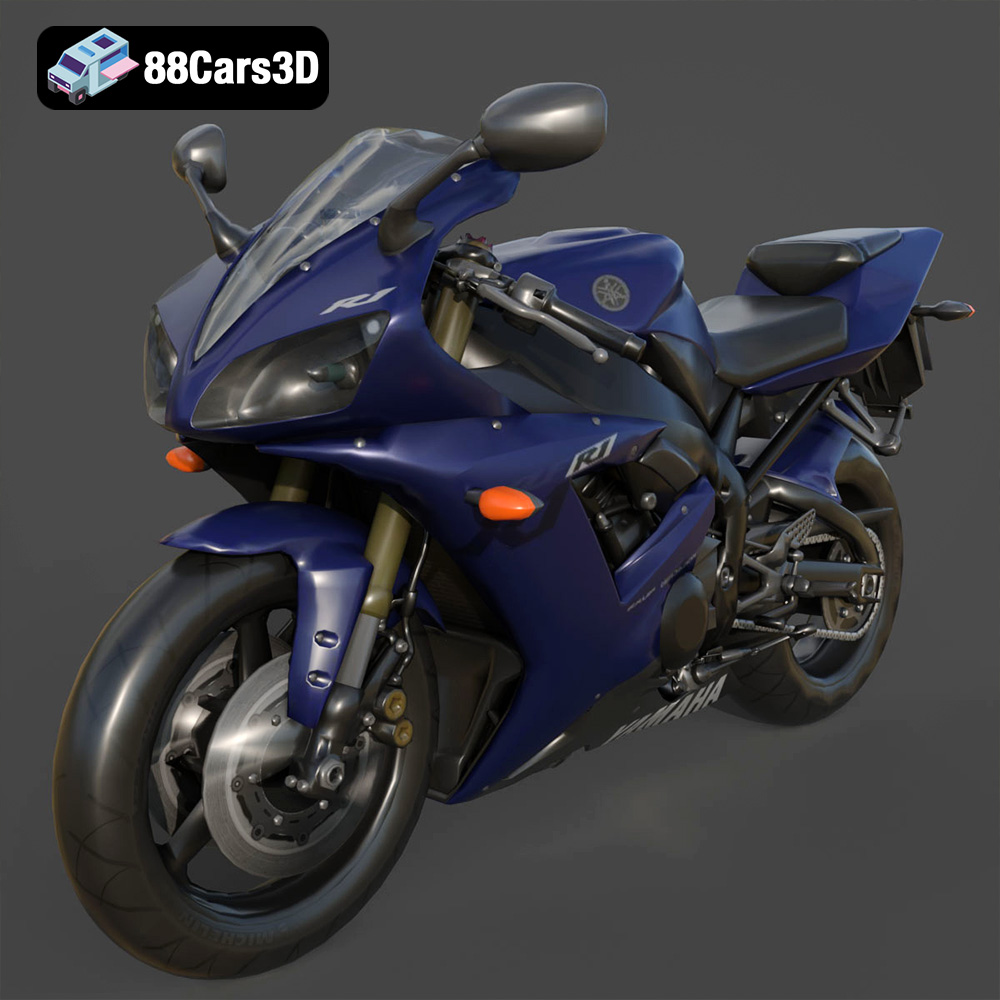
Texture: Yes | Material: Yes
Download the highly detailed, game-ready Yamaha R1 3D Model. Features aggressive aerodynamic fairings, a detailed crossplane inline-4 engine, and track-focused suspension geometry. Includes .blend, .fbx, .obj, .glb, .stl, .ply, .unreal, and .max formats for game development, AR/VR, and rendering.
Price: $19.99
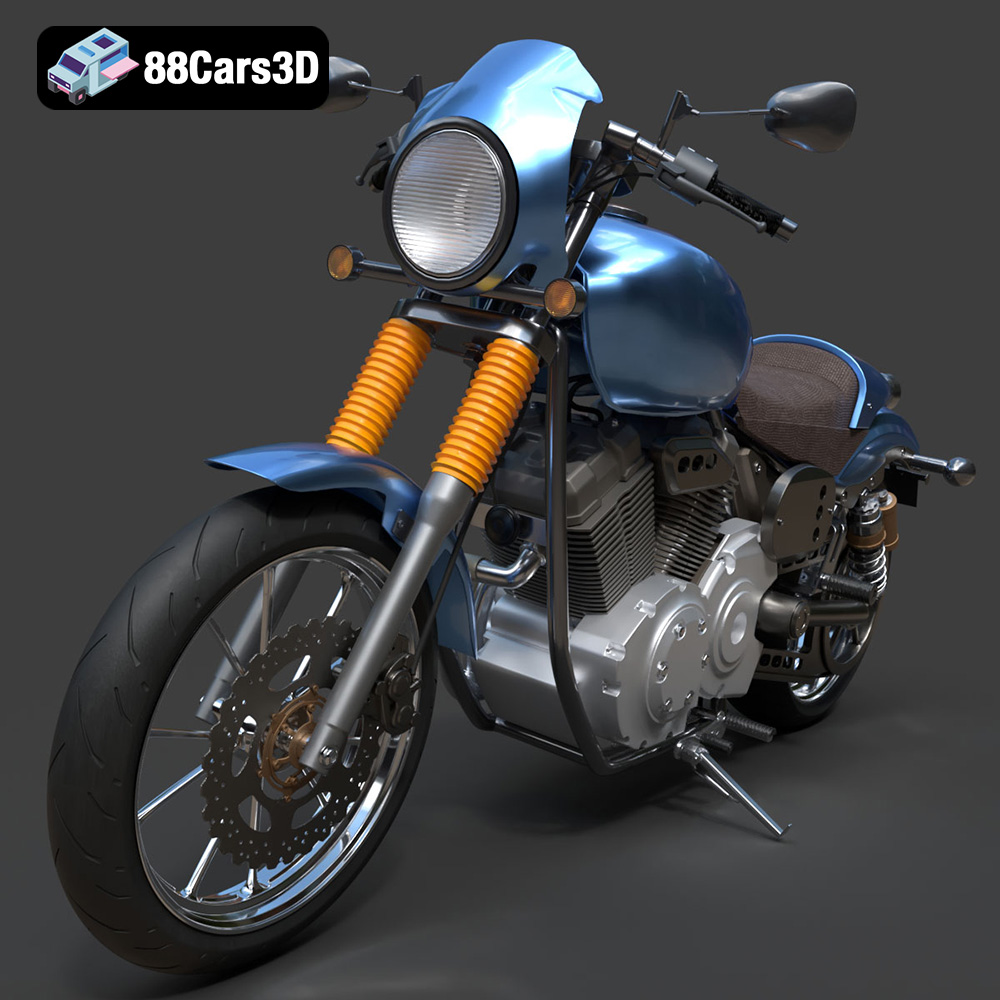
Texture: Yes | Material: Yes
Download the highly detailed, game-ready Yamaha XV950 Racer 3D Model. Features an aggressive cafe-racer front cowl, detailed air-cooled V-twin engine, and classic retro styling. Includes .blend, .fbx, .obj, .glb, .stl, .ply, .unreal, and .max formats for game development, AR/VR, and rendering.
Price: $19.99

Texture: Yes | Material: Yes
Download the highly detailed, game-ready Volvo VNL Tractor Truck 2002 3D Model. Features iconic aerodynamic styling, detailed fifth-wheel coupling, and heavy-duty chassis. Includes .blend, .fbx, .obj, .glb, .stl, .ply, .unreal, and .max formats for game development, AR/VR, and rendering.
Price: $39.99
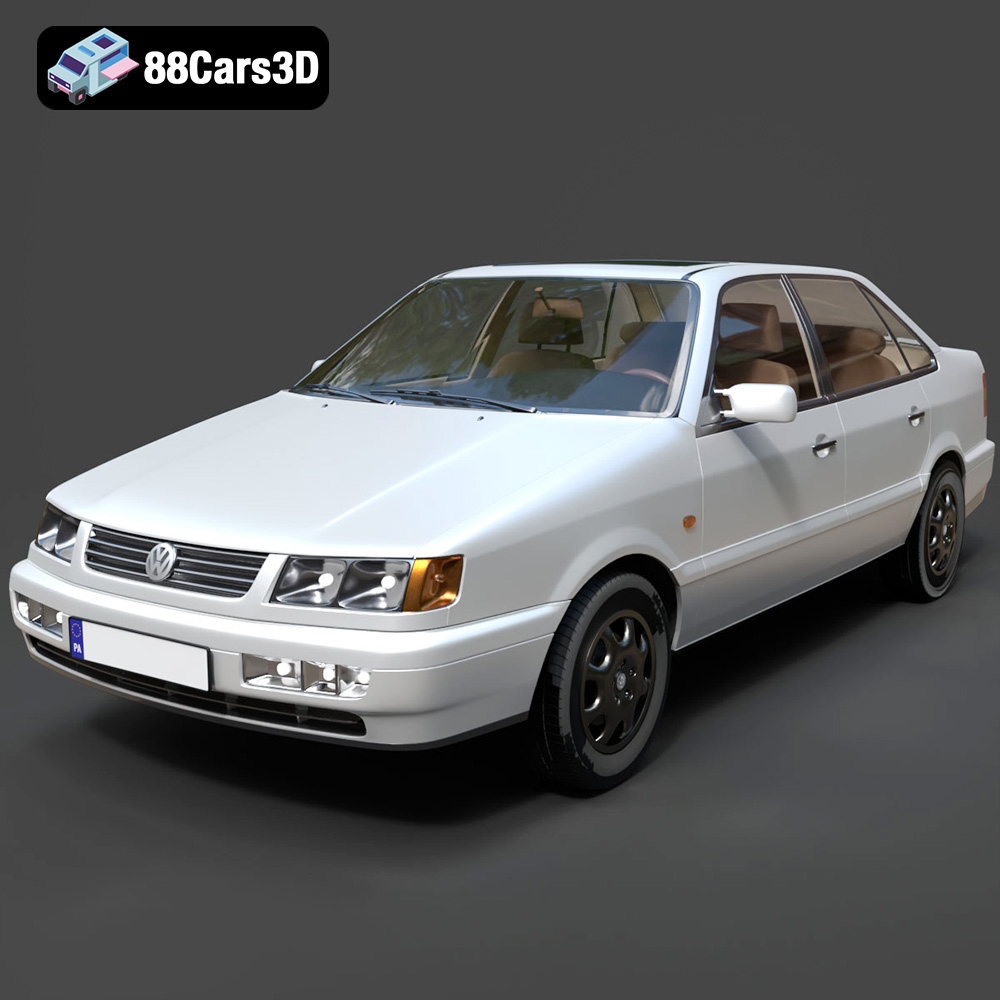
Texture: Yes | Material: Yes
Download the highly detailed, game-ready Volkswagen Passat Mk4 B4 Sedan 1993 3D Model. Features accurate 90s sedan styling, detailed front grille-less fascia, and a classic interior setup. Includes .blend, .fbx, .obj, .glb, .stl, .ply, .unreal, and .max formats for game development, AR/VR, and rendering.
Price: $39.99

Texture: Yes | Material: Yes
Download the highly detailed, game-ready Volkswagen Jetta GLI 2019 3D Model. Features an aggressive honeycomb grille with red accents, sleek aerodynamic profile, and exclusive GLI sport wheels. Includes .blend, .fbx, .obj, .glb, .stl, .ply, .unreal, and .max formats for game development, AR/VR, and rendering.
Price: $39.99
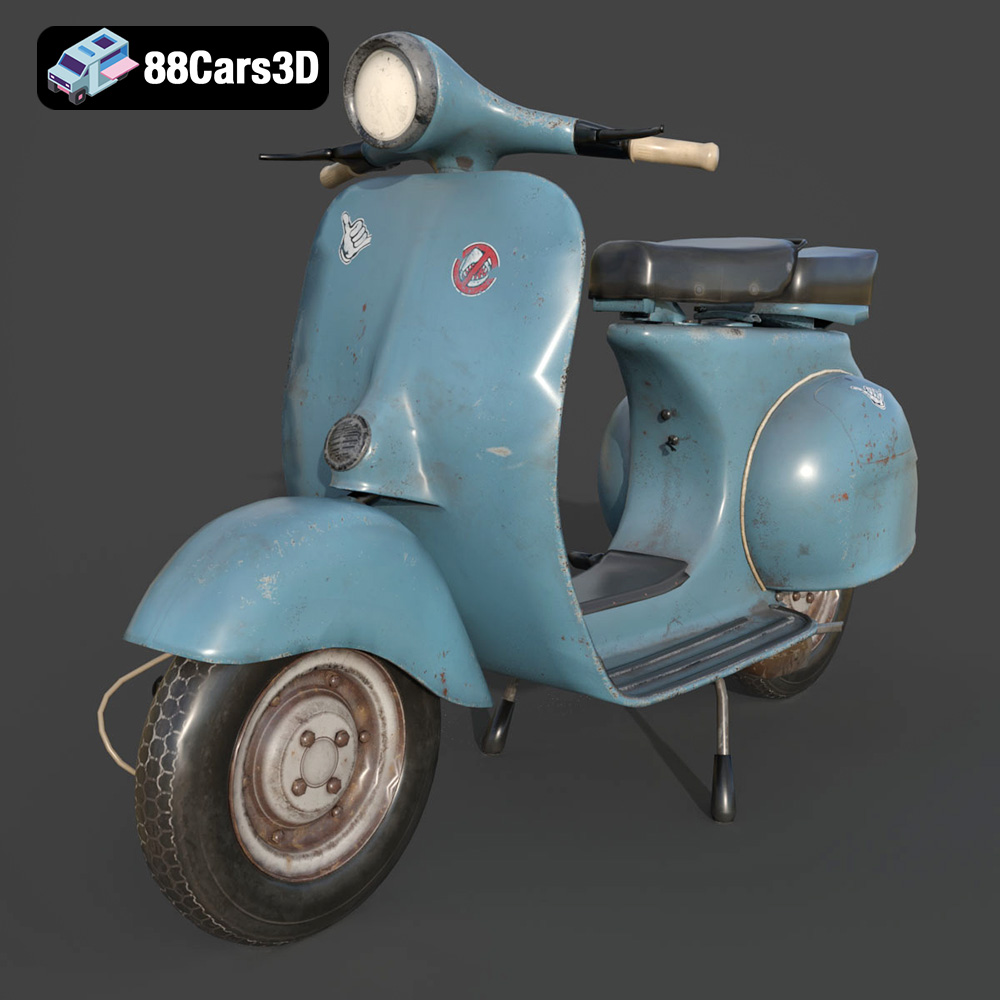
Texture: Yes | Material: Yes
Download the highly detailed, game-ready Vintage Vespa 3D Model. Features iconic rounded monocoque styling, classic saddle, and chrome accents. Includes .blend, .fbx, .obj, .glb, .stl, .ply, .unreal, and .max formats for game development, AR/VR, and rendering.
Price: $39.99

Texture: Yes | Material: Yes
Download the highly detailed, game-ready Vespa GS 150 3D Model. Features elegant aerodynamic curves, classic leg shield, and detailed engine casing. Includes .blend, .fbx, .obj, .glb, .stl, .ply, .unreal, and .max formats for game development, AR/VR, and rendering.
Price: $39.99
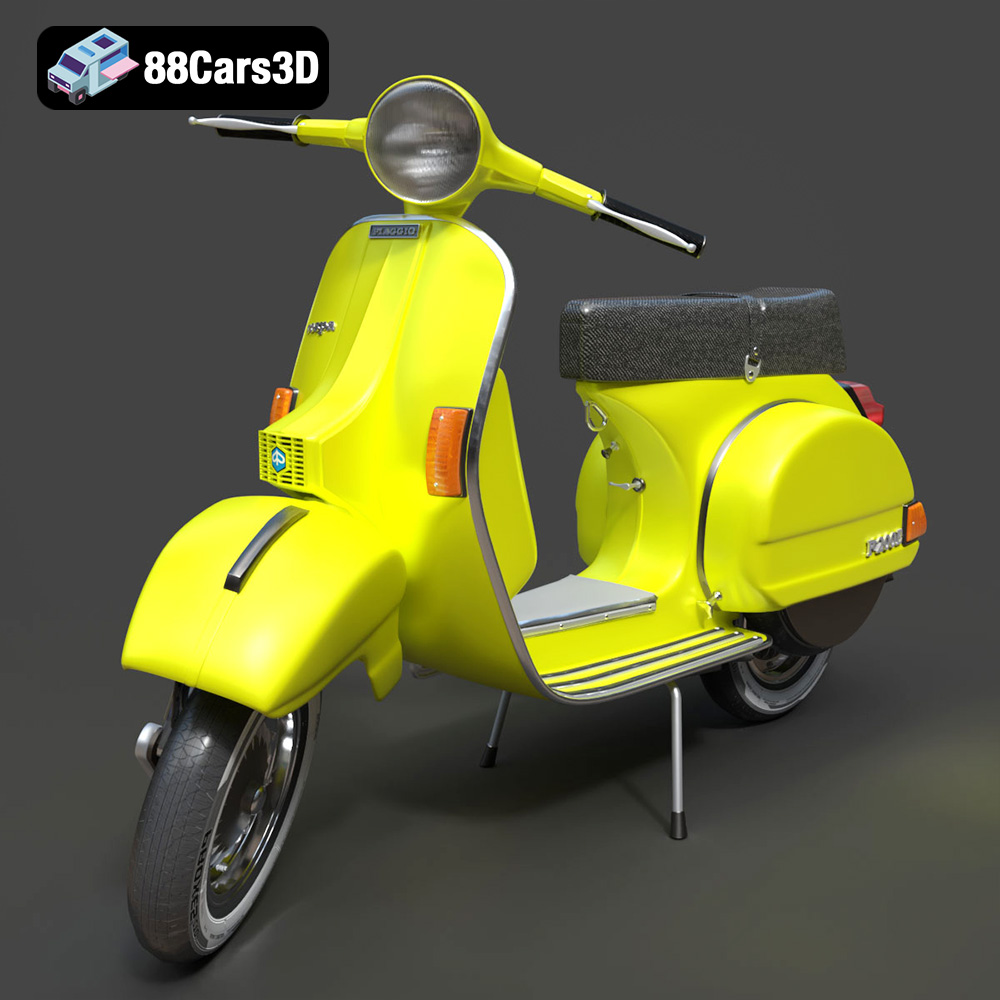
Texture: Yes | Material: Yes
Download the highly detailed, game-ready Vespa P200E 3D Model. Features classic vintage styling, accurate step-through frame geometry, and authentic detailing. Includes .blend, .fbx, .obj, .glb, .stl, .ply, .unreal, and .max formats for game development, AR/VR, and rendering.
Price: $39.99

