Get 20% OFF All Premium 3D & STL Models!

In the vibrant intersection of art and engineering, the creation of high-fidelity 3D car models stands as a testament to digital craftsmanship. From the gleaming surfaces of a cinematic masterpiece to the pixel-perfect precision required for a cutting-edge racing simulation, these digital assets form the backbone of countless visual experiences. A meticulously crafted 3D vehicle isn’t just a model; it’s a dynamic character, a focal point, and an essential tool for visualization and immersion.
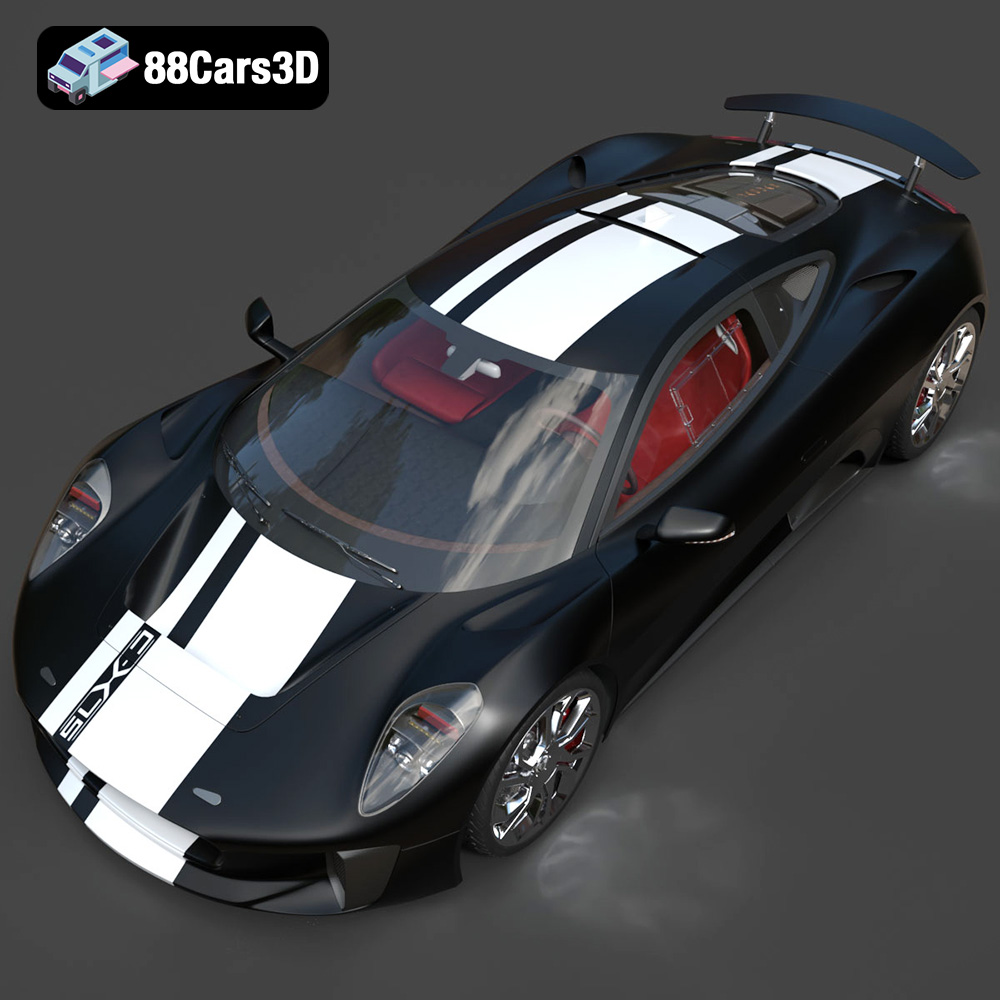
The allure of concept cars, in particular, transcends the physical realm, finding new life and purpose within digital environments. Consider the breathtaking Jaguar C-X75 2014 3D Model – a hybrid-electric hypercar concept that pushed boundaries of design and performance. This digital rendition captures every nuance of the original’s aggressive stance and aerodynamic elegance, offering professionals an unparalleled asset. Whether you’re an automotive designer evaluating future concepts, a game developer seeking the ultimate in-game vehicle, or a visualization artist aiming for photorealistic renders, the quality of your 3D model dictates the quality of your output.
This blog post will delve into the intricate world of 3D car models, exploring the technical considerations, diverse applications, and professional workflows that elevate a simple mesh into a vital production asset. We’ll highlight how models like the Jaguar C-X75 from 88cars3d.com are engineered to meet the stringent demands of modern digital pipelines, providing flexibility and unparalleled realism across various industries.
The utility and versatility of any 3D model are profoundly influenced by the file formats it supports. Choosing the correct format is paramount for seamless integration into various software environments, optimizing performance, and achieving specific project goals, whether for rendering, real-time applications, or even physical fabrication. The Jaguar C-X75 2014 3D Model, designed with professional standards in mind, is offered in a comprehensive suite of industry-standard formats, each catering to distinct needs.
The .blend format is native to Blender, a powerful and increasingly popular open-source 3D creation suite. A .blend file typically encapsulates an entire scene, including not just the mesh data of the model but also its materials, textures, lighting setups, camera positions, animations, and even physics simulations. This makes it an ideal choice for artists who work primarily within Blender, offering full editability and the ability to immediately begin rendering or further refine the model within its native environment. For the C-X75 model, the .blend file provides a ready-to-use scene with pre-configured materials and lighting, allowing for rapid iteration and creative exploration.
Autodesk’s .fbx (Filmbox) format is arguably the most widely adopted interchange format in the 3D industry, particularly favored for game development and real-time applications like Unreal Engine and Unity. FBX supports not only mesh geometry but also critical elements like skeletal animations, blend shapes, lights, cameras, and material assignments. Its robust support for embedded textures and efficient data handling makes it excellent for transferring complex animated assets between different software packages while maintaining hierarchical structures and transformations. When importing the C-X75 as an .fbx, developers can expect a streamlined workflow for getting the model into their game engines with minimal fuss, ready for optimization.
The .obj (Wavefront Object) format is a venerable and widely supported standard for representing 3D geometry. It stores vertex positions, UV coordinates, normals, and face information, often accompanied by a separate .mtl (material library) file for basic material properties. While .obj does not support animations or complex scene data, its universal compatibility makes it a safe bet for transferring static models between virtually any 3D software. For the C-X75, the .obj format ensures maximum compatibility across various pipelines, serving as a reliable backbone for cross-software collaboration.
.glb (GLB Transmission Format) is the binary version of glTF (GL Transmission Format), designed specifically for efficient transmission and loading of 3D scenes and models into web-based applications, AR/VR experiences, and mobile platforms. GLB packages all necessary data—geometry, materials, textures, and even animations—into a single, self-contained file. This optimization for lightweight, real-time delivery makes it invaluable for interactive product showcases, metaverse projects, and immersive digital experiences. The C-X75 model in .glb is perfectly poised for integration into browser-based configurators or AR apps, offering stunning visuals with rapid load times.
The .stl (Stereolithography) format is the industry standard for 3D printing. It represents the surface geometry of a 3D object using a collection of interconnected triangles. STL files contain only geometric data, without color, texture, or material information. This simplicity makes it ideal for additive manufacturing processes, where precise surface representation is key. For engineers or enthusiasts wishing to create a physical prototype or collectible model of the Jaguar C-X75, the .stl file provides a direct pathway to 3D printing, ensuring the sculptural integrity of the original design.
.ply (Polygon File Format) is a file format for storing graphical objects that have polygonal representations. It can store a wide range of data, including color, transparency, surface normals, and various properties for vertices, faces, and edges. While not as universally used as .obj or .fbx for general interchange, .ply is particularly valued in fields like CAD, scientific visualization, and 3D scanning, where precision and additional data attributes are often required. A .ply version of the C-X75 could be useful for detailed mesh analysis or specific engineering simulations.
While not a direct file format in the sense of .fbx or .obj, the inclusion of an .unreal file (or an Unreal Engine-ready asset) indicates a pre-configured asset package specifically optimized for Unreal Engine. This typically means the model has been imported, materials have been set up using Unreal’s physically based rendering (PBR) system, textures are correctly linked, and potentially even collision meshes or level-of-detail (LOD) groups have been established. This ‘plug-and-play’ readiness significantly accelerates development for projects built in Unreal Engine, allowing developers to drop the C-X75 directly into their scenes with minimal setup time.
The .max format is the native file format for Autodesk 3ds Max, a leading software for 3D modeling, animation, and rendering in architectural visualization, product design, and cinematic production. A .max file contains the complete 3ds Max scene, including all geometry, modifiers, materials, textures, lights, cameras, animation data, and render settings. This format offers full flexibility for professional artists who rely on 3ds Max for complex rigging, advanced rendering setups with V-Ray or Corona Renderer, and detailed animation sequences. The .max file for the C-X75 provides a fully editable and render-ready version, allowing for extensive customization and high-end visual output.
The provision of these diverse formats for the Jaguar C-X75 2014 3D Model underscores its versatility and value, ensuring that professionals across different disciplines can seamlessly integrate this high-quality asset into their specific workflows.
Automotive rendering is a specialized discipline within 3D visualization, demanding an acute understanding of light, materials, and composition to evoke photorealism. A premium 3D car model, such as the Jaguar C-X75 2014, serves as an impeccable foundation for these endeavors. The goal is to create visuals indistinguishable from photographs, a feat achieved through a blend of technical prowess and artistic vision.
The fidelity of automotive rendering hinges on the quality of its materials and textures. Modern rendering relies heavily on Physically Based Rendering (PBR) workflows, where material properties like albedo, roughness, metallic, and normal maps accurately simulate how light interacts with surfaces. For the Jaguar C-X75, this means meticulously recreating the deep luster of its paintwork, the subtle reflectivity of its carbon fiber elements, the intricate patterns of its tire treads, and the nuanced details of its glass and interior upholstery. Each material must be calibrated to react realistically to light, whether it’s the diffused reflection of matte surfaces or the sharp specular highlights on polished chrome. The Jaguar C-X75 2014 3D Model provides these advanced material setups, allowing artists to achieve stunning results directly out of the box or with minimal adjustments in rendering engines like V-Ray, Corona, or Cycles in Blender.
Beyond materials, lighting is the paramount sculptor of form in rendering. High Dynamic Range Image (HDRI) environments are commonly used to provide realistic, image-based lighting, capturing the subtle nuances of real-world illumination. Complementary to HDRIs, strategic placement of virtual lights (e.g., area lights, spot lights) can emphasize body lines, create dramatic shadows, or highlight specific design features. A well-constructed 3D model like the C-X75, with its precise geometry and clean normals, will respond flawlessly to these lighting conditions, revealing the intricate details of its design. Whether rendered in 3ds Max using advanced ray-tracing techniques or in Blender with its powerful Cycles engine, the interplay of light and shadow on the C-X75’s sculpted form transforms it from a digital asset into a visual spectacle.
The journey to photorealism often concludes with careful post-processing. Tools like Adobe Photoshop or DaVinci Resolve are used to add subtle effects that enhance the realism and cinematic quality of the render. This includes color grading, bloom, depth of field, chromatic aberration, lens flares, and subtle grain, all of which mimic the imperfections and characteristics of real-world photography and cinematography. When starting with a high-quality render from a model like the Jaguar C-X75 2014, these post-production steps elevate the final image, imbuing it with atmosphere and emotional resonance, making it suitable for high-profile marketing campaigns, automotive presentations, or digital art portfolios.
Game development presents a unique set of challenges for 3D car models. While visual fidelity is crucial, it must be balanced with strict performance requirements for real-time interaction. The Jaguar C-X75 2014 3D Model exemplifies how a high-detail asset can be adapted for the demanding environment of modern game engines like Unreal Engine and Unity.
Integrating a detailed 3D car model into a game requires significant optimization. One of the primary techniques is the implementation of Level of Detail (LOD) models. These are progressively lower-polygon versions of the same asset that swap in as the car moves further from the player’s camera, drastically reducing rendering overhead without a noticeable visual impact. A professionally built model like the C-X75 should have clean topology, making it easier to generate these LODs effectively. Additionally, collision meshes are critical; these simpler, invisible meshes define the car’s physical boundaries for physics simulations, ensuring realistic interactions with the game world without taxing the engine with complex geometry calculations. The pre-configured .unreal asset from 88cars3d.com often includes these optimizations, accelerating integration.
For a car to function authentically in a game, it needs to be properly rigged. This involves creating a hierarchical bone structure (or a non-deforming rig for cars) that allows individual components like wheels, doors, steering wheel, and suspension to be animated independently. Wheel rotation, steering, suspension compression, and even opening/closing doors for specific game mechanics are all driven by this rig. Furthermore, interactive elements such as functional dashboards, customizable paint jobs, and upgradeable parts all require careful planning and implementation of material parameters and scripting within the game engine. A clean, well-structured 3D car model like the Jaguar C-X75 simplifies this rigging and animation process, ensuring that the car moves and behaves realistically within the game’s physics system.
Game engines utilize material instancing to allow for real-time customization and optimization. A base material can be created with various parameters (e.g., color, roughness, metallic value), and then instances of this material can be made, each with unique parameter values. This allows players or designers to change the car’s paint color, apply different finishes, or switch out decals without creating entirely new materials, saving memory and improving performance. For a model like the Jaguar C-X75, game developers can leverage this to offer players a wide array of customization options, enhancing the personal connection to their in-game vehicle and enriching the overall gaming experience.
The utility of high-quality 3D car models extends far beyond traditional rendering and game development, finding exciting applications in immersive technologies and physical prototyping. The multi-format provision of assets like the Jaguar C-X75 2014 3D Model is crucial for these burgeoning fields.
Augmented Reality (AR) and Virtual Reality (VR) are transforming how we interact with digital content, offering unparalleled levels of immersion. For automotive applications, this means prospective buyers can “walk around” and “sit inside” a virtual car from the comfort of their home, or designers can collaborate on new vehicle concepts in a shared virtual space. The .glb format, optimized for web and real-time delivery, is a cornerstone for such experiences. Leveraging the C-X75 in AR/VR allows users to explore its intricate design, inspect its interior, or even place it in their driveway via a smartphone, blurring the lines between the digital and physical worlds. The demand for lightweight, yet visually rich 3D car models for these platforms is rapidly increasing, and professional assets are essential for delivering seamless, high-quality experiences.
3D printing has revolutionized product development and personal fabrication, allowing digital models to manifest as physical objects. While a highly detailed rendering model may have too much polygon density or complex internal geometry for direct 3D printing, the .stl format specifically caters to this need. The .stl file of the Jaguar C-X75 2014 allows designers to create physical scale models for aerodynamic testing, aesthetic evaluation, or simply as collectible display pieces. Engineers can use these physical prototypes to assess ergonomics, fit, and finish before committing to costly traditional manufacturing. The accuracy and clean topology of the original digital model are critical here, as any imperfections can translate into errors in the physical print, highlighting the importance of starting with a premium-grade asset.
High-fidelity 3D car models are indispensable for architectural visualization (ArchViz), where they populate street scenes, driveways, and showrooms to add realism and scale. A luxury vehicle like the C-X75 adds a touch of sophistication and aspirational lifestyle to renders of high-end properties or commercial spaces. Similarly, in product showcases, a stunning car model can serve as a contextual background or a hero asset itself, demonstrating intricate design details or material finishes. The ability to render the C-X75 in a variety of environments, from urban settings to pristine studios, showcases its versatility and enhances the overall visual narrative, a key advantage provided by the diverse file formats and professional quality from 88cars3d.com.
The true mark of a professional 3D car model lies in its underlying technical structure. It’s not just about looking good; it’s about being robust, efficient, and versatile. The Jaguar C-X75 2014 3D Model exemplifies these principles through meticulous attention to topology, UV mapping, and material construction.
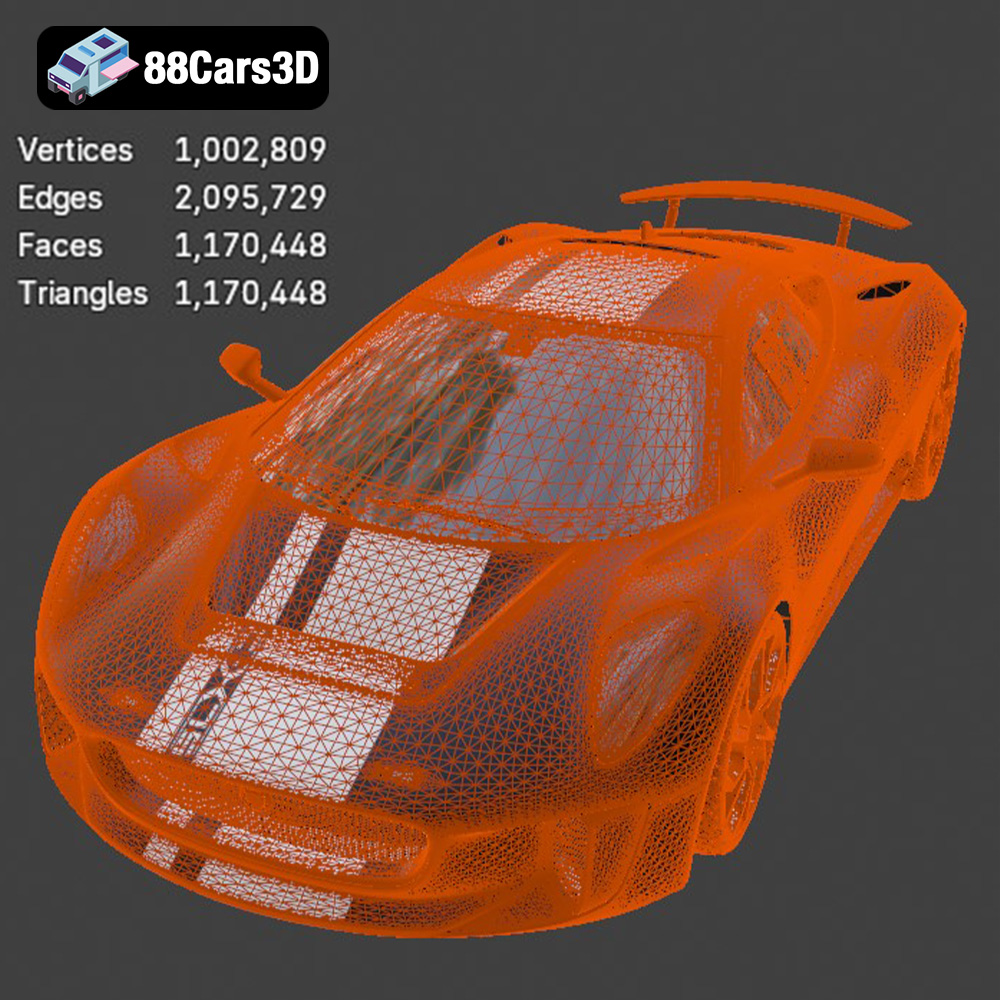
Clean geometry, often referred to as “clean topology,” is the bedrock of any high-quality 3D model. This means using mostly quad polygons (four-sided faces) with minimal triangles or n-gons (polygons with more than four sides), especially on visible surfaces. Good edge flow ensures that the polygons follow the natural contours and creases of the object, which is crucial for smooth subdivision (for high-resolution renders), deformation (for animation), and accurate lighting. For the C-X75, this translates into perfectly smooth curves along its body panels, sharp yet clean creases around its vents, and a model that renders without artifacts or pinching. Such clean geometry also significantly aids in the creation of LODs for game engines and ensures predictable results when baking normal maps or displacement maps.
UV mapping is the process of flattening the 3D surface of a model into 2D space, allowing textures to be painted onto it without distortion. Professional 3D car models feature clean, non-overlapping UV layouts, which are essential for applying high-resolution textures, baking ambient occlusion, or exporting normal maps. The efficiency of UV space utilization also impacts performance, especially in real-time applications where texture atlases (combining multiple textures into one sheet) are common. The Jaguar C-X75 2014 3D Model boasts meticulous UVs, ensuring that its intricate decals, panel gaps, and material transitions are rendered flawlessly, reflecting the true fidelity of the vehicle’s design and enhancing realism across all applications.
As discussed, Physically Based Rendering (PBR) is the standard for achieving photorealistic materials. A high-quality 3D car model comes with a comprehensive set of PBR textures (albedo/base color, metallic, roughness, normal, ambient occlusion) that accurately define how light interacts with each surface. These textures are typically provided at high resolutions (e.g., 4K or 8K) to capture minute details like paint flakes, tire sidewall text, or interior stitching. The careful calibration of these texture maps ensures that the C-X75 model behaves predictably under any lighting condition, from a sun-drenched exterior shot to a dimly lit studio render. This technical precision is what elevates a model from a simple visual representation to a robust, physically accurate digital asset, suitable for even the most demanding production pipelines.
In the fast-paced world of 3D production, time is a precious commodity. Creating a high-fidelity 3D car model like the Jaguar C-X75 from scratch demands hundreds of hours of expert modeling, texturing, and optimization. For individuals and studios alike, acquiring professional-grade assets can be a game-changer, significantly impacting project timelines, budgets, and overall quality.
The most immediate benefit of purchasing a pre-made, high-quality 3D model is the immense time savings. Instead of dedicating valuable resources to modeling every bolt, seam, and curve of a complex vehicle, artists and developers can focus on creative aspects like scene composition, animation, lighting, and interactive elements. This accelerates project delivery, allows for more iterations, and frees up skilled personnel for other critical tasks. For the Jaguar C-X75 2014 3D Model, this means having a production-ready asset at your fingertips, bypasses weeks or even months of development time, directly translating into cost savings and increased efficiency.
Not all 3D models are created equal. Low-quality models often suffer from poor topology, inefficient UVs, distorted textures, or incorrect scaling, leading to headaches in production. A professional asset, such as those found on 88cars3d.com, guarantees a baseline of excellence. These models are typically created by experienced artists who adhere to industry best practices for clean geometry, optimized performance, and accurate material representation. This commitment to quality means fewer technical issues, better rendering results, and smoother integration into complex pipelines, empowering creators to achieve their artistic vision without technical compromises.
The provision of multiple file formats, from native software files like .blend and .max to universal interchange formats like .fbx and specialized formats like .glb and .stl, ensures maximum versatility. This multi-format approach means the Jaguar C-X75 2014 3D Model can seamlessly transition from a photorealistic cinematic render in 3ds Max to an interactive AR experience on a mobile device, or even a physically printed prototype. This adaptability makes such an asset an invaluable investment for any professional operating in diverse digital environments, ensuring that one purchase can serve multiple project requirements across various platforms and applications.
The world of 3D modeling is continually evolving, driven by the insatiable demand for ever-greater realism and immersion. At the heart of this evolution lies the meticulous creation and strategic deployment of high-fidelity 3D assets. The Jaguar C-X75 2014 3D Model stands as a prime example of what can be achieved when technical precision meets artistic excellence, offering a versatile foundation for a multitude of digital endeavors.
Whether you are crafting breathtaking automotive renders, developing the next-generation racing game, designing an interactive AR experience, or prototyping a physical model, the quality of your base asset is paramount. From its clean topology and optimized UVs to its comprehensive suite of file formats, the C-X75 model provides a robust and reliable solution for professionals across the globe. By investing in such a high-caliber 3D car model, you’re not just acquiring data; you’re gaining a powerful tool that saves time, ensures quality, and elevates your projects to new heights of realism and engagement.
Explore this exceptional model and a wide range of other premium 3D car models for all your creative and professional needs at 88cars3d.com. Unleash the full potential of your digital projects with assets engineered for unparalleled performance and visual fidelity.
Experience unparalleled realism with the Jaguar C-X75 2014 3D Model. This exceptionally detailed digital replica captures the essence of the renowned hybrid-electric concept car, offering automotive enthusiasts and professionals an immaculate asset for their digital projects. Engineered with precision, this model brings the stunning aerodynamics and aggressive styling of the C-X75 to your virtual environments. Designed with professional standards in mind, the model features exceptionally clean geometry and realistic materials. Every exterior curve and aerodynamic element has been meticulously crafted to reflect the authentic vehicle, complemented by a fully modeled interior. This dedication to accuracy ensures pristine edge flow and optimal polygon count, making it a reliable asset for intense production pipelines. Whether you are developing next-generation racing games, producing photorealistic cinematic renderings, creating interactive AR/VR experiences, or generating architectural visualizations, this Jaguar C-X75 model delivers outstanding performance. Its versatile build ensures seamless integration into major production software and real-time engines. To provide maximum flexibility, the model is supplied in multiple industry-standard formats: .blend – Editable Blender file with materials and lighting setup; .fbx – Game-engine ready format for Unreal Engine and Unity; .obj – Standard 3D model format compatible with all major software; .glb – Optimized for AR/VR and web-based visualization; .stl – Suitable for 3D printing and prototyping; .ply – Detailed polygon mesh for analysis and visualization; .unreal – Pre-configured for Unreal Engine use; .max – Editable 3ds Max file for rendering and animation.
$39.99
.arvr
.blend
.c-x75
.car3dmodel
.conceptcar
.cx75
.fbx
.gameasset
.glb
.hybrid
.hypercar
.jaguar
.max
.obj
.ply
.rendering
.simulation
.sportsCar
.stl
.unreal