Get 20% OFF All Premium 3D & STL Models!

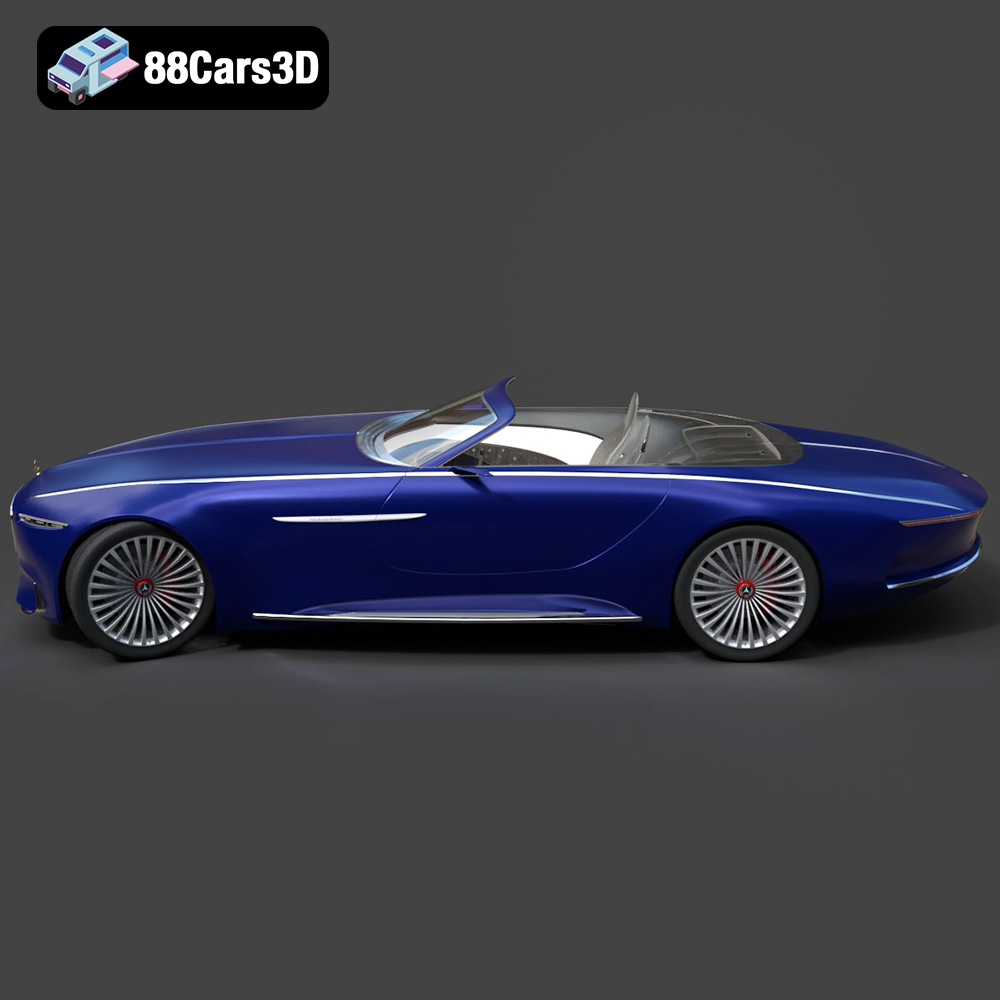
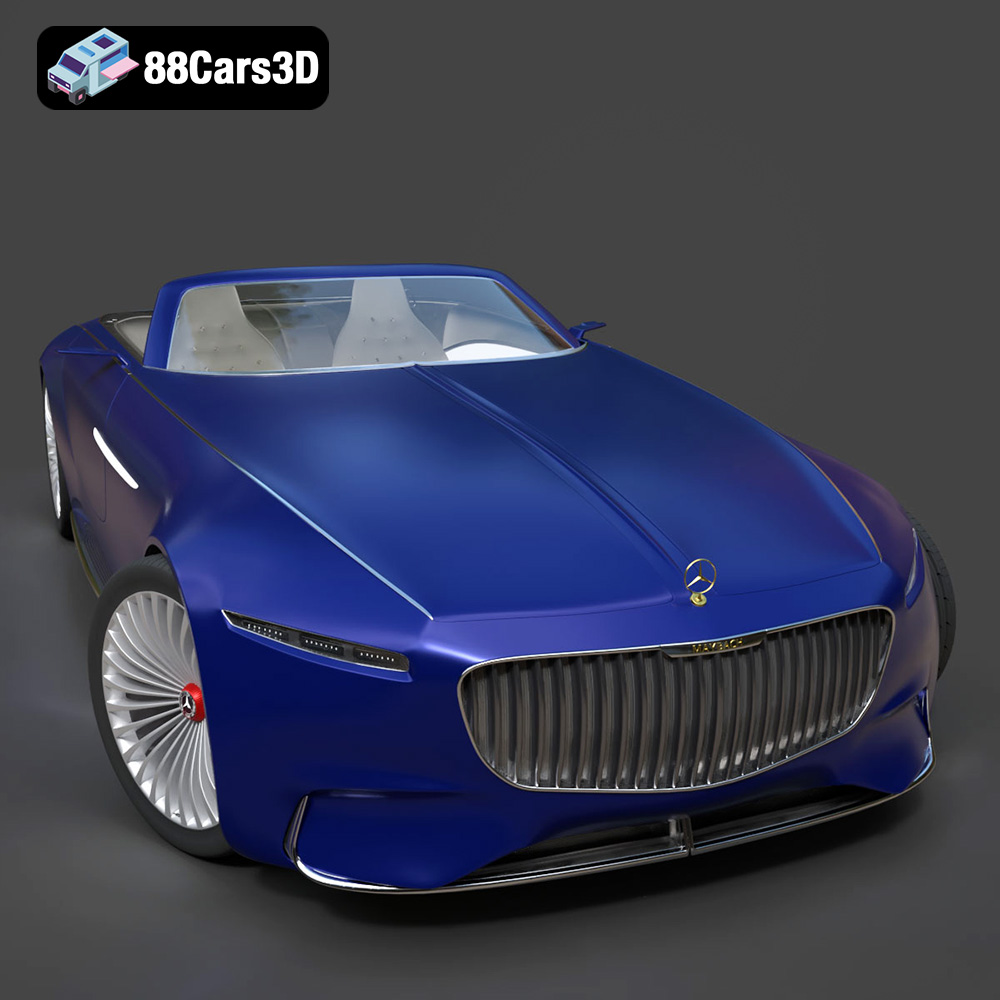
The Mercedes-Maybach Vision 6 2018 is a stunning testament to automotive artistry. Its breathtaking design, a blend of classic aero coupe aesthetics and futuristic technology, makes it a highly desirable subject for 3D printing enthusiasts. Transforming this digital masterpiece from 88cars3d.com into a tangible model requires careful planning, precise execution, and a touch of artistry. This comprehensive guide will walk you through the process of 3D printing your own miniature Vision 6, covering everything from file preparation to post-processing.
The choice of 3D printing technology significantly impacts the final result. For the Mercedes-Maybach Vision 6, both Fused Deposition Modeling (FDM) and Stereolithography (SLA) offer viable options, each with its own strengths and weaknesses.
FDM printing, using materials like PLA or PETG, is a more accessible and cost-effective method. It’s ideal for larger scale models where fine details are less critical.
SLA printing, also known as resin printing, excels in producing highly detailed parts with smooth surfaces. It’s the preferred method for smaller scale models of the Vision 6, especially those emphasizing intricate design elements.
Choosing the right file format is crucial for a smooth 3D printing workflow. Different file types offer varying levels of detail, compatibility, and suitability for different applications. The Mercedes-Maybach Vision 6 model from 88cars3d.com includes a range of formats, each serving a unique purpose.
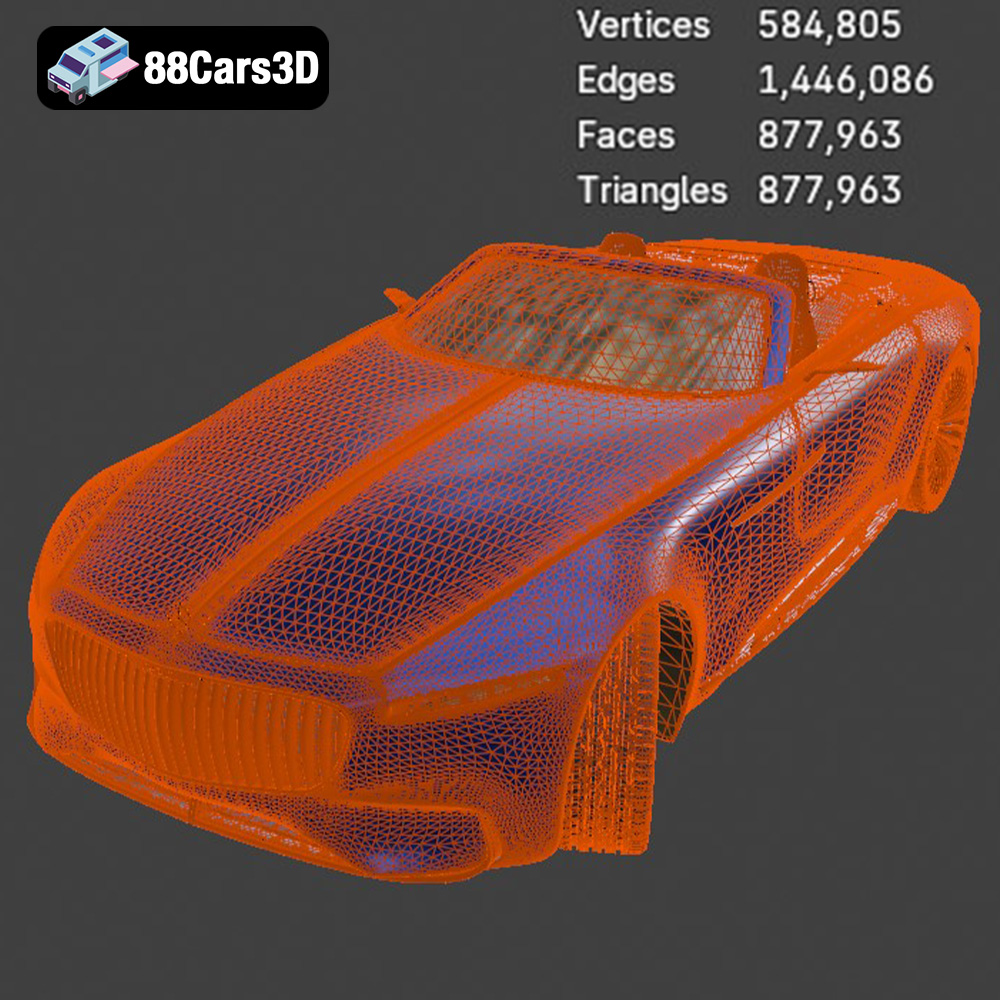
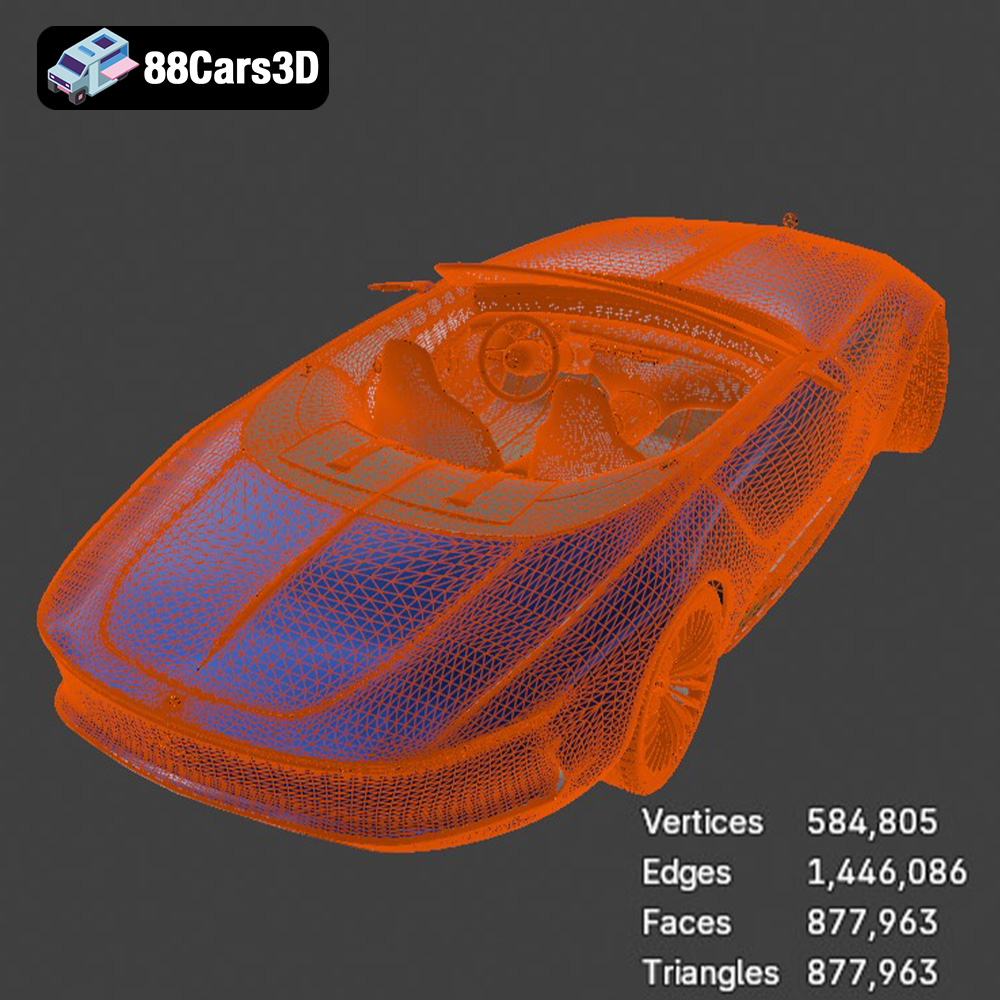
The .stl (stereolithography) format is the workhorse of 3D printing. It represents a 3D object as a collection of interconnected triangles, forming a mesh. This simplicity makes it universally compatible with slicing software, the programs that convert 3D models into instructions for 3D printers. However, .stl files only contain geometric data; they do not include information about color, texture, or materials.
When using .stl files for the Vision 6, ensure the mesh quality is sufficient to capture the car’s complex curves and details. Low-resolution .stl files can result in a faceted appearance, detracting from the model’s visual appeal. Higher resolution .stl files, while larger in size, provide a smoother and more accurate representation. Most slicing software allows you to adjust the mesh resolution during import, balancing file size with print quality. Optimizing the triangle count in the .stl file directly impacts the final surface finish.
The .obj format is another widely used 3D file type, but unlike .stl, it supports color and texture information. This is especially useful if you want to create a 3D printed model of the Vision 6 with realistic paint finishes or interior details. However, .obj files can be more complex to handle than .stl files, and not all slicing software fully supports their color and texture capabilities.
The .ply format is designed for storing 3D data acquired from scanning technologies. It’s known for its ability to represent complex shapes with high precision, making it suitable for reproducing the intricate details of the Mercedes-Maybach Vision 6. However, .ply files can be quite large, and their compatibility with 3D printing software may be limited compared to .stl and .obj.
The .blend format is the native file type for Blender, a popular open-source 3D modeling software. This format is incredibly useful if you want to customize the Vision 6 model before 3D printing it. You can modify the geometry, add details, or even create variations of the design within Blender. Once you’re satisfied with your modifications, you can export the model as an .stl file for 3D printing.
The .fbx format is primarily used for transferring 3D models between different software applications, particularly in game development and animation. It supports animation data, materials, and textures, making it a versatile format for complex 3D scenes. While some slicing software can import .fbx files, its primary use is for preparing the model for rendering or animation rather than direct 3D printing.
The .glb format is designed for efficient transmission and display of 3D models in web browsers and augmented reality (AR) applications. It’s a compact format that can contain both geometry and textures, allowing you to preview the Vision 6 model in a real-world environment before committing to a 3D print. While not directly used for 3D printing, .glb files can be helpful for visualizing the final product.
Similar to .blend, the .max format is the native file type for Autodesk 3ds Max, a professional 3D modeling and rendering software. This format allows for extensive customization of the Vision 6 model before exporting it for 3D printing. Users can modify geometry, materials, and lighting within 3ds Max to achieve the desired aesthetic before converting it to a printable .stl file.
Before sending the STL file to your 3D printer, it’s essential to prepare it using slicing software. This involves orienting the model, adding supports, and setting appropriate printing parameters.
* **Optimizing Orientation:** Orienting the Mercedes-Maybach Vision 6 at an angle (e.g., 45 degrees) on the print bed can reduce the need for extensive support structures and improve surface finish. Consider the car’s overall shape and minimize overhangs.
* **Support Strategy:** Generate supports strategically, focusing on areas like the side mirrors, the underside of the hood, and the rear spoiler. Use a support density that balances stability with ease of removal.
* **Layer Height:** Choose a layer height appropriate for your chosen printing technology and desired level of detail.
* **Wall Thickness:** A wall thickness of 1.2-2.0mm provides sufficient strength for the model.
* **Infill Density:** An infill density of 20-30% balances structural integrity with material usage.
* **Print Speed:** Adjust the print speed based on the material and printer capabilities. Slower speeds often result in better print quality.
The material you choose for 3D printing the Vision 6 will influence its appearance, durability, and overall feel. Consider these factors when making your selection:
PLA (Polylactic Acid) is a biodegradable thermoplastic polymer derived from renewable resources. It is easy to print with, relatively inexpensive, and produces parts with a smooth surface finish. PLA is suitable for creating display models of the Vision 6, but it may not be the best choice for parts that will be subjected to high temperatures or stress.
PETG (Polyethylene Terephthalate Glycol-modified) is a thermoplastic polymer that offers improved strength, flexibility, and chemical resistance compared to PLA. It is also more heat-resistant, making it a better choice for parts that will be exposed to sunlight or high temperatures. PETG is a good all-around material for 3D printing the Vision 6, providing a balance of strength, durability, and ease of printing.
Resin is a liquid polymer that is cured by ultraviolet light. Resin printing produces parts with exceptional detail and a smooth surface finish. Resin is ideal for creating highly detailed models of the Vision 6, but it is more expensive than PLA or PETG. Resin prints also require post-processing, such as washing and curing, to remove uncured resin and fully harden the part.
Post-processing is crucial to achieving a professional-looking finish on your 3D printed Mercedes-Maybach Vision 6.
* **Careful Removal:** Gently remove support structures using specialized tools. Take care not to damage the model’s surface.
* **Sanding:** Begin with coarse sandpaper (e.g., 220 grit) to remove larger imperfections, then gradually move to finer grits (e.g., 400, 600, 800) to achieve a smooth surface. Wet sanding can help minimize dust.
* **Priming:** Apply a primer coat to create a uniform surface for painting. This helps the paint adhere better and improves the overall finish.
* **Painting:** Use high-quality automotive paints to replicate the Mercedes-Maybach Vision 6’s authentic factory colors. Consider using an airbrush for a smooth and even application. Apply multiple thin coats, allowing each coat to dry completely before applying the next.
* **Assembly:** Carefully assemble the various parts of the model, such as the wheels, suspension, and interior components. Use super glue or epoxy to bond the parts together.
* **Finishing Touches:** Add details such as decals, chrome accents, and clear coats to enhance the model’s realism and visual appeal.
Even with careful planning, you may encounter issues during the 3D printing process. Here are some common problems and their solutions:
* **Cause:** Uneven cooling of the print, causing it to lift from the build plate.
* **Solution:** Use a heated bed, increase bed adhesion (e.g., using glue stick or hairspray), or enclose the printer to maintain a more consistent temperature.
* **Cause:** Excess material oozing from the nozzle during travel moves.
* **Solution:** Reduce the printing temperature, increase retraction settings, or decrease travel speed.
* **Cause:** Loose belts, stepper motor issues, or vibrations.
* **Solution:** Tighten belts, check stepper motor connections, and ensure the printer is placed on a stable surface.
Before embarking on your 3D printing project, it’s helpful to estimate the print time and material costs. These estimates will vary depending on the size of the model, the printer settings, and the material used.
* **Print Time:** Use your slicing software to estimate the print time based on your chosen settings. Keep in mind that this is just an estimate, and the actual print time may vary.
* **Material Cost:** Calculate the amount of material required for the print using your slicing software. Multiply this amount by the cost per kilogram of your chosen material to estimate the material cost.
By carefully planning your 3D printing project and following these guidelines, you can create a stunning replica of the Mercedes-Maybach Vision 6, showcasing its iconic design and engineering. Remember that patience and experimentation are key to achieving the best results. With dedication, you can bring this automotive masterpiece to life in your own home or workshop. 88cars3d.com provides the perfect starting point with their high-quality 3D models.
The Mercedes-Maybach Vision 6 2018 is a breathtaking electric concept car that pays a stunning homage to the glorious age of the aero coupes. It features dramatic, extreme proportions with a massively elongated hood, a sweeping low roofline, and an iconic vertical strut grille inspired by a pinstriped suit. Key visual elements include the striking gullwing doors, ultra-slim LED headlights, an aerodynamic boat-tail rear design, and massive 24-inch transparent aerodynamically optimized wheels.
$39.99
.2018
.blend
.fbx
.glb
.max
.obj
.ply
.rendering
.stl
.unreal
car-3d-model
concept-car
game asset
game-ready
low-poly
luxury car
mercedes-maybach
optimized
vision-6
VR/AR