Get 20% OFF All Premium 3D & STL Models!

The Volkswagen Schwimmwagen Typ 166, a legendary amphibious vehicle from World War II, is a fascinating subject for 3D printing enthusiasts. Its unique design and historical significance make it a compelling model to recreate. This guide provides a comprehensive overview of how to successfully 3D print this model, covering everything from pre-print preparation to post-processing techniques. Whether you are a seasoned 3D printing veteran or a newcomer to the hobby, this article will equip you with the knowledge to bring this iconic vehicle to life. The high-quality models available at 88cars3d.com, including the STL file for the Schwimmwagen, provide an excellent starting point.
Selecting the appropriate 3D printing technology is crucial for achieving the desired level of detail and accuracy when printing the Volkswagen Schwimmwagen Typ 166. Several options are available, each with its own set of advantages and limitations.
FDM is one of the most widely used 3D printing technologies, known for its affordability and ease of use. FDM printers work by extruding a thermoplastic filament, such as PLA or ABS, layer by layer to create the final object. While FDM is suitable for larger parts of the Schwimmwagen, such as the chassis and body panels, it may struggle to capture the finer details, such as the engine components and intricate interior features. Consider using a smaller nozzle and lower layer height to improve detail resolution when using FDM.
SLA and DLP are resin-based 3D printing technologies that offer superior detail and surface finish compared to FDM. These printers use ultraviolet light to cure liquid resin layer by layer. SLA and DLP are ideal for printing the more intricate parts of the Schwimmwagen, such as the propeller, steering wheel, and detailed suspension components. The higher resolution of resin printing will accurately reproduce the details of the original model. However, resin printers are typically more expensive than FDM printers, and the resin material can be more brittle than thermoplastics.
SLS is a powder-based 3D printing technology that uses a laser to fuse powdered material, such as nylon, into a solid object. SLS offers excellent mechanical properties and allows for the creation of complex geometries without the need for support structures. While SLS is a viable option for printing the Schwimmwagen, it is generally more expensive than FDM and SLA/DLP, making it less accessible for hobbyists.
Choosing the correct file format is essential for successful 3D printing. Different file formats contain varying levels of information about the model, which can impact the printing process and the final result.
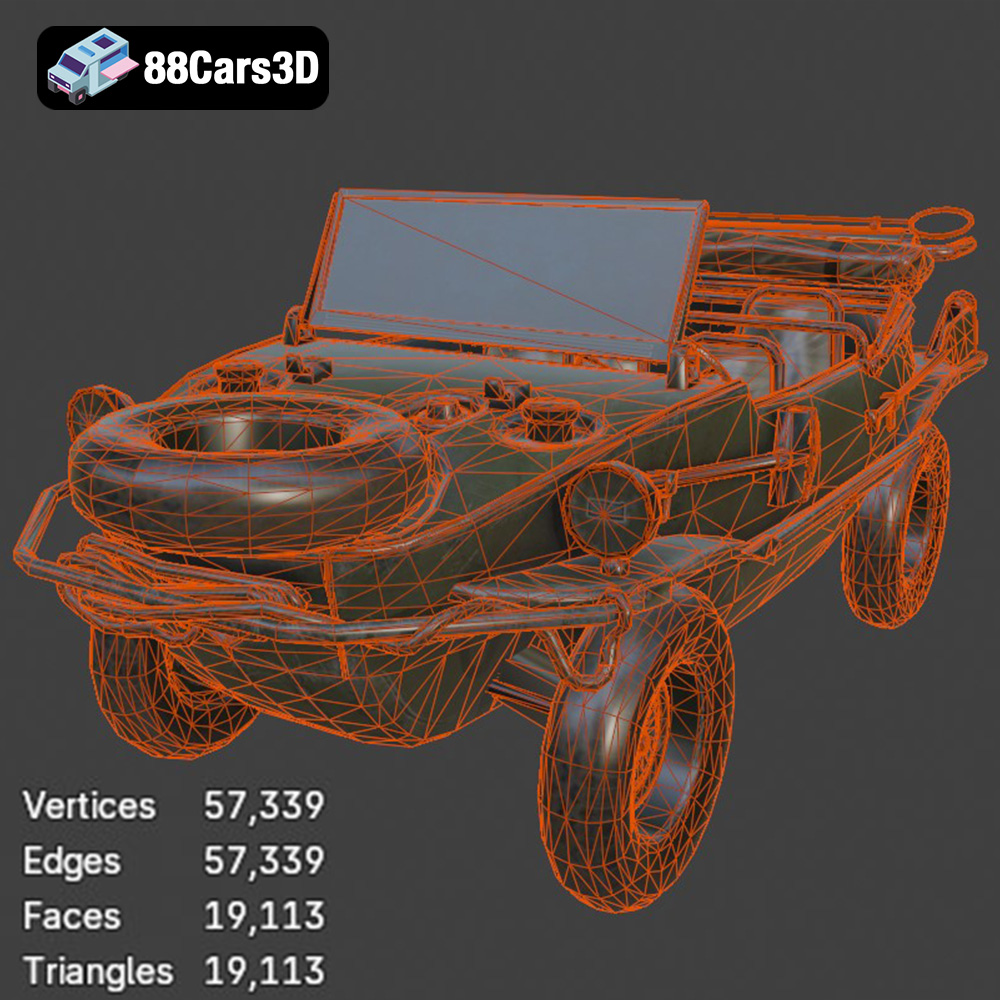
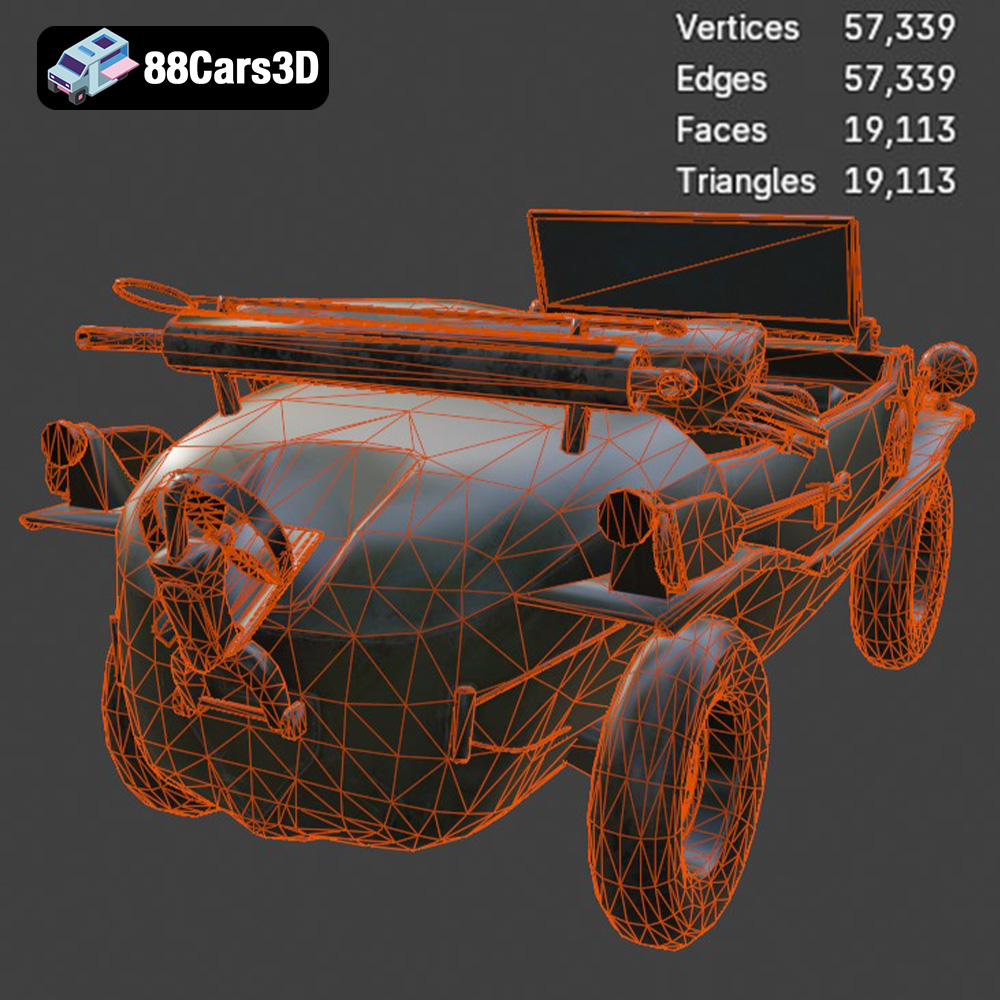
The STL (Stereolithography) file format is the industry standard for 3D printing. It represents the surface geometry of a 3D object as a collection of triangles. STL files are simple, widely supported by slicing software, and suitable for most 3D printing applications. The STL format excels at representing the overall shape of the Volkswagen Schwimmwagen Typ 166 and works well for the main body, chassis, and wheels. However, STL files do not store color or texture information. When working with STL files, ensure the mesh quality is high enough to avoid faceted surfaces in the final print. Finer details, like the rivets on the body or the treads on the tires, will be better represented with a higher triangle count. When importing into slicing software, pay attention to potential errors in the mesh (e.g., non-manifold edges, holes) and use repair tools to correct them before printing.
The OBJ (Object) file format is a more versatile format than STL, as it can store color and texture information in addition to geometry. OBJ files are often used for 3D models intended for rendering or animation. While OBJ files can be used for 3D printing, they are not as widely supported as STL files, and some slicing software may not handle them correctly. If you plan to paint your 3D printed Schwimmwagen after printing, the color data in the OBJ file is not necessary. However, if you intend to explore full-color 3D printing in the future, having the OBJ file available is an advantage.
The PLY (Polygon) file format is another mesh-based format that can store color and texture information. PLY files are known for their ability to represent high-resolution meshes with great precision, making them suitable for capturing intricate details. While PLY files can be used for 3D printing, they are not as commonly used as STL files. The Volkswagen Schwimmwagen Typ 166 model could benefit from the precision of the PLY format, particularly for the intricate details of the engine and interior components, if your slicing software supports it.
The BLEND file format is the native file format for Blender, a popular open-source 3D modeling software. BLEND files contain the entire Blender scene, including the model geometry, textures, materials, lighting, and camera settings. Having the BLEND file allows you to fully customize the Volkswagen Schwimmwagen Typ 166 model before exporting it to a 3D printable format like STL. You can modify the model’s geometry, add details, or create variations of the design. This is especially useful if you want to create a modified version of the Schwimmwagen, such as one with battle damage or custom accessories.
The FBX (Filmbox) file format is a proprietary format developed by Autodesk, widely used for exchanging 3D models between different software applications. FBX files can store geometry, textures, materials, and animation data. While FBX files can be imported into some slicing software, they are primarily intended for use in game development and animation workflows. The main advantage of using FBX for the Volkswagen Schwimmwagen Typ 166 is its ability to preserve material information, which can be useful if you plan to use the model in a rendering or animation project after 3D printing it.
The GLB (GL Transmission Format Binary) file format is a binary file format designed for efficient delivery and loading of 3D models in web and AR/VR applications. GLB files are self-contained and can store geometry, textures, materials, and animations in a single file. While GLB files are not directly used for 3D printing, they are useful for previewing the Volkswagen Schwimmwagen Typ 166 model in augmented reality (AR) before printing it. This allows you to visualize the model in your physical environment and get a better sense of its size and scale.
The .MAX file format is the native format for Autodesk 3ds Max, a professional 3D modeling, animation, and rendering software. Similar to .BLEND for Blender, the .MAX file contains the entire 3ds Max scene, including the model geometry, textures, materials, lighting, and camera settings. This offers comprehensive editing capabilities, allowing for intricate modifications and customizations to the Volkswagen Schwimmwagen Typ 166 model before exporting it for 3D printing or other applications.
Before you can start 3D printing the Volkswagen Schwimmwagen Typ 166, you need to prepare the 3D model using slicing software. Slicing software converts the 3D model into a series of layers that the 3D printer can understand and build.
The 88cars3d.com product description recommends specific scales (1:16, 1:35, 1:24) for military modeling standards. Choose the scale that best suits your needs and preferences. Once you have determined the scale, import the STL file into your slicing software and scale the model accordingly. Correct orientation is crucial for print quality and support generation. The product description suggests printing the frame angled for structural integrity and printing the wheels separately. Experiment with different orientations to minimize the need for supports and ensure the best possible surface finish.
Support structures are necessary to support overhanging parts of the model during printing. The Volkswagen Schwimmwagen Typ 166 has several areas that will require supports, such as the exhaust system, propeller, steering wheel, and suspension components. Use your slicing software to generate support structures automatically, or manually add them for more control. Consider using dissolvable support material for complex areas to simplify post-processing. The type of support (tree, linear, etc.) will depend on your printer and the model’s geometry. Aim for supports that are easy to remove without damaging the printed part.
The slicing software settings will significantly impact the quality of the 3D print. Here are some recommended settings for printing the Volkswagen Schwimmwagen Typ 166:
The choice of material impacts the final look, feel, and durability of your 3D printed Volkswagen Schwimmwagen Typ 166. Here’s a breakdown of popular options:
PLA is a biodegradable thermoplastic known for its ease of printing and relatively low printing temperature. It’s a good choice for beginners and for parts where high strength isn’t critical. PLA provides decent detail and a smooth surface finish. However, it’s not very heat resistant and can warp in high-temperature environments.
PETG combines the ease of printing of PLA with improved strength and heat resistance. It’s more durable than PLA and offers better layer adhesion. PETG is a good all-around choice for the Volkswagen Schwimmwagen Typ 166, offering a balance of printability and durability. It’s also more resistant to moisture than PLA.
ABS is a strong and heat-resistant thermoplastic commonly used in engineering applications. It’s more challenging to print than PLA and PETG, requiring higher printing temperatures and an enclosure to prevent warping. However, ABS offers excellent durability and impact resistance, making it suitable for parts that need to withstand stress. If you’re planning on using the 3D printed Schwimmwagen in a dynamic environment, ABS might be a good choice, but the printing complexity is a factor.
Resin printing offers the highest level of detail and surface finish. It’s ideal for printing the intricate parts of the Volkswagen Schwimmwagen Typ 166, such as the engine, propeller, and interior details. However, resin prints are typically more brittle than thermoplastic prints and may require post-curing. Resin is also more expensive than filament.
Post-processing is essential for achieving a professional-looking finish on your 3D printed Volkswagen Schwimmwagen Typ 166. Here are some common techniques:
Carefully remove the support structures from the printed parts using pliers or a sharp knife. Be gentle to avoid damaging the model. Once the supports are removed, sand the surface of the parts with progressively finer grits of sandpaper to remove any imperfections and layer lines. Start with a coarser grit (e.g., 220) and gradually move to finer grits (e.g., 400, 600, 800) for a smooth finish. Wet sanding can help to reduce dust and improve the surface finish.
Apply a primer coat to the sanded parts to create a smooth and uniform surface for painting. Use a spray primer that is compatible with the material of your 3D print. Allow the primer to dry completely before painting. Research authentic factory colors for the Volkswagen Schwimmwagen Typ 166 to achieve a realistic look. Apply multiple thin coats of paint, allowing each coat to dry before applying the next. Consider using metallic finishes for certain parts to enhance the realism. Use masking tape to create clean lines and protect areas that you don’t want to paint.
Once all the parts are painted and finished, assemble the Volkswagen Schwimmwagen Typ 166. Use adhesive, such as super glue or epoxy, to bond the parts together. Ensure that the parts are aligned correctly before the adhesive sets. Refer to reference images of the real vehicle to ensure accurate assembly. Separate wheels, propeller, suspension, and steering components can be animated after assembly, increasing the model’s realism.
Even with careful preparation, you may encounter some challenges during the 3D printing process. Here are some common issues and their solutions:
Warping occurs when the printed part detaches from the build plate due to uneven cooling. To prevent warping, ensure that your build plate is properly leveled and heated. Use a bed adhesion aid, such as a brim or raft. If you are printing with ABS, use an enclosure to maintain a consistent temperature around the print.
Layer shifting occurs when the printer head moves out of alignment during printing. This can be caused by loose belts, excessive print speed, or vibrations. Check the tension of your printer’s belts and tighten them if necessary. Reduce the print speed and ensure that the printer is placed on a stable surface.
Stringing occurs when the printer extrudes filament while moving between different parts of the print. This can be caused by excessive nozzle temperature, insufficient retraction, or wet filament. Reduce the nozzle temperature and increase the retraction distance in your slicing software. Dry your filament before printing to remove any moisture.
Under-extrusion occurs when the printer does not extrude enough filament, resulting in weak and incomplete layers. This can be caused by a clogged nozzle, insufficient filament diameter, or incorrect extrusion multiplier. Clean your nozzle and ensure that the filament diameter is set correctly in your slicing software. Increase the extrusion multiplier to compensate for the under-extrusion.
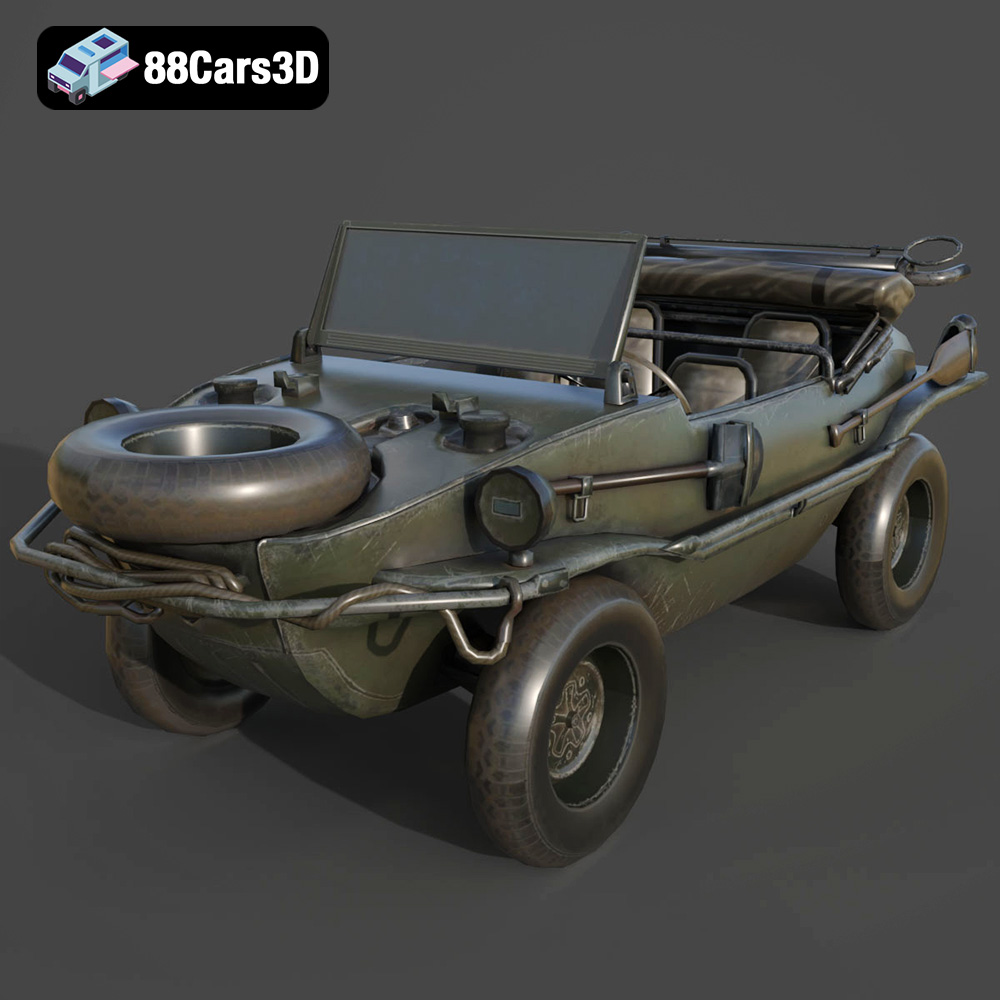
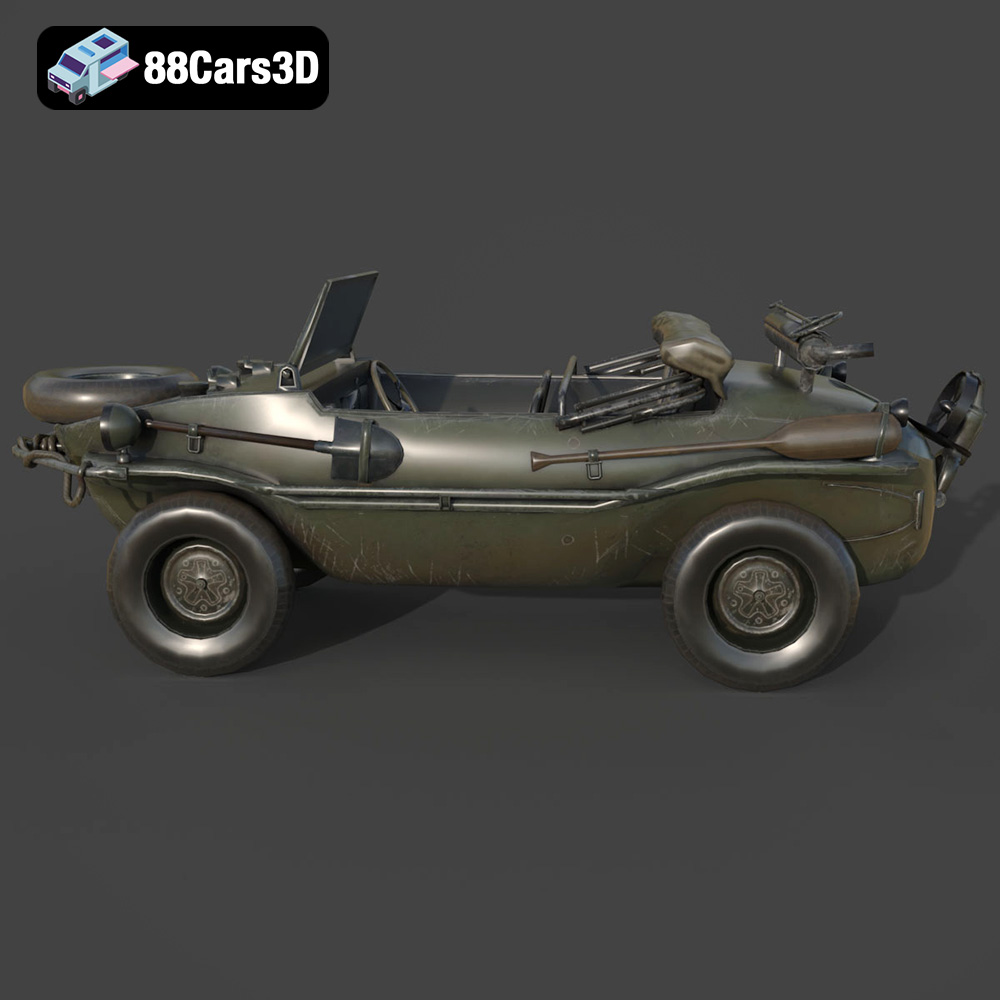
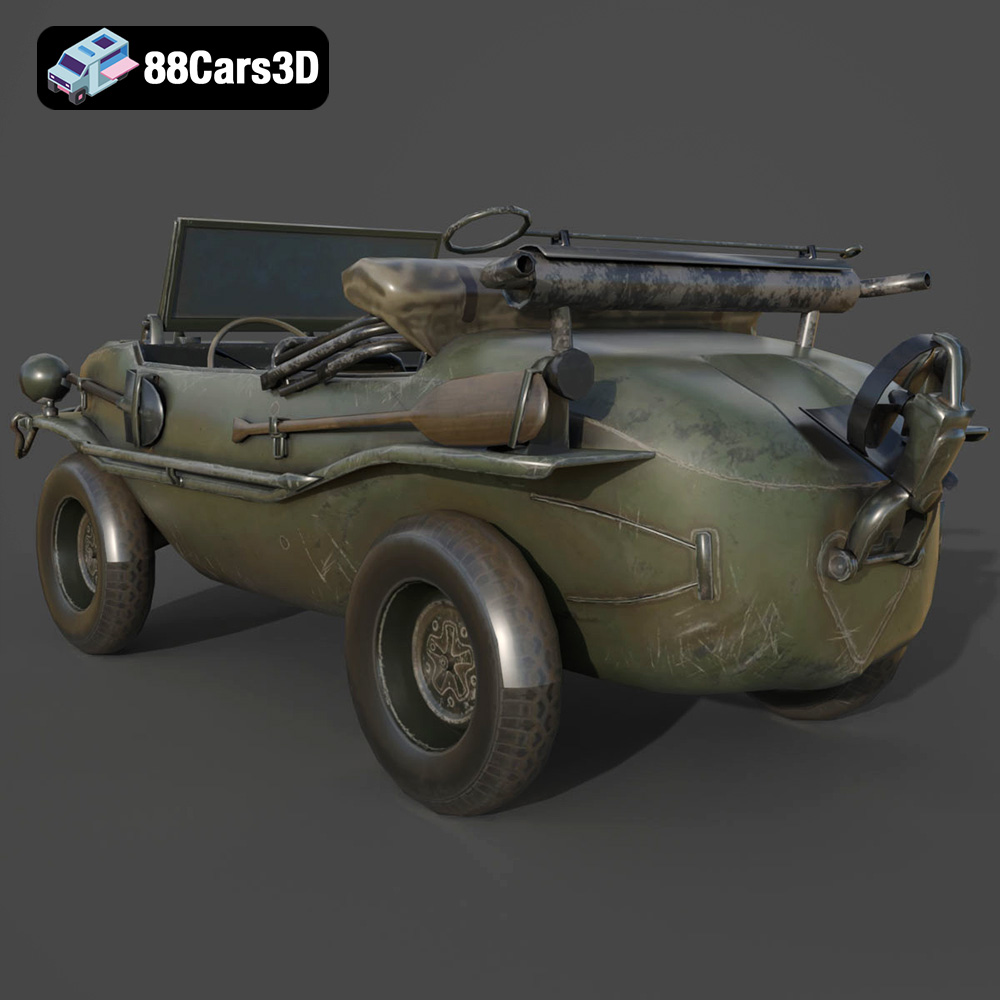
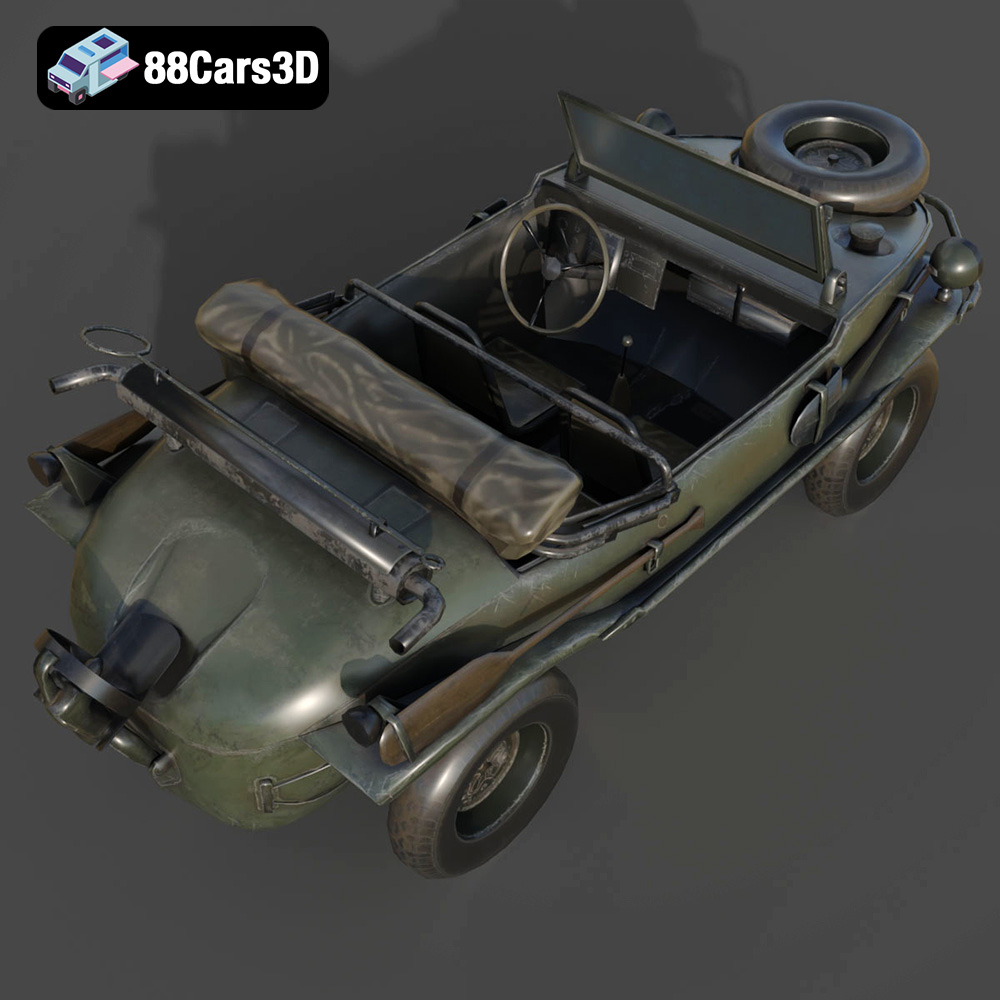
The Volkswagen Schwimmwagen Typ 166 is an iconic World War II amphibious off-road vehicle, celebrated for its rugged durability and unique boat-like hull design. Serving as one of the most mass-produced amphibious cars in history, it features a distinctive rear-mounted air-cooled flat-four engine, a fold-down propeller system, and four-wheel drive capability. This highly accurate 3D model meticulously captures its utilitarian military aesthetics, from the riveted watertight chassis to the spare tire mounted on the sloping front hood.
$39.99
3D printing the Volkswagen Schwimmwagen Typ 166 is a rewarding project that combines historical appreciation with technical skill. By carefully selecting the right 3D printing technology, preparing the 3D model with appropriate slicing software settings, choosing the optimal material, and applying post-processing techniques, you can create a stunning replica of this iconic vehicle. The models at 88cars3d.com offer a great starting point for this project. Remember to troubleshoot any common 3D printing issues that may arise and adjust your settings accordingly. With patience and attention to detail, you can achieve a professional-quality 3D printed model that you will be proud to display. Happy printing!
.blend
.fbx
.glb
.max
.obj
.ply
.rendering
.stl
.unreal
.volkswagen
amphibious-vehicle
car-3d-model
classic-car
game asset
game-ready
low-poly
military-vehicle
off-road
optimized
schwimmwagen-typ-166
VR/AR
ww2-vehicle