Get 20% OFF All Premium 3D & STL Models!

The roar of a classic engine, the gleam of polished chrome, the timeless lines of mid-century design – there’s an undeniable allure to vintage automobiles. For 3D artists, game developers, automotive designers, and visualization specialists, recreating this magic in a digital environment presents both a challenge and an opportunity. It demands not just technical skill, but an appreciation for the historical nuances of design. This is precisely where high-quality 3D car models become indispensable assets. They are the digital blueprints that transform concepts into breathtaking realities, offering a foundation of precision and detail that saves countless hours of development time.
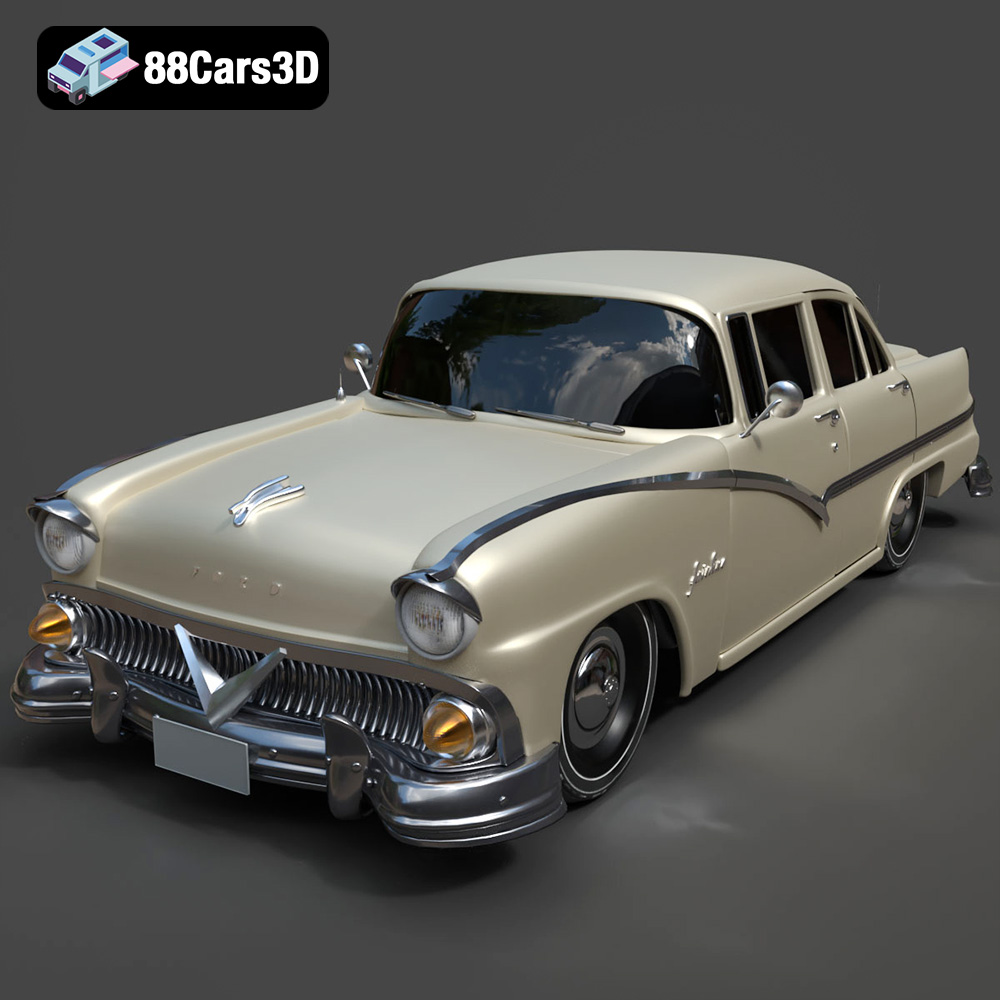
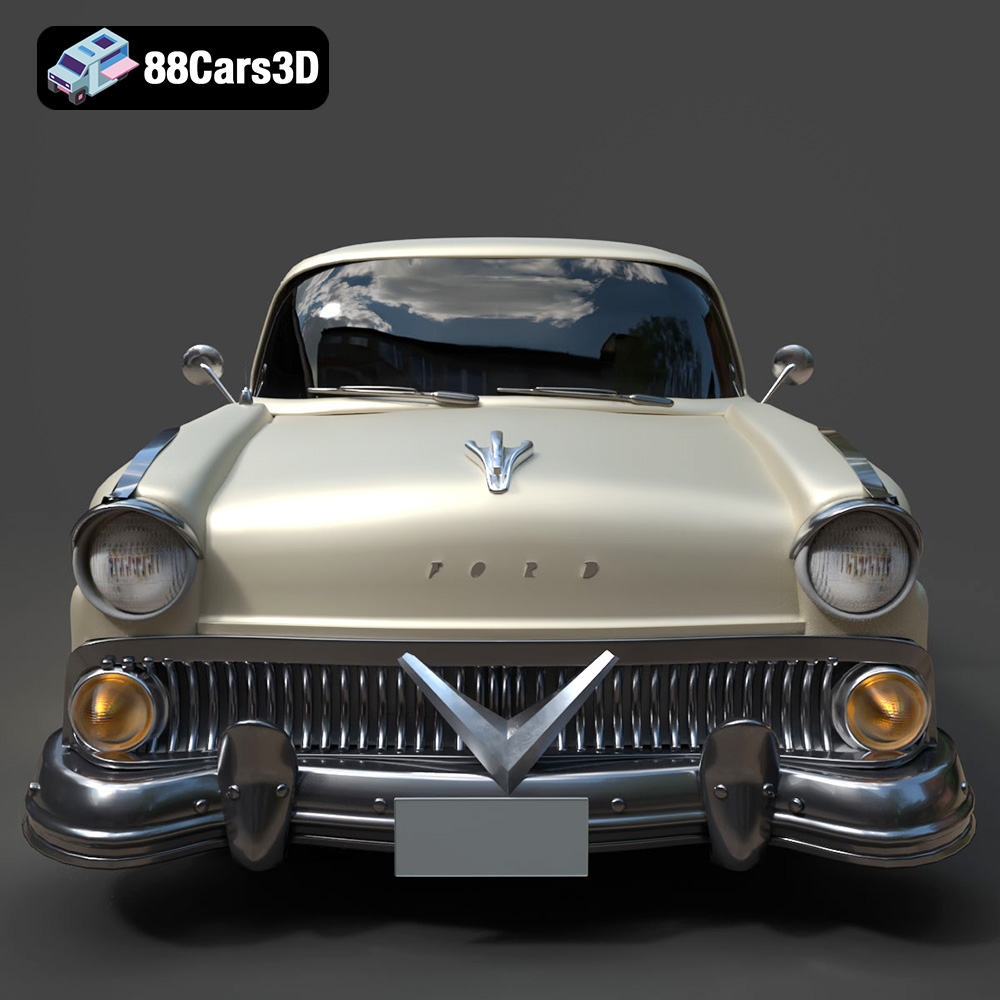
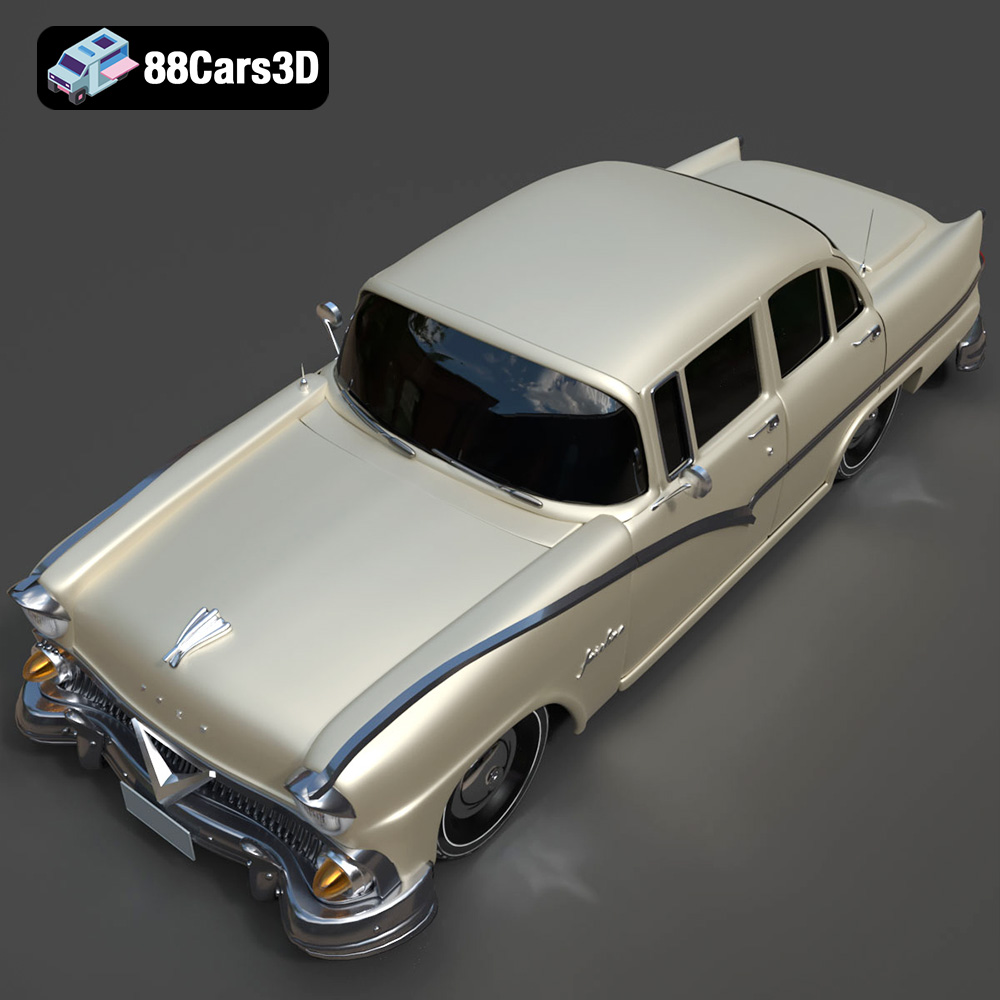
Among these digital treasures, the Ford Fairlin stands as an iconic symbol of American motoring heritage. Its sweeping bodylines, distinctive V8-inspired grille, and robust presence evoke an era of style and power. Now, imagine bringing that exact essence into your latest project, whether it’s a period-accurate racing game, an immersive AR/VR experience, a cinematic render, or a detailed architectural visualization. The Ford Fairlin 3D Model, available on 88cars3d.com, offers an exceptional starting point, meticulously crafted to capture every intricate detail while remaining optimized for a diverse range of professional applications. This model isn’t just a static representation; it’s a versatile tool engineered to elevate your creative vision.
In the dynamic world of 3D, choosing the right file format is as crucial as selecting the right model. It dictates compatibility, data retention, and how seamlessly your asset integrates into various software pipelines. The Ford Fairlin 3D Model exemplifies versatility by being offered in a comprehensive suite of formats, each serving distinct purposes and workflows. Understanding these formats is key to maximizing efficiency and achieving your desired results.
The **.blend** file format is Blender’s native project file. It’s a complete package, containing not just the mesh data but also materials, textures, lighting, cameras, animation data, and even modifiers. For users entrenched in the Blender ecosystem, this format offers unparalleled flexibility. It allows for full editability, from adjusting polygon flow and UV maps to tweaking PBR materials or extending animations. It’s the ideal choice for artists who wish to dive deep into the model’s construction, make significant alterations, or leverage Blender’s powerful rendering capabilities for high-fidelity automotive rendering.
Autodesk’s **.fbx** (Filmbox) format has become the de facto standard for exchanging 3D data between various applications, especially within game development. It excels at preserving complex scene information, including mesh data, materials, textures, animations, skinning, and camera data. For game engines like Unreal Engine and Unity, the .fbx format is king. Its robust support for skeletal animation and hierarchy makes it ideal for transferring rigged vehicles, ensuring proper pivot points for wheels and steering are maintained when importing for real-time interaction. It’s the go-to for ensuring your game-ready Ford Fairlin transitions smoothly into interactive environments.
The **.obj** (Wavefront Object) format is one of the oldest and most widely supported 3D file formats. It’s primarily a geometric definition file, storing vertex positions, normals, texture coordinates (UVs), and polygon connectivity. While it can reference external material files (.mtl), its strength lies in its simplicity and universal compatibility. Almost every 3D software can import and export .obj files, making it excellent for cross-software compatibility when the primary need is to transfer pure mesh data. It’s a reliable choice if you need the Ford Fairlin’s geometry for sculpting, retopology, or applications with limited format support.
The **.glb** (GL Transmission Format Binary) format is increasingly vital for modern interactive experiences. It’s a binary version of glTF, designed to be compact and efficient for web-based 3D, augmented reality (AR), and virtual reality (VR) applications. A single .glb file can contain mesh, materials, textures, and animation data, making it a self-contained asset ideal for quick loading and display in browsers or mobile AR/VR viewers. For showcasing the Ford Fairlin in a virtual showroom or an interactive web experience, .glb offers optimal performance and ease of deployment.
The **.stl** (Stereolithography) format is the standard file type for 3D printing. It represents a 3D model as a series of connected triangles, describing the surface geometry of an object without color, texture, or other CAD attributes. When converting the Ford Fairlin 3D Model for physical fabrication, .stl ensures that the printer receives a watertight, unambiguous mesh. This is crucial for hobbyists and professionals looking to create scale models or prototypes of the classic car.
The **.ply** (Polygon File Format or Stanford Triangle Format) is a flexible format for storing 3D data, particularly useful for scanned data. Like .obj, it defines geometry, but it can also store additional properties such as color, transparency, normals, texture coordinates, and even reliability information for each vertex and face. It’s often used in academic and research contexts, as well as for precision mesh data in CAD or analysis applications where more detailed attribute information is required alongside the geometry.
While not a standalone file type in the traditional sense, **.unreal** implies an asset specifically packaged or optimized for direct import and use within Unreal Engine. This often means the FBX file has been pre-processed, materials set up with PBR (Physically Based Rendering) shaders, collision meshes generated, and sometimes even basic LODs (Levels of Detail) configured. An “engine-ready” Unreal asset for the Ford Fairlin ensures minimal setup time, allowing developers to drop the classic car directly into their virtual worlds with correct materials and performance optimizations.
Similar to .blend for Blender, **.max** is the native project file for Autodesk 3ds Max. This format retains all scene information, including complex modifiers, rigging, animations, lights, and render settings specific to 3ds Max. For professional studios relying on 3ds Max for high-end visualization, animation, and automotive rendering, the .max file provides the fullest control over the Ford Fairlin model, enabling intricate adjustments and seamless integration into existing 3ds Max projects.
The comprehensive file format offering for the Ford Fairlin 3D Model underscores its adaptability and value, ensuring that no matter your chosen platform or end goal, you have the right tool for the job.
Recreating a classic vehicle like the Ford Fairlin in 3D is more than just mimicking shapes; it’s about translating soul. The design philosophy behind this 3D model centers on absolute authenticity, meticulously dissecting every curve and contour that defined mid-century American automotive design. The goal is to provide a digital twin that resonates with the nostalgic power of the original.
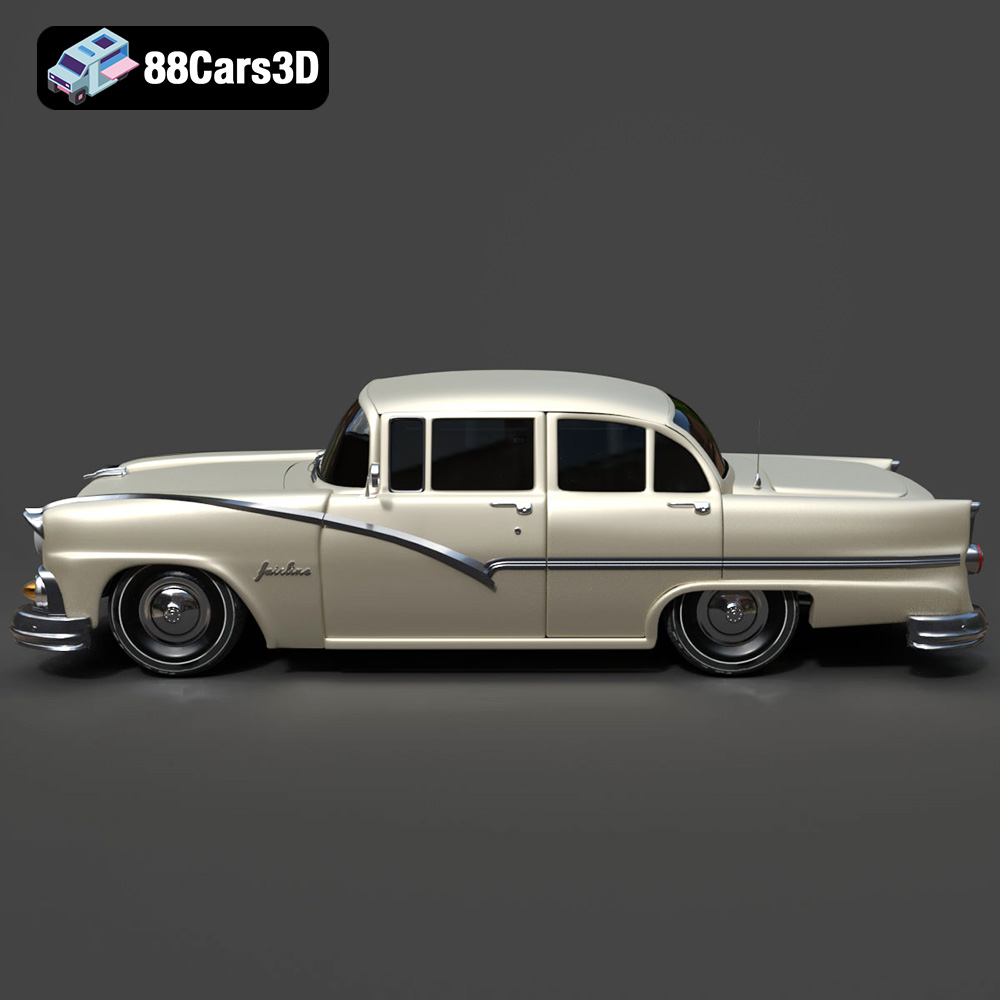
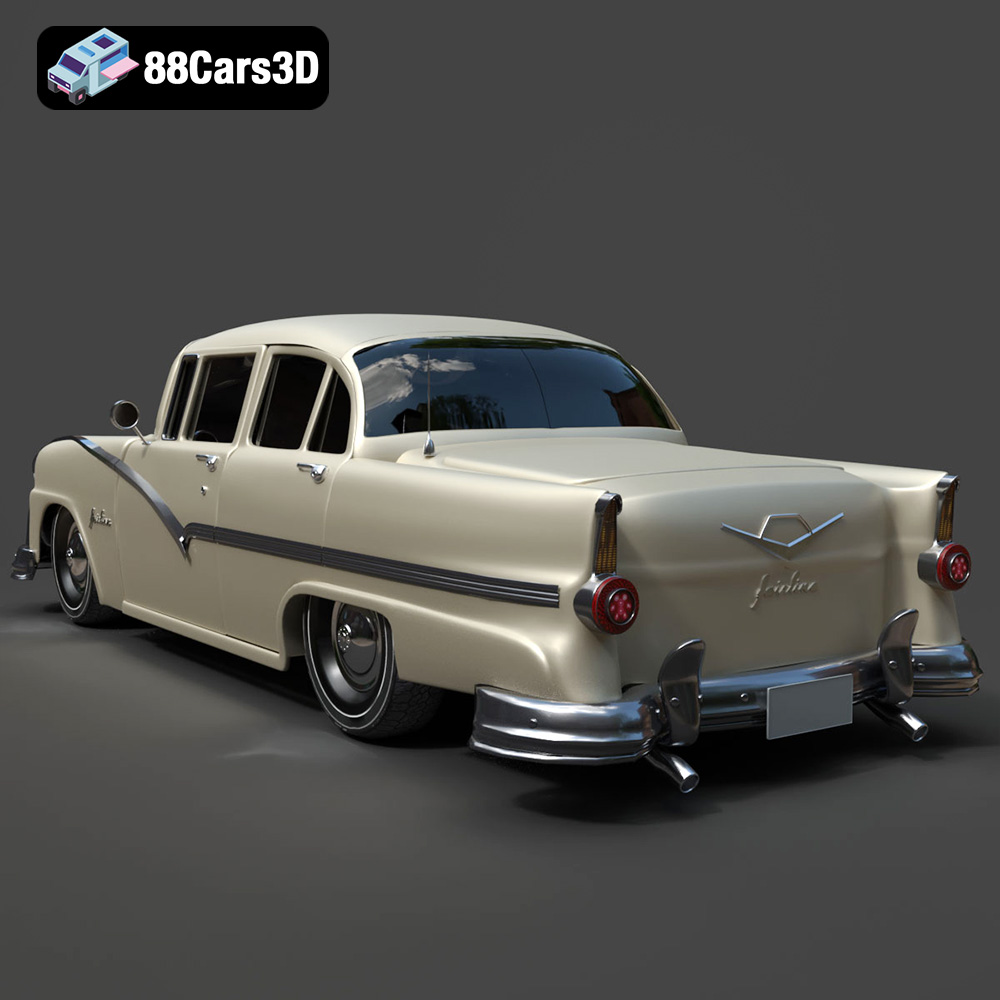
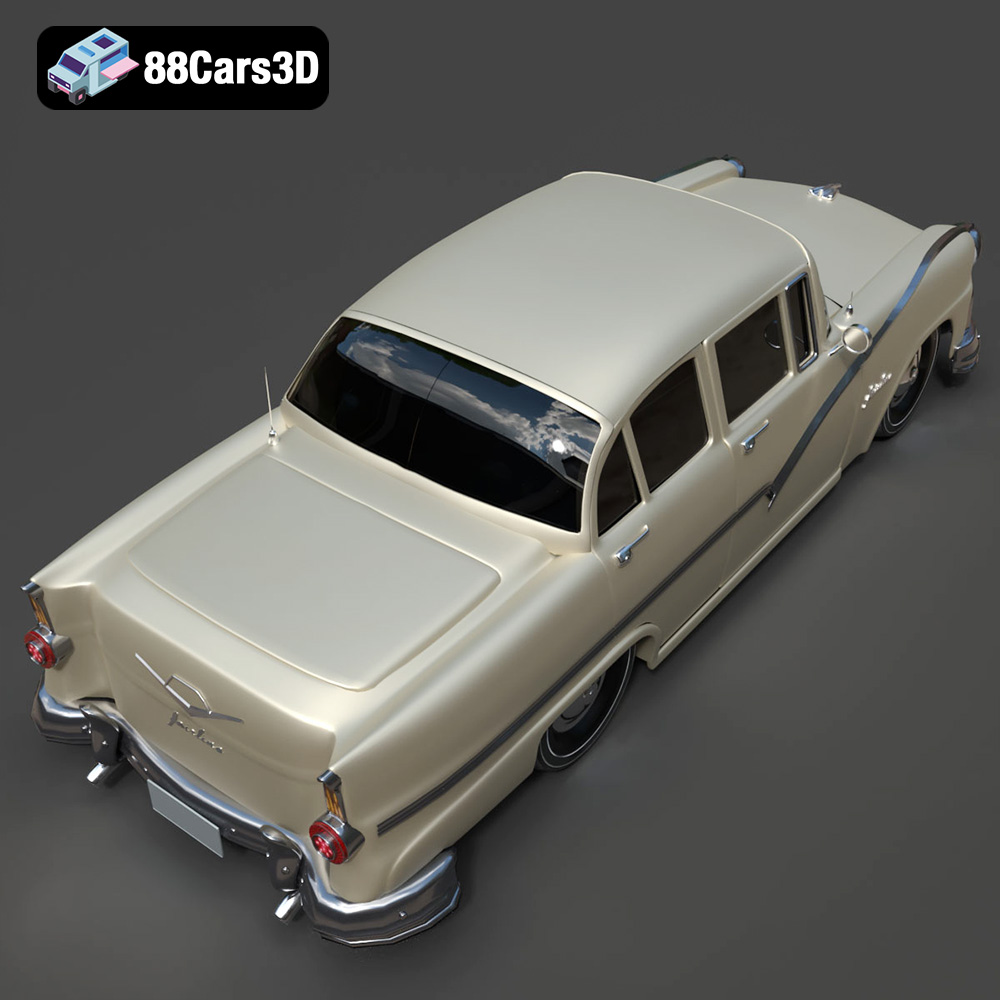
The model starts with accurate Ford Fairlin frame geometry, ensuring the classic proportions are perfectly maintained. This isn’t just a generic car shape; it’s the specific, recognizable silhouette of the Fairlin, from its expansive chrome bumpers to its sweeping bodyline. The front grille, inspired by the legendary V8 powerplant, is recreated with precision, highlighting the vehicle’s vintage appeal. Moving along the exterior, the authentic dual exhaust system with its chrome tailpipes evokes the classic rumble, while period-correct lighting, featuring classic round headlights and signature taillights, perfectly frames the design. Even the vintage-style steel wheels with classic whitewall tire detailing are historically accurate, contributing to an overall visual fidelity that makes this model shine in any automotive rendering scenario. The detailed undercarriage and suspension setup further enhance realism, making it suitable for close-up shots or even cutaway diagrams.
The attention to detail extends seamlessly into the cockpit and interior features. Here, the model offers an authentic vintage bench seat with highly detailed upholstery, inviting viewers to imagine themselves behind the wheel. The classic thin-rimmed steering wheel, complete with its chrome horn ring, is a perfect period piece. An accurate retro analog instrument cluster with detailed gauge faces and period-correct control details, including the column shifter and pedals, completes the immersive experience. For game developers, this level of interior detail is crucial. The optimized geometry for first-person POV in gaming means that players or virtual passengers will experience a true-to-life environment, enhancing the overall realism and immersion of the game or VR application.
The true value of a professional 3D car model lies not just in its visual appeal, but in its technical construction. The Ford Fairlin 3D Model is a testament to this, striking a delicate balance between high-end visual fidelity and game-ready performance, making it an ideal game asset.
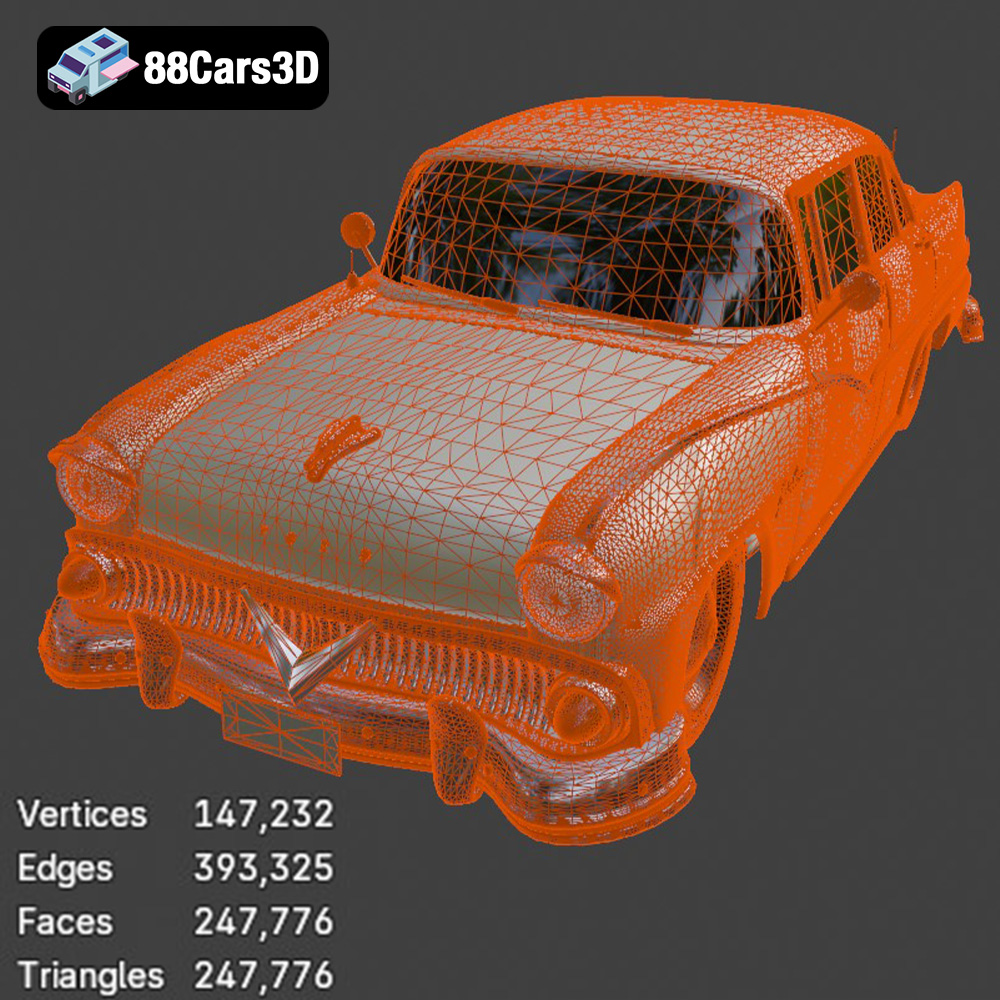
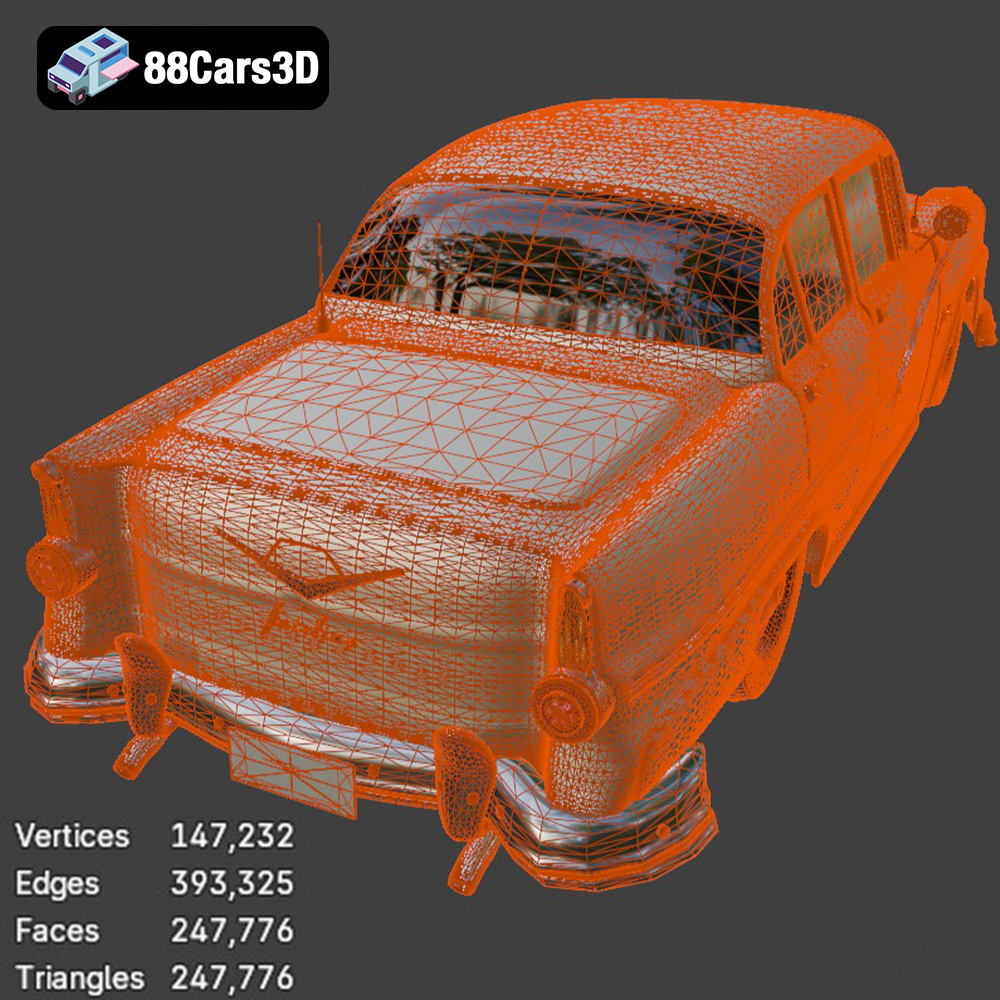
A critical technical advantage of this model is its optimized triangle count of approximately 150,000. This figure is strategically chosen to provide maximum visual fidelity without compromising real-time performance in engines like Unreal and Unity. For context, while hyper-realistic models can run into millions of polygons, 150,000 triangles allow for rich detail on a hero asset without crippling frame rates. For highly demanding game environments or AR/VR experiences, a well-implemented Level of Detail (LOD) strategy would typically involve generating lower-poly versions of the Ford Fairlin. While the base model is optimized, its clean topology makes generating these LODs straightforward, ensuring the car looks great both up close and at a distance without unnecessary rendering overhead.
Although not explicitly detailed in the product description, for a “game-ready” asset designed for “high-end visual realism,” impeccable UV mapping and PBR (Physically Based Rendering) material setup are implicitly crucial. The model’s geometry would feature clean, non-overlapping UVs, allowing for efficient texture application. This foundation enables artists to leverage modern PBR workflows, applying realistic metallic, roughness, normal, and ambient occlusion maps. This ensures the Ford Fairlin reacts accurately to lighting, giving its chrome parts the correct reflectivity and its paintwork the authentic sheen of a vintage finish, making it perfect for photorealistic automotive rendering.
The product highlights “separate wheels, suspension, and steering components for animation” and “proper pivot setup for steering, wheel rotation, and suspension travel.” This is a significant technical advantage. It means the model is pre-rigged or at least built with animation in mind. Individual components are properly grouped and pivoted, allowing animators to quickly set up wheel rotations, steering movements, and dynamic suspension compression. This saves considerable time in game development for vehicle physics implementation and in cinematic animation for realistic car movement, crucial for any interactive or narrative project featuring the Ford Fairlin.
The versatility of the Ford Fairlin 3D Model truly shines in how effortlessly it integrates into diverse professional pipelines, from fast-paced game development to intricate visualization projects.
For game development, the Ford Fairlin is a prime game asset. Its optimized polycount and real-world scale make it ideal for open-world games, racing titles, and simulators. Using the .fbx or engine-ready .unreal formats, developers can directly import the model into Unreal Engine or Unity. The pre-setup pivots for wheels and steering drastically reduce the time spent on vehicle physics and animation rigging. Imagine developing a retro-themed racing game; the Fairlin can be dropped into a scene, physics applied, and immediately driven, saving weeks of modeling and optimization. It can serve as a hero car, AI traffic, or a customizable vehicle for players, providing a solid foundation for dynamic gameplay scenarios.
In architectural visualization, the presence of a classic car can transform a static scene into a living, breathing environment. Placed within a mid-century modern home render or a bustling street scene, the Ford Fairlin adds character, historical context, and a focal point for the eye. With its highly detailed exterior and interior, the model excels in close-up renders and studio lighting setups. Artists using 3ds Max or Blender (with the respective .max or .blend files) can leverage advanced rendering engines like V-Ray, Corona, or Cycles to achieve photorealistic results. The model’s accurate materials and geometry ensure that reflections, shadows, and global illumination behave correctly, enhancing the overall realism of the visualization. For cinematic renders, the animatable components allow for dynamic camera shots, following the Fairlin as it drives through a stylized environment, enhancing storytelling.
The rise of AR/VR technology creates new opportunities for engaging with 3D models. The Ford Fairlin, particularly in its .glb format, is perfect for immersive virtual showrooms, configurators, and mobile AR experiences. A potential use case could be a virtual classic car dealership where users can walk around the Fairlin, inspect its interior, and even customize its paint job or tire options in real-time. For a mobile AR app, users could place a life-sized Ford Fairlin in their driveway, examining its details as if it were physically present. The optimized geometry ensures smooth performance on a variety of devices, providing a seamless and engaging user experience.
The utility of a high-quality 3D model extends beyond digital displays. The Ford Fairlin 3D Model is fully convertible to .stl format, opening doors for 3D printing enthusiasts and professionals alike to bring this classic beauty into the physical world.
Converting the Ford Fairlin to a physical model requires careful consideration. The recommended scales (1:12, 1:18, 1:24) are standard for collectible models, offering a good balance between detail and manageable print size. For optimal results, especially for fine details like the exhaust system, mirrors, and intricate interior elements, resin printing (SLA/DLP) is highly recommended over filament-based (FDM) printing. Resin printers can achieve significantly finer layer heights (0.04–0.12 mm), capturing the delicate chrome trims and upholstery textures that define the Fairlin. For larger, less detailed components, FDM might be suitable, but resin will undoubtedly yield a superior finished product.
3D printing is often just the first step. Post-processing is where the model truly comes to life. Initial steps include removing supports, sanding to smooth layer lines or print artifacts, and applying primer to create an even surface for painting. The real magic happens with paint. Recommending authentic factory colors with metallic finishes allows hobbyists to recreate the Fairlin’s original showroom appearance. This level of detail in the finishing process can transform a raw 3D print into a stunning display piece, celebrating the craftsmanship of both the original car and the digital artist who created its 3D counterpart.
A premium 3D asset should offer more than just a fixed representation; it should be a malleable tool that adapts to diverse creative requirements. The Ford Fairlin 3D Model provides significant customization options, empowering artists and developers to tailor it precisely to their project’s needs.
The ability to change body and interior colors is fundamental. Users can easily switch between authentic factory colors to custom finishes, experimenting with matte, gloss, or metallic looks to achieve a specific aesthetic. Imagine a vintage car commercial needing the Fairlin in a unique metallic blue, or a game level set in a dystopian future where the car has a weathered, rusty texture. The model’s robust material setup facilitates these changes. Furthermore, modifying tire textures from classic whitewalls to off-road variants or street-racing slicks can dramatically alter the vehicle’s character, expanding its utility across different scenarios. This flexibility makes it an incredibly versatile game asset for any developer.
Adapting lighting for different environments is another crucial customization. The Ford Fairlin 3D Model can be easily integrated into various lighting setups, from a sunny outdoor scene to a dramatic, dimly lit garage. Whether it’s studio lighting for a high-end product render or dynamic environmental lighting for a game, the model’s PBR-ready materials will react realistically. Artists can experiment with global illumination, specular highlights, and shadow casting to evoke specific moods or enhance realism in their automotive rendering projects. This adaptability ensures the Fairlin always looks its best, no matter the context.
In the fast-evolving landscape of 3D content creation, the demand for high-quality, versatile, and technically sound 3D models continues to grow. The Ford Fairlin 3D Model stands out as an exemplary asset that marries historical authenticity with modern technical optimization. From its meticulously recreated exterior and interior details to its expertly managed polycount and comprehensive file format support, every aspect of this model is designed to empower professionals.
Whether your goal is to populate a vast open-world game with realistic vehicles, create breathtaking cinematic visualizations, craft immersive AR/VR experiences, or even bring a tangible scale model to life through 3D printing, the Ford Fairlin provides an unparalleled foundation. Its compatibility with industry-standard software like 3ds Max and Blender, and its game-ready nature for Unreal Engine and Unity, make it an invaluable tool for any artist or developer.
Investing in a premium 3D car model like the Ford Fairlin from 88cars3d.com isn’t just acquiring an asset; it’s acquiring a cornerstone for innovation, a testament to meticulous craftsmanship, and a key to unlocking new creative possibilities in your next project. It embodies the legacy of a classic car, ready to drive into your digital future.
Experience the timeless elegance and power of the classic Ford Fairlin, a stunning representation of mid-century automotive design. Known for its heritage and iconic presence, this vehicle features signature styling cues including expansive chrome bumpers, a sweeping bodyline, and a classic V8-inspired front grille. Its vintage appeal is highlighted by perfectly proportioned exterior lines and a meticulously recreated exhaust system that captures the essence of classic American motoring.
This premium 3D model boasts exceptional topology with an optimized triangle count of approximately 150,000, ensuring maximum visual fidelity without compromising game-ready performance. It is expertly crafted for a variety of demanding applications, providing flawless geometry and stunning realism for game development, AR/VR applications, high-end animation, and architectural visualization.
Perfect for classic car showcases, period-accurate racing games, VR garage configurators, and cinematic renders.
.blend, .fbx, .obj, .glb, .stl, .ply, .unreal, .max
Tags:
ford, fairlin, fairlane, classic-car, vintage-car, retro, car-3d-model, game-ready, low-poly, optimized, game-asset, rendering, vr-ar, blend, fbx, obj, glb, stl, ply, unreal, maxVespa VNB 125-B 3D Model 3D Printable STL
$19.99
.blend
.fairlane
.fbx
.ford
.glb
.max
.obj
.ply
.rendering
.retro
.stl
.unreal
car-3d-model
classic-car
fairlin
game asset
game-ready
low-poly
optimized
vintage-car
VR/AR