Get 20% OFF All Premium 3D & STL Models!

The automotive industry has always been at the forefront of design and engineering innovation, pushing boundaries not just in the physical realm but increasingly in the digital one. From concept visualization to cinematic advertisements, immersive gaming experiences, and cutting-edge virtual reality showrooms, high-fidelity 3D car models are the indispensable backbone of modern digital automotive content. Crafting these digital masterpieces demands a profound understanding of technical specifications, software workflows, and real-world application.
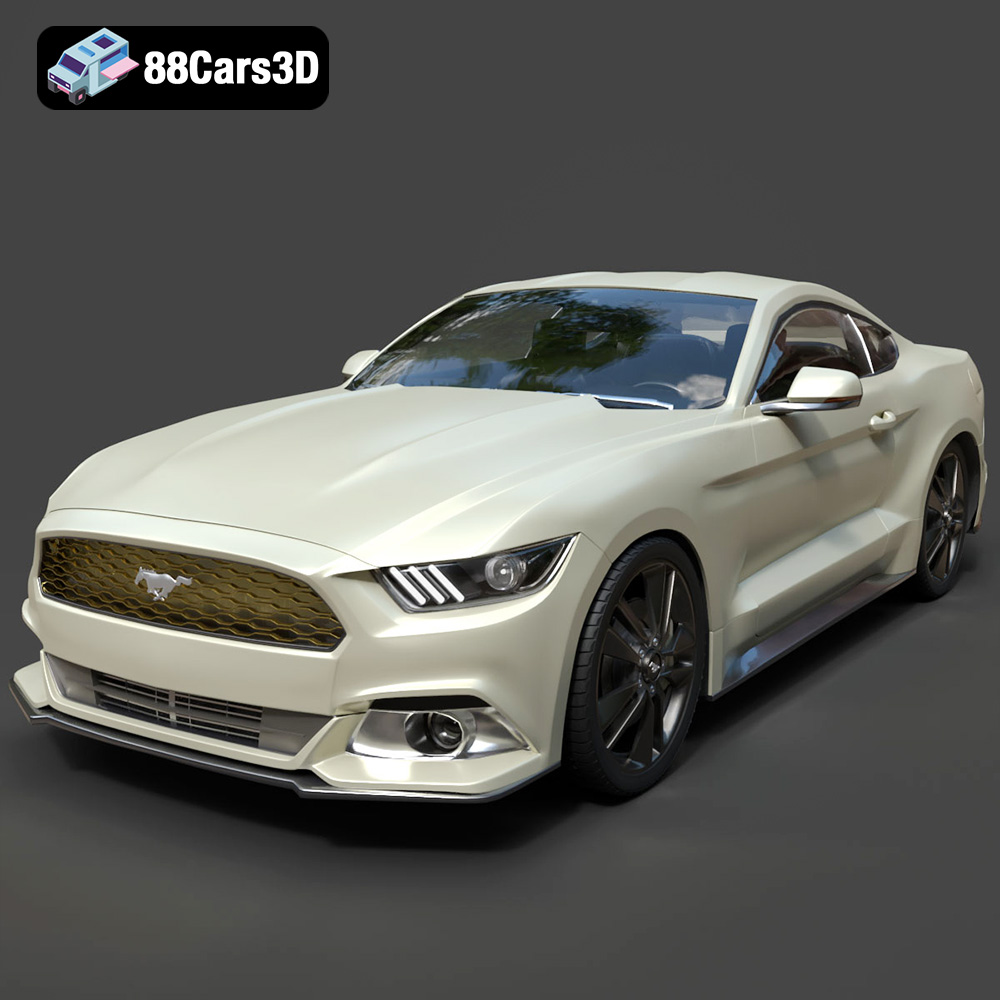
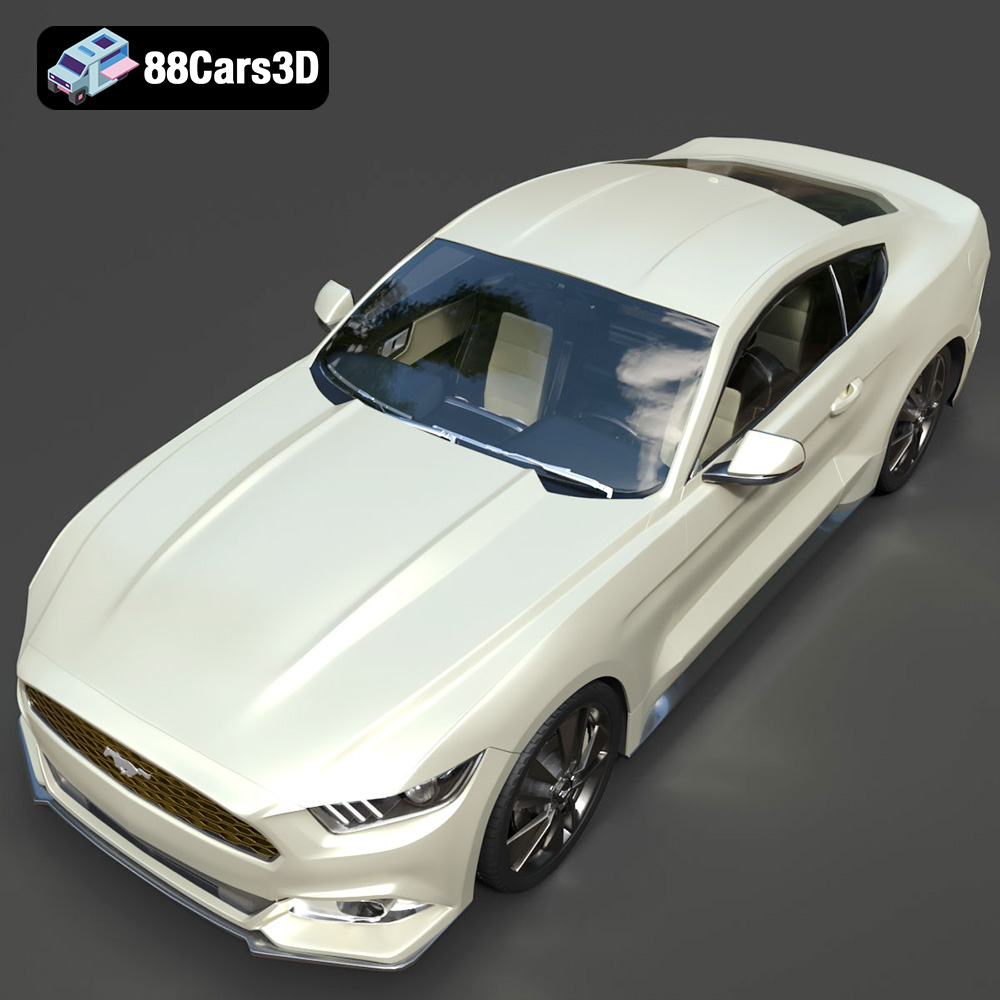
Imagine bringing the roar of a V8 engine and the sleek lines of an American legend to life, not just on the road, but within a pixel-perfect digital environment. This is where a meticulously engineered asset like the Ford Mustang GT 3D Model Download STL FBX OBJ GLB Blend from 88cars3d.com becomes invaluable. It’s more than just a model; it’s a versatile toolkit designed to empower designers, game developers, animators, and architects to achieve unparalleled realism and performance in their projects. This article will delve into the technical intricacies of leveraging such a sophisticated 3D asset, exploring file formats, rendering techniques, game development optimization, and even the fascinating world of 3D printing, demonstrating how a single, high-quality model can transform diverse creative endeavors.
When working with 3D assets, particularly complex ones like a detailed car model, selecting the correct file format is crucial for workflow efficiency, compatibility, and achieving desired output. The Ford Mustang GT 3D Model provides an extensive array of formats, each serving distinct purposes and optimized for different stages of the digital production pipeline. Understanding these formats is paramount for any professional or enthusiast.
The .blend file is Blender’s native format, offering a comprehensive and fully editable scene. When you download the Ford Mustang GT model in .blend format, you gain access to the entire project file, including the mesh data, materials, textures, lighting setups, cameras, animations (if present), and even modifiers used during its creation. This format is ideal for Blender users who wish to customize every aspect of the model, from tweaking material nodes and adjusting geometry to rigging new elements or integrating it into a larger Blender-based scene. Its self-contained nature ensures that all associated assets are properly linked and ready for immediate work within Blender, making it a powerful starting point for detailed modifications and artistic expression.
.fbx (Filmbox) is a proprietary file format developed by Autodesk, serving as one of the most widely adopted interchange formats in the 3D industry. Its strength lies in its ability to store not only mesh data but also critical information like animations, skeletal rigs, textures, and even material definitions across different software packages. For the Ford Mustang GT, the .fbx format is perfect for migrating the model into popular real-time engines like Unreal Engine and Unity, as well as other DCC applications such as Maya, 3ds Max, or Cinema 4D. It maintains proper scaling, pivot points (essential for wheel rotation and suspension), and often carries basic material assignments that can be easily converted to PBR workflows in the target software, ensuring robust compatibility for complex animated scenes and game pipelines.
The .obj (Wavefront OBJ) format is a venerable and highly compatible format primarily used for transferring 3D geometry data. It stores vertex positions, UV coordinates, normals, and polygon faces. While it doesn’t typically embed animations or complex material networks like .fbx, it often references external .mtl (material) files for basic color and texture map assignments. The Ford Mustang GT in .obj format is a reliable choice for ensuring broad cross-software compatibility, especially when the primary focus is on the raw mesh for sculpting, retopology, or applications that handle materials differently. Its universal nature makes it a foundational format for many 3D artists.
.glb (GL Transmission Format Binary) is the binary version of glTF, a royalty-free specification for 3D scenes and models. It is specifically designed for efficient transmission and loading of 3D content in web applications, augmented reality (AR), and virtual reality (VR) experiences. A .glb file packages all necessary data—geometry, materials, textures, and animations—into a single, compact file, making it ideal for the performance-sensitive environments of browsers and mobile devices. For showcasing the Ford Mustang GT in an interactive web viewer, an AR configurator, or a lightweight VR experience, the .glb format provides excellent optimization and ease of integration.
.stl (Stereolithography) is the de facto standard for 3D printing. This format represents a 3D model as a series of connected triangles, defining only the surface geometry without color, texture, or material information. The Ford Mustang GT in .stl format is essential for transforming the digital model into a physical object. While it’s a straightforward format, ensuring the mesh is “manifold” (watertight, with no gaps or inversed normals) is critical for successful printing. It’s the go-to format for hobbyists and professionals looking to create display models or prototypes of the Mustang GT.
The .ply (Polygon File Format) is another format for storing 3D data, often used for data acquired from 3D scanners, CAD systems, or for scientific analysis. It can store various properties for each vertex (such as color, normal vectors, transparency) and face (color, texture coordinates), offering more flexibility than .stl. While less common for general artistic distribution, the Ford Mustang GT in .ply format can be valuable for niche applications requiring precise mesh data for engineering analysis, reverse engineering, or integration into specialized CAD workflows.
The .unreal designation implies a highly optimized, engine-ready asset specifically tailored for Epic Games’ Unreal Engine. This often means the model has undergone specific preparation, including proper scaling, collision geometry setup, material instancing for PBR (Physically Based Rendering), and potentially LOD (Level of Detail) variations. For the Ford Mustang GT, an .unreal asset would allow for direct import into Unreal Engine projects with minimal setup, providing a significant time-saving advantage for game developers and architectural visualization artists, ensuring optimal performance and visual fidelity within the engine.
The .max file is Autodesk 3ds Max’s native project format. Similar to .blend, it encapsulates the entire scene, including geometry, materials, lighting, cameras, animations, and render settings specific to 3ds Max. For users of this robust architectural visualization and animation software, the .max format of the Ford Mustang GT offers the highest degree of editability and integration within their existing 3ds Max workflows. It’s ideal for high-end rendering with V-Ray or Corona Renderer, complex scene composition, and detailed animation sequences.
This comprehensive offering of file formats for the Ford Mustang GT from 88cars3d.com underscores the model’s versatility, ensuring that it seamlessly fits into virtually any professional 3D pipeline, from high-fidelity rendering to real-time game development and physical prototyping.
Automotive rendering is a specialized discipline that blends artistic vision with technical precision. It’s about more than just making a car look good; it’s about evoking emotion, highlighting design philosophy, and communicating power and prestige. The Ford Mustang GT 3D Model provides an exceptional foundation for achieving photorealistic results, thanks to its detailed geometry and thoughtful optimization.
Achieving photorealism in a 3D render relies heavily on two critical components: realistic materials and convincing lighting. The Ford Mustang GT model’s detailed geometry and accurate UVs are a perfect canvas for PBR (Physically Based Rendering) workflows. PBR materials meticulously simulate how light interacts with surfaces in the real world, using texture maps such as Albedo (color), Roughness (micro-surface detail), Metallic (conductive properties), and Normal maps (fine surface bumps without adding geometry). For the Mustang GT, this means accurately representing the metallic flake of its paintwork, the subtle reflectivity of glass, the texture of its tires, and the intricate stitching on its interior sports seats.
Lighting is the sculptor of form. Utilizing High Dynamic Range Images (HDRIs) can effortlessly place the Mustang GT into real-world environments with accurate global illumination, reflections, and shadows. For studio shots, an array of virtual lights can highlight its aggressive lines, accentuate the quad-tip exhaust, or reveal the intricate details of the 5.0L V8 engine bay. The model’s separated components, like wheels, suspension, and steering, allow for dynamic lighting setups that cast realistic shadows and capture the essence of a high-performance vehicle.
Integrating the Ford Mustang GT into a professional rendering workflow within software like 3ds Max or Blender is a streamlined process. Upon importing the .fbx or .obj file, artists can immediately begin setting up advanced materials. In 3ds Max, this typically involves using V-Ray or Corona Renderer’s PBR materials, connecting relevant texture maps, and fine-tuning parameters. The model’s real-world scale accuracy ensures that lighting and camera settings behave predictably, mirroring real-life photography principles.
Blender users can leverage the .blend file directly or import .fbx, utilizing Cycles or Eevee render engines. Cycles, Blender’s path-tracing engine, excels at photorealistic light simulation, while Eevee offers real-time rendering capabilities ideal for quick previews and animations. The Mustang GT’s proper pivot setup for steering, wheel rotation, and suspension travel is a huge time-saver for animators. Instead of manually correcting pivot points, artists can instantly begin animating realistic vehicle movements, whether it’s a subtle suspension bounce or a full-throttle drift, making the creative process more efficient and focused on artistic direction rather than technical setup.
The demand for high-quality, performant 3D car models in game development and interactive experiences has never been higher. Players expect immersive realism, and developers need assets that can deliver without bogging down engine performance. The Ford Mustang GT 3D Model is explicitly engineered with these requirements in mind, offering an optimal balance of visual fidelity and real-time efficiency.
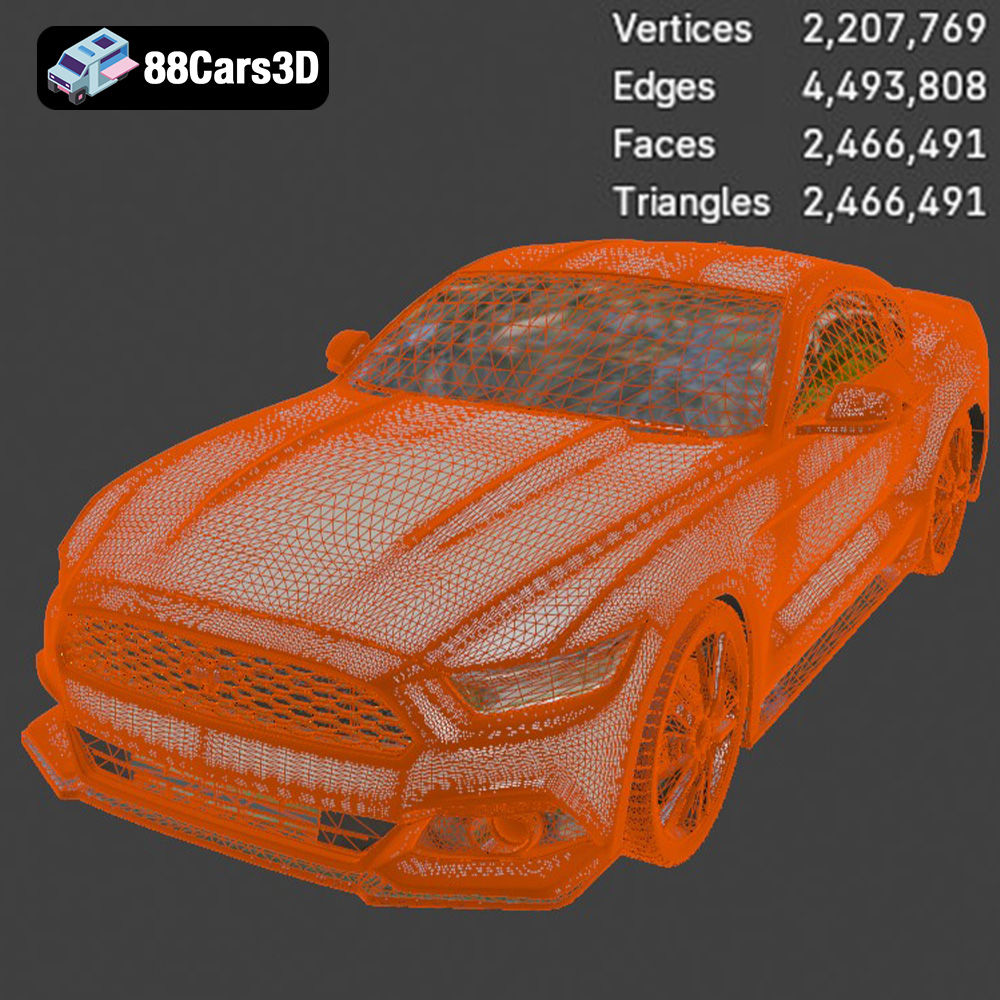
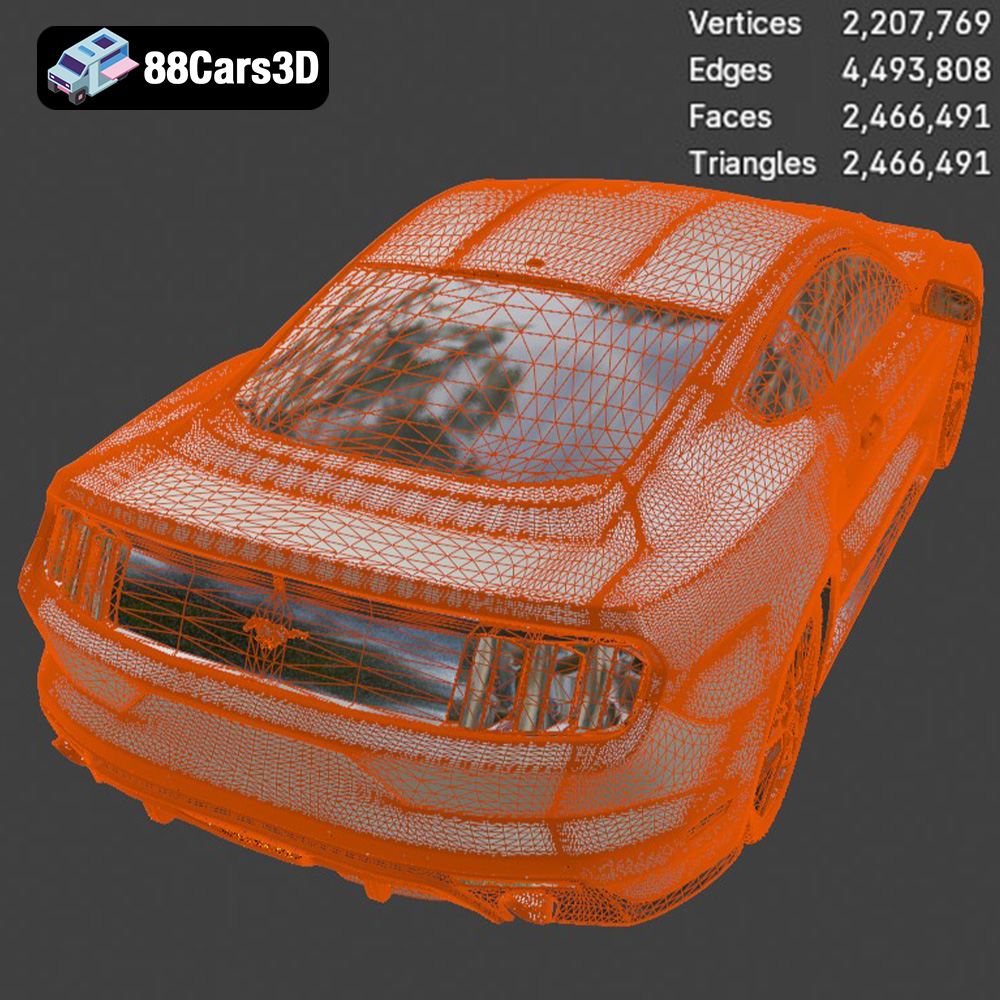
A “game-ready” asset is characterized by its optimized polygon count, clean topology, and appropriate material setup. With approximately 200,000 triangles, the Ford Mustang GT model strikes a near-perfect balance for modern real-time engines like Unreal Engine and Unity. This poly count is low enough to ensure excellent frame rates in open-world racing games or bustling urban environments, yet high enough to retain the iconic aggressive aesthetic, detailed interior, and engine bay nuances for close-up inspection or first-person viewpoints.
For Unreal Engine, the inclusion of an .unreal specific file format or a robust .fbx ensures seamless integration. Artists can import the model, apply PBR materials (easily converted from the provided textures), and quickly set up vehicle blueprints for driving mechanics. The accurate pivot points for wheels and steering are invaluable, reducing development time by allowing immediate animation and physics integration. Similarly, in Unity, the .fbx format facilitates straightforward import, material assignment, and integration with physics engines, making the Mustang GT an ideal asset for rapid prototyping and final game production.
Augmented Reality (AR) and Virtual Reality (VR) represent the next frontier in interactive experiences, and high-quality 3D assets are central to their success. Whether it’s a virtual showroom allowing customers to explore a car in 360 degrees or an AR application that places a digital Mustang GT on your driveway, performance is critical. The .glb file format, provided with the Mustang GT model, is specifically optimized for these applications. Its compact, single-file structure and efficient data compression ensure quick loading times and smooth performance on mobile devices and VR headsets.
The Mustang GT’s highly detailed interior, including the digital instrument cluster, infotainment screen, and realistic stitching on the sport bucket seats, is particularly impactful in AR/VR. Users can “step inside” the vehicle, inspecting every element as if it were truly there, providing an unparalleled level of immersion. This makes the model perfect for virtual configurators, immersive training simulations, or even interactive marketing campaigns where users can personalize their dream car in real-time, all powered by the robust optimization of the 88cars3d.com asset.
The journey of a 3D model doesn’t always end on a screen. For enthusiasts, designers, and educators, the ability to transform a digital asset into a tangible, physical object through 3D printing offers a unique and satisfying extension of the creative process. The Ford Mustang GT 3D Model is versatile enough to bridge this gap, offering an .stl file specifically for this purpose.
The .stl format, included with the Ford Mustang GT model, is the industry standard for 3D printing. However, preparing a high-fidelity rendering model for physical output requires specific considerations. The model’s geometry needs to be “manifold” – meaning it’s a watertight mesh without any gaps, internal geometry, or inverted normals – to ensure a successful print. While the provided .stl is designed to be print-ready, users might still need to perform minor checks or repairs using dedicated 3D printing software (like Meshmixer or Netfabb) to ensure optimal results, especially if scaling or modifications are applied.
The product description provides excellent guidance for 3D print settings: recommended scales (1:12, 1:18, 1:24), layer height (0.04–0.12 mm), wall thickness (1.2–2.0 mm), and infill (20–30%). Resin printing (SLA/DLP) is highly recommended for capturing the Mustang GT’s fine details, such as the aggressive rear diffuser, quad-tip exhaust, and intricate suspension components. Supports will be required for overhangs and delicate parts like side mirrors and aerodynamic splitters, and the recommended print orientation (frame angled, wheels separately) optimizes structural integrity and detail preservation.
3D printing is often just the first step in creating a high-quality physical model. Post-processing is where the printed parts truly come to life. For the Ford Mustang GT, this involves meticulous sanding to smooth layer lines, applying primer to create a uniform surface, and then painting with authentic factory colors and metallic finishes to replicate the real vehicle’s aesthetics. The ability to print components like wheels and suspension separately allows for multi-material painting and assembly, resulting in a more detailed and realistic final display piece.
Hobbyists can spend hours masking and painting the sequential taillights, applying a clear coat for a glossy finish, and even adding small decals to match a specific Mustang GT trim. This hands-on process transforms the digital geometry into a tangible, collectible item, bridging the digital and physical worlds in a truly unique way. It’s an excellent project for model-making enthusiasts who appreciate both digital craftsmanship and traditional modeling techniques.
The versatility of a high-quality 3D asset like the Ford Mustang GT 3D Model extends across a myriad of professional applications, enabling diverse industries to innovate and excel. From conceptualization to consumer engagement, digital automotive models are transforming workflows.
In the fiercely competitive automotive market, compelling visuals are paramount. Manufacturers and design studios frequently leverage 3D car models for concept validation, market research, and all forms of advertising. The Mustang GT model, with its accurate frame geometry, detailed exterior features like the tri-bar LED headlights, and high-performance alloy wheels, is an ideal tool for creating stunning visualization. Imagine a marketing campaign featuring the digital Mustang GT in various lifestyle scenes – cruising through a cityscape, parked against a scenic backdrop, or in a dramatic studio lighting setup – all without the cost and logistical challenges of a physical car photoshoot.
Designers can also use such models for iterative design reviews, experimenting with different body colors, modifying tire textures (track vs. street variants), and adjusting material finishes (matte, gloss, metallic) instantly. This rapid customization capability allows for quick decision-making and ensures that the final product aligns perfectly with brand vision. From digital brochures to configurators that allow customers to customize their car online, the Mustang GT model provides the realism and flexibility needed to captivate audiences and drive sales.
The gaming industry thrives on immersive experiences, and realistic vehicles are often central to that immersion. For racing titles, open-world adventures, or even urban simulators, a detailed and optimized asset like the Ford Mustang GT is a game-changer. Its ~200,000 triangle count makes it performant enough for large-scale environments, while its detailed cockpit and interior features (sport bucket seats, digital instrument cluster) provide an authentic first-person POV, critical for player engagement.
Beyond entertainment, professional simulations for driver training, vehicle dynamics testing, or architectural walkthroughs with realistic vehicle traffic also benefit immensely. The Mustang GT’s real-world scale accuracy and proper pivot setup mean that physics engines can react realistically to its movements, enhancing the fidelity of any simulation. Developers can quickly populate virtual worlds with a high-quality, recognizable vehicle, speeding up asset integration and allowing more focus on gameplay mechanics or simulation accuracy.
In the fast-paced world of 3D content creation, access to high-quality, reliable assets is a cornerstone of professional success. Sourcing models that meet stringent technical requirements across diverse applications can be challenging, but marketplaces like 88cars3d.com simplify this process, offering exceptional value and expertise.
88cars3d.com specializes in providing premium 3D car models that stand out for their exceptional quality, meticulous detail, and thoughtful optimization. What sets them apart is their understanding of the various needs of 3D artists and developers. Every model, including the Ford Mustang GT, undergoes rigorous development to ensure clean topology, accurate geometry, and robust performance across different platforms. This attention to detail saves countless hours of post-purchase cleanup and optimization, allowing creators to focus on their artistic vision rather than wrestling with technical issues.
The provision of multiple, application-specific file formats (.blend, .fbx, .obj, .glb, .stl, .ply, .unreal, .max) for each model is a testament to 88cars3d.com’s commitment to versatility and professional workflows. Whether you’re rendering cinematic sequences in 3ds Max, building a game in Unreal Engine, developing an AR experience for the web, or 3D printing a physical replica, you’ll find the right format ready for integration, making 88cars3d.com a go-to resource for high-end automotive assets.
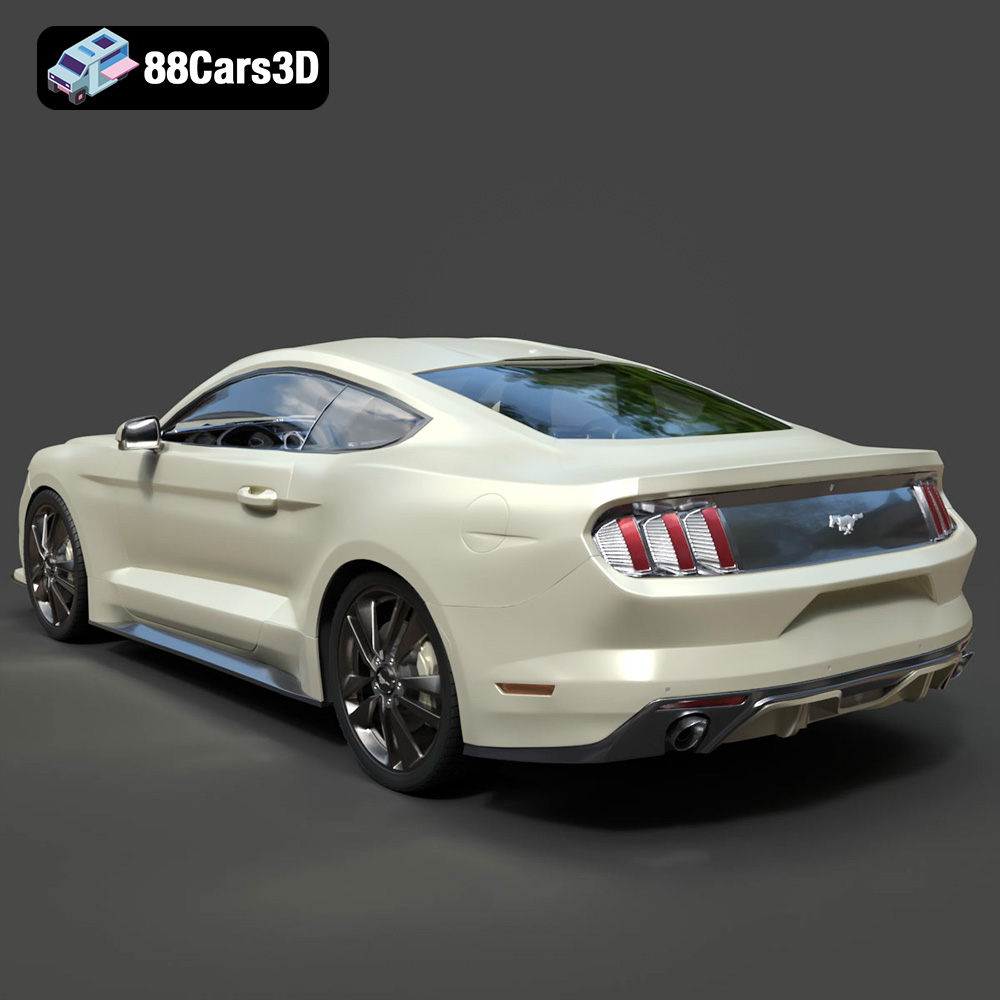
The Ford Mustang GT 3D Model exemplifies the quality and utility offered by 88cars3d.com. It’s not just a beautiful rendition of an iconic car; it’s a technically superior asset. Its optimized polycount of ~200,000 triangles perfectly balances visual realism with game-ready performance. The detailed exterior, from the aggressive rear diffuser to the signature tri-bar LED taillights, and the highly detailed interior with a modern digital instrument cluster, ensures that the model holds up under the closest scrutiny.
Furthermore, its accurate real-world scale, proper pivot setups for animation, and compatibility with major 3D software and real-time engines confirm its professional-grade utility. For anyone looking to elevate their automotive rendering, game development, AR/VR projects, or even 3D printing endeavors, this Ford Mustang GT model from 88cars3d.com offers an unparalleled blend of aesthetic appeal, technical robustness, and workflow efficiency. It’s an investment in quality that pays dividends in saved time and superior output.
The digital automotive landscape is continually evolving, driven by an insatiable demand for photorealistic visuals and immersive interactive experiences. At the heart of this evolution lies the indispensable role of high-quality 3D car models. As we’ve explored, the technical specifications, file format versatility, and meticulous optimization of an asset can dramatically impact a project’s success, from the nuanced reflections in a rendering studio to the smooth frame rates in a fast-paced racing game.
The Ford Mustang GT 3D Model Download STL FBX OBJ GLB Blend stands as a prime example of excellence in digital automotive asset creation. Its comprehensive suite of file formats, game-ready optimization, and stunning attention to detail empower professionals and enthusiasts across diverse disciplines. Whether your goal is to produce breathtaking cinematic renders, engineer engaging game assets, design cutting-edge AR/VR showrooms, or bring a tangible piece of automotive art to life through 3D printing, this model provides the robust foundation you need.
By investing in premium assets like the Ford Mustang GT from 88cars3d.com, creators can streamline their workflows, achieve unparalleled realism, and focus their energies on innovation and artistic expression. It’s a testament to how expertly crafted 3D models are not just components but catalysts for pushing the boundaries of what’s possible in the digital realm.
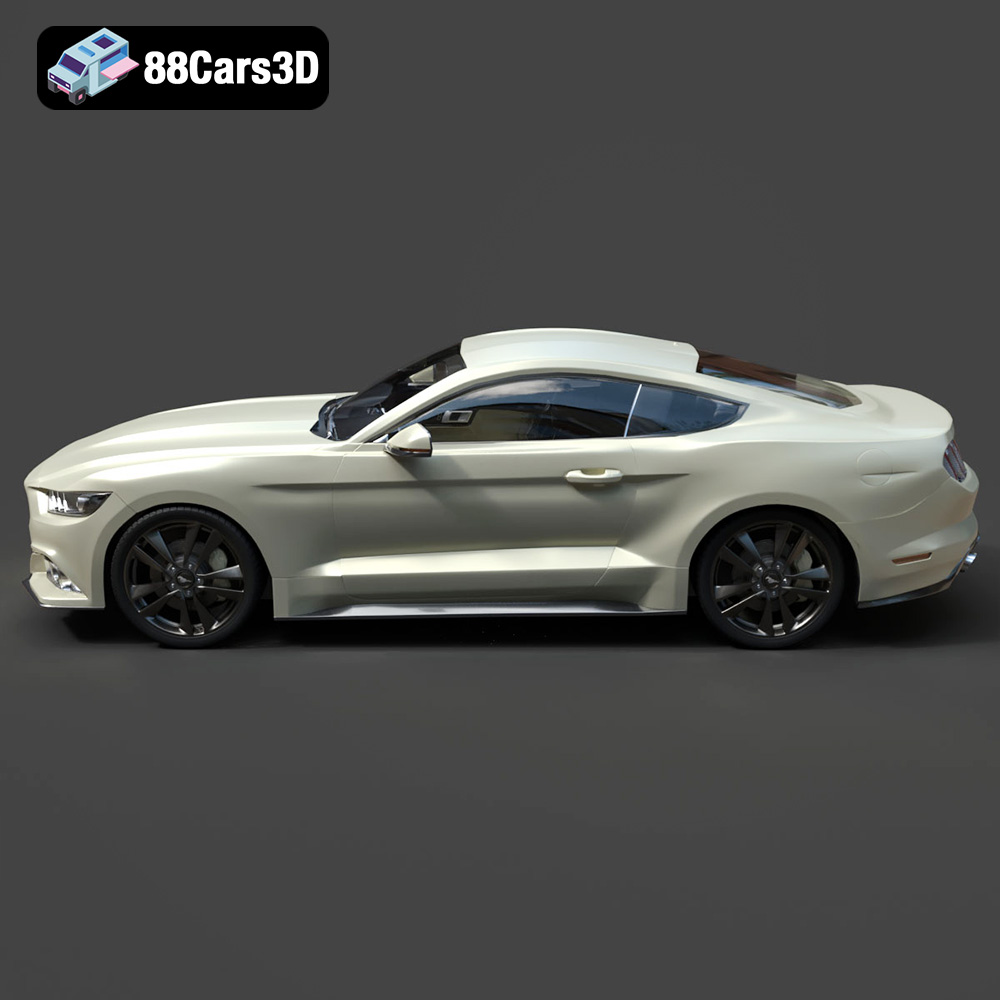
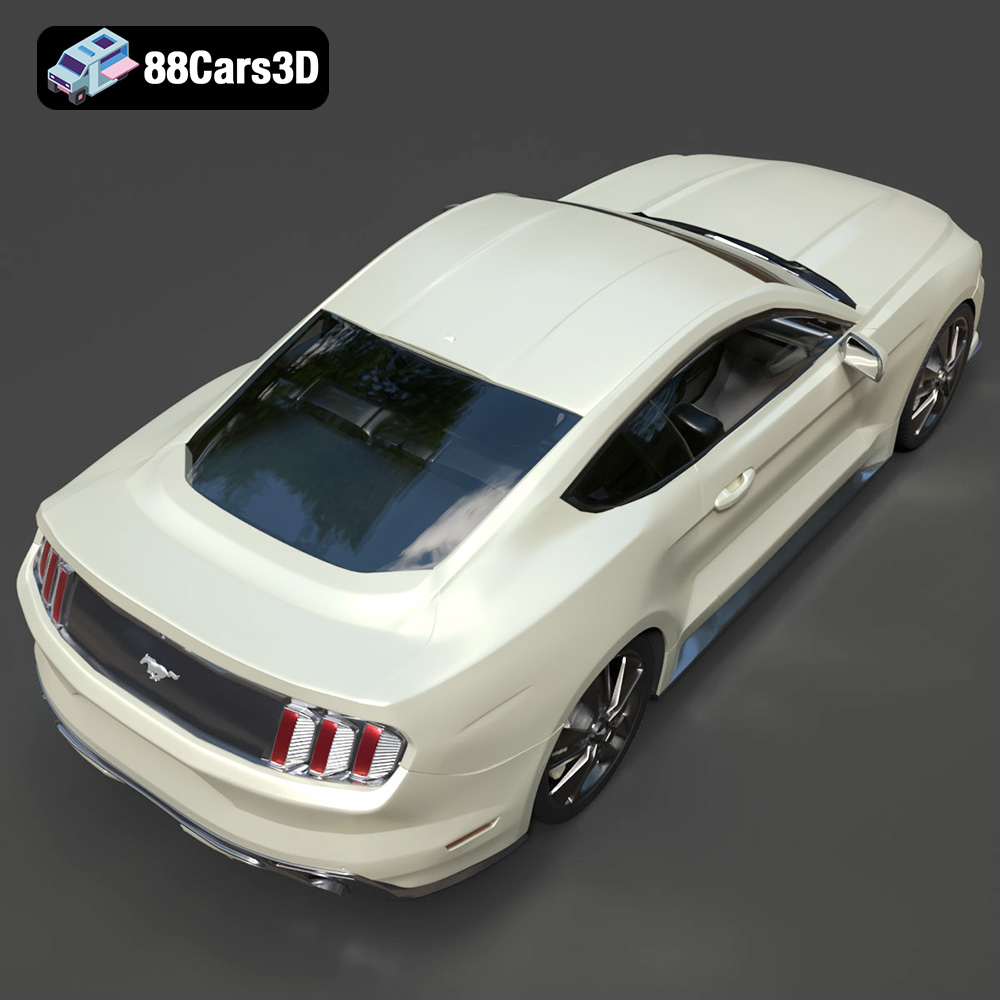
The Ford Mustang GT is an enduring icon of American muscle, celebrated for its aggressive aesthetic, legendary heritage, and raw power. This incredibly detailed 3D model captures the unmistakable styling cues of the modern Mustang GT, from its signature long hood and fastback roofline to the imposing front grille, quad-tip exhaust system, and raw 5.0L V8 engine bay details.
Engineered for premium digital performance, this model features an optimized topology with approximately 200,000 triangles, delivering exceptional game-ready performance without sacrificing visual fidelity. The meticulously crafted geometry ensures seamless integration into game development workflows, high-end AR/VR experiences, cinematic animations, and professional automotive visualization.
Perfect for open-world racing games, virtual automotive showrooms, cinematic renders, and high-performance car configurators.
.blend, .fbx, .obj, .glb, .stl, .ply, .unreal, .max
Tags:
ford, mustang-gt, muscle-car, sports-car, game-ready, low-poly, optimized, car-3d-model, game-asset, rendering, vr-ar, blend, fbx, obj, glb, stl, ply, unreal, maxMercedes Benz CLS 500 3D Model 3D Printable STL
$19.99
.blend
.fbx
.ford
.glb
.max
.obj
.ply
.rendering
.sports car
.stl
.unreal
car-3d-model
game asset
game-ready
low-poly
muscle-car
mustang-gt
optimized
VR/AR