Get 20% OFF All Premium 3D & STL Models!

In the rapidly evolving landscape of digital content creation, the demand for high-fidelity 3D assets is insatiable. From photorealistic architectural visualizations to immersive open-world video games, and from cutting-edge AR/VR experiences to precise 3D prints, the quality of a 3D model can significantly impact the final output and overall project success. Automotive design, in particular, stands at the forefront of this digital revolution, requiring meticulous attention to detail, accurate proportions, and optimized performance. Whether you’re a seasoned game developer, a freelance automotive renderer, or an architect integrating vehicles into a scene, selecting the right 3D car model is paramount. These digital assets are more than just static objects; they are foundational components that bring scenes to life, convey brand identity, and elevate user experiences.
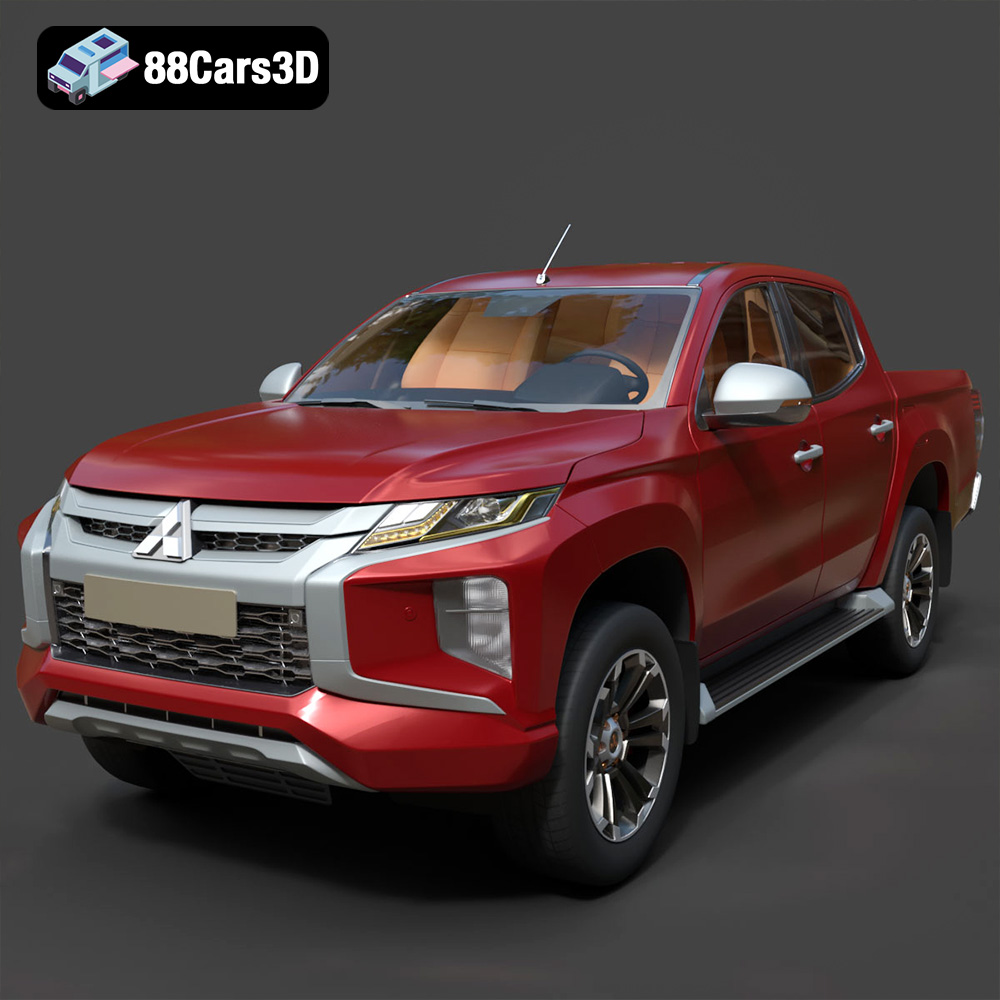
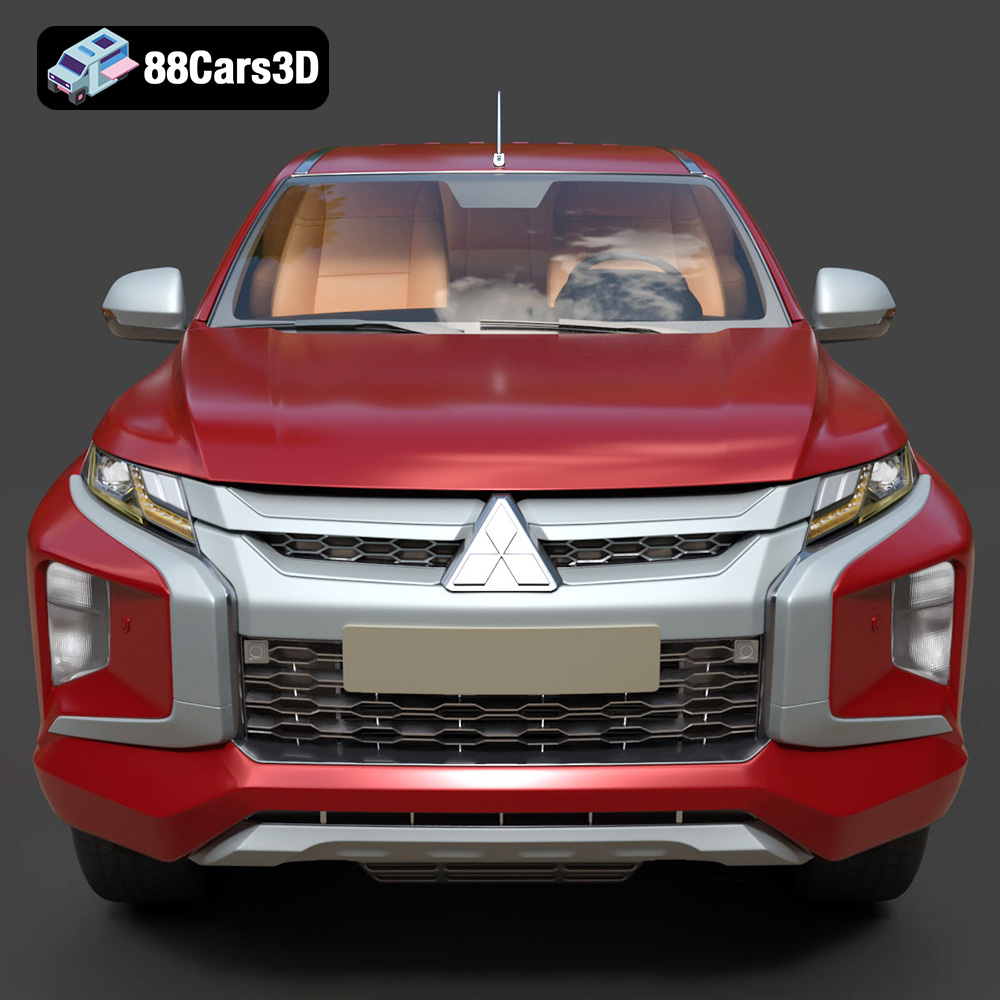
Today, we’re delving into the intricacies of professional 3D car models, exploring their technical specifications, diverse applications, and the workflows that leverage them to their fullest potential. We’ll specifically shine a spotlight on an exceptional example of digital craftsmanship: the Mitsubishi L200 Crew Cab 2019 3D Model, available for download on 88cars3d.com. This model perfectly encapsulates the blend of rugged utility and modern design, offering a versatile asset for a multitude of digital projects. Its robust “Dynamic Shield” front fascia and aggressive styling, coupled with detailed interior and exterior features, make it an ideal candidate for demonstrating the power of well-crafted automotive assets.
Navigating the world of 3D assets often begins with understanding the myriad of file formats available, each tailored for specific software, pipelines, or end-use applications. Choosing the correct format is crucial for maintaining data integrity, optimizing performance, and ensuring compatibility across your workflow. The Mitsubishi L200 Crew Cab 2019 3D Model is exemplary in its broad format support, providing creators with unparalleled flexibility. Let’s break down the most common and vital formats:
The .blend format is the native file type for Blender, the powerful open-source 3D creation suite. When you download a .blend file, you’re getting a fully editable Blender scene, complete with the original mesh geometry, materials (configured for Cycles or Eevee), textures, lighting, camera setups, and often even animation data. This format is ideal for users working primarily in Blender who need maximum flexibility for modifications, rigging, or extending the model’s functionality within the Blender environment. It preserves all the scene’s data and relationships, making it a perfect starting point for customization.
.fbx (Filmbox) is arguably the most widely adopted 3D interchange format in the industry, particularly favored for game development and real-time pipelines. Developed by Autodesk, FBX files can store not only geometry but also materials, textures, animations, rigging, and even scene hierarchy. It’s the go-to format for transferring assets between different 3D software packages like 3ds Max, Maya, Blender, and directly into game engines like Unreal Engine and Unity. Its strength lies in its robust data transfer capabilities, ensuring that your animated 3D car models retain their motion and material properties when moving between platforms.
The .obj (Wavefront Object) format is a universal standard renowned for its simplicity and wide cross-software compatibility. OBJ files primarily store geometric data, including vertices, normals, UV coordinates, and face definitions. While it can reference external material files (.mtl) for basic shading, it doesn’t typically carry animation, rigging, or complex material setups internally. It’s an excellent choice when you need a clean mesh for sculpting, retopology, or when importing into software that might not support more complex formats. For static high-poly models, OBJ remains a reliable choice, ensuring the core mesh data is preserved.
.glb (GLB format for glTF) is a relatively newer format that has rapidly gained traction, especially for augmented reality (AR), virtual reality (VR), and browser-based 3D display. GLB is the binary version of glTF (Graphics Library Transmission Format), consolidating all assets—geometry, textures, materials, and animations—into a single file. This makes it highly efficient for transmission and loading on the web or mobile devices. Its optimization for real-time rendering and small file size makes it perfect for interactive web experiences, mobile AR apps, and virtual showrooms.
The .stl (Stereolithography) format is the de facto standard for 3D printing. It represents a 3D model as a series of connected triangles (a triangulated surface mesh), defining only the surface geometry of an object without color, texture, or other CAD attributes. While it lacks visual fidelity, its simplicity is its strength for manufacturing. For hobbyists or professionals looking to bring digital 3D car models like the L200 into the physical world, converting to STL is the essential first step, ensuring the model is ready for slicing and printing.
.ply (Polygon File Format) is another format primarily used for storing 3D data from 3D scanners, CAD applications, and for scientific analysis. It can store a wide range of properties, including color, transparency, normals, texture coordinates, and even confidence values for scan data. While less common for general-purpose asset distribution than FBX or OBJ, PLY offers a more precise representation of mesh data and attributes, making it valuable for engineering, reverse engineering, and applications requiring highly accurate surface data.
The “.unreal” format, or more accurately, assets packaged for Unreal Engine (often via FBX import into the engine and then saved as engine-native asset types like Static Meshes, Skeletal Meshes, Material Instances, etc.), signifies that the model is already optimized and configured for the Unreal Engine environment. This means materials are typically set up with PBR (Physically Based Rendering) values, collision meshes might be included, and LODs (Levels of Detail) could be pre-configured. Such assets drastically reduce setup time for game developers, allowing for quick integration and immediate use within Unreal Engine projects.
Similar to .blend for Blender, .max is the native project file format for Autodesk 3ds Max, a leading software for 3D modeling, animation, and rendering. A .max file contains the complete 3ds Max scene, including geometry, modifiers, materials (V-Ray, Corona, Arnold setups), lights, cameras, animations, and render settings. It provides the highest level of editability and preserves all proprietary features of 3ds Max, making it ideal for users embedded in an Autodesk-centric workflow who need full control over the model’s structure and scene elements for advanced rendering and animation.
The availability of such a diverse range of formats for the Mitsubishi L200 Crew Cab 2019 3D Model means that creators from various disciplines can seamlessly integrate this high-quality asset into their preferred pipelines, ensuring optimal performance and fidelity regardless of the intended application.
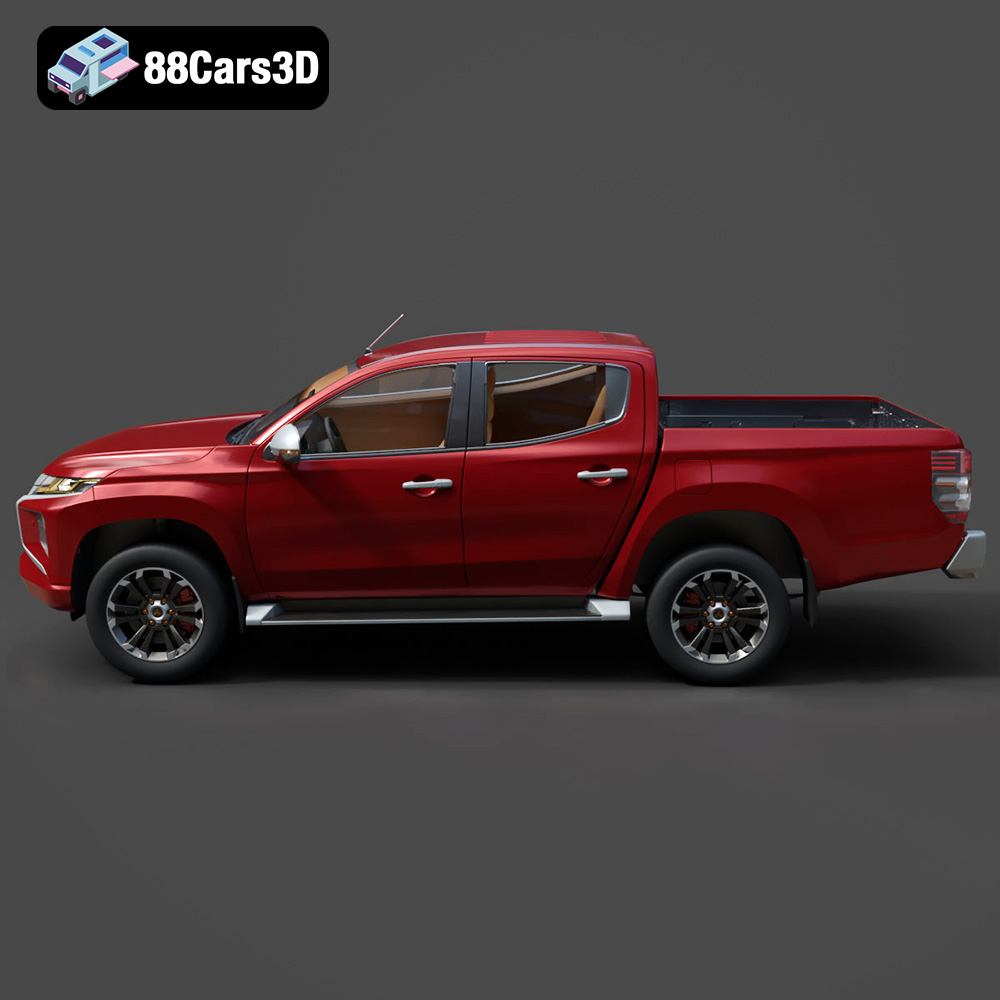
The Mitsubishi L200 Crew Cab 2019 3D Model from 88cars3d.com is a testament to the meticulous craftsmanship required for premium digital assets. It doesn’t just represent a vehicle; it captures the essence of the real-world L200 (also known as the Triton), a workhorse known for its robustness and modern aesthetics. This digital twin bridges the gap between commercial utility and comfortable family transport, making it an incredibly versatile asset for diverse creative projects.
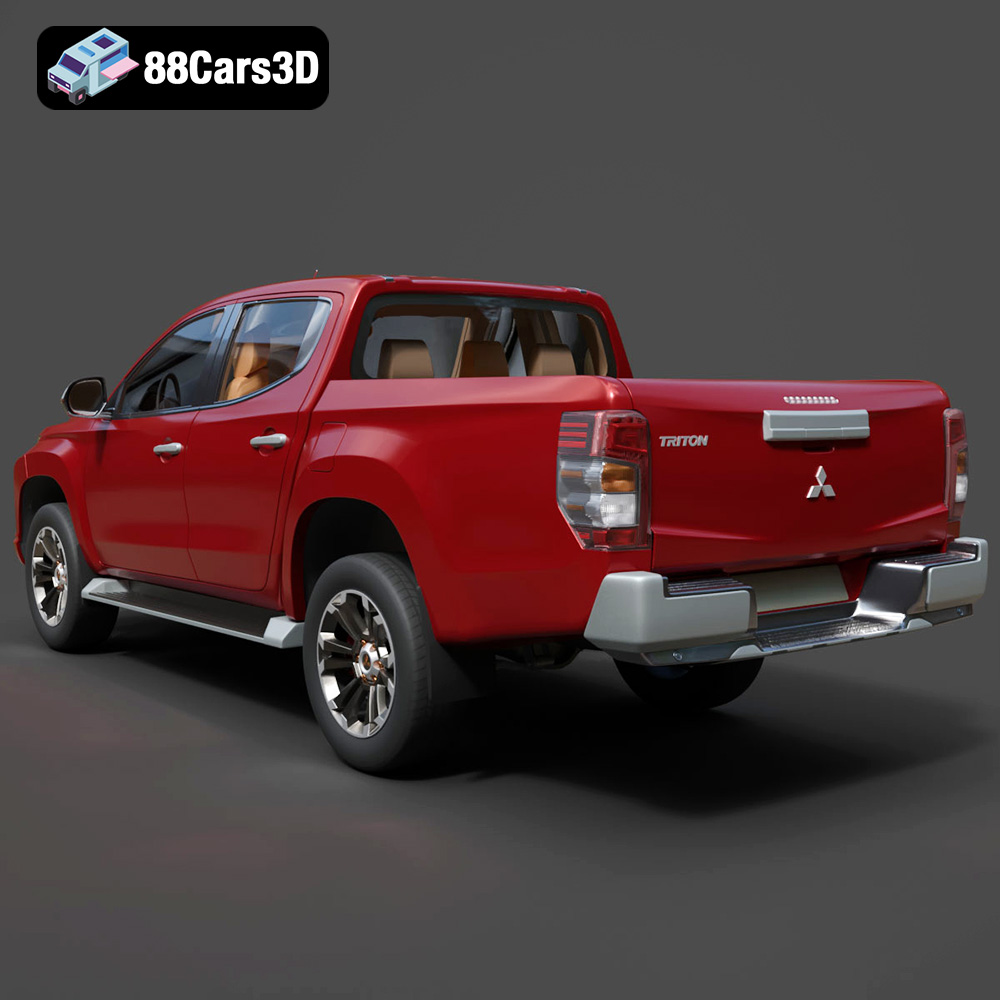
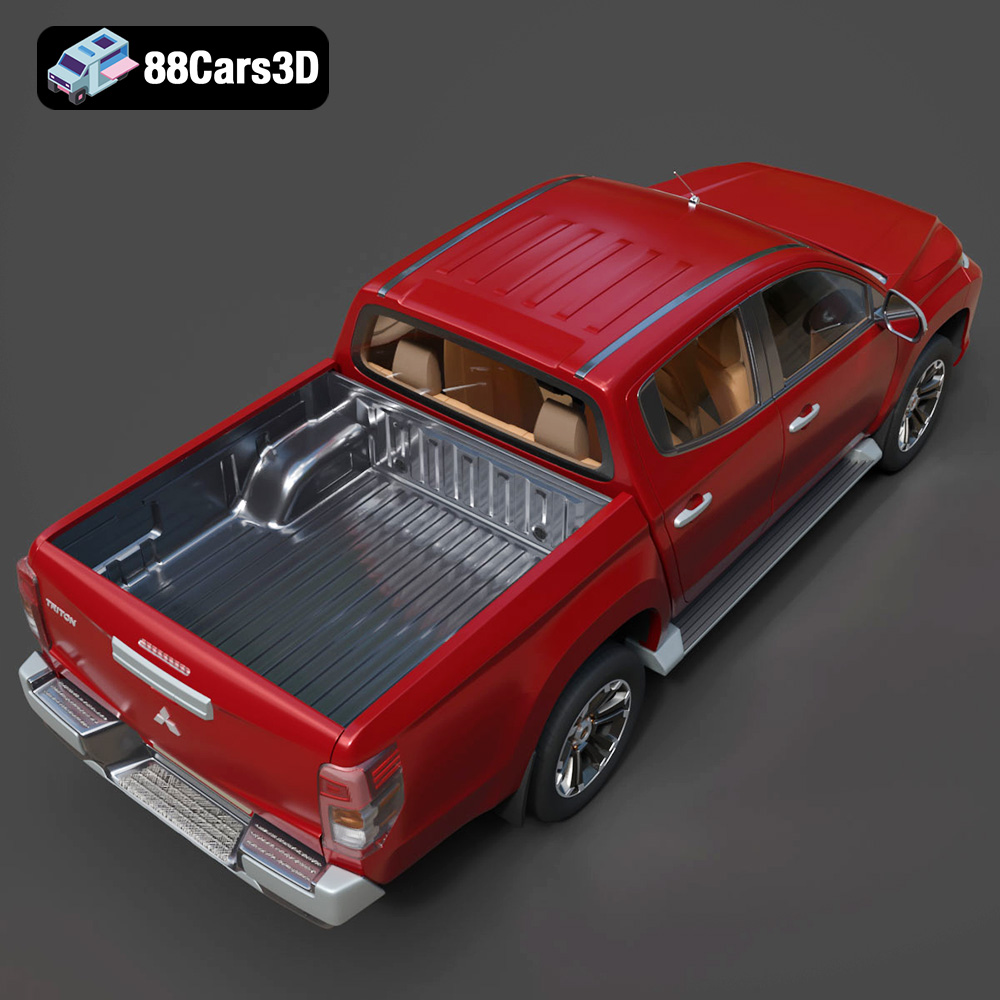
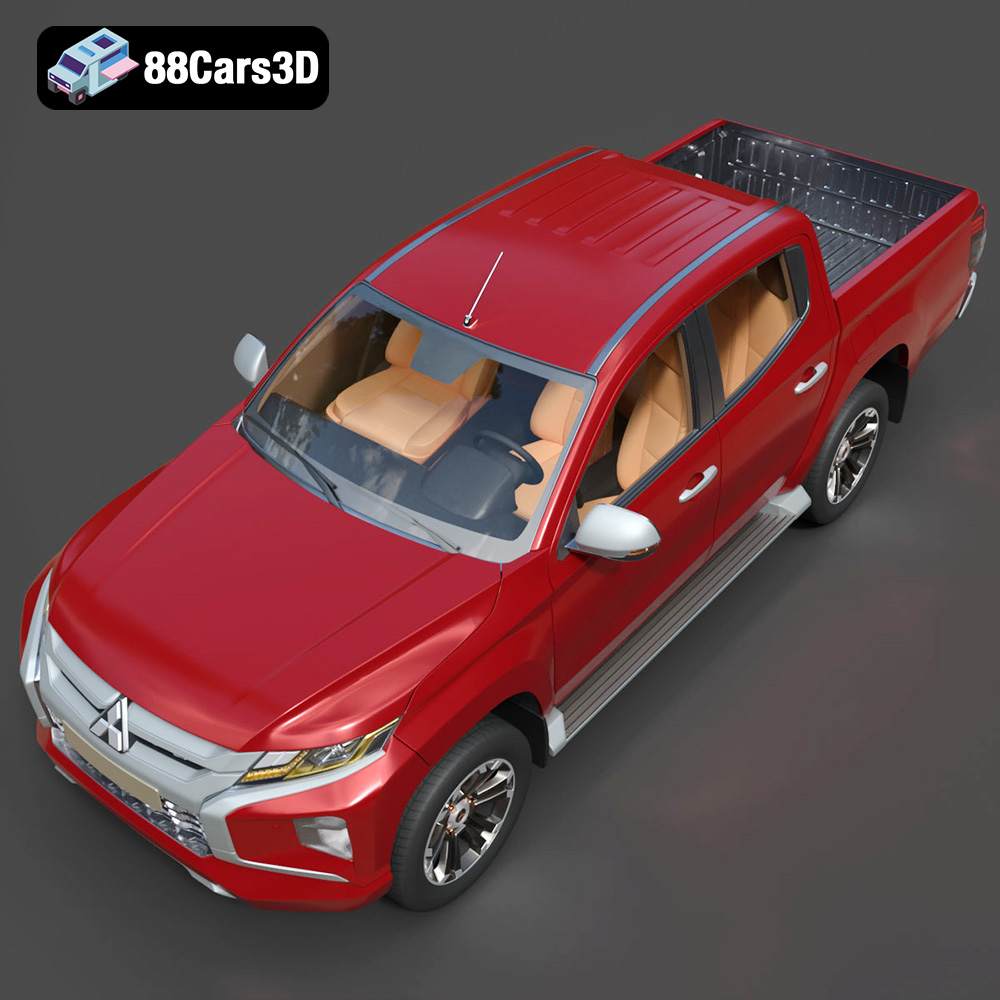
The model’s exterior is where its high-end visual fidelity truly shines. The signature “Dynamic Shield” front fascia, a hallmark of modern Mitsubishi design, is accurately recreated, giving the model its distinctive, aggressive stance. From the intricate detailing of the LED headlight clusters and distinct taillight housings to the sculpted side panels and authentic tailgate, every element has been carefully considered. The alloy wheel design is precise, paired with detailed all-terrain tires that suggest capability. Even visible suspension components and undercarriage chassis elements are included, which is crucial for close-up shots, complex animations, or realistic off-road simulations. The separation of wheels, suspension, and steering components ensures that animators have full control over realistic motion, a critical feature for professional-grade automotive simulations and cinematics.
Beyond the rugged exterior, the interior of the L200 Crew Cab model is equally impressive. It features a spacious five-seat configuration with accurate upholstery details, essential for any project requiring first-person perspectives or detailed interior shots. The detailed steering wheel, complete with brand insignia and multi-function buttons, the accurate instrument cluster, and the modern center infotainment display all contribute to a believable and immersive environment. Precise control details, including pedals, the gear selector, and climate vents, are modeled with care. This level of interior optimization is particularly valuable for game development, allowing players to feel truly immersed in the cockpit, or for AR/VR applications where users can explore the vehicle’s interior in an interactive virtual showroom.
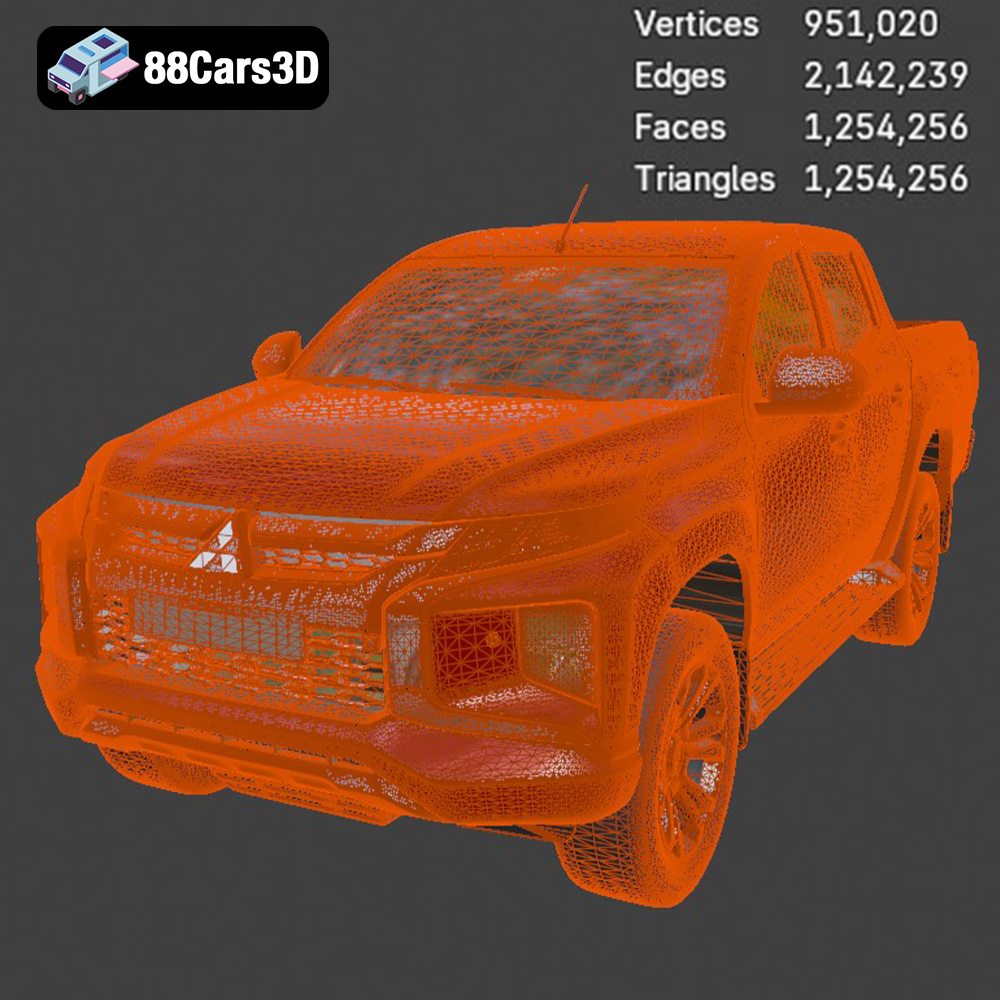
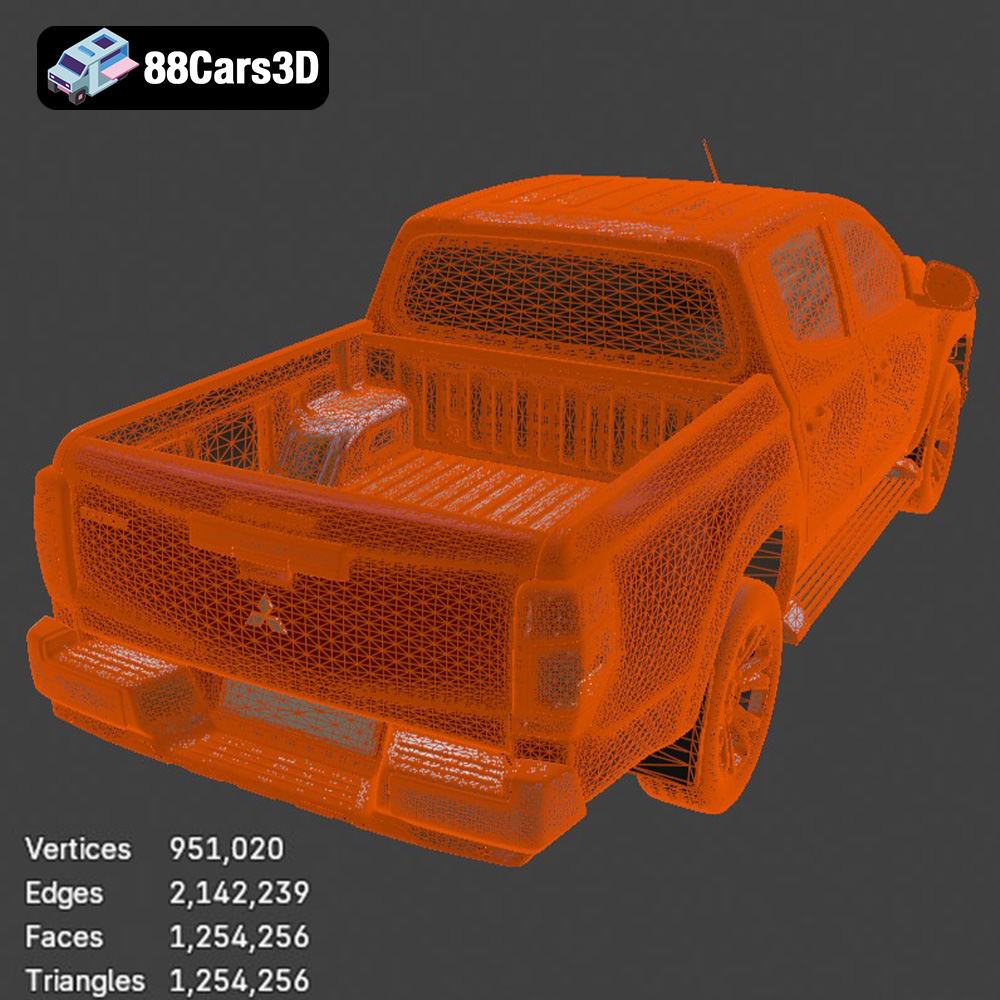
The Mitsubishi L200 model isn’t just about visual appeal; it’s engineered for performance. With an optimized topology of approximately 550,000 triangles, it strikes a perfect balance between intricate detail and game-ready optimization. This moderate poly count ensures smooth performance in real-time engines like Unreal and Unity without compromising on high-end visual realism. It adheres to real-world scale accuracy, based on actual vehicle chassis dimensions, which is vital for integration into architectural visualization scenes or accurate physics simulations. Furthermore, proper pivot setups for steering, wheel rotation, and suspension travel are included, greatly simplifying the animation process and enhancing realism. This combination of visual fidelity and technical optimization makes it an ideal choice for serious digital creators.
Automotive rendering is an art form that demands precision, technical expertise, and a keen eye for aesthetics. A high-quality 3D car model like the Mitsubishi L200 Crew Cab 2019 serves as the perfect foundation for creating stunning visualizations, whether for marketing, product design, or cinematic storytelling.
When working with the .max or .blend file formats, artists have full control over every aspect of the scene. In 3ds Max, leveraging renderers like V-Ray or Corona allows for unparalleled photorealism. The workflow typically involves importing the .max file, setting up physically based rendering (PBR) materials for the car’s body paint (often using a multi-layered material for metallic flake and clear coat effects), glass, rubber, and chrome. Advanced lighting setups, utilizing HDRI environments for realistic reflections and global illumination, coupled with targeted area lights, are crucial. For the Mitsubishi L200, attention to the reflective qualities of the “Dynamic Shield” grille and the LED light arrays is key to achieving that showroom finish.
Similarly, Blender users can harness Cycles or Eevee to produce breathtaking renders. The .blend file provides a native starting point. Artists would focus on creating PBR shaders, ensuring accurate metallic, roughness, and normal maps for all surfaces. Eevee, Blender’s real-time renderer, is excellent for quick iterations and animations, while Cycles delivers uncompromised photorealism. For both software, detailed interior renders require careful attention to upholstery textures, dashboard materials, and subtle ambient occlusion to enhance depth.
The environment surrounding your 3D car model is just as important as the model itself. For automotive rendering, common setups include studio environments with softbox lighting for clean, product-focused shots, or dynamic outdoor scenes that tell a story. Using an HDRI (High Dynamic Range Image) is fundamental for realistic lighting and reflections, as it captures real-world light information. When rendering the Mitsubishi L200, imagine placing it in a rugged off-road landscape at sunset, using the golden hour’s light to highlight its robust features, or in a sleek urban setting, emphasizing its modern design. The ability to customize body colors, modify tire textures, and adjust material finishes (matte, gloss, metallic), as facilitated by the model’s design, allows artists to tailor the vehicle to any scene or brand campaign, making it exceptionally versatile for commercial rendering.
Game development demands a unique blend of visual excellence and performance optimization. The Mitsubishi L200 Crew Cab 2019 3D Model, with its game-ready optimization, is a prime example of an asset built to excel in real-time environments, enriching game worlds and enhancing player immersion.
For game developers, the .fbx and .unreal formats are invaluable. When importing the Mitsubishi L200 into Unreal Engine, the .fbx format ensures that the mesh, UVs, and potentially basic material slots are transferred correctly. The next step involves setting up advanced PBR materials within Unreal’s Material Editor, defining parameters for metallic, roughness, normal, and ambient occlusion maps. For a car, this often includes complex car paint shaders with clear coats, tire materials with displacement for realistic tread, and detailed interior materials. The model’s optimized ~550,000 triangle count is crucial here, allowing it to perform smoothly even in large open-world games or racing titles where many vehicles might be present. LODs (Levels of Detail) can be generated to further optimize performance at varying distances, ensuring the game runs smoothly without visual compromise.
Similarly, in Unity, the .fbx file is the starting point. Artists would apply Unity’s Standard Shader or custom PBR shaders, configuring the various maps to achieve photorealistic results. The proper pivot setup for wheels, steering, and suspension is a significant advantage, as it simplifies the rigging process for vehicle physics and animation within both game engines. This allows developers to quickly implement realistic driving mechanics, making the L200 ideal for off-road simulators or vehicle combat games.
Beyond polycount, other optimization techniques are vital for game assets. Efficient UV mapping ensures that textures are applied without distortion and that texture atlases can be used to reduce draw calls. The careful consideration of polygon distribution, ensuring higher detail where it’s needed most (e.g., the front fascia, wheels) and lower detail in less visible areas, contributes to a balanced asset. Collision meshes, often simplified versions of the visual mesh, are essential for accurate in-game physics. The Mitsubishi L200’s design, considering these factors, means less rework for game developers, allowing them to focus on gameplay mechanics and environmental design, making it a valuable asset for any studio looking for high-quality 3D car models.
The utility of a high-quality 3D car model extends far beyond traditional rendering and game development. With the rise of immersive technologies and accessible manufacturing, these assets find new life in augmented reality, virtual reality, and physical 3D prints.
The Mitsubishi L200 Crew Cab 2019 3D Model is perfectly suited for AR/VR applications, thanks to its optimized geometry and the availability of the .glb format. In virtual showrooms, users can interactively explore the vehicle’s interior and exterior, change colors, or even open doors, providing a highly engaging experience for potential buyers. For AR experiences, the L200 can be projected into a real-world environment, allowing users to “place” the truck in their driveway or garage via a smartphone app. The optimized polycount ensures smooth performance on mobile devices, which are often the target platform for AR applications. Imagine a customer using an AR app to see how the L200 fits in their space, or walking around a fully interactive VR model, examining every detail from the precise control panel to the authentic cargo bed.
For hobbyists, designers, or educators, the ability to 3D print a digital model offers a tangible connection to the digital world. The Mitsubishi L200 model is convertible to .stl format, making it ready for 3D printing. The provided 3D print settings are crucial for a successful physical reproduction. Recommended scales (1:12, 1:18, 1:24) allow for detailed display models. Layer height recommendations (0.04–0.12 mm) and the suggestion of resin printing underscore the desire for fine detail, especially for intricate parts like mirrors, door handles, and the undercarriage. Proper wall thickness, infill, and strategic use of supports are essential to ensure structural integrity and prevent printing failures. Post-processing, including sanding, priming, and painting with authentic factory colors, can bring a miniature L200 to life, showcasing the potential of digital assets in physical form. This fusion of digital design and physical fabrication highlights the versatility of premium 3D car models.
In any professional 3D pipeline, efficiency and quality are key. Leveraging pre-made, high-quality 3D car models like the Mitsubishi L200 Crew Cab 2019 can significantly streamline workflows, save valuable development time, and elevate the overall standard of your projects. Instead of spending countless hours on modeling and texturing from scratch, artists can focus on scene composition, lighting, animation, or game logic.
The time investment required to model a vehicle from the ground up, with the level of detail and optimization present in the L200 model, is substantial. By acquiring such a high-fidelity asset from a reputable source like 88cars3d.com, you immediately gain access to a professionally crafted model that meets industry standards for topology, UVs, and real-world scale. This not only accelerates project timelines but also ensures a consistent level of quality across your assets. For studios working on tight deadlines, or independent creators juggling multiple tasks, this efficiency is invaluable.
Despite being a pre-made asset, the Mitsubishi L200 model offers extensive customization options. The ability to change body colors, modify tire textures, and adjust material finishes directly empowers artists to adapt the vehicle to specific brand guidelines, aesthetic requirements, or environmental contexts. Whether you need a pristine showroom model in a metallic finish, a rugged off-road variant with mud-splattered tires, or a unique custom paint job for a game character, the underlying structure of the model supports these modifications. This flexibility, coupled with the proper pivot setups for animation, ensures that the model can be dynamically integrated into a wide range of scenarios without extensive rework.
Consider a major automotive manufacturer needing to visualize a new vehicle lineup before physical prototypes are available. High-quality 3D car models are essential for creating marketing materials, virtual configurators, and even internal design reviews. A game studio developing an open-world driving simulation relies on meticulously crafted vehicles that look good, perform well, and interact realistically with the game world. An architect might use the L200 model to populate a large-scale industrial site visualization, adding a touch of realism and functionality to the scene. In each of these scenarios, the technical specifications and detailed features of a model like the Mitsubishi L200 Crew Cab 2019 contribute directly to the success and realism of the final product, proving its worth as a versatile and indispensable digital asset.
The digital realm thrives on detail, and nowhere is this more evident than in the creation and deployment of high-quality 3D car models. From the nuanced curves of a vehicle’s body to the intricate textures of its interior, every element contributes to an immersive and convincing experience. Understanding the technical specifications, file formats, and diverse applications is not just beneficial—it’s essential for anyone serious about digital content creation.
The Mitsubishi L200 Crew Cab 2019 3D Model stands as an excellent example of a professional-grade asset, offering a perfect blend of visual fidelity and technical optimization across a wide spectrum of uses. Whether you’re aiming for photorealistic renders in 3ds Max, integrating a game-ready vehicle into Unreal Engine, designing interactive AR/VR experiences, or bringing a physical print to life, this model provides the robust foundation you need. Its detailed exterior, sophisticated interior, optimized polycount, and broad format compatibility underscore its value as a premium asset for any creative professional. By investing in such meticulously crafted 3D car models from trusted sources like 88cars3d.com, you empower your projects with unparalleled quality, efficiency, and creative flexibility, truly driving digital excellence.
The 2019 Mitsubishi L200 Crew Cab (also known as the Triton) is a masterclass in rugged utility and modern design. Known for its robust “Dynamic Shield” front fascia, aggressive styling, and exceptional 4WD capabilities, this pickup truck bridges the gap between commercial workhorse and comfortable family vehicle. Key visual elements include the distinctive front grille, striking LED headlight arrays, sculpted side panels, and a durable cargo bed designed to handle any load. This high-quality 3D model strikes the perfect balance between high-end visual fidelity and game-ready optimization. Featuring an optimized topology with approximately 550,000 triangles, it ensures smooth performance in real-time applications without sacrificing intricate details. It is meticulously crafted to serve primary use cases like game development, immersive AR/VR experiences, high-end animation, and architectural or automotive visualization. Perfect for rugged off-road game environments, virtual automotive showrooms, architectural visualization scenes, and commercial rendering campaigns.
$39.99
.2019
.4×4
.blend
.fbx
.glb
.max
.mitsubishi
.obj
.ply
.rendering
.stl
.unreal
car-3d-model
crew-cab
game asset
game-ready
l200
low-poly
off-road
optimized
pickup-truck
utility-vehicle
VR/AR