Get 20% OFF All Premium 3D & STL Models!

Few vehicles command attention quite like the Ford GT. A modern marvel inspired by the legendary GT40, the 2005 Ford GT stands as a testament to American automotive engineering and racing heritage. Its retro-futuristic styling, powerful mid-engine presence, and iconic racing stripes have solidified its place in the pantheon of supercars. For 3D artists, game developers, automotive designers, and visualization specialists, capturing the essence of such a machine digitally presents both a challenge and an opportunity. A meticulously crafted 3D model of the Ford GT 2005 doesn’t just replicate a car; it provides a versatile foundation for countless creative endeavors, from hyper-realistic renders to immersive interactive experiences.
The quest for photorealism and performance in digital assets often leads professionals to seek out high-quality, pre-optimized 3D car models. This is precisely where a product like the Ford GT 2005 3D Model truly shines. Engineered for maximum versatility and fidelity, this model captures every iconic detail, from its cantilevered doors to the visible 5.4-liter supercharged V8 engine. Whether your project demands stunning cinematic visuals, seamless real-time game integration, or even physical replication through 3D printing, a well-structured asset is paramount. Let’s delve into the technical depths and creative possibilities this exceptional 3D model offers.
Creating a digital twin of an automotive icon like the Ford GT 2005 requires an intricate blend of artistic skill and technical precision. It’s not merely about modeling the shape; it’s about translating the vehicle’s character, its engineering nuances, and its emotional appeal into a virtual form that can be manipulated and rendered across diverse platforms.
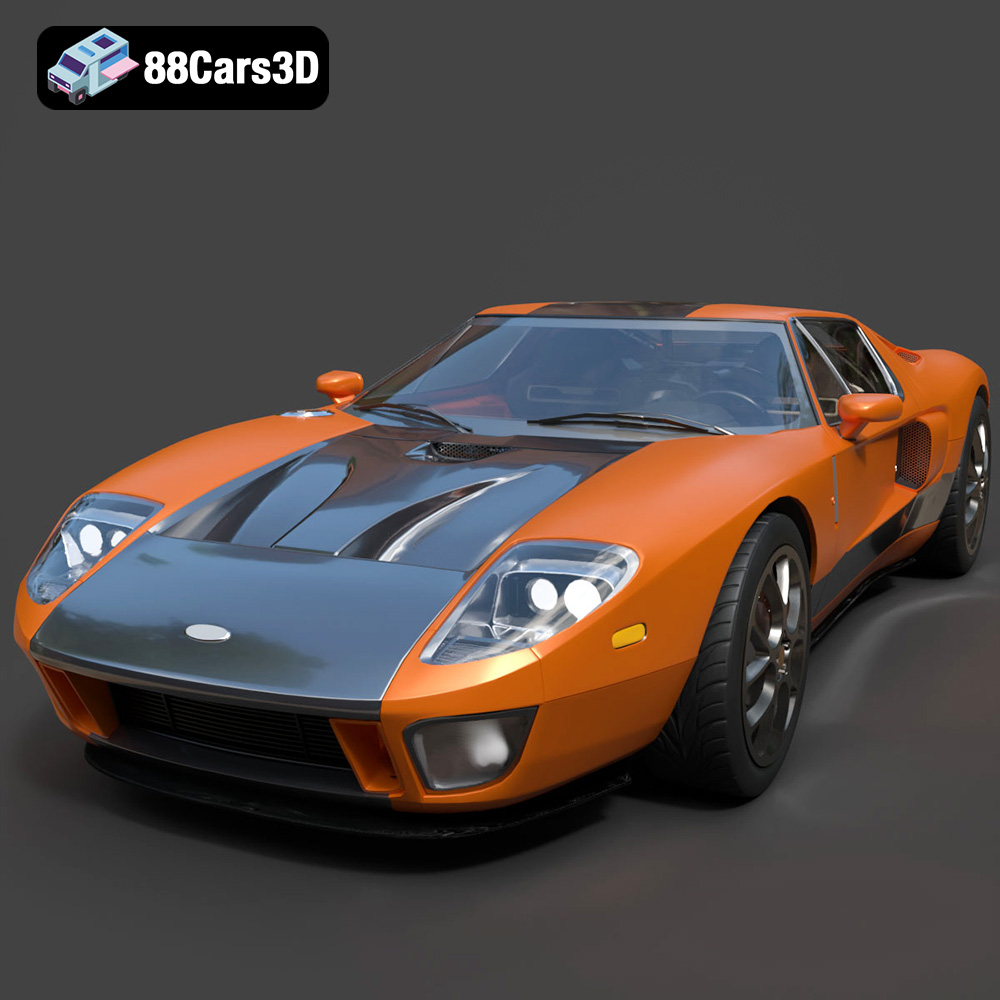
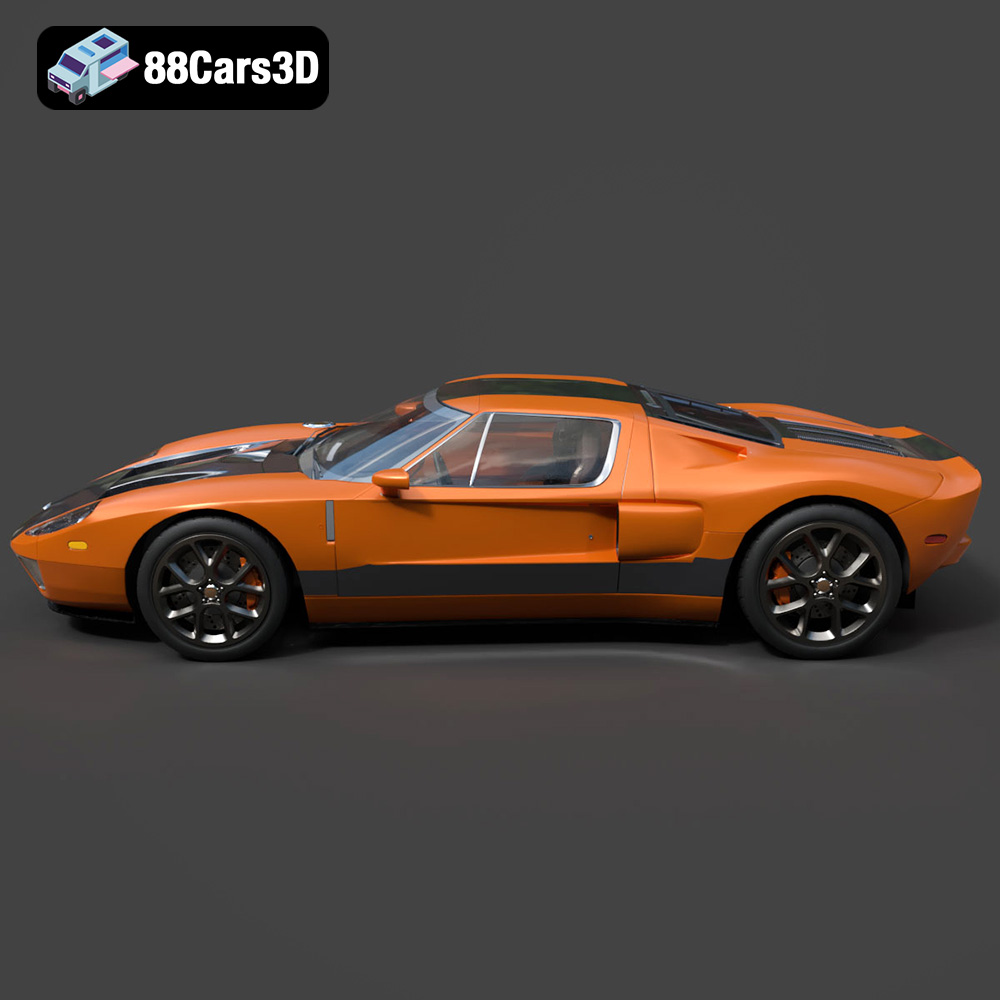
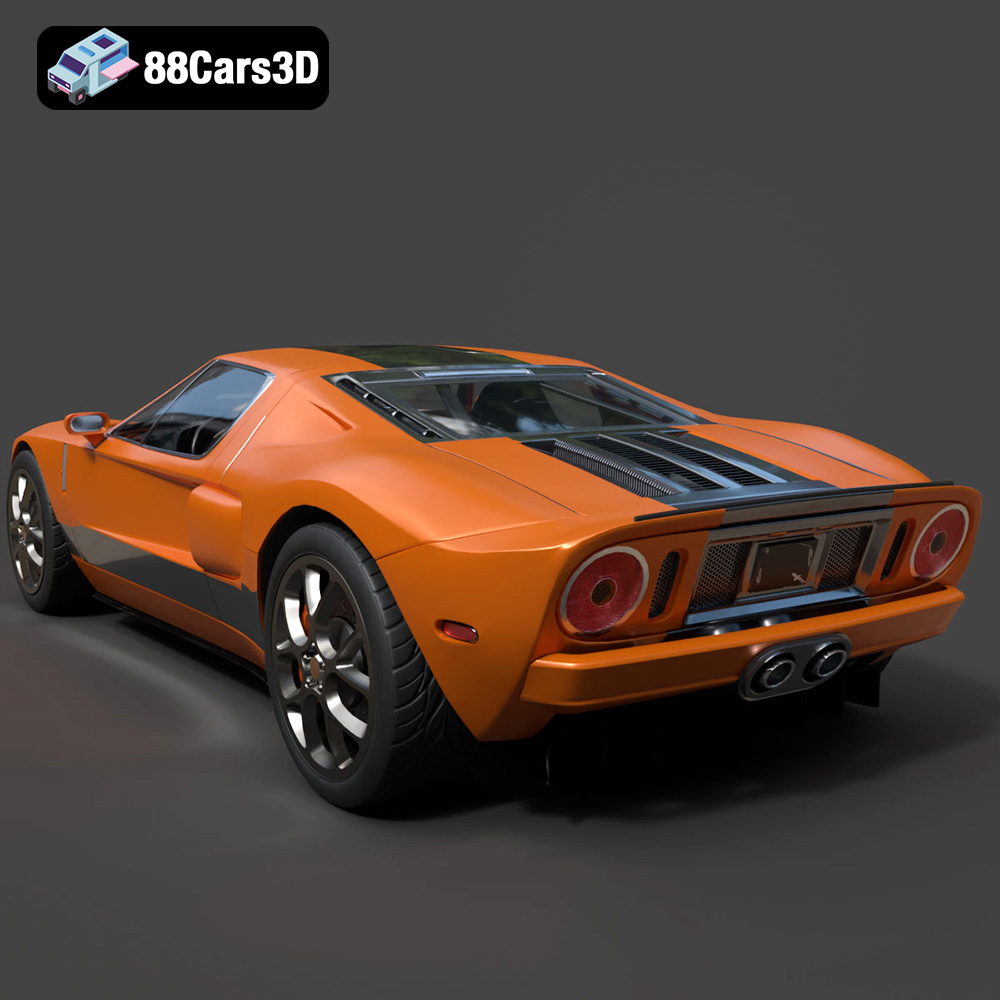
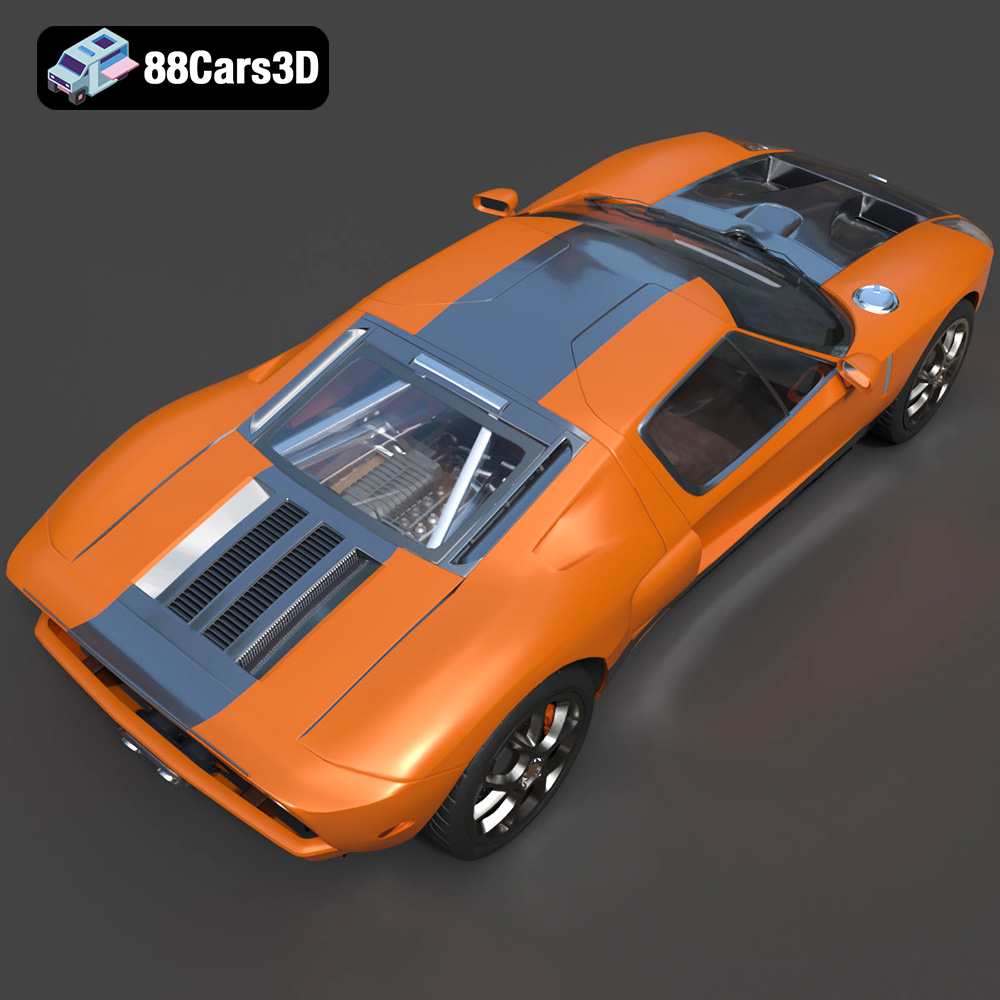
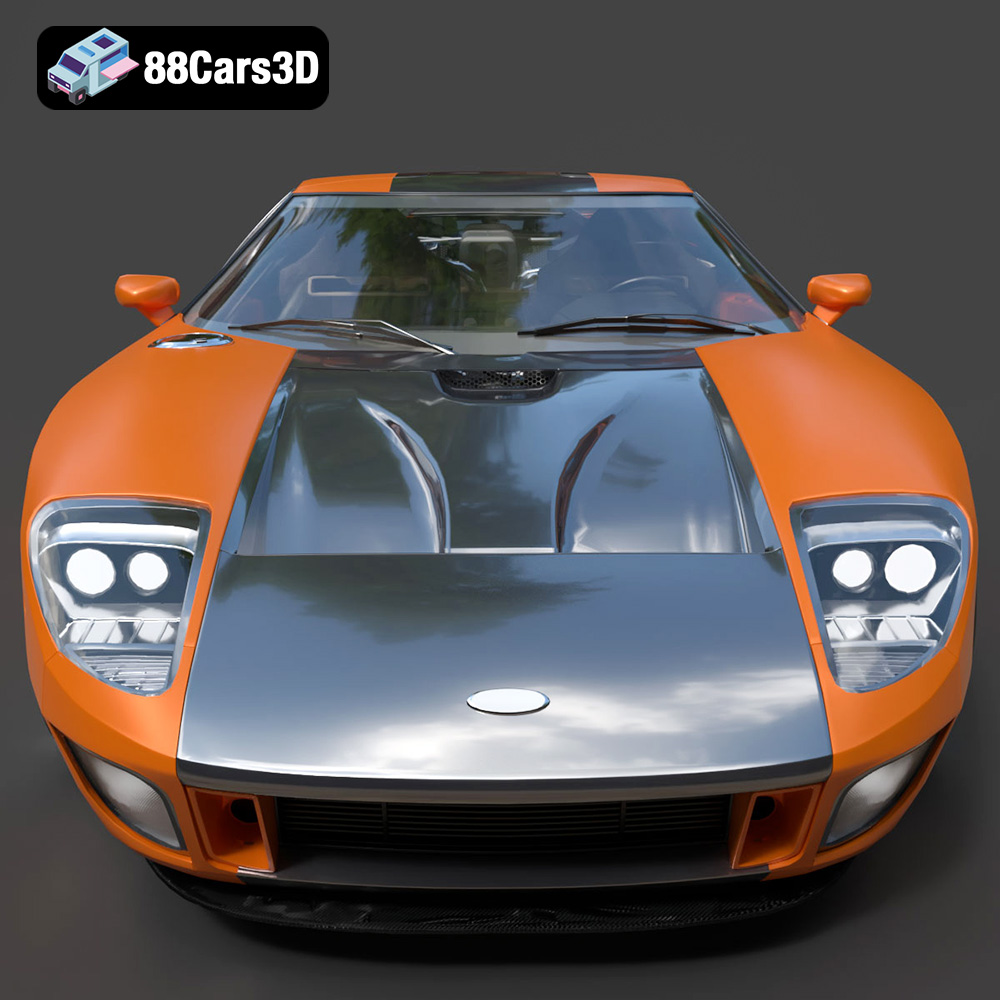
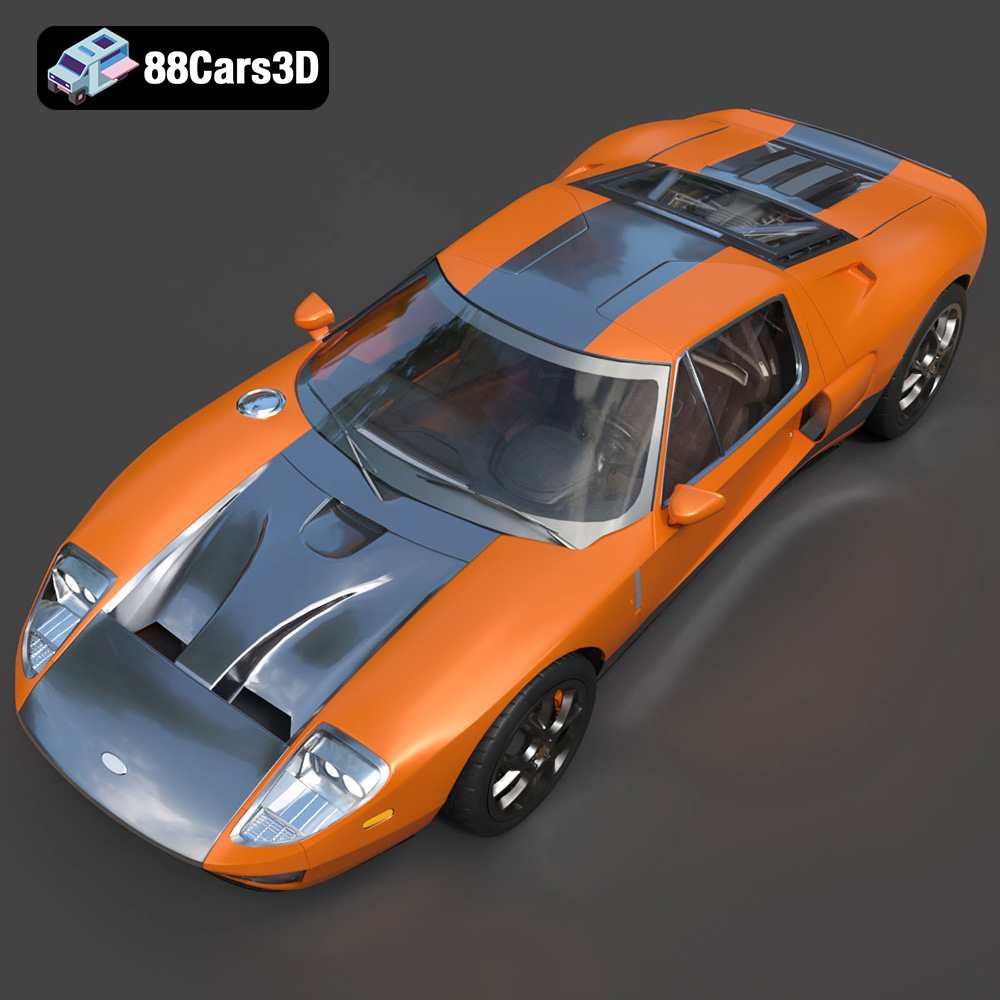
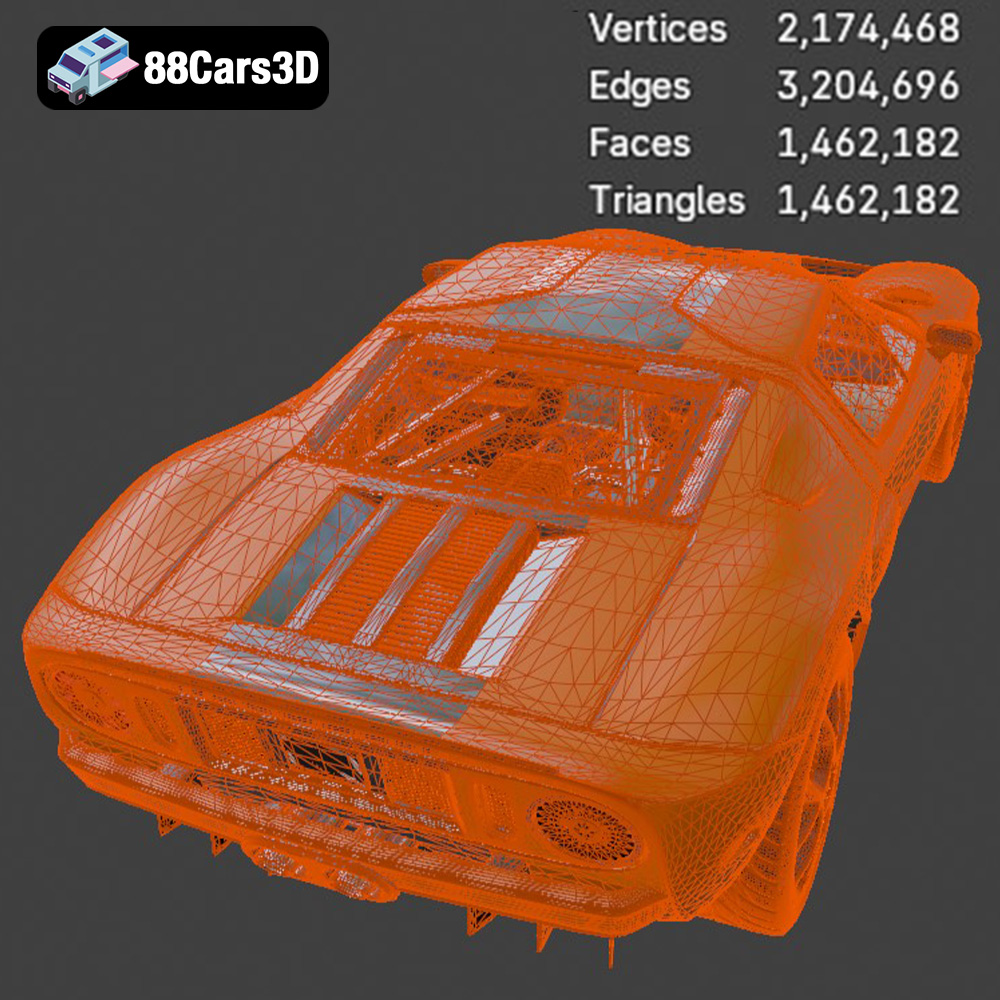
The Ford GT 2005 boasts an unmistakable silhouette, a harmonious blend of sleek aerodynamics and muscular aggression. Replicating this in 3D demands meticulous attention to proportions, curvature, and subtle design cues. This high-fidelity model starts with accurate Ford GT 2005 frame geometry, ensuring that every aerodynamic curve and panel gap aligns with the real-world counterpart. Details like the dual central exhausts, aggressive stance, and the classic twin racing stripes are not just visual elements but integral parts of its identity. Beyond the primary body, the model includes a detailed 5.4L supercharged V8 engine block, visible beneath the rear glass, adding a layer of realism often overlooked in simpler models. Precision headlight housings and signature circular LED-style taillights are modeled with care, providing accurate light refraction and aesthetic appeal. Furthermore, high-detail BBS-style alloy wheels, complete with low-profile performance tires and visible brake calipers, enhance the authenticity. Even functional-looking suspension and chassis undertray detailing are included, proving its suitability for scenarios where underside views are crucial, such as virtual car lifts or detailed animations. The inclusion of separate wheels, suspension, and steering components ensures robust animation capabilities, crucial for driving simulations or cinematic sequences.
While the exterior grabs immediate attention, the interior is where the driver connects with the machine. For a 3D model to be truly immersive, especially for first-person perspective applications like games or VR, the cockpit must be equally detailed. The Ford GT 2005 3D model delivers with ventilated leather-style racing seats featuring authentic GT bucket contours. The accurate steering wheel, complete with its detailed center emblem, feels genuine. The iconic retro-inspired instrument cluster, with its full array of analog gauges, is faithfully recreated. A detailed magnesium center console, toggle switches, pedals, and the manual shifter complete the immersive experience. Crucially, the geometry for these interior elements is optimized for first-person POV in gaming, meaning that visual fidelity is maintained even when the camera is positioned inside the cabin, without excessively burdening real-time engine performance. Beyond visual fidelity, the model adheres to real-world scale accuracy, based on actual vehicle chassis dimensions, and features proper pivot setups for steering, wheel rotation, and suspension travel. This technical underpinning is vital for developers who need to animate the vehicle realistically without extensive re-rigging or adjustments.
The true measure of a high-quality 3D asset lies not just in its visual fidelity, but in its versatility and compatibility across various software and pipelines. A comprehensive 3D car model, such as the Ford GT 2005 available on 88cars3d.com, provides a wide array of file formats, each serving distinct purposes and catering to different professional workflows. Understanding these formats is crucial for selecting the right one for your specific project needs, optimizing your pipeline, and ensuring seamless integration.
The .blend format is the native file type for Blender, a powerful open-source 3D creation suite. When you download a .blend file, you’re getting a complete Blender scene, often including the model’s geometry, materials, textures, lighting, cameras, and even animation data. This format is ideal for users working primarily in Blender who require full editability. It allows for deep customization, tweaking materials, adjusting topology, or incorporating the model into existing Blender projects with ease. For artists who want to render the Ford GT 2005 in cycles or Eevee, or modify its rigging, the .blend file is the most direct and flexible option.
.fbx (Filmbox) is a proprietary file format developed by Autodesk, widely recognized as the industry standard for 3D data interchange. It supports geometry, materials (with some limitations depending on the software), animations, and rigs. Its robust support for skeletal animations and hierarchical structures makes it the go-to format for game development. Both Unreal Engine and Unity have excellent .fbx importers, making it the preferred choice for integrating 3D car models like the Ford GT into real-time environments. It’s a balanced format that retains much of the model’s complexity while being highly compatible across different software, crucial for collaborative pipelines.
The .obj (Wavefront OBJ) format is one of the oldest and most universally supported 3D file formats. It’s a simple, text-based format that primarily stores geometry (vertices, normals, texture coordinates, and faces) and can reference external material files (.mtl) for basic material properties. While it doesn’t support animation or rigging, its widespread compatibility makes it an excellent choice for transferring static 3D models between different software packages. If you need a clean mesh of the Ford GT 2005 to import into virtually any 3D application for modeling, texturing, or rendering without needing complex data, .obj is a reliable foundation.
.glb (GLB, Binary glTF) is the binary version of the glTF (Graphics Language Transmission Format) standard, which is rapidly becoming the “JPEG of 3D.” Optimized for web-based applications, AR (Augmented Reality), and VR (Virtual Reality), .glb files are single, self-contained assets that embed geometry, textures, animations, and PBR (Physically Based Rendering) materials. This makes them incredibly efficient for transmitting and rendering 3D scenes on the web or in mobile AR/VR experiences. For showcasing the Ford GT 2005 in a virtual showroom via a web browser or integrating it into a mobile AR app, .glb offers superior performance and ease of use.
.stl (STereoLithography) is the most common file format for 3D printing. It represents a 3D model as a series of connected triangles (a triangulated surface mesh) without color, texture, or other CAD attributes. When preparing the Ford GT 2005 for physical replication on a 3D printer, the .stl format is essential. It’s a direct representation of the object’s surface geometry, which slicing software uses to generate the toolpaths for the printer. While it lacks visual data, its simplicity makes it robust for manufacturing applications.
The .ply (Polygon File Format, Stanford Triangle Format) is another format used for storing 3D data, particularly from 3D scanners. It can store a wider range of properties than .obj or .stl, including color, transparency, texture coordinates, and even reliability information. While less common for general artistic use, it’s a precision mesh format often used in scientific computing, CAD, or for analyzing complex geometries. For high-accuracy reverse engineering or specialized analysis of the Ford GT 2005 model, .ply can be a valuable option.
The .unreal format, or more accurately, assets packaged for Unreal Engine, typically refers to a project file or a collection of assets specifically pre-configured for direct import and use within the Unreal Editor. This might involve an FBX file already imported and set up with appropriate materials, collision meshes, LODs, and Blueprints. Having an “.unreal” ready asset for the Ford GT 2005 means significantly reduced setup time for Unreal Engine developers, as much of the optimization and material assignment has already been handled, ensuring the model is truly engine-ready for real-time environments.
Finally, the .max format is the native file type for Autodesk 3ds Max, a professional 3D computer graphics program for making 3D animations, models, games, and images. Similar to .blend for Blender, a .max file contains the complete 3ds Max scene, including geometry, materials, textures, lighting, cameras, animation, and modifiers. It offers the most flexibility for users working within the 3ds Max ecosystem, allowing for complex scene setups, advanced rendering with V-Ray or Corona, and sophisticated animation rigs for the Ford GT 2005. It’s the ultimate format for high-end automotive rendering and animation pipelines that rely on 3ds Max.
The availability of all these formats with the Ford GT 2005 3D model means unprecedented flexibility, ensuring that regardless of your software preference or project requirements, you have the right tool for the job. This comprehensive offering is a hallmark of quality assets found on platforms like 88cars3d.com.
High-quality 3D car models are the bedrock of stunning automotive visualization. Whether for marketing campaigns, design reviews, or film production, the ability to render a vehicle with photorealistic fidelity is crucial. The Ford GT 2005 3D model provides an excellent starting point for achieving these goals.
Achieving photorealism involves more than just a detailed model; it’s about how light interacts with its surfaces. Professionals often use software like 3ds Max or Blender with powerful render engines like V-Ray, Corona Renderer, Cycles, or Octane. The Ford GT model’s “clean geometry and well-structured material setups” are a significant advantage here. This means it’s prepped for Physically Based Rendering (PBR), where materials accurately simulate real-world light behavior using maps for albedo (base color), roughness, metallic, normal, and sometimes ambient occlusion. In a typical studio setup, artists will leverage High Dynamic Range Images (HDRIs) for realistic environmental lighting and reflection, supplemented by targeted area lights to highlight specific curves and details of the car. The model’s optimized geometry ensures smooth subdivision if needed for extreme close-ups, while the precise UV mapping allows for seamless texture application and minimal distortion. Customization options, such as changing body colors (e.g., to the iconic Heritage Blue/Orange), modifying tire textures (track vs. street variants), or adjusting material finishes (matte, gloss, metallic), provide endless creative control without compromising realism.
Beyond static renders, the Ford GT 2005 3D model is perfectly suited for dynamic cinematic animations. Its separate, animatable components – wheels, suspension, and steering – allow for realistic vehicle motion. Imagine a virtual camera tracking the supercar as it navigates a winding road, or a detailed breakdown animation showcasing its engineering. For brand campaigns, automotive manufacturers and advertising agencies frequently utilize such models to create breathtaking visuals that would be prohibitively expensive or logistically challenging to achieve with real vehicles. From immersive product configurators that allow potential buyers to customize their dream car to high-octane sequences for video advertisements, a high-quality 3D asset provides unparalleled flexibility and cost-efficiency. This model’s capability to seamlessly blend performance with unparalleled detail makes it an invaluable asset for agencies aiming to create impactful visual narratives for the automotive industry.
The demands of real-time rendering environments, such as those found in video games and interactive applications, are distinct from offline rendering. Performance is paramount, requiring a delicate balance between visual fidelity and resource efficiency. The Ford GT 2005 3D model is specifically engineered to meet these stringent requirements.
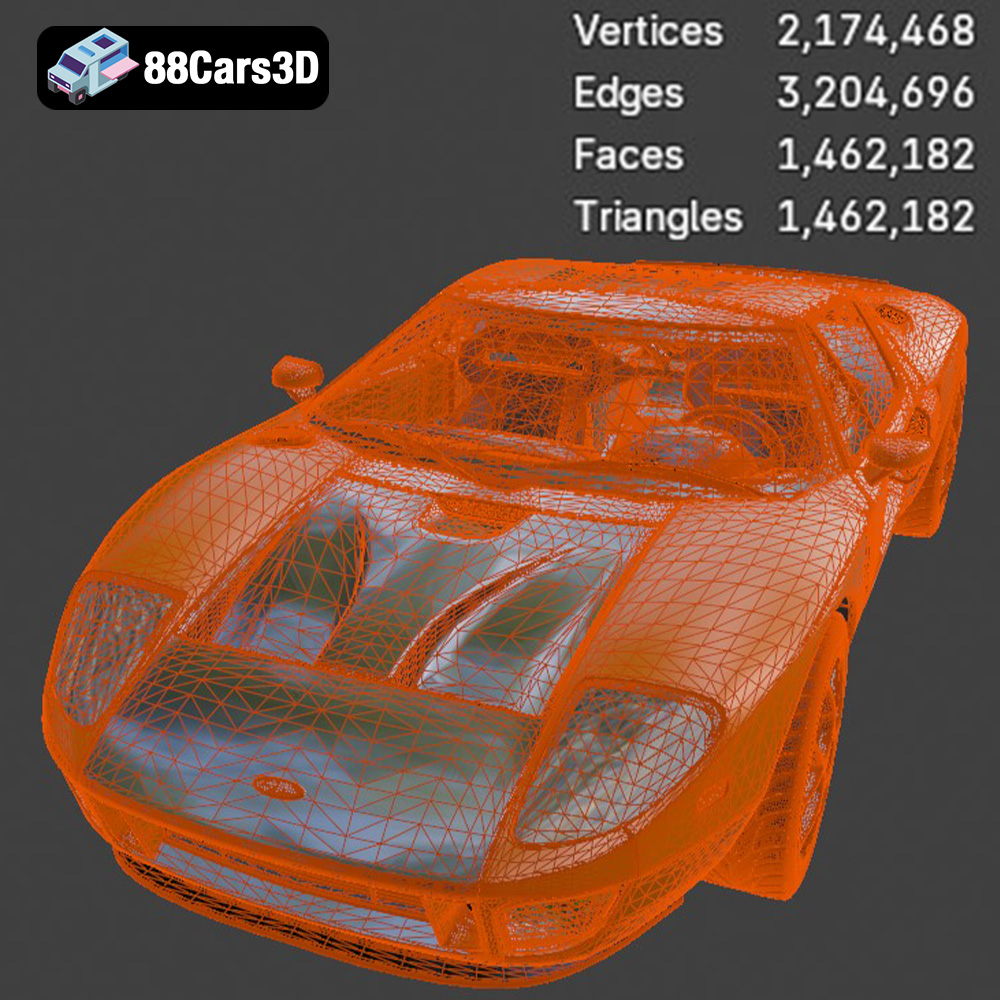
Game development relies heavily on optimized assets. The Ford GT 2005 model’s ~150,000 triangles strikes a perfect balance, offering high-end visual realism without overburdening game engine performance. This poly count is ideal for a hero vehicle in modern racing games or open-world titles, allowing for smooth framerates even with multiple vehicles on screen. For further optimization, game developers typically implement Levels of Detail (LODs), where simpler versions of the model are swapped in when the car is further from the camera. While not explicitly stated as included, the optimized base mesh of this model makes creating LODs straightforward. Efficient UV mapping and organized texture sets are also critical for real-time engines, ensuring textures are rendered efficiently. Importing the .fbx or .unreal format of the Ford GT into engines like Unreal or Unity is a streamlined process. Its proper pivot setup for steering, wheel rotation, and suspension travel is especially beneficial for vehicle physics and animation systems, allowing developers to quickly integrate the model into a driveable state without extensive rigging work. This makes it an ideal choice for “open-world racing games, high-end automotive visualizations,” and simulators where performance and visual accuracy are equally important.
Augmented Reality (AR) and Virtual Reality (VR) environments represent another frontier for 3D car models. Whether it’s a virtual showroom experience where customers can walk around and interact with the Ford GT 2005, or an AR application that places the car realistically in your driveway, performance and optimized assets are non-negotiable. The model’s game-ready nature and inclusion of the .glb format are key advantages here. The .glb format is specifically designed for efficient loading and rendering in AR/VR applications and web browsers, making it perfect for creating lightweight, interactive experiences. Imagine a VR configurator where users can customize the car’s paint, wheels, and interior, or an AR app that lets them explore its intricate details on their tablet. The optimized polycount and clean geometry ensure that these experiences run smoothly on various devices, offering true immersion without performance bottlenecks. This versatility makes the Ford GT 2005 3D model an excellent candidate for virtual showrooms, configurators, and mobile AR experiences, extending its utility beyond traditional rendering and game development.
While often associated with digital displays, high-quality 3D car models also bridge the gap between the virtual and physical worlds through 3D printing. The ability to transform a digital asset into a tangible object opens up new avenues for creators, collectors, and hobbyists alike.
The journey from a detailed 3D model to a physical replica begins with the right file format: .stl. The Ford GT 2005 3D model includes this format, specifically catering to 3D printing enthusiasts. However, simply having an .stl file isn’t enough; proper preparation and print settings are crucial for a successful outcome. The recommended scale of 1:12, 1:18, or 1:24 provides a good balance between detail and printability, making it suitable for display-scale hobbyists. For achieving fine details, especially on intricate parts like the exhaust, mirrors, or steering wheel, resin printing is highly recommended over FDM. Layer heights between 0.04–0.12 mm are suggested for optimal surface quality. Critical structural considerations include a wall thickness of 1.2–2.0 mm and an infill of 20–30% for internal strength. Supports are almost always required for overhangs and delicate features. The recommended print orientation, with the frame printed at an angle for structural integrity and wheels printed separately, highlights the specialized knowledge required to transition from digital to physical successfully. Post-processing, including sanding, priming, and painting with authentic factory colors and metallic finishes, transforms the raw print into a stunning collectible.
The accessibility of 3D printing has revolutionized model making. Hobbyists can now bring their favorite cars to life on their desks, creating custom dioramas or unique display pieces. For designers and engineers, 3D printing offers a rapid prototyping solution, allowing them to physically evaluate design elements, ergonomics, or structural integrity of the Ford GT model before committing to expensive manufacturing processes. This is especially relevant in educational settings, where students can learn about automotive design and engineering through hands-on model creation. Moreover, for collectors, 3D printing enables the creation of rare or bespoke replicas that might otherwise be unavailable or prohibitively expensive. The Ford GT 2005 3D model provides a fantastic base for such endeavors, fostering a vibrant community of creators who can modify, paint, and personalize their physical models, truly embodying its American racing heritage in miniature form.
In the dynamic world of 3D content creation, the value of a meticulously crafted, versatile asset cannot be overstated. The Ford GT 2005 3D Model exemplifies this principle, offering unparalleled fidelity and adaptability for a broad spectrum of professional applications. From the demanding photorealism of automotive rendering and visualization to the performance-critical environments of game development and AR/VR, and even to the tangible world of 3D printing, this model proves to be an indispensable tool. Its detailed exterior and interior features, coupled with game-ready optimization and comprehensive file format support, make it a standout choice for any project requiring an iconic supercar.
Whether you’re a seasoned professional seeking to elevate your next project or an enthusiast eager to explore new creative frontiers, this Ford GT 2005 3D model from 88cars3d.com provides the foundation for success. It’s not just a digital object; it’s a gateway to bringing your automotive visions to life, with the assurance of quality and technical precision that empowers seamless workflows. Explore the possibilities and discover how this exceptional asset can transform your next creative endeavor.
Experience the legendary performance and retro-futuristic styling of the 2005 Ford GT with this high-fidelity 3D model. Built as a tribute to the four-time Le Mans-winning GT40, this iconic mid-engine supercar boasts a timeless design characterized by its aerodynamic silhouette, cantilevered doors that cut into the roofline, and the muscular presence of its 5.4-liter supercharged V8 visible through the rear clamshell. The model perfectly captures its distinctive dual central exhausts, aggressive stance, and the classic twin racing stripes that define its American racing heritage.
Engineered for maximum versatility, this 3D model features game-ready topology with a highly optimized triangle count, ensuring smooth performance in real-time engines without sacrificing high-end visual fidelity. The clean geometry and well-structured material setups guarantee stunning reflections and realistic textures. Whether utilized as an interactive hero asset, an environmental prop, or a high-end cinematic vehicle, this model seamlessly blends performance with unparalleled detail.
Perfect for open-world racing games, high-end automotive visualizations, immersive VR showroom experiences, and dynamic cinematic animations.
.blend, .fbx, .obj, .glb, .stl, .ply, .unreal, .max
Tags:
ford, gt-2005, sports-car, supercar, classic-car, game-ready, low-poly, optimized, car-3d-model, game-asset, rendering, vr-ar, blend, fbx, obj, glb, stl, ply, unreal, maxVespa VNB 125-B 3D Model 3D Printable STL
$19.99
.blend
.fbx
.ford
.glb
.max
.obj
.ply
.rendering
.sports car
.stl
.supercar
.unreal
car-3d-model
classic-car
game asset
game-ready
gt-2005
low-poly
optimized
VR/AR