Get 20% OFF All Premium 3D & STL Models!

In the rapidly evolving world of digital content creation, the demand for high-fidelity 3D assets is more critical than ever. From cinematic automotive rendering to immersive game development and advanced AR/VR experiences, the quality of your 3D models directly impacts the final output. Every curve, every reflection, and every material nuance contributes to the perceived realism and overall impact of a project. It’s in this pursuit of perfection that assets like the Honda VFR 801 3D Model stand out as indispensable tools for professionals.
This article will delve into the technical intricacies that define a truly professional 3D model, exploring the essential file formats, integration workflows with industry-standard software like 3ds Max, Blender, and Unreal Engine, and the diverse applications of such assets. We will examine how meticulously crafted 3D car models, exemplified by the Honda VFR 801, not only streamline production but also empower creators to achieve unparalleled visual fidelity across various digital platforms. Whether you’re an architect visualizing a future urban landscape, a game designer populating an open world, or a marketing specialist crafting a compelling advertisement, understanding the capabilities of premium 3D assets is key to unlocking your project’s full potential.
At the heart of any successful digital project lies the foundation of high-quality assets. A professional 3D model is far more than just a visually appealing object; it’s a meticulously engineered digital construct designed for optimal performance and versatility. When we speak of professional-grade 3D car models, we’re referring to assets built with precision, intended to withstand rigorous production pipelines, and deliver consistent, outstanding results. The Honda VFR 801 3D Model, for instance, embodies these principles, offering a benchmark of quality for automotive visualization.
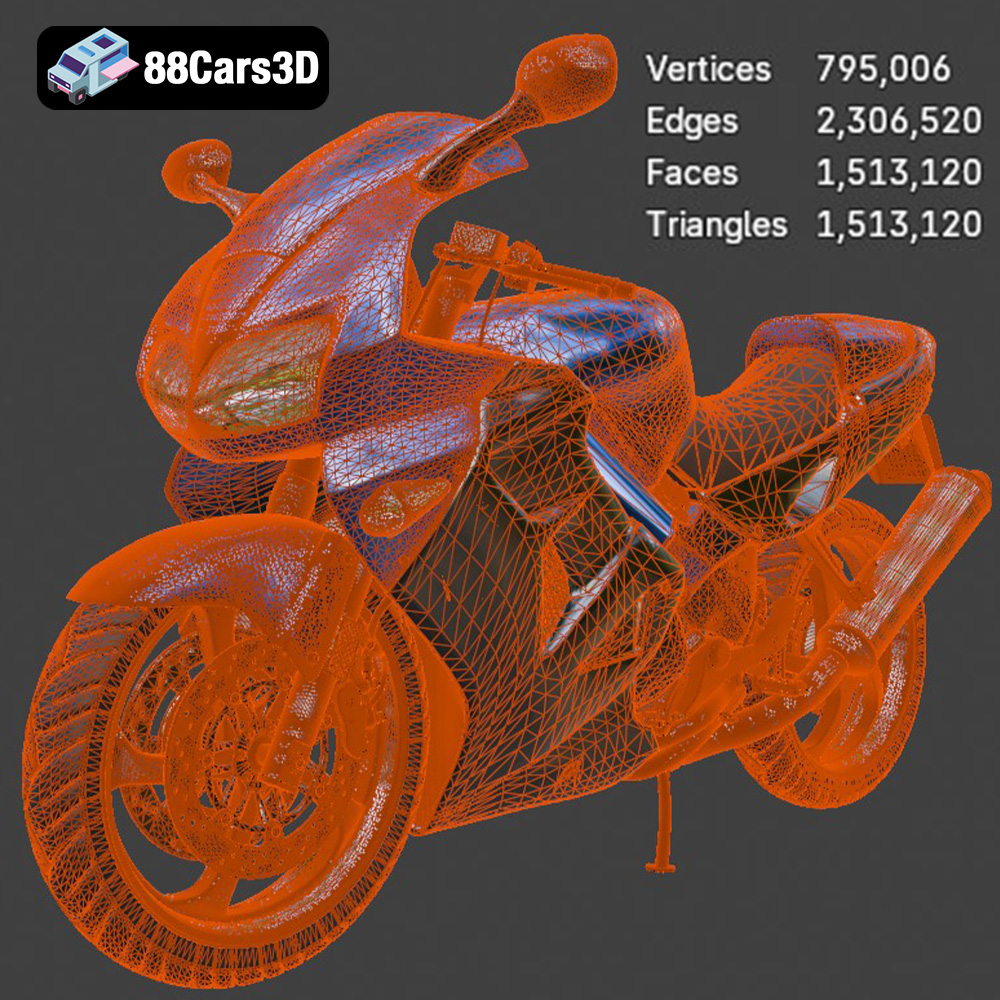
One of the foremost indicators of a professional 3D model is its polygon geometry and topology. “Clean polygon geometry” means that the mesh is well-organized, free from issues like non-manifold geometry, overlapping faces, or isolated vertices. This clean structure is crucial for predictable deformation during animation, stable subdivision surfacing (allowing for smooth transitions at higher detail levels), and efficient rendering. The Honda VFR 801 3D Model boasts topology that is not only clean but also “fully optimized for smooth rendering and seamless subdivision.” This optimization ensures that whether you’re rendering a close-up shot or integrating it into a real-time environment, the model will perform flawlessly without introducing artifacts or demanding excessive computational resources. A well-constructed mesh also translates to easier UV unwrapping and texture application, saving countless hours in the texturing phase.
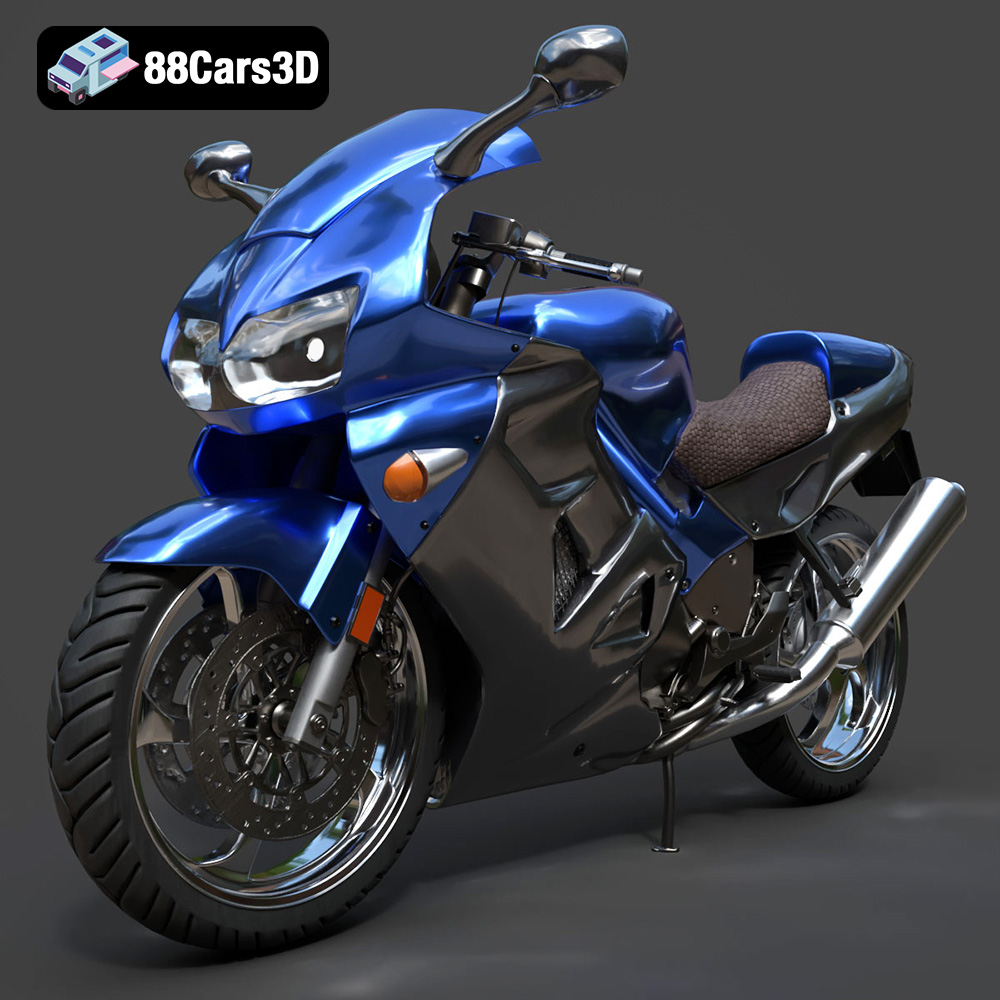
Beyond the mesh itself, the materials and texturing applied to a 3D model are paramount for achieving realism. “Realistic materials” implies the use of physically based rendering (PBR) workflows, where material properties like albedo (color), roughness, metallic, normal maps, and ambient occlusion are accurately represented. These PBR textures react realistically to light, mimicking how surfaces behave in the real world. For a detailed asset like the Honda VFR 801 3D Model, this means authentic reflections on the paintwork, the subtle sheen of rubber tires, and the intricate textures of engine components. High-resolution textures, carefully painted and applied, coupled with optimized UV layouts, ensure that every detail, no matter how small, contributes to the overall immersive experience. This attention to material fidelity is what truly brings 3D car models to life, making them indistinguishable from their real-world counterparts in high-quality renders.
Navigating the diverse landscape of 3D software and applications requires a solid understanding of various 3D model file formats. Each format serves a specific purpose, offering unique advantages for different stages of the production pipeline, from initial modeling to final deployment in real-time engines or 3D printing. The Honda VFR 801 3D Model exemplifies versatility by being offered in a comprehensive range of these essential formats, ensuring maximum compatibility and utility for any professional workflow.
The .blend format is the native file type for Blender, one of the most popular open-source 3D creation suites. A .blend file is a complete scene package, containing not just the 3D model geometry but also materials, textures, lighting setups, cameras, animations, and even scripts. This makes it incredibly powerful for artists working primarily within Blender, offering a fully editable environment where every aspect of the scene can be tweaked and refined. For the Honda VFR 801 3D Model, the .blend file provides a ready-to-render scene with pre-configured materials and lighting, making it ideal for immediate high-quality visualization or for further customization within Blender’s robust toolset. Its self-contained nature ensures that all dependencies are present and correctly linked.
.fbx (Filmbox) is arguably the most widely adopted interchange format in the 3D industry, particularly favored for game development and animation pipelines. Developed by Autodesk, .fbx supports geometry, animation, skinning, blend shapes, cameras, lights, and materials, making it a robust choice for transferring complex animated scenes between different software packages. Its strength lies in its ability to maintain crucial scene data when moving between applications like 3ds Max, Maya, Blender, Unity, and Unreal Engine. The Honda VFR 801’s .fbx version is explicitly “game-engine ready,” indicating its optimized mesh, efficient material assignments, and often, clean UVs and correctly scaled units, making it perfect for direct import into real-time environments for interactive experiences and virtual production.
The .obj (Wavefront Object) format is a venerable and widely supported standard for representing 3D geometry. It’s a simpler format compared to .fbx, primarily focusing on vertex positions, normals, texture coordinates, and polygonal faces. While it doesn’t typically store animation or rigging data, its universal compatibility makes it an excellent choice for static mesh transfer between virtually any 3D software package. Most 3D applications can import and export .obj files reliably. The Honda VFR 801 3D Model in .obj format serves as a “standard 3D model format compatible with all major software,” ensuring that regardless of your primary 3D application, you can integrate the model seamlessly, then apply your preferred materials and textures.
.glb (GL Transmission Format Binary) is a modern, compact, and efficient format designed for delivering 3D models and scenes on the web, in augmented reality (AR), and virtual reality (VR) applications. It’s the binary version of glTF (Graphics Library Transmission Format), bundling all assets (geometry, materials, textures, animations) into a single file, which significantly simplifies loading and parsing. Its optimization for real-time rendering and small file size makes it perfect for interactive web viewers, AR experiences on mobile devices, or lightweight VR applications. For the Honda VFR 801, the .glb format is “optimized for AR/VR and web-based visualization,” making it ready for showcasing the model directly in a browser or integrating it into an interactive online configurator or a mobile AR app.
.stl (Stereolithography) is the de facto standard format for 3D printing and rapid prototyping. It represents a 3D model as a collection of unconnected triangular facets, defining only the surface geometry without color, texture, or material information. While simplistic, its widespread adoption by 3D printers and slicing software makes it indispensable for transforming digital designs into physical objects. The Honda VFR 801 in .stl format is “suitable for 3D printing and prototyping,” allowing designers to produce a tangible scale model of the motorcycle for physical review, fitment testing, or even creating custom accessories.
The .ply (Polygon File Format, or Stanford Triangle Format) is another format for storing 3D data, particularly popular in academic and research contexts for scanner-generated data and mesh analysis. It can store a wider range of properties than .stl, including color, transparency, normals, texture coordinates, and even reliability information for each polygon. This makes it valuable for applications requiring precise data integrity or for scientific visualization. The Honda VFR 801 as a “.ply – Detailed polygon mesh for analysis and visualization” would be suited for reverse engineering workflows, detailed inspection, or specific technical simulations where the additional data attributes are beneficial.
The .unreal format (or more accurately, assets packaged for Unreal Engine) signifies models that have been meticulously prepared and often pre-imported into an Unreal Engine project. This means the model often comes with correctly set up materials, collision meshes, LODs (Levels of Detail), and potentially even blueprints or animation sequences ready to be dropped directly into an Unreal project. This eliminates the often tedious and error-prone process of manually configuring assets within the engine. For the Honda VFR 801, the “.unreal – Pre-configured for Unreal Engine use” ensures a streamlined workflow for game developers, virtual production studios, or anyone leveraging Unreal Engine’s powerful real-time rendering capabilities.
Finally, the .max format is the native file type for Autodesk 3ds Max, a leading software for 3D modeling, animation, rendering, and visualization. Similar to .blend files, .max files are comprehensive scene containers, holding geometry, materials, textures, lighting, cameras, animation data, and all other scene-related information. Having the Honda VFR 801 3D Model available as an “.max – Editable 3ds Max file for rendering and animation” provides 3ds Max users with complete control over the asset. They can easily modify the mesh, adjust materials, set up complex lighting rigs, or integrate the motorcycle into intricate animated sequences, leveraging all the advanced features of 3ds Max without any conversion hurdles.
The true power of a versatile 3D asset like the Honda VFR 801 3D Model lies in its seamless integration into various professional workflows. Designed to be “game-engine ready” and compatible with major software, it serves as a high-value component across diverse industries, from high-end visualization to interactive experiences.
For artists focused on photorealistic automotive rendering, the Honda VFR 801 3D Model provides an excellent starting point. In 3ds Max, designers can import the .max or .fbx file, leveraging its robust modeling and rendering tools. Users can set up intricate studio lighting, utilizing renderers like V-Ray or Corona to achieve stunning, lifelike images. The model’s “clean polygon geometry” and “realistic materials” ensure that reflections on the metallic surfaces and the subtle textures of the tires and upholstery respond accurately to light, producing marketing-grade visuals. Similarly, Blender users can take advantage of the .blend file, which often includes pre-configured materials and lighting. This allows for immediate rendering using Cycles or Eevee, enabling quick iterations for design reviews or cinematic sequences. The optimized topology of the Honda VFR 801 ensures smooth subdivision for extreme close-ups without compromising performance, making it an ideal asset for detailed brochures, advertisements, or even virtual showrooms of 3D car models.
The game industry demands highly optimized yet visually rich assets. The Honda VFR 801 3D Model, with its “game-engine ready format for Unreal Engine,” is perfectly suited for this environment. Game developers can import the .fbx or utilize the specific .unreal asset, which comes pre-configured for optimal performance within the engine. This includes properly scaled models, efficient material setups, and sometimes even Level of Detail (LOD) meshes to ensure smooth performance across various hardware specifications. Whether populating an open-world racing game, creating a detailed cutscene, or building a realistic virtual training simulation, the Honda VFR 801 integrates effortlessly. Its “clean polygon geometry” and “optimized for smooth rendering” attributes directly translate to stable frame rates and visually appealing graphics within a real-time context. Developers can quickly set up advanced lighting, physics, and interactive elements to bring the motorcycle to life in their virtual worlds.
Augmented Reality (AR) and Virtual Reality (VR) platforms require models that are not only visually compelling but also highly optimized for real-time performance on varied devices, including mobile. The .glb format of the Honda VFR 801 3D Model is specifically “optimized for AR/VR and web-based visualization,” making it an excellent choice for these emerging technologies. Developers can integrate the model into AR apps, allowing users to place a virtual Honda VFR 801 in their physical environment, examine it from all angles, or even customize its appearance. In VR, the model can serve as an interactive exhibit, a vehicle in a virtual experience, or a component of an educational simulation. The efficient file size and streamlined structure of the .glb ensure quick loading times and smooth interactions, crucial for maintaining user immersion in interactive media. This capability makes the Honda VFR 801 an invaluable asset for creating engaging digital marketing content or innovative product showcases.
While often associated with stunning visuals, professional 3D models extend their utility far beyond rendering. The inherent accuracy and detail of assets like the Honda VFR 801 3D Model empower a multitude of practical applications across various industries, offering solutions that enhance design, training, and marketing efforts.
High-fidelity 3D car models, such as the Honda VFR 801, serve as powerful tools in design and engineering. While not direct CAD models, their accurate scaling and detailed geometry can be invaluable for early-stage design visualization, spatial planning, and even ergonomic studies. Engineers can use the .ply format for detailed mesh analysis, inspecting surface continuity and curvature for design validation. For example, in an automotive accessory design firm, a highly accurate 3D model of a motorcycle like the VFR 801 can be imported into CAD software environments (via .obj or .fbx), providing a reference for designing aftermarket parts or custom modifications. Designers can virtually “fit” new components, assess aesthetic integration, and identify potential conflicts long before physical prototypes are ever made, significantly reducing development costs and time. The .stl format further enables rapid prototyping, allowing for physical production of scale models or specific components for tactile review.
The realism offered by professional 3D car models makes them ideal for training and educational applications. Imagine a motorcycle safety training simulator where new riders can practice maneuvers and react to various scenarios in a safe, controlled virtual environment. The Honda VFR 801 3D Model could be the core vehicle, providing an accurate representation of the bike’s dimensions and visual characteristics, enhancing immersion for the trainee. Similarly, educational institutions can use these models to teach principles of mechanical engineering, vehicle dynamics, or even basic vehicle maintenance. Interactive modules built with game engines like Unreal, using the pre-configured .unreal model, can allow students to virtually disassemble the engine, identify components, and understand their functions without needing access to a physical motorcycle. This hands-on, virtual learning experience is invaluable for practical education.
In the competitive world of marketing, captivating visuals are key. Professional 3D car models revolutionize how vehicles are presented in advertising. Instead of costly and time-consuming photoshoots, marketers can generate an endless array of photorealistic images and animations of the Honda VFR 801 in diverse environments, lighting conditions, and camera angles. This allows for unparalleled flexibility in campaign creation, from sleek print advertisements to dynamic video commercials and interactive online configurators. A manufacturer could showcase different color options or accessories on the Honda VFR 801 3D Model instantly, catering to various market segments with tailored visuals. Furthermore, the .glb format can be integrated into web banners or social media posts, offering interactive 3D views directly in a browser, engaging potential customers in a novel and memorable way. This level of visual control and versatility empowers brands to create compelling narratives and immersive experiences, driving engagement and sales.
Investing in premium 3D assets, such as the Honda VFR 801 3D Model from 88cars3d.com, is a strategic decision that offers significant advantages for any serious digital content creator. The immediate availability of “unmatched realism” and “meticulous attention to detail” translates directly into enhanced project quality and operational efficiency, especially for intricate subjects like 3D car models.
Developing a high-fidelity 3D model from scratch is an incredibly time-consuming and expensive endeavor, requiring specialized skills in modeling, texturing, and optimization. By purchasing a professional-grade asset like the Honda VFR 801 3D Model, you bypass this entire initial development phase. The time saved can be redirected towards other critical aspects of your project, such as scene composition, animation, or advanced rendering setups. For studios, this means adhering to tighter deadlines and managing resources more effectively. For freelancers, it allows for taking on more projects and delivering higher quality outputs faster. The multiple file formats offered ensure that the model is ready for immediate integration into your preferred software, minimizing conversion issues and further streamlining the workflow. This efficiency directly translates to cost savings, making premium assets a smart economic choice for any scale of production.
The description of the Honda VFR 801 3D Model emphasizes “meticulous attention to detail” and “accurate scaling and true-to-life aesthetics.” This level of precision is difficult and often impossible to achieve with generic or lower-quality assets. A premium model ensures that every panel gap, every decal, and every material property is faithfully replicated. For automotive rendering, this authenticity is paramount; even subtle inaccuracies can break immersion. Products from 88cars3d.com uphold this standard, providing models that are not only visually stunning but also technically robust. This means you can trust that the asset will perform reliably in high-stakes productions, delivering the realism and quality necessary to captivate your audience. Whether for architectural visualization, game environments, or cinematic productions, the foundational quality of assets from 88cars3d.com elevates the entire project, allowing creators to focus on artistic direction rather than troubleshooting model imperfections.
In the dynamic realm of 3D content creation, the foundation of any outstanding project lies in the quality of its assets. The comprehensive exploration of 3D modeling workflows, file formats, and practical applications underscores the critical role that professional-grade 3D car models play across various industries. Assets like the Honda VFR 801 3D Model exemplify the benchmark for quality, offering unparalleled realism, clean topology, and versatile compatibility for everything from automotive rendering in 3ds Max and Blender to immersive game assets in Unreal Engine and AR/VR experiences.
By understanding the nuances of formats like .blend, .fbx, .obj, and .glb, professionals can strategically integrate these powerful tools into their pipelines, accelerating production and elevating visual fidelity. The ability to seamlessly transition from visualization to prototyping, and from training simulators to compelling marketing campaigns, highlights the immense value that such meticulously crafted digital assets bring. Investing in high-quality 3D models like the Honda VFR 801 is not just about acquiring an object; it’s about acquiring efficiency, reliability, and the power to transform creative visions into stunning digital realities. For your next project demanding precision and realism in 3D car models, explore the professional collection available at 88cars3d.com and experience the difference true quality makes.
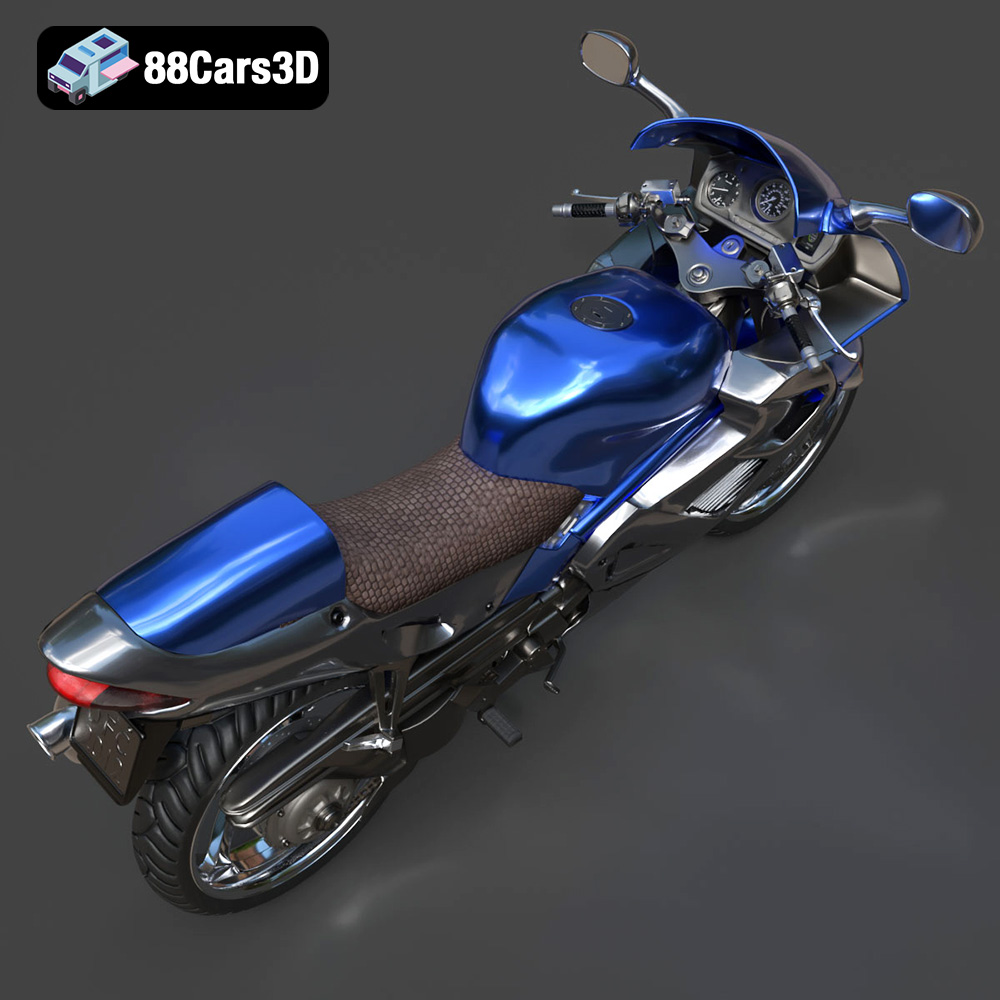
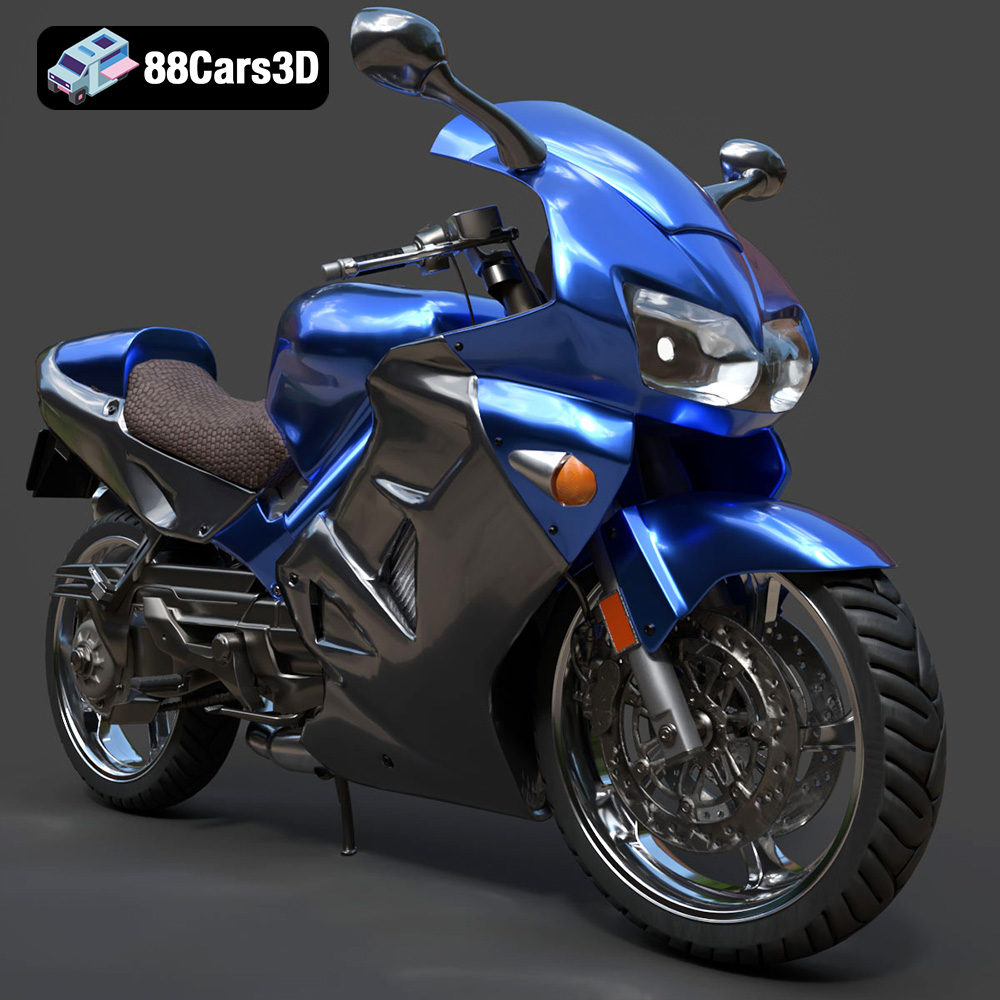
Experience unmatched realism with the Honda VFR 801-002 3D Model. Constructed with meticulous attention to detail, this professional 3D asset captures the dynamic essence and engineering precision of the iconic Honda VFR. It is designed to elevate your visual projects with accurate scaling and true-to-life aesthetics. Key features include clean polygon geometry, realistic materials, and exceptional detailing. The topology is fully optimized for smooth rendering and seamless subdivision, ensuring professional-grade results whether utilized for static imagery or dynamic animations. This versatile 3D model is ideal for a wide range of applications. From digital rendering and simulation to game development and immersive AR/VR experiences, it integrates seamlessly into your existing pipeline to deliver outstanding visual fidelity.
$39.99
.arvr
.blend
.car3dmodel
.fbx
.gameasset
.glb
.honda
.max
.motorcycle
.obj
.ply
.rendering
.simulation
.sportbike
.stl
.twowheeler
.unreal
.vfr