Get 20% OFF All Premium 3D & STL Models!

In the fast-paced world of digital content creation, the demand for realistic and technically precise 3D car models has never been higher. From breathtaking cinematic renderings to immersive real-time game experiences and interactive AR/VR applications, the digital automobile stands at the intersection of art and engineering. For professionals across these diverse fields, a meticulously crafted 3D model isn’t just an asset; it’s the foundation upon which entire digital worlds are built.
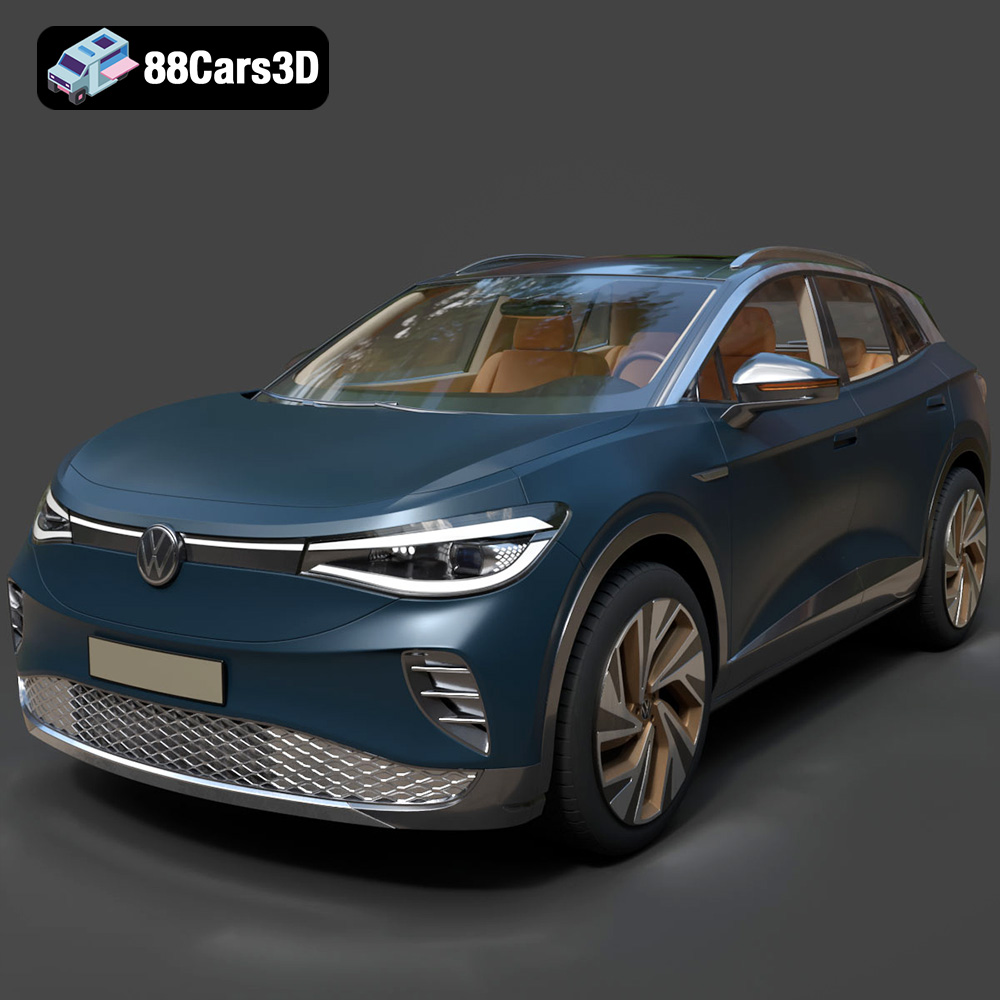
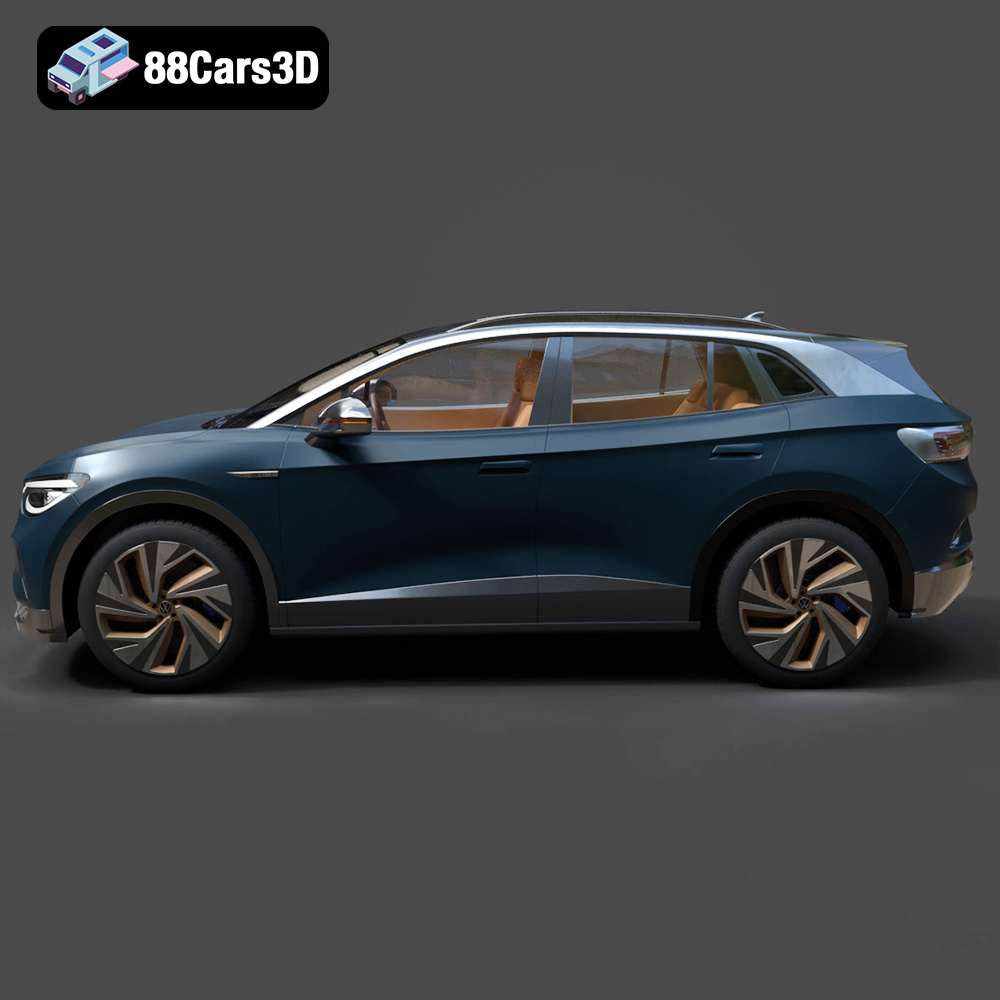
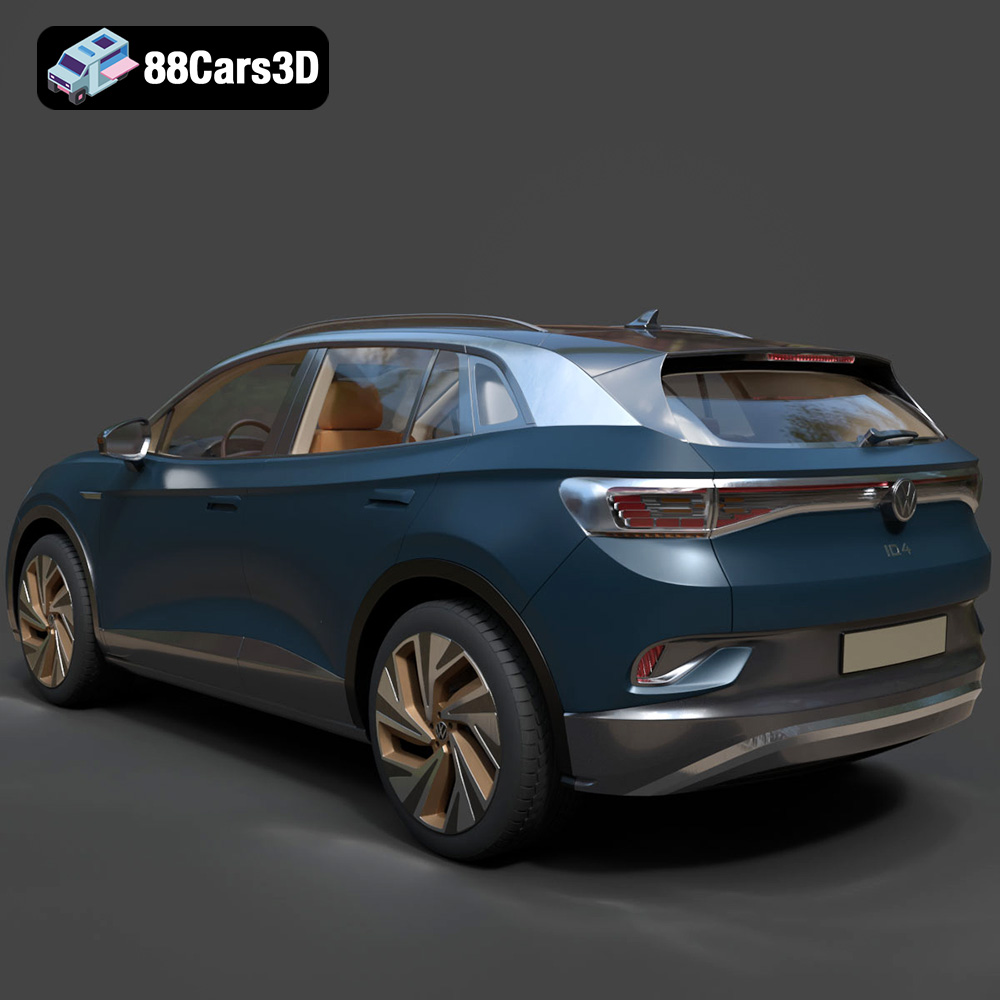
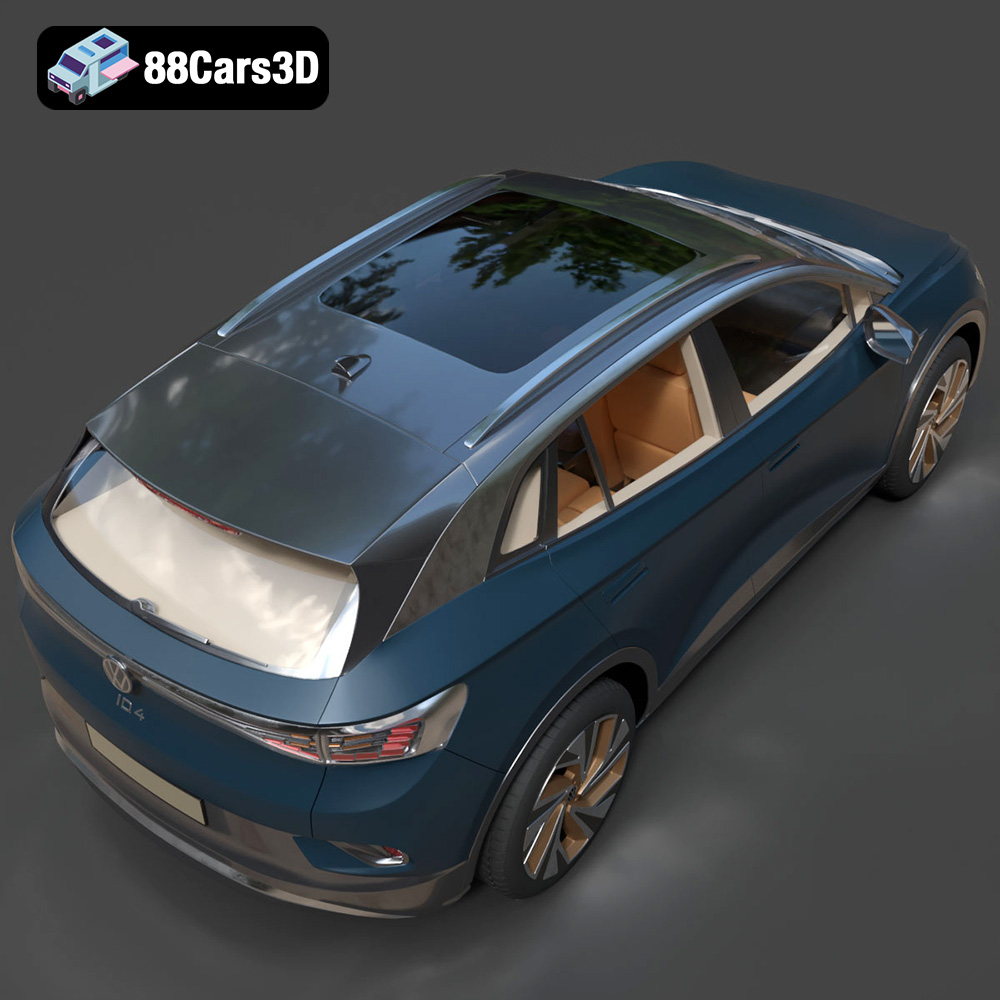
At the forefront of this digital automotive revolution is the pursuit of authenticity. Creators strive to replicate every curve, every reflection, and every intricate detail of real-world vehicles, pushing the boundaries of realism. This pursuit makes models like the Volkswagen ID4 2021 3D Model an indispensable tool. This extensively detailed model perfectly captures the aerodynamic curves and modern design of the popular electric vehicle, providing an accurate representation suitable for professional digital environments. Engineered with precision, it features clean geometry, accurate proportions, and realistic materials, ensuring seamless integration into close-up shots and demanding digital scenes. Such high-fidelity assets are crucial for anyone looking to achieve professional-grade results.
The journey of a vehicle, from concept to showroom, is increasingly digital. Architects, product designers, marketers, and game developers all rely on sophisticated 3D models to visualize, communicate, and innovate. These digital representations serve as versatile building blocks, adapting to an array of platforms and purposes. Whether it’s showcasing a new car’s features before physical prototypes exist, creating a high-stakes racing simulation, or integrating a vehicle into an architectural rendering, the quality of the base 3D model dictates the success of the final output.
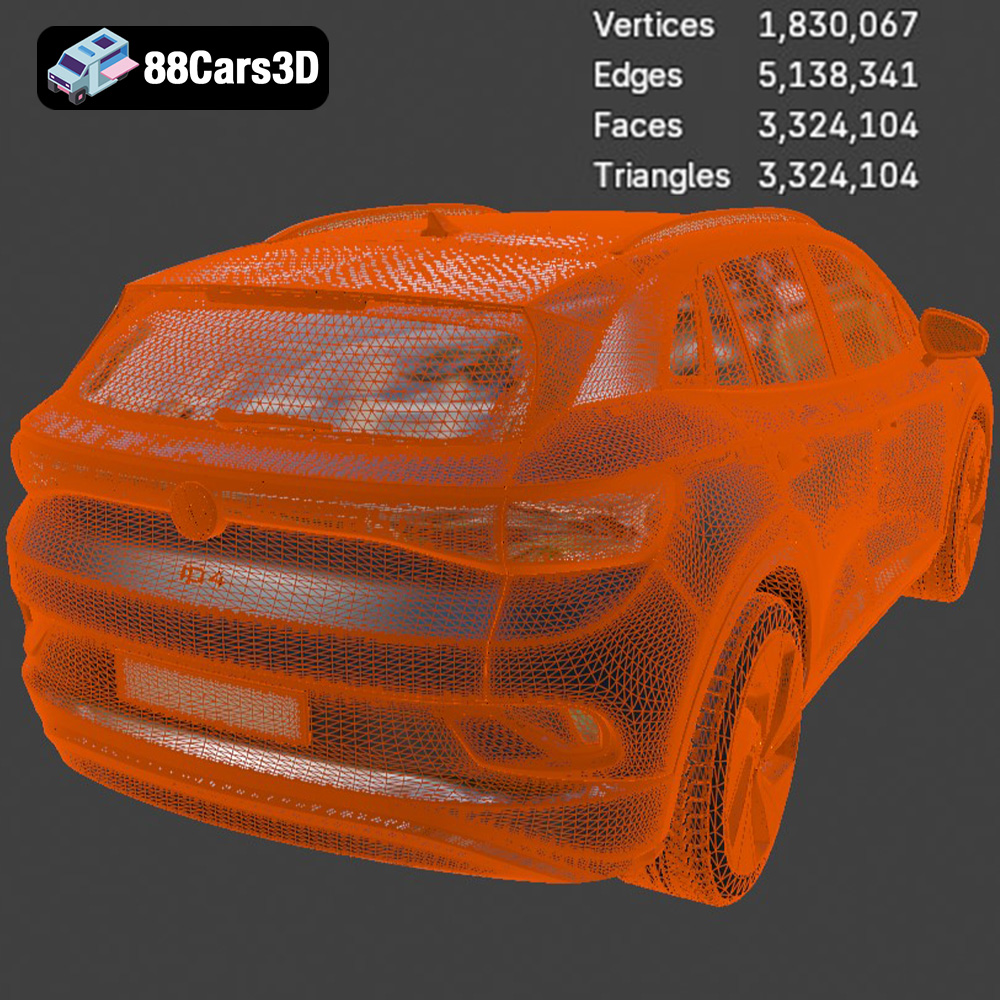
High-quality 3D car models are not merely visual approximations; they are digital twins. This requires an obsessive attention to detail, beginning with precise blueprint matching and meticulous polygonal modeling. Every facet, from the subtle curvature of the fender to the precise cut of the headlights and the intricate design of the wheels, must be accurately represented. For a model like the Volkswagen ID4 2021, this means capturing the distinctive modern aesthetic and EV-specific design cues with absolute fidelity. Clean topology, often achieved through careful quad-based modeling, is paramount. This ensures smooth subdivision, artifact-free deformation, and efficient UV unwrapping, which are critical for both static rendering and dynamic animation.
In marketing and visualization, authenticity builds trust and engagement. Consumers expect to see vehicles rendered with photorealistic accuracy, indistinguishable from real-world photography. In gaming, realism translates to immersion, where players can identify with the vehicles they drive. This demand extends beyond the exterior to the intricately modeled interior, accurate dashboard layouts, seating textures, and even under-the-hood components if the application requires. Achieving this level of authenticity requires not only superior modeling but also expertly crafted materials and textures, often employing Physically Based Rendering (PBR) workflows to accurately simulate how light interacts with different surfaces.
The versatility of a 3D model often hinges on its availability in various file formats, each optimized for different stages of the production pipeline or specific software ecosystems. Understanding these formats is crucial for any professional working with 3D content, enabling seamless transitions between applications and ensuring compatibility for diverse project requirements. The Volkswagen ID4 2021 3D Model from 88cars3d.com, for instance, exemplifies this versatility by offering a comprehensive suite of formats, catering to virtually any professional workflow.
The .blend format is native to Blender, an incredibly powerful and popular open-source 3D creation suite. A .blend file typically contains not just the raw mesh data, but also materials, textures, lighting setups, cameras, animations, and even physics simulations. This makes it an ideal format for artists who primarily work in Blender, offering a fully editable scene that can be tweaked and customized down to the smallest detail. For the Volkswagen ID4 2021, the .blend file provides a complete starting point, ready for rendering with Blender’s Cycles or Eevee render engines, or further modification.
The .fbx (Filmbox) format is an industry-standard proprietary format developed by Autodesk, widely used for exchanging 3D data between various software applications, especially within game development. It can store models, animation, cameras, and even some material information. Its strength lies in its ability to efficiently transfer complex scenes with animation data while maintaining hierarchical structures. For integrating 3D car models like the Volkswagen ID4 2021 into game engines such as Unreal Engine and Unity, .fbx is often the go-to choice due to its robust support for baked animations, bone structures, and efficient mesh representation, making it game-engine ready.
The .obj (Wavefront Object) format is one of the oldest and most universally supported 3D file formats. It is a simple, text-based format that primarily stores geometry (vertices, normals, texture coordinates, and faces) and can reference an accompanying .mtl (Material Template Library) file for basic material properties. While it doesn’t support animation or complex scene data, its widespread compatibility makes it an excellent choice for straightforward mesh exchange between almost any 3D software. If you need to import the Volkswagen ID4 2021 into a less common application or ensure maximum compatibility, .obj is a reliable fallback.
The .glb (GLB format, an evolution of glTF – GL Transmission Format) is an increasingly important format, particularly for web-based 3D, Augmented Reality (AR), and Virtual Reality (VR) applications. It is an efficient, compact, binary format that bundles models, textures, and animations into a single file, making it quick to load and display. Its focus on real-time rendering and small file size makes it perfect for interactive web viewers, social media filters, and standalone AR/VR experiences. For showcasing the Volkswagen ID4 2021 interactively in a browser or on mobile devices, .glb offers optimal performance and visual fidelity.
The .stl (Stereolithography) format is the standard file type for 3D printing. It represents a 3D object as a collection of unconnected triangular facets, defining the surface geometry of the object. While it does not store color, texture, or material information, its simplicity makes it universally compatible with 3D printers and slicing software. If the intent is to create a physical prototype of the Volkswagen ID4 2021, the .stl file provides the necessary geometry for additive manufacturing, ensuring a watertight and manifold mesh crucial for successful printing.
The .ply (Polygon File Format or Stanford Triangle Format) is a file format for storing graphical objects that are described as a collection of polygons. It can store more complex information than .stl, including color, transparency, and sometimes even confidence values for scanned data. It’s often used in scientific and engineering applications, especially for storing data from 3D scanners, and for precision mesh analysis in CAD environments. For detailed inspection or simulation of the Volkswagen ID4 2021’s mesh structure, the .ply format offers a robust representation.
The .unreal designation often refers to assets that are pre-configured or specifically optimized for direct import and use within Unreal Engine. While typically imported via .fbx, having an “.unreal” optimized package means that PBR materials are correctly set up, textures are properly linked, collision meshes might be pre-generated, and LODs (Levels of Detail) are often included. This significantly streamlines the integration process for the Volkswagen ID4 2021 into a high-fidelity real-time environment within Unreal Engine, saving valuable development time.
The .max format is the native file type for Autodesk 3ds Max, a leading software for 3D modeling, animation, and rendering in architectural visualization, product design, and cinematic productions. Similar to .blend, a .max file stores the complete scene, including geometry, materials, lighting, cameras, animation, and render settings. For professionals deeply embedded in the 3ds Max ecosystem, the .max version of the Volkswagen ID4 2021 3D Model provides maximum flexibility for detailed rendering with engines like V-Ray or Corona, custom animations, and complex scene integrations.
Photorealistic rendering is where high-quality 3D car models truly shine. The process involves more than just plugging in a model; it’s a meticulous blend of lighting, material science, camera work, and post-processing. A model like the Volkswagen ID4 2021, with its clean geometry and PBR-ready materials, provides the perfect canvas for creating stunning visuals that can be indistinguishable from real photography.
Autodesk 3ds Max, often paired with powerful render engines like V-Ray or Corona Renderer, is a staple in professional automotive visualization. The workflow typically begins by importing the .max file of the 3D car model. Materials are then assigned or refined using PBR textures (Albedo/Base Color, Metallic, Roughness, Normal, Ambient Occlusion) to accurately simulate surface properties. Lighting is critical: HDRI (High Dynamic Range Image) maps are frequently used to provide realistic environmental lighting and reflections, often supplemented by physical lights (e.g., area lights, photometric lights) to highlight specific contours or create dramatic effects. Camera settings, including depth of field, f-stop, and motion blur, are fine-tuned to mimic real-world photography. The Volkswagen ID4 2021, with its precisely modeled surfaces, will beautifully react to these lighting setups, yielding authentic reflections and shadows essential for high-end rendering.
Blender offers incredible flexibility for automotive rendering, appealing to both independent artists and large studios. Its native Cycles renderer provides unbiased, physically accurate ray tracing, capable of producing stunning photorealism. Eevee, Blender’s real-time renderer, offers a rapid preview and near-instantaneous feedback, perfect for design iteration and animation pre-visualization. For the Volkswagen ID4 2021 .blend file, artists can leverage Blender’s powerful node-based shader system to create complex materials, procedural textures, and even animated effects. Custom lighting setups, often incorporating realistic studio lighting rigs or outdoor environments, bring the model to life. Blender’s robust animation tools also allow for intricate camera movements and car animations, enhancing the storytelling aspect of the visualization.
The quality of the source model directly impacts the final render. The Volkswagen ID4 2021 3D Model, engineered with precision and featuring clean geometry, minimizes potential issues like shading artifacts or complex mesh cleanup. Its accurate proportions and realistic materials are pre-configured to react correctly with physically based renderers. This means artists can spend less time fixing issues and more time on creative aspects: experimenting with different paint finishes, exploring various lighting conditions, or designing dynamic scenes. Whether aiming for marketing collateral, cinematic sequences, or product configurators, this model provides a reliable and high-fidelity base for breathtaking automotive rendering.
Game development demands a different set of optimizations and considerations compared to offline rendering. Real-time performance is paramount, requiring a delicate balance between visual fidelity and computational efficiency. High-quality 3D car models, such as those available on 88cars3d.com, are essential for creating immersive game environments, but they must be properly prepared for engine integration.
Unreal Engine is a powerhouse for creating visually stunning and highly interactive real-time experiences, including racing games, open-world simulations, and architectural visualizations. Importing a 3D car model like the Volkswagen ID4 2021 usually begins with its .fbx or .unreal format. Upon import, key steps include setting up PBR materials, ensuring correct UV mapping for textures (Base Color, Normal, Metallic, Roughness, Ambient Occlusion), and creating appropriate collision meshes. For interactive elements, skeletal meshes might be created for wheels, doors, or suspensions, allowing for dynamic animation. LODs (Levels of Detail) are crucial: multiple versions of the model with progressively lower poly counts are generated to optimize performance when the car is further from the camera. The pre-configured .unreal file for the Volkswagen ID4 2021 significantly streamlines this process, allowing developers to quickly drop the model into their scenes with minimal setup.
Performance optimization for game assets involves several critical techniques. Poly count management is primary; while high-poly models are great for cinematic renders, game engines require more efficient meshes. A well-optimized model might feature thousands of polygons for close-ups, but automatically swap to hundreds in the distance via LODs. Efficient UV mapping is essential not only for texture clarity but also for lightmap generation. Baking high-resolution details from a sculpt onto a lower-poly mesh’s normal map can achieve visual complexity without the poly overhead. Setting up correct collision meshes, whether simple bounding boxes or more complex convex hulls, ensures realistic interaction with the game world. Finally, PBR material setup must be efficient, using texture atlases where possible and minimizing the number of unique material calls to keep draw calls low. The Volkswagen ID4 2021 is designed with these considerations in mind, making it a robust game asset.
The Volkswagen ID4 2021 3D Model is described as “game-engine ready,” meaning it has been prepared to meet the stringent requirements of real-time applications. This includes clean topology that supports efficient subdivision and LOD generation, optimized UV maps for texture baking and lightmaps, and carefully crafted PBR materials. For game developers, this translates to reduced development time and higher visual quality. Whether creating a realistic driving simulator, populating a futuristic cityscape, or featuring the ID4 in a virtual showroom, this model provides a solid, optimized foundation that can be directly integrated and iterated upon within game engines like Unreal, delivering stunning visuals without compromising performance.
The utility of high-quality 3D car models extends far beyond static images and traditional games. Emerging technologies like Augmented Reality (AR), Virtual Reality (VR), 3D printing, and advanced simulations are opening new frontiers for digital automotive assets, demanding specific formats and optimizations.
AR and VR are transforming how we interact with products, offering immersive experiences that blur the lines between the digital and physical worlds. Imagine “walking around” a Volkswagen ID4 2021 in your living room via AR, or test-driving it in a fully immersive VR environment. For these applications, file formats like .glb are paramount. They bundle all necessary data (geometry, textures, animations) into a single, highly optimized file, ensuring quick loading and smooth real-time performance on a variety of devices, from mobile phones to high-end VR headsets. The Volkswagen ID4 2021’s availability in .glb format makes it an ideal candidate for creating interactive product showcases, virtual tours, and even educational content within AR/VR ecosystems.
For designers and engineers, 3D printing offers an invaluable bridge between digital design and physical prototyping. A high-quality 3D model, especially one available in a robust format like .stl, can be transformed into a tangible object. While the .stl format strips away color and material data, it retains the precise geometric details, allowing for the creation of scale models, functional parts, or design prototypes. The Volkswagen ID4 2021, provided in .stl, enables designers to physically examine the car’s proportions and aesthetics, identify potential design flaws, or even present a miniature version of the vehicle during product development stages. This iterative process accelerates innovation and reduces costs in traditional manufacturing.
Beyond entertainment, 3D car models are crucial for serious simulations, including engineering analysis, autonomous vehicle development, and driver training. High-fidelity models, often utilizing formats like .ply for detailed mesh data, can be integrated into physics engines to accurately simulate vehicle dynamics, aerodynamics, and structural integrity. For autonomous vehicle training, virtual environments populated with precise 3D car models allow AI algorithms to learn and adapt in a safe, controlled setting. Similarly, professional driving simulators rely on highly accurate 3D models to create realistic sensory feedback and visual cues. The technical precision of the Volkswagen ID4 2021 3D Model makes it suitable for these demanding applications, providing a reliable digital twin for rigorous analysis and simulation.
In a saturated market of digital assets, the distinction between good and exceptional often lies in the underlying quality and technical integrity of a 3D model. Investing in high-quality 3D car models from a reputable source like 88cars3d.com is not just a preference; it’s a strategic decision that saves time, reduces frustration, and elevates the final output of any project. The Volkswagen ID4 2021 3D Model is a prime example of this commitment to excellence.
Clean topology, typically quad-based, ensures that meshes deform smoothly during animation and subdivide predictably for high-resolution renders. It prevents unsightly artifacts and simplifies the texturing process. Similarly, efficient and non-overlapping UV mapping is critical for applying textures without stretching or seams, and for generating accurate lightmaps in game engines. A model with messy geometry or poor UVs will require extensive cleanup, consuming valuable artist time and potentially introducing errors. High-quality models, like those available on 88cars3d.com, are meticulously crafted with these best practices in mind, providing a solid foundation from the start.
Time is a valuable commodity in any production pipeline. Starting with a pre-optimized, accurately modeled, and professionally textured asset significantly accelerates workflows. Instead of spending hours on modeling and texturing, artists and developers can focus on creative direction, lighting, animation, and scene composition. Furthermore, the accuracy of proportions and details in a professionally made 3D car model ensures that the final visualization is true to life, which is paramount for marketing, product visualization, and engineering applications. The Volkswagen ID4 2021 3D Model, with its “clean geometry, accurate proportions, and realistic materials,” embodies this time-saving and accuracy-driven philosophy, making it an invaluable asset for professionals.
The digital automotive landscape is continually evolving, driven by an insatiable demand for realism, immersion, and versatility. High-quality 3D car models are the bedrock of this evolution, empowering artists, developers, and engineers to create compelling visuals, interactive experiences, and robust simulations. From the nuanced curves of a photorealistic render to the optimized polygons of a game-ready asset, the technical precision and artistic fidelity of these models are non-negotiable.
The Volkswagen ID4 2021 3D Model stands as a testament to what’s possible when technical excellence meets artistic vision. Its comprehensive suite of file formats—from editable .blend and .max files to game-engine ready .fbx and .unreal, and AR/VR optimized .glb—underscores its adaptability across a spectrum of professional applications. Whether your project involves cinematic automotive rendering, cutting-edge game development, immersive AR/VR experiences, or precision 3D printing and simulation, this model provides an unparalleled foundation for success. For those seeking to elevate their digital automotive projects, the quality and flexibility found in models like the Volkswagen ID4 2021 from 88cars3d.com are truly indispensable.
Experience exceptional realism with the Volkswagen ID4 2021 3D Model. This extensively detailed model perfectly captures the aerodynamic curves and modern design of the popular electric vehicle, providing an accurate representation suitable for professional digital environments.
Engineered with precision, this model features clean geometry, accurate proportions, and realistic materials. The intricately modeled interior and exterior elements ensure seamless integration into close-up shots and demanding digital scenes.
Ideal for a wide range of professional applications, this model is perfect for automotive visualization, game development, rendering, AR/VR experiences, and interactive simulations.
$39.99
.arvr
.blend
.car3dmodel
.crossover
.electricvehicle
.ev
.fbx
.gameasset
.glb
.id4
.max
.obj
.ply
.rendering
.simulation
.stl
.unreal
.volkswagen
SUV