Get 20% OFF All Premium 3D & STL Models!

In the rapidly evolving landscape of digital content creation, the demand for high-fidelity 3D assets is more critical than ever. From blockbuster video games and cinematic visualizations to cutting-edge AR/VR experiences and sophisticated product configurators, the quality of 3D models directly impacts the final output’s realism and immersive power. Automotive design, in particular, stands at the forefront of this digital revolution, requiring models that capture every curve, reflection, and intricate detail with unparalleled precision.
Imagine the challenge of recreating a luxury sports sedan – its aggressive stance, sophisticated contours, and dynamic presence – in a digital environment. It demands not just an eye for detail, but a deep understanding of 3D modeling principles, material science, and optimization techniques. This is where premium 3D car models become indispensable tools for professionals. They serve as the bedrock for countless projects, saving countless hours of modeling work and ensuring a level of authenticity that resonates with audiences.
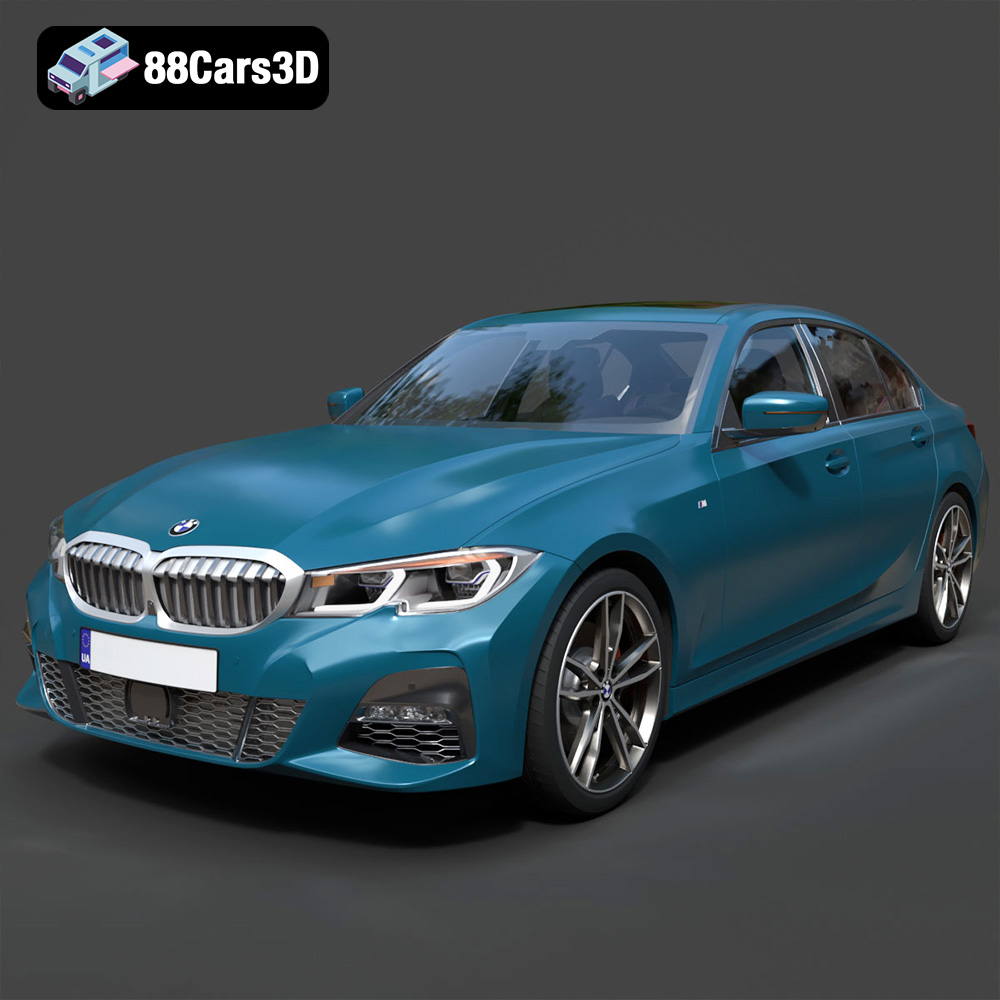
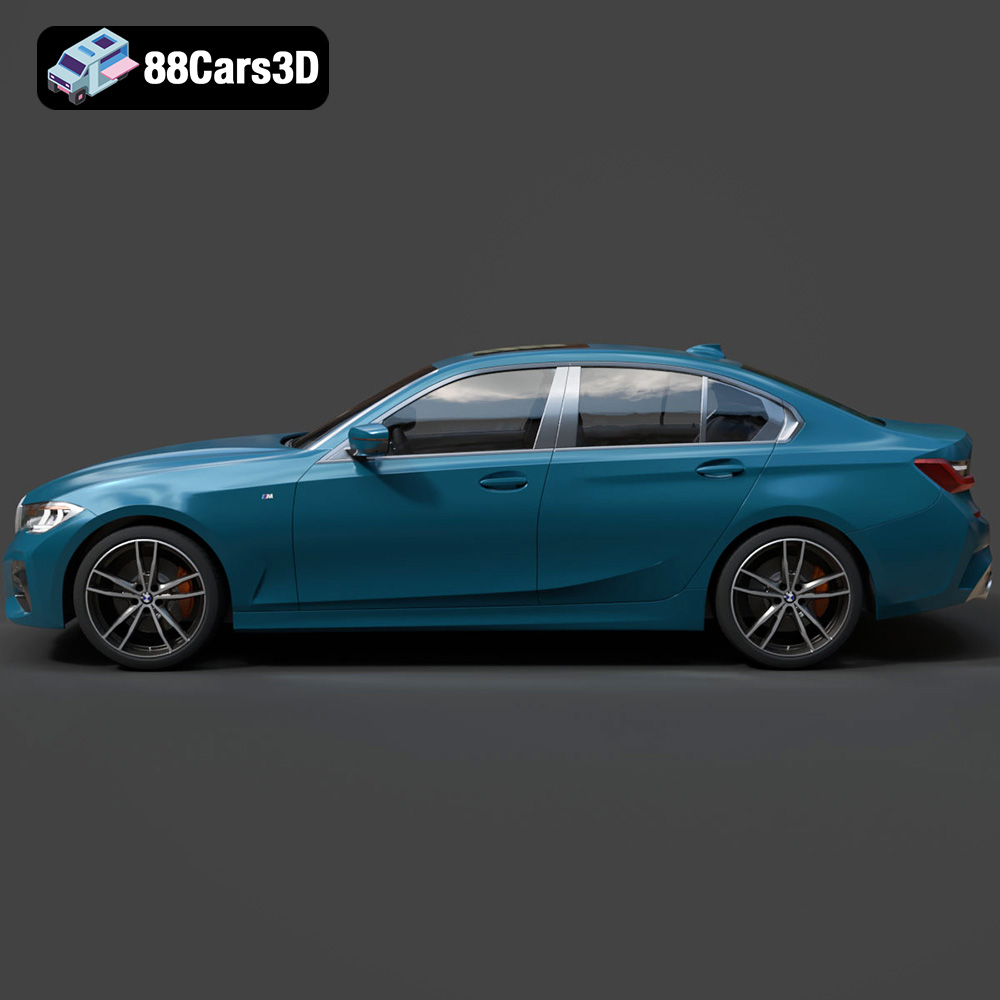
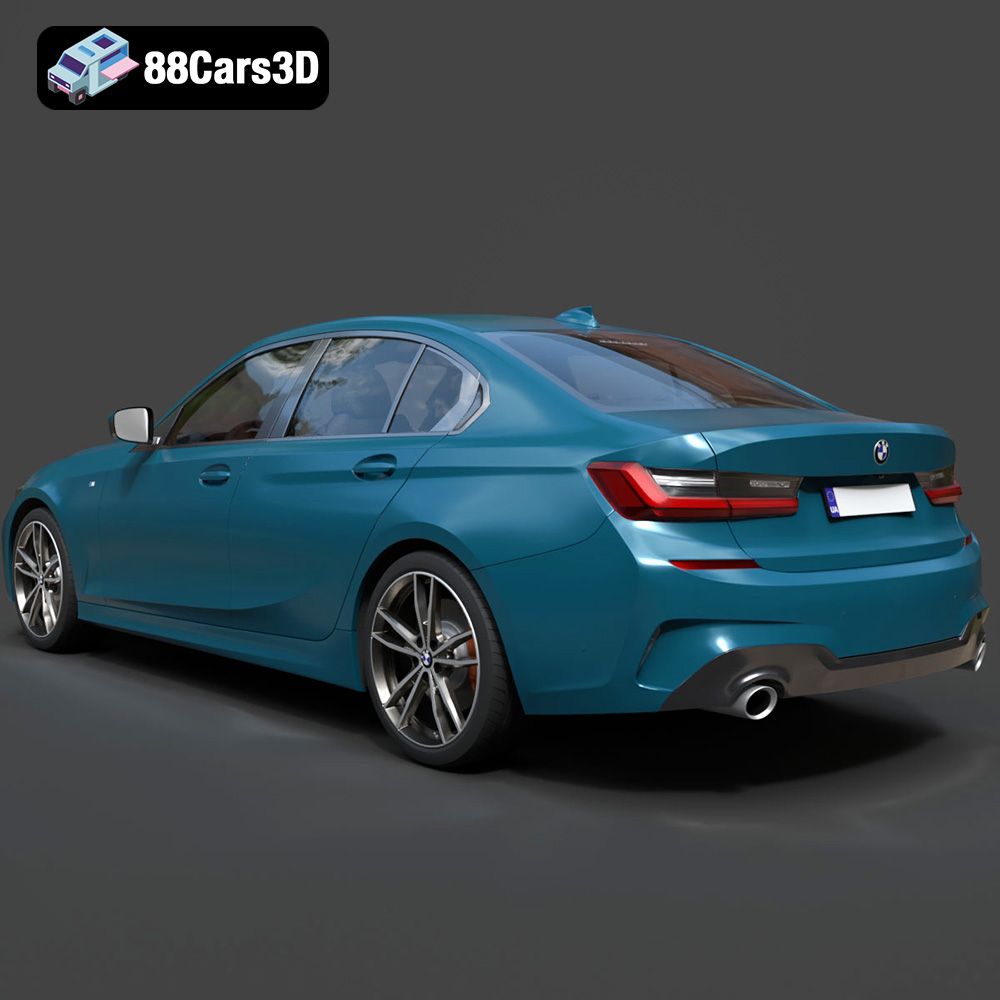
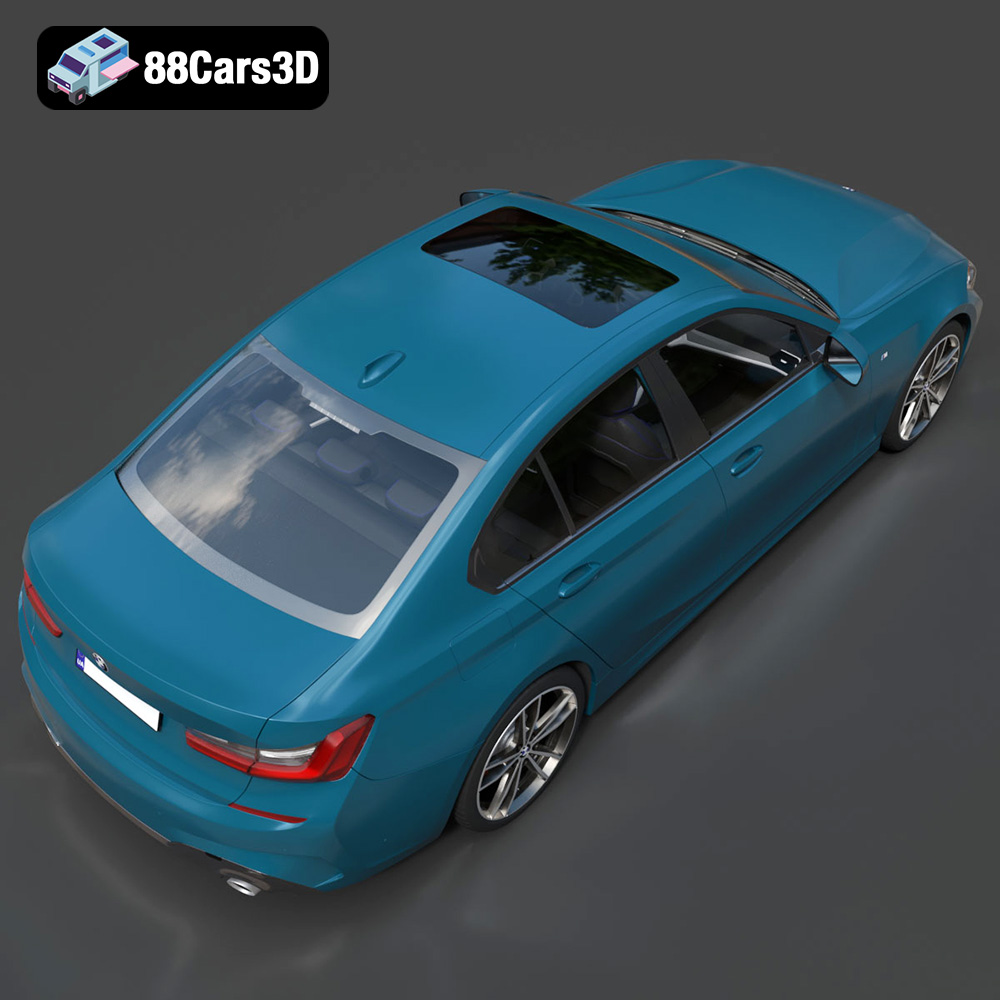
Today, we delve into the meticulous craftsmanship behind such assets, exploring how they empower designers, developers, and artists across various industries. We’ll examine the technical intricacies that elevate a good model to an exceptional one, discuss essential workflows, and highlight the versatility required in modern pipelines. At the heart of our discussion is an exemplary asset that embodies these standards: the BMW 3 Series M-Sport Sedan 2019 3D Model, available on 88cars3d.com. This model provides a perfect case study for understanding the impact of precision-engineered 3D car models in professional applications.
The choice of a 3D model file format is far more than a technicality; it’s a strategic decision that dictates compatibility, workflow efficiency, and the ultimate utility of a digital asset. Professional 3D car models like the BMW 3 Series M-Sport Sedan 2019 are often provided in a suite of formats, ensuring seamless integration across diverse software and platforms. Understanding each format’s strengths and ideal applications is paramount for any serious 3D artist or developer.
The .blend format is native to Blender, the increasingly popular open-source 3D creation suite. A .blend file is a complete scene package, containing not just the mesh data but also materials, textures, lighting setups, cameras, animations, and even physics simulations. For artists working primarily in Blender, this is the most convenient and powerful format, offering full editability and the ability to immediately render or modify any aspect of the model. The BMW 3 Series M-Sport Sedan 2019 3D Model, for instance, comes with an editable .blend file, ensuring artists can dive straight into advanced customizations or scene integration with all necessary components pre-configured.
Autodesk’s .fbx (Filmbox) format has become an industry staple, particularly for game development and real-time visualization. It supports geometric data (meshes, polygons), material properties, textures, animations, and even skeletal data, making it ideal for transferring complex assets between different 3D software packages (like Maya, 3ds Max, Blender) and game engines (Unreal Engine, Unity). Its robustness and widespread support make it the go-to format for exporting animated characters, environments, and, crucially, vehicle assets like our BMW 3 Series M-Sport Sedan 2019 3D Model, ensuring it’s “game-engine ready” out of the box.
The .obj (Wavefront OBJ) format is one of the oldest and most universally supported 3D file formats. It primarily stores geometric data – vertices, normals, UV coordinates, and faces – and references external material files (.mtl) for appearance information. While it doesn’t support animation or rigging, its simplicity and widespread compatibility make it an excellent choice for straightforward mesh exchange between virtually any 3D software. When maximum compatibility is the goal, or when working with software that has limited import options, .obj remains a reliable format.
.glb (GL Transmission Format Binary) is a relatively newer format rapidly gaining traction, especially in the realms of Augmented Reality (AR), Virtual Reality (VR), and web-based 3D applications. It’s a binary version of glTF, designed for efficient transmission and loading of 3D scenes and models. A .glb file packages all necessary data (geometry, materials, textures, animations) into a single, compact file, making it incredibly easy to share and display models in browsers or mobile AR/VR viewers. For interactive experiences featuring vehicles, such as a virtual car showroom, the .glb version of the BMW 3 Series M-Sport Sedan 2019 3D Model would be invaluable.
The .stl (Stereolithography) format is the de facto standard for 3D printing and rapid prototyping. It represents 3D surfaces as a collection of triangular facets, defining only the geometry of an object without color, texture, or material information. While not suitable for rendering or animation, it’s essential for bringing digital models into the physical world. For designers needing a physical prototype of the BMW 3 Series M-Sport Sedan 2019, the .stl file provides the direct input needed for additive manufacturing.
The .ply (Polygon File Format, or Stanford Triangle Format) is often used for storing 3D data from 3D scanners or for CAD/CAM applications. It can store a variety of properties, including color, transparency, normals, texture coordinates, and scalar values at each vertex or face. While less common for general 3D asset exchange compared to .fbx or .obj, it’s particularly useful for precise mesh analysis, scientific visualization, and applications where detailed polygon data beyond simple geometry is required. For highly accurate reproductions or reverse engineering, a .ply file offers a robust data structure.
While not a universal file format in the traditional sense, the term “.unreal” often refers to assets specifically configured and optimized for direct import and use within Unreal Engine. This typically means an .fbx file that has been meticulously prepared with appropriate material setups (PBR), collision meshes, LODs (Levels of Detail), and possibly Blueprints, ready to be dropped into a scene. For developers leveraging Unreal Engine, having a pre-configured .unreal asset, as offered with the BMW 3 Series M-Sport Sedan 2019, significantly streamlines the development pipeline, bypassing many common import and setup hurdles.
The .max format is the proprietary scene file format for Autodesk 3ds Max. Like .blend, it encapsulates an entire scene, including geometry, materials, textures, lights, cameras, animations, and modifiers specific to 3ds Max. For artists and studios heavily invested in the 3ds Max ecosystem, having the native .max file for the BMW 3 Series M-Sport Sedan 2019 3D Model ensures full creative control, enabling advanced rendering setups with V-Ray or Corona, complex animation sequences, or detailed environmental integrations.
The provision of this comprehensive suite of formats with the BMW 3 Series M-Sport Sedan 2019 3D Model underscores its versatility and the commitment of marketplaces like 88cars3d.com to supporting diverse professional workflows.
Automotive visualization is a highly specialized field that demands a delicate balance of artistic flair and technical precision. Whether for marketing, product design review, or architectural visualization, the goal is to render vehicles with photorealism that blurs the line between digital and reality. This requires not just powerful rendering engines but also exceptionally crafted 3D car models as the starting point.
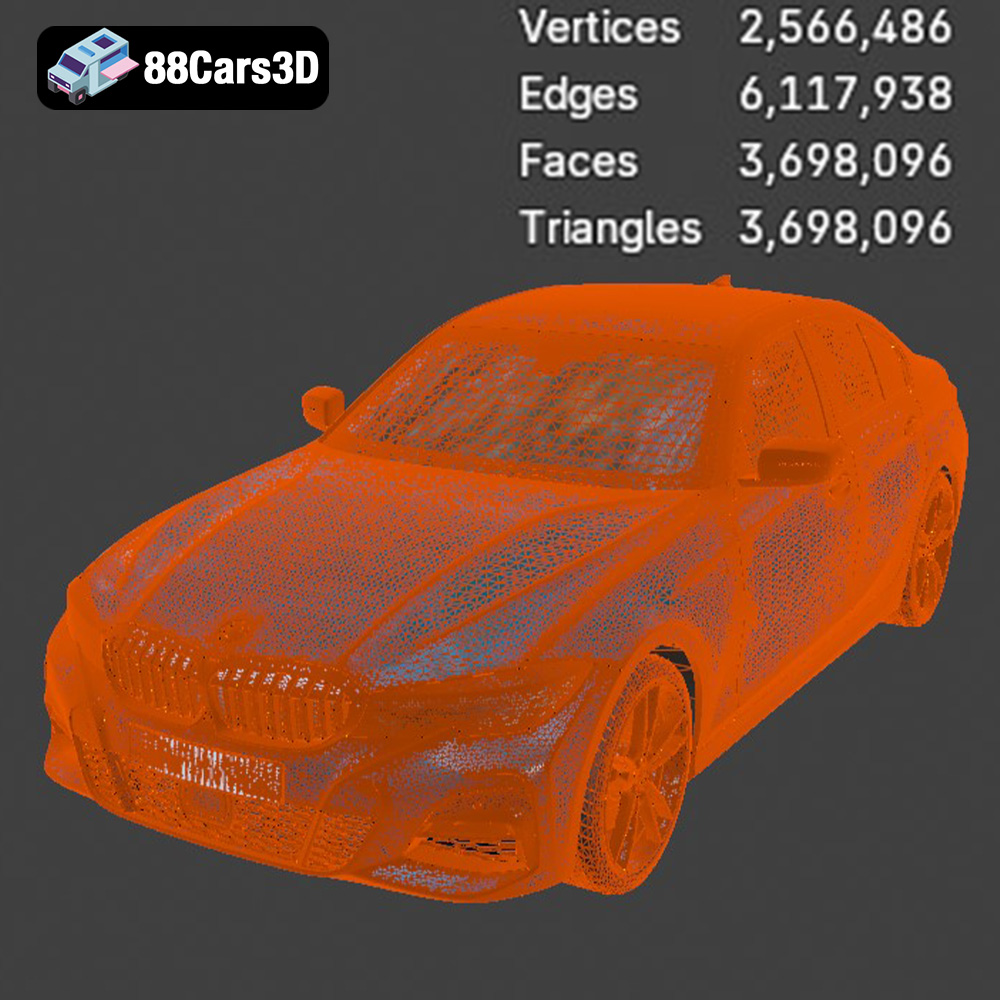
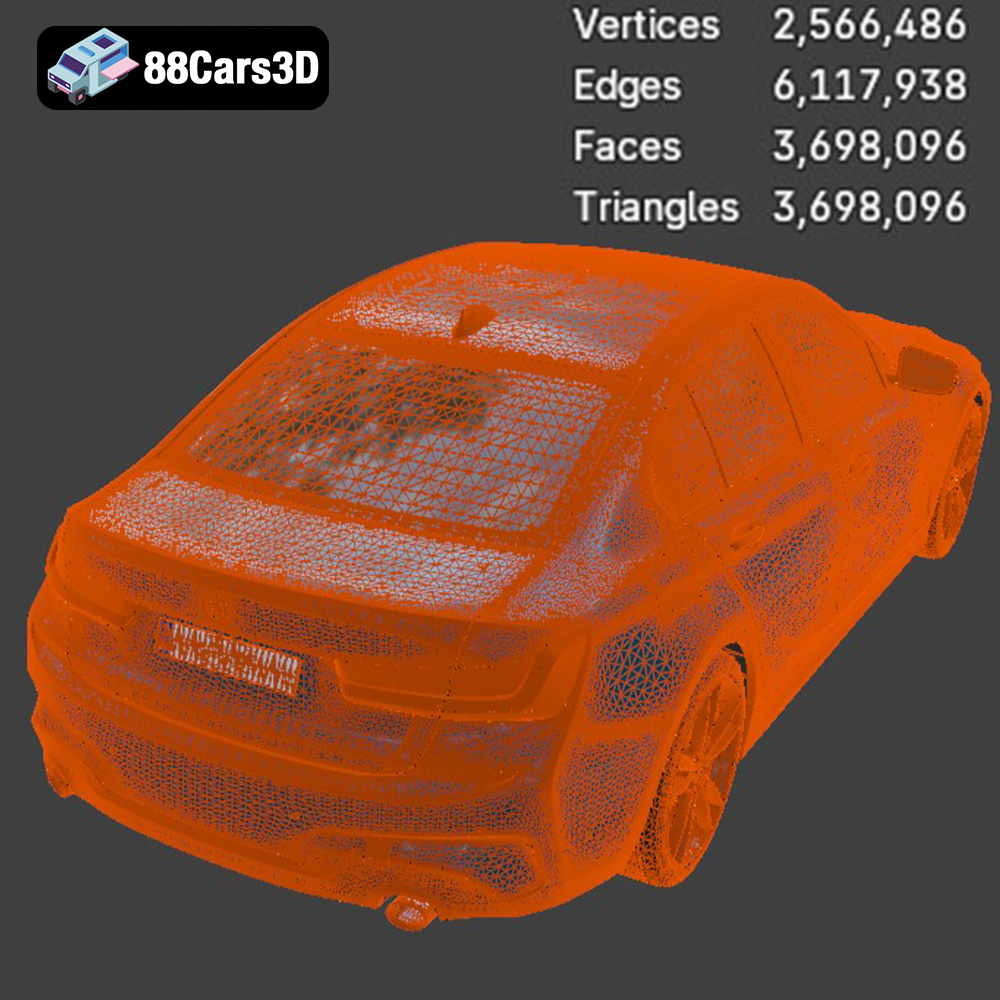
Achieving photorealism begins with the 3D model itself. For a luxury car like the BMW 3 Series M-Sport Sedan 2019, every subtle curve, sharp crease, and panel gap must be faithfully replicated. This means working with meticulously optimized clean geometry, ensuring precise edge flow that allows for smooth subdivision and accurate reflections. Irregular geometry, or “bad topology,” can lead to undesirable shading artifacts, visible seams, or distorted reflections, immediately breaking the illusion of realism. The attention to detail in the BMW 3 Series M-Sport Sedan 2019 3D Model, with its “precise proportions and authentic detailing,” directly contributes to its ability to achieve stunning visual fidelity in renders.
Beyond the mesh, realistic materials are crucial. Automotive finishes are complex, often involving multi-layered paints, clear coats, metallic flakes, and subtle imperfections. Physically Based Rendering (PBR) workflows are standard, where materials react to light in a physically accurate way. This means defining parameters like albedo (base color), roughness, metallic, normal maps, and often advanced shaders for car paint, glass, and chrome. The featured BMW 3 Series M-Sport Sedan 2019 3D Model boasts “realistic materials that react naturally under various lighting conditions,” indicating that these PBR principles have been meticulously applied. When coupled with sophisticated global illumination and high-dynamic-range (HDR) lighting environments in renderers like V-Ray, Corona, Arnold (3ds Max) or Cycles, Eevee (Blender), these material properties create breathtaking results.
For many visualization projects, a fully modeled interior is non-negotiable. Whether showcasing the luxury features in a marketing campaign or populating an architectural interior scene, a detailed cabin adds immense value. The BMW 3 Series M-Sport Sedan 2019 3D Model includes a “fully modeled interior,” ensuring that no angle is left unaddressed. This level of completeness allows for flexible camera angles and close-up shots without needing to source or create additional assets. Furthermore, seamless integration into complex scenes often requires consistent scale and optimized geometry to maintain render performance, a feature inherent in professionally crafted 3D car models.
Game development presents a unique set of challenges and opportunities for 3D car models. While photorealism is increasingly a goal, performance and interactivity are paramount. Game assets must be highly optimized without sacrificing visual quality, a balance that requires expert knowledge in model creation and engine integration.
Unlike offline rendering, game engines render frames in real-time, often 30 to 120 times per second. This necessitates strict polygon budgets and efficient UV layouts. A “meticulously optimized clean geometry” in a 3D car model means that polygons are used wisely, concentrating detail where it’s visible while simplifying less critical areas. This often involves creating multiple Levels of Detail (LODs) for a single model, where lower-polygon versions are swapped in when the car is further from the camera, dramatically improving performance without noticeable visual degradation. For game engines like Unreal Engine and Unity, having game-engine ready formats such as .fbx and specific .unreal files for the BMW 3 Series M-Sport Sedan 2019 means much of this optimization work is already done.
In game engines, materials need to be set up to respond dynamically to changing lighting, weather, and damage systems. This means using PBR materials that accurately reflect light and shadows in real-time. Textures are often baked from high-polygon models onto lower-polygon game meshes to retain detail efficiently. The BMW 3 Series M-Sport Sedan 2019 3D Model’s realistic materials are crucial here, providing a strong foundation for creating dynamic visual effects, from rain streaks on the windows to realistic paint wear and tear. Furthermore, proper UV mapping is essential for applying these textures without distortion and for efficient lightmap generation.
For vehicle simulations and racing games, a 3D car model needs more than just visual geometry. It requires specific collision meshes (often simplified proxy geometry) for accurate physics interactions with the environment and other vehicles. This also includes defining suspension points, wheel physics, and center of mass. While these are often engine-specific implementations, a well-structured 3D car model with logical hierarchy, as boasted by the BMW 3 Series M-Sport Sedan 2019 3D Model, makes the process of adding these interactive elements significantly smoother. Developers can quickly assign components like wheels, doors, and chassis to specific physics actors, accelerating the game development pipeline.
The utility of high-quality 3D car models extends far beyond traditional rendering and game development, venturing into cutting-edge immersive experiences and tangible physical prototypes. Augmented Reality (AR), Virtual Reality (VR), and 3D printing are increasingly reliant on robust and versatile digital assets.
AR and VR demand highly optimized, yet visually compelling, 3D models. Performance is even more critical than in traditional games, as latency can induce motion sickness. Models must be lightweight, have efficient UVs, and utilize PBR materials suitable for real-time rendering on various devices, from high-end VR headsets to mobile AR platforms. The BMW 3 Series M-Sport Sedan 2019 3D Model, with its .glb format, is specifically “optimized for AR/VR and web-based visualization.” This means it’s ready for interactive virtual showrooms, digital car configurators that allow users to explore different trims and colors, or even placing a virtual car in a real-world environment via AR apps. The “dynamic presence” mentioned in the description translates directly to an engaging user experience in these immersive contexts.
For automotive designers and enthusiasts, the ability to bring a digital concept into the physical world is invaluable. 3D printing enables rapid prototyping, allowing for physical review of designs, scale models, or even functional parts. The .stl format provided with the BMW 3 Series M-Sport Sedan 2019 3D Model is the standard for 3D printing. However, preparing a model for 3D printing involves more than just exporting to .stl. It requires ensuring the mesh is “watertight” (no holes or non-manifold geometry), has sufficient wall thickness, and is scaled correctly. While the base model provides the precise geometry, a bit of preparation may be needed depending on the printer and intended scale, but starting with a high-quality, clean mesh like this one drastically simplifies the process.
The rise of WebGL and WebAssembly has opened the door for rich 3D experiences directly within web browsers, without requiring plugins. This is particularly relevant for automotive brands wanting to showcase their vehicles online in an interactive way. Formats like .glb are perfect for this, allowing users to rotate, zoom, and inspect a car model directly on a product page. The versatility of the BMW 3 Series M-Sport Sedan 2019 3D Model means it can be readily integrated into such web configurators, offering a compelling alternative to static images or videos and enhancing customer engagement.
Time is a valuable commodity in any professional production pipeline. Creating a high-quality 3D car model from scratch can take hundreds of hours, demanding specialized skills in modeling, texturing, and optimization. This is where sourcing premium, pre-built 3D car models from reputable marketplaces like 88cars3d.com offers a significant advantage, streamlining workflows and accelerating project timelines.
The primary benefit of a premium 3D car model like the BMW 3 Series M-Sport Sedan 2019 is the immediate availability of a production-ready asset. Instead of spending weeks or months on modeling, UV mapping, texturing, and material setup, artists can integrate the model directly into their scenes within hours. This efficiency is invaluable for meeting tight deadlines, especially in fast-paced industries like advertising, game development, and cinematic production. The detailed description of the BMW 3 Series M-Sport Sedan 2019 3D Model highlights “seamless integration into complex scenes without compromising performance,” underscoring this core benefit.
When working on large projects with multiple artists, maintaining a consistent level of quality across all assets is challenging. Sourcing pre-made premium 3D car models ensures a baseline of high quality, as these assets are typically created by expert modelers to professional standards. “Every component has been designed to meet professional standards,” ensuring uniform precision in geometry, materials, and hierarchy. This consistency is vital for maintaining visual integrity in a final product, whether it’s a large-scale automotive configurator or a racing game featuring numerous vehicles.
Professional 3D assets are built with flexibility in mind. Features like “precise edge flow and logical hierarchy allow for easy modifications and rendering.” This means artists aren’t locked into a static model; they can easily adjust materials, add custom decals, animate specific parts (doors, wheels), or even modify the geometry for specialized needs. For example, if a project requires a specific paint finish not included, the PBR-ready materials of the BMW 3 Series M-Sport Sedan 2019 3D Model allow for straightforward material overrides. The multiple file formats further enhance this adaptability, ensuring the model can be used across various software ecosystems without conversion headaches.
While purchasing a premium 3D model involves an upfront cost, it almost always translates into significant savings in time and resources compared to developing an equivalent asset in-house. For studios and freelancers, this means faster project completion, enabling them to take on more projects or allocate resources to other critical tasks. The investment in a high-quality asset like the BMW 3 Series M-Sport Sedan 2019 3D Model from 88cars3d.com quickly pays for itself through increased efficiency and superior output quality, providing an excellent return on investment for any professional venture.
The digital automotive world thrives on accuracy, detail, and efficiency. As we’ve explored, the creation and application of high-fidelity 3D car models are complex undertakings, demanding a blend of artistic vision and rigorous technical execution. Whether you are building immersive video games, crafting photorealistic automotive visualizations, producing cinematic animations, or designing interactive AR/VR experiences, the quality of your foundational 3D assets dictates the success of your entire project.
The BMW 3 Series M-Sport Sedan 2019 3D Model stands as a prime example of what a professional-grade asset can offer. Its meticulously optimized geometry, fully modeled interior, realistic materials, and comprehensive suite of industry-standard file formats – from .blend and .max for comprehensive editing to .fbx and .unreal for game development, and .glb for AR/VR, alongside .obj, .stl, and .ply for broad compatibility and specialized uses – make it an exceptionally versatile and powerful tool. It embodies the precision and attention to detail that professionals demand, significantly streamlining workflows and ensuring a superior final product.
In an industry where time is money and quality is paramount, leveraging expertly crafted 3D car models is not merely a convenience, but a strategic imperative. Resources like 88cars3d.com provide access to these essential building blocks, empowering creators to focus on innovation and storytelling, rather than getting bogged down in repetitive modeling tasks. Invest in quality, accelerate your projects, and elevate your digital creations to the next level.
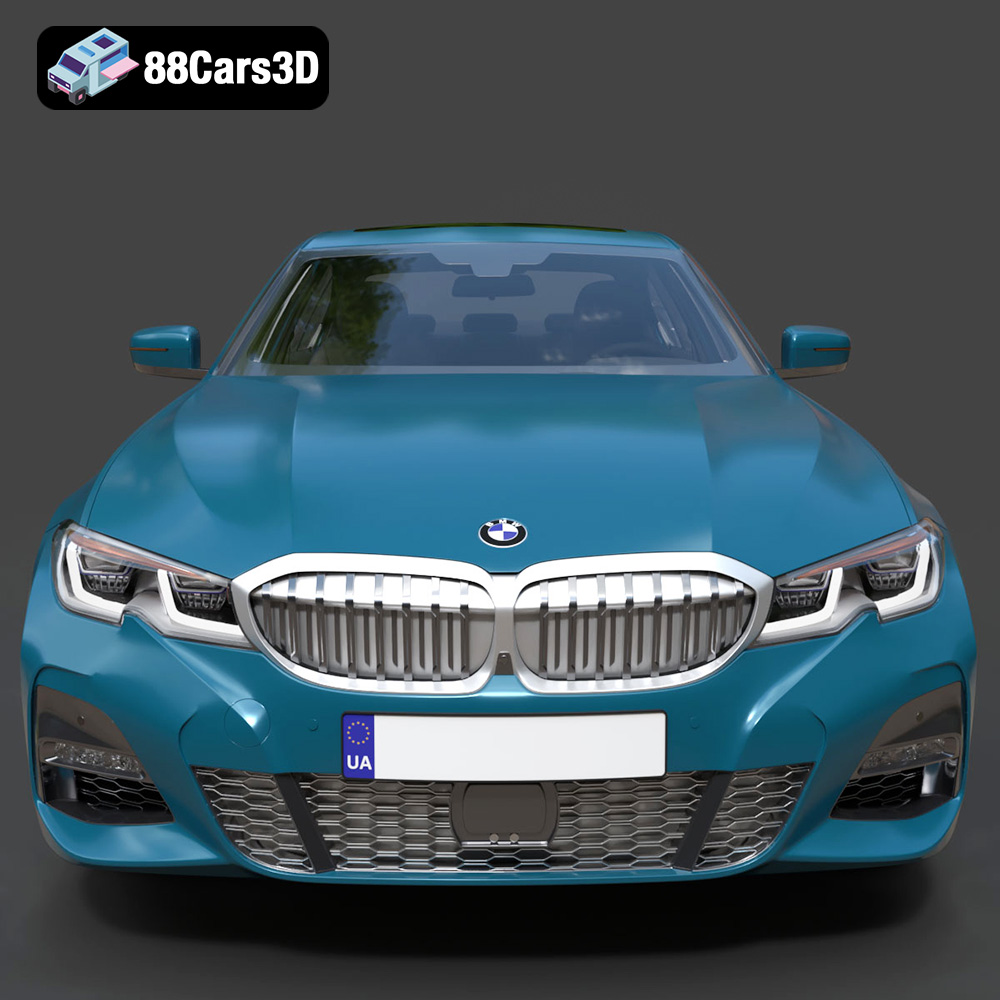
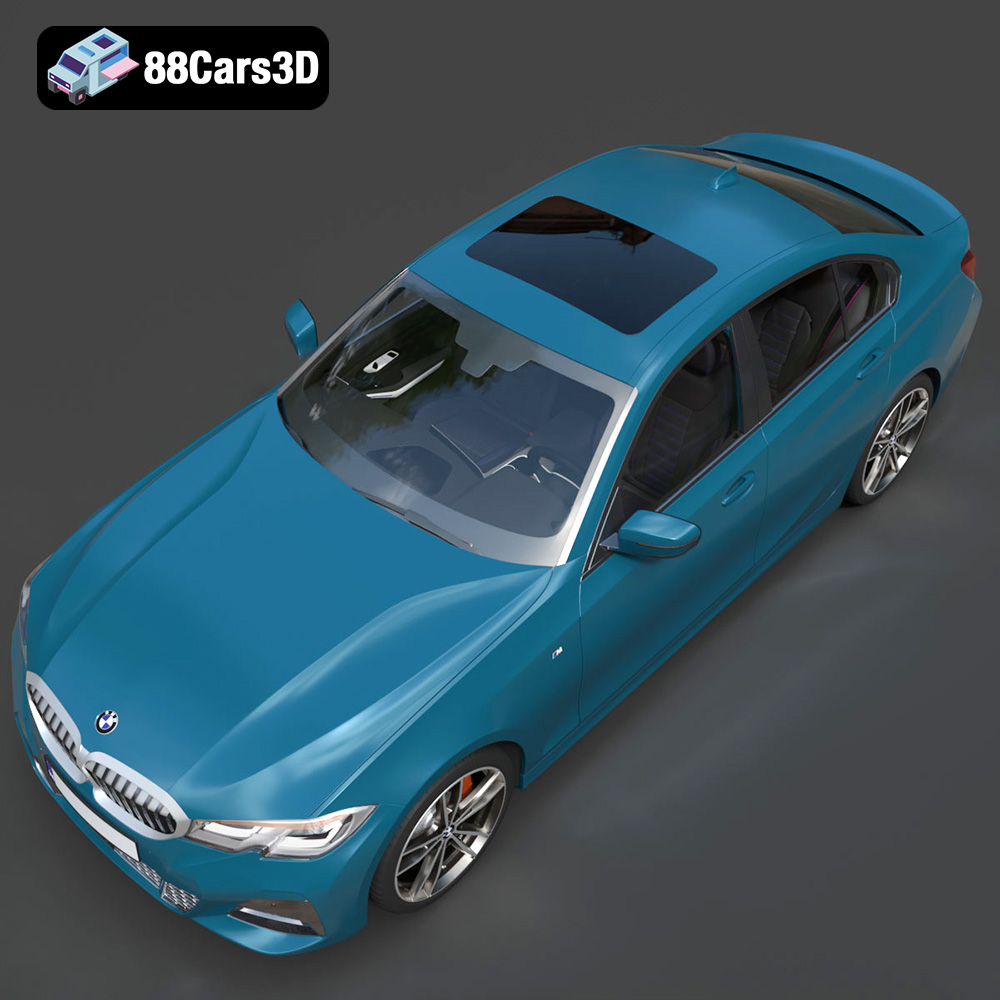
Experience true realism with the BMW 3 Series M-Sport Sedan 2019 3D Model. Crafted to exact specifications, this digital vehicle replica captures the sophisticated contours, aggressive styling, and dynamic presence of the iconic luxury sports sedan. Designed for versatility, this model delivers precise proportions and authentic detailing suitable for demanding digital environments. Key features include meticulously optimized clean geometry, a fully modeled interior, and realistic materials that react naturally under various lighting conditions. Every component has been designed to meet professional standards, ensuring seamless integration into complex scenes without compromising performance. The precise edge flow and logical hierarchy allow for easy modifications and rendering. This versatile 3D asset is perfectly suited for a wide array of professional applications. Whether developing immersive video games, creating photorealistic automotive visualizations, producing cinematic animations, or designing interactive AR/VR experiences, this model provides the reliable foundation needed for demanding digital projects.
$39.99
.3series
.arvr
.blend
.bmw
.car3dmodel
.fbx
.gameasset
.glb
.luxurycar
.max
.msport
.obj
.ply
.rendering
.sedan
.simulation
.sportssedan
.stl
.unreal